 by
Tom Gurney
Tom Gurney BSc (Hons) is an art history expert with over 20 years experience
Email:
tomgurney1@gmail.com
/ Phone:
+44 7429 011000
The Old Stagecoach by Eastman Johnson: Introduction
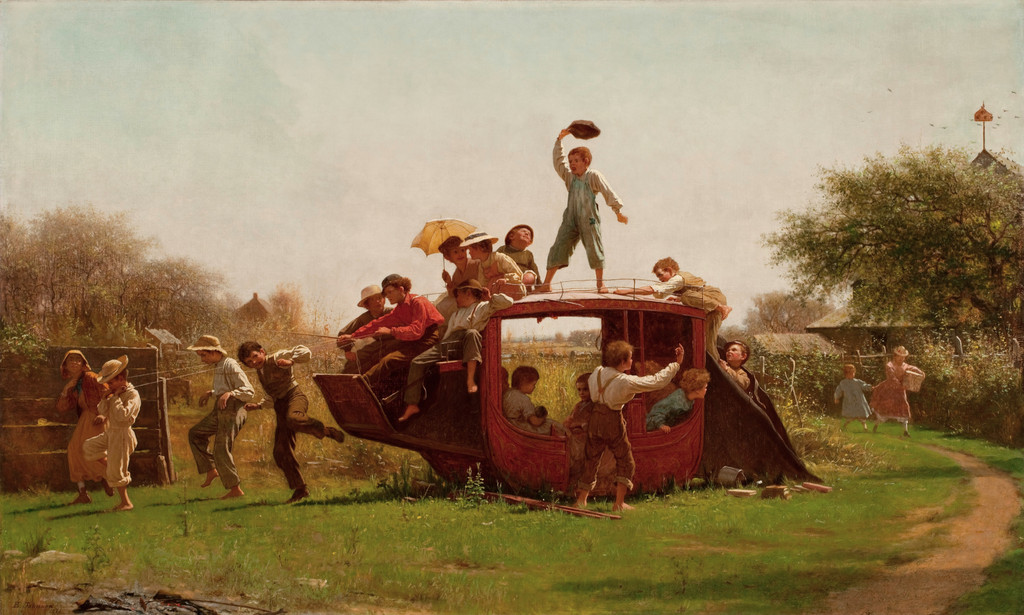
The vehicle in Eastman Johnson’s The Old Stagecoach is going nowhere, but almost everyone around it seems to be moving. Children climb into its broken body, crowd onto the roof and pull ropes at the front. Above them, a boy waves his cap against the sky. An abandoned means of transport has acquired another life through play.
Painted in 1871, the canvas belongs to the Layton Art Collection and is held at the Milwaukee Art Museum. Its apparent spontaneity conceals a carefully constructed scene, combining Nantucket child models with a coach Johnson had sketched elsewhere. The picture also carries a more difficult question: whether everyone participates in the game on equal terms. [1] [2]
At a Glance
- Artist Eastman Johnson
- Title The Old Stagecoach
- Date 1871
- Medium Oil on canvas
- Dimensions 92.08 × 152.72 cm
- Collection Layton Art Collection, Milwaukee Art Museum
- Accession L1888.22
- Credit Gift of Frederick Layton
The museum’s current measurements describe the painting in its surviving format. [1]
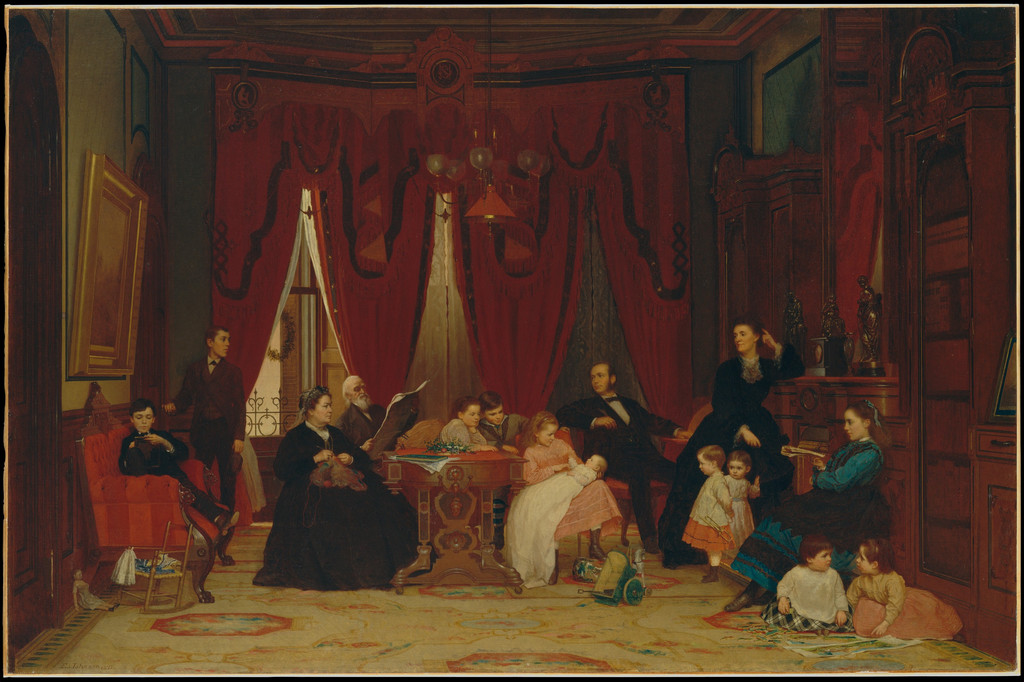
This work across Eastman Johnson’s career
The Boyhood of Lincoln
1868; Michigan canvasThe Brown Family
1869; NGA versionThe Hatch Family
1870–71The Girl I Left Behind Me
About 1872The Toilet
1873Husking Bee, Island of Nantucket
1876; Chicago canvasNotes and sources
The Boyhood of Lincoln. Firelight makes an imagined scene of Lincoln reading into an image of aspiration. [3]
The Brown Family. A child’s reaching arm connects three generations within an elaborate interior. [4]
The Hatch Family. Fifteen figures inhabit a library through a carefully distributed set of activities. [5]
The Old Stagecoach (current article). Children give a broken vehicle a new purpose through play. [1]
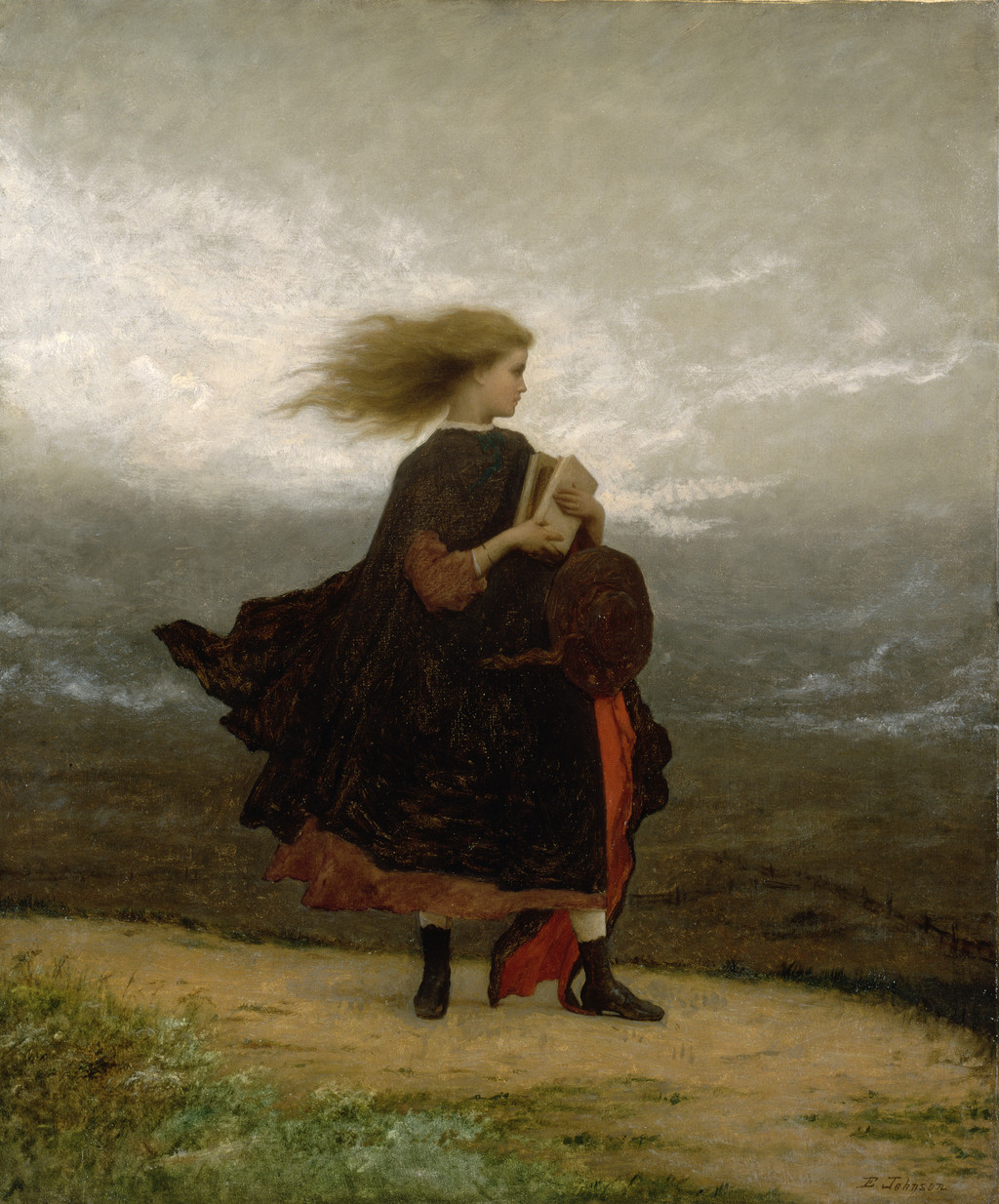
The Girl I Left Behind Me. A still figure, books and wind-driven clothing hold competing directions of attention. [6]
The Toilet. The mirror returns a face while the figure’s back occupies the foreground. [7]
Husking Bee, Island of Nantucket. A line of people and pale husks joins harvest work to a social gathering. [8]
Contents
- A wreck made useful again
- The path, meadow and approaching figures
- A scene staged in the studio
- Mayflower and the reuse of the past
- Play and unequal participation
- Exhibition, collectors and public memory
- The surviving format
- Annotated details
A wreck made useful again
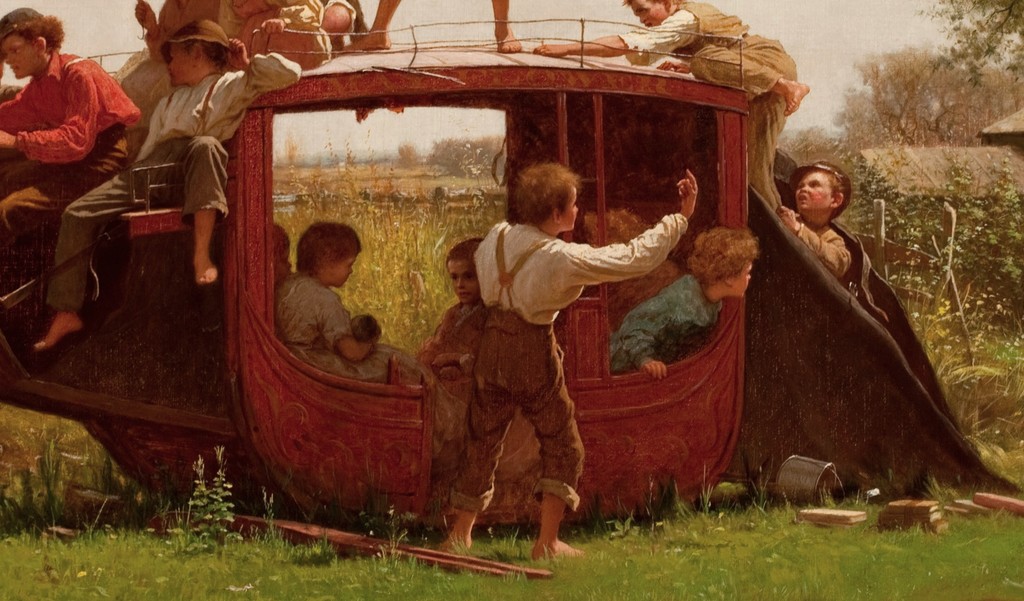
The coach’s red body rests low in the grass. Its original working equipment is absent or unusable, while its compartments, roof and projecting front supply a framework for the children. They can imitate travel without restoring the machinery that would make the vehicle move.
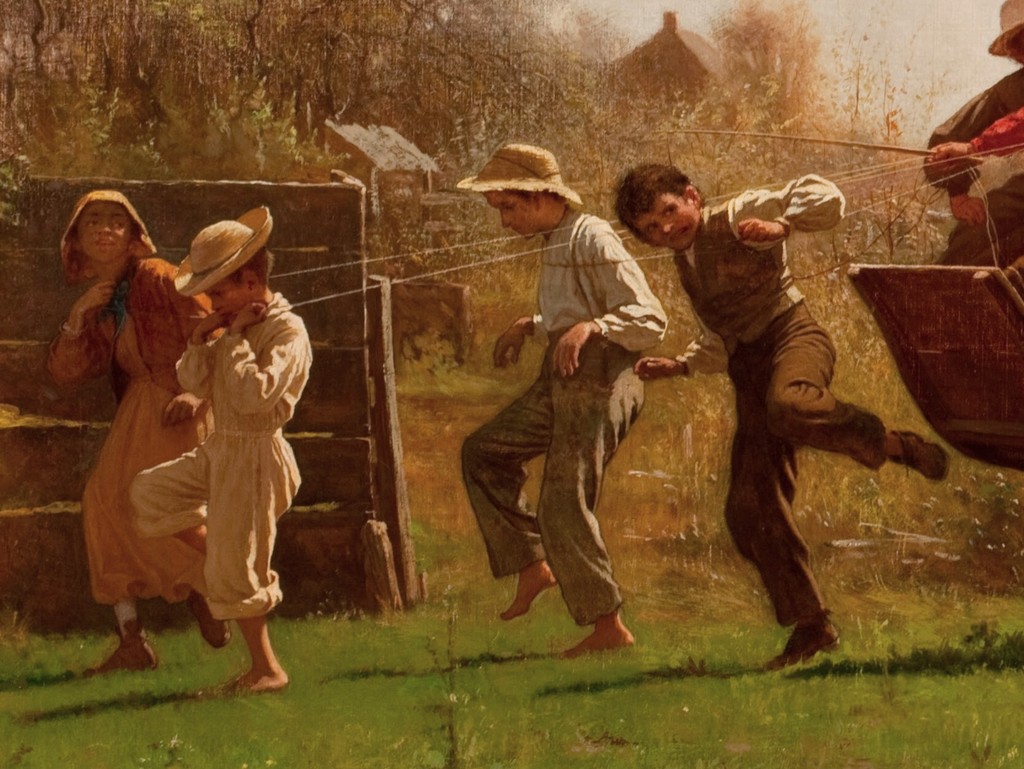
Johnson uses that contradiction throughout the scene. The ropes extend towards children acting as the pulling team; others take the places of passengers or climb towards them. A child stands beside an opening in the coach, raising an arm into the group above. These actions make the stationary object feel like the centre of a busy journey.
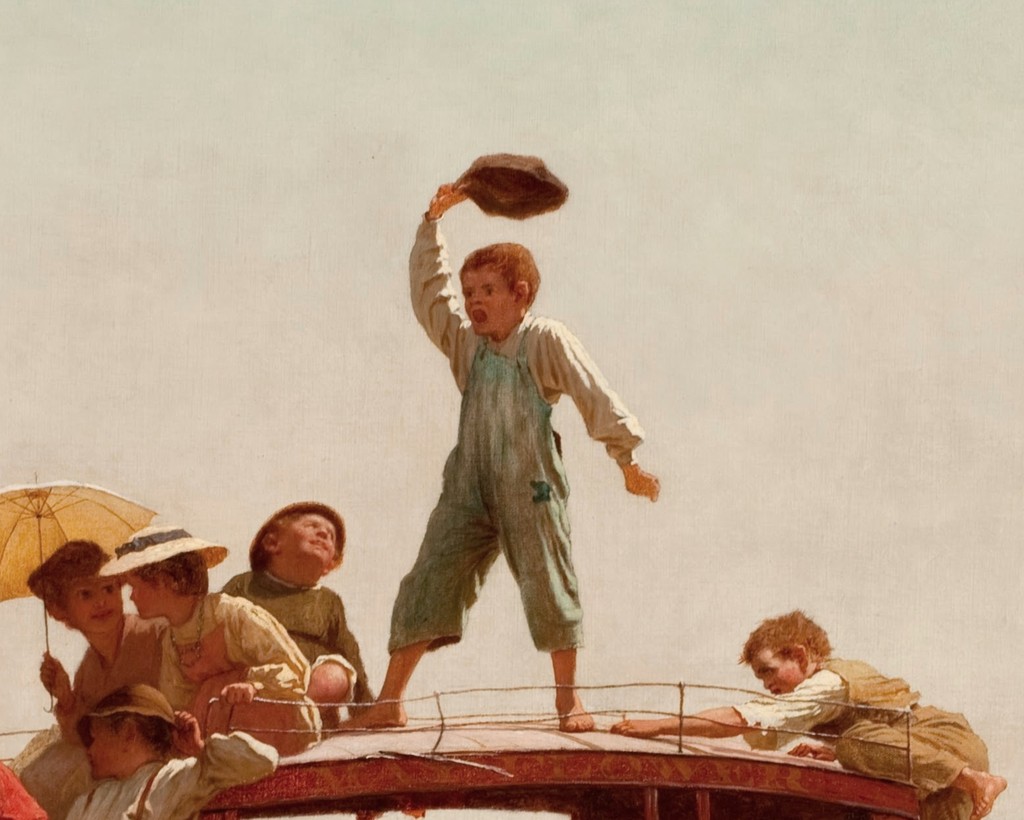
The boy on the roof creates the highest point. His legs spread to establish balance, while the raised cap extends his gesture into an otherwise open sky. The small figure carries an extraordinary amount of the composition’s energy because he rises above the clustered bodies and the coach’s long horizontal mass.
The surrounding children do not simply repeat his movement. One sits quietly beneath an umbrella, another leans over the roof’s edge, and others press into the enclosed compartment. Their differences give the game a social structure: the same abandoned object offers several roles and several ways of belonging.
The coat, hat and umbrella details also suggest children trying out gestures associated with adult travel. Yet their scale relative to the coach keeps the make-believe visible. The pleasure of the image depends on recognising both the imagined journey and the material impossibility of the vehicle carrying it out.
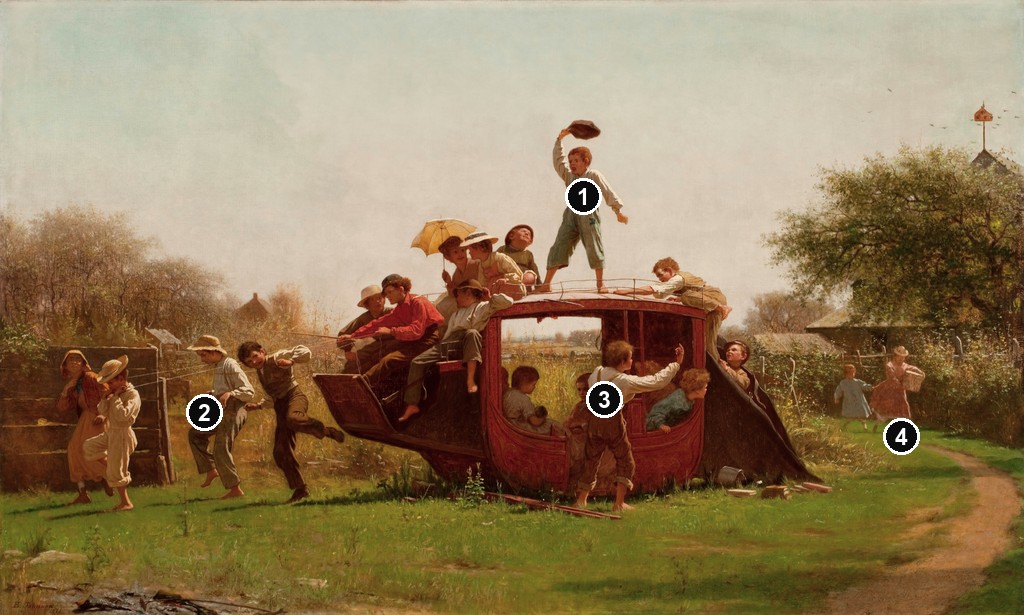
Annotated Details from The Old Stagecoach
The numbered points identify visible features discussed in this article. Return from each detail to the whole composition. Eastman Johnson, The Old Stagecoach, 1871. Oil on canvas, 92.08 × 152.72 cm. Layton Art Collection, Milwaukee Art Museum, Gift of Frederick Layton, L1888.22. Public domain faithful reproduction. Image source. Public domain. Numbers added to a separate overview; detail images are native crops. No recolouring, retouching, reconstruction or enlargement.
Details from THE OLD STAGECOACH
Compare the cropped details with the complete images above. Notice how their colours, shapes and positions contribute to the larger compositions.
The boy above the roof
A standing boy raises his cap above the other children. His tall silhouette and extended arm carry the game upward into the open sky.
Children pulling at the front
Ropes extend from the broken coach towards children at the left. Their leaning bodies give the imagined journey effort and direction even though the vehicle remains a wreck.
A damaged coach full of occupants
Children occupy the open body, roof and entrance of the coach. The red shell gathers their separate actions while its missing running gear makes the play’s imagined movement especially clear.
The path and approaching figures
A curving path leads past the coach towards an adult and child in the distance. Their smaller scale extends the scene beyond the crowded game and into the surrounding meadow.
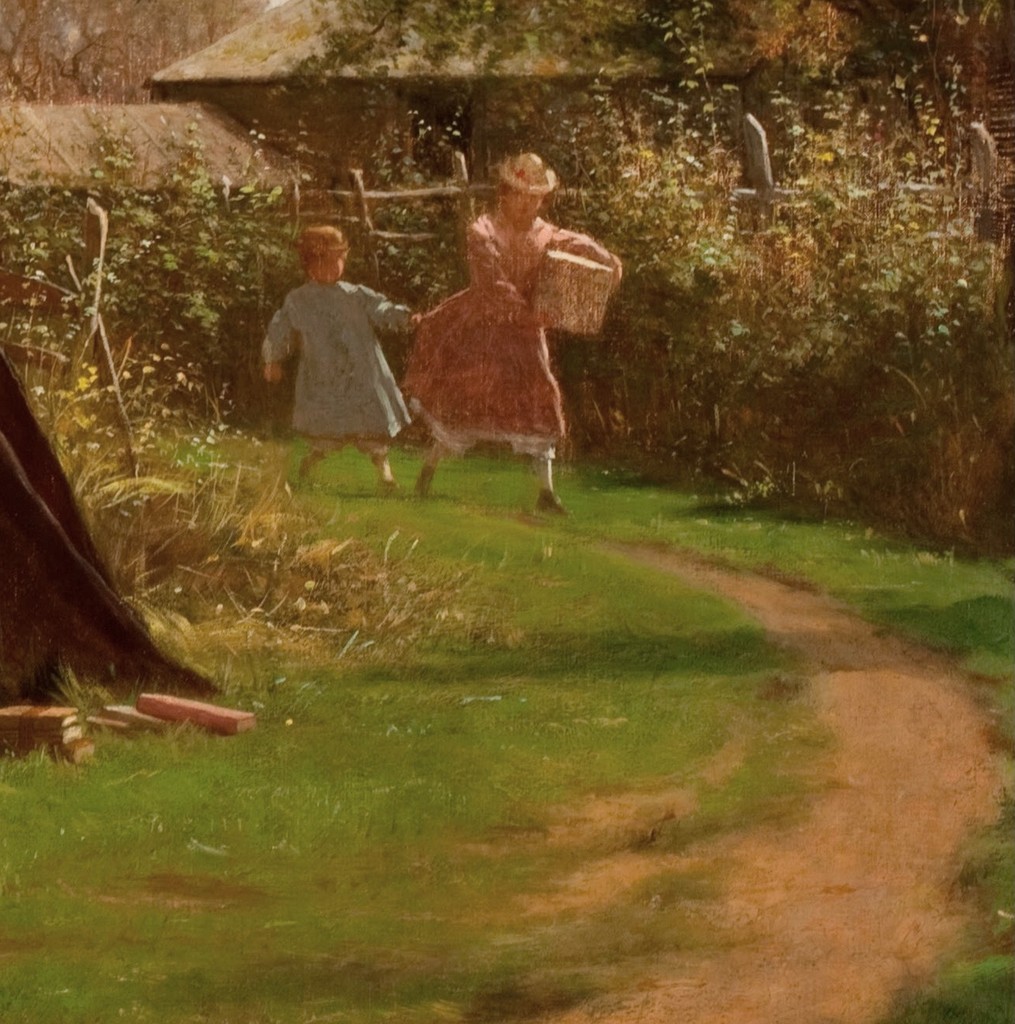
The path, meadow and approaching figures
A curving path enters from the lower right and leads towards the coach. Two smaller figures approach along it, making the game appear capable of receiving more participants. The path continues the sense of movement beyond the main group without supplying a clearly defined destination.
The meadow gives the children room to disperse. Trees and fencing enclose the middle distance, but the open grass and sky prevent the wreck from feeling trapped within a cramped yard. Buildings, vegetation and the small elevated birdhouse at the right help establish a settled rural environment around the play.
The horizontal design is especially effective here. A viewer can follow the pulling group from the left, cross the coach’s body and reach the arriving children at the right. The roof figure then draws attention upwards. Johnson moves the eye through the same combination of lateral travel and climbing that structures the game.
Discarded objects near the coach, identified by the museum as schoolbooks and lunch pails, give the play a temporal setting. The children have put aside the equipment of another part of their day. The foreground remnants of a fire introduce a darker, less comfortable detail within the sunny field. [1] [9]
A scene staged in the studio
The museum and catalogue explain that Johnson used local Nantucket children as models, arranging them on a platform in his studio. He adapted their positions to an abandoned coach he had drawn in the Catskill Mountains. The finished image therefore combines observation from different places with a constructed arrangement of figures. [1] [2]
That history changes how the picture’s naturalness should be understood. The variety of poses can feel convincingly unplanned, but Johnson had to make them compatible with the coach’s roof, openings and projections. The platform allowed bodies to be studied in positions that could later become parts of a coherent painted game.
The catalogue also cites an October 1870 letter to dealer Samuel P. Avery in which Johnson described a large picture of children playing in a stagecoach. The letter places the project’s development before the canvas’s signed 1871 date. Its informal size estimate does not replace the current object measurements. [2]
The distinction between convincing appearance and direct transcription is central to Johnson’s genre painting. Familiar gestures, recognisable objects and local models could be assembled into a scene that readers understood immediately. Such readability does not make the painting a photograph of one afternoon or prove that the game occurred exactly as shown.
Mayflower and the reuse of the past
The museum draws attention to the name Mayflower on the coach. It connects the wreck with the ship associated with the Pilgrims’ arrival in Massachusetts in 1620. Within that interpretation, the children’s occupation of an obsolete vehicle can suggest a younger generation reworking an inherited national past. [1]
The idea is powerful because the old object has not disappeared. Its damage remains visible even while the children make it useful in another way. Renewal takes place through an existing structure rather than on an empty field, giving the game a historical dimension beyond the imitation of ordinary travel.
Milwaukee’s 2017 exhibition guide develops this relationship through the aftermath of the Civil War. It considers the triumphant roof figure, fragments of military-looking dress and the children emerging from the coach as possible images of rebirth. These are interpretive connections, not a surviving statement by Johnson explaining a complete symbolic programme. [9]
The picture’s popularity also belongs to a culture of rural nostalgia. Adults could look at the children’s energy and imagine an earlier, less burdened world. The guide relates that appeal to the pressures of postwar industrial and urban change. The painting’s sunny surface offered a memorable setting in which viewers could negotiate those feelings. [9]
Watch: Eastman Johnson
Choose a film to explore the artist’s work, its interpretation and its wider setting.
Director's Choice - The Girl I Left Behind Me by Eastman Johnson
The Smithsonian American Art Museum looks at Johnson’s The Girl I Left Behind Me.
Watch on YouTubePlay and unequal participation
The nostalgic reading becomes more complicated at the front of the coach. Hills identifies the leftmost figure as a Black girl, while the museum’s account emphasises her position within the improvised pulling team. Her inclusion places Black and white children within one game, but inclusion alone does not establish equality. [1] [2]
The roles matter. Some children occupy the coach or ride above it, while others supply its imagined motive power. The same arrangement can appear exuberantly cooperative and reproduce a distinction between those carried and those made to pull. The ropes give this difference a material form within the play.
The 2017 guide makes a stronger connection between the girl’s rope and racial violence during Reconstruction. It reads the detail against the dangers faced by Black Americans after emancipation. That unsettling interpretation should remain attributed to the guide, rather than presented as an incontrovertible description of Johnson’s intention. [9]
The two readings need not be collapsed into one verdict. The painting can suggest shared childhood and still contain an unequal distribution of roles. Its interest lies partly in the difficulty of making a cheerful national image out of a society whose conflicts had not ended with the war.
The comparison with A Ride for Liberty sharpens that difficulty. In the escape scene, movement carries urgent consequences for the people on the horse. Here, travel becomes a game around an immobile wreck. The contrast makes agency, freedom and who controls a journey useful questions for looking at both works.
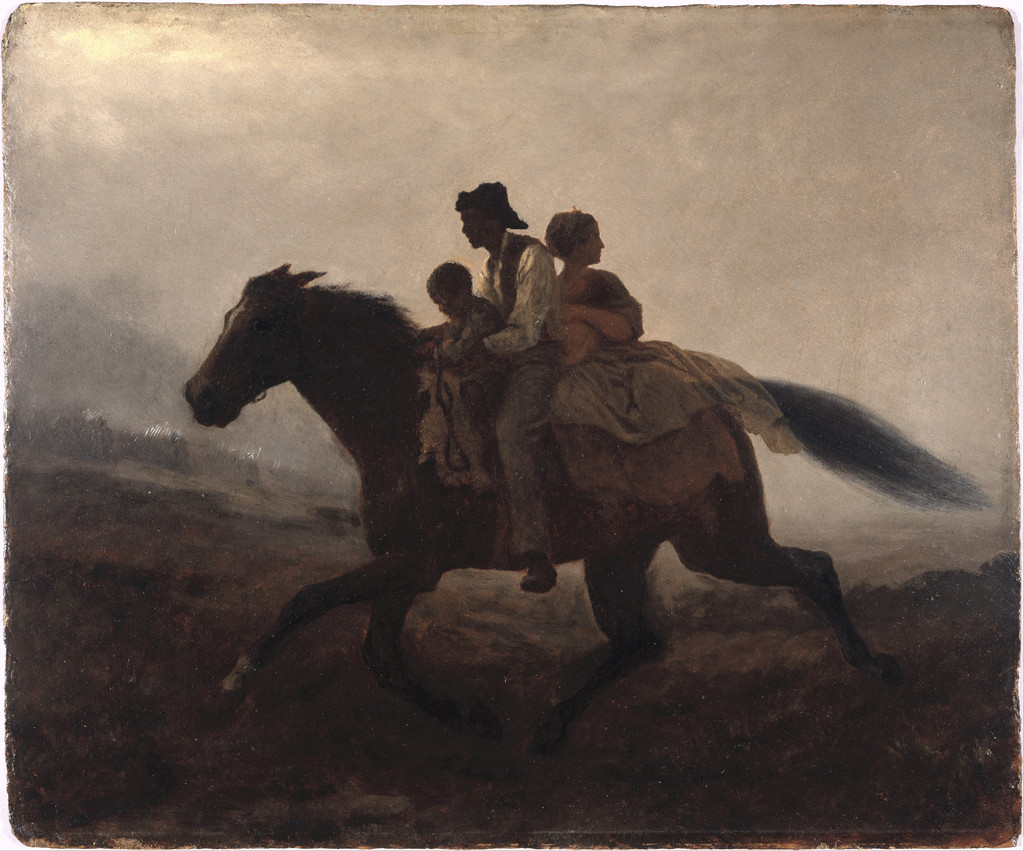
Eastman Johnson, A Ride for Liberty—The Fugitive Slaves, about 1862. Oil on paperboard, 55.2 × 66.7 cm. Brooklyn Museum, 40.59a–b. Public domain. This Brooklyn version is distinct from the inscribed Virginia Museum version.
Image source
.
Public domain
.
Exhibition, collectors and public memory
The painting circulated quickly in 1871, appearing at the Century Association, Goupil’s, the Brooklyn Art Association and the National Academy of Design. The catalogue records different forms of the title during that early history, including Stagecoach and Last Service of Old Stage Coach . [2]
Its later appearance at Philadelphia’s 1876 Centennial Exhibition brought it into a major national display. The 2017 museum guide describes how contemporary accounts treated it as a work that many visitors already knew. Repeated exhibition helped turn a particular painting of a particular game into a familiar image of American rural childhood. [9]
Ownership passed through Avery and George Whitney before Frederick Layton acquired the picture in 1885. It entered the Layton collection by gift in 1888. The sequence connects Johnson’s New York exhibition network with the development of a public art collection in Milwaukee. [2]
The surviving format
The catalogue reports that the painting was reduced at the top by about four inches. It cites information from the Layton collection and a stereograph taken at the 1876 Centennial as evidence for an earlier state. The precise alteration date is not established in the consulted account. [2]
This format history is worth distinguishing from the scene’s subject. The damaged coach belongs to the painted narrative; the later reduction belongs to the physical canvas. The present reproduction shows the surviving composition, with no attempt to invent or reconstruct the missing upper area.
The work’s warmth, light and varied gestures still support close looking within that format. Compared with Husking Bee , another broad rural gathering, the coach scene concentrates activity around a single object rather than extending it through repeated rows. Johnson turns the wreck into both the children’s stage and the viewer’s organising centre.
Artworks directory
Browse twenty-one selected objects discussed in these articles, including the Gifford portrait and the Prang print after Johnson. Dates identify individual objects, including the San Diego Drummer Boy study. Use All media to include the chromolithograph.
| Name | Date | Medium |
|---|---|---|
| Kitchen at Mount Vernon | 1857; Charles Butt canvas | Oil on canvas |
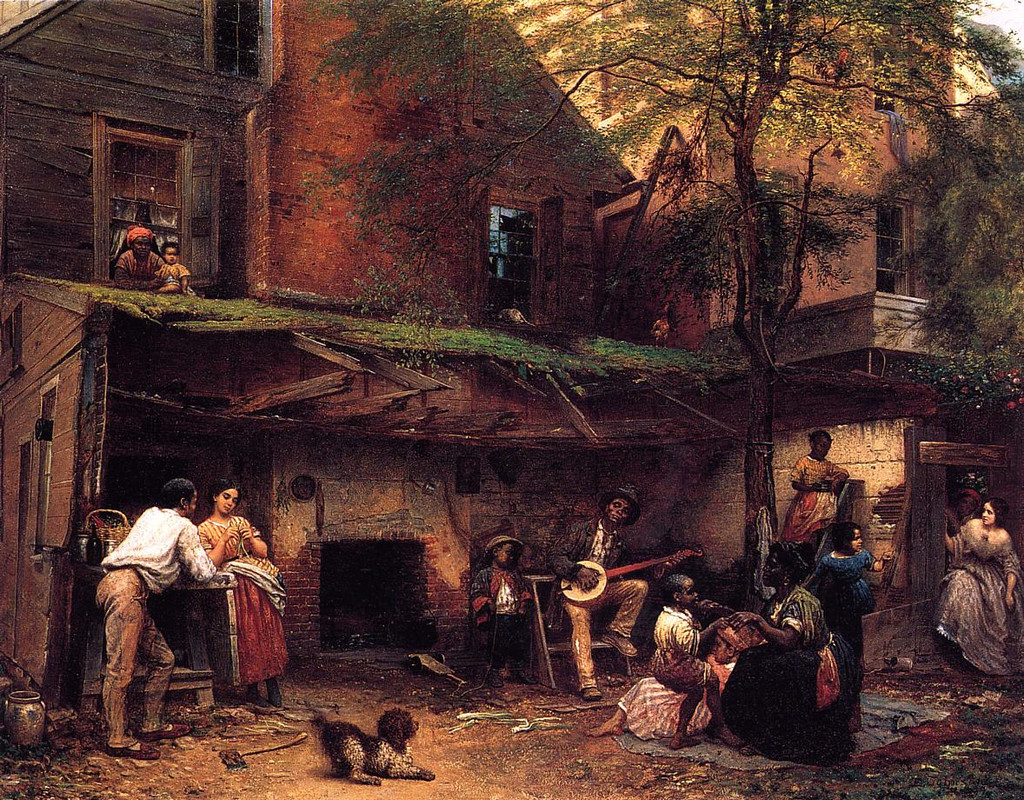
| Negro Life at the South | 1859; New York Historical original | Oil on linen |
| A Ride for Liberty—The Fugitive Slaves | About 1862; Brooklyn version | Oil on paperboard |
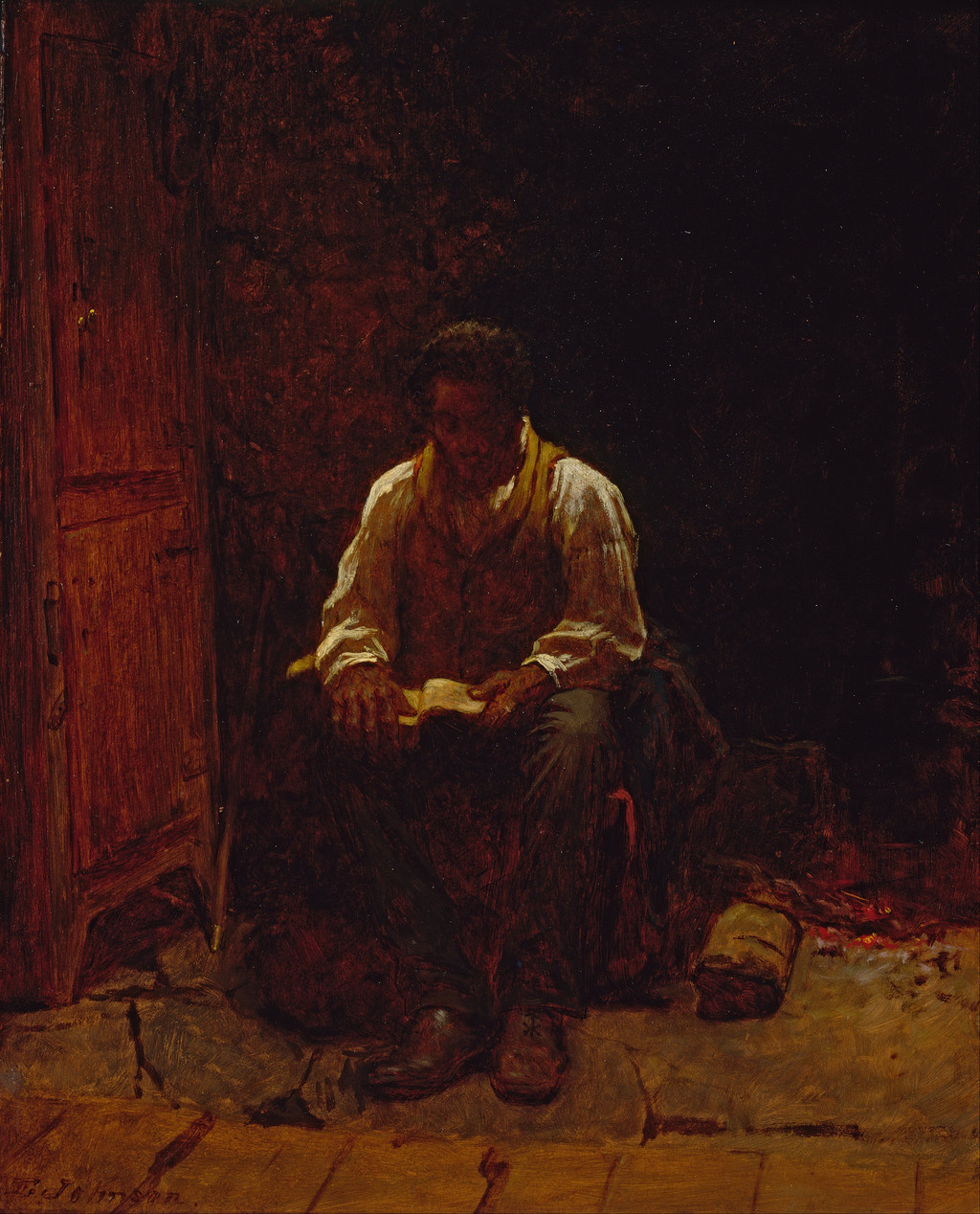
| The Lord Is My Shepherd | 1863 | Oil on fiberboard |
| Sugaring Off | About 1864–65; unfinished RISD canvas | Oil on canvas |
| The Wounded Drummer Boy (San Diego study) | About 1864–71; study, not the finished canvas | Oil on board |
| The Early Scholar | About 1865; NGA study | Oil on academy board on canvas |
| Fiddling His Way | 1866; Chrysler canvas | Oil on canvas |
| The Letter Home | 1867; Minneapolis drawing | Charcoal and graphite on paper |
| The Boyhood of Lincoln | 1868; Michigan canvas | Oil on canvas |
| The boyhood of Lincoln—An evening in the log hut (Prang after Johnson) | About 1868; separate reproductive print | Chromolithograph, W. Harring / L. Prang & Co., after Johnson |
| The Brown Family | 1869; NGA version | Oil on paper on canvas |
| The Hatch Family | 1870–71 | Oil on canvas |
| The Old Stagecoach | 1871 | Oil on canvas |
| The Girl I Left Behind Me | About 1872 | Oil on canvas |
| The Toilet | 1873 | Oil on paper board |
| Husking Bee, Island of Nantucket | 1876; Chicago canvas | Oil on canvas |
| The New Bonnet | 1876 | Oil on academy board |
| Sanford Robinson Gifford | 1880; possibly posthumous | Oil on academy board |
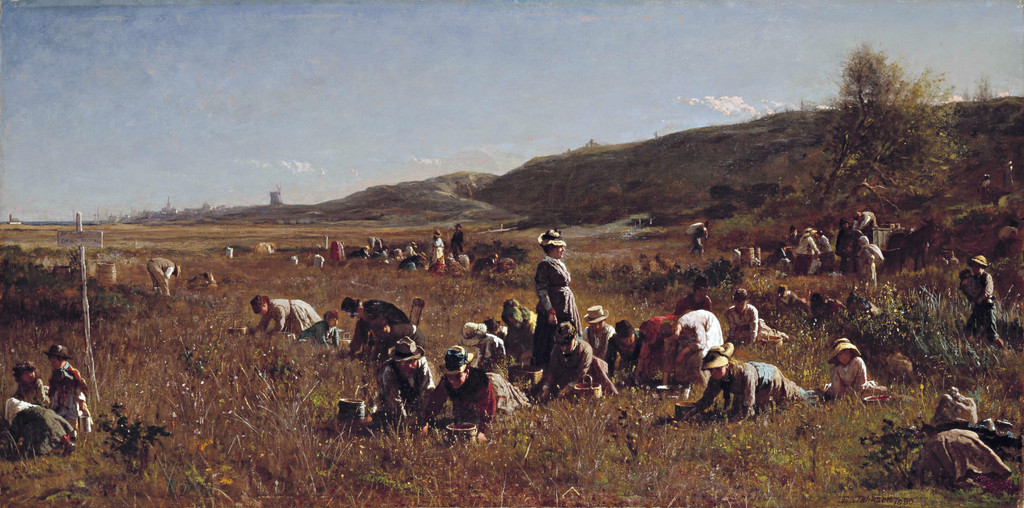
| The Cranberry Harvest, Island of Nantucket | 1880; Timken canvas | Oil on canvas |
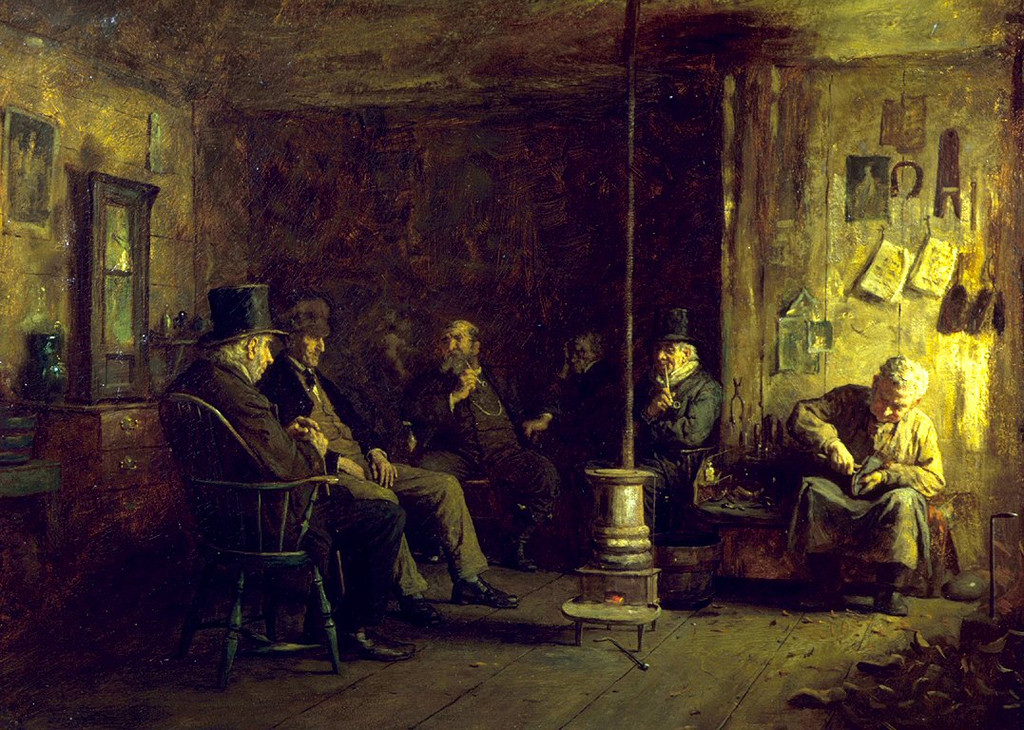
| The Nantucket School of Philosophy | 1887 | Oil on panel |
Frequently Asked Questions
It belongs to the Layton Art Collection at the Milwaukee Art Museum, accession L1888.22, with the credit Gift of Frederick Layton. [1]
The museum relates the coach’s name to colonial memory and the renewal of an inherited past. The connection is an interpretation of the painting, not a documented artist explanation of every detail. [1]
Discussion
Look again at the images and ideas explored in The Old Stagecoach by Eastman Johnson. These editorial prompts invite your observations.
Reader Insights
Follow the children around the vehicle. Which roles involve riding, watching, climbing or pulling?
How does the stationary coach create a feeling of travel despite its damaged condition?
Compare the sunny play with the guide’s more troubling interpretation. Which visible details sustain the tension?
Join the Conversation
Share a detail, comparison or question about The Old Stagecoach by Eastman Johnson below.
References
- Milwaukee Art Museum. The Old Stagecoach , 1871, L1888.22. Current object facts and curatorial interpretation; school objects, local models and Mayflower context. View source
- Patricia Hills and Abigael MacGibeny. Old Stage Coach , 1871, Hills no. 26.2.1. Eastman Johnson Catalogue Raisonné. Studio construction, transcribed 1870 letter, provenance, exhibitions and reported format reduction. Original letter, stereograph and expert correspondence were not directly consulted. View source
- Boyhood of Lincoln,1868,1895.90. View source
- The Brown Family, 1869, 1978.72.1. View source
- The Hatch Family, 1870–71, 26.97. View source
- The Girl I Left Behind Me, c.1872, 1986.79. View source
- The Toilet, 1873, 2015.19.85. View source
- Husking Bee, Island of Nantucket, 1876, 1922.444: current public API. View source
- Milwaukee Art Museum. Eastman Johnson and a Nation Divided , 2017 gallery guide. Nostalgia, Civil War and Reconstruction readings, contemporary reception and participation. Historical reviews are consulted through this guide. View source
- Splash image source.
Eastman Johnson, The Old Stagecoach, 1871. Oil on canvas, 92.08 × 152.72 cm. Layton Art Collection, Milwaukee Art Museum, Gift of Frederick Layton, L1888.22. Public domain faithful reproduction. Public domain .
View source