 by
Tom Gurney
Tom Gurney BSc (Hons) is an art history expert with over 20 years experience
Email:
tomgurney1@gmail.com
/ Phone:
+44 7429 011000
The Lord Is My Shepherd by Eastman Johnson: Introduction
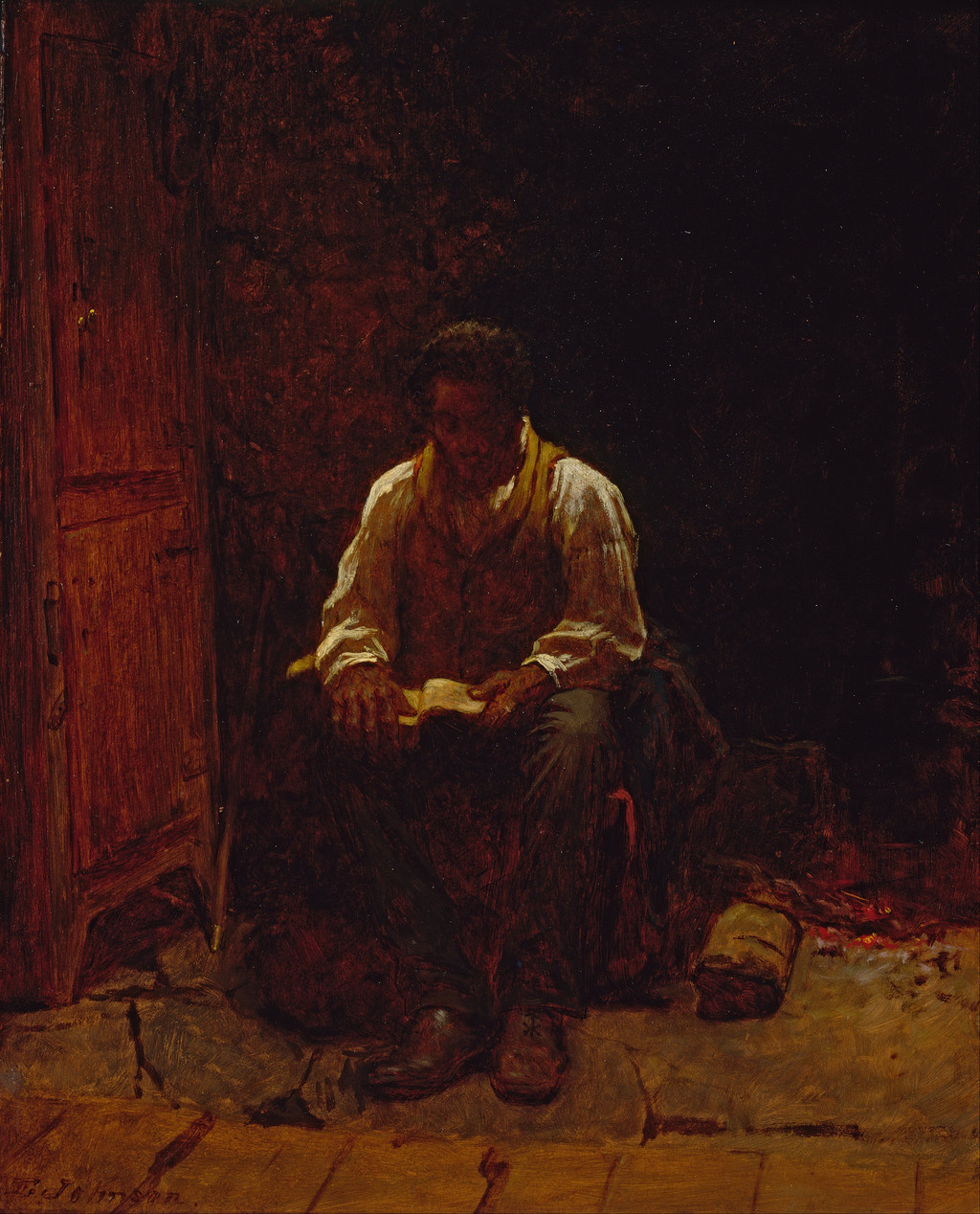
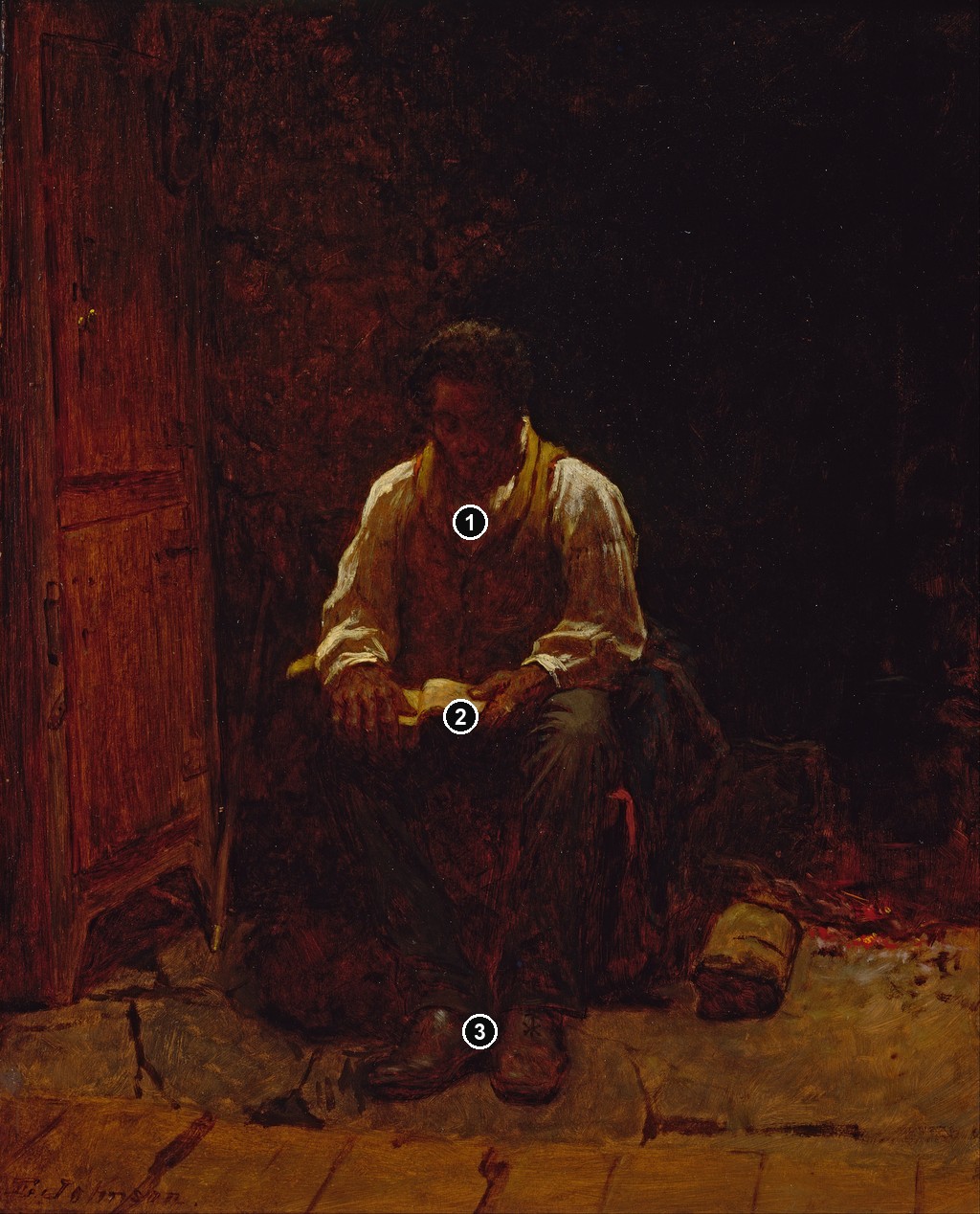
An older man sits beside a hearth, his head bent towards an open book. His pale sleeves catch the light, while his waistcoat, trousers and much of the room remain dark. Eastman Johnson gives the act of reading a small, concentrated space within a largely shadowed interior.
The Lord Is My Shepherd dates from 1863 and belongs to the Smithsonian American Art Museum. Its quiet subject has a substantial historical charge: the museum interprets the Black reader through the relationship between emancipation, education and citizenship. The painting invites close attention to an individual whose name and personal history are not established by the consulted records. [1]
At a Glance
- Artist Eastman Johnson
- Title The Lord Is My Shepherd
- Date 1863
- Medium Oil on fiberboard
- Dimensions 42.3 × 33.2 cm
- Collection Smithsonian American Art Museum
- Accession 1979.5.13
- Credit Gift of Mrs. Francis P. Garvan; transfer from the National Museum of American History, Smithsonian Institution
The current museum record supplies the date and dimensions above. The catalogue raisonné gives the broader date c. 1862–63 and slightly different measurements for the same object. [1] [2]
This work across Eastman Johnson’s career
Kitchen at Mount Vernon
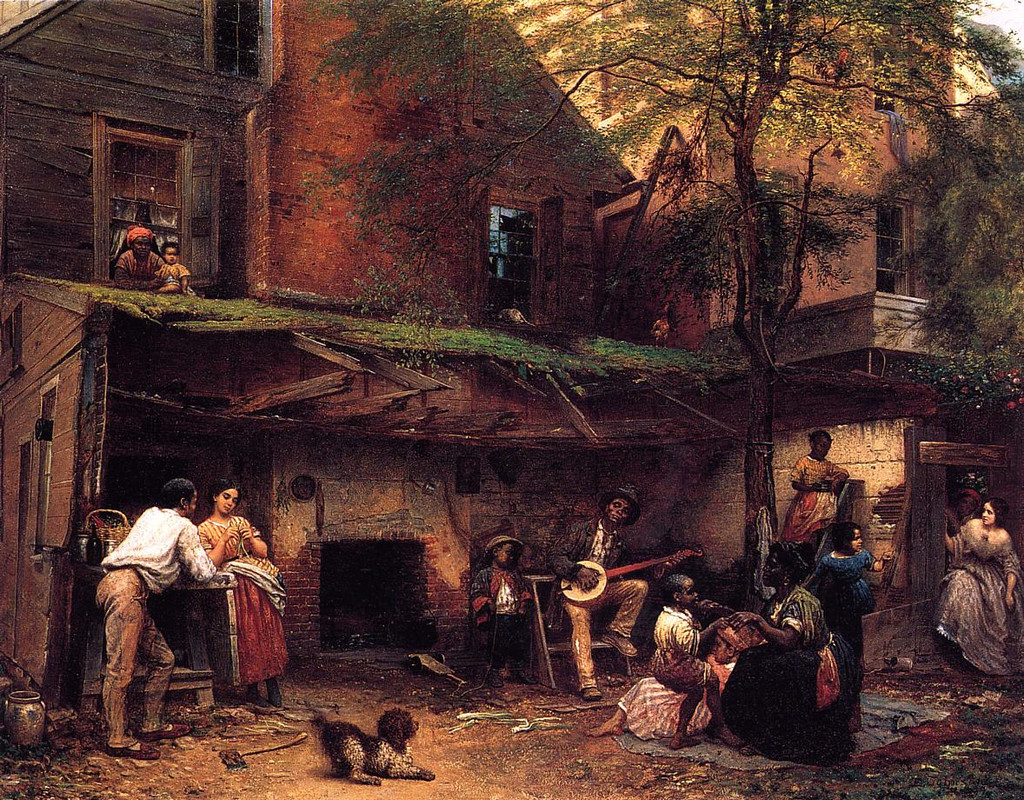
1857; Charles Butt canvasNegro Life at the South
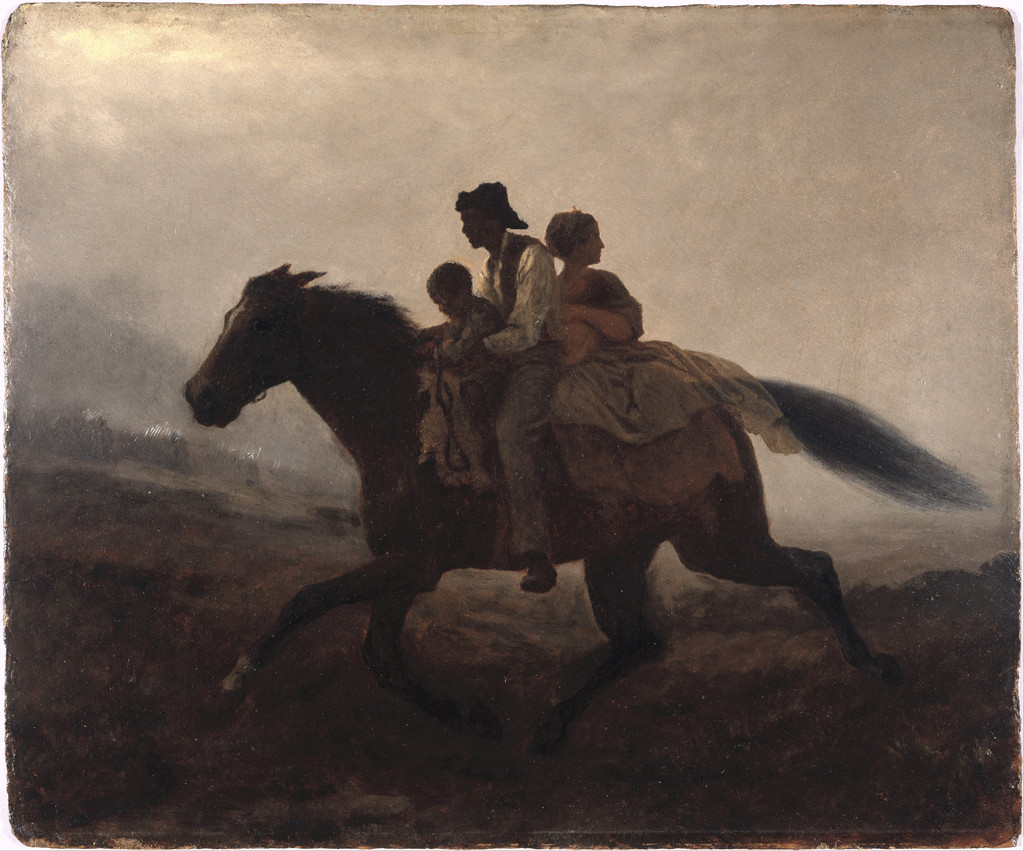
1859; New York Historical originalA Ride for Liberty—The Fugitive Slaves
About 1862; Brooklyn versionSugaring Off
About 1864–65; unfinished RISD canvasThe Wounded Drummer Boy (San Diego study)
About 1864–71; study, not the finished canvasThe Early Scholar
About 1865; NGA studyNotes and sources
Kitchen at Mount Vernon. A large hearth and worn architecture surround a small family group. [3]
Negro Life at the South. A Washington yard brings everyday encounters into the contested setting of slavery. [4]
A Ride for Liberty—The Fugitive Slaves. A family’s movement towards freedom carries the whole composition. [5]
The Lord Is My Shepherd (current article). A lowered head and open book concentrate attention within a dark room. [1]
Sugaring Off. Unfinished passages reveal the preparation of an ambitious gathering around maple-sugar production. [6]
The Wounded Drummer Boy (San Diego study). Soldier and drummer form a single upright group; this study has its own object history. [7]
The Early Scholar. A child’s position beside a stove turns the need for warmth into the centre of a schoolroom. [8]
Contents
- Hands, book and lowered head
- The room around the reader
- Reading in 1863
- Piety without a complete biography
- The related Chimney Corner
- Collecting and later interpretation
- Annotated details
Hands, book and lowered head
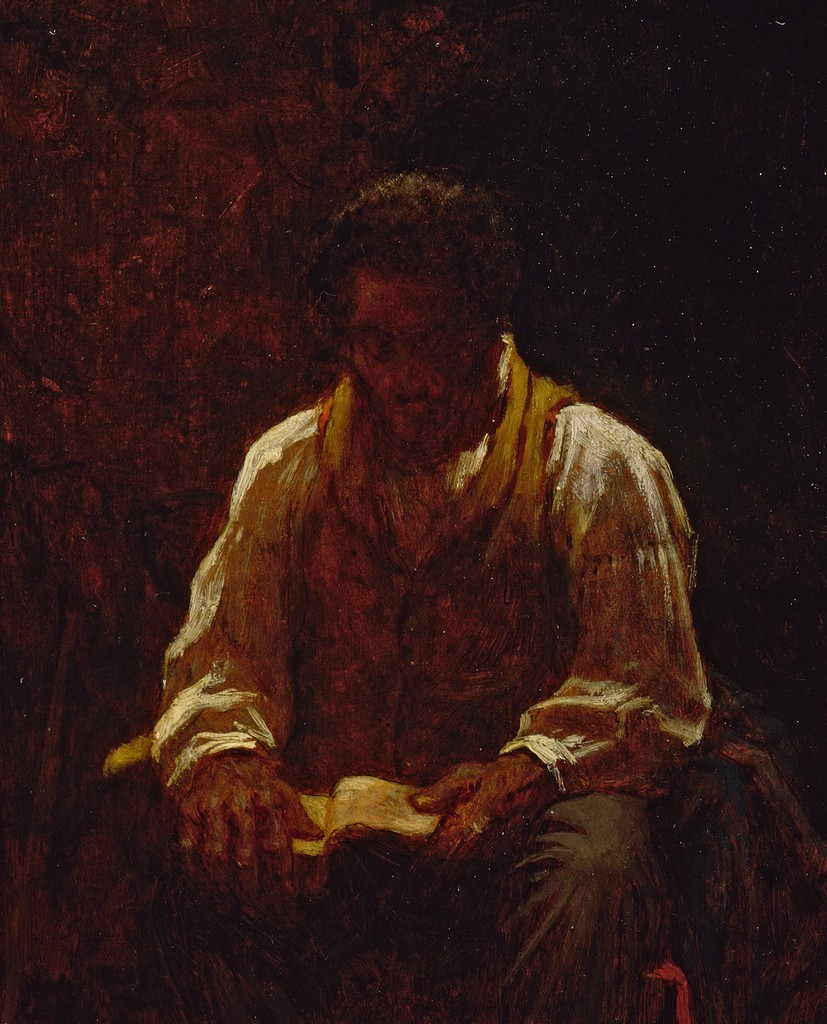
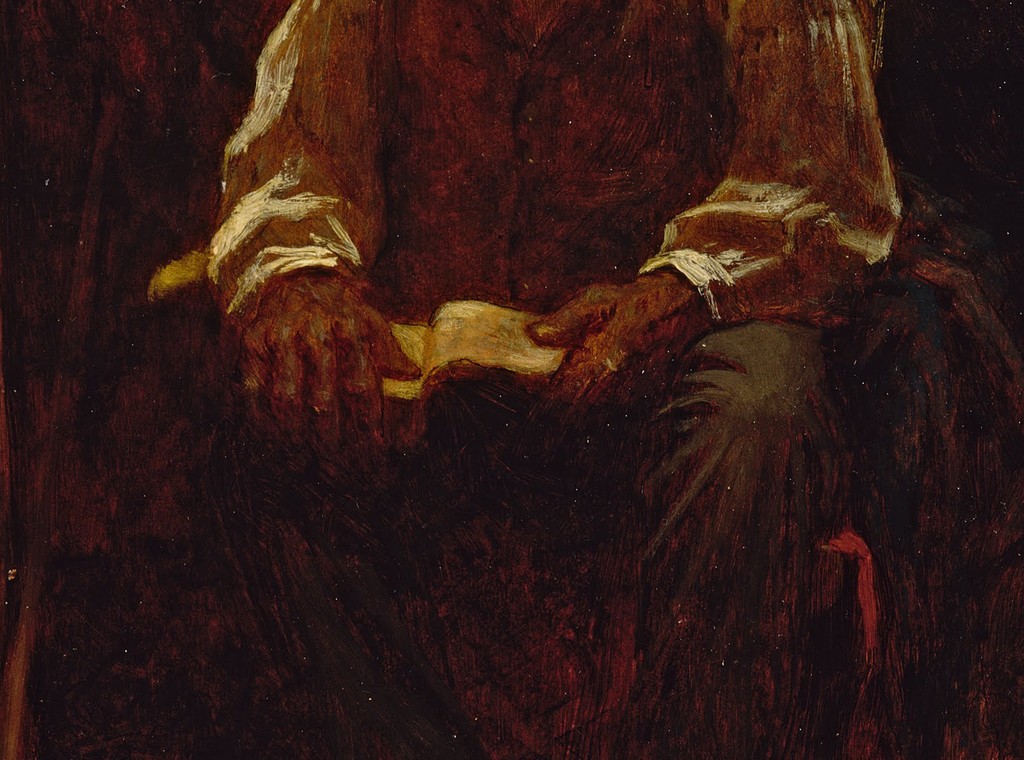
The book rests close to the reader’s knees. His hands hold it open, while the head bends towards the pages. These three elements establish a compact area of activity near the centre of the painting. Johnson does not need a large gesture to make attention visible.
The sleeves help articulate the pose. Their pale folds emerge from the dark clothing and room, drawing the eye down towards the hands. The pages provide another small patch of light. The reader’s face remains less clearly illuminated, so the act of looking matters more than a fully displayed expression.
This is a different kind of encounter from a formal portrait. The man does not turn towards an audience or present an object for inspection. The viewer comes upon an activity that appears to be continuing independently. His apparent unawareness gives the scene intimacy, while also reminding us that we are looking at someone whose thoughts are unavailable.
The title and the museum’s interpretation identify a devotional reading. They do not establish which passage is open on the painted pages. Nor can the small reproduction supply legible text. The image communicates reading through the relation between body and book, rather than through words the viewer can decipher.
Annotated Details from The Lord Is My Shepherd
The numbered points identify visible features discussed in this article. Return from each detail to the whole composition. Eastman Johnson, The Lord Is My Shepherd, 1863. Oil on fiberboard, 42.3 × 33.2 cm. Smithsonian American Art Museum, Gift of Mrs. Francis P. Garvan; transfer from the National Museum of American History, Smithsonian Institution, 1979.5.13. Public domain. Image source. Public domain. Numbers added to a separate overview; detail images are native crops. No recolouring, retouching, reconstruction or enlargement.
Details from THE LORD IS MY SHEPHERD
Compare the cropped details with the complete images above. Notice how their colours, shapes and positions contribute to the larger compositions.
Lowered head and pale sleeves
The reader’s head inclines towards the book while his pale sleeves emerge from the dark room. The uneven light keeps the face and upper body concentrated around the act of reading.
Hands around the open book
The open pages form a small light shape between the hands. They connect the downward direction of the head with the figure’s lap without revealing a legible passage of text.
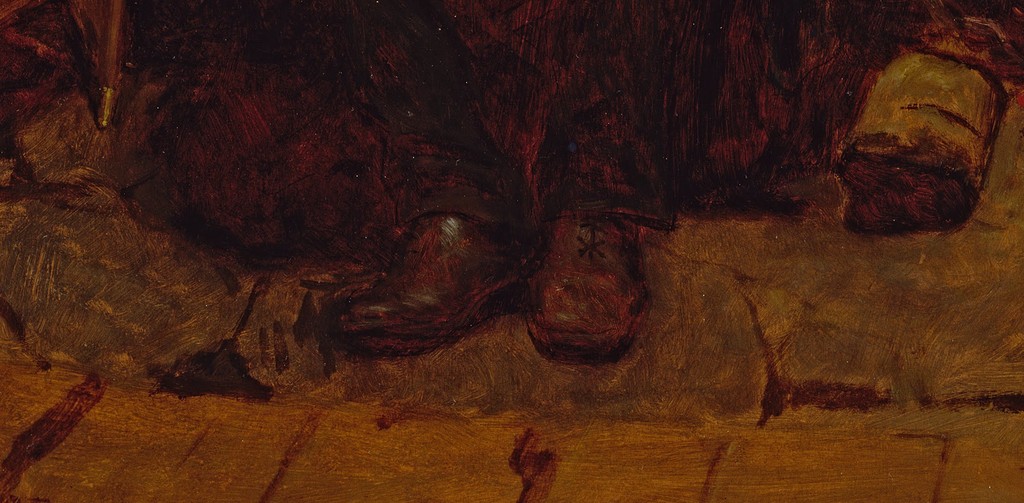
Shoes, floor and surrounding shadow
The worn shoes meet the lightened floor beneath the seated figure. Broad dark areas hold the legs together, while the edge of the hearth and nearby objects mark the room’s boundaries.
The room around the reader
A closed door occupies the left edge, with a long folded umbrella-like object resting nearby. At the right, the hearth contains pale ash and a small glow among the fuel. Floorboards extend towards the man’s boots, grounding the figure in a tangible, modest room.
The setting makes reading part of ordinary domestic life. The hearth offers warmth; the chair supports a body at rest; the door implies another space beyond the room. Johnson provides enough detail to establish use without turning the surroundings into an inventory of possessions.
The upright door also helps hold the seated figure in place. Its large rectangle balances the irregular shapes of the hearth at the opposite side. Between them, the man’s bent body forms a lower, rounded concentration. Architecture and furniture give stillness a clear structure.
The darkness should not be mistaken for an absence of pictorial activity. Brown and reddish passages allow some surfaces to emerge while others recede. The small areas of light gain emphasis because they occupy so little of the composition. The open book becomes consequential within that limited illumination.
Reading in 1863
The museum’s 2006 exhibition label connects the picture’s date with the Emancipation Proclamation and the expectations placed on newly freed people. It interprets the reader as an image of education and responsibility, reassuring to white viewers uncertain about emancipation. That is an account of the picture’s public meaning, rather than an identified biography of the model. [1]
The legal restrictions imposed on Black literacy under slavery give reading a significance beyond private leisure. Their precise form varied by place and circumstance; the broad statement in an exhibition label should not be treated as a complete account of every Southern jurisdiction. The painting itself cannot tell us where this man learned to read or what obstacles he encountered.
Patricia Hills similarly considers the reader through changing expectations surrounding freedom and citizenship. She argues that an image of a pious man studying a Bible could make Black literacy acceptable within a familiar domestic and religious setting. Her interpretation draws attention to the demands of a white audience as well as to the dignity accorded the figure. [9]
That reading contains a tension. The man’s concentration gives him an interior life independent of the viewer, yet the picture could also be judged by whether he met another group’s expectations of proper behaviour. Recognising his intelligence and asking whether the image reassured an audience are related but distinct ways of looking.
The year does not settle the man’s legal status. It would be misleading to assume that every Black person was freed by the proclamation, or that a dated painting identifies its model as a particular newly emancipated person. The strongest evidence here concerns the represented activity and its historical interpretation, not a recovered individual life story.
Piety without a complete biography
The devotional title gives the book a religious frame before the viewer has examined a single painted page. The hearth and restrained pose reinforce the mood of inwardness. These features make the painting readily legible as an image of faith, but they do not provide direct access to the sitter’s beliefs.
This distinction matters because an anonymous subject can otherwise become only an illustration of an idea. Johnson gives the man a body, clothing, hands and a sustained action. The historical interpretation should illuminate those choices without replacing him with a generic symbol of emancipation or obedience.
His age also contributes to the scene without yielding an exact history. The image makes learning visible in an older adult, rather than reserving it for a child at school. It does not tell us whether he is beginning to read, revisiting a familiar passage or following a lifelong habit.
In The Boyhood of Lincoln , a reader is identified through a famous future. Here, the title supplies a spiritual association rather than a name. The comparison brings out how differently Johnson’s quiet interiors can connect an act of reading with public ideas about character.
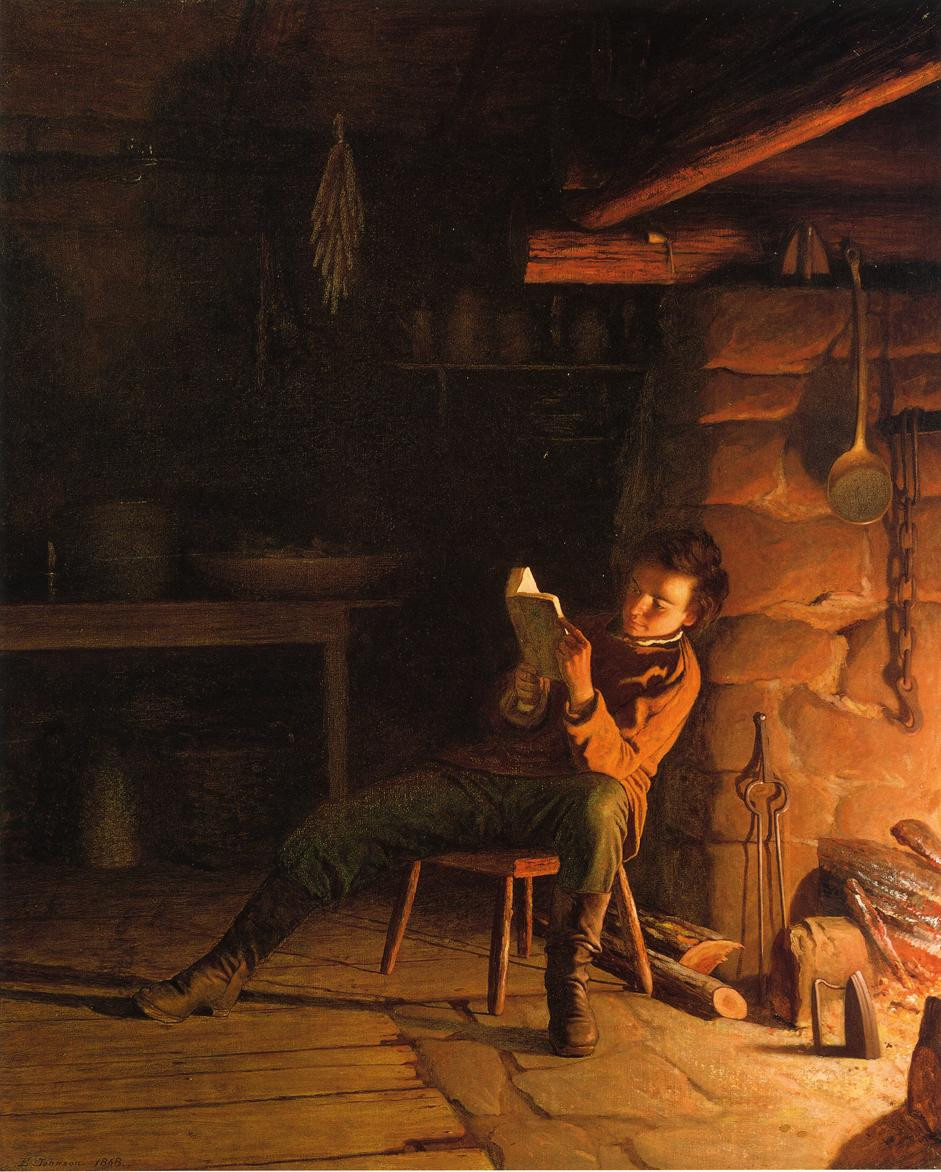
Eastman Johnson, The Boyhood of Lincoln, 1868. Oil on canvas, 117.95 × 94.62 cm. University of Michigan Museum of Art, Bequest of Henry C. Lewis, 1895.90. Public domain faithful reproduction via WikiArt.
Image source
.
Public domain
.
Watch: Eastman Johnson
Choose a film to explore the artist’s work, its interpretation and its wider setting.
Director's Choice - The Girl I Left Behind Me by Eastman Johnson
The Smithsonian American Art Museum looks at Johnson’s The Girl I Left Behind Me.
Watch on YouTubeThe related Chimney Corner
Hills compares The Lord Is My Shepherd with The Chimney Corner , an 1863 painting associated with the Munson collection in Utica. The museum’s own educational material treats that work separately. A related scene and a close compositional resemblance do not make the two paintings one object. [9] [10]
Keeping the titles distinct is especially useful when consulting older illustrations or interpretations. A discussion of a reader beside a hearth may concern one version while a modern reproduction shows another. Ownership, support and dimensions must follow the exact work being described, rather than whichever title a writer uses most casually.
The current Smithsonian record specifies fiberboard for the illustrated painting. That is an object-specific identification, not a reason to describe every Johnson interior as a painting on board. Likewise, no technical examination of this particular work was consulted that would justify identifying a pigment mixture from its dark appearance.
The room also relates to Johnson’s wider interest in domestic interiors. The catalogue notes a resemblance to The New England Kitchen . That connection places the reader within a recurring spatial vocabulary without proving that the painted room was his home or identifying a precise address. [2]
Collecting and later interpretation
The catalogue records Francis P. Garvan as the owner by 1937 and later lists the painting with his estate and Mrs. Garvan. The Smithsonian’s current credit combines the gift with its transfer from the National Museum of American History. These records establish later collecting history while leaving the painting’s earliest ownership incompletely documented in the sources used here. [1] [2]
The work appeared in Eastman Johnson: Painting America in 1999–2000 and in The Civil War and American Art in 2012–13. Those exhibitions placed the small interior within broader discussions of race, national life and the war’s effects on representation. The painting’s scale did not prevent it from carrying questions extending well beyond the room. [2]
Its most immediate effect remains the reader’s concentration. In The Early Scholar , Johnson also makes a largely private act visible through posture and light. Here, the historical setting changes what that concentration could mean to an audience. A book held on a lap becomes both an ordinary possession in a room and a point of entry into the contested promises of freedom.
Artworks directory
Browse twenty-one selected objects discussed in these articles, including the Gifford portrait and the Prang print after Johnson. Dates identify individual objects, including the San Diego Drummer Boy study. Use All media to include the chromolithograph.
| Name | Date | Medium |
|---|---|---|
| Kitchen at Mount Vernon | 1857; Charles Butt canvas | Oil on canvas |
| Negro Life at the South | 1859; New York Historical original | Oil on linen |
| A Ride for Liberty—The Fugitive Slaves | About 1862; Brooklyn version | Oil on paperboard |
| The Lord Is My Shepherd | 1863 | Oil on fiberboard |
| Sugaring Off | About 1864–65; unfinished RISD canvas | Oil on canvas |
| The Wounded Drummer Boy (San Diego study) | About 1864–71; study, not the finished canvas | Oil on board |
| The Early Scholar | About 1865; NGA study | Oil on academy board on canvas |
| Fiddling His Way | 1866; Chrysler canvas | Oil on canvas |
| The Letter Home | 1867; Minneapolis drawing | Charcoal and graphite on paper |
| The Boyhood of Lincoln | 1868; Michigan canvas | Oil on canvas |
| The boyhood of Lincoln—An evening in the log hut (Prang after Johnson) | About 1868; separate reproductive print | Chromolithograph, W. Harring / L. Prang & Co., after Johnson |
| The Brown Family | 1869; NGA version | Oil on paper on canvas |
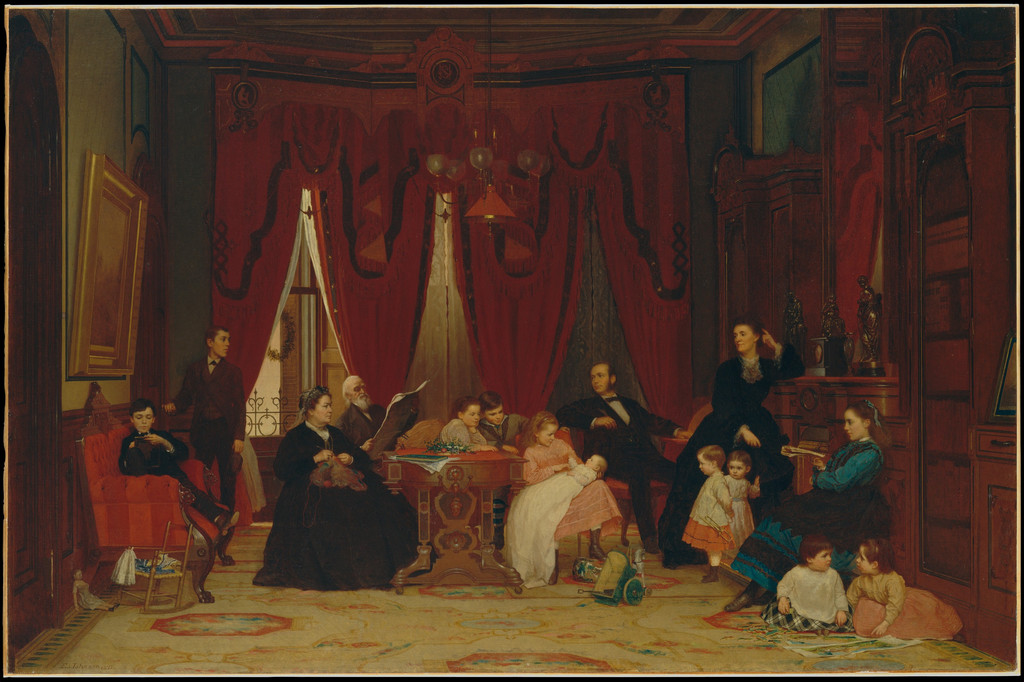
| The Hatch Family | 1870–71 | Oil on canvas |
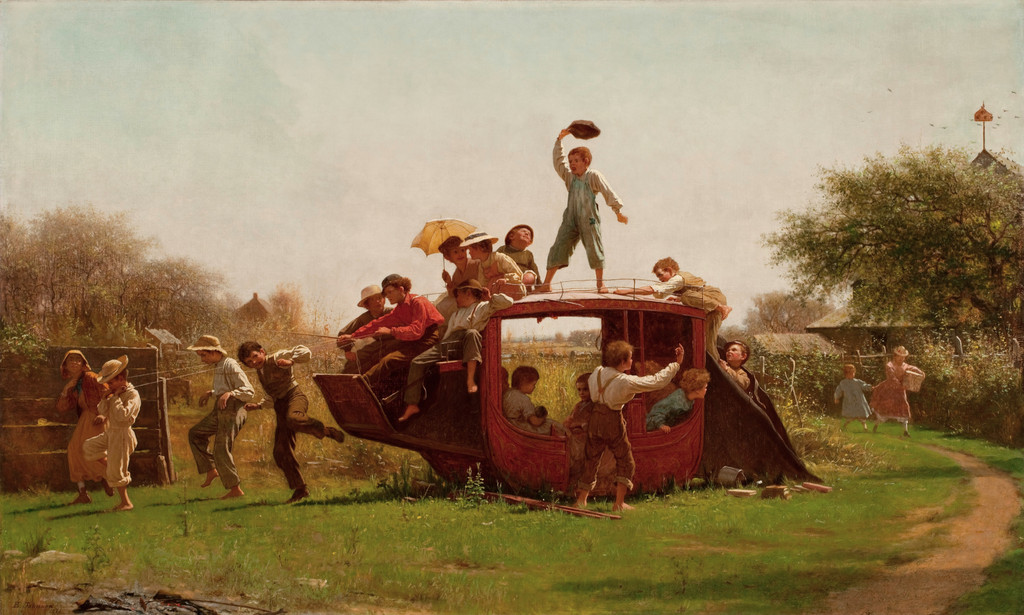
| The Old Stagecoach | 1871 | Oil on canvas |
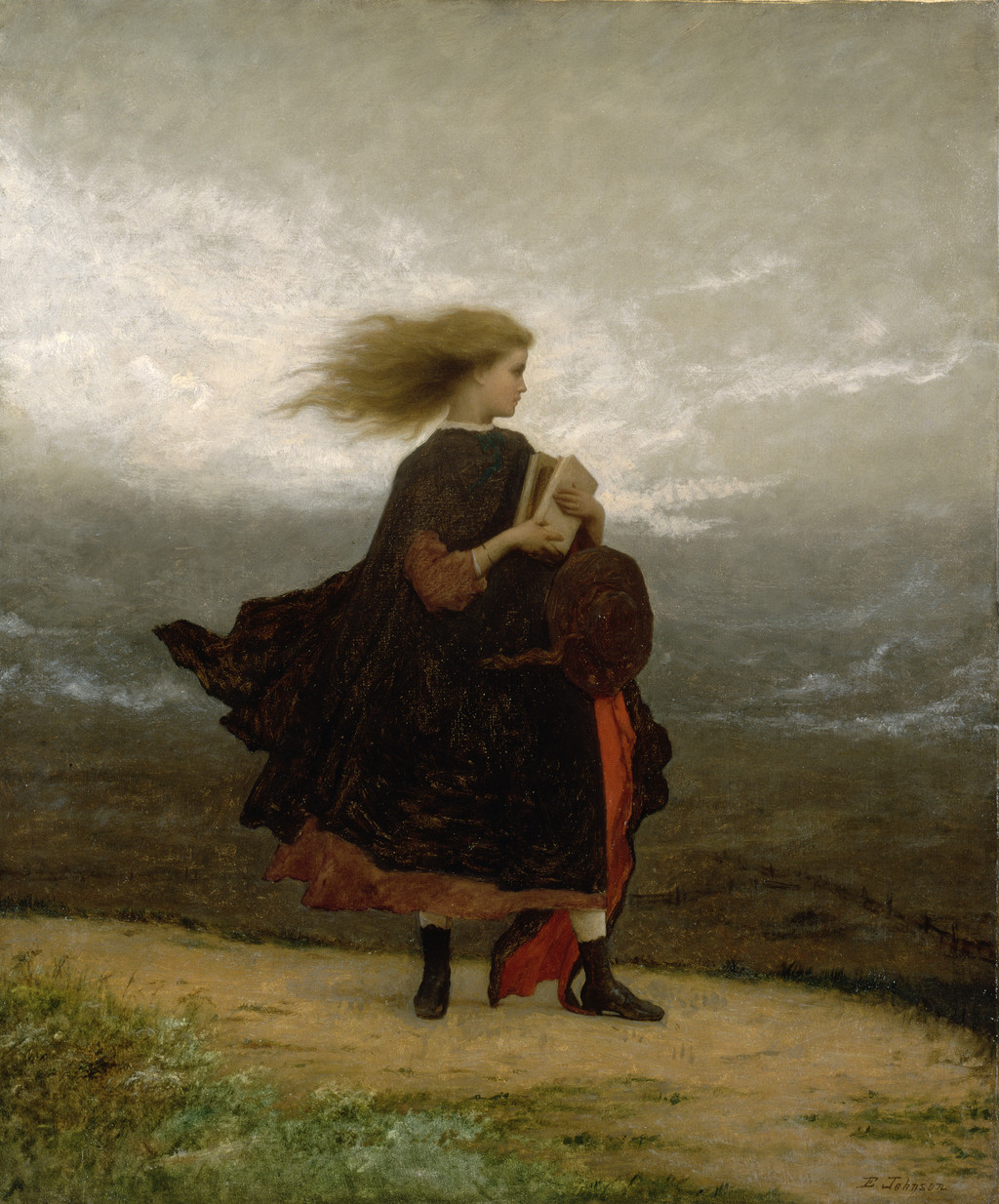
| The Girl I Left Behind Me | About 1872 | Oil on canvas |
| The Toilet | 1873 | Oil on paper board |
| Husking Bee, Island of Nantucket | 1876; Chicago canvas | Oil on canvas |
| The New Bonnet | 1876 | Oil on academy board |
| Sanford Robinson Gifford | 1880; possibly posthumous | Oil on academy board |
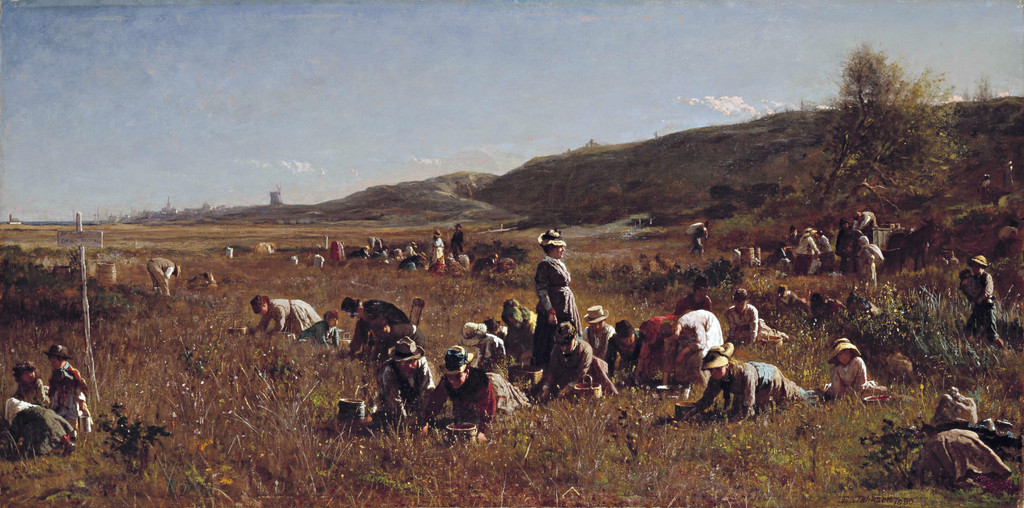
| The Cranberry Harvest, Island of Nantucket | 1880; Timken canvas | Oil on canvas |
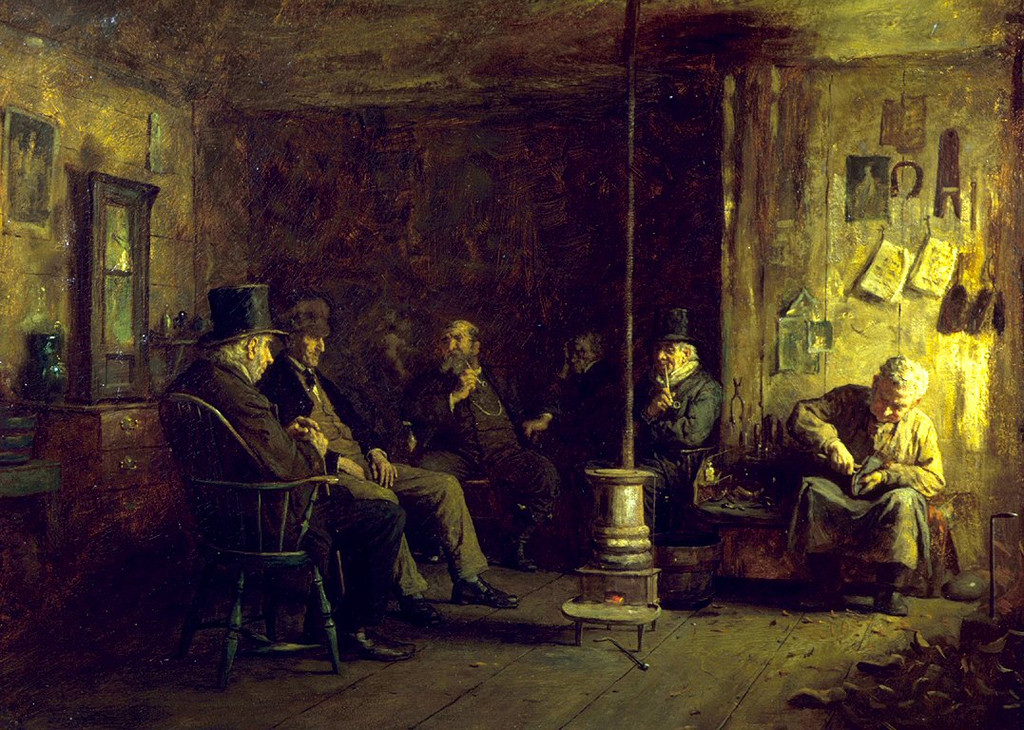
| The Nantucket School of Philosophy | 1887 | Oil on panel |
Frequently Asked Questions
It belongs to the Smithsonian American Art Museum, accession 1979.5.13. Its current record gives oil on fiberboard, 42.3 × 33.2 cm. [1]
The title supplies a devotional association, but the painted page does not establish a legible passage in the reproduction.
Discussion
Look again at the images and ideas explored in The Lord Is My Shepherd by Eastman Johnson. These editorial prompts invite your observations.
Reader Insights
How do the hands, book and pale sleeves establish the reader’s concentration within the dark room?
What changes when you compare this unnamed adult reader with the imagined young Lincoln?
How does the domestic setting support the literacy interpretation without supplying a complete biography?
Join the Conversation
Share a detail, comparison or question about The Lord Is My Shepherd by Eastman Johnson below.
References
- Smithsonian American Art Museum , The Lord Is My Shepherd, 1979.5.13. Current object fields, credit and 2006 exhibition interpretation; broad historical statements in the label are qualified in the text. View source
- Patricia Hills and Abigael MacGibeny , The Lord Is My Shepherd, c. 1862–63, Hills no. 9.1.1, Eastman Johnson Catalogue Raisonné. Exact object identity, later provenance, room comparison and exhibitions; current owning-museum date and measurements take precedence. View source
- Washington’s Kitchen at Mount Vernon,1857,Hills6.0.4. View source
- Negro Life at the South,1859,S-225. View source
- A Ride for Liberty–The Fugitive Slaves, Brooklyn version, Hills 10.0.11r. View source
- Sugaring Off, ca.1864–1865, 45.050. View source
- Wounded Drummer Boy, San Diego study, Hills 10.0.18. View source
- The Early Scholar,c.1865,1963.10.157: current object record. View source
- Patricia Hills , Painting Race: Eastman Johnson’s Pictures of Slaves, Ex-Slaves, and Freedmen, in Eastman Johnson: Painting America, 1999, p. 140. Literacy, citizenship, domesticity and comparison with The Chimney Corner. The essay’s description of a cane is not adopted for the umbrella-like form visible in the supplied image. View source
- Munson , American History Lesson 3: The Chimney Corner. Institutional treatment of the separate Utica work. Its broad historical and older support claims are not transferred to the Smithsonian painting. View source
- Splash image source.
Eastman Johnson, The Lord Is My Shepherd, 1863. Oil on fiberboard, 42.3 × 33.2 cm. Smithsonian American Art Museum, Gift of Mrs. Francis P. Garvan; transfer from the National Museum of American History, Smithsonian Institution, 1979.5.13. Public domain. Public domain .
View source