 by
Tom Gurney
Tom Gurney BSc (Hons) is an art history expert with over 20 years experience
Email:
tomgurney1@gmail.com
/ Phone:
+44 7429 011000
The Early Scholar by Eastman Johnson: Introduction
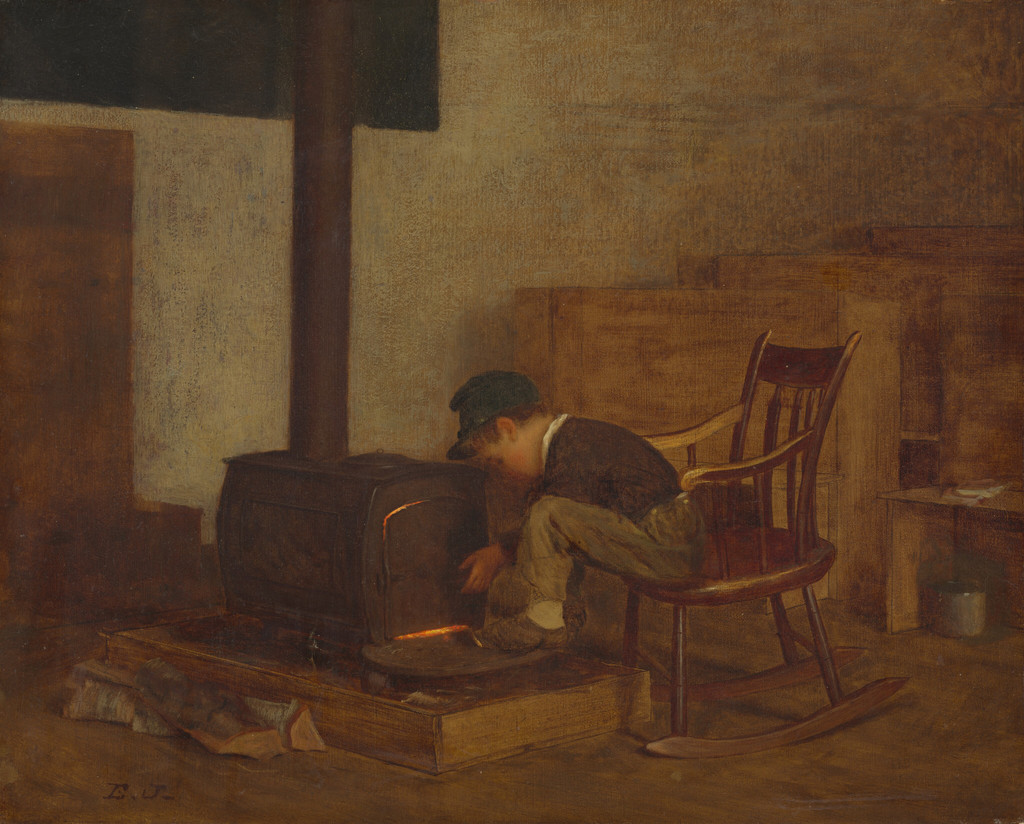
In Eastman Johnson’s The Early Scholar , the first task of the school day appears to be getting warm. A boy bends forward from a large rocking chair, bringing his hands and feet towards a stove. His dark cap almost merges with the brown room. The small orange glow beneath him gives this otherwise quiet interior its immediate point of interest.
The painting in the National Gallery of Art is a sketch dating from about 1865. Its open handling is part of its appeal: the room is established with economical blocks of tone, while the boy’s compressed pose provides the human incident. Other versions developed the subject differently, making the distinction between this small work and a later finished picture essential to its history. [1] [2]
At a Glance
- Artist Eastman Johnson
- Title The Early Scholar
- Date About 1865
- Medium Oil on academy board on canvas
- Dimensions 43.2 × 53.7 cm
- Collection National Gallery of Art, Washington
- Accession 1963.10.157
- Credit Chester Dale Collection
The object information follows the National Gallery of Art’s current record. [1]
This work across Eastman Johnson’s career
Sugaring Off
About 1864–65; unfinished RISD canvasThe Wounded Drummer Boy (San Diego study)
About 1864–71; study, not the finished canvasThe Early Scholar (current article)
About 1865; NGA studyFiddling His Way
1866; Chrysler canvasThe Letter Home
1867; Minneapolis drawingThe Boyhood of Lincoln
1868; Michigan canvasNotes and sources
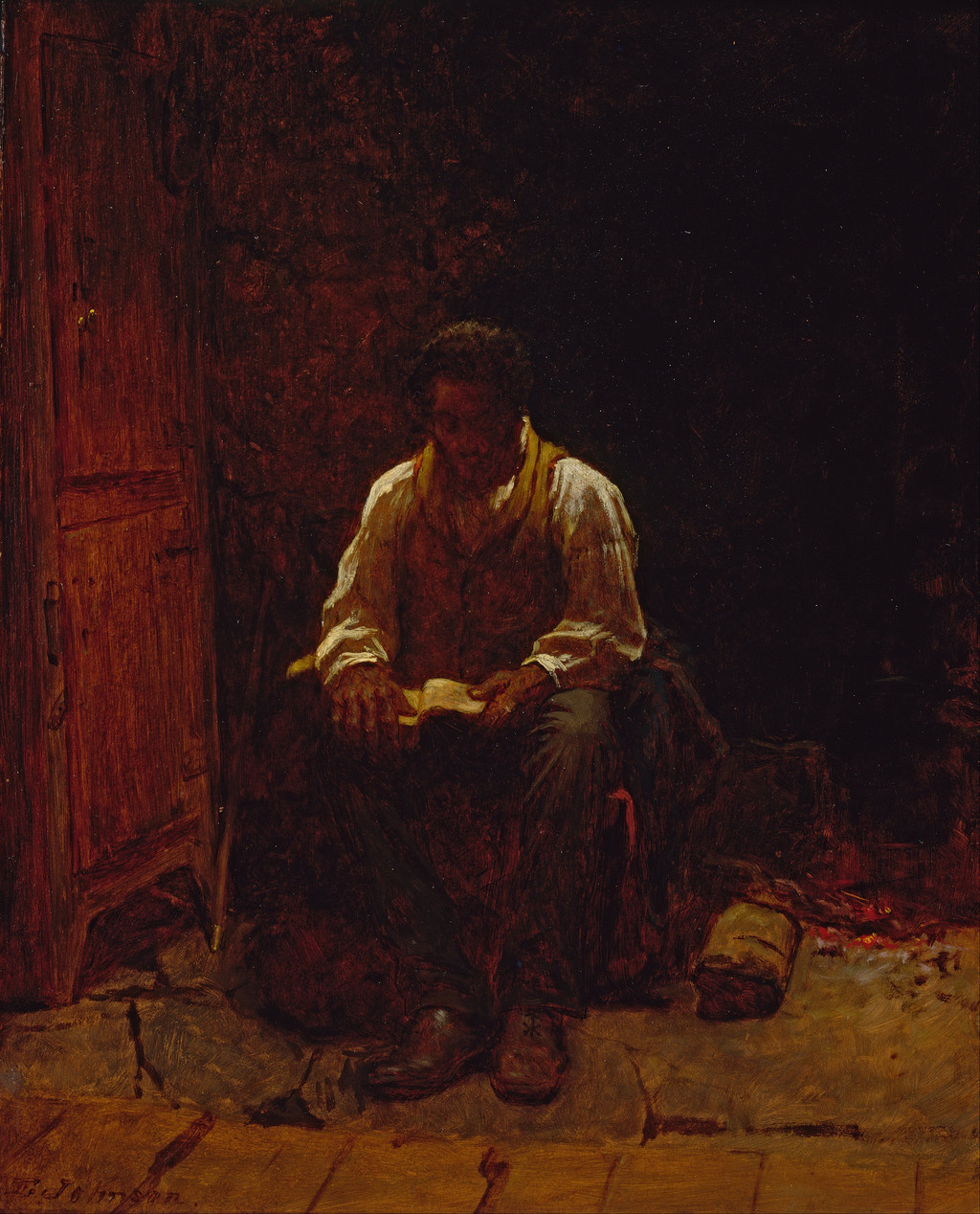
The Lord Is My Shepherd. A lowered head and open book concentrate attention within a dark room. [3]
Sugaring Off. Unfinished passages reveal the preparation of an ambitious gathering around maple-sugar production. [4]
The Wounded Drummer Boy (San Diego study). Soldier and drummer form a single upright group; this study has its own object history. [5]
The Early Scholar (current article). A child’s position beside a stove turns the need for warmth into the centre of a schoolroom. [1]
Fiddling His Way. A Black musician’s playing gathers the attention of a household. [6]
The Letter Home. A wounded man and a woman writing connect spoken words with an absent home. [7]
The Boyhood of Lincoln. Firelight makes an imagined scene of Lincoln reading into an image of aspiration. [8]
Contents
- A school day organised around warmth
- How Johnson builds the room
- A sketch and its other versions
- Brown preparation and visible process
- Schoolroom memory and the retained study
- From the studio to the National Gallery
- Annotated details
A school day organised around warmth
The boy is the only visible occupant. He leans so far forward that the rocking chair seems unusually large around him: its high back rises behind his shoulders, while its curved runners extend across the foreground. The chair’s generous outline and his folded body give the scene a slightly awkward intimacy. This is a person fitting himself to a useful patch of heat, rather than posing for a formal likeness.
Johnson places the stove to the left of centre, allowing its dark rectangular body to overlap the figure. The orange opening is very small in relation to the room, but its colour makes it conspicuous. Following that light leads the eye to the boy’s hands, then up towards his lowered head. A daily action supplies the composition with a clear sequence of attention.
The title introduces a second activity that the image keeps in reserve. We expect a scholar to read or write, yet this child’s immediate business is bodily comfort. The empty furniture at the right establishes a place where lessons might happen without competing with the foreground incident. The picture’s interest lies in that interval between arrival and study.
Nothing in the current museum identification supplies the child’s name or a particular school. The scene can be read as a carefully selected incident from schoolroom life without turning it into a record of one known pupil’s morning. Its familiarity comes from the action and setting, rather than a documented personal story. [1] [2]
Annotated Details from The Early Scholar
The numbered points identify visible features discussed in this article. Return from each detail to the whole composition. Eastman Johnson, The Early Scholar, about 1865. Oil on academy board on canvas, 43.2 × 53.7 cm. National Gallery of Art, Washington, Chester Dale Collection, 1963.10.157. Public domain. Image source. Public domain. Numbers added to a separate overview; detail images are native crops. No recolouring, retouching, reconstruction or enlargement.
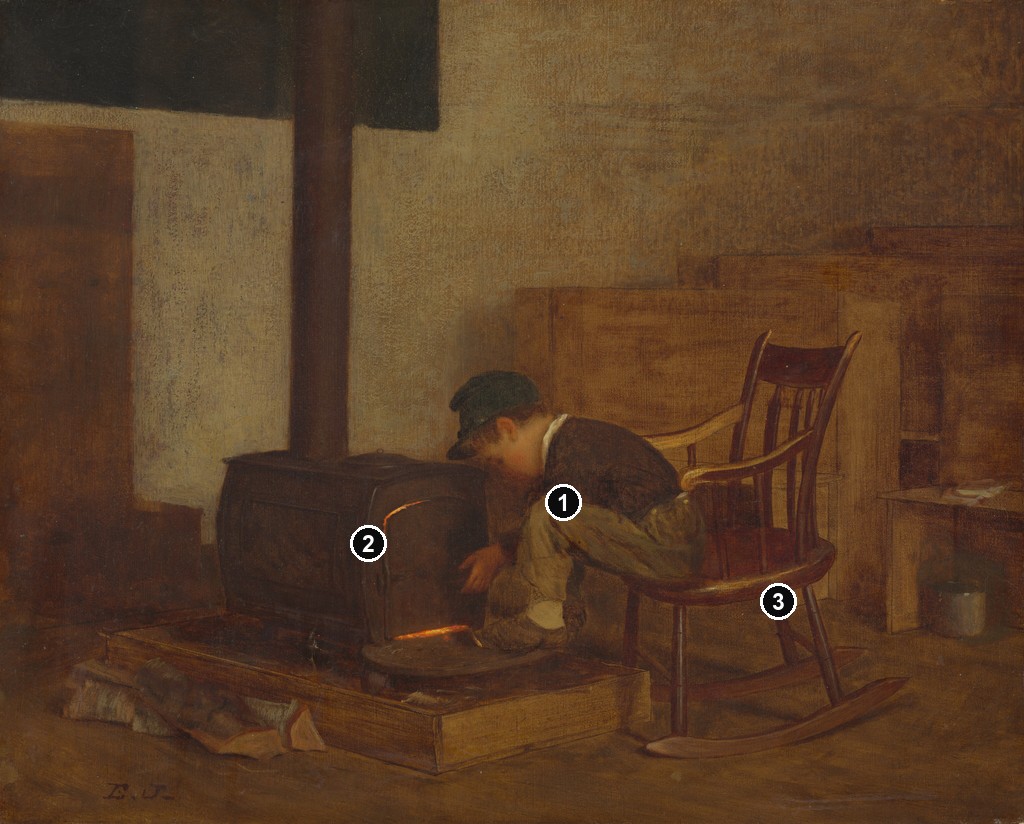
Details from THE EARLY SCHOLAR
Compare the cropped details with the complete images above. Notice how their colours, shapes and positions contribute to the larger compositions.
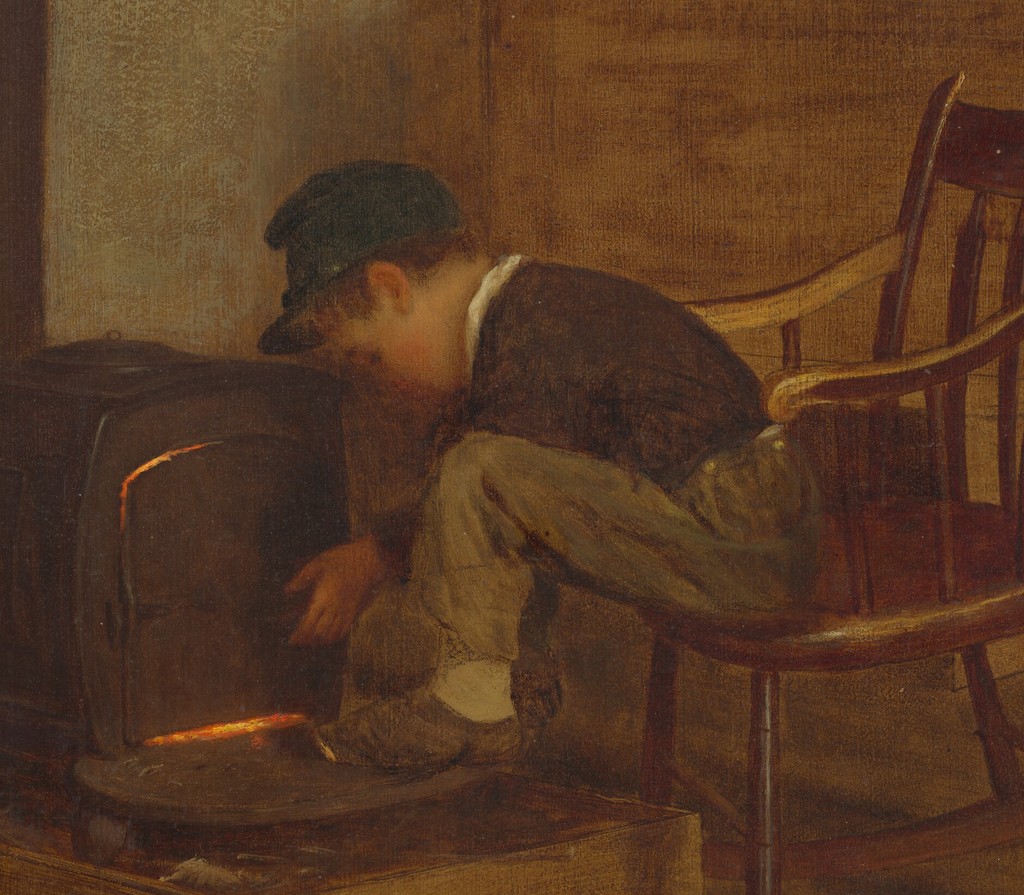
A body leaning towards warmth
The boy bends forward in the rocking chair, drawing his hands and feet towards the stove. His lowered head joins the curve of his back, making warmth the scene’s immediate concern.
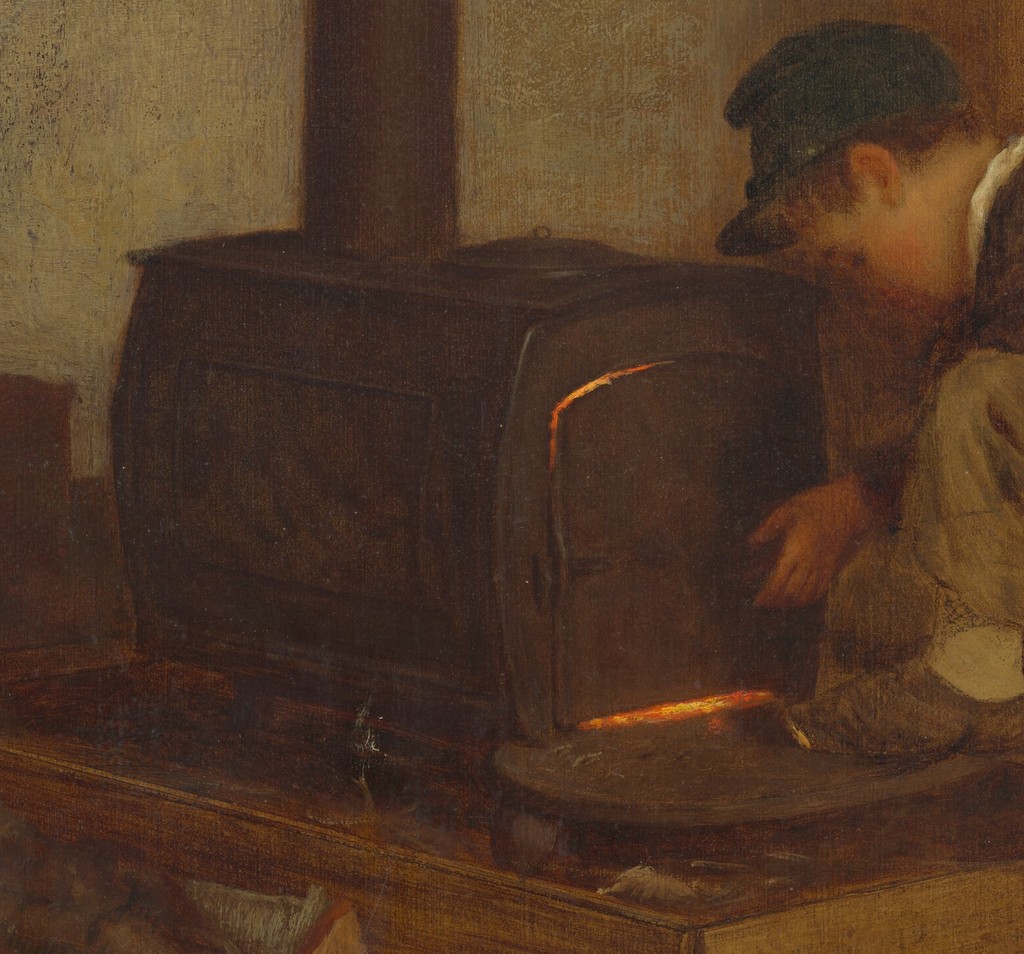
The stove and its small orange light
A narrow orange opening marks the stove within the otherwise brown room. Its small bright passages connect the dark iron box with the boy’s outstretched hands and feet.
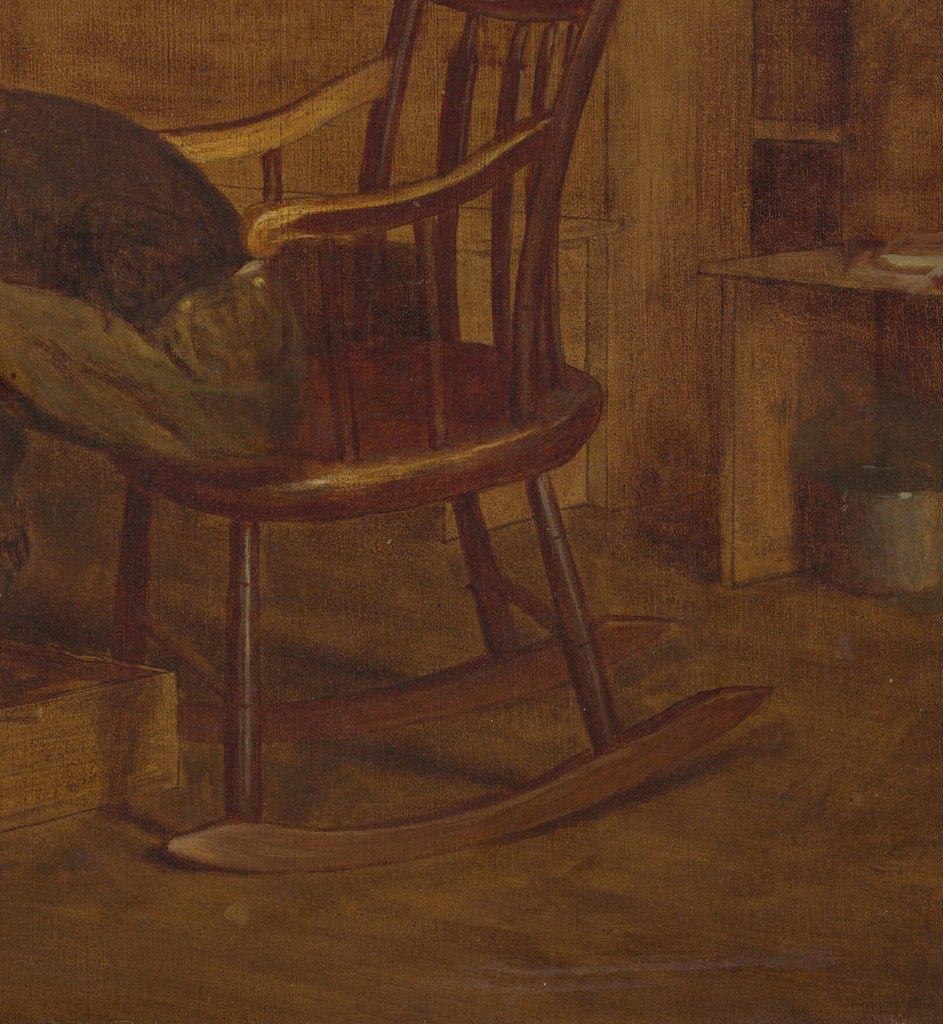
Chair, platform and surrounding room
The curved rocker and raised platform give the figure a firm position in the room. Their overlapping horizontal and curved edges contrast with the upright stove pipe and the wall behind.
How Johnson builds the room
Much of the interior consists of broad brown and buff areas. The wall, floor and furniture remain distinguishable, but Johnson does not give every surface equal definition. The boy, chair and stove gather the most consequential shapes into a compact group. Beyond them, the benches recede with a looser sense of completion.
The stove platform helps hold that group together. Its projecting edge forms a shallow stage beneath the boy’s feet, while the chair’s runners move across a different diagonal. These overlapping structures give the foreground weight. Higher up, the stove pipe and dark wall shapes introduce firmer verticals, balancing the body’s forward bend.
This uneven distribution of detail makes the work particularly useful for understanding Johnson’s method. A scene can become legible before all its objects receive a polished finish. The boy’s effort to reach the heat is already unmistakable; further description of every board or bench would change the picture’s surface, but would not be needed to explain its central action.
A sketch and its other versions
John Davis’s National Gallery catalogue entry distinguishes at least three versions of The Early Scholar . The Washington picture is the initialled sketch. A signed private version bears the date 1865, while a more finished version dated 1868 was described in the artist’s estate-sale records. These are separate objects within the development of one subject. [2]
That distinction matters when reading contemporary criticism. Davis associates the finished work with the 1868 National Academy of Design exhibition, where Johnson also showed The Boyhood of Lincoln . Comments about that exhibited picture cannot simply be transferred to the NGA sketch. Differences in accessories and finish help explain why a review may describe something that is not visible here. [2]
The comparison also broadens the subject beyond a single charming child. Johnson returned to the relationship between young people, interiors and concentration. In The Boyhood of Lincoln , reading becomes an exemplary activity associated with a future president. In this sketch, the child’s physical adjustment to the room comes first. The two subjects make different uses of the space between ordinary experience and an improving story.
Watch: Eastman Johnson
Choose a film to explore the artist’s work, its interpretation and its wider setting.
Director's Choice - The Girl I Left Behind Me by Eastman Johnson
The Smithsonian American Art Museum looks at Johnson’s The Girl I Left Behind Me.
Watch on YouTubeBrown preparation and visible process
The NGA’s published technical examination describes a thin cardboard support mounted on coarse fabric, with a buff ground and a transparent brown middle tone. Drawing and preliminary modelling remain visible beneath more opaque passages of light paint. These findings belong to the particular Washington object and help explain the unity of its restrained surface. [2]
Davis connects this approach with Thomas Couture, with whom Johnson studied in Paris. Establishing a composition through a middle tone allowed shadows and lights to develop in relation to an already organised whole. In The Early Scholar , the room’s shared brown atmosphere remains visible even where individual objects receive different degrees of attention. [2]
The catalogue also considers a possible transfer procedure in the development of Johnson’s compositions. That suggestion remains a hypothesis, rather than proof that every contour here was mechanically transferred. The useful evidence is more specific: the support, preparation, drawing and distribution of paint recorded for this work. Johnson’s broader working methods are explored on the technique page . [2]
The same technical entry records abrasion, inpainting and discoloured varnish. Those are observations published in 1996, not a statement that the painting’s condition has remained unchanged since then. They remind us that the appearance of an old sketch reflects both its original making and its later material history. [2]
Schoolroom memory and the retained study
Davis places Johnson’s subject within a wider interest in children, warmth and older schoolrooms. His comparison with Édouard Frère’s The Cold Day points towards a shared international vocabulary of small incidents and sympathetic observation. The relationship helps locate Johnson’s American scene within a larger field of genre painting. [2]
Such pictures could appeal through memories of austere schooling while education itself was changing. Their apparent simplicity therefore deserves attention: a familiar stove and a solitary pupil could make an earlier way of life feel immediate. This does not mean that the image documents a universal childhood experience. It selects one comprehensible encounter between a body and a room. [2]
The sketch also belongs to the history of Johnson’s retained working pictures. A studio photograph published in Edgar French’s 1906 account shows paintings and studies gathered around the artist’s workspace; the NGA catalogue identifies The Early Scholar on the left wall. Its presence there offers a useful contrast with the public career of the more finished version. [9] [2]
From the studio to the National Gallery
The NGA record traces the work through F. Reside’s ownership and the 1931 estate sale at Silo’s to Chester Dale. It entered the National Gallery through Dale’s 1963 bequest. Its later museum history has made an economical working picture available for sustained examination alongside Johnson’s more elaborate compositions. [1]
The contrast with The Brown Family is especially revealing. Both organise figures within an interior, but the family group distributes attention among several people and carefully differentiated furnishings. The Early Scholar concentrates its effect into the meeting of chair, child and stove. Its limited action is enough to make the room feel occupied.
Artworks directory
Browse twenty-one selected objects discussed in these articles, including the Gifford portrait and the Prang print after Johnson. Dates identify individual objects, including the San Diego Drummer Boy study. Use All media to include the chromolithograph.
| Name | Date | Medium |
|---|---|---|
| Kitchen at Mount Vernon | 1857; Charles Butt canvas | Oil on canvas |
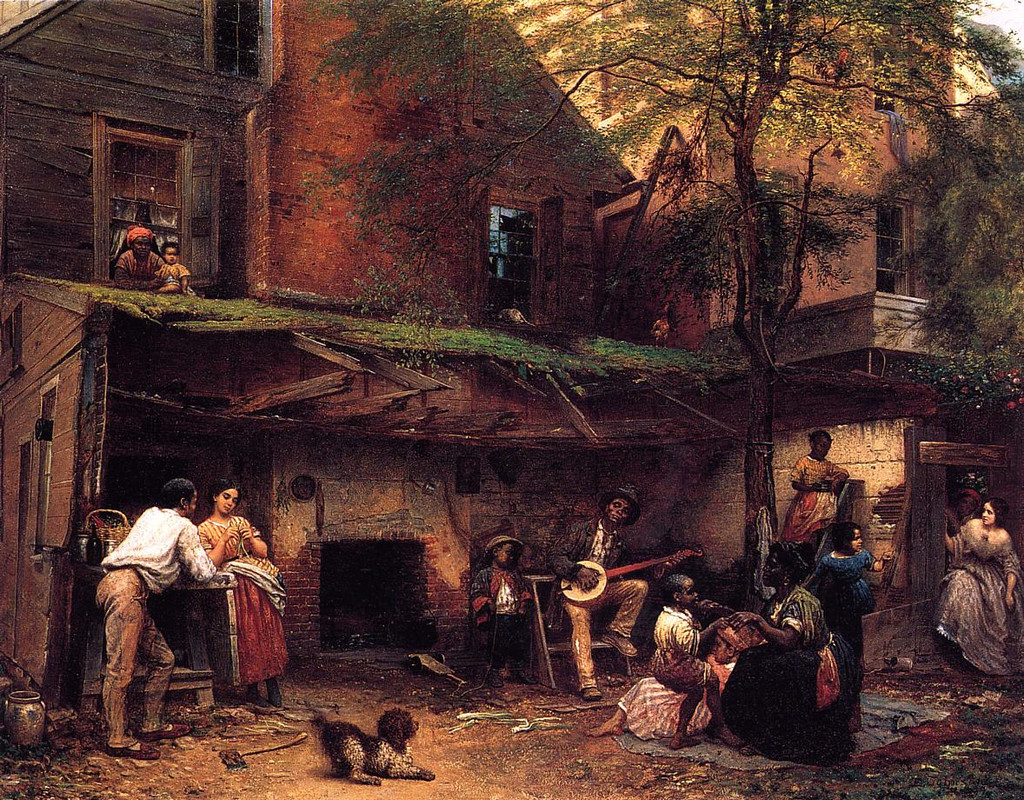
| Negro Life at the South | 1859; New York Historical original | Oil on linen |
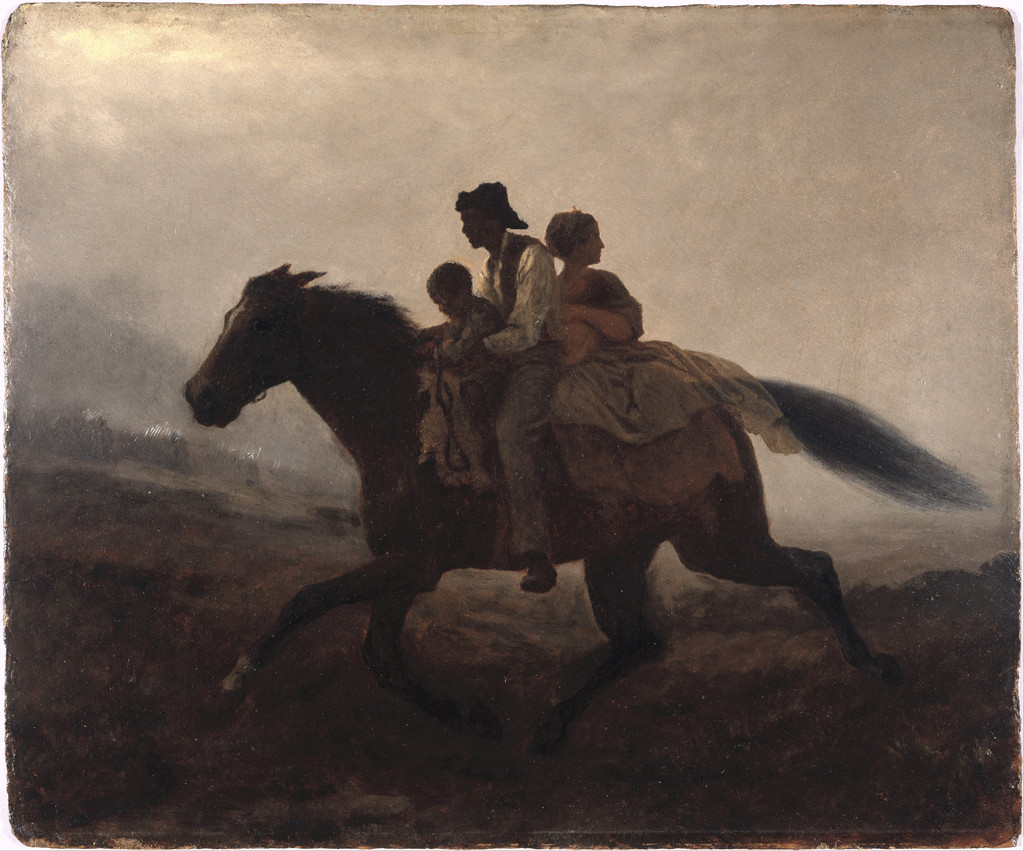
| A Ride for Liberty—The Fugitive Slaves | About 1862; Brooklyn version | Oil on paperboard |
| The Lord Is My Shepherd | 1863 | Oil on fiberboard |
| Sugaring Off | About 1864–65; unfinished RISD canvas | Oil on canvas |
| The Wounded Drummer Boy (San Diego study) | About 1864–71; study, not the finished canvas | Oil on board |
| The Early Scholar | About 1865; NGA study | Oil on academy board on canvas |
| Fiddling His Way | 1866; Chrysler canvas | Oil on canvas |
| The Letter Home | 1867; Minneapolis drawing | Charcoal and graphite on paper |
| The Boyhood of Lincoln | 1868; Michigan canvas | Oil on canvas |
| The boyhood of Lincoln—An evening in the log hut (Prang after Johnson) | About 1868; separate reproductive print | Chromolithograph, W. Harring / L. Prang & Co., after Johnson |
| The Brown Family | 1869; NGA version | Oil on paper on canvas |
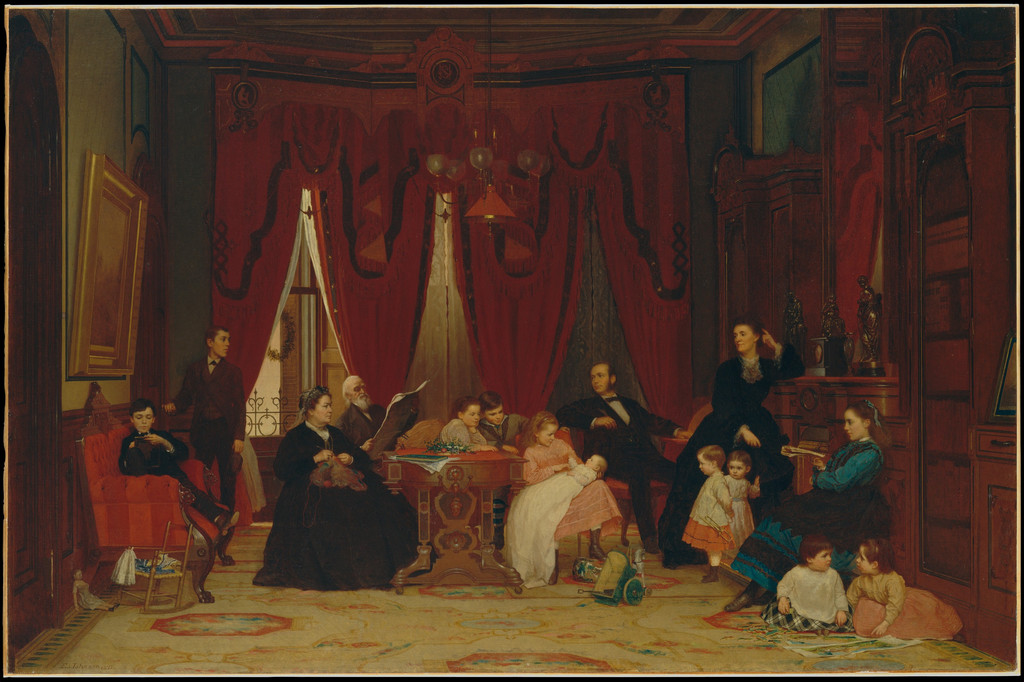
| The Hatch Family | 1870–71 | Oil on canvas |
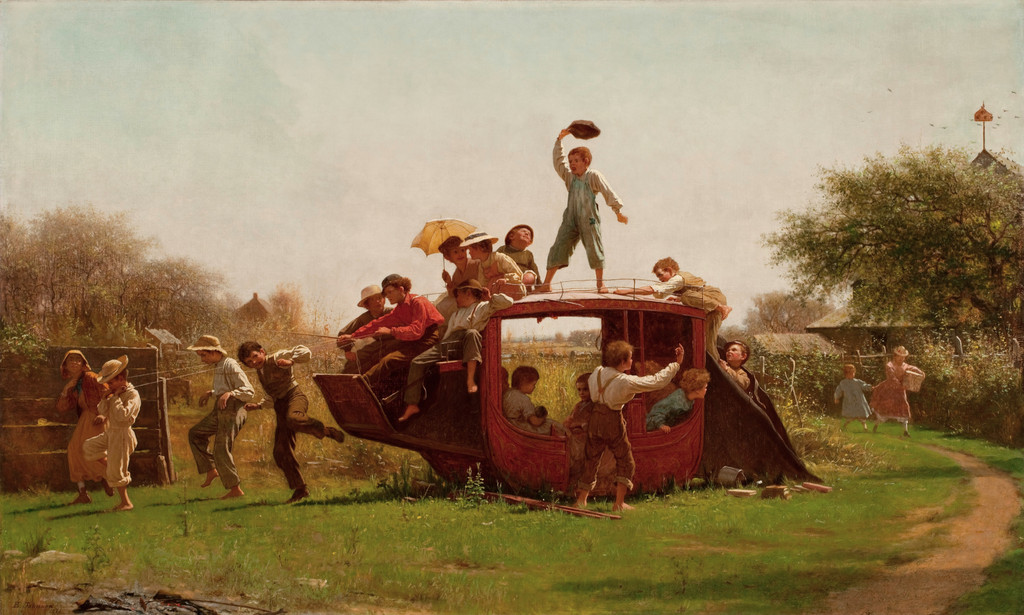
| The Old Stagecoach | 1871 | Oil on canvas |
| The Girl I Left Behind Me | About 1872 | Oil on canvas |
| The Toilet | 1873 | Oil on paper board |
| Husking Bee, Island of Nantucket | 1876; Chicago canvas | Oil on canvas |
| The New Bonnet | 1876 | Oil on academy board |
| Sanford Robinson Gifford | 1880; possibly posthumous | Oil on academy board |
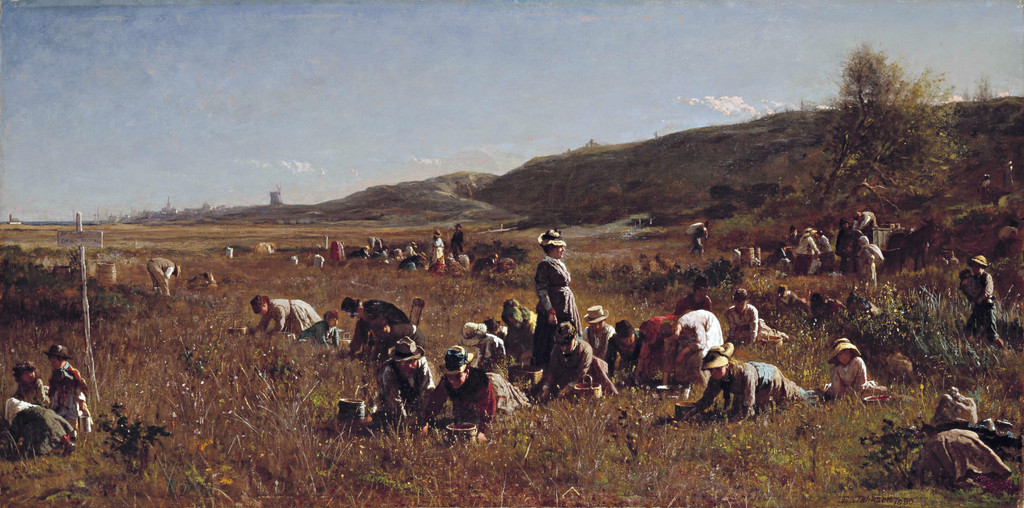
| The Cranberry Harvest, Island of Nantucket | 1880; Timken canvas | Oil on canvas |
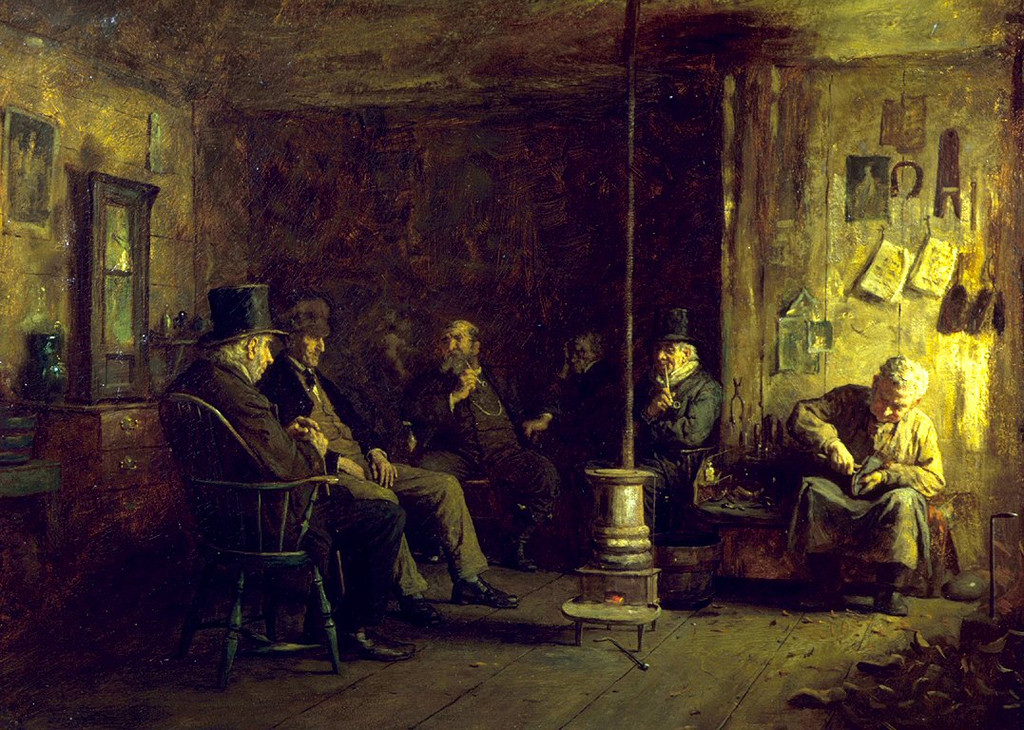
| The Nantucket School of Philosophy | 1887 | Oil on panel |
Frequently Asked Questions
The sketch discussed here belongs to the National Gallery of Art in Washington, accession 1963.10.157. It is part of the Chester Dale Collection. [1]
The NGA catalogue distinguishes this sketch, dated about 1865, from a finished 1868 version associated with the National Academy exhibition. Reviews and object histories should be matched to the correct version. [2]
The work retains the character of a sketch, with broad tonal preparation and selective development of figures and objects. The published technical entry documents those features; it does not establish a known reason for stopping at this stage. [2]
Discussion
Look again at the images and ideas explored in The Early Scholar by Eastman Johnson. These editorial prompts invite your observations.
Reader Insights
How do the stove, desk and curve of the child’s back organise an apparently quiet schoolroom?
Compare the concentrated light with the surrounding shadows. Which details become legible first?
How does knowing this is a retained study change the way you look at its visible handling?
Join the Conversation
Share a detail, comparison or question about The Early Scholar by Eastman Johnson below.
References
- National Gallery of Art. The Early Scholar , about 1865, 1963.10.157. Current object record, collection history and public-domain image. View source
- John Davis. “The Early Scholar.” In American Paintings of the Nineteenth Century , Part I, National Gallery of Art, 1996, pp. 373–376. Object entry, related versions, interpretation and technical notes. View source
- The Lord Is My Shepherd, 1863, 1979.5.13. View source
- Sugaring Off, ca.1864–1865, 45.050. View source
- Wounded Drummer Boy, San Diego study, Hills 10.0.18. View source
- Fiddling His Way,1866,89.60. View source
- The Letter Home,1867,74.17; current collection data. View source
- Boyhood of Lincoln,1868,1895.90. View source
- Edgar French. “An American Portrait Painter of Three Historical Epochs.” The World’s Work , volume 13, December 1906, pp. 8307–8323; studio photograph on p. 8317. Publication date does not establish the photograph’s exact date. View source
- Splash image source.
Eastman Johnson, The Early Scholar, about 1865. Oil on academy board on canvas, 43.2 × 53.7 cm. National Gallery of Art, Washington, Chester Dale Collection, 1963.10.157. Public domain. Public domain .
View source