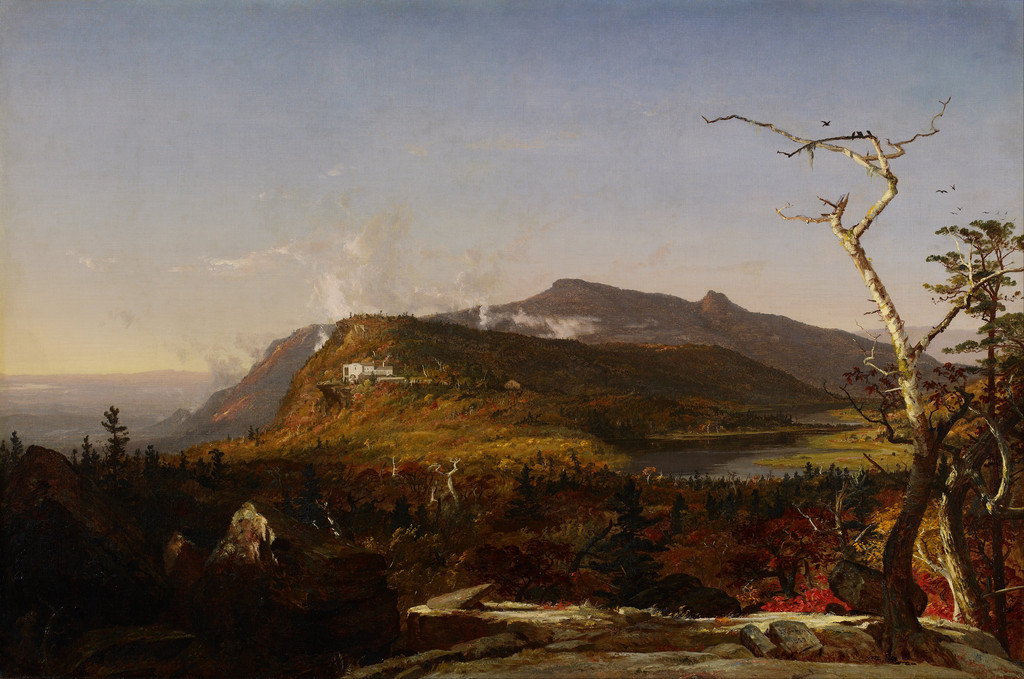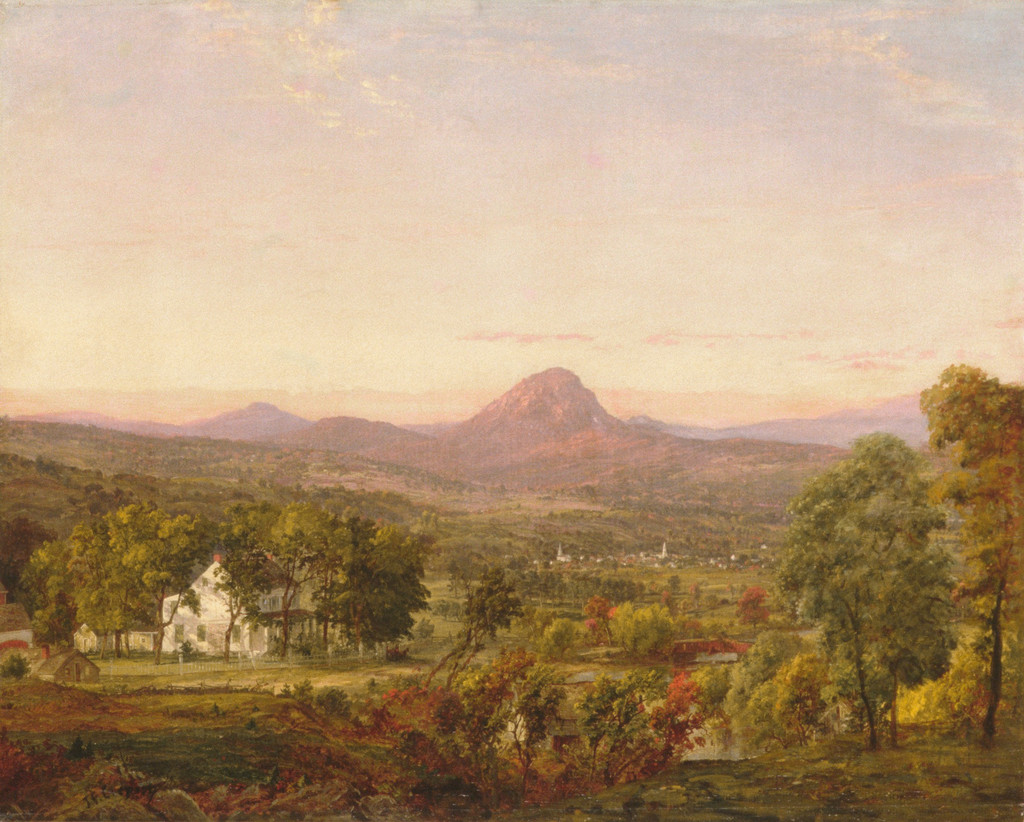
 by Tom Gurney
Tom Gurney BSc (Hons) is an art history expert with over 20 years experience
Email: tomgurney1@gmail.com / Phone: +44 7429 011000
Up among the Clouds: Jasper Cropsey’s 1855 Essay: Introduction
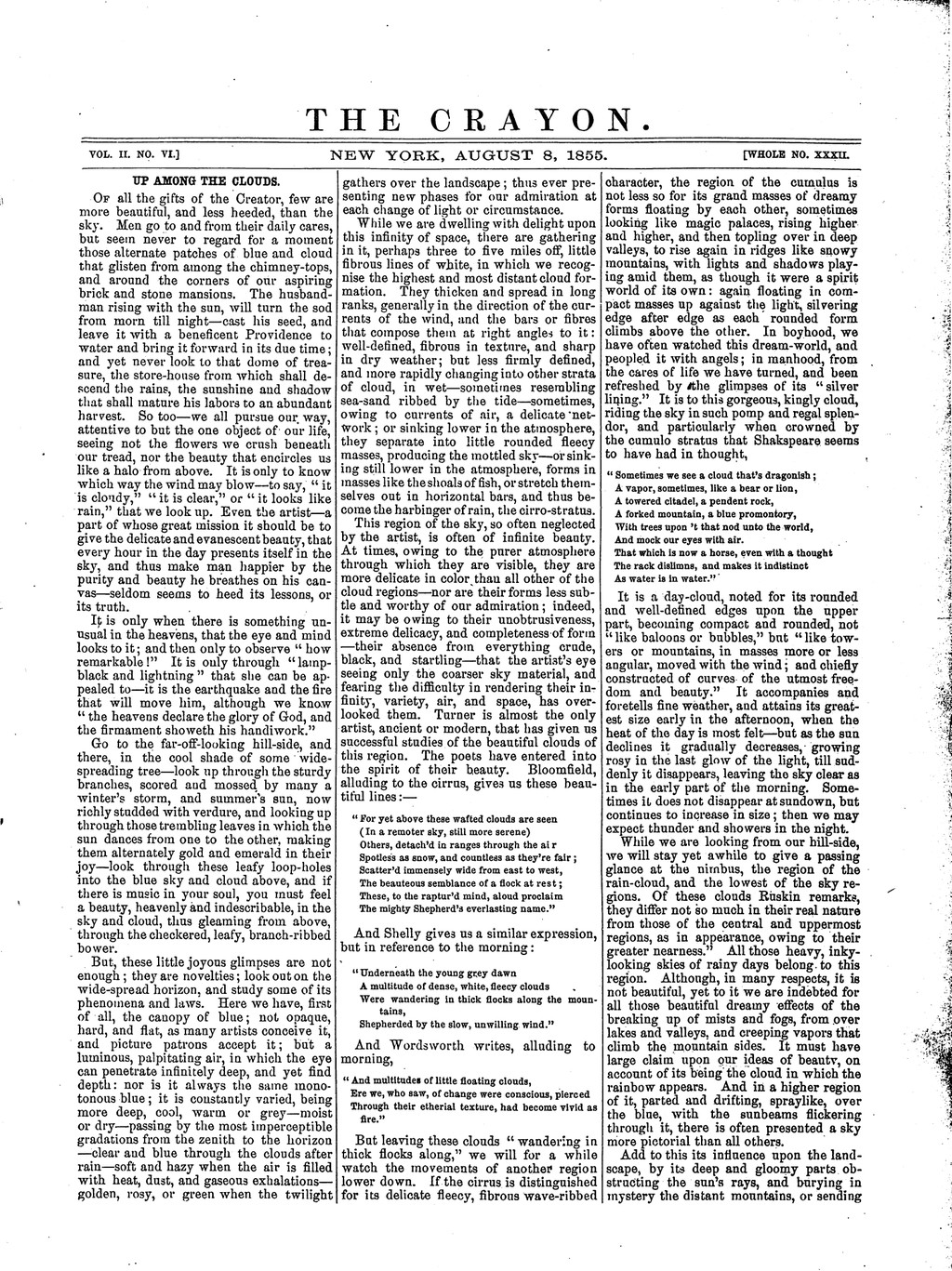
Jasper Cropsey’s Up among the Clouds begins with a familiar failure of attention. People move through their daily lives beneath a changing sky, yet scarcely look at it except to judge whether rain is coming. Writing in The Crayon on 8 August 1855, Cropsey asks readers to regard that overlooked space as a source of beauty, knowledge and artistic responsibility. [1]
The essay is a valuable companion to his paintings. It explains why the sky can be more than a background behind mountains and trees: atmosphere has depth, clouds have form, and their changing relations to light affect the whole landscape.
At a Glance
- Author: Jasper Francis Cropsey
- Title: Up among the Clouds
- Publication: The Crayon, volume II, number VI
- Date: 8 August 1855
- Pages: 79–80
- Subject: Attention to sky, cloud form and landscape painting
- Historical context: Published before Cropsey’s London residency of 1856–63
- Main argument: Study the sky’s variety rather than repeat a familiar decorative effect
Contents
- A painter addressing public attention
- From a leafy opening to the wide horizon
- Luminous air rather than a flat blue surface
- Different cloud regions and different kinds of form
- Everyday beauty and the power of storm
- Turner, Ruskin and the problem of repetition
- Reading painted skies beside the essay
- Annotated details
A painter addressing public attention
Cropsey’s opening examples include townspeople passing beneath glimpses of sky between buildings and a farmer whose work depends on sunshine and rain. Their surroundings already contain the subject he wants them to notice. The essay’s first audience is therefore wider than a group of painters learning to depict clouds. It asks how ordinary habits can make people overlook the conditions within which they live. [1]
The farmer example makes this especially pointed. Agricultural labour relies on the very sky that its worker may scarcely study. In Cropsey’s account, practical dependence does not guarantee sustained attention. Looking upward only to predict weather is useful, but it misses the changing forms and colours available throughout the day. [1]
The painter receives a more demanding version of the same criticism. Cropsey assigns the artist a responsibility to communicate “delicate and evanescent beauty,” allowing viewers to encounter effects they might otherwise pass by. Art can increase attention by preserving an impression of something fleeting. [1]
This is part of a religious account of beauty. Cropsey presents the natural world as a gift and treats looking at it as an activity with moral value. His argument belongs to its nineteenth-century setting; it makes the landscape artist’s work meaningful through a connection between observation, pleasure and creation. [1]
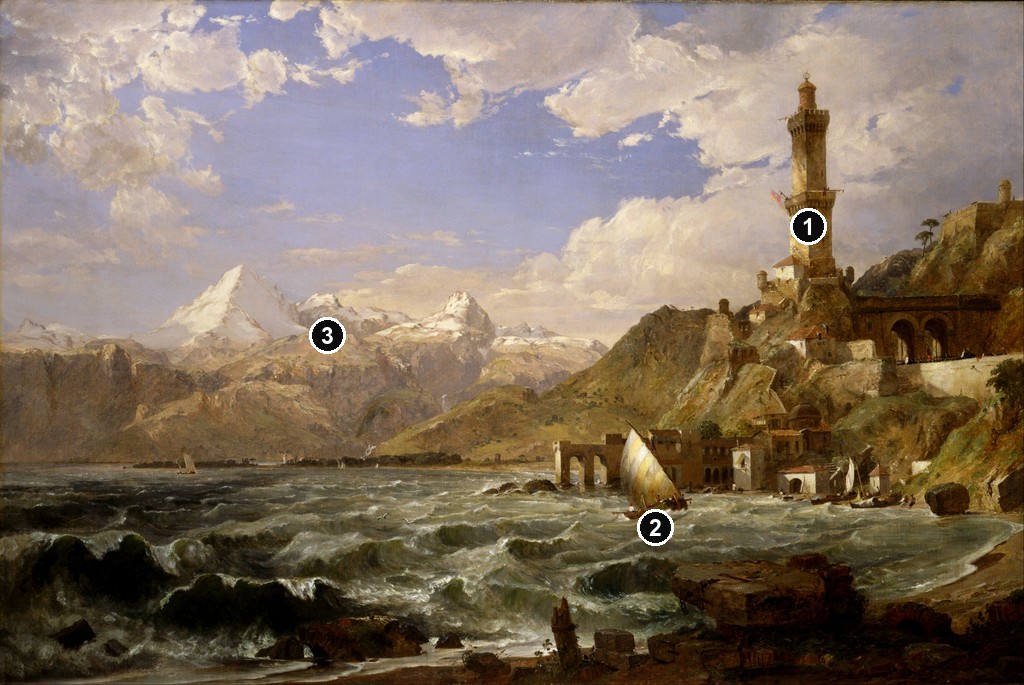
Annotated Details from Up among the Clouds: Jasper Cropsey’s 1855 Essay
The numbered points identify visible features discussed in this article. Return from each detail to the whole composition. The captions keep each work’s identity, date and medium separate.
The Coast Of Genoa
Jasper Francis Cropsey, The Coast of Genoa, 1854. Oil on canvas, 122.4 × 184.2 cm. Smithsonian American Art Museum, 1984.162. Gift of Aileen B. Train, Helen B. Spaulding and Julia B. Key. Jasper Francis Cropsey / Smithsonian American Art Museum, via Google Art Project. Image source. Public domain. Separate resized overview with numbered points; details cropped from the original, without recolouring, retouching or enlargement.
Autumn On The Hudson River
Jasper Francis Cropsey, Autumn—On the Hudson River, 1860. Oil on canvas, 151.8 × 274.9 cm. National Gallery of Art, Washington, 1963.9.1. Gift of the Avalon Foundation. Painted in London. Jasper Francis Cropsey / National Gallery of Art, Washington. Image source. CC0 / Public domain. Separate resized overview with numbered points; details cropped from the original, without recolouring, retouching or enlargement.
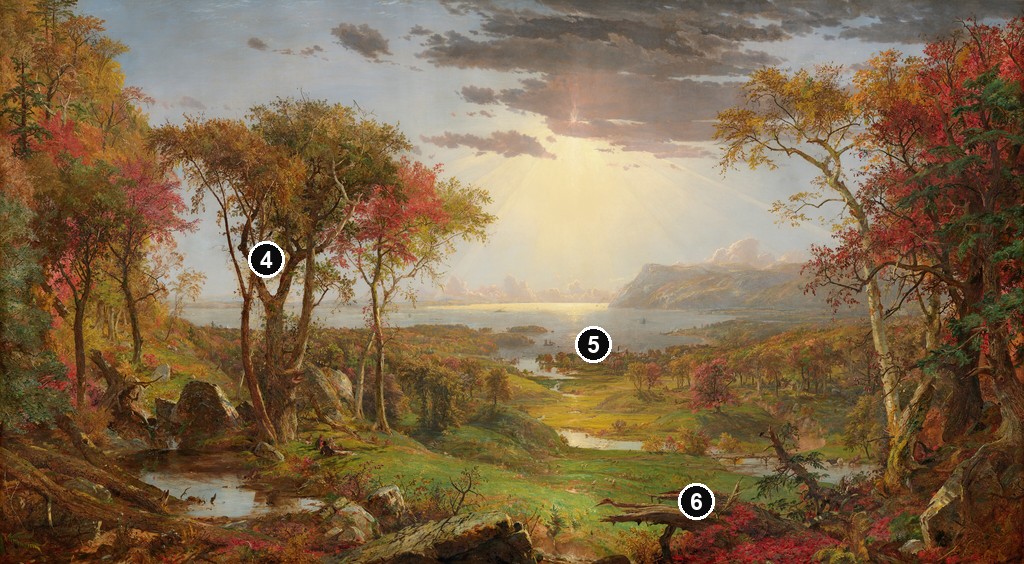
Details from UP AMONG THE CLOUDS: JASPER CROPSEY’S 1855 ESSAY
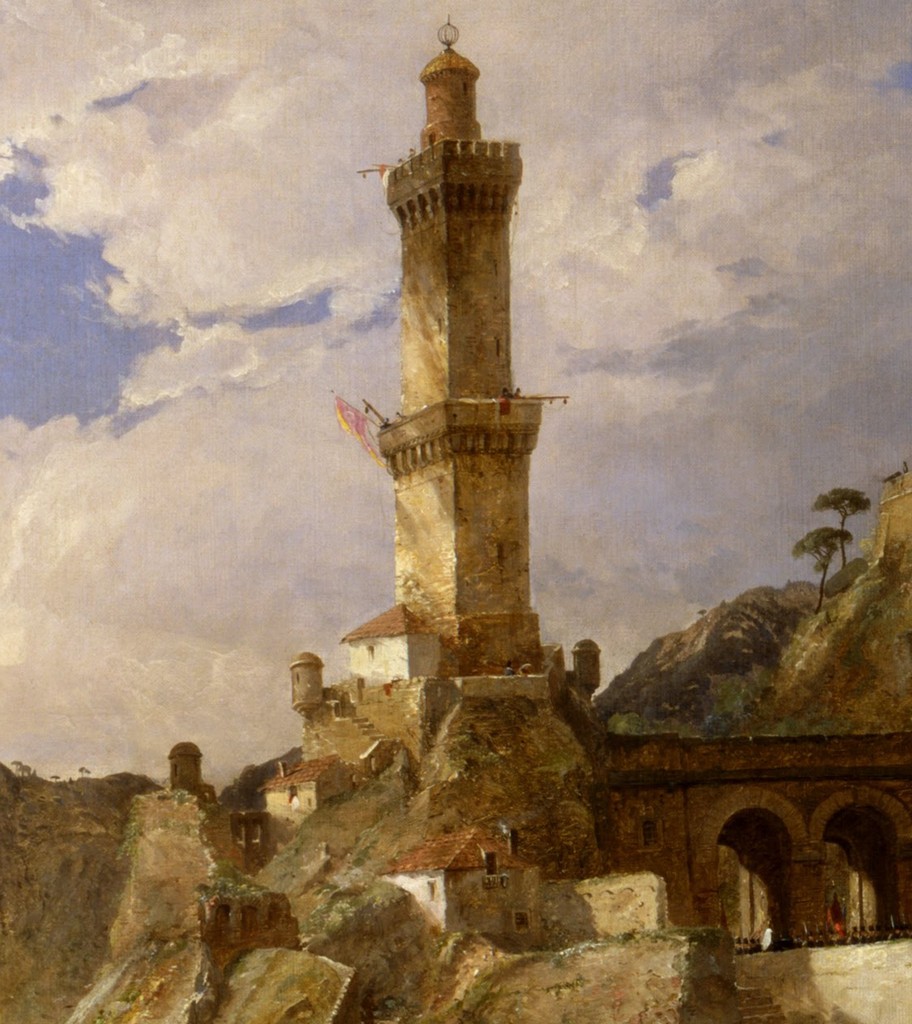
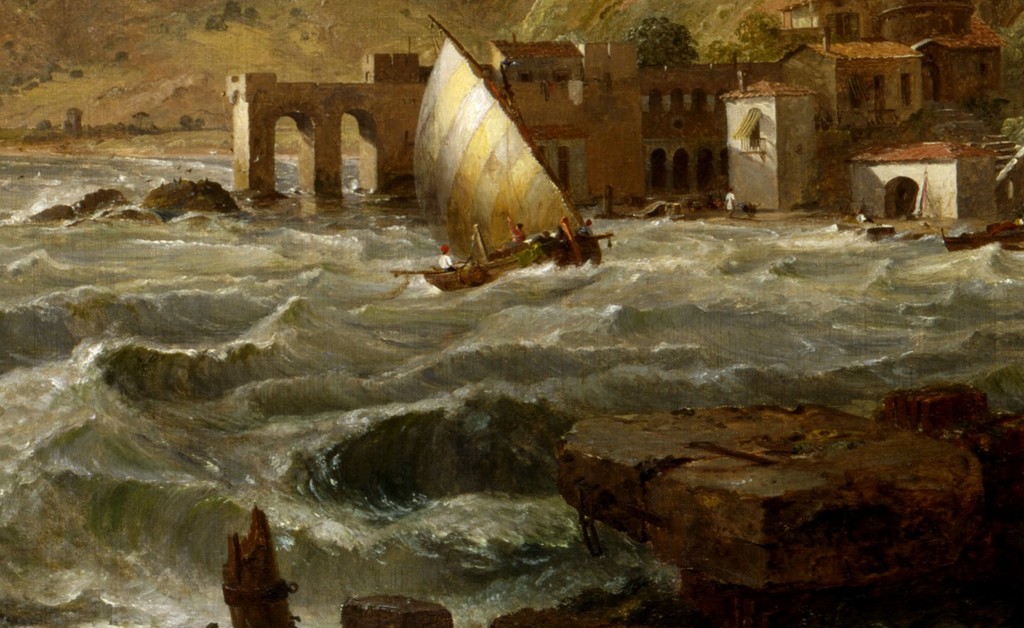
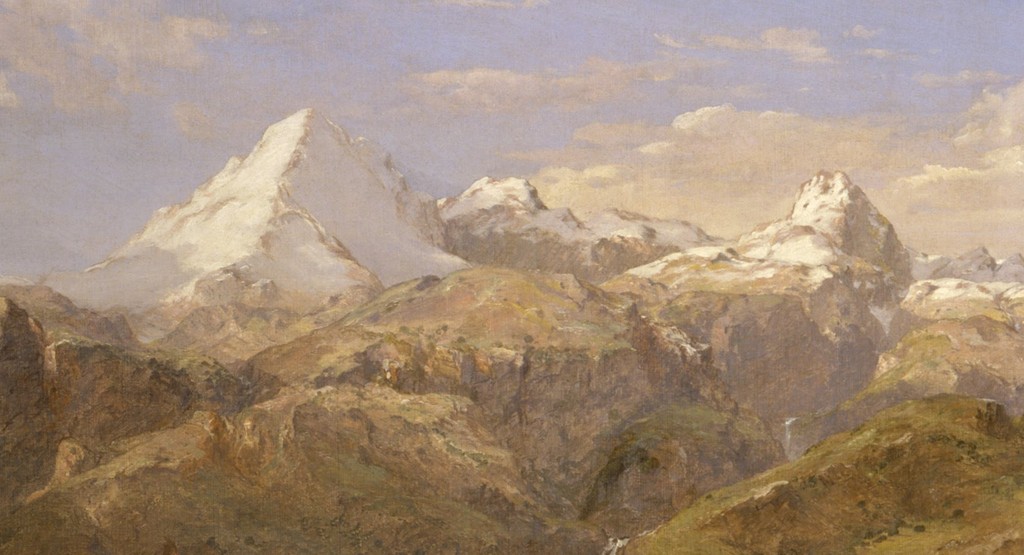
Compare the cropped details with the complete images above. Notice how their colours, shapes and positions contribute to the larger compositions.
The Coast Of Genoa
Tower rising above the coast
A tall tower rises above stone buildings on the rocky coast. Its vertical form connects the shore with the large clouded sky.
Sail and breaking waves
A pale sail cuts across the restless water beside the coastal buildings. White wave edges repeat its brightness in the near sea.
Snowy peaks beyond the sea
Snowy peaks stand beyond the coastal water. Their pale forms add depth to the invented panoramic arrangement; this crop does not name a particular summit.
Autumn On The Hudson River
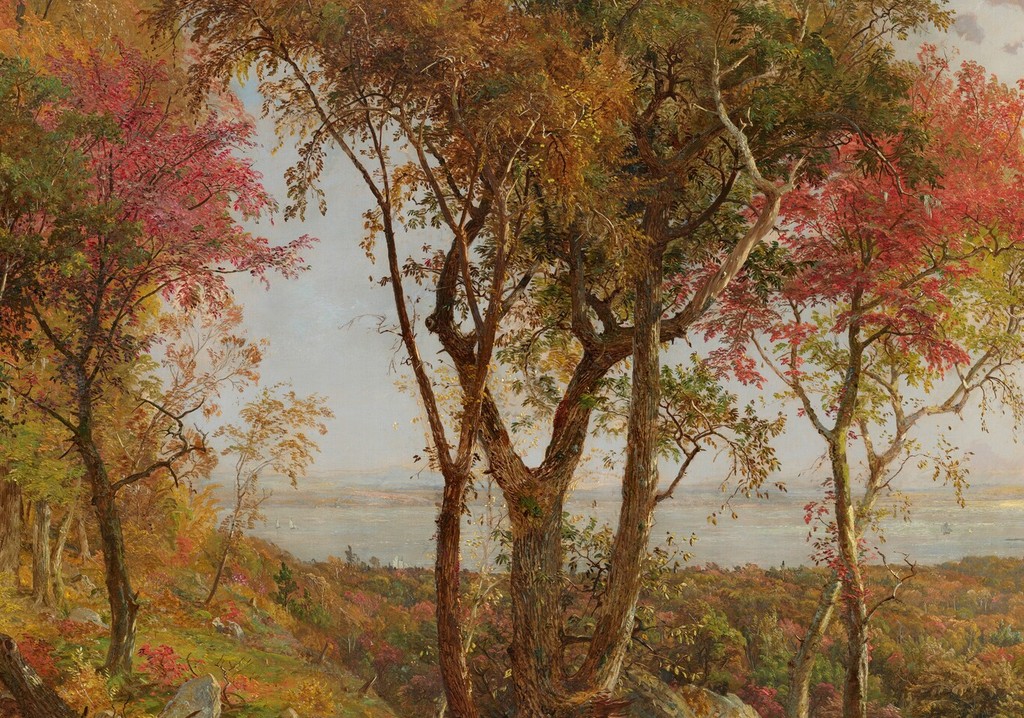
Trees framing the open river
Branching near trees and patches of red, yellow and green foliage enclose the brighter river. Their large scale helps distinguish the wooded foreground from the distant view.
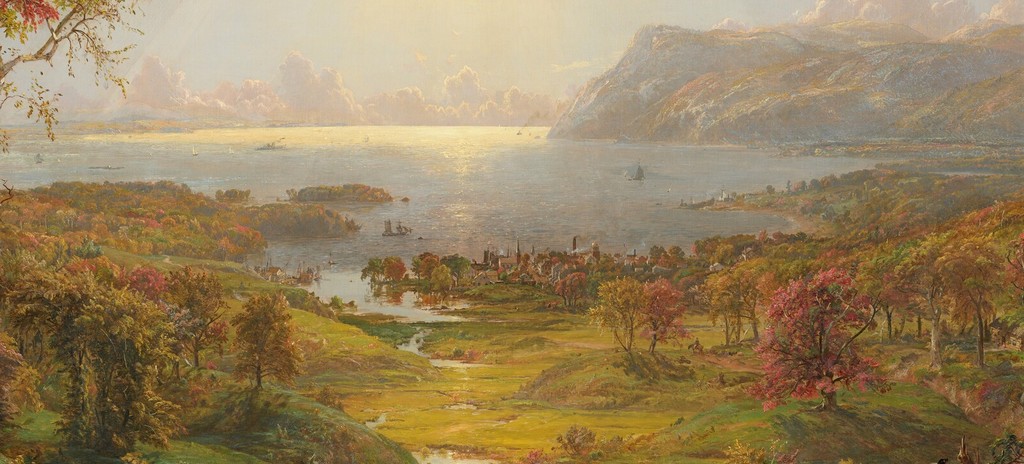
River, settlement and distant ridge
The river, small buildings and distant ridge occupy the central opening. Their reduced scale contrasts with the large trees at the edges.
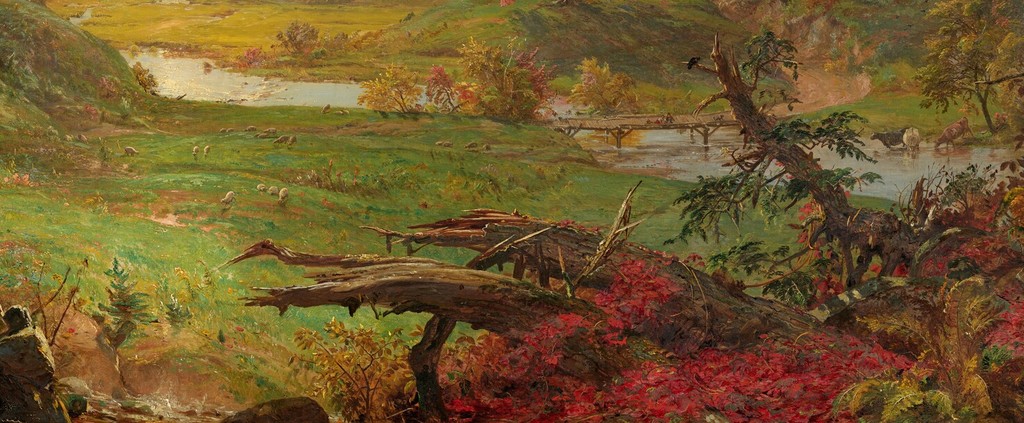
Water and fallen wood in the foreground
Near water, a small crossing and fallen timber carry the eye back into the foreground. Irregular wood and red vegetation interrupt the wider calm panorama.
From a leafy opening to the wide horizon
Cropsey first asks the reader to imagine resting beneath a tree and looking upward through its leaves and branches. The limited openings offer changing glimpses of sky. Light moves through the foliage, bringing the nearby tree and the more distant atmosphere into the same experience of looking. [1]
This is a small, sheltered encounter with the subject. It resembles the way a foreground tree can frame a portion of the sky in a painting: the near object gives shape to what is seen beyond it. Cropsey’s reader is invited to begin with a manageable opening rather than an abstract lesson about an unlimited expanse.
He then widens the exercise. Attractive glimpses are insufficient; the observer should turn to the open horizon and investigate the sky’s changing appearances. That shift is crucial. Pleasure initiates the act of looking, but sustained study must follow it. A striking patch of blue or a picturesque cluster of clouds is only a beginning. [1]
The movement from tree to horizon also changes the scale of attention. The reader first sees small intervals separated by leaves, then a broad atmospheric space in which cloud formations can be compared. The essay builds its argument through this enlargement of the view.
Luminous air rather than a flat blue surface
Cropsey objects to skies treated as opaque, hard or flat. He describes the blue expanse as “luminous, palpitating air”: something the eye seems able to penetrate, rather than a coloured wall behind the landscape. [1]
The distinction matters pictorially. A flat backdrop can leave mountains and trees looking like objects placed in front of one uniform surface. A sky that appears to extend into depth helps those same forms occupy a larger space. Its light and gradations can connect foreground, distant land and horizon.
Cropsey follows this idea with an account of variation. Blue changes with height, weather and the conditions of the air. Heat, haze, rain and twilight can produce different appearances. He wants painters to observe those distinctions instead of assuming that one attractive blue will serve every landscape. [1]
The essay consequently gives atmosphere a structural role. Changes across the sky are relevant to the arrangement of the painting, not merely to its surface colour. A hazier horizon can make distant land recede; a clearer opening can pull attention toward a particular part of the view. Those are useful questions to bring to a Cropsey landscape even where its exact weather has not been documented.
Different cloud regions and different kinds of form
Cropsey discusses high, delicate formations, rounded masses and lower rain clouds. His descriptions attend to differences of distance, texture, scale and outline. Thin fibrous cloud and a large mass near the viewer do not present the same challenge to an artist. [1]
He is particularly interested in subtle effects that a painter might neglect because they are difficult to render or less immediately dramatic. In the high clouds, he values “infinity, variety, air, and space.” Their delicacy is itself an artistic problem: how can small variations convey something extensive and light? [1]
The larger cloud masses offer a different experience. Cropsey describes them through changing volumes, projections and shadows. Architectural and mountainous comparisons make their forms intelligible while also suggesting their instability. A cloud may appear substantial, yet its shape continues to alter. [1]
These passages are best read as an artist’s nineteenth-century account of looking. Their value for an art reader lies in the distinctions they encourage: nearer and farther, thin and massive, sharply edged and dissolving. The essay does not provide a modern scientific field guide or a method for assigning a precise weather event to every painted sky.
Watch: Jasper Cropsey
Look closely at Cropsey’s Mount Jefferson, then explore the wider Hudson River School tradition.
Summer or Autumn? Picturing the American Republic
Smarthistory discusses Cropsey’s seasonal landscape and the image of the American republic.
Watch on YouTubeEveryday beauty and the power of storm
The opening criticises a habit of noticing the heavens only when something exceptional happens. Yet Cropsey does not dismiss storms. He gives rain clouds a substantial place in the essay because they can alter light, obscure distant mountains and create powerful emotional effects. [1]
Cloud shadows connect the sky to the country below. A dark mass can interrupt sunlight across a valley, while mist can partly conceal a mountain’s outline. This makes atmosphere an agent within the landscape. The ground’s appearance changes as cloud and light change above it. [1]
Cropsey’s treatment also joins visual effects with feeling. He describes the approach of storm as capable of producing fear, solemnity or heightened attention. Such responses help explain why a painter might choose a dramatic sky for a scene of conflict or emotional intensity. [1]
The essay’s objection is to reducing that drama to darkness alone. A storm cloud still has particular shapes, parts and relations to the light. Its expressive force should grow from those observed structures. Simply making a corner of the sky black would neglect the formal qualities that interested him.
Turner, Ruskin and the problem of repetition
Cropsey singles out Turner’s achievement in studying delicate cloud effects. The judgment belongs to Cropsey’s argument, rather than establishing an objective ranking of every artist’s skies. It indicates what he valued: forms that convey atmospheric subtlety as well as immediately impressive masses. [1]
He also draws on Ruskin, quoting criticism of cloud passages that look agreeable but lack developed structure. Cropsey’s own conclusion presses the point further. Audience approval is insufficient reason to paint “the same agreeable sky over and over again.” The artist should continue to study and seek greater truth and beauty. [1]
That criticism makes the essay more than an invitation to imitate a successful effect. Its final demand is for renewed observation. Familiarity with a pleasing formula can become an obstacle if it prevents the painter from noticing differences.
Cropsey would settle in London the following year, where his circle included Ruskin and where he encountered the work of Turner and Constable. The chronology gives the essay a useful position within his career: its published judgments precede the 1856–63 residency, while his later British experience offered further opportunities to engage with those interests. [2]
Reading painted skies beside the essay
In The Coast of Genoa, clouds occupy a large area above restless water and distant mountains. The Smithsonian dates the oil to 1854. [3] That date places it after the European journey of 1847–49 described in the NGA biography. [2] It also precedes the essay, making the painting a useful comparison without being an illustration produced for the text.
The cloud masses in that painting help vary the large upper field. Lighter openings and darker passages distinguish parts of the sky, while the small boats and architecture below give the atmospheric space a sense of scale. The viewer can apply Cropsey’s question about form: what makes these clouds feel like volumes, rather than flat patches?
In Starrucca Viaduct, Pennsylvania, 1865, a train’s smoke appears within a broad landscape beneath clouds. The Toledo canvas invites a different comparison, between a small sign of railway movement and the larger forms above it. The clouds help extend the view beyond the viaduct’s horizontal course. [4]
Autumn—On the Hudson River, 1860, places its strongest opening of light beyond the foreground trees. Sky, distant hills and river work together to make that opening feel extensive. The National Gallery catalogue records the painting’s London production and the importance of its American autumn subject. [5]
Each comparison asks a different question of the sky. Genoa offers substantial cloud masses above a moving sea; Starrucca sets clouds in relation to railway smoke and valley space; the Hudson panorama connects atmosphere to an illuminated distance. Cropsey’s essay encourages this specific attention to differences, carrying the reader beyond the general label of a beautiful sky.
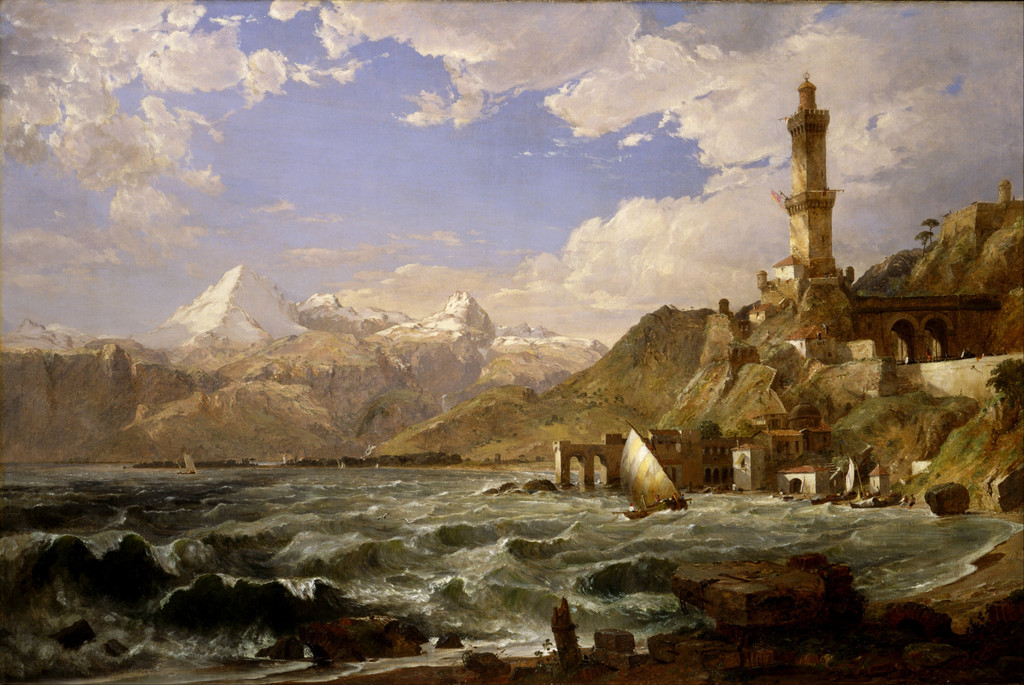
Jasper Francis Cropsey, The Coast of Genoa, 1854. Smithsonian American Art Museum, 1984.162. Its substantial clouds provide a comparison with ideas published the following year. Jasper Francis Cropsey / Smithsonian American Art Museum, via Google Art Project. Image source. Public domain. Proportionally resized only; full carrier, margins and native appearance retained.
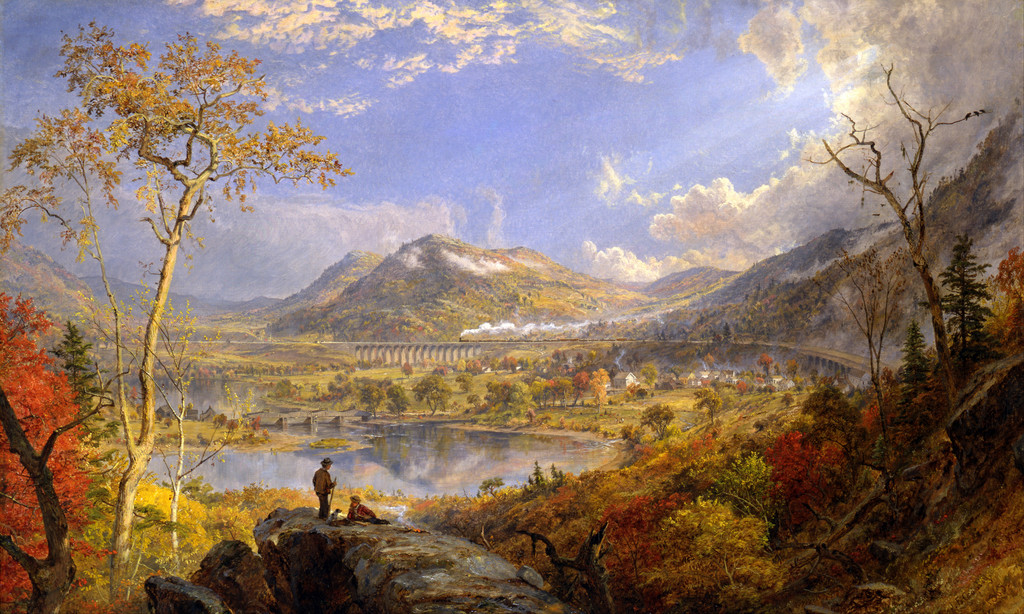
Jasper Francis Cropsey, Starrucca Viaduct, Pennsylvania, 1865. Toledo Museum of Art, 1947.58. Train smoke appears within a valley beneath larger cloud forms. Jasper Francis Cropsey / Toledo Museum of Art, via Google Art Project. Image source. Public domain. Proportionally resized only; full carrier, margins and native appearance retained.
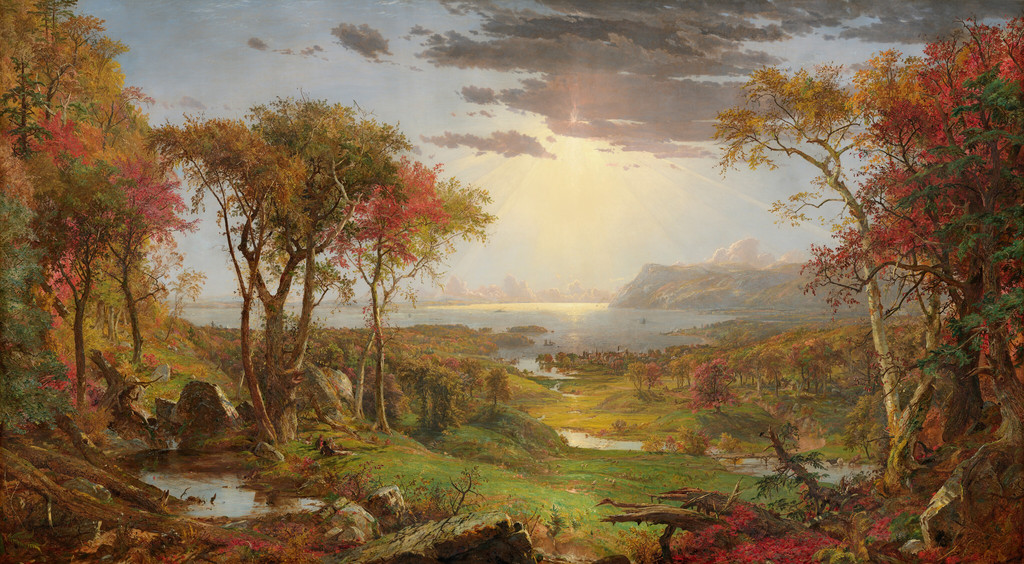
Jasper Francis Cropsey, Autumn—On the Hudson River, 1860. National Gallery of Art, Washington, 1963.9.1. Foreground trees frame a broad opening of sky, hills and river. Jasper Francis Cropsey / National Gallery of Art, Washington. Image source. CC0 / Public domain. Proportionally resized only; full carrier, margins and native appearance retained.
Artworks directory
A selected directory of 18 paintings, two drawings and three architectural projects. Repeated subjects retain distinct object identities. Links lead to a companion article where available, otherwise the consulted institutional record. Unillustrated objects remain searchable; this is not a complete catalogue raisonné.
Frequently Asked Questions
Yes. The essay appeared with his signature in The Crayon, volume II, number VI, on 8 August 1855, across pages 79–80. [1]
Its main concern is observation, form, atmosphere and artistic responsibility. Its criticism of repeating the same pleasing sky points toward renewed study rather than a single reusable formula. [1]
He values the expressive power of storms while criticising the neglect of everyday and delicate effects. His argument asks painters to study different kinds of sky, including those that appear less dramatic. [1]
Discussion
Look again at the images and ideas explored in Up among the Clouds: Jasper Cropsey’s 1855 Essay. These editorial prompts invite your observations.
Reader Insights
Which clouds in a Cropsey painting first seem solid enough to occupy space?
Does the sky change the way you understand the land’s distance and light?
How would repeated use of one agreeable sky alter your experience of different landscapes?
Join the Conversation
Share a detail, comparison or question about Up among the Clouds: Jasper Cropsey’s 1855 Essay below.
References
- J. F. Cropsey, Up among the Clouds, The Crayon, II, no. VI, 8 August 1855, pp.79–80. Complete article read and both original facsimile pages inspected. Short quoted wording checked against the scans; Ruskin’s words within the essay distinguished from Cropsey’s own conclusion. View source
- Deborah Chotner, Cropsey biography, American Paintings of the Nineteenth Century, Part I, National Gallery of Art (1996), printed pp.109–110. London residency and British artistic contacts. View source
- Smithsonian American Art Museum, The Coast of Genoa, accession 1984.162. Exact 1854 comparison and object identity. View source
- Toledo Museum of Art, Starrucca Viaduct, Pennsylvania, accession 1947.58. Exact 1865 canvas and landscape context. View source
- Deborah Chotner, Autumn—On the Hudson River, American Paintings of the Nineteenth Century, Part I, National Gallery of Art (1996), printed pp.118–122. London production and the American autumn subject. View source
- Splash image source.
The Crayon, 8 August 1855, page 79, with the opening of J. F. Cropsey’s Up among the Clouds. The complete historical page is shown, including its original margins and surrounding text. The Crayon,8August1855,p.79 / Internet Archive, Wikimedia Commons. Public domain. Proportionally resized only; full carrier, margins and native appearance retained.
View source