 by Tom Gurney
Tom Gurney BSc (Hons) is an art history expert with over 20 years experience
Email: tomgurney1@gmail.com / Phone: +44 7429 011000
Jasper Cropsey Biography: Introduction
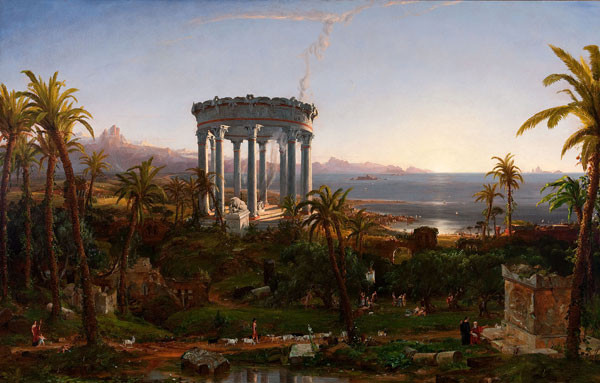
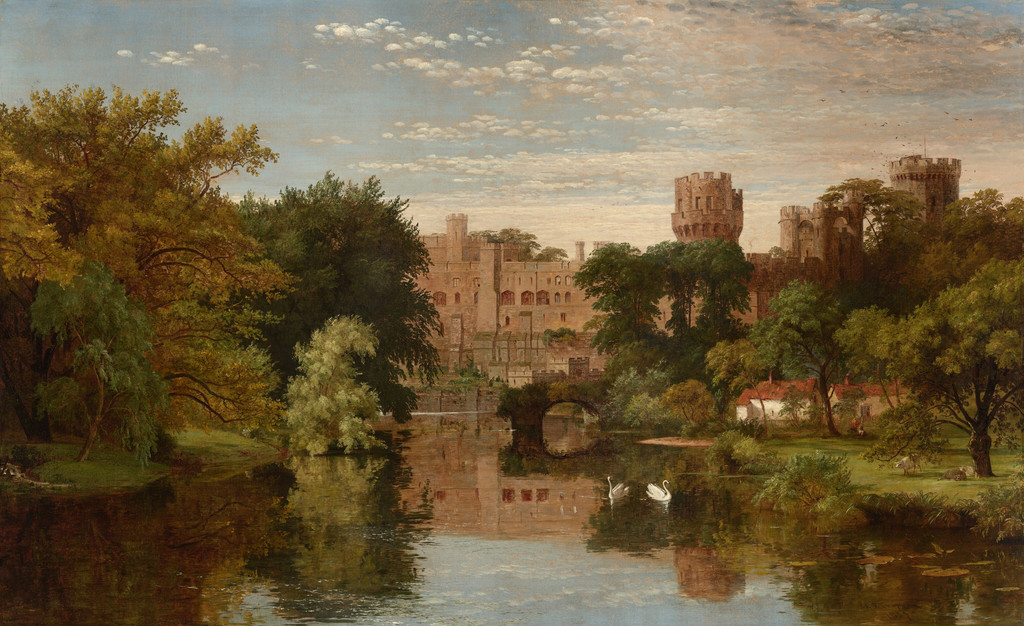
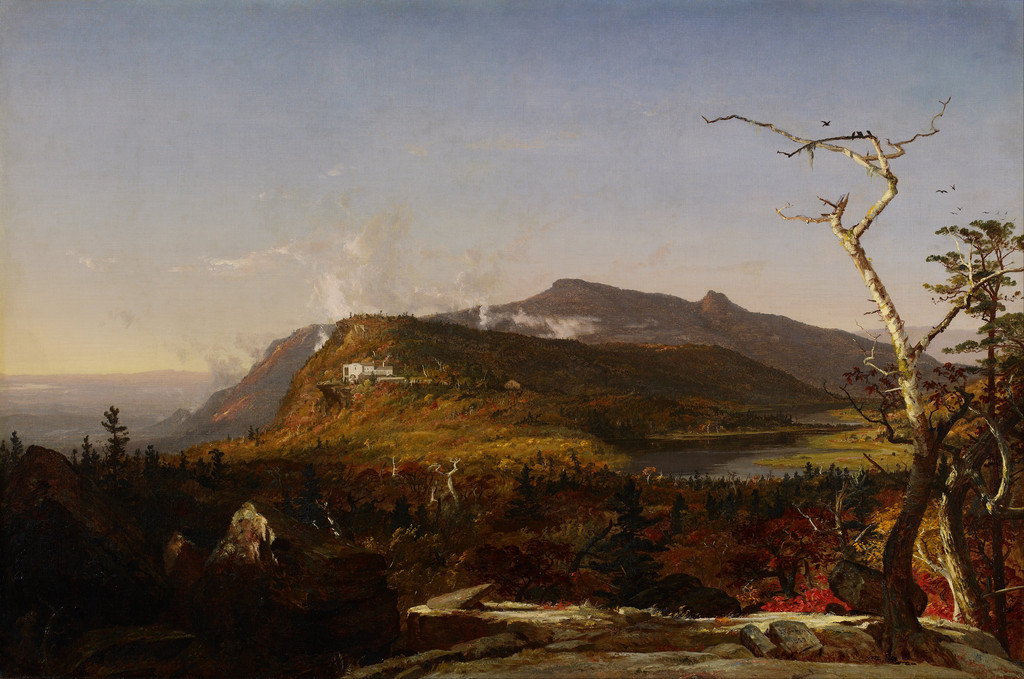
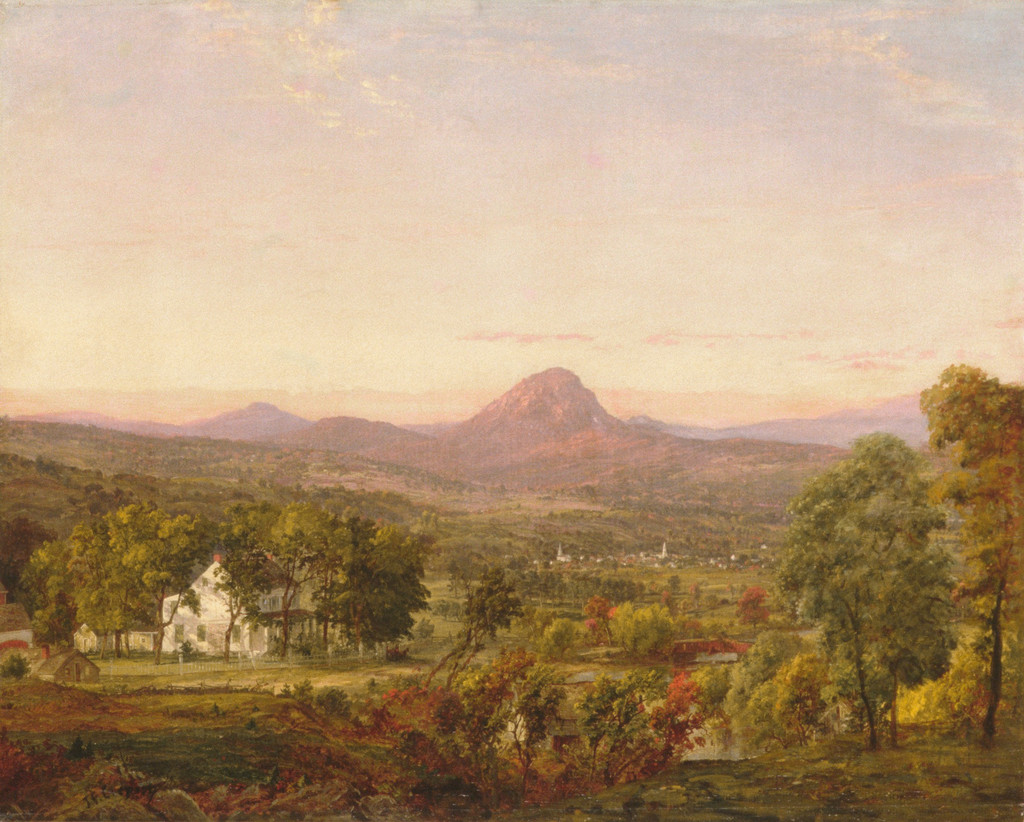
Jasper Francis Cropsey was born on 18 February 1823 in Rossville, Staten Island, and died on 22 June 1900 at Hastings-on-Hudson. His career joined architectural training, landscape study, international travel and a long practice in oil and watercolour. A major London period made American autumn scenery part of his public reputation, while later homes at Warwick and Hastings connected his work with familiar regional country. [1]
The life can be followed through several kinds of record. His unfinished memoir gives a young artist’s view of his beginnings; Tuckerman’s 1867 account records an already successful painter; later museum catalogues reconstruct individual works and chronology. The surviving house adds evidence about a working place and the family’s later stewardship. Each source illuminates a different moment. [2] [3] [6]
At a Glance
- Full name: Jasper Francis Cropsey
- Born: 18 February 1823, Rossville, Staten Island
- Died: 22 June 1900, Hastings-on-Hudson
- Early training: Joseph Trench’s architectural office, 1837–42
- Academy membership: Associate in 1844; full member in 1851
- Marriage: Maria Cooley, May 1847
- First European journey: 1847–49
- London residence: 1856–63
- Watercolour society: Founding member in 1867
- Later homes: Aladdin, then Ever Rest
Jasper Cropsey in context
Bars show approximate historical periods. c. means circa (about).
Hudson River School
c. 1825–1880 [15]Notes and sources
Hudson River School. Approximate context from Cole’s New York arrival to the Centennial-era decline. Kevin J. Avery, Metropolitan Museum of Art.
Each bar runs from the artist’s birth to their death.
Asher Brown Durand
1796–1886 · Birth–death [16]Thomas Cole
1801–1848 · Birth–death [17]Martin Johnson Heade
1819–1904 · Birth–death [18]Jasper Cropsey
1823–1900 · Birth–death [19]George Inness
1825–1894 · Birth–death [20]Frederic Edwin Church
1826–1900 · Birth–death [21]Notes and sources
Asher Brown Durand. Life dates from the Met’s institutional essay; calendar overlap alone does not prove collaboration. Metropolitan Museum of Art.
Thomas Cole. Life dates from the Met’s institutional essay; calendar overlap alone does not prove collaboration. Metropolitan Museum of Art.
Martin Johnson Heade. Life dates from the Met’s institutional essay; calendar overlap alone does not prove collaboration. Metropolitan Museum of Art.
Jasper Cropsey. Life dates from the Met’s institutional essay; calendar overlap alone does not prove collaboration. Metropolitan Museum of Art.
George Inness. Life dates from the Met’s institutional essay; calendar overlap alone does not prove collaboration. Metropolitan Museum of Art.
Frederic Edwin Church. Life dates from the Met’s institutional essay; calendar overlap alone does not prove collaboration. Metropolitan Museum of Art.
Contents
- Rossville and an early interest in making
- Five years in an architectural office
- First exhibitions and early church designs
- Greenwood Lake and Maria Cooley
- First Europe: Britain, Rome and Italian material
- Return in 1849 and the American studio
- A painter writing about the sky
- London from 1856 to 1863
- Autumn and the British audience
- Annotated details
Rossville and an early interest in making
Chotner describes Cropsey as the eldest of eight children in a farming family descended from Dutch and French Huguenot immigrants. His beginnings on Staten Island remained part of later accounts of his life, even after his professional work took him to New York and Europe. [1]
A model house brought an early public recognition. In 1837, at fourteen, he received a diploma at the New York City Mechanics Institute Fair. Chotner connects that achievement with the start of his architectural apprenticeship in the same year. [1]
The model is a useful beginning because it joins observation, drawing and construction. Cropsey’s later art did not emerge from a career restricted to painting from the first. Making a small building and representing proposed structures belonged to the skills he developed as a teenager.
Period accounts also describe episodes of poor health. They should be read as historical testimony rather than used to diagnose him retrospectively or explain every change in a painting. Tuckerman’s judgments about health and uneven execution belong to his own critical account. [3]
Four stages of Jasper Cropsey’s career
These periods group related developments; painting, travel and local work overlap across their boundaries.
Architecture and the first landscapes
Staten Island beginnings, the 1837–1842 Trench apprenticeship, early church designs and Greenwood Lake studies preceded Academy associate membership in 1844. [1]
Italy, New York and London
Marriage in May 1847 and the first European journey preceded renewed American work and the seven-year London residence from 1856 to 1863. [1]
Railways, commissions and Aladdin
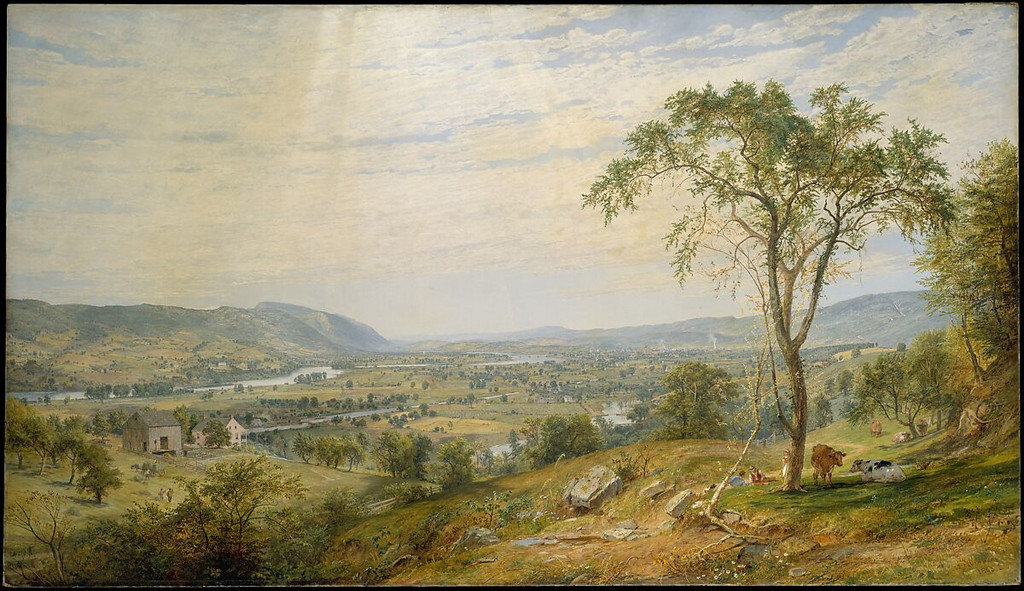
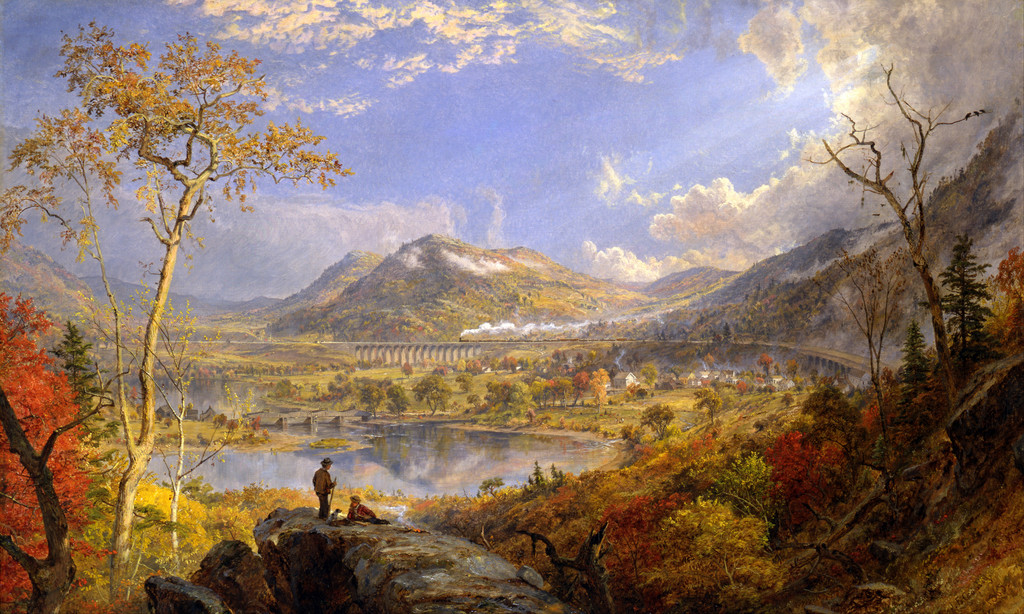
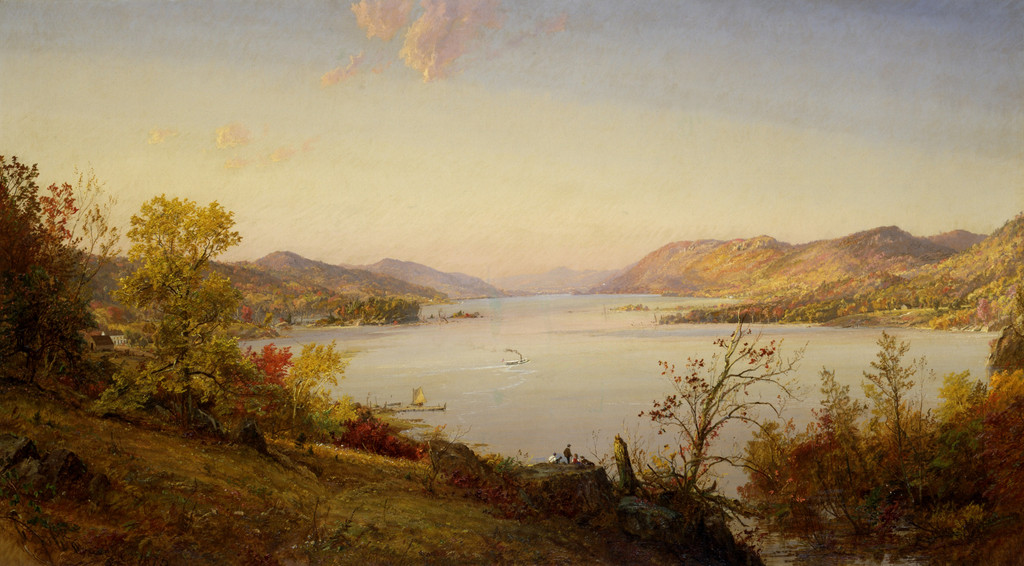
Pennsylvania landscapes, the 1867 watercolour society role, Aladdin’s 1866–1869 construction and later regional pictures developed before the house’s sale in 1884. [4]
A smaller home and continued practice
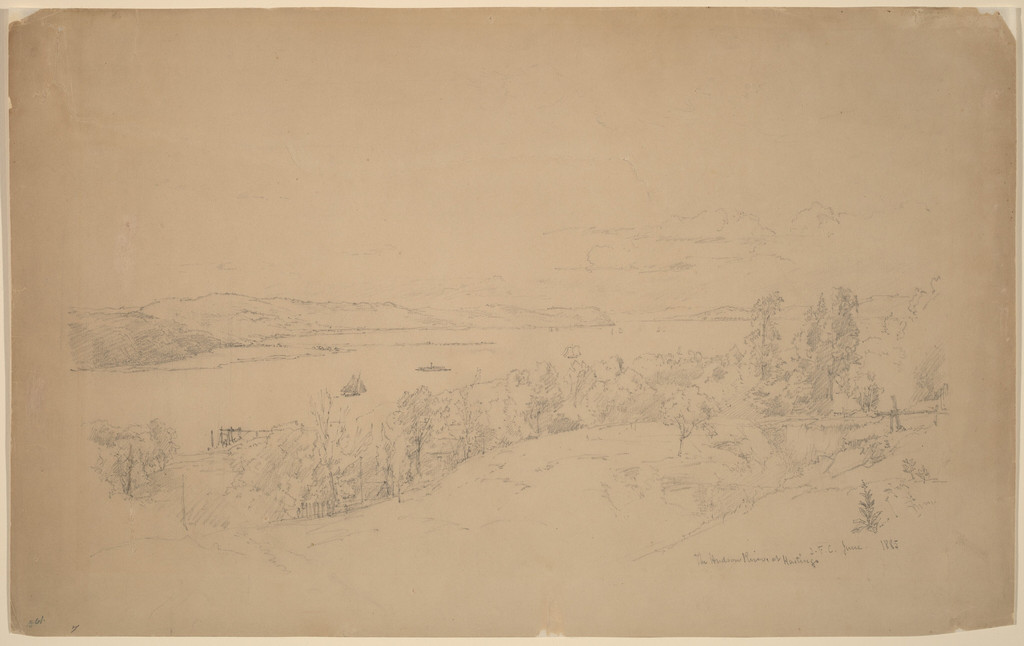
The 1885 move, 1886 purchase and studio completed about 1887 made Ever Rest a working home. Later regional travel and increased watercolour practice continued to the end of the life. [6]
Annotated Details from Jasper Cropsey Biography
The numbered points identify visible features discussed in this article. Return from each detail to the whole composition. The captions keep each work’s identity, date and medium separate.
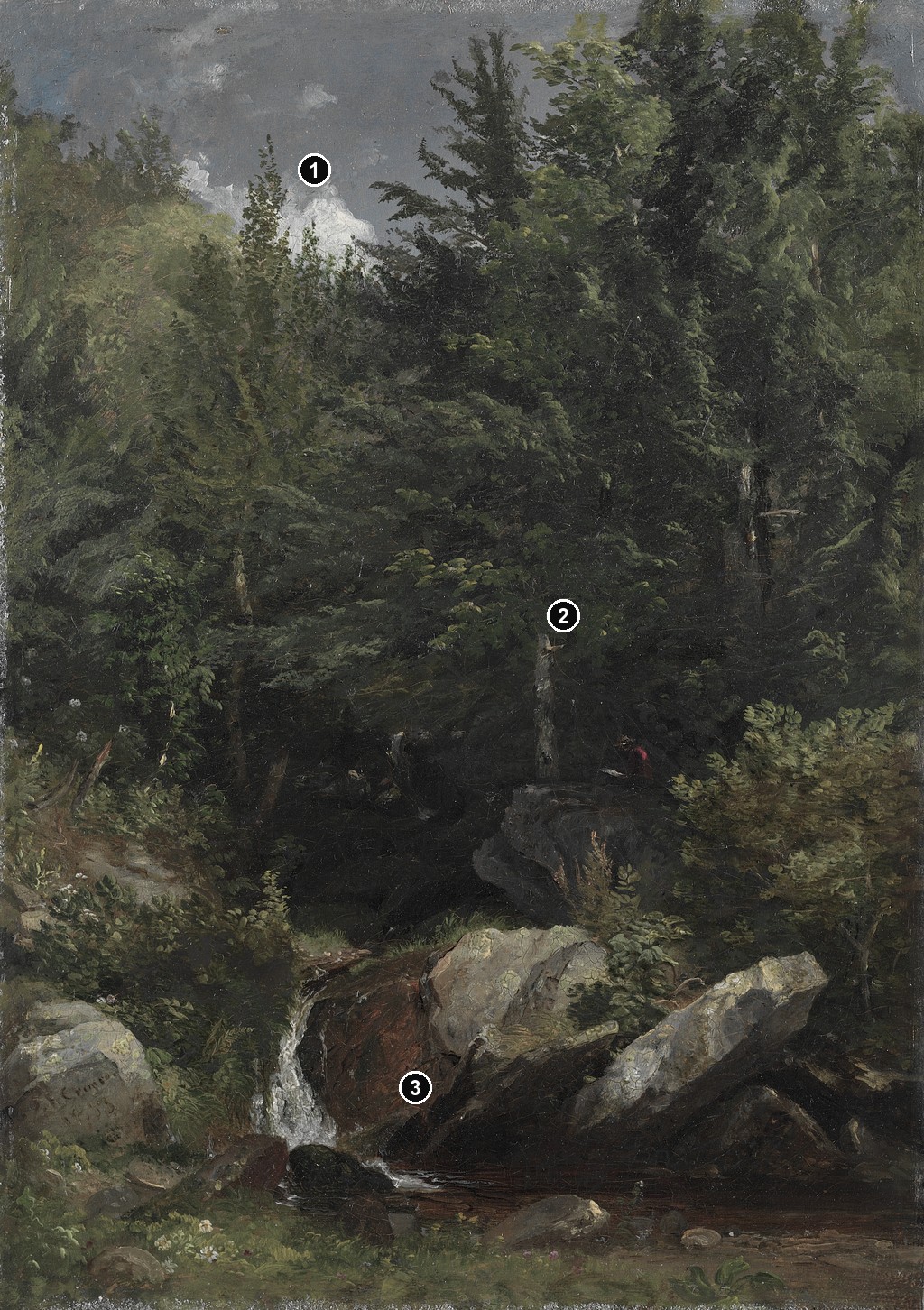
Trees And A Stream
Jasper Francis Cropsey, Trees and a Stream, 1853. Oil on board, 33.9 × 23.9 cm. Cleveland Museum of Art, 1977.118. A separate work, probably made during a summer stay in Massachusetts. Jasper Francis Cropsey / Cleveland Museum of Art. Image source. CC0 1.0. Separate resized overview with numbered points; details cropped from the original, without recolouring, retouching or enlargement.
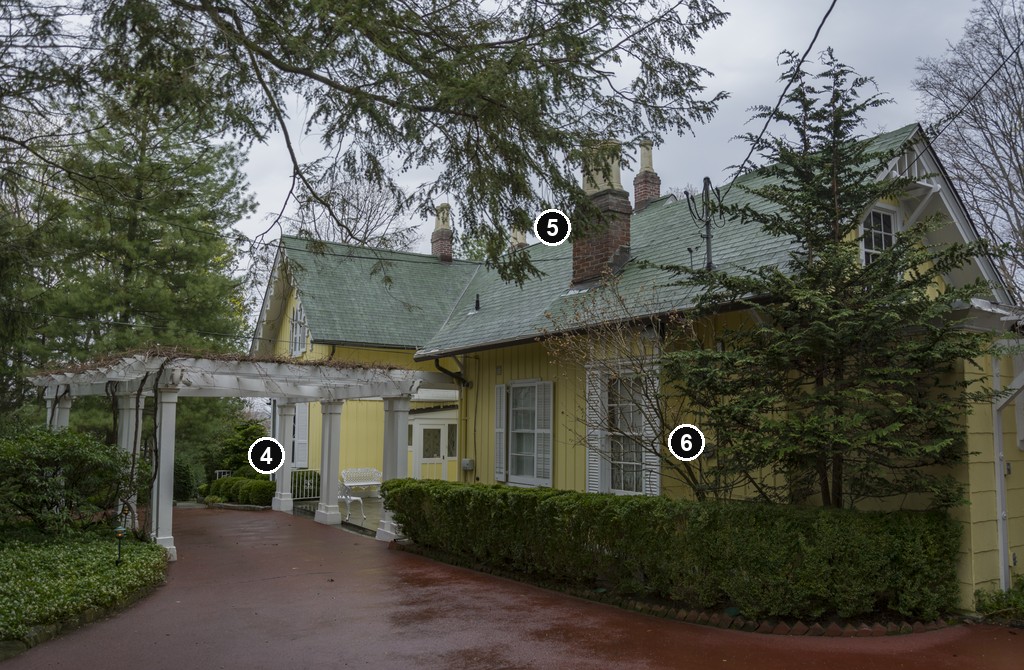
Ever Rest exterior, photographed 2018
Ever Rest, photographed in 2018 by Ɱ. This modern external view shows the surviving Hastings home, rather than the exact position from which the 1885 river drawing was made. Ɱ,2018 / Wikimedia Commons. Image source. CC BY-SA 4.0. Separate resized overview with numbered points; details cropped from the original, without recolouring, retouching or enlargement. Numbered overview and detail crops are adaptations of Ɱ’s 2018 photograph and are offered under the same CC BY-SA 4.0 licence.
Details from JASPER CROPSEY BIOGRAPHY
Compare the cropped details with the complete images above. Notice how their colours, shapes and positions contribute to the larger compositions.
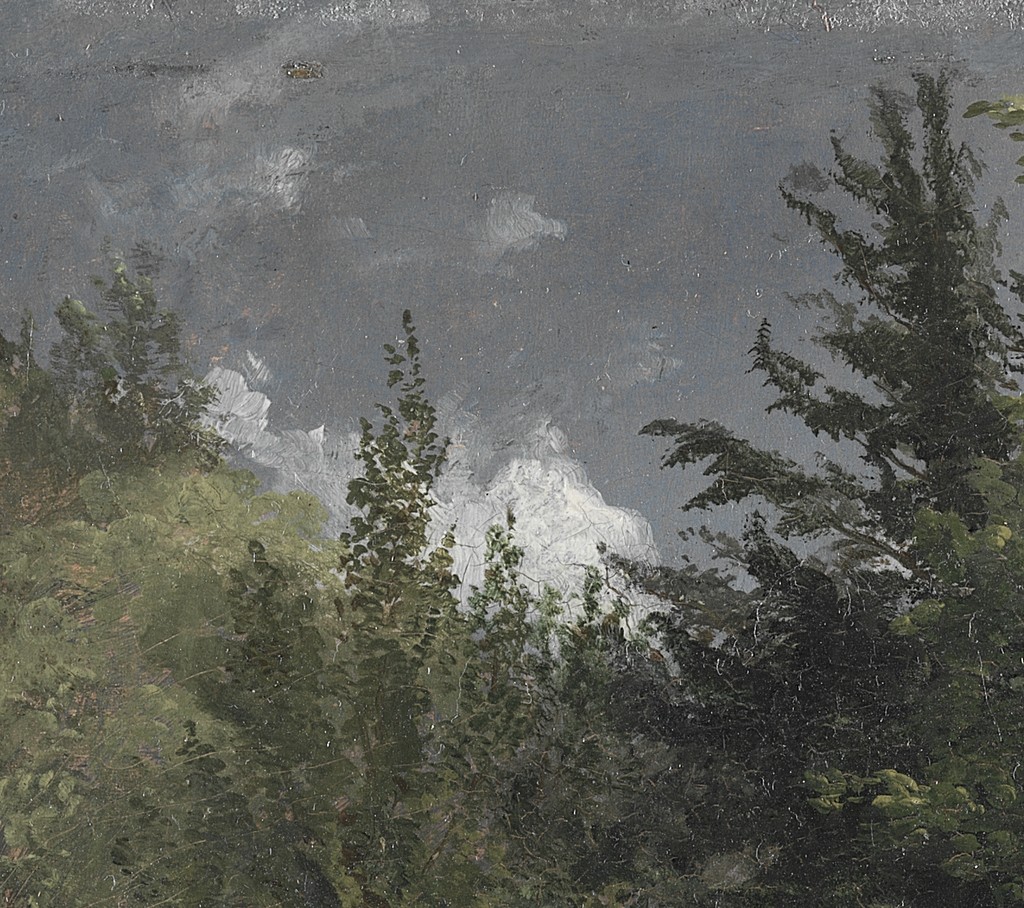
Trees And A Stream
Pale opening above the woodland
A pale sky opening appears above layered dark foliage. The small opening gives contrast to the enclosed wooded scene.
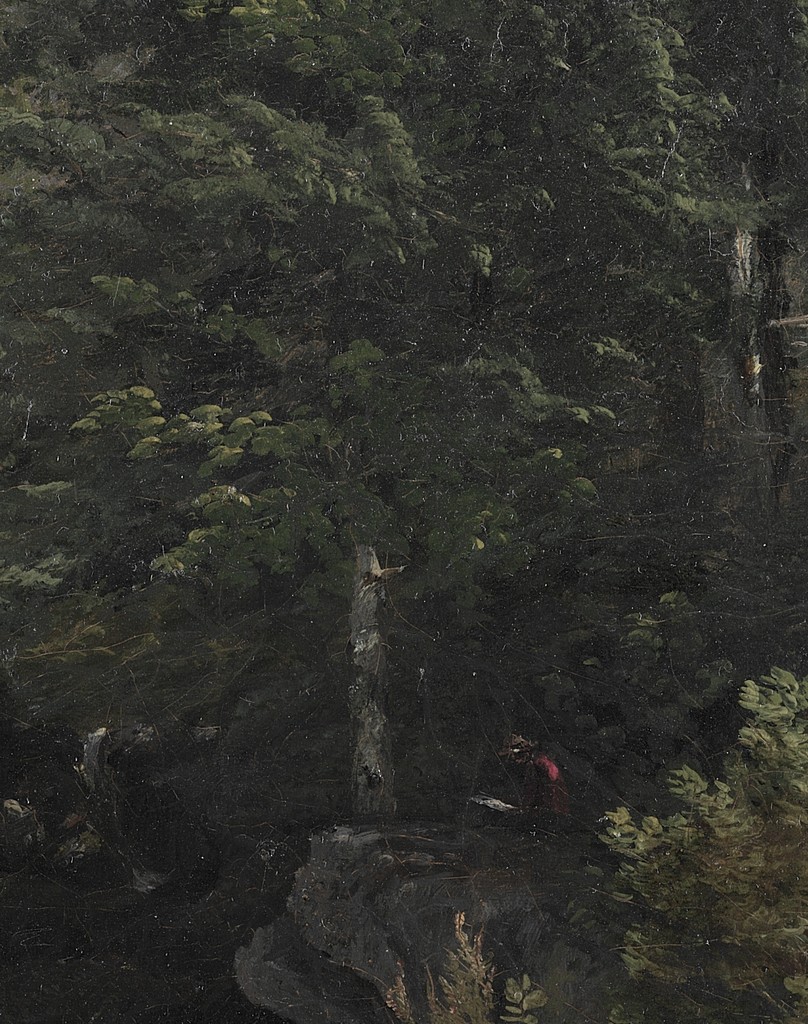
Trunks within the shaded foliage
Narrow trunks emerge unevenly through the shaded foliage. Differences of tone separate their forms without requiring a tree-species identification.
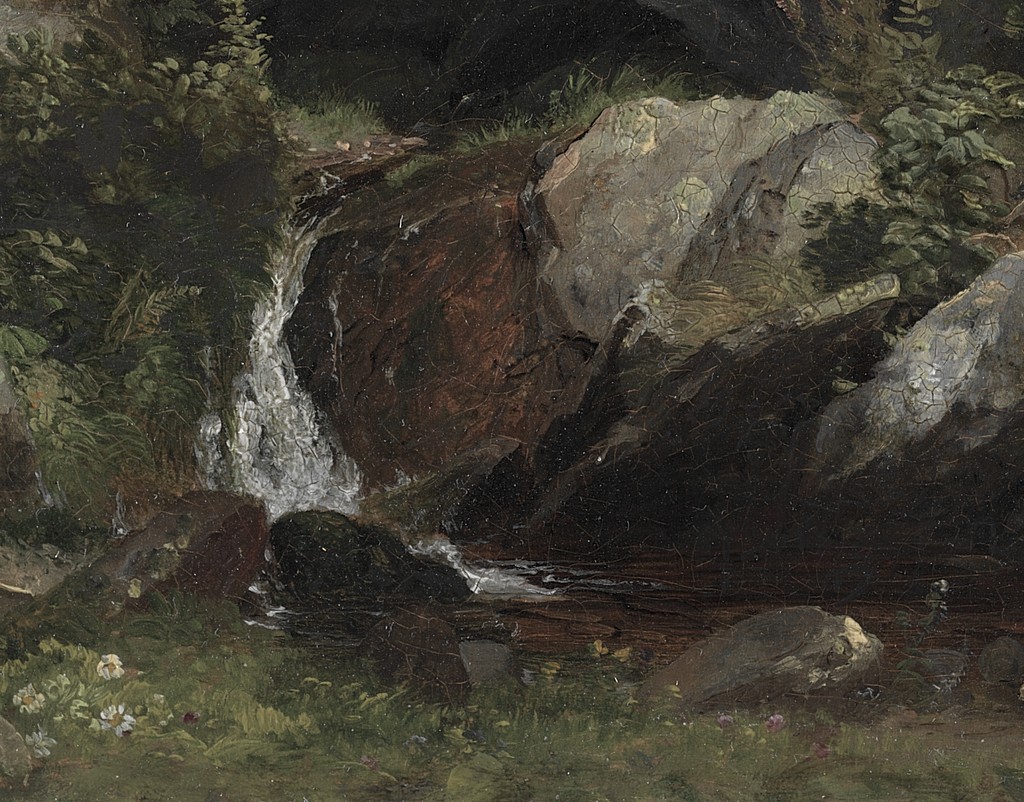
Stream passing between near rocks
A pale stream passes between irregular near rocks into darker water. Light marks along its edge make its descent visible.
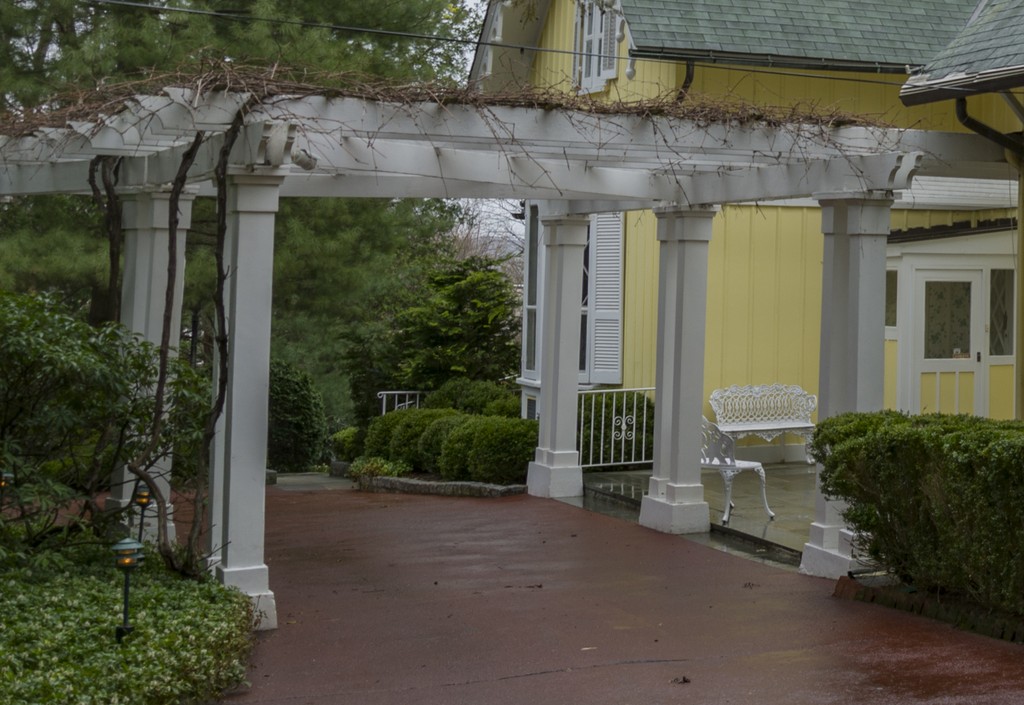
Ever Rest exterior, photographed 2018
Porch and approach in 2018
Pale porch supports and the paved approach are visible in Ɱ’s 2018 exterior photograph. The dated view documents the preserved property rather than an unchanged nineteenth-century scene.
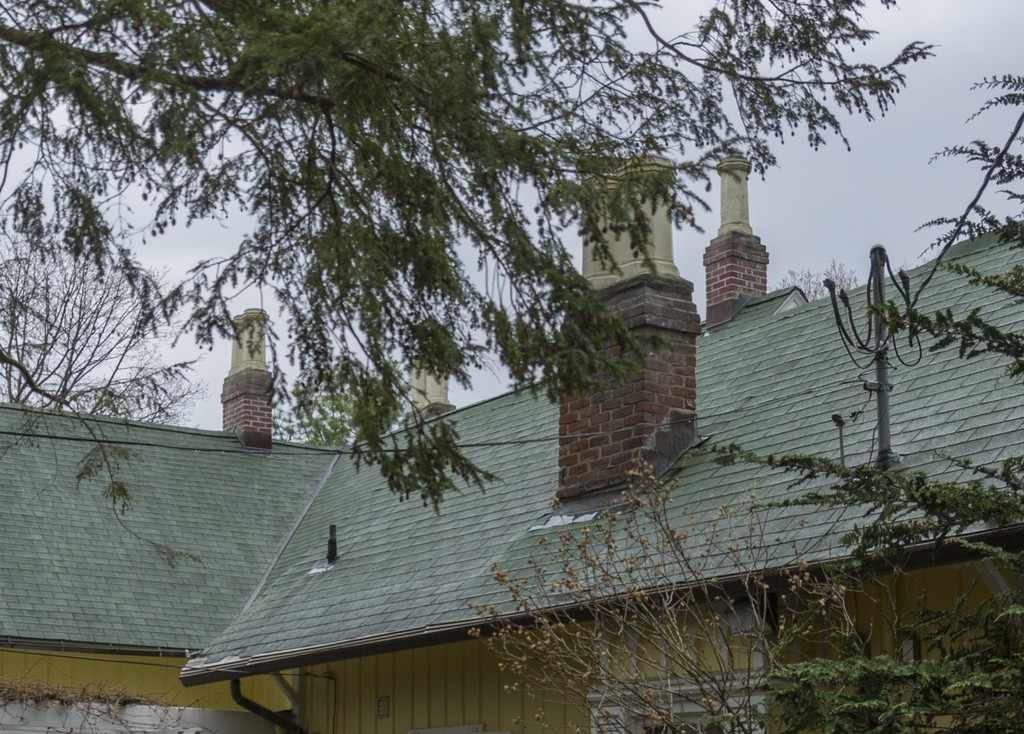
Roof slopes and chimneys
Overlapping roof slopes and brick chimneys divide the exterior into several forms. The photograph does not establish which individual materials survived from Cropsey’s lifetime.
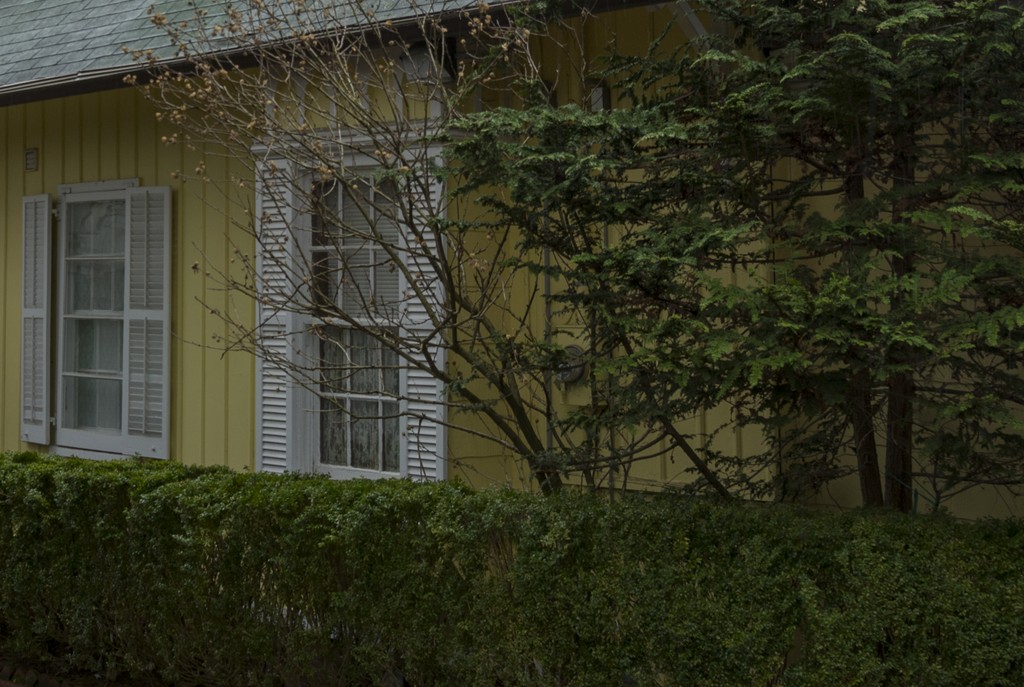
Windows, siding and planting
Pale windows and yellow siding remain visible behind trees and shrubs. Planting partly obscures the building, so the photograph is used alongside the measured survey rather than as a complete architectural plan.
Five years in an architectural office
Cropsey apprenticed to Joseph Trench from 1837 to 1842. Chotner records rapid progress in drawing: after eighteen months, he handled nearly all the office’s finished renderings. Trench also provided paints, canvas and a place for artistic study. [1]
The employment gave him a sustained practice of making form visible to other people. A rendering had a professional purpose, while painting offered further possibilities for colour, atmosphere and subject. Those activities overlapped within his training.
His unfinished reminiscences of 1846, published in the Staten Island Historian, describe lessons from Edward Maury and efforts to learn through copying. He recalls using his own watercolours as material for early oils and receiving advice from William Sidney Mount. [2]
The memoir also gives his side of disagreements in Trench’s office. Its immediacy is valuable, but it remains a young artist’s self-account, written before much of the career discussed here. It does not independently settle accusations about an employer’s conduct.
First exhibitions and early church designs
In 1843 Cropsey exhibited Italian Composition at the National Academy of Design. Chotner considers it probably based on a print, an important qualification because the painting preceded his first Italian journey. Its title alone cannot establish that he had already seen the country it evoked. [1]
Architectural commissions helped support him in the same period. Shepherd discusses two Staten Island churches: Gothic Revival St. Luke’s at Rossville and the Greek Revival Moravian Church at New Dorp. Their histories show a practical architectural career developing alongside painting. [2]
St. Luke’s cornerstone was laid in October 1843 and the church consecrated in September 1844. The Moravian church was designed in 1843 and later altered. Those dates belong to built projects; surviving drawing dates and later photographs require their own identities. [2]
The overlap makes the early transition more gradual than a simple abandonment of one skill for another. Cropsey gained recognition as a painter while continuing to use architectural design for income. The architecture guide follows those commissions and their later counterparts.
Greenwood Lake and Maria Cooley
Landscape studies in New Jersey helped develop his painting career. Chotner records a two-week trip that resulted in Greenwood Lake pictures accepted at an 1843 American Art-Union exhibition. Subsequent visits returned him to a region that would remain important for decades. [1]
On one of those visits he met Maria Cooley. They married in May 1847, before travelling abroad together. The researched chronology is retained here rather than adopting an inconsistent earlier marriage year from a shorter modern biography. [1] [3]
Professional standing was also growing. The National Academy elected him an associate in 1844 and a full member in 1851. The two stages should be distinguished rather than compressed into one date of membership. [1]
Greenwood Lake consequently joins several parts of the life: early landscape success, courtship and later repeated subjects. The Smithsonian’s 1875 canvas illustrated elsewhere in this cluster is one later work, not the original picture that established his early reputation.
First Europe: Britain, Rome and Italian material
The Cropseys travelled in Britain during the summer of 1847 before spending a year among American artists in Rome. Chotner gives that broad sequence; Tuckerman describes a more extensive route through Britain, France, Switzerland and Italy. His account is used here as a period narrative, not an independently checked itinerary for every stop. [1] [3]
Tuckerman and the Smithsonian biography connect Cropsey with a Roman studio previously occupied by Thomas Cole. That association helps situate his admiration for an earlier American landscape painter. It does not make Cropsey Cole’s formally documented pupil. [3] [7]
The journey supplied ruins, coastal views and other Italian subjects for continued work. Tuckerman describes outdoor studies around Rome and travel in southern Italy, including company with William Wetmore Story and Christopher Pearse Cranch. The paintings could be developed later from material gathered abroad. [3]
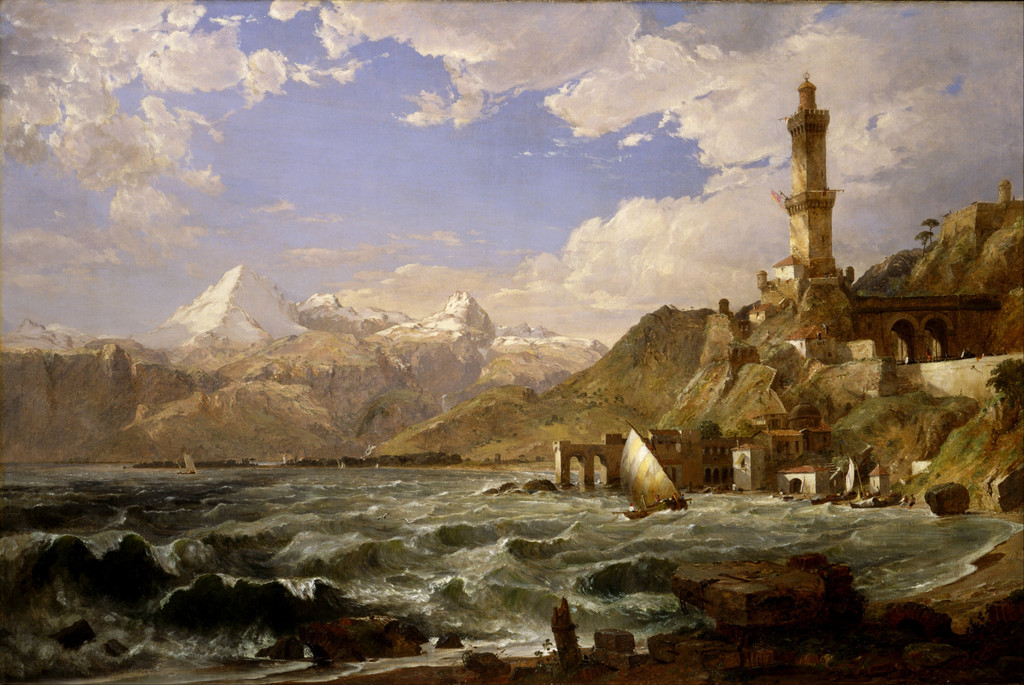
This distinction matters for The Coast of Genoa of 1854. A finished date after the journey does not imply a new Italian trip in that year. The interval between gathered material and a completed oil belongs to the practice, rather than being a chronological error. [13]
Return in 1849 and the American studio
Cropsey returned to the United States in 1849 and visited the White Mountains. Chotner describes a New York studio from which he travelled in summers through upstate New York, Vermont and New Hampshire. American material developed alongside the Italian subjects. [1]
Teaching supplemented income when sales were weak. Chotner identifies David Johnson as the pupil who gained substantial recognition. That particular relationship is better documented than a general claim that every related landscape painter studied under Cropsey. [1]
The Cleveland Trees and a Stream of 1853 gives one close example from this phase. Its small oil-on-board format concentrates on woodland and moving water, contrasting with the expansive landscapes that later dominated his public reputation. The museum places its probable outdoor setting in Massachusetts. [11]
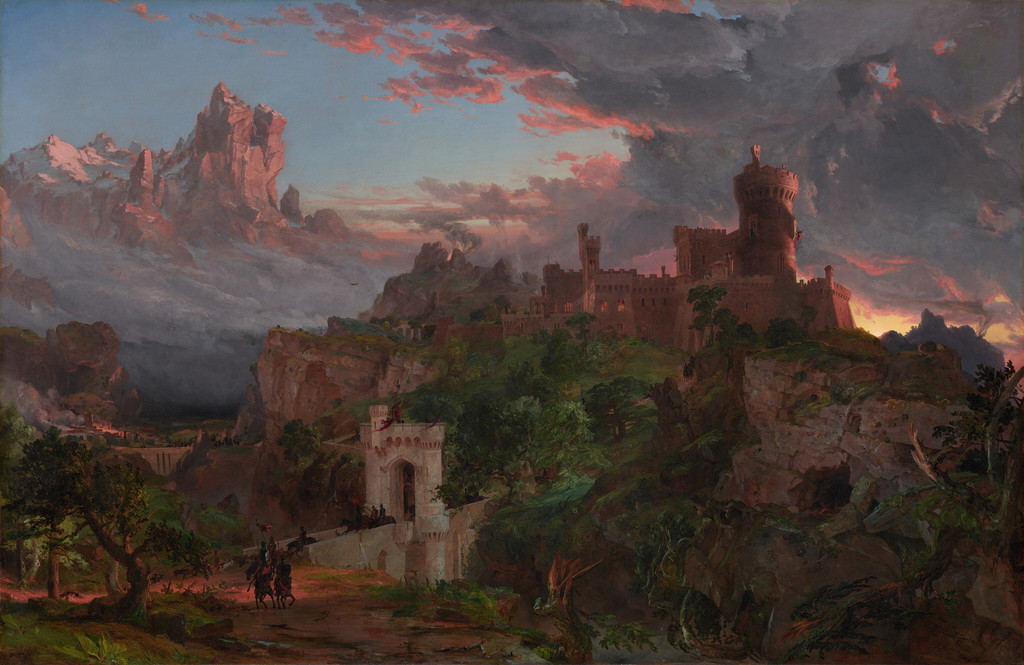
The 1851 companion paintings The Spirit of War and The Spirit of Peace show another direction. Chotner discusses their imaginary architecture and contrasting worlds. Cropsey’s landscape practice could incorporate allegory as well as direct studies of a familiar region. [1]
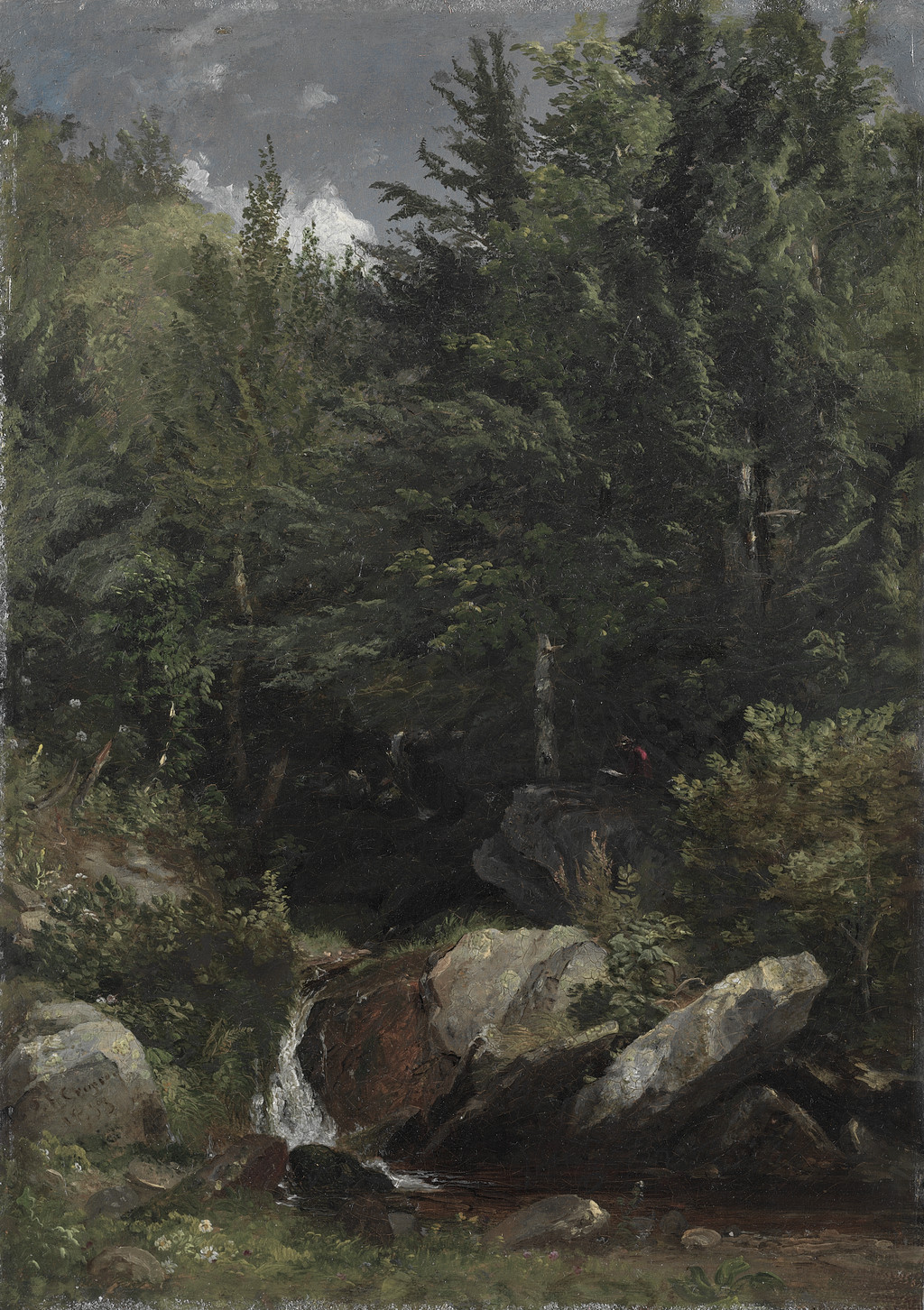
Jasper Francis Cropsey, Trees and a Stream, 1853. Cleveland Museum of Art, 1977.118. A modest oil-on-board woodland study from the years between European residences. Jasper Francis Cropsey / Cleveland Museum of Art. Image source. CC0 1.0. Proportionally resized only; full carrier, margins and native appearance retained.
A painter writing about the sky
In August 1855 Cropsey published Up among the Clouds in The Crayon. The complete two-page essay gives a direct expression of his interest in atmospheric form, variety and the possibilities of landscape painting. It also gives religious importance to the painter’s task. [9]
The text asks artists to look beyond a repeated agreeable sky. Cropsey attends to different cloud forms and their contribution to space, light and feeling. His argument connects observation with selection: a painter has to make choices from the variety offered by nature. [9]
The essay is a useful companion to the paintings because it records a concern before the major London autumn canvas. It is not a modern meteorological paper or a recipe listing pigments and brushes. The essay guide follows its actual language and context.
London from 1856 to 1863
Cropsey and Maria sailed for England in June 1856 and established a studio at Kensington Gate in London. Chotner describes an active social circle that included John Ruskin, Lord Lyndhurst and Charles Eastlake. The seven-year period connected professional work with British artistic and social networks. [1]
His commissions moved in both directions: English landmarks for American patrons and American scenery for British audiences. Museums and galleries also brought him into contact with the paintings of Constable and Turner. Trips to Dorset and the Isle of Wight supplied further subjects. [1]
Tuckerman records illustration designs for editions of Moore and Poe in 1858, and a proposed series of thirty-six pictures interrupted after sixteen because of financial difficulties in 1857. These details come from the period account. They show how publication and commercial conditions could enter the work alongside exhibition paintings. [3]
British success therefore had several forms. Landscape sales, commissions, prints, illustration and public display connected the painter with different audiences. The period cannot be reduced to a single royal encounter, even though that event became part of his later reputation.
Watch: Jasper Cropsey
Look closely at Cropsey’s Mount Jefferson, then explore the wider Hudson River School tradition.
Summer or Autumn? Picturing the American Republic
Smarthistory discusses Cropsey’s seasonal landscape and the image of the American republic.
Watch on YouTubeAutumn and the British audience
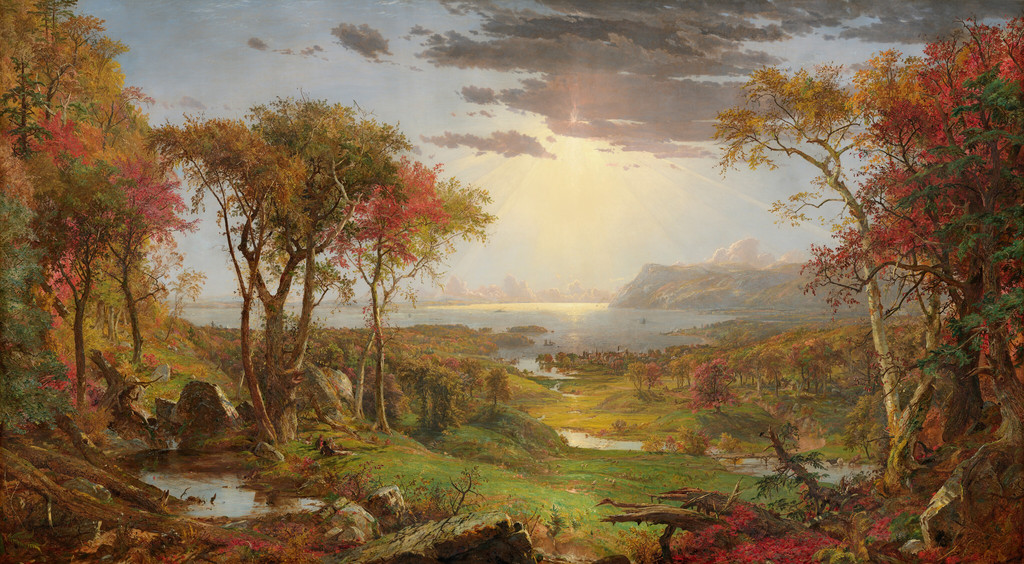
Autumn—On the Hudson River was completed in London in 1860 after a long period of work. Its broad panorama and vivid foliage presented American country at a scale that invited sustained looking. Chotner discusses critical responses to its beauty and the credibility of its colour. [1]
She reports leaf samples pasted to cardboard, citing a Guardian account of June 1860 through Talbot. That mediated evidence is distinct from Cropsey’s presentation to Queen Victoria in June 1861. The two events should not be combined into invented dialogue in which the Queen rejects the leaves. [1]
The painting’s exhibition at the London International Exhibition of 1862 extended its public life. Its American subject was being understood within British discussion of travel, scenery and art. The transatlantic setting is part of the work’s history, rather than incidental background. [1]
The individual painting page follows the documented viewpoint, reception and technical record. Here its role is biographical: it marks a period when Cropsey’s public association with American autumn became especially strong.
Jasper Francis Cropsey, Autumn—On the Hudson River, 1860. National Gallery of Art, 1963.9.1. An American landscape completed and first publicly received in London. Jasper Francis Cropsey / National Gallery of Art, Washington. Image source. CC0 / Public domain. Proportionally resized only; full carrier, margins and native appearance retained.
Home again: patrons and transport
The Cropseys returned to America in 1863. Chotner records a subsequent visit to Gettysburg to study the battlefield’s topography, as well as renewed architectural commissions. The return opened another phase of American work rather than ending his international connections. [1]
Rebora traces major Pennsylvania landscapes of 1865 through commissions, studies and circulation. Valley of Wyoming and Starrucca Viaduct place inhabited country within extensive panoramas. Their individual histories show how patrons and public forms of display shaped landscape production. [4]
The Brandywine Museum’s account of the 1873 Ramapo commission identifies James McHenry as a transatlantic railway businessman who had taken control of the Erie Railway. The commission joins a particular autumn landscape with an investor’s celebration of a route. [8]
Cropsey’s later elevated railway station designs add a built form to his relation with transport. Chotner places the Gilbert Railway’s Queen Anne style cast and wrought iron stations in his later career. They should not be moved back to the 1840s by a compressed biography. [1]
Aladdin and regional familiarity
He began Aladdin outside Warwick in 1866, and the twenty-nine-room home was completed in 1869. Maddox describes its large studio and the way home windows and mirrors framed and reflected surrounding scenery. The house combined professional ambition with familiar regional material. [1] [5]
Maddox’s Sugar Loaf study shows why that familiarity should not be equated with exact transcription. The painter could enlarge a mountain or combine remembered forms within a continuous view. A local setting supplied material without dictating every pictorial decision. [5]
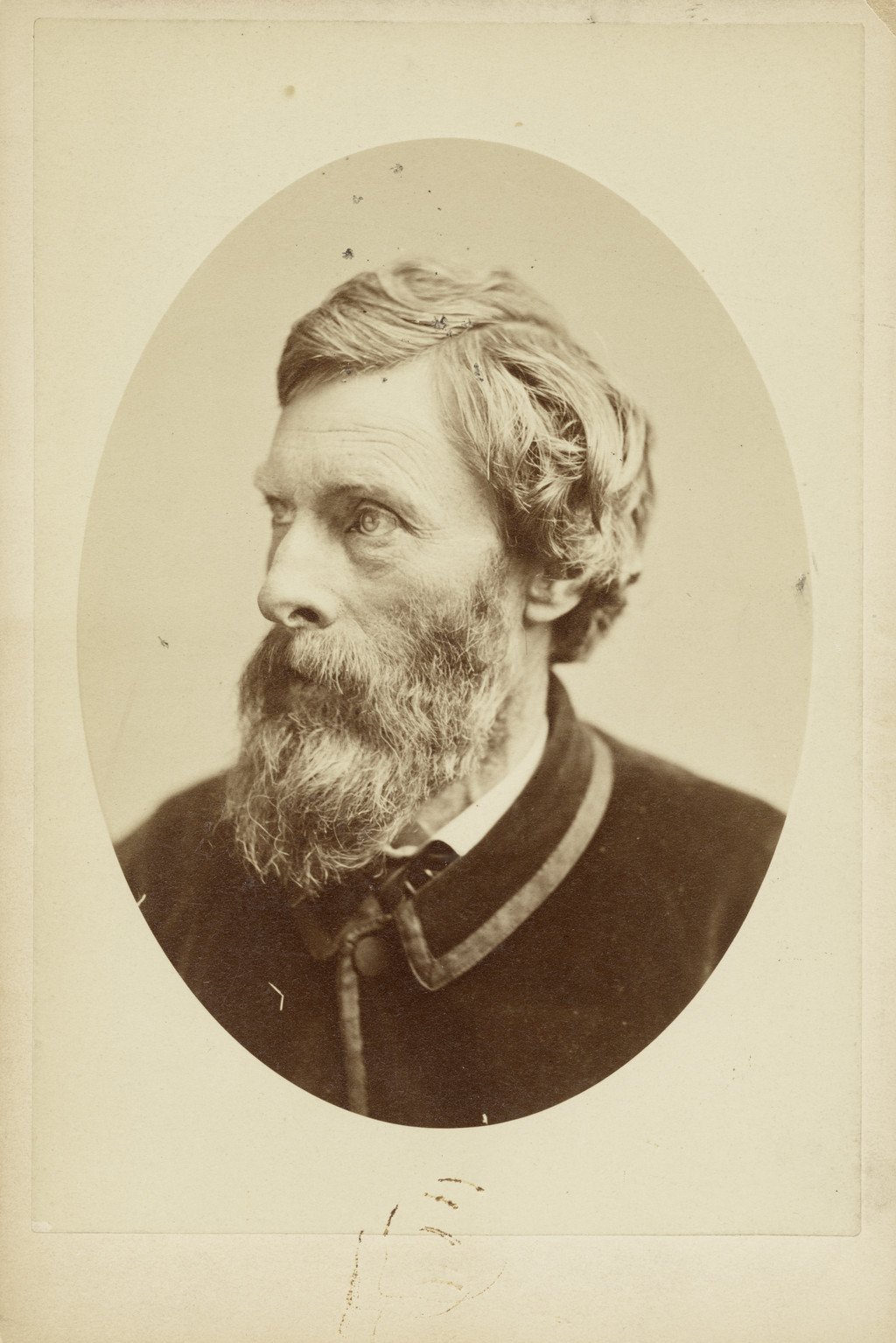
Napoleon Sarony’s portrait, dated about 1870 in the source record, belongs around this phase of the life. The complete photograph presents the bearded painter within an oval on its marked mount. It supplies a period likeness, not evidence of a particular painting session or state of health. [12]
Its whole carrier is retained here. Scratches, stains and margins belong to the surviving object’s appearance, rather than details to remove in order to manufacture a cleaner historical document. The source identity and image credit make its role different from the modern house photograph.
Changing taste and the Hastings move
Chotner describes declining demand as Cropsey’s detailed, dramatic landscapes were eclipsed by smaller, softer, mood-oriented work associated with Barbizon-inspired painters such as Inness. Continued exhibition did not preserve his earlier level of popularity. [1]
Aladdin was sold in 1884. Jasper and Maria moved to Hastings in 1885 and bought the earlier Saunders cottage in 1886, naming it Ever Rest. The foundation dates Cropsey’s added studio to about 1887 and describes its north-facing window and cupola. [1] [6]
The foundation’s account of moved furnishings creates a material connection between the homes. Cropsey designed the dining furniture, which New York makers built, and objects from Aladdin found places in the smaller house. The studio also served family and guests. [6]
His late material was not confined entirely to Hastings. The Brandywine Museum connects its 1887 autumn painting with a regional trip. The documented example qualifies any blanket assertion that he ceased travelling after the move. [8]
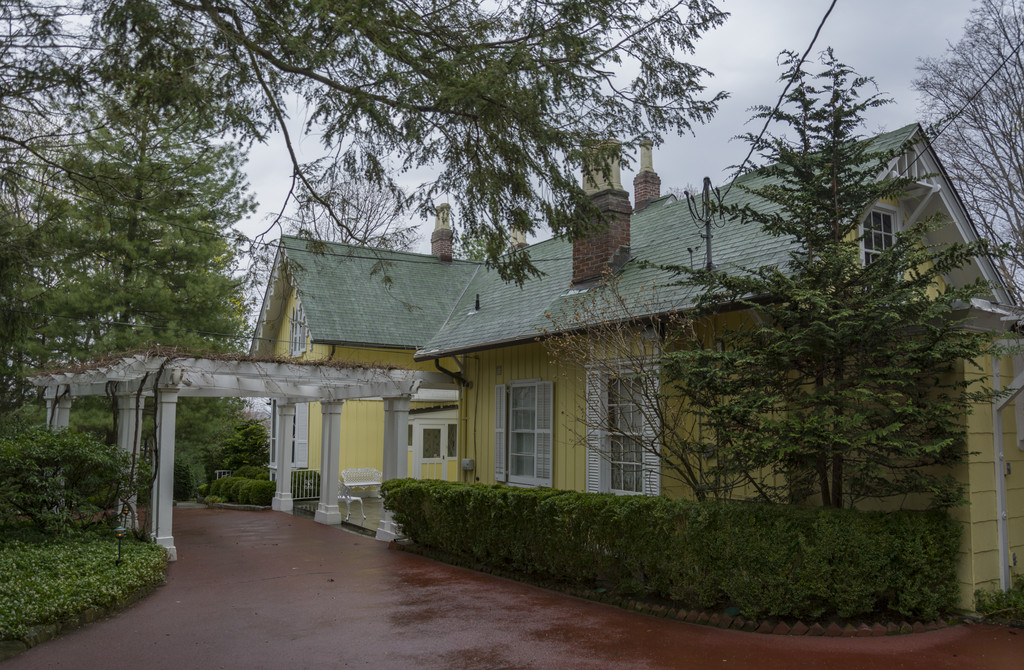
Ever Rest, Hastings-on-Hudson, photographed by Ɱ in 2018. Modern context for Cropsey’s later home, proportionally resized only; CC BY-SA 4.0. Ɱ, 2018; CC BY-SA 4.0. Image source. CC BY-SA 4.0. Proportionally resized only; full carrier, margins and native appearance retained.
Watercolour, death and later memory
Cropsey suffered a stroke in 1893 and increasingly worked in watercolour afterward, according to Chotner. The medium had already been part of his training and career; he was a founding member of the watercolour society in 1867. The late change was an increased emphasis, not a new discovery. [1] [4]
He died on 22 June 1900, aged seventy-seven. Maria died in 1906. The foundation records an estate sale of remaining paintings and subsequent family occupation of Ever Rest; William Steinschneider, husband of their granddaughter Isabel, was the last family resident and died in 1970. [1] [6]
Ever Rest became part of the Newington-Cropsey Foundation in 1977. Later collecting and research helped reconstruct a broader understanding of his work. The foundation’s catalogue page describes three volumes and the substantial role of Kenneth W. Maddox in that research; the page supplies publication information, not a claim that those volumes were consulted here. [6] [10]
The surviving record returns attention to a varied career. Cropsey’s autumn reputation remains central, but office drawing, travel, teaching, publications, architecture and work on paper make the life more extensive. Particular sources and objects allow those activities to be connected without replacing the historical gaps with a polished legend.
Artworks directory
A selected directory of 18 paintings, two drawings and three architectural projects. Repeated subjects retain distinct object identities. Links lead to a companion article where available, otherwise the consulted institutional record. Unillustrated objects remain searchable; this is not a complete catalogue raisonné.
Frequently Asked Questions
The researched chronology used here gives May 1847. [1]
He lived there from 1856 to 1863, a major seven-year phase of his career. [1]
Discussion
Look again at the images and ideas explored in Jasper Cropsey Biography. These editorial prompts invite your observations.
Reader Insights
Which part of the life becomes clearer through the architectural training?
How does a London audience change the history of an American landscape?
What does the surviving home add that a list of paintings cannot?
Join the Conversation
Share a detail, comparison or question about Jasper Cropsey Biography below.
References
- Deborah Chotner, Cropsey biography and painting entries, American Paintings of the Nineteenth Century, Part I, National Gallery of Art (1996), printed pp.109–122. Researched life chronology, War, Warwick and Autumn. View source
- Barnett Shepherd, architecture discussion, and Jasper Cropsey, unfinished 1846 reminiscences, Staten Island Historian, Summer 1983, PDF pp.6–8 and 10–12. Early testimony and church history. View source
- Henry T. Tuckerman, Book of the Artists (1867), Cropsey chapter, pp.532–540, consulted through OCR. Period account of travel, reputation, illustration and commercial work; paraphrased, without scan-confirmed direct quotations. View source
- Carrie Rebora, Cropsey biography and selected entries, American Paradise: The World of the Hudson River School, Metropolitan Museum of Art (1987), printed pp.200–216. Society role, commissions and individual painting histories. View source
- Kenneth W. Maddox, A Forgotten Mountain: Jasper F. Cropsey’s Paintings of Sugar Loaf, Metropolitan Museum Journal, 35 (2000), pp.221–236. Aladdin, familiar country and composed topography. View source
- Newington-Cropsey Foundation, Ever Rest. Cottage, studio, family survival and foundation history. View source
- Smithsonian American Art Museum, Jasper Francis Cropsey biography. Roman studio association; its compressed railway chronology is not adopted. View source
- Brandywine Museum of Art, Cropsey, Wyeth, and the American Landscape Tradition, 2025 large-print labels, selected PDF pp.8–9 and 19–22. Ramapo patron and later regional travel. View source
- J. F. Cropsey, Up among the Clouds, The Crayon, II, 6, 8 August 1855, pp.79–80. Complete primary essay on clouds and landscape practice. View source
- Newington-Cropsey Foundation, Catalogue Raisonne. Publication information and Maddox’s research role; volumes not consulted. View source
- Cleveland Museum of Art, Trees and a Stream, accession 1977.118. Exact 1853 oil-on-board study and probable setting. View source
- Wikimedia Commons, Jasper Francis Cropsey by Napoleon Sarony — Original, National Portrait Gallery S/NPG.78.41. Period portrait dated about 1870, original whole mount and reproduction rights. View source
- Smithsonian American Art Museum, The Coast of Genoa, accession 1984.162. Exact completion date of 1854, distinct from the earlier journey. View source
- Splash image source.
Napoleon Sarony, Jasper Francis Cropsey, about 1870. National Portrait Gallery, Smithsonian Institution, S/NPG.78.41. The complete original portrait and marked mount are retained. Napoleon Sarony, ca1870 / National Portrait Gallery, Smithsonian Institution, S/NPG.78.41. Public domain. Proportionally resized only; full carrier, margins and native appearance retained.
View source - Kevin J. Avery, “The Hudson River School”, Metropolitan Museum of Art (2004). Origins in 1825 and decline in the 1870s–1880s; c. 1825–1880 is an approximate comparative range. View source
- Smithsonian American Art Museum, Asher Brown Durand: 1796–1886. Artist life dates. View source
- Smithsonian American Art Museum, Thomas Cole: 1801–1848. Artist life dates. View source
- National Gallery of Art, Martin Johnson Heade: 1819–1904. Artist life dates. View source
- National Gallery of Art, Jasper Cropsey: 1823–1900. Artist life dates. View source
- National Gallery of Art, George Inness: 1825–1894. Artist life dates. View source
- Amon Carter Museum of American Art, Frederic Edwin Church: 1826–1900. Artist life dates. View source