


 by
Tom Gurney
Tom Gurney BSc (Hons) is an art history expert with over 20 years experience
Email:
tomgurney1@gmail.com
/ Phone:
+44 7429 011000
Circus Elephants by John Steuart Curry: Introduction
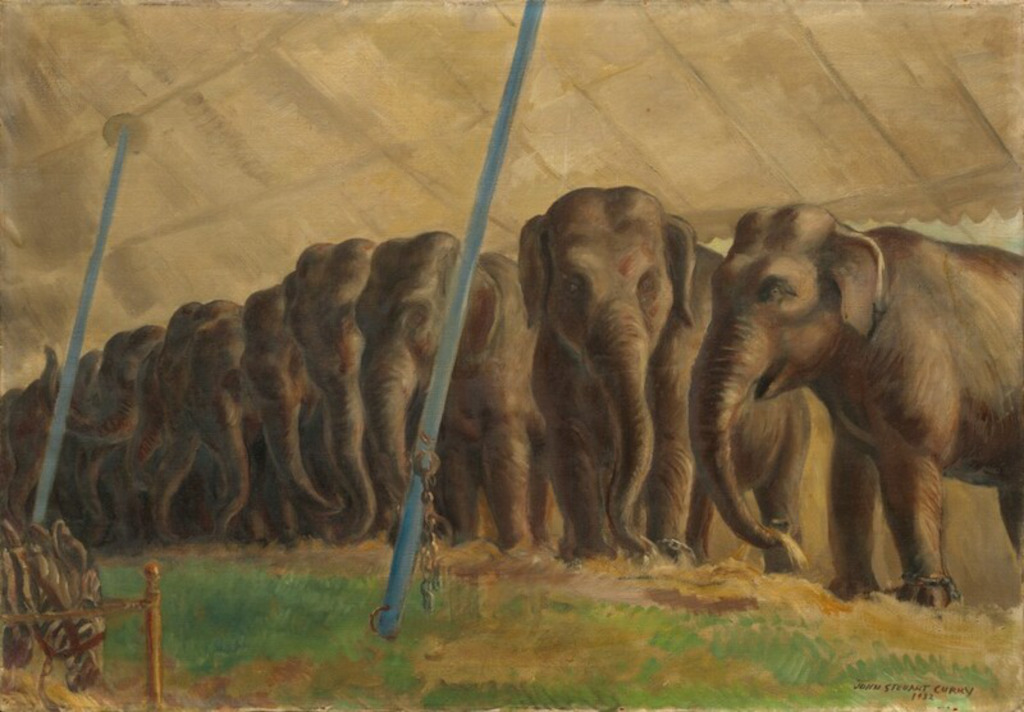
Under a broad canvas roof, a line of elephants gathers over scattered hay. The nearest animals loom above the foreground, while their companions diminish towards the left. John Steuart Curry makes this apparently quiet feeding scene an exercise in weight, balance and repeated movement. A curled trunk or an angled ear interrupts the procession of heavy bodies, giving the group a rhythm that rewards slow looking.
Painted in 1932, Circus Elephants belongs to the National Gallery of Art in Washington. The oil on canvas measures 64 by 91.8 centimetres and carries accession number 1976.50.1. Admiral Neill Phillips gave it in memory of Grace Hendrick Phillips. Curry subsequently developed the subject in a separate lithograph, so the painting and print have different dates, materials and collection histories. [1]
At a Glance
- Artist John Steuart Curry, 1897–1946.
- Title Circus Elephants .
- Date 1932.
- Medium Oil on canvas.
- Dimensions 64 × 91.8 centimetres, overall.
- Collection National Gallery of Art, Washington, DC.
- Credit Gift of Admiral Neill Phillips in memory of Grace Hendrick Phillips.
- Accession 1976.50.1.
- Related print Circus Elephants , published in 1936 by Associated American Artists.
This work across John Steuart Curry’s career
Circus Elephants (current article)
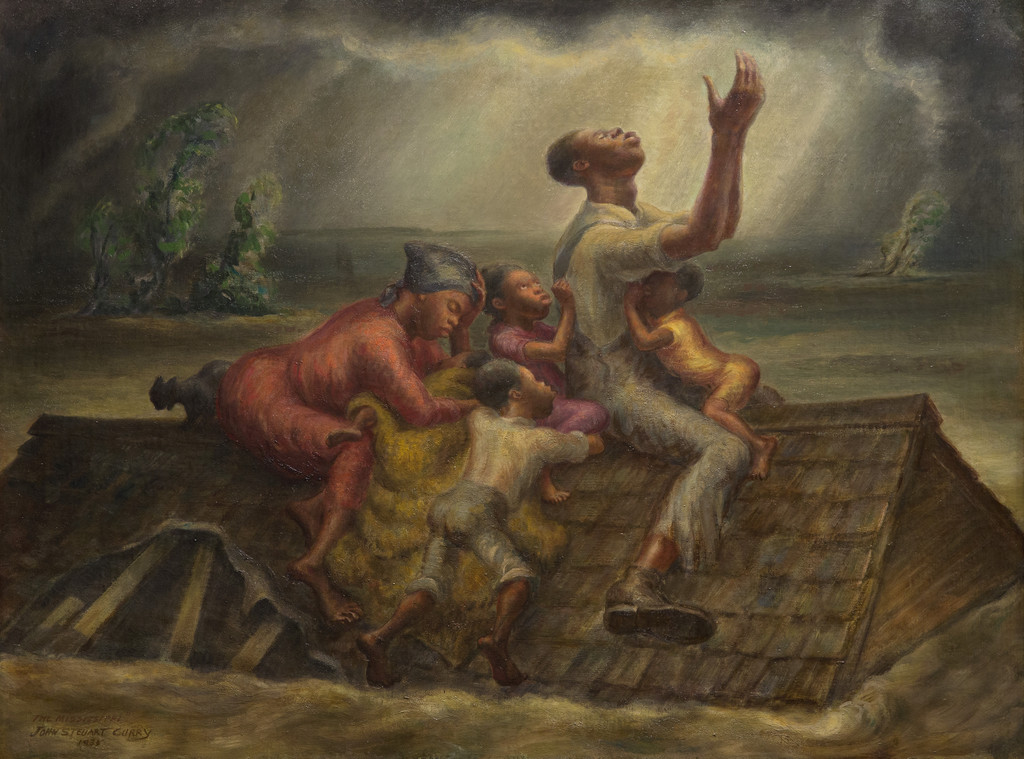
1932 paintingThe Mississippi
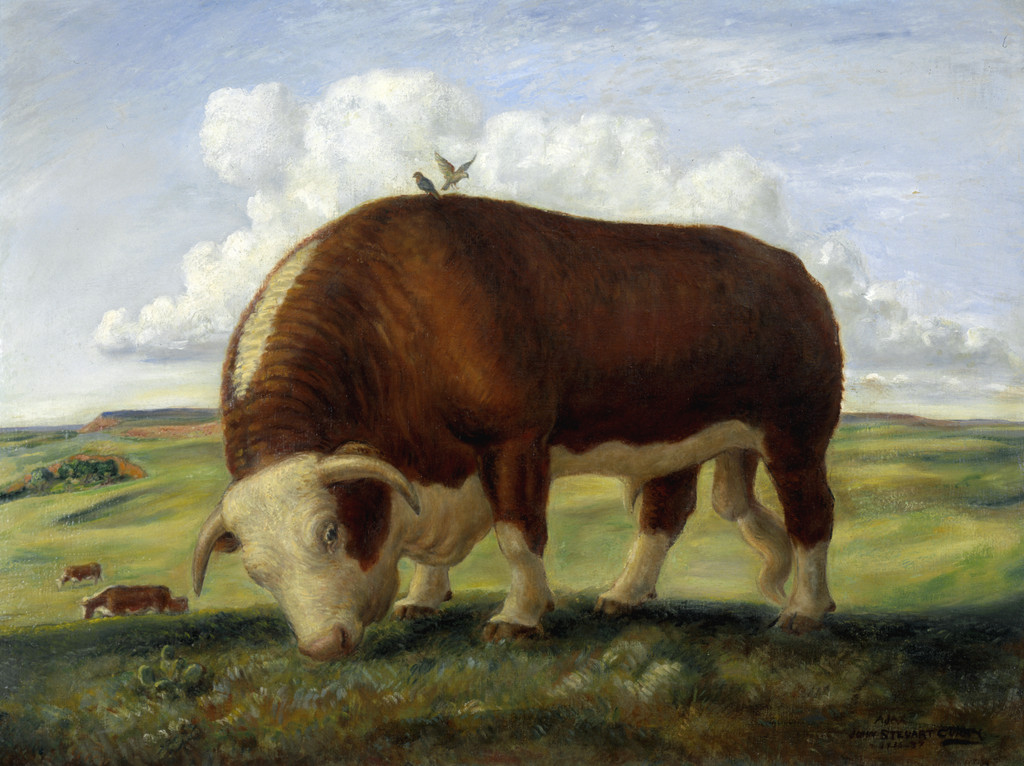
1935 paintingAjax
1936–37 oil paintingTragic Prelude
1938–40; project 1937–42Wisconsin Landscape
1938–39Our Good Earth
1942 oil paintingNotes and sources
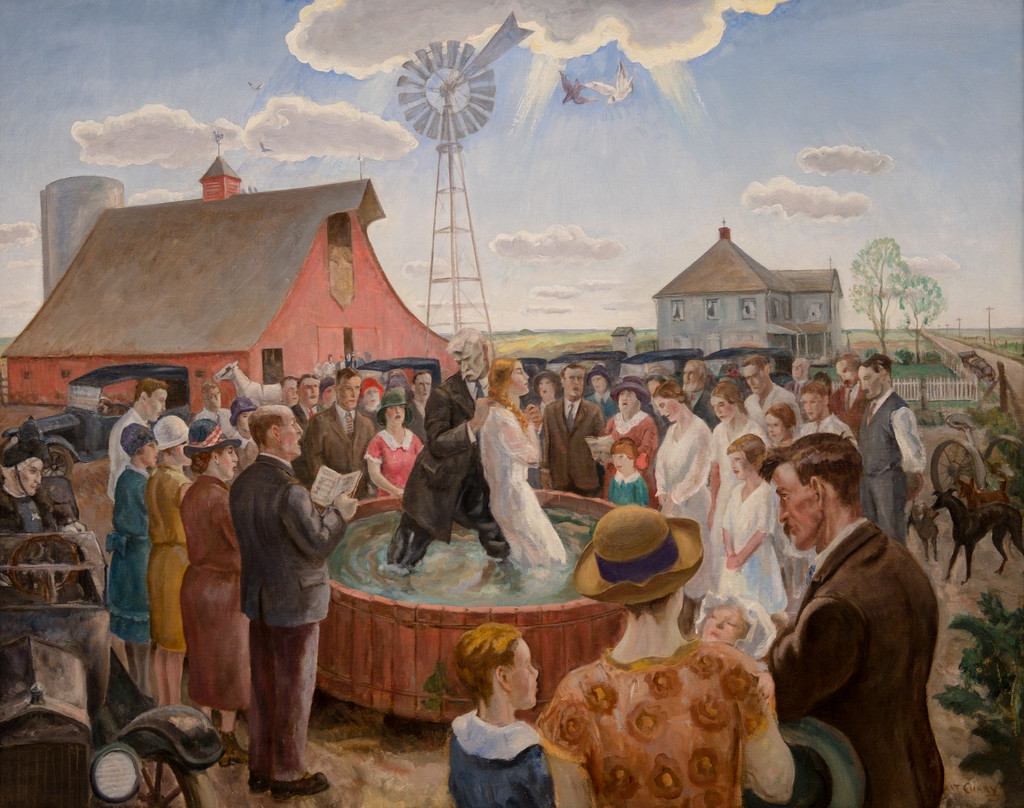
Baptism in Kansas. A remembered Kansas ceremony is staged within a working farmyard. [2]
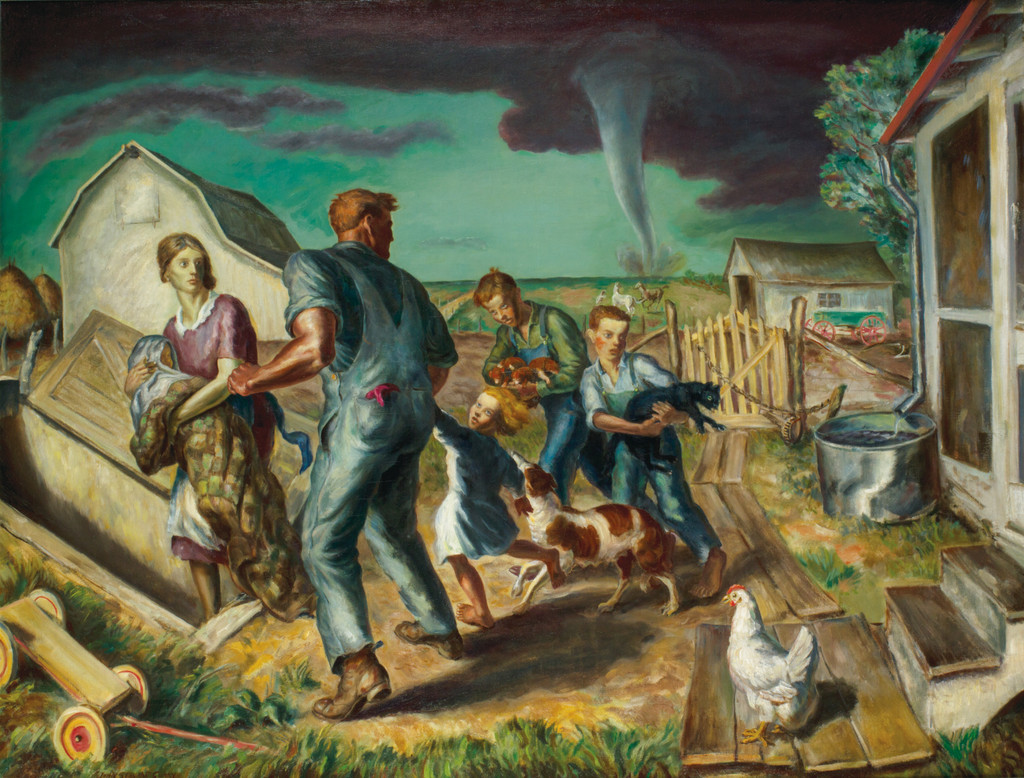
Tornado Over Kansas. A Kansas storm and a family seeking shelter, painted in Curry’s Westport studio. [3]
Circus Elephants (current article). Elephants and handlers occupy the working space beneath a circus tent. [1]
The Mississippi. A family occupies a roof amid floodwater; the painting is tempera on canvas mounted on panel. [4]
Ajax. The monumental bull in the Smithsonian oil differs from the earlier lithograph. [5]
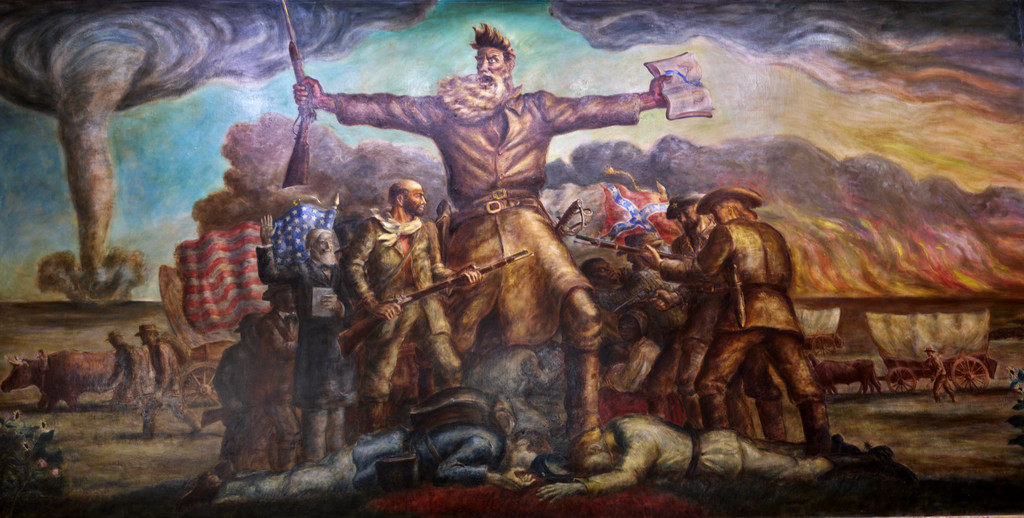
Tragic Prelude. John Brown stands at the centre of a Kansas State Capitol mural continuing across adjoining walls. [6]
Wisconsin Landscape. An extensive farm panorama, distinct from the separately catalogued preparatory study. [7]
Our Good Earth. The Chazen painting is distinct from the watercolour study, lithographs and wartime posters. [8]
Contents
- A line of animals under the tent
- Mass, receding space and the moving trunk
- The 1932 circus journey
- Drawing and the return to the studio
- Paint handling and the technical examination
- The 1936 lithograph
- Exhibition, ownership and later interpretations
A line of animals under the tent
The tent occupies much of the upper picture. Its pale fabric spreads above the elephants like a shallow canopy, enclosing them without providing a distant view. The scene feels sheltered and crowded. Curry gives the animals room to stand, but their overlapping forms leave relatively few openings between them. The weight of one body seems to continue into the next.
Two blue poles cut across this procession. They lean through the picture at different distances, connecting the ground with the roof and breaking the repeated curves of backs and heads. Their straight edges make the animals appear rounder. Blue also provides a cool interruption among the warmer browns, greys and straw colours, keeping the tent structure distinct from the herd.
The nearest elephant extends beyond the right edge. That partial body makes the gathering seem larger than the picture can contain. At the opposite corner, a small zebra's head appears behind a railing. Its stripes create a sharply contrasting pattern beside the elephants' broad surfaces. Both cropped animals suggest that the viewer is seeing one portion of a larger enclosure.
Hay scattered across the foreground connects the animals to a shared activity. The green ground remains visible around it, with patches of brown showing through. These irregular areas prevent the lower picture from becoming a smooth platform. Looking from the loose straw upwards to the elephants' feet gives their bodies a convincing place to rest.
Mass, receding space and the moving trunk
The changing scale of the heads establishes depth immediately. On the right, faces, ears and trunks can be examined separately; farther left, they form a closer pattern. Overlap matters as much as diminishing size. Each body conceals part of the next, so the eye follows a continuous chain of animals into the background rather than jumping between isolated silhouettes.
Within that repetition, Curry varies the trunks. Some descend almost vertically; others bend or curl towards the hay. A trunk combines the visual properties of a limb and a swinging line: it belongs to a heavy body but can turn through a much tighter curve. Those small changes make the row seem capable of shifting even though the elephants stand in place.
The two nearest heads offer different views of the face. One is more frontal, while its neighbour turns across the picture. The contrast invites comparison between the broad forehead, the folded ear and the narrow eye. Small facial features draw attention precisely because they occupy so little space within such substantial forms. The animals become individually interesting without needing human expressions.
Chains visible near the legs and tent supports also belong to this scene of captivity. They complicate an easy impression of unrestricted calm. The painting lets us observe a feeding interval within a managed enclosure; it cannot tell us everything about the animals' treatment or experience. Attending to the restraints keeps the material circumstances of the spectacle in view alongside Curry's impressive handling of their bodies.
The 1932 circus journey
In April 1932 Curry began about ten weeks with the Ringling Bros. and Barnum & Bailey Circus. Circus Elephants and The Flying Codonas followed in his Westport, Connecticut, studio. [9]
Fort Wayne Museum of Art's account describes sketches and studies that Curry continued to draw upon after the trip. Its collection includes the 1932 drawing The Passing Leap , accession 1971.10, made with ink, graphite, pencil and ink wash. Such a work places the elephant subject beside another sustained interest: the movement of circus performers. The tour offered several related subjects rather than a single group of animals. [10]
The contrast between feeding elephants and airborne acrobats is particularly revealing. One subject concentrates weight close to the ground; the other makes the body's support and suspension a central question. In the elephant painting, balance is legible through planted feet, shifting trunks and overlapping bodies. Excitement comes from how Curry organizes ordinary movement, even during an interval away from a performance.
Drawing and the return to the studio
Worcester Art Museum's exhibition of Curry's sketchbooks described a working format that combined drawings with notes, references and less finished marks. Its holdings include circus material within a much wider record of his activity. The museum received the extensive group from Kathleen Gould Curry in 1999. The sketchbooks help explain how drawing could preserve an observation while leaving it available for later development. [11]
Two drawings at the Beach Museum make the variety more concrete. Circus Elephant and Trainer , 1932, is graphite on paper, accession 2002.1228. Elephants at the Circus , also dated 1932, is coloured crayon on paper, accession 2002.1267. Both came through Kathleen G. Curry's bequest. The first shows an elephant on a support beside a small trainer; the second includes performing animals and riders. Neither repeats the feeding row of the Washington oil. [12]
Their different arrangements matter when considering Curry's process. An elephant could be studied as an individual body, as part of an act or within a group. Similar subject matter does not make every drawing a direct preparatory study for the same painting. Here, the finished oil concentrates on the relationship between neighbouring animals and the enclosure around them, creating a particular composition from a broader field of observation.
Curry's advice on rounded forms, movement and elephants' small eyes survives through Laurence Schmeckebier's account of a children's radio interview, reproduced by Torchia. It illuminates the subject without providing a written statement attached to this canvas. [9]
In the trainer drawing, the small human figure supplies a direct measure of the elephant's size. The coloured-crayon sheet instead brings several animals together with riders and a lightly indicated tent. Their open outlines leave much of the paper visible. Compared with the oil's enclosed, densely overlapping row, these arrangements show how differently Curry could distribute the same kind of animal across a rectangular surface.
Watch: John Steuart Curry
Choose a film to explore the artist’s work, its interpretation and its wider setting.
Look at This: John Steuart Curry at MOWA
An exhibition interview with Graeme Reid considers Curry’s work and life in Wisconsin.
Watch on YouTubePaint handling and the technical examination
The National Gallery's technical summary describes fluid paint worked wet into wet over a commercially prepared off-white ground. Early paint layers allowed for the poles, suggesting advance planning; thicker, comparatively dry touches supplied details. The painting is unvarnished. Yellow ultraviolet fluorescence in one white passage suggests possible zinc white, rather than establishing a confirmed pigment identification. [9]
Planning and fluid handling can coexist. The firm diagonal framework holds the composition together, while less rigid transitions across the animals' bodies allow light and shadow to suggest rounded volume. The picture's apparent ease should therefore be considered alongside the decisions that organize it. A scene of repeated forms would quickly become monotonous if every head, leg and trunk received the same emphasis.
Conservators Lance Mayer and Gay Myers place Curry's circus period within a wider phase of technical experimentation. Their study finds differing recipes among paintings rather than one consistent procedure. They also show that his experiments with tempera and oil began before the 1934 English publication of Max Doerner's book. That broader history should not be used to replace the National Gallery's identification of this particular work as oil on canvas. [13]
The 1936 lithograph
The Smithsonian American Art Museum holds Circus Elephants , a 1936 lithograph published by Associated American Artists, accession 1979.98.64. Its printed image measures 22.9 by 32.4 centimetres; the larger sheet measures 30.2 by 40.7 centimetres. It entered through Frank McClure's bequest. The difference between image and sheet dimensions is useful when comparing a print with the dimensions of a canvas. [14]
Gail Windisch and Sylvan Cole Jr.'s index records the print under Circus Elephants (Elephants) , with publication in 1936, an edition of 250 and George C. Miller of New York as printer. The entry also traces its appearance in successive AAA catalogues. This is publication evidence for a repeatable edition, four years after the oil's date, rather than evidence that Curry produced 250 paintings. [15]
The index's illustration retains the recognizable arrangement of receding elephants and slanting tent supports. Without the painting's blue poles and green foreground, differences between light and dark carry more of the structure. The nearest heads stand out against the pale roof; the animals farther left gather into a darker, compressed group. That broad pattern makes the composition intelligible even when seen at a modest scale.
The shared arrangement offers a useful comparison between colour and monochrome. In the oil, a blue diagonal can separate itself from a brown body through hue as well as lightness. In the print, a corresponding boundary must remain legible within a narrower tonal vocabulary. The continued clarity of the feeding line demonstrates the importance of Curry's underlying organization, beyond the individual colours that first attract attention in the canvas.
The subject also circulated as a photomechanical reproduction. The Beach Museum identifies its example as Elephants at the Circus , accession 2002.1071. Its illustrated teaching handout shows an Artex Prints imprint beneath the colour image. Although the museum labels the subject 1932, that date does not by itself establish when this reproduction was printed. It is a third kind of object, separate from the original canvas and original lithographic edition. [12]
Exhibition, ownership and later interpretations
The National Gallery records the oil in Curry's 1933 Ferargil circus exhibition as Elephants , number three. It subsequently appeared in a 1939 Chicago exhibition and the 1947 Associated American Artists retrospective. Its provenance passes through Walker Gallery, Grace Hendrick Eustis, later Phillips, who owned it by 1939, and Admiral Neill Phillips before the 1976 gift. This history follows the individual canvas through changing settings. [1]
Interpretations have also changed. Torchia disputes Irma Jaffe's proposed religious and psychological symbolism, favouring attention to Curry's interest in animal form. The disagreement is useful because it distinguishes a later reading from demonstrated artistic intention. [9]
Looking closely remains rewarding whatever broader interpretation one brings. The blue poles, enclosing roof, descending scale and varied trunks organize a crowded space with unusual clarity. Beside Ajax , the painting shows how much Curry could build around the presence of an animal: weight, rhythm, enclosure and the small details that make a massive body command attention.
Artworks and versions directory
Browse 84 selected object, version, edition and reproduction records. Several concern related images or different impressions; this is not a complete lifetime catalogue or a count of unique compositions. Search also finds prints, photographs and reproductions; the medium filter groups paintings and drawings.
Frequently Asked Questions
The National Gallery dates the oil painting to 1932. The associated lithograph was published in 1936.
The oil belongs to the National Gallery of Art in Washington, accession 1976.50.1. Ownership does not guarantee current display.
Curry gathered observations during his 1932 journey and painted the finished oil after returning to his Westport studio.
No. The 1936 lithographic edition and later photomechanical reproductions are different types of object. Check the medium, publisher and accession details.
Discussion
Look again at the images and ideas explored in Circus Elephants by John Steuart Curry. These editorial prompts invite your observations.
Reader Insights
How do the blue poles change your sense of the elephants' weight and movement?
Which small difference between neighbouring animals attracts your attention first?
How does noticing the visible chains affect your reading of the feeding scene?
Join the Conversation
Share a detail, comparison or question about Circus Elephants by John Steuart Curry below.
References
- National Gallery of Art , Circus Elephants, 1932, oil on canvas, 1976.50.1: dimensions, provenance and exhibition history. View source
- Whitney Museum of American Art, John Steuart Curry | Baptism in Kansas | Whitney Museum of American Art. View source
- Muskegon Museum of Art, Tornado Over Kansas - Muskegon Museum of Art. View source
- Saint Louis Art Museum, The Mississippi,1935,7:1937: collection record and provenance. View source
- Smithsonian American Art Museum, Ajax. View source
- Kansas Historical Society, Kansas State Capitol - Online tour - Tragic Prelude - Kansas Historical Society. View source
- Metropolitan Museum of Art, Wisconsin Landscape. View source
- Chazen Museum of Art, Our Good Earth | 1873 |Chazen Museum of Art. View source
- Robert Torchia , National Gallery of Art, American Paintings, 1900–1945: Circus Elephants, 1932: essay and technical summary. View source
- Suzanne Slick , Fort Wayne Museum of Art, Artist Highlight: Under the Big Top with John Steuart Curry: circus work and collection captions. View source
- Worcester Art Museum , Collective Images: The Sketchbooks of John Steuart Curry, 2002: exhibition essay. View source
- Marianna Kistler Beach Museum of Art , Two by Two: Elephants teaching handout, physical pages 3 and 12: reproduction and drawings. View source
- Lance Mayer and Gay Myers , Old Master Recipes in the 1920s, 1930s, and 1940s: Curry, Marsh, Doerner, and Maroger, section 2. View source
- Smithsonian American Art Museum , Circus Elephants, 1936, lithograph on paper, 1979.98.64. View source
- Gail Windisch and Sylvan Cole Jr. , Art for Every Home: An Illustrated Index, 2016, printed page 18, entry 71. View source
More CURRY Paintings
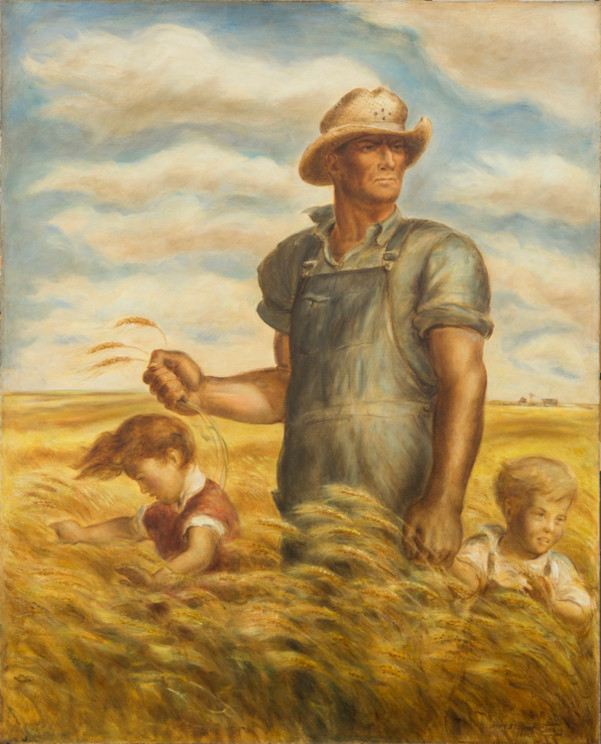
Our Good Earth
1942 painting and its related prints and wartime imagery.
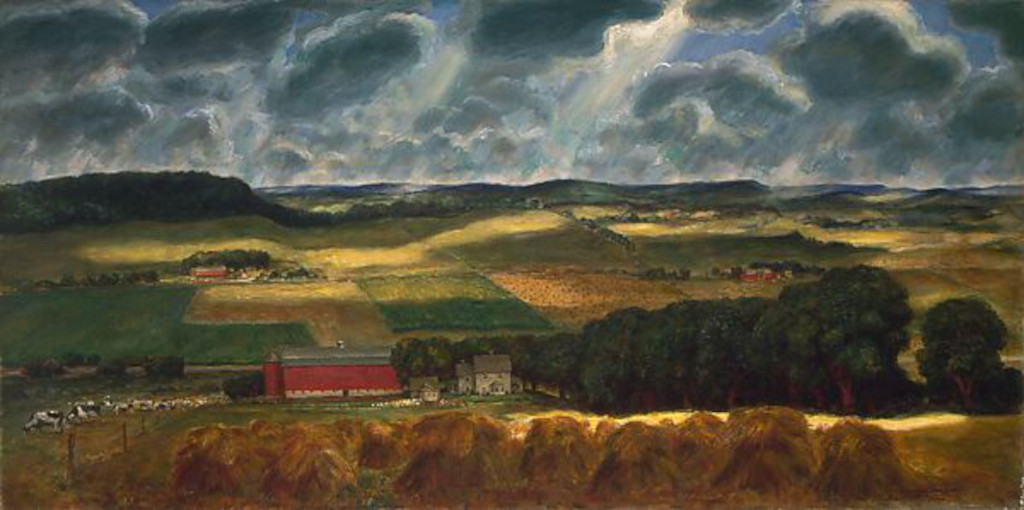
Wisconsin Landscape
1938–39 panorama of working farmland, held by The Met.


Circus Elephants
1932 painting of elephants, handlers and the work behind the circus.