


 by
Tom Gurney
Tom Gurney BSc (Hons) is an art history expert with over 20 years experience
Email:
tomgurney1@gmail.com
/ Phone:
+44 7429 011000
Spring Shower by John Steuart Curry: Introduction
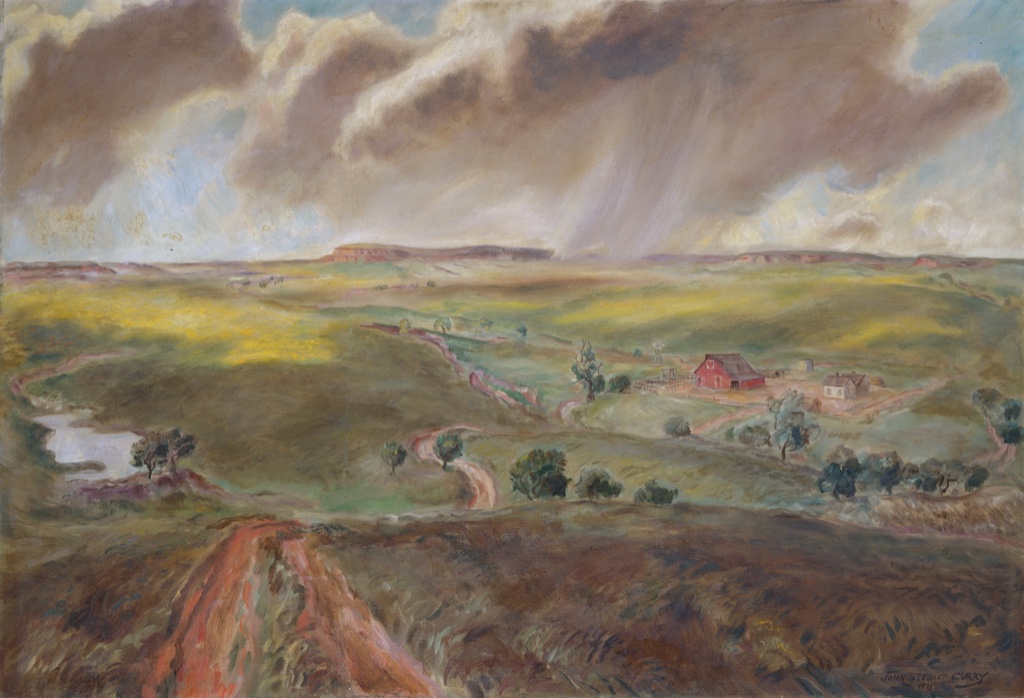
Rain falls across a distant stretch of countryside while a small farmstead remains visible beneath an immense sky. John Steuart Curry's Spring Shower (Western Kansas Landscape) gives weather a central place in the life of the land. Roads, water, scattered trees and buildings belong to one continuous panorama, with the passing shower joining earth and cloud near the horizon.
The Metropolitan Museum of Art dates the oil painting to 1931. Its dimensions are 75.9 by 111.4 centimetres, and its accession number is 32.84. The museum acquired it through the Arthur Hoppock Hearn Fund in 1932, shortly after its execution. [1]
At a Glance
- Artist John Steuart Curry, 1897–1946.
- Full title Spring Shower (Western Kansas Landscape) .
- Date 1931.
- Medium Oil on canvas.
- Dimensions 75.9 × 111.4 centimetres.
- Collection Metropolitan Museum of Art, New York.
- Credit Arthur Hoppock Hearn Fund, 1932.
- Object number 32.84.
This work across John Steuart Curry’s career
Circus Elephants
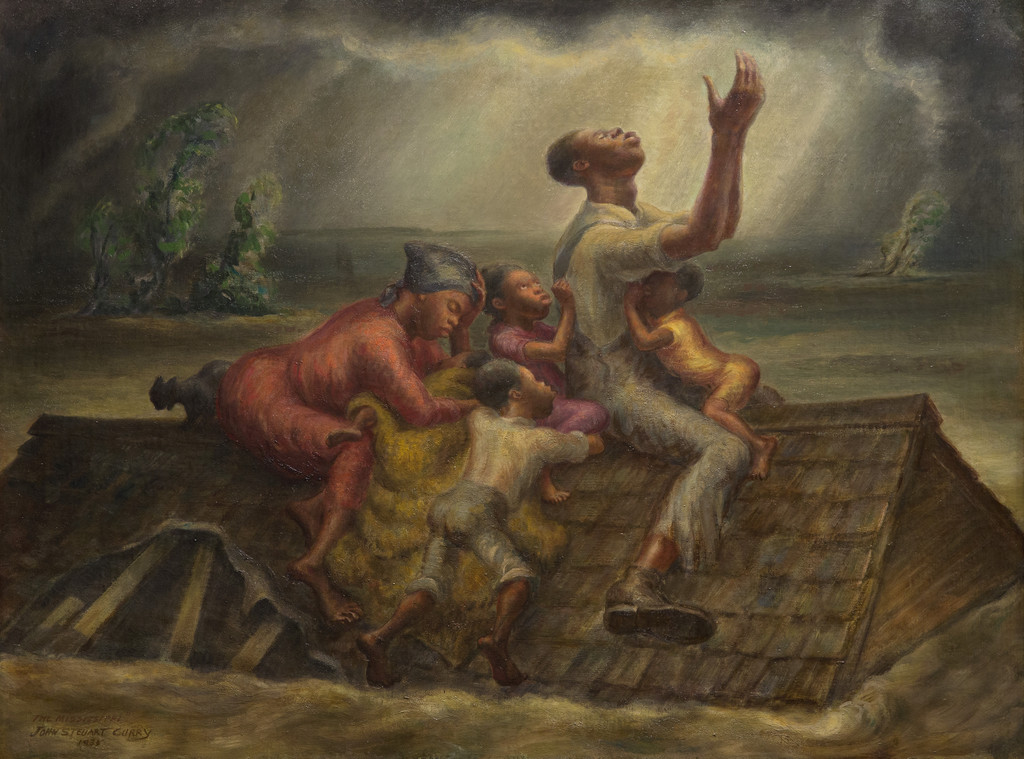
1932 paintingThe Mississippi
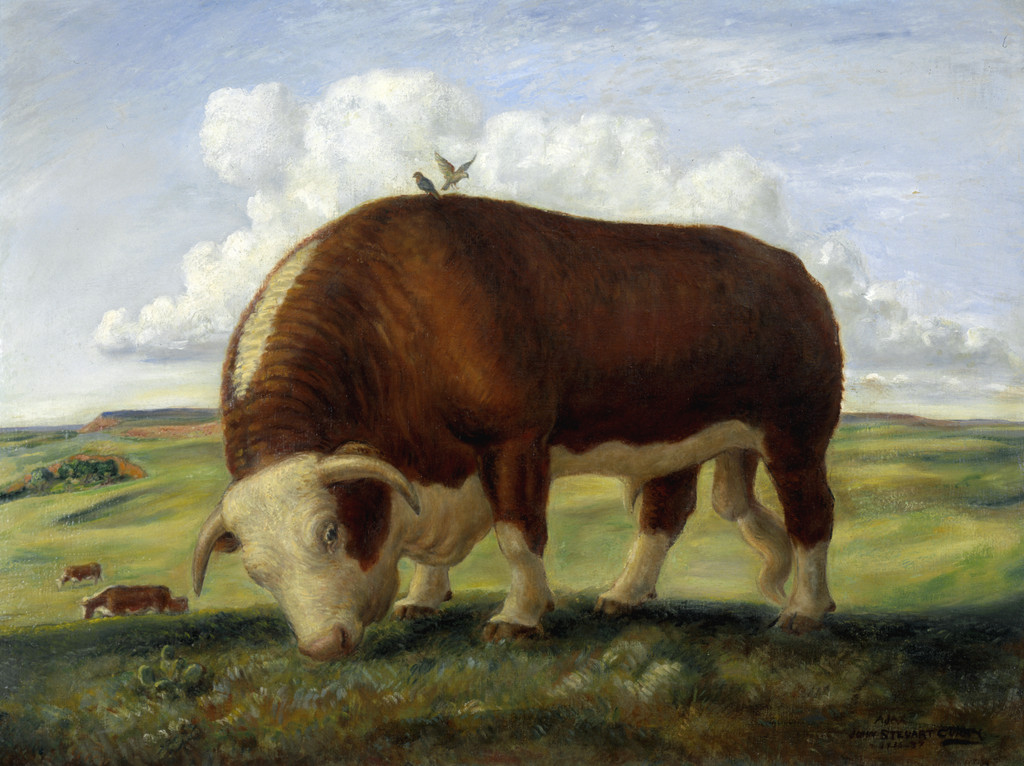
1935 paintingAjax
1936–37 oil paintingTragic Prelude
1938–40; project 1937–42Wisconsin Landscape
1938–39Our Good Earth
1942 oil paintingNotes and sources
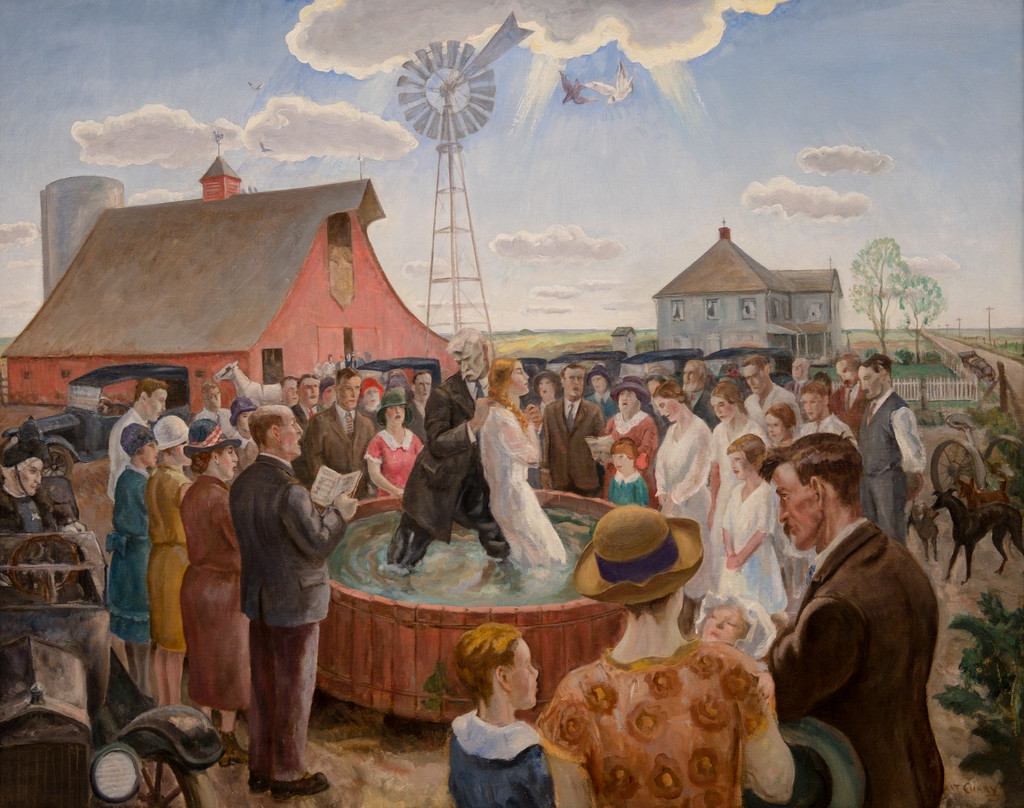
Baptism in Kansas. A remembered Kansas ceremony is staged within a working farmyard. [2]
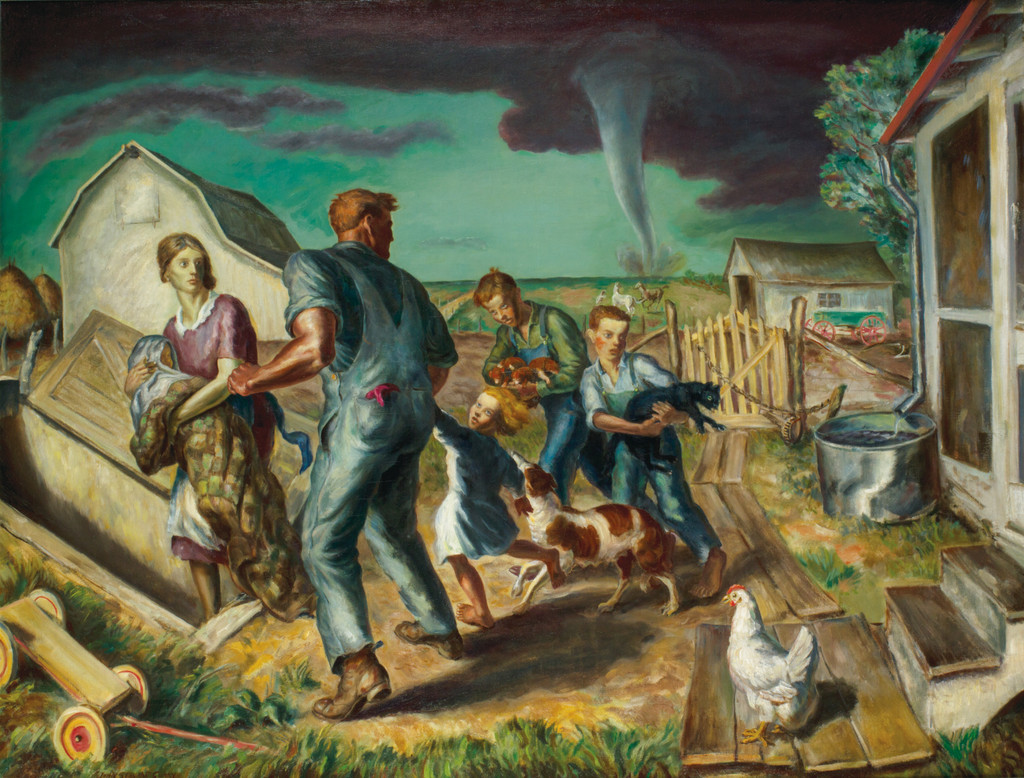
Tornado Over Kansas. A Kansas storm and a family seeking shelter, painted in Curry’s Westport studio. [3]
Spring Shower (Western Kansas Landscape) (current article). A winding track, farm buildings and distant rain organize the Kansas landscape. [1]
Circus Elephants. Elephants and handlers occupy the working space beneath a circus tent. [4]
The Mississippi. A family occupies a roof amid floodwater; the painting is tempera on canvas mounted on panel. [5]
Ajax. The monumental bull in the Smithsonian oil differs from the earlier lithograph. [6]
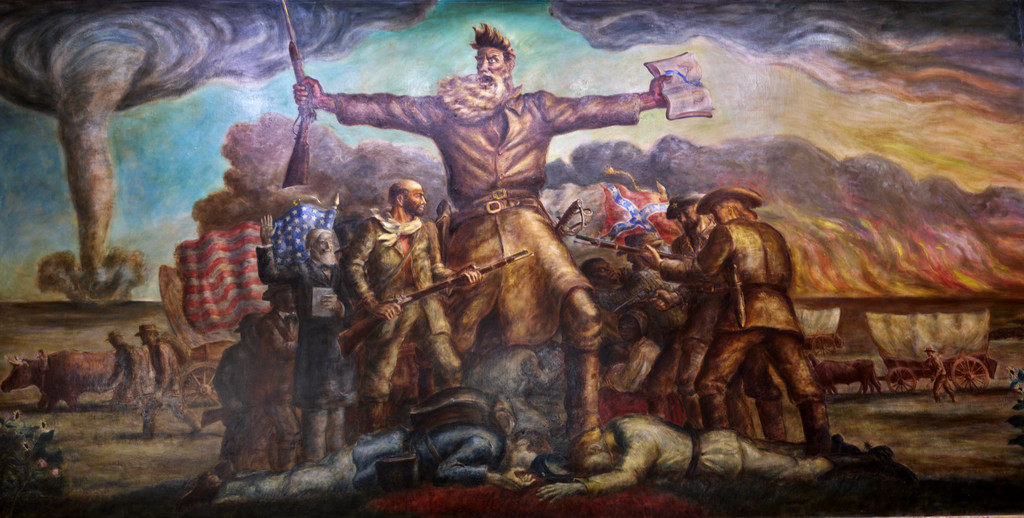
Tragic Prelude. John Brown stands at the centre of a Kansas State Capitol mural continuing across adjoining walls. [7]
Wisconsin Landscape. An extensive farm panorama, distinct from the separately catalogued preparatory study. [8]
Our Good Earth. The Chazen painting is distinct from the watercolour study, lithographs and wartime posters. [9]
Contents
- Rain across an open countryside
- The landscape as a whole
- The 1931 painting and museum acquisition
- An early international catalogue appearance
- Weather alongside Curry's other landscapes
- Kansas seen during an eastern career
Rain across an open countryside
The shower appears as a pale, descending veil beneath the largest cloud. Its softened edges merge with the landscape, making the rain seem to occupy a broad area rather than a single narrow point. Blue openings remain visible around the cloud masses. The sky holds several conditions at once: brightness, shadow and falling water.
Curry makes the distant rain visible through differences of colour and clarity. Nearby trees and buildings retain more definite edges; the country beneath the shower becomes less distinct. This change encourages the eye to travel into the painting. Distance is expressed through the way weather changes what can be seen, as well as through the diminishing size of objects.
The low, broken horizon gives the clouds a substantial share of the picture. Yet the land also contains considerable variation. Small rises, shallow valleys and exposed reddish slopes prevent it from reading as a flat strip beneath the sky. Looking between these different levels makes the scene feel expansive without requiring a distant mountain or an imposing foreground tree.
The landscape as a whole
A winding track enters from the lower part of the composition and turns through the middle distance. Its pale and reddish edges make it stand out against the surrounding greens. The bends slow the eye's progress towards the farm. Curry gives the viewer a route across the land, with changes of direction that reveal how its slopes fit together.
The red barn and lighter house form a small, recognizable group to the right. A windmill and enclosures add to the sense of a working farmstead. Their modest scale matters: human occupation is clearly present, but it occupies only part of the larger countryside. The buildings provide a focus without making the surrounding fields a mere backdrop.
At the left, a patch of water introduces another pale surface among the greens and browns. Scattered trees create darker accents around it and across the slopes. These repeated elements connect different parts of the view. Water, trees, tracks and fields give the panorama internal relationships, allowing attention to move beyond the barn towards the more distant rain.
The foreground's exposed earth also introduces a rougher texture and warmer colour. Its close slopes establish the viewer's elevated position, looking across rather than upwards at the farm. From that vantage point, the eye can take in a network of small places. The picture's breadth comes from connecting them beneath a common sky.
The 1931 painting and museum acquisition
The title's geographical description identifies western Kansas, while its first words emphasize a particular kind of weather. Those two parts work together. We are invited to attend both to a region and to a temporary condition moving across it. The shower helps make the countryside feel changeable, even though roads, buildings and landforms appear comparatively settled.
The Met's 1932 acquisition places the work among Curry's early museum successes. Its current collection record supplies the full title, medium, fund credit and dimensions. [1] These details distinguish the physical canvas from later reproductions and from other landscapes with similar seasonal titles.
Watch: John Steuart Curry
Choose a film to explore the artist’s work, its interpretation and its wider setting.
Look at This: John Steuart Curry at MOWA
An exhibition interview with Graeme Reid considers Curry’s work and life in Wisconsin.
Watch on YouTubeAn early international catalogue appearance
Spring Shower appears in the 1941 catalogue La pintura contemporánea norteamericana , published in connection with exhibitions planned for Latin American cities. Printed page 40 lists the work in English, Spanish and Portuguese, dates it 1931 and names the Metropolitan Museum of Art. The same page also lists View of Madison and The Flying Codonas . Its illustration shows View of Madison , rather than Spring Shower . [10]
The catalogue gives measurements of 72.5 by 109 centimetres, differing from the Met's present 75.9 by 111.4 centimetres. The current holding record provides the dimensions used here. The discrepancy does not establish that the canvas was enlarged, reduced or otherwise altered; that would require further evidence about the object itself.
The listing gives the painting a place within an international presentation of contemporary American art. It also places Curry's landscapes alongside his circus subject, showing a range of work broader than a single regional scene. The entry documents that presentation without identifying every venue at which the canvas was actually displayed.
Weather alongside Curry's other landscapes
In 2001, the New York State Museum included Spring Shower in its exhibition of twentieth-century American landscapes from the Met. The exhibition was scheduled for 31 May–14 October 2001 and brought together forty paintings from the Met's collection. Its announcement associated Curry's canvas with the country's agricultural riches. [11] That interpretation draws attention to the working land and the relationship between water and its surrounding fields.
Comparison with The Line Storm reveals how differently Curry could organize a weather subject. There, lightning and a threatening cloud intensify the journey of a loaded wagon. Here, the eye moves more widely across the land, following tracks and scattered farm buildings towards a shower in the distance. Weather gives each landscape its character, while scale, viewpoint and the placement of human activity determine how we experience it.
Kansas seen during an eastern career
The Kansas subject belongs to a career that also developed far from the state. The Connecticut State Library records Curry’s purchase of a Westport studio in 1924, his subsequent study in Paris and his return to Westport in 1928. Its account places his move to a New York City studio in 1932. The 1931 canvas therefore belongs to the intervening period of his eastern career. [12]
This chronology helps distinguish a painting’s subject from the artist’s address. The title identifies the Kansas countryside being represented; it does not establish that the finished canvas was executed outdoors at the farm shown. Curry’s biography follows the movements between his home region, training and professional life.
Looking back at the panorama with that distinction in mind makes its arrangement worth considering. The track, farm buildings and distant rain are brought together as a legible view of agricultural country. Their relationship conveys an experience of place that an artist could continue to explore while his working life extended beyond it.
Artworks and versions directory
Browse 84 selected object, version, edition and reproduction records. Several concern related images or different impressions; this is not a complete lifetime catalogue or a count of unique compositions. Search also finds prints, photographs and reproductions; the medium filter groups paintings and drawings.
Frequently Asked Questions
The Met dates the painting to 1931 and records its acquisition through the Arthur Hoppock Hearn Fund in 1932.
It belongs to the Metropolitan Museum of Art in New York, accession 32.84. Collection ownership does not guarantee current display.
The museum uses Spring Shower (Western Kansas Landscape) .
The evidence discussed here does not identify the farmstead or establish a precise viewpoint within western Kansas.
Discussion
Look again at the images and ideas explored in Spring Shower by John Steuart Curry. These editorial prompts invite your observations.
Reader Insights
How does the winding track influence the order in which you notice the landscape's details?
Does the distant rain make the scene feel unsettled, sustaining or both?
How would the composition change if the farm buildings occupied more of the picture?
Join the Conversation
Share a detail, comparison or question about Spring Shower by John Steuart Curry below.
References
- Metropolitan Museum of Art , Spring Shower (Western Kansas Landscape), 1931, oil on canvas, 32.84: current object record. View source
- Whitney Museum of American Art, John Steuart Curry | Baptism in Kansas | Whitney Museum of American Art. View source
- Muskegon Museum of Art, Tornado Over Kansas - Muskegon Museum of Art. View source
- National Gallery of Art, Circus Elephants: collection object record. View source
- Saint Louis Art Museum, The Mississippi,1935,7:1937: collection record and provenance. View source
- Smithsonian American Art Museum, Ajax. View source
- Kansas Historical Society, Kansas State Capitol - Online tour - Tragic Prelude - Kansas Historical Society. View source
- Metropolitan Museum of Art, Wisconsin Landscape. View source
- Chazen Museum of Art, Our Good Earth | 1873 |Chazen Museum of Art. View source
- La pintura contemporánea norteamericana , 1941, printed page 40; Museum of Modern Art digital catalogue, physical PDF page 51. View source
- New York State Museum , 20th Century American Landscapes From The Metropolitan Museum of Art, exhibition announcement, 18 May 2001. View source
- Connecticut State Library, State Archives, Curry — John Steuart (1897–1946). Opening career paragraphs consulted for the Westport studio in 1924, Paris study, return in 1928 and New York studio move in 1932; this chronology does not establish the painting’s precise execution site. View source
More CURRY Paintings
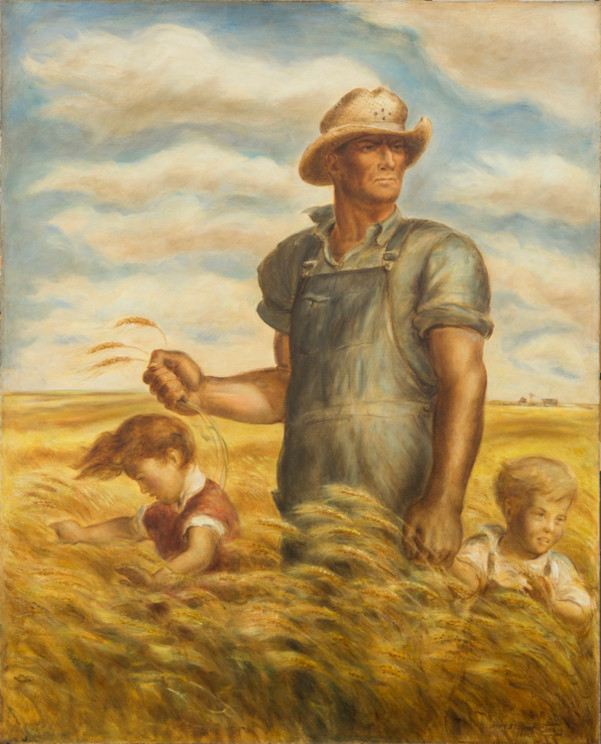
Our Good Earth
1942 painting and its related prints and wartime imagery.
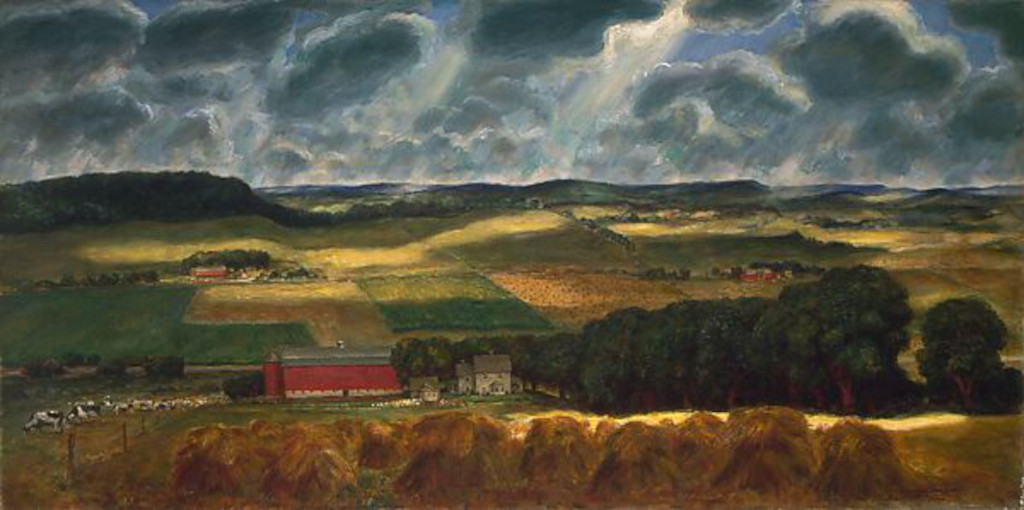
Wisconsin Landscape
1938–39 panorama of working farmland, held by The Met.


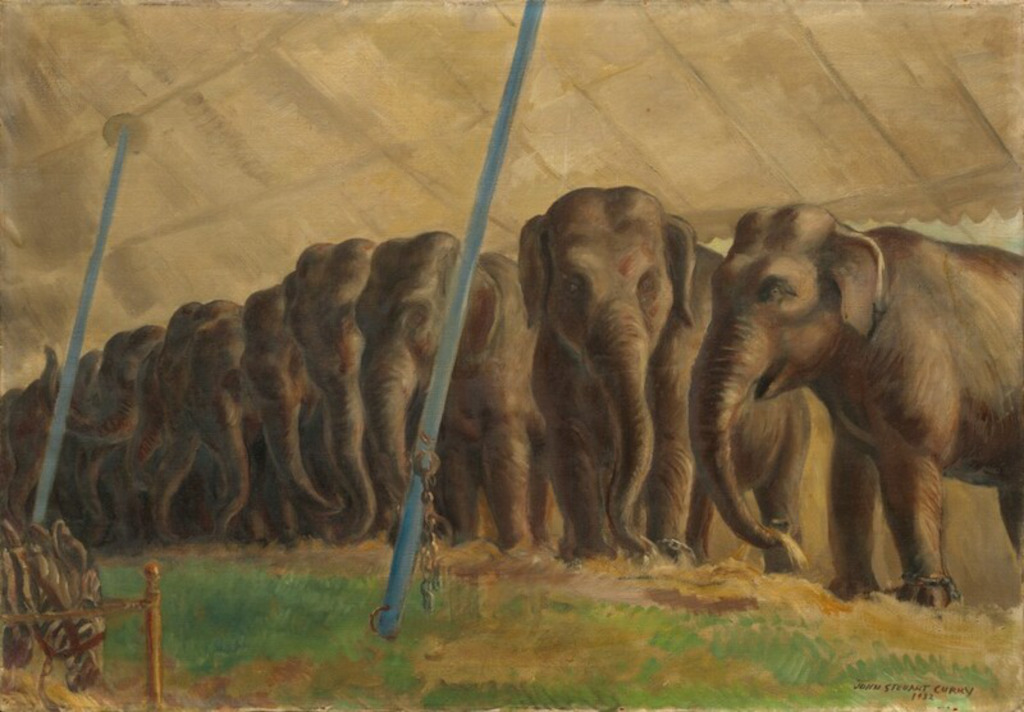
Circus Elephants
1932 painting of elephants, handlers and the work behind the circus.