


 by
Tom Gurney
Tom Gurney BSc (Hons) is an art history expert with over 20 years experience
Email:
tomgurney1@gmail.com
/ Phone:
+44 7429 011000
The Fugitive by John Steuart Curry: Introduction
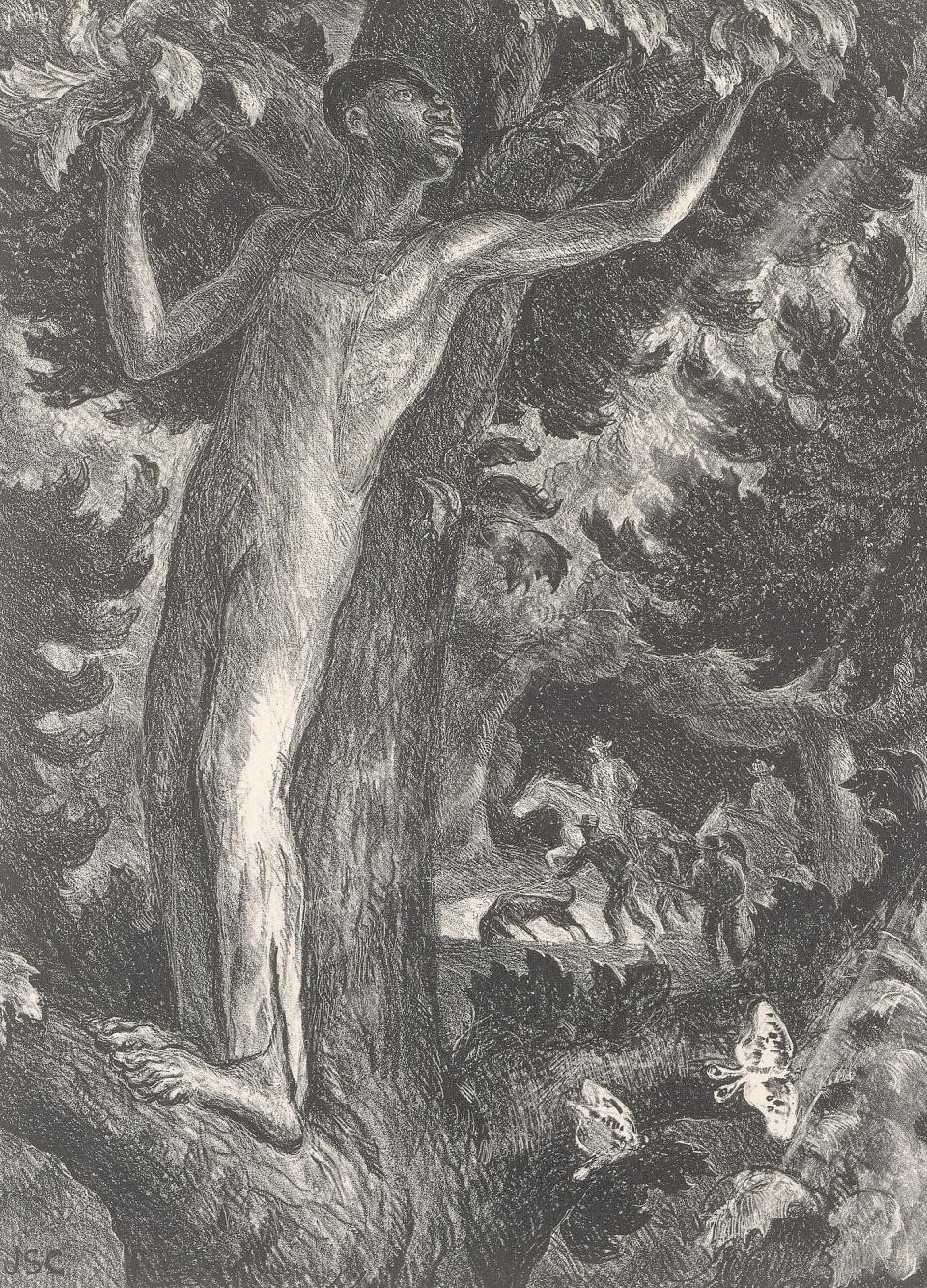
A Black man shelters in a tree while a pursuing group moves through a clearing below. His body occupies most of the height of The Fugitive , yet the small figures beneath him determine the danger of the scene. John Steuart Curry places the viewer close to the person being hunted, with the pursuers visible at a much greater distance.
The Smithsonian American Art Museum owns an impression of this 1935 lithograph, accession 1972.41, given by Adelyn D. Breeskin. [1] Its subject belongs to Curry's sustained engagement with racial violence. The print brings together a closely observed figure, a dense woodland setting and the threat of lynching without showing the violence's final outcome.
At a Glance
- Artist John Steuart Curry, 1897–1946.
- Title The Fugitive .
- Date 1935.
- Medium Lithograph.
- Smithsonian image dimensions 13 × 9½ inches, 33.0 × 24.2 centimetres.
- Collection Smithsonian American Art Museum.
- Credit Gift of Adelyn D. Breeskin.
- Object number 1972.41.
- Related works A graphite study, other print impressions and a separately documented painting.
This work across John Steuart Curry’s career
Circus Elephants
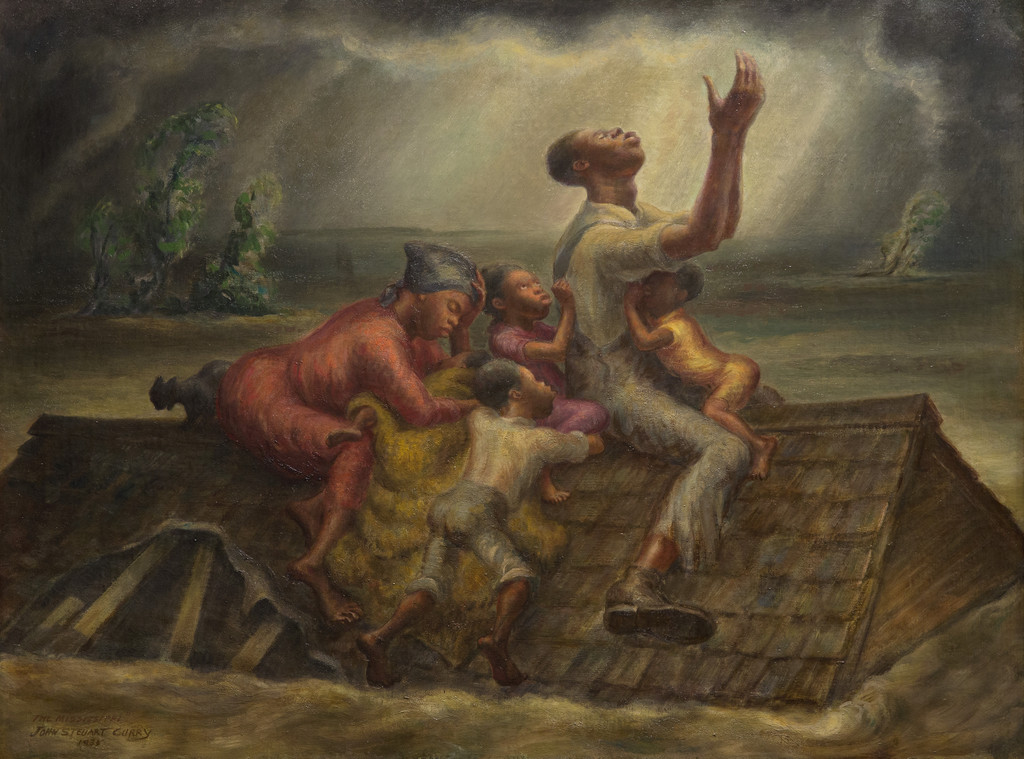
1932 paintingThe Mississippi
1935 paintingThe Fugitive (current article)
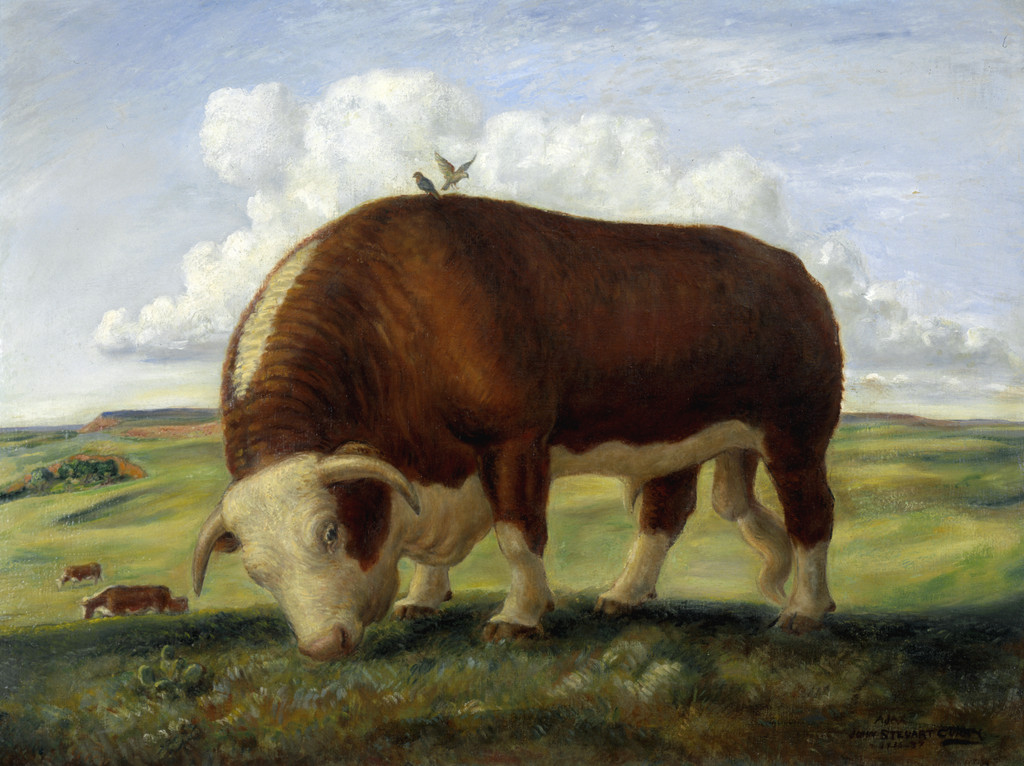
1935 lithographAjax
1936–37 oil paintingTragic Prelude
1938–40; project 1937–42Wisconsin Landscape
1938–39Our Good Earth
1942 oil paintingNotes and sources
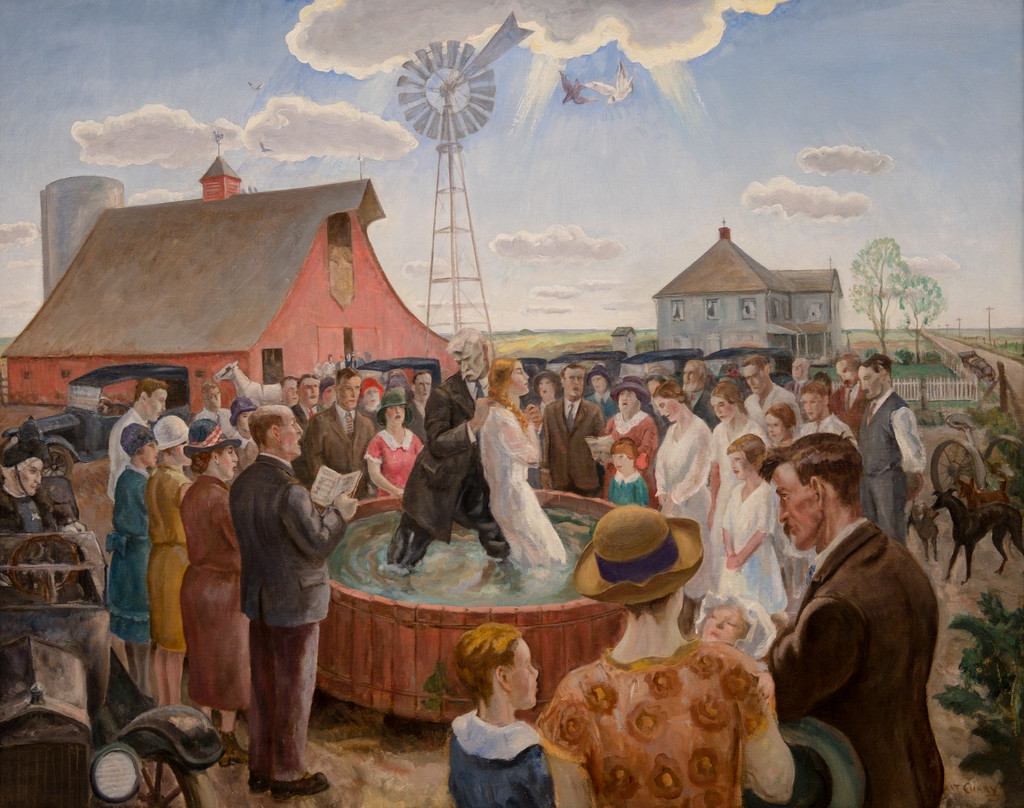
Baptism in Kansas. A remembered Kansas ceremony is staged within a working farmyard. [2]
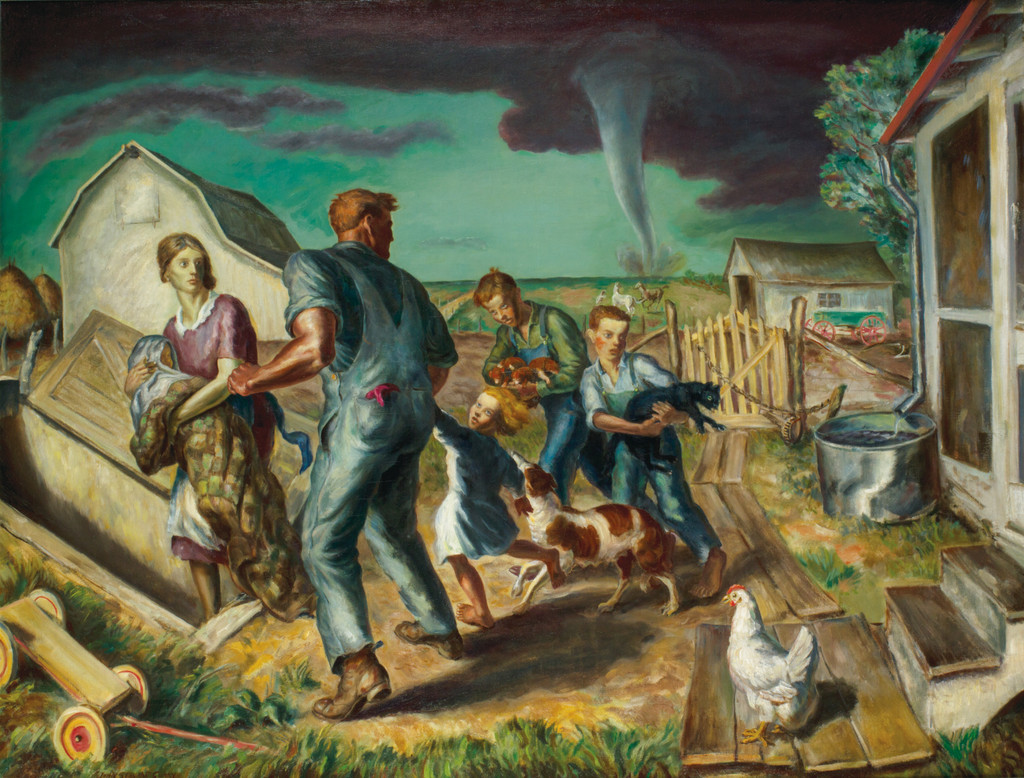
Tornado Over Kansas. A Kansas storm and a family seeking shelter, painted in Curry’s Westport studio. [3]
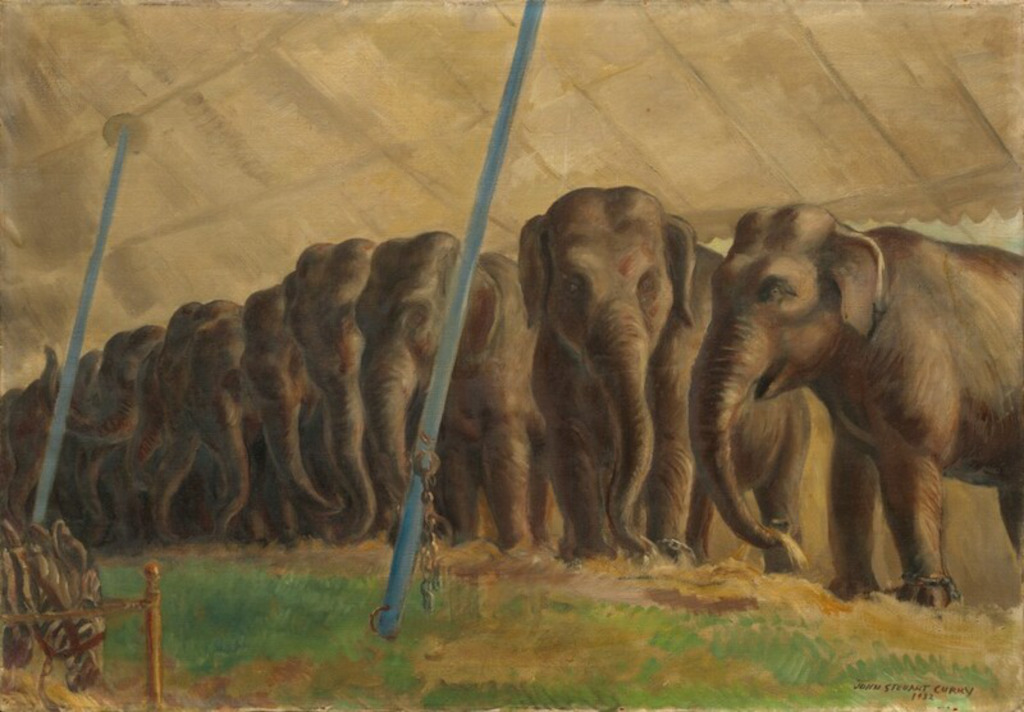
Circus Elephants. Elephants and handlers occupy the working space beneath a circus tent. [4]
The Mississippi. A family occupies a roof amid floodwater; the painting is tempera on canvas mounted on panel. [5]
The Fugitive (current article). This Smithsonian impression belongs to Curry’s anti-lynching imagery, distinct from the painting. [1]
Ajax. The monumental bull in the Smithsonian oil differs from the earlier lithograph. [6]
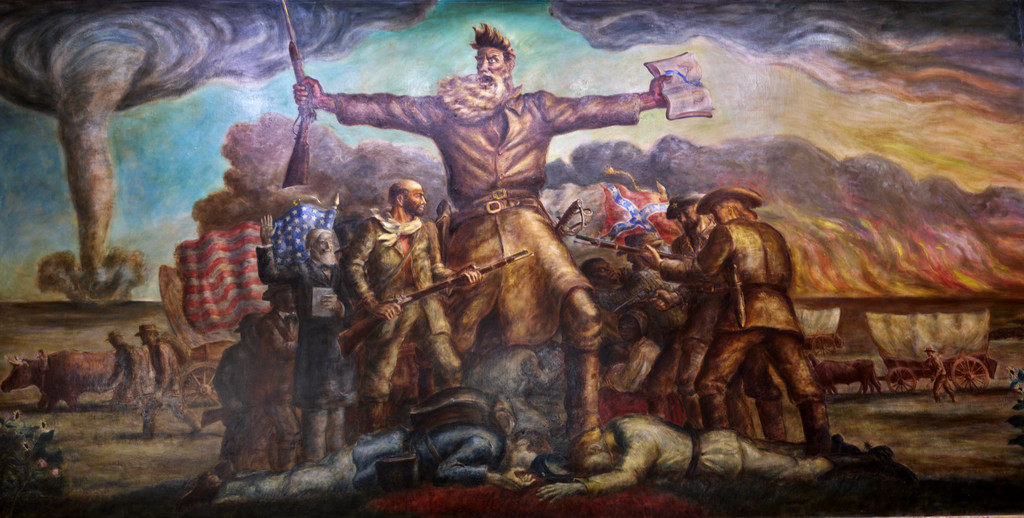
Tragic Prelude. John Brown stands at the centre of a Kansas State Capitol mural continuing across adjoining walls. [7]
Wisconsin Landscape. An extensive farm panorama, distinct from the separately catalogued preparatory study. [8]
Our Good Earth. The Chazen painting is distinct from the watercolour study, lithographs and wartime posters. [9]
Contents
- A figure among the branches
- The clearing and the threat below
- Foliage, moths and the printed surface
- The NAACP exhibition of 1935
- The campaign for federal protection
- Drawing, print impressions and the separate painting
- The image beside Curry's murals
- Annotated details
A figure among the branches
The man's torso rises along the left side of the trunk, while his arms extend into the foliage above. His feet rest on a lower branch. The pose stretches his body between these supports, making shelter appear physically demanding. He must hold his position within an irregular structure rather than stand securely on the ground.
The exposed lower leg and foot make the effort of balancing especially clear. The toes meet a slanting branch, while the long line of the shin leads back towards the torso. Above, the hands reach into the canopy. These small points of contact matter because so much of the body remains suspended between them.
Curry gives the figure both prominence and partial concealment. Light catches the front of the body and the extended arms, helping them emerge from the darker tree. Elsewhere, the outlines meet dense areas of leaves, bark and shadow. It takes a moment to separate the man's form from the structure supporting him, just as the setting offers concealment without removing his vulnerability.
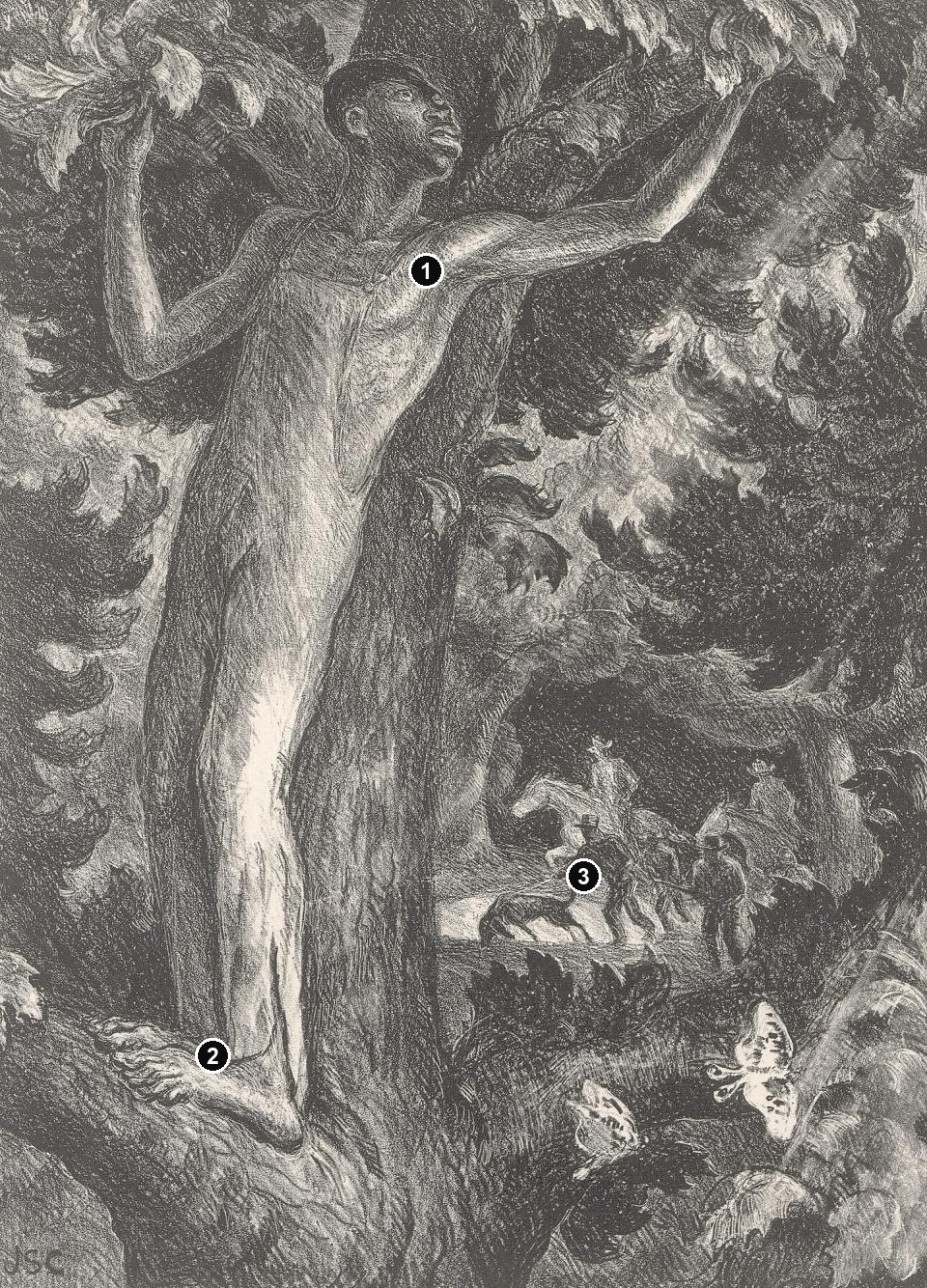
The upward turn of the head is particularly important. It directs attention away from the pursuers and towards the upper branches. Combined with the spread arms, it allows a religious association: the Smithsonian's interpretation connects the pose with Christ's Crucifixion. [10] This is a reading of the image's expressive form, rather than a literal identification of the man as a biblical figure.
The pose can therefore carry two kinds of meaning at once. It belongs to someone trying to remain hidden in a tree, but its enlarged, exposed form also gives that person an exceptional presence. The fugitive is central to the viewer's attention even while he must avoid attracting the attention of the group below.
Annotated Details from The Fugitive
The numbered points identify visible features discussed in this article. Return from each detail to the whole composition. John Steuart Curry, The Fugitive, 1935, lithograph. Smithsonian American Art Museum, 1972.41. Image source. CC0 / public domain. Editorial numbers added to the overview; detail crops retain the source image’s appearance.
Details from THE FUGITIVE
Compare the cropped details with the complete images above. Notice how their colours, shapes and positions contribute to the larger compositions.
Face, arms and surrounding leaves
The lifted arms extend into the branches as the man turns his face to one side. Light passages across the torso set the exposed body against the darker surrounding foliage.
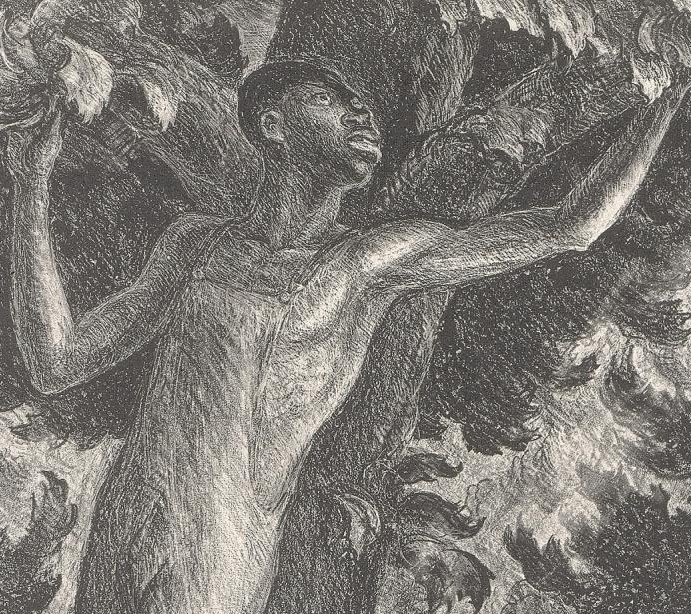
Bare feet gripping a branch
The bare feet press against the branching tree. Their close contact with the wood makes the effort of holding a precarious position physically visible.
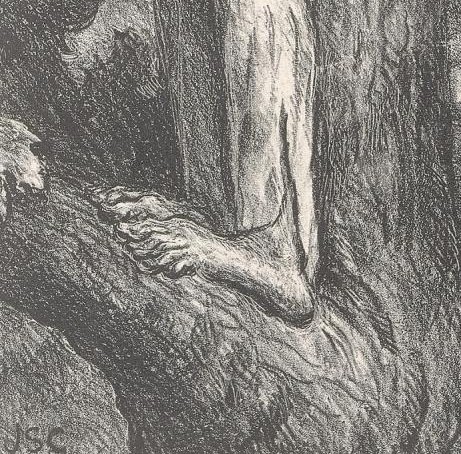
The smaller pursuers and dogs below
Men and dogs occupy a much smaller area beneath the raised figure. Their scale establishes distance while keeping the threat connected with the man’s position among the branches.
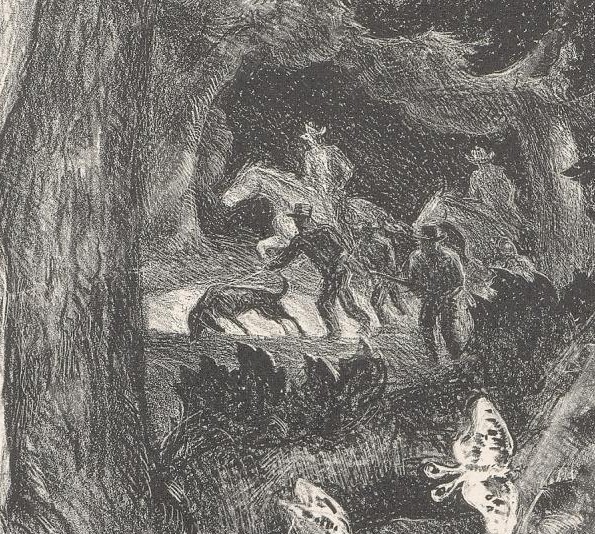
The clearing and the threat below
A small opening at the lower right reveals the pursuers and a dog. Their scale establishes distance, but their placement makes them immediately consequential. The eye moves down from the large foreground body to the group in the clearing, joining two spaces that might initially seem separate.
The tree divides these spaces without sealing them off. Its thick trunk creates a strong central barrier, yet gaps in the surrounding foliage allow the pursuit to remain visible. Curry has arranged concealment and exposure within the same view. The man appears protected by the tree's mass and endangered by the openings around it.
This relationship produces an unequal encounter. The individual is shown at intimate range, where the viewer can attend to his face, limbs and physical effort. The group is seen from farther away, through its collective movement and connection with the dog. The composition concentrates individuality in the hunted man while making pursuit an action carried out by several people together.
Nothing in the image establishes an accusation, trial or crime committed by the fugitive. Its title names his situation as someone in flight. In the anti-lynching context, that distinction matters: the scene asks the viewer to confront the threat to a person rather than accept the pursuers' authority or invent a justification for their violence.
Foliage, moths and the printed surface
Leaves fill much of the picture, their edges turning in different directions around the figure. Against these restless forms, the long limbs and torso supply a more continuous structure. The contrast makes the body readable without isolating it against an empty background. The tree remains an active part of the encounter.
Large moths appear near the lower right, where they introduce pale, patterned shapes against the dark woodland. They occupy a different scale from the distant pursuers. Together with the foreground leaves, they help distinguish the immediate surroundings from the clearing beyond. Their presence makes the intervening space feel inhabited rather than merely a backdrop for the human action.
The image's darks are built from a densely worked field of marks. Lighter passages along the body, clothing and foliage emerge within that surrounding texture. The resulting range of tones gives volume to the figure and depth to the woods, despite the absence of colour. This is one reason to consider The Fugitive as a print in its own right, rather than as a colourless substitute for a painting.
Curry also controls how quickly the scene can be understood. The large figure is encountered first; smaller details then reveal the situation below. Once the pursuers have been noticed, the viewer returns to the same body with a clearer understanding of its precarious position. The composition makes looking a process of discovery.
The NAACP exhibition of 1935
The Fugitive was connected with An Art Commentary on Lynching , an exhibition sponsored by the National Association for the Advancement of Colored People in 1935. The Huntington's account identifies Curry's contributions as the lithograph and painting of The Fugitive , together with the painting Manhunt . [11] These were related works, with different emphases on the hunted person and the pursuing group.
The Smithsonian places the exhibition within efforts to mobilize opposition to lynching and describes participation by thirty-nine artists of varied backgrounds. [10] Curry, a white artist, was contributing to a campaign concerned with racial terror against African Americans. The setting was therefore more specific than a general display of dramatic rural scenes.
Former museum curator Bill North records that The Fugitive lithograph appeared on the exhibition catalogue's cover. [12] That use gave the composition a further public function: the image could introduce the exhibition's argument before a reader encountered its individual works. The catalogue appearance is documented here through North's account.
The print's focus on threatened life also helps explain its suitability for such a setting. It presents an urgent human situation while withholding the spectacle of a completed lynching. The viewer is made aware of danger through the arrangement of bodies and distances, with the individual still alive and the outcome unresolved.
Watch: John Steuart Curry
Choose a film to explore the artist’s work, its interpretation and its wider setting.
Look at This: John Steuart Curry at MOWA
An exhibition interview with Graeme Reid considers Curry’s work and life in Wisconsin.
Watch on YouTubeThe campaign for federal protection
The exhibition coincided with renewed efforts to secure federal anti-lynching legislation. The Senate's historical account describes Senator Edward Costigan's work with Robert Wagner and the obstruction that defeated their efforts. In 1935, a lengthy filibuster prevented the bill's advance, and Costigan withdrew it. [13]
That failure supplies an important historical context for Curry's image of a man without visible protection. The print does not illustrate a Senate debate, but its exhibition setting connected the pictured threat with demands for political action. Artistic expression and legislative campaigning addressed the same violence through different means.
The failure of the 1930s proposals should not be mistaken for the end of this legislative history. The Senate records that federal anti-lynching legislation finally became law in 2022. [13] The later change does not diminish the urgency of the earlier campaign; it makes the long delay in securing such legislation part of the history through which the print is now understood.
Drawing, print impressions and the separate painting
Birmingham Museum of Art owns Study for “The Fugitive” , a graphite drawing dated about 1934, accession 2008.99. Its listed measurements are for the frame, not the drawing itself. [14] The record establishes a separate work on paper and should not be used to supply the size or medium of the Smithsonian print.
Birmingham also owns a 1935 lithograph, accession 2008.100, catalogued as belonging to an edition of twenty-five. It records image and sheet measurements separately. [15] Its image measures 12¾ by 9½ inches, within a sheet measuring 19¼ by 16 inches. The Smithsonian gives image dimensions of 13 by 9½ inches for its own impression. Those catalogued measurements belong to the individual records; they do not, by themselves, establish a change to the composition or explain how each institution measured it.
Multiple museum holdings therefore need not indicate different compositions: a print can survive in several impressions, each with its own accession, credit and dimensions.
The related painting has a different technical history. Conservators Lance Mayer and Gay Myers discuss Curry's notebook entry for a Fugitive begun in November 1934. They report tempera underpainting, intervening varnish layers and an oil finish, followed by further work in the winter of 1935–36. [16] These details concern the painting, listed in a private collection in their 2002 study.
The notebook evidence comes through the conservators' publication. It helps establish that Curry developed the subject across media, but it does not describe how the lithograph was printed. Nor does the painting's reworking change the Smithsonian's 1935 date for the print. Keeping those histories distinct allows each object to remain intelligible.
The image beside Curry's murals
Curry returned to mob violence in Law Versus Mob Rule , his 1936 oil-on-canvas mural for the Department of Justice in Washington. The General Services Administration identifies its threatened figure as a white man, sheltered by a robed personification of justice. [17] He is distinct from the Black fugitive concealed in this tree.
The difference changes the structure of the encounter. In the lithograph, protection depends on a precarious hiding place; in the mural, justice intervenes visibly between the individual and the mob. The comparison brings the absence of such an intervening figure in The Fugitive into sharper focus. No official authority enters its clearing to halt the pursuit.
For the wider commission history, see Curry's murals . Alongside those public works, The Fugitive shows how an intimate printed image could address a national issue. Its force rests on bringing the viewer close to one person while keeping the collective threat unmistakably present.
Artworks and versions directory
Browse 84 selected object, version, edition and reproduction records. Several concern related images or different impressions; this is not a complete lifetime catalogue or a count of unique compositions. Search also finds prints, photographs and reproductions; the medium filter groups paintings and drawings.
Frequently Asked Questions
Curry treated the subject in several media. The Smithsonian work discussed here is a 1935 lithograph, 1972.41; a related painting and drawing are separate objects.
It depicts a Black man hiding from pursuers and belongs to Curry's anti-lynching work of the 1930s.
At the Smithsonian American Art Museum, as a gift of Adelyn D. Breeskin. Other museums own separate impressions.
The Smithsonian interprets the spread arms and upward gaze through that religious association. The image also depicts the practical effort of sheltering in a tree.
No. The Senate describes obstruction and withdrawal of the Costigan-Wagner bill. Federal anti-lynching legislation became law in 2022.
Discussion
Look again at the images and ideas explored in The Fugitive by John Steuart Curry. These editorial prompts invite your observations.
Reader Insights
How does the difference in scale between the man and the pursuers affect your response?
Does the tree seem more protective or confining as you look longer?
What changes when justice is shown intervening in the mural rather than absent from the print?
Join the Conversation
Share a detail, comparison or question about The Fugitive by John Steuart Curry below.
References
- Smithsonian American Art Museum , The Fugitive, 1935, lithograph, Gift of Adelyn D. Breeskin, 1972.41. View source
- Whitney Museum of American Art, John Steuart Curry | Baptism in Kansas | Whitney Museum of American Art. View source
- Muskegon Museum of Art, Tornado Over Kansas - Muskegon Museum of Art. View source
- National Gallery of Art, Circus Elephants: collection object record. View source
- Saint Louis Art Museum, The Mississippi,1935,7:1937: collection record and provenance. View source
- Smithsonian American Art Museum, Ajax. View source
- Kansas Historical Society, Kansas State Capitol - Online tour - Tragic Prelude - Kansas Historical Society. View source
- Metropolitan Museum of Art, Wisconsin Landscape. View source
- Chazen Museum of Art, Our Good Earth | 1873 |Chazen Museum of Art. View source
- Smithsonian American Art Museum , Oh Freedom! John Steuart Curry: interpretation and 1935 exhibition context. View source
- The Huntington , Manhunt, 2014.30.45: collection record and label discussing Curry's contributions to An Art Commentary on Lynching. View source
- Bill North , John Steuart Curry: Between Fear and Faith, selected anti-lynching and catalogue-cover passage, reproduced on JohnSteuartCurry.net. View source
- United States Senate , Edward P. Costigan: A Featured Biography, including the anti-lynching campaign and later legislation. View source
- Birmingham Museum of Art , Study for “The Fugitive”, about 1934, graphite on paper, 2008.99. View source
- Birmingham Museum of Art , The Fugitive, 1935, lithograph, 2008.100. View source
- Lance Mayer and Gay Myers , Old Master Recipes in the 1920s, 1930s, and 1940s: Curry, Marsh, Doerner, and Maroger, Journal of the American Institute for Conservation 41, no. 1, 2002, section 2.2. View source
- General Services Administration , Law Versus Mob Rule, 1936: finished mural record and interpretation. View source
- Splash image source.
John Steuart Curry, The Fugitive, 1935, lithograph. Smithsonian American Art Museum, 1972.41. CC0 / public domain . Proportionally resized; original appearance retained.
View source
More CURRY Paintings
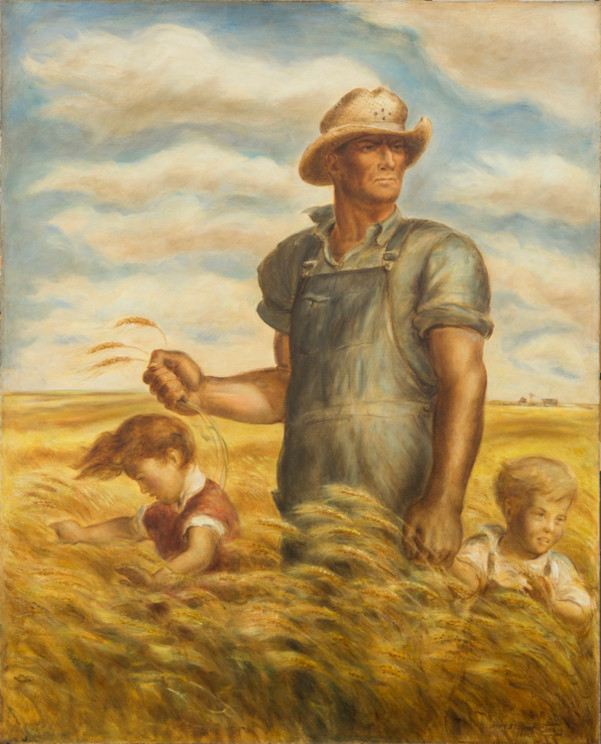
Our Good Earth
1942 painting and its related prints and wartime imagery.
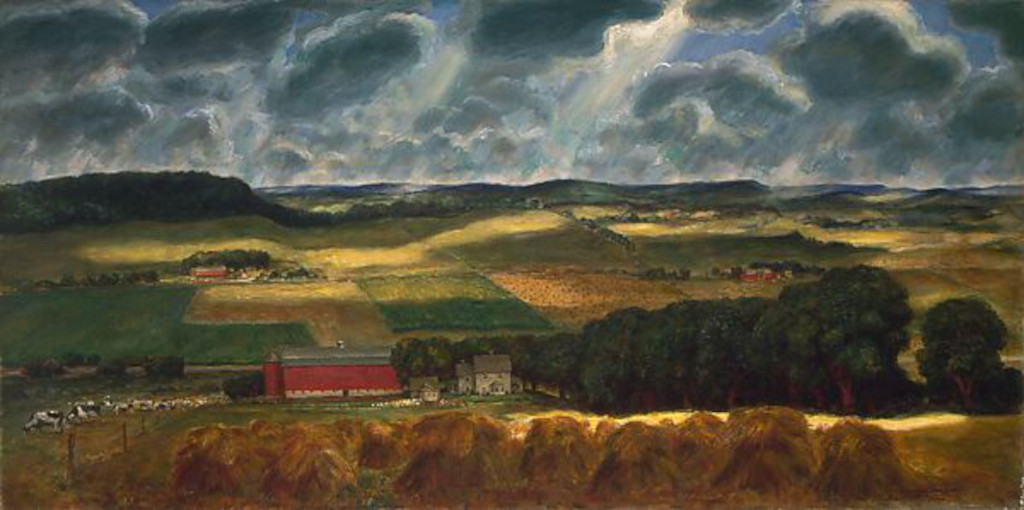
Wisconsin Landscape
1938–39 panorama of working farmland, held by The Met.


Circus Elephants
1932 painting of elephants, handlers and the work behind the circus.