


 by
Tom Gurney
Tom Gurney BSc (Hons) is an art history expert with over 20 years experience
Email:
tomgurney1@gmail.com
/ Phone:
+44 7429 011000
The Flying Codonas by John Steuart Curry: Introduction
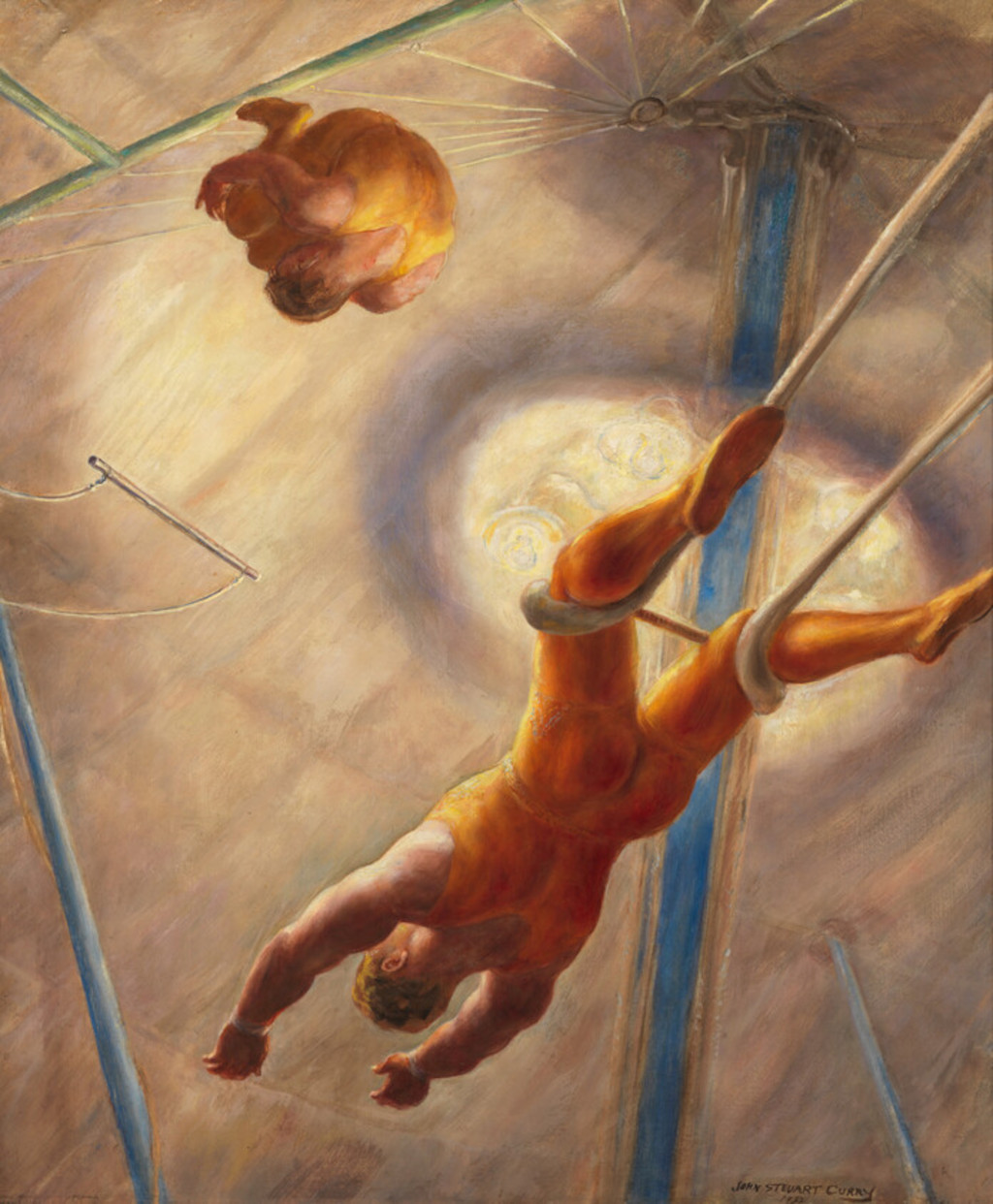
Two aerialists occupy a brilliantly lit space high inside a circus tent. One is curled into a compact shape near the upper left; the other extends diagonally across the foreground, suspended upside down with arms reaching outward. In The Flying Codonas , John Steuart Curry makes the relationship between their bodies the centre of the performance.
Whitney Museum of American Art dates the painting to 1932 and identifies its medium as tempera and oil on composition board. The work, accession 33.10, belongs to the museum's collection by purchase. [1] Its tall format concentrates attention on the air occupied by the performers, with little opportunity to settle into an ordinary ground-level view.
At a Glance
- Artist John Steuart Curry, 1897–1946.
- Title The Flying Codonas .
- Date 1932.
- Medium Tempera and oil on composition board.
- Dimensions 35 15/16 × 29 15/16 inches, 91.3 × 76 centimetres.
- Collection Whitney Museum of American Art.
- Credit Purchase.
- Accession 33.10.
- Early exhibition First Biennial Exhibition of Contemporary American Painting, 1932–33.
This work across John Steuart Curry’s career
Circus Elephants
1932 paintingThe Flying Codonas (current article)
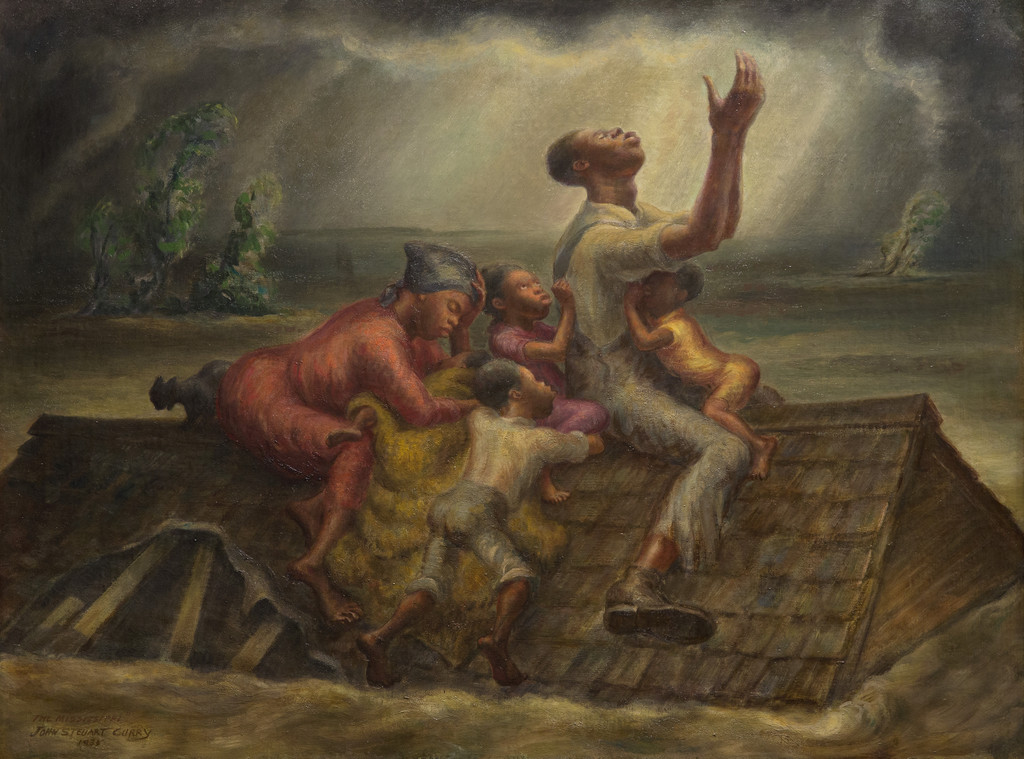
1932 paintingThe Mississippi
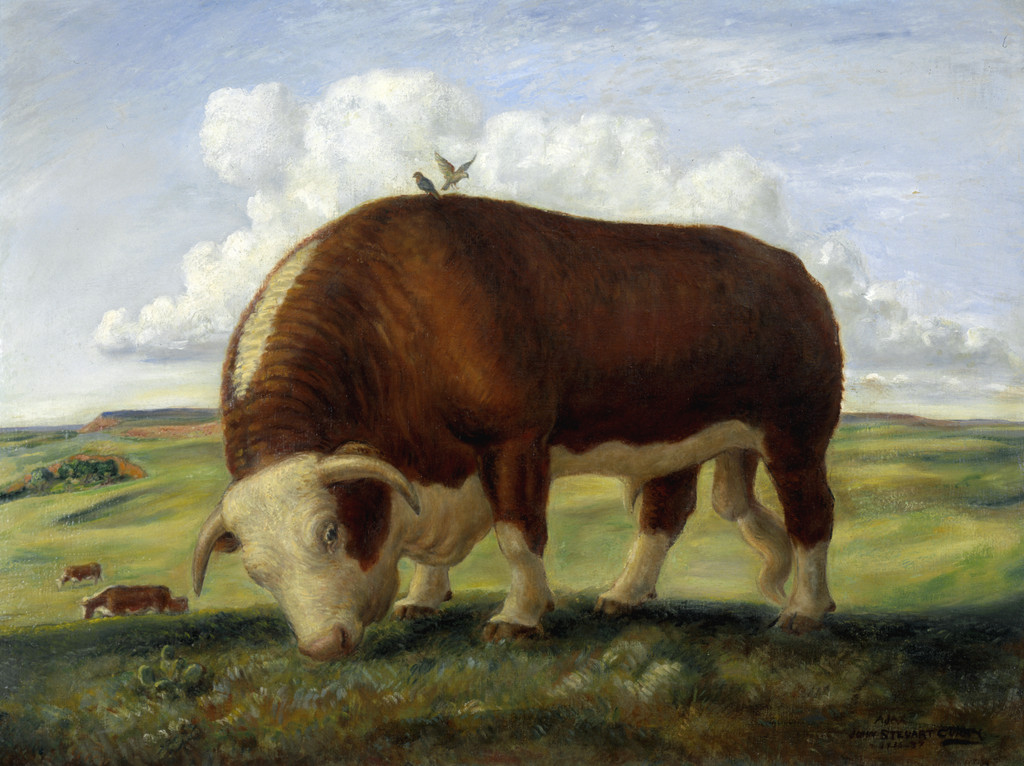
1935 paintingAjax
1936–37 oil paintingTragic Prelude
1938–40; project 1937–42Wisconsin Landscape
1938–39Our Good Earth
1942 oil paintingNotes and sources
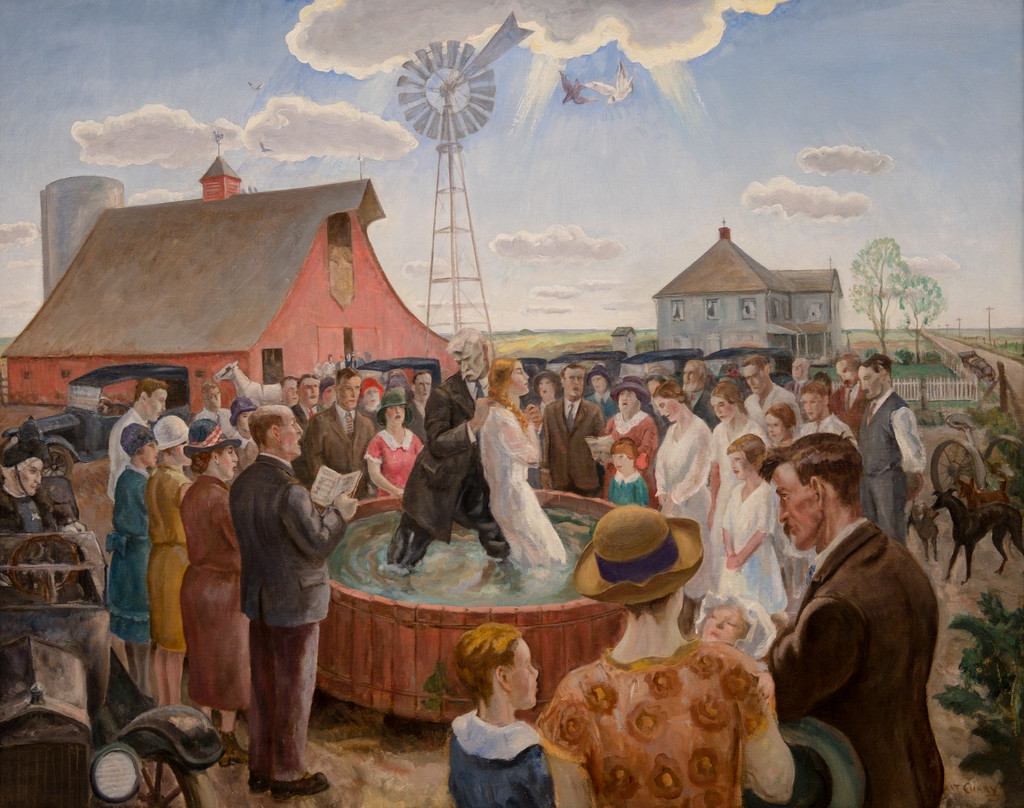
Baptism in Kansas. A remembered Kansas ceremony is staged within a working farmyard. [2]
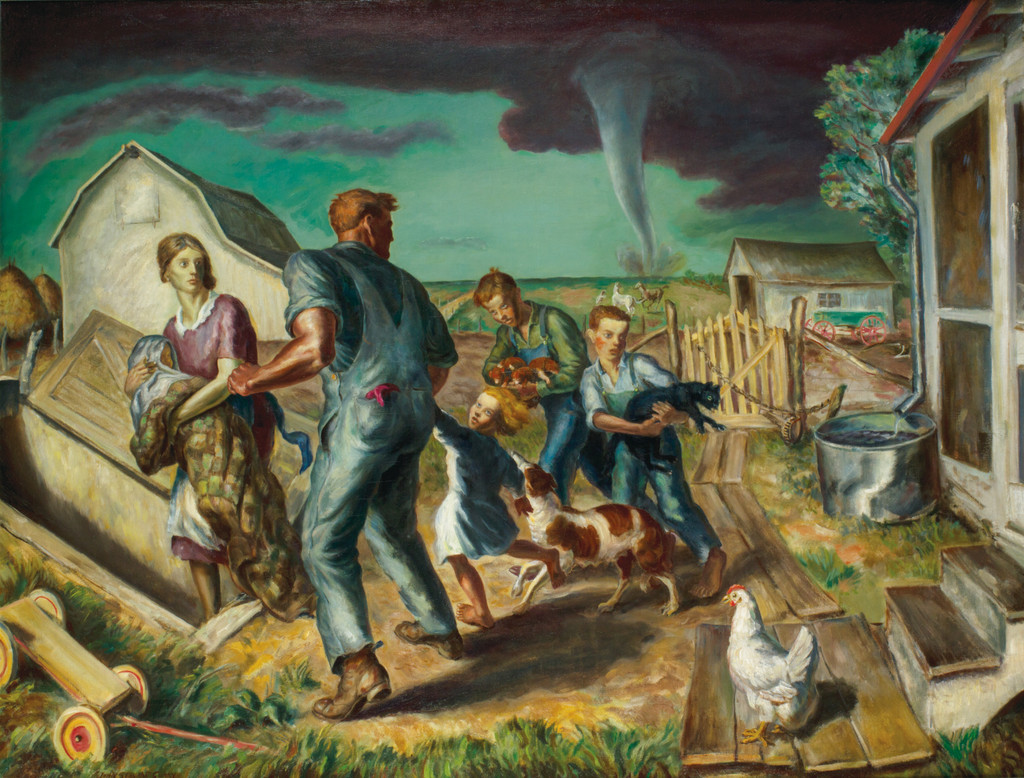
Tornado Over Kansas. A Kansas storm and a family seeking shelter, painted in Curry’s Westport studio. [3]
Circus Elephants. Elephants and handlers occupy the working space beneath a circus tent. [4]
The Flying Codonas (current article). Tempera and oil on composition board; separate from drawings and later lithographs. [1]
The Mississippi. A family occupies a roof amid floodwater; the painting is tempera on canvas mounted on panel. [5]
Ajax. The monumental bull in the Smithsonian oil differs from the earlier lithograph. [6]
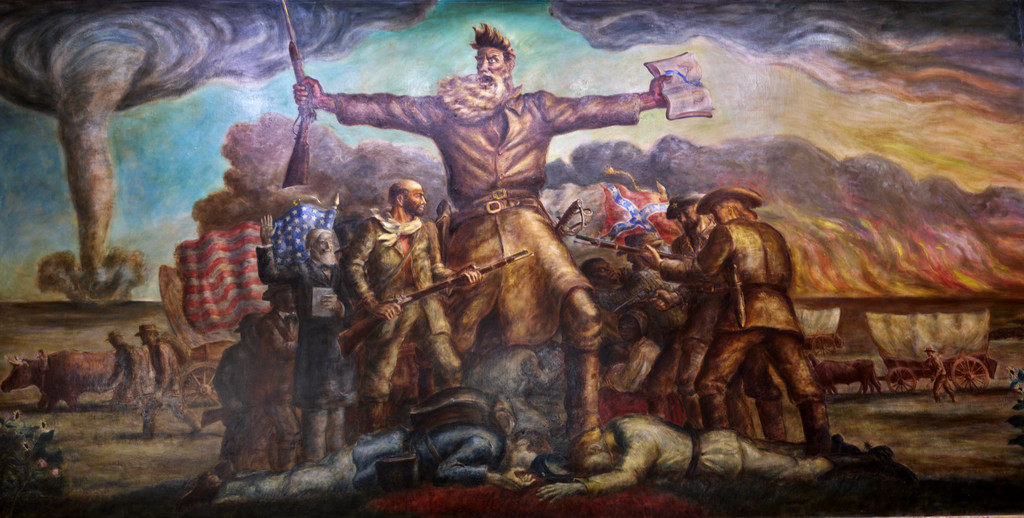
Tragic Prelude. John Brown stands at the centre of a Kansas State Capitol mural continuing across adjoining walls. [7]
Wisconsin Landscape. An extensive farm panorama, distinct from the separately catalogued preparatory study. [8]
Our Good Earth. The Chazen painting is distinct from the watercolour study, lithographs and wartime posters. [9]
Contents
- Bodies suspended in the tent
- Colour, light and the supporting structure
- The circus journey and the drawings
- Tempera and oil on composition board
- The first Whitney biennial
- The separate lithograph and other circus pictures
Bodies suspended in the tent
The foreground aerialist stretches from the right edge towards the lower left. His inverted position turns the familiar proportions of a standing figure into a long diagonal. Arms and torso lead the eye downwards, while the bent legs and supporting apparatus connect the body with the upper right of the picture.
The second performer has a markedly different shape. Curled tightly above and to the left, this figure appears almost circular beside the other's extended form. Curry uses that contrast to make the two bodies distinct at once. The eye moves between compression and extension, following different phases of aerial movement within a single composition.
An unoccupied trapeze appears at the left. Its narrow bar and curved suspension lines introduce another part of the apparatus without competing with the figures' scale. The empty space around it matters: the painting allows the viewer to notice where a body is absent as well as where the performers are now positioned.
The picture does not provide a complete sequence of the act. It holds a particular arrangement of bodies, ropes and open space, inviting the viewer to imagine the movement that connects them. That incompleteness contributes to its suspense. The bodies are clearly formed, but their changing relationship remains the painting's active question.
Colour, light and the supporting structure
Warm orange clothing links the performers across the composition. Against the lighter tent interior, their colour gives them a shared prominence even though they differ greatly in size and position. Shadows model their limbs and torsos, preserving a sense of physical weight within an image of flight.
Pale circular lights stand out behind the foreground performer. Elsewhere, warmer illumination spreads across the tent fabric, interrupted by darker passages and the lines of its supports. The effect is theatrical rather than evenly descriptive: some areas become strongly visible while others remain less definite.
Curry also gives the apparatus an important organizing role. Ropes cross the upper space, and a strong upright near the right helps anchor the more unstable diagonals. The performers' apparent freedom depends visually on this supporting framework. Their bodies may dominate the picture, but the surrounding equipment makes the act intelligible.
The viewpoint intensifies this concentration. No clearly described audience or circus floor supplies an ordinary place from which to measure the action. Instead, the foreground body extends so close to the picture's edges that the viewer seems to share the elevated space. The farther figure is smaller, but its compact outline remains conspicuous against the illuminated tent. Distance becomes a relationship between bodies and apparatus rather than a view across rows of spectators. This choice makes the act feel immediate while keeping its larger setting only partly visible.
The circus journey and the drawings
Curry travelled with the Ringling Bros. and Barnum & Bailey Circus in 1932. RISD Museum's account connects that experience with drawings of aerialists that supplied material for later paintings and prints. Its collection includes the charcoal drawing Tamara Codona on the Trapeze , dated 1932, accession 1988.007. [10]
The drawing presents another aspect of aerial performance: the ascent of a performer and the watching figures below. It is a separate composition from Whitney's painting, with its own medium and collection history. Its value here is to show the range of situations Curry considered, rather than to identify it as a precise preliminary design for the two painted figures.
Worcester Art Museum's exhibition Collective Images emphasized the importance of Curry's sketchbooks, bringing together finished drawings, quick marks and working notes. Circus drawings formed part of that material. [11] Such pages allowed the artist to attend to changing poses and arrangements before deciding which relationships could sustain a larger composition.
Beach Museum of Art also owns The Codonas , a 1932 ink drawing, accession 2002.1234, from Kathleen G. Curry's bequest. [12] These surviving records show that the subject extended beyond a single painting. They do not make every circus drawing a study for the same finished work.
Watch: John Steuart Curry
Choose a film to explore the artist’s work, its interpretation and its wider setting.
Look at This: John Steuart Curry at MOWA
An exhibition interview with Graeme Reid considers Curry’s work and life in Wisconsin.
Watch on YouTubeTempera and oil on composition board
Whitney's medium description matters because the painting is sometimes loosely described as an oil on canvas. Its support is composition board, and the museum records both tempera and oil. [1] Those terms identify the object more accurately without supplying a complete account of how Curry built its surface.
The combination should not be treated as a licence to assign it a recipe from another painting. The visible forms can be discussed through their modelling, colour and arrangement; the exact sequence of layers would require evidence specific to this work. The apparent softness of the tent's light, for example, is a pictorial effect rather than proof of a particular varnish or pigment.
The first Whitney biennial
Whitney lists The Flying Codonas in its First Biennial Exhibition of Contemporary American Painting, held from 22 November 1932 to 5 January 1933. The museum's exhibition archive preserves the dates, installation photographs and a link to the original catalogue. [13]
That early exhibition history places the circus picture within a broad survey of contemporary American painting. Curry's subject was a public entertainment rather than an isolated farm scene, expanding the range of experiences represented by an artist associated with Regionalism. The painting's strong organization of bodies and apparatus also gave the familiar spectacle a distinctly concentrated visual form.
The separate lithograph and other circus pictures
Syracuse University Art Museum owns a lithograph titled The Flying Codonas , dated 1933, accession 1966.2164. It came from Mr. Harry and Maria Wickey. [14] This print is a separate object from Whitney's 1932 painting; its later date should not replace the date of the work on board.
Together with the drawings, that record establishes Curry's continuing engagement with the aerialists across different media. For another side of his circus work, see Circus Elephants , where animals, handlers and tent equipment organize a scene closer to the ground.
In The Flying Codonas , the emphasis rests on suspended human bodies. Their contrasting shapes, the empty trapeze and the tent's intersecting supports create a picture whose energy depends on the coordination of several parts. The spectacle remains convincing because Curry makes the apparatus and the physical demands of performance visible alongside the moment of flight.
Artworks and versions directory
Browse 84 selected object, version, edition and reproduction records. Several concern related images or different impressions; this is not a complete lifetime catalogue or a count of unique compositions. Search also finds prints, photographs and reproductions; the medium filter groups paintings and drawings.
Frequently Asked Questions
Whitney dates its painting to 1932. Syracuse's separate lithograph is dated 1933.
No. Whitney identifies it as tempera and oil on composition board.
It belongs to Whitney Museum of American Art, accession 33.10. Consult the museum's current information for display availability.
Yes. Museums preserve circus drawings and sketchbooks, including separately catalogued Codona subjects at RISD and Beach Museum of Art.
Discussion
Look again at the images and ideas explored in The Flying Codonas by John Steuart Curry. These editorial prompts invite your observations.
Reader Insights
How does the contrast between the curled figure and the extended figure shape your sense of movement?
What role does the empty trapeze play in your understanding of the act?
How would the picture change if the ropes and structural supports were less visible?
Join the Conversation
Share a detail, comparison or question about The Flying Codonas by John Steuart Curry below.
References
- Whitney Museum of American Art , The Flying Codonas, 1932, tempera and oil on composition board, 33.10. View source
- Whitney Museum of American Art, John Steuart Curry | Baptism in Kansas | Whitney Museum of American Art. View source
- Muskegon Museum of Art, Tornado Over Kansas - Muskegon Museum of Art. View source
- National Gallery of Art, Circus Elephants: collection object record. View source
- Saint Louis Art Museum, The Mississippi,1935,7:1937: collection record and provenance. View source
- Smithsonian American Art Museum, Ajax. View source
- Kansas Historical Society, Kansas State Capitol - Online tour - Tragic Prelude - Kansas Historical Society. View source
- Metropolitan Museum of Art, Wisconsin Landscape. View source
- Chazen Museum of Art, Our Good Earth | 1873 |Chazen Museum of Art. View source
- RISD Museum , Circus, 1 August 2014–22 February 2015, exhibition text, physical PDF page 2: Tamara Codona on the Trapeze, 1988.007. View source
- Worcester Art Museum , Collective Images: The Sketchbooks of John Steuart Curry, 2002 exhibition account. View source
- Marianna Kistler Beach Museum of Art , The Codonas, 1932, ink on paper, 2002.1234. View source
- Whitney Museum of American Art , First Biennial Exhibition of Contemporary American Painting, 22 November 1932–5 January 1933. View source
- Syracuse University Art Museum , The Flying Codonas, 1933, lithograph, 1966.2164. View source
More CURRY Paintings
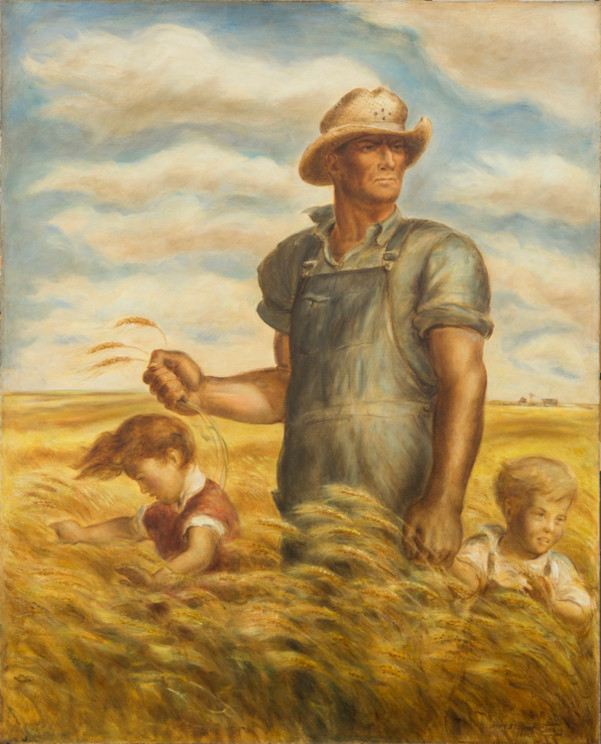
Our Good Earth
1942 painting and its related prints and wartime imagery.
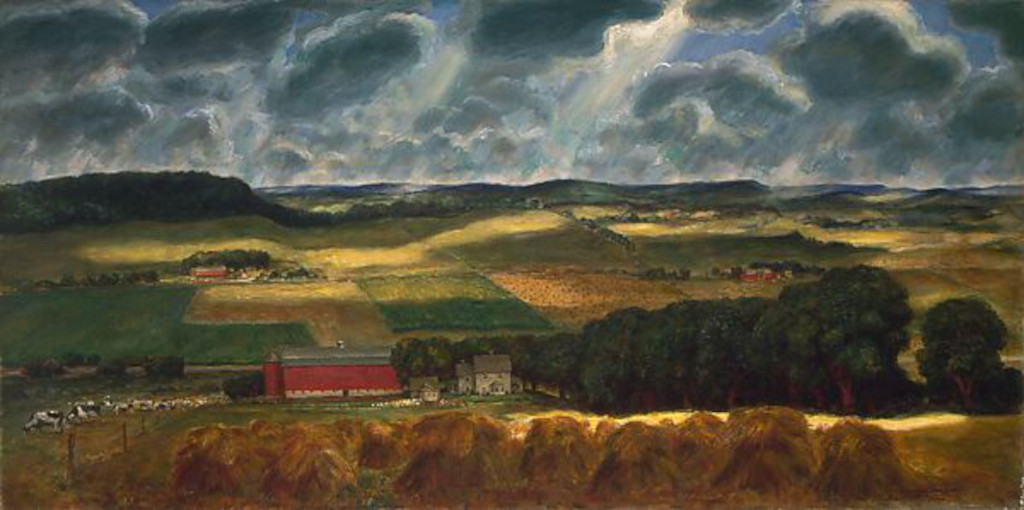
Wisconsin Landscape
1938–39 panorama of working farmland, held by The Met.


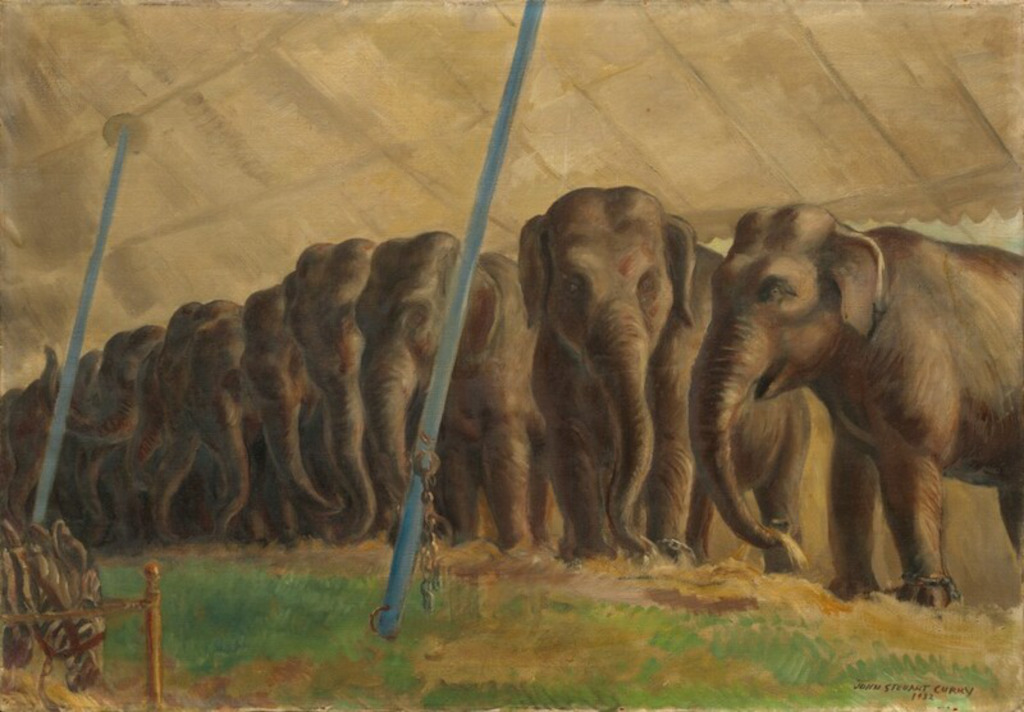
Circus Elephants
1932 painting of elephants, handlers and the work behind the circus.