


 by
Tom Gurney
Tom Gurney BSc (Hons) is an art history expert with over 20 years experience
Email:
tomgurney1@gmail.com
/ Phone:
+44 7429 011000
The Return of Private Davis from the Argonne by John Steuart Curry: Introduction
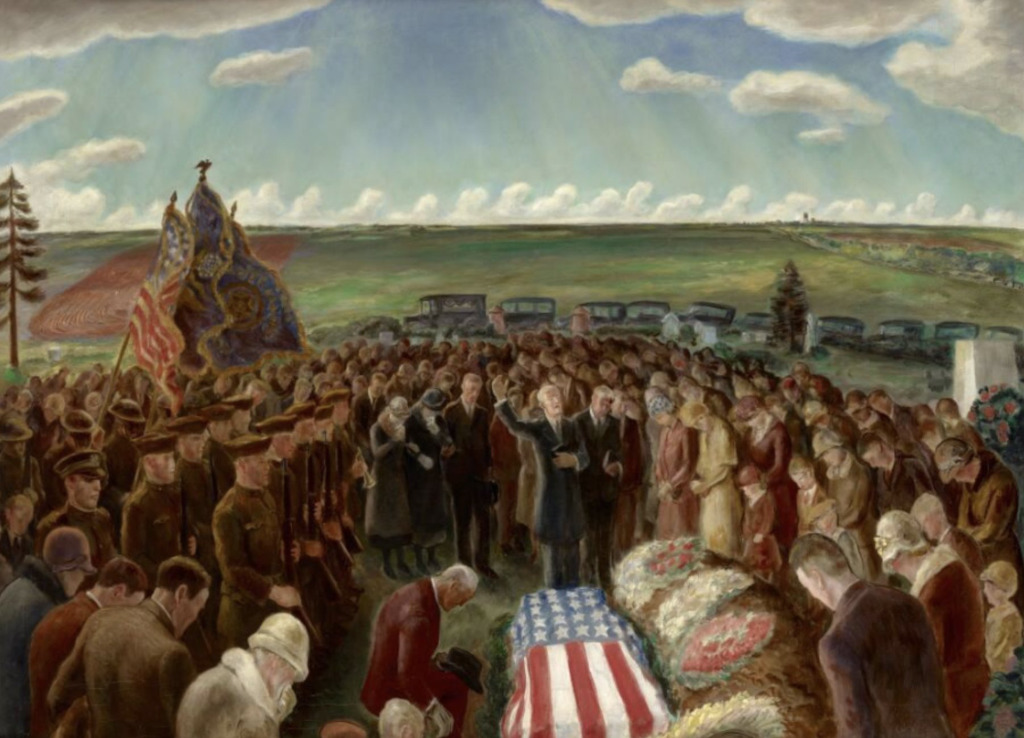
A community gathers around a flag-covered coffin beneath an immense sky. Uniformed men stand to one side, civilians crowd the other, and a preacher addresses the mourners. Beyond them, a line of cars separates the cemetery from open country stretching towards a distant town. John Steuart Curry brings a soldier's death overseas into the landscape of his Kansas home.
The Return of Private Davis from the Argonne belongs to the Museum of Fine Arts, Houston, which dates the oil painting to 1928–1940. Its canvas measures 38¼ by 52¼ inches, approximately 97.2 by 132.7 centimetres; its accession is 2011.763. [1] The extended date records a painting developed long after the funeral it represents, rather than a picture completed at the graveside.
The subject is the return and reburial of William Lewis Davis, a former schoolmate of the artist. Historian Steven Trout identifies the funeral as an event held at Winchester, Kansas, on 5 June 1921. [2] Understanding that event is essential, but the painting also asks a wider question: how can public ceremony accommodate the private loss caused by war?
At a Glance
- Artist John Steuart Curry, 1897–1946.
- Title The Return of Private Davis from the Argonne .
- Date 1928–1940.
- Medium Oil on canvas.
- Canvas dimensions 38¼ × 52¼ inches, 97.2 × 132.7 centimetres.
- Collection Museum of Fine Arts, Houston.
- Credit Museum purchase funded by the Caroline Wiess Law Accessions Endowment.
- Object number 2011.763.
- Historical occasion William Lewis Davis's reburial at Winchester, Kansas, 5 June 1921.
- Important distinction Davis died in the Alsace/Vosges sector, rather than in the Argonne named in the title.
This work across John Steuart Curry’s career
Circus Elephants
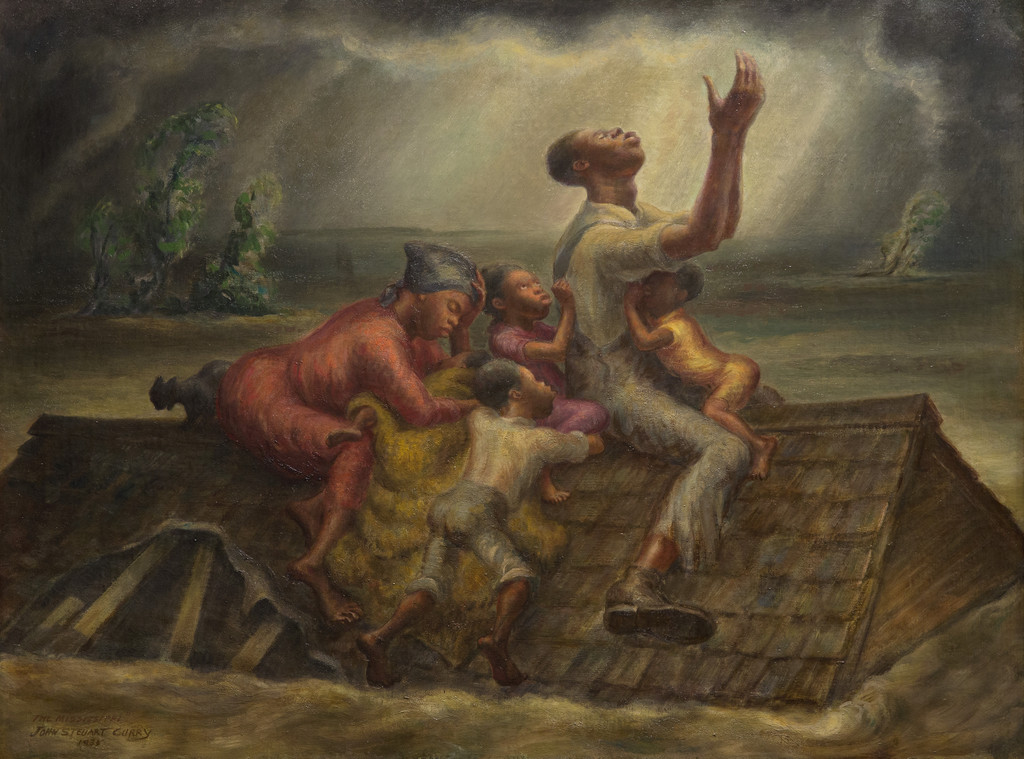
1932 paintingThe Mississippi
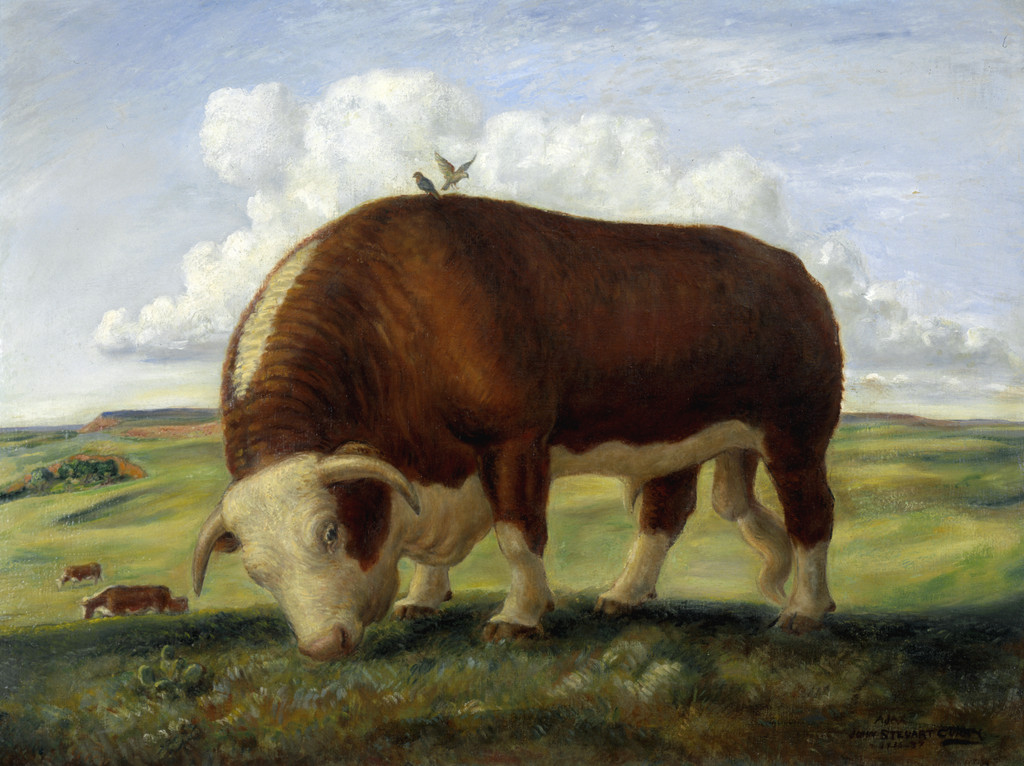
1935 paintingAjax
1936–37 oil paintingTragic Prelude
1938–40; project 1937–42Wisconsin Landscape
1938–39Our Good Earth
1942 oil paintingNotes and sources
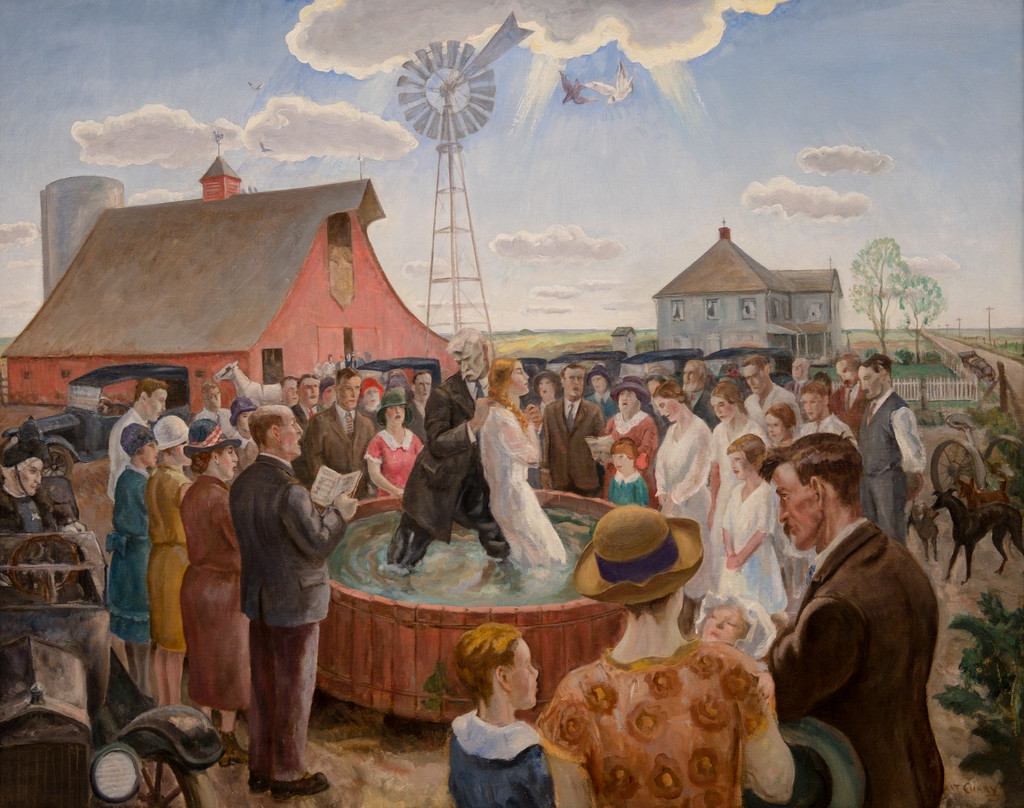
Baptism in Kansas. A remembered Kansas ceremony is staged within a working farmyard. [3]
The Return of Private Davis from the Argonne (current article). A long-developed painting of a Kansas soldier’s reburial, not a scene of combat in the Argonne. [1]
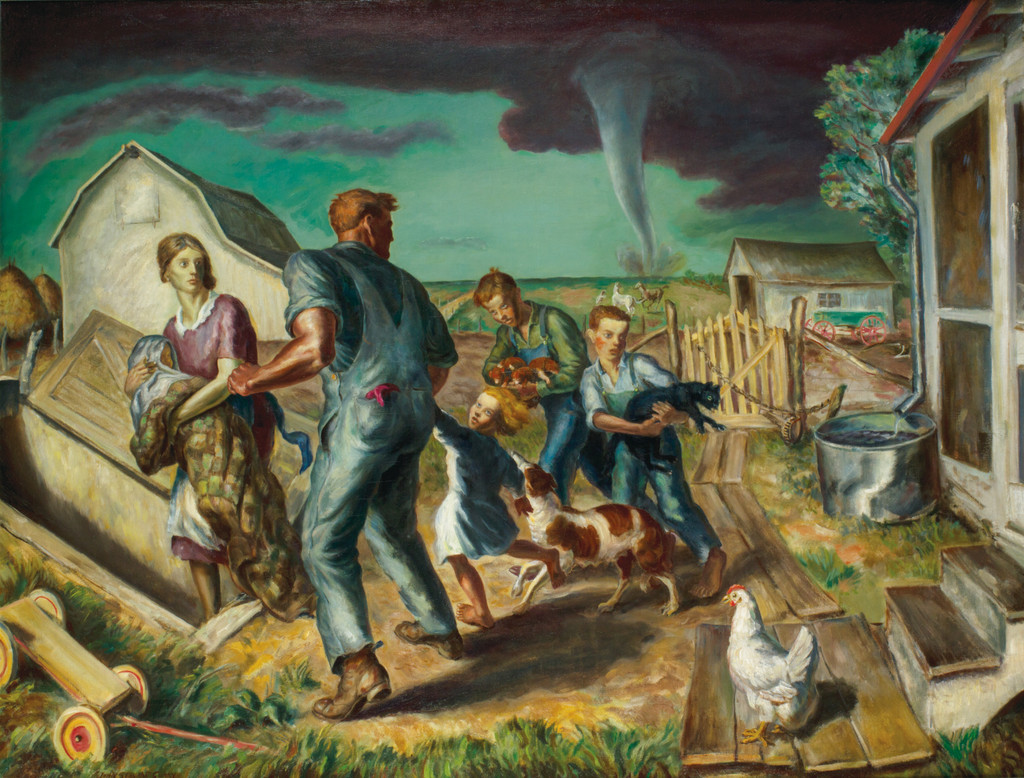
Tornado Over Kansas. A Kansas storm and a family seeking shelter, painted in Curry’s Westport studio. [4]
Circus Elephants. Elephants and handlers occupy the working space beneath a circus tent. [5]
The Mississippi. A family occupies a roof amid floodwater; the painting is tempera on canvas mounted on panel. [6]
Ajax. The monumental bull in the Smithsonian oil differs from the earlier lithograph. [7]
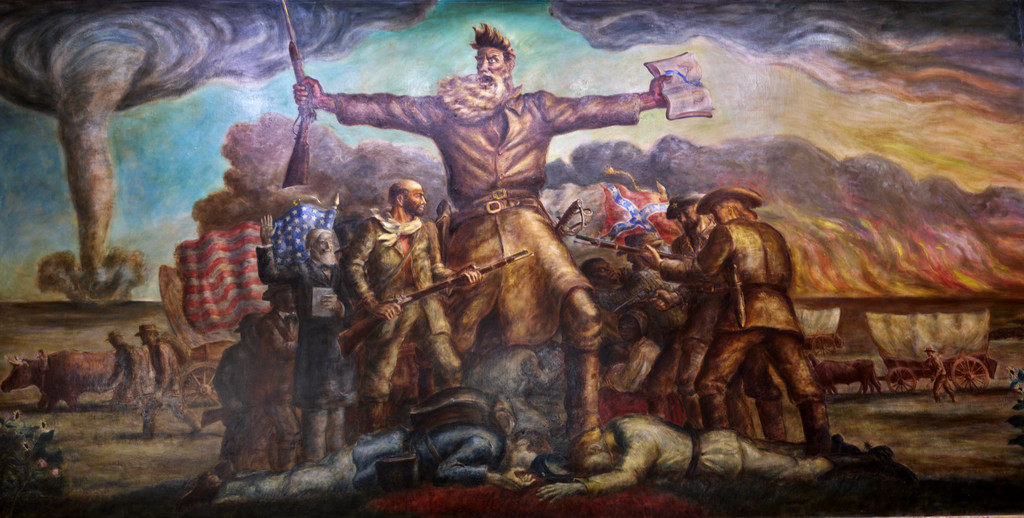
Tragic Prelude. John Brown stands at the centre of a Kansas State Capitol mural continuing across adjoining walls. [8]
Wisconsin Landscape. An extensive farm panorama, distinct from the separately catalogued preparatory study. [9]
Our Good Earth. The Chazen painting is distinct from the watercolour study, lithographs and wartime posters. [10]
Contents
- A military funeral in a Kansas landscape
- William Lewis Davis and the 1921 reburial
- Why American families could bring the dead home
- The Argonne title and the place where Davis died
- A constructed cemetery view
- A painting developed from 1928 to 1940
- Courbet, Dunn and the burial picture
- Community purchase and the 1940 presentation
- Mourning, patriotism and interpretations of war
- Collective mourning and the individual loss
A military funeral in a Kansas landscape
The coffin enters from the lower edge, creating a strong axis into the assembled crowd. Its flag makes it immediately recognizable as the centre of a military funeral. Flowers banked alongside it introduce a softer, more irregular mass beside the straight edges of the casket and the repeated stripes of its covering.
The mourners form an enclosing arc. On the left, uniforms and upright standards give the gathering a more formal rhythm; on the right, bowed heads and varied civilian clothing create a less regular arrangement. These groups remain distinct, but their attention converges on the same space. Curry shows a ceremony that brings different parts of the community together without making every participant identical.
Near the middle, the preacher's raised hand interrupts the repeated downward inclination of the heads around him. His gesture introduces an act of speech into a gathering largely defined by silence and stillness. The image supplies the outward form of a sermon, but it gives the viewer no words with which to judge its content.
The foreground figures are partly cut by the frame. This cropping makes the gathering seem to continue beyond the painted boundary, while the elevated viewpoint allows the crowd's overall shape to remain visible. The viewer is close enough to recognize individual gestures yet far enough above the scene to consider its arrangement as a whole.
William Lewis Davis and the 1921 reburial
Davis enlisted in the Kansas National Guard in 1917 and served with the 139th Infantry. He died in August 1918, aged twenty-three, after being wounded during his first night in the front-line trenches. Trout reconstructs this history from military and family material, contemporary newspapers and later testimony. [2]
His death preceded the funeral in Kansas by nearly three years. Initially buried in France, he returned through the postwar programme for repatriating American service members' remains. Trout traces the final journey from Hoboken, New Jersey, by rail to Winchester, where the coffin arrived on 4 June 1921. The community's funeral followed the next day.
The ceremony included a church service and a graveside gathering, with military participation and the local American Legion. The painting concentrates on the cemetery rather than attempting to illustrate every stage of that day. Its flags, uniformed participants and assembled civilians connect a particular family's bereavement with a broader public tribute.
Trout identifies the kneeling man beside the coffin as Davis's father, John W. Davis, drawing on testimony from the soldier's nephew. That identification gives the foreground a more specific emotional centre. Among the institutions and groups represented at the funeral, the father's posture directs attention to the relationship that the ceremony cannot replace.
Curry described Davis as an old school friend, but the surviving evidence does not establish that the artist attended the 1921 service. The distinction matters. The painting can be rooted in a real local event without being treated as a complete eyewitness record of its participants, landscape or sequence.
Why American families could bring the dead home
Davis's return belonged to a national undertaking. Arlington National Cemetery's centennial resource guide explains that American families could choose between permanent burial in a United States military cemetery overseas and the return of remains to a destination in the United States, at government expense. [11]
That choice placed family wishes within a system of military administration, transport and commemoration. A funeral in Kansas was therefore the final stage of a journey requiring more than a local decision. The coffin made its way from a European burial ground, across the Atlantic and through the American railway network before the community could assemble around it.
This context changes the meaning of the word “return.” The soldier did come home, but the interval between his death and reburial had already transformed homecoming into an act of remembrance. The people gathered at the cemetery faced both a physical arrival and the renewed recognition of a loss that had occurred years earlier.
Houston's own discussion guide, prepared around Bobbie Ann Mason's In Country , draws attention to the contrast between an anticipated celebratory homecoming and the funeral Curry actually depicts. [12] Its comparison with the returns of later American veterans shows how the painting's subject can prompt questions extending beyond the First World War.
The Argonne title and the place where Davis died
The title should not be used as a precise statement of Davis's service location. Trout places his fatal wounding in the Vosges Mountains of Alsace, before the Meuse-Argonne Offensive began. The Argonne named in the painting is therefore different from the sector in which this soldier's life ended. [2]
Trout argues that the familiar battleground helped give a local death a more representative national meaning. That is an interpretation of Curry's choice of title, rather than proof that the artist deliberately falsified a military record. The painting's title and the soldier's biography answer different questions and should remain distinguishable.
The circumstances of the wounding are also uncertain. Accounts discussed by Trout differ in their descriptions of the encounter and its aftermath. His suggestion of possible friendly fire remains a hypothesis; it is not an established cause of Davis's death. The painting itself supplies no evidence that could resolve those conflicting reports.
For the viewer, the essential contrast lies between a title that promises arrival and an image that reveals the form that arrival took. The coffin makes the homecoming unmistakable, while the gathering shows the community attempting to receive the dead man through the language and actions of a funeral.
A constructed cemetery view
The funeral occupies a large part of the foreground, but it shares the canvas with an exceptional expanse of land and sky. Fields recede beyond the cars, and distant buildings become very small marks. This shift in scale allows the immediate gathering and the much larger environment to remain visible together.
The horizon is comparatively level, while the crowd and vehicles create a second, lower boundary across the picture. Between them, the open ground provides a space very different from the crowded foreground. The eye moves from closely grouped people towards distances with little human activity, then returns to the coffin's clear pattern.
Trout's examination of the cemetery's actual setting shows that Curry rearranged the topography. The view towards Winchester is not the view available from Davis's grave. [2] The landscape should consequently be read as a pictorial construction, not a reliable guide to the position of the cemetery, town and surrounding slopes.
That construction permits the painting to operate at two scales. The people appear substantial when considered individually, but their ceremony becomes small beside the wider country. Neither scale cancels the other. The gathering can express the importance of this death to a community while the landscape makes that community one small part of a much larger world.
The cars are particularly effective in linking those scales. Their repeated roofs form a boundary behind the mourners, establishing depth without requiring a conspicuous road through the centre. They also give the event a modern setting. This is a twentieth-century community arriving at a cemetery, rather than a timeless assemblage of figures in an empty pastoral landscape.
A painting developed from 1928 to 1940
Curry began the work in 1928 and continued to revise it before its completion in 1940. Both Trout's account and Houston's current dating preserve that long development. [1] It places years of reflection between the historical ceremony and the finished canvas, with further distance separating the funeral from the start of painting.
An early sketch reproduced in Trout's study offers a useful comparison. Its viewpoint is closer to the level of the figures, giving the viewer a position more like that of another person at the service. The finished painting lifts the viewpoint and increases the importance of the land beyond the gathering. The change affects how the event is encountered, even where the basic funeral subject remains.
Such a long development should not be mistaken for continuous, documented daily work. The surviving date range establishes the span of the project, not a complete schedule of Curry's sessions or a sequence for every alteration. Its significance is that the painting took shape through reconsideration rather than a single act of immediate transcription.
The years also changed the public setting in which the picture could be understood. When Curry began, Americans were still debating the meaning of the Great War; by 1940, another war had begun in Europe. The same coffin and community could therefore carry different associations for viewers at different stages of the painting's development.
Courbet, Dunn and the burial picture
Trout proposes comparisons with Gustave Courbet's A Burial at Ornans and Harvey Dunn's I Am the Resurrection and the Life . The comparisons are valuable because all three pictures give a community's response to death a substantial pictorial setting. They do not establish that Curry copied a particular arrangement or that every similar feature has the same meaning.
Musée d'Orsay dates Courbet's painting to 1849–1850 and emphasizes its challenge to conventional hierarchies: ordinary villagers were represented at life size on a canvas whose scale had generally been reserved for more elevated subjects. [13] Curry's canvas is much smaller, but the comparison directs attention to the importance granted to a provincial ceremony and its participants.
Dunn, Curry's former teacher, supplies a different point of reference. In the painting reproduced by Trout, a small gathering occupies a rise above extensive open country. The relationship between mourners and distance is particularly relevant to Curry's picture. In both, the setting becomes part of the experience of burial rather than simply a convenient background.
The distinctions are as useful as the similarities. Curry's military participants, American flags, cars and named returned soldier give his funeral a specific modern history. A broad tradition of burial pictures helps explain its artistic ambitions, but the circumstances of Davis's return remain central to the work's identity.
Watch: John Steuart Curry
Choose a film to explore the artist’s work, its interpretation and its wider setting.
Look at This: John Steuart Curry at MOWA
An exhibition interview with Graeme Reid considers Curry’s work and life in Wisconsin.
Watch on YouTubeCommunity purchase and the 1940 presentation
The painting acquired a public commemorative role of its own in 1940. Trout documents its purchase by Milwaukee's Alonzo Cudworth American Legion Post 23 through a subscription campaign involving thirty donors. The price was $1,500, and Curry presented the picture on 31 May 1940. [2]
The transaction joined the subject of remembrance to an organization of veterans. A Kansas soldier's funeral entered a building associated with the memory of military service in Wisconsin. The painting was consequently received within a setting where flags, sacrifice and collective tribute already had an institutional significance.
Trout's account of the presentation also records differing responses. Some members had questioned whether the picture was appropriate for the post, while Milwaukee Art Institute director Alfred G. Pelikan defended it and argued that sustained viewing would reveal its depth. These remarks are known through the historical reporting discussed in Trout's article, rather than through a recording of the dinner.
The episode is revealing without settling the painting's meaning. Its buyers could value the work as an act of homage even if other viewers found its atmosphere troubling. Public ownership and ceremonial reception do not require a picture to deliver one uncomplicated message. The funeral's solemnity could support patriotic identification while its coffin and extensive empty distances encouraged a more difficult response.
Mourning, patriotism and interpretations of war
The gestures of the mourners support a reading of sincere grief. Heads bend, bodies incline and the crowd gathers closely around the coffin. These observable actions establish attention and participation, but they do not reveal every individual's thoughts. The image creates a collective occasion while leaving room for differences within it.
The preacher introduces a contrasting energy. His upright posture and raised hand stand against the bowed figures nearby. Trout reads this contrast as potentially satirical, questioning whether public language can offer adequate consolation. That interpretation should remain distinguishable from the visible gesture itself: a raised hand can also belong to a conventional act of blessing or address.
The same openness applies to the military group. Their formation gives the service discipline and dignity, while repeated poses can also suggest the impersonality of an institution. The picture allows respect for the dead soldier to coexist with questions about the systems and beliefs that sent men to war. It need not ridicule the mourners in order to make that tension felt.
Trout places these questions within Curry's opposition to American involvement in another European war during the late 1930s. He also considers personal bereavement, including the death of Curry's younger brother Paul, as a possible background to the artist's sustained interest in loss. These are contextual arguments, not a complete explanation of why each painted figure appears as it does.
Curry's own military experience requires similar care. His brief service in the Student Army Training Corps in 1918 did not take him to the Western Front. The painting addresses a war he did not experience as a battlefield combatant. Its authority comes from artistic construction and engagement with remembrance, rather than a claim that its maker had shared Davis's front-line experience.
The work's capacity to sustain several readings is part of its importance. A tribute to a dead friend, an image of communal solidarity and a warning about the cost of war can occupy the same canvas. Their coexistence makes the painting more demanding than an illustration designed solely to praise service or solely to condemn it.
Collective mourning and the individual loss
In a 1998 NewsHour discussion preserved in transcript by the American Archive of Public Broadcasting, curator Patricia Junker emphasized the community's collective mourning and the relationship between its small size and the vast prairie. [14] Her account offers a different emphasis from Trout's sharper reading of the ceremony's possible failures.
The two approaches direct attention to different relationships within the same image. One stresses a community drawn together by loss; the other asks whether its rituals can adequately explain or console that loss. The foreground supports both questions. It contains the signs of public ceremony and the bent figure of a father whose relationship to the dead soldier is irreducibly personal.
The sky extends this uncertainty. Its bands of clouds and descending light can give the gathering a solemn setting, but they do not provide a written answer to the preacher's address. Reading the light as blessing, distance or indifference depends on interpretation. The visible arrangement creates the possibility of those responses without requiring the viewer to choose only one.
From the historical owner to Houston
The illustration accompanying Trout's 2008 article credits the Westervelt Company and the Westervelt-Warner Museum in Tuscaloosa. Houston's current collection record identifies the painting as part of the Museum of Fine Arts, Houston, with purchase funding from the Caroline Wiess Law Accessions Endowment. [1] The older location belongs to the work's history rather than its present collection identity.
Houston's record also lists the painting in exhibitions including American Made in 2012–13 and the travelling World War I and American Art exhibition of 2016–18. This later history places the canvas within a wider reconsideration of American responses to war, extending its audience beyond the Kansas subject and the veterans' setting of its first purchase.
The painting continues to reward a movement between close and distant looking. At close range, its coffin, flowers and bowed figures make the funeral tangible. Seen as a whole, the cars, open fields and immense sky situate that loss within a much larger landscape. Curry gives the returned soldier a place among his people while leaving the costs and meanings of his death open to sustained reflection.
Artworks and versions directory
Browse 84 selected object, version, edition and reproduction records. Several concern related images or different impressions; this is not a complete lifetime catalogue or a count of unique compositions. Search also finds prints, photographs and reproductions; the medium filter groups paintings and drawings.
Frequently Asked Questions
William Lewis Davis was a Kansas soldier and former schoolmate of Curry. He died in 1918, and his remains were reburied at Winchester, Kansas, on 5 June 1921.
Trout's research places his fatal wounding in the Vosges Mountains of Alsace, before the Meuse-Argonne Offensive. The painting's title is not an exact service record.
His attendance has not been established by the surviving evidence discussed in Trout's study.
Curry began the work in 1928 and continued to develop it before its completion in 1940. The funeral itself took place in 1921.
It belongs to the Museum of Fine Arts, Houston, accession 2011.763. Check the museum's current information for display availability.
It supports several readings. Its military tribute and communal mourning coexist with an unsettling emphasis on death, distance and the difficulty of consolation.
Discussion
Look again at the images and ideas explored in The Return of Private Davis from the Argonne by John Steuart Curry. These editorial prompts invite your observations.
Reader Insights
How does the elevated viewpoint change your relationship to the people at the funeral?
Does the surrounding landscape strengthen the community's tribute or make its scale seem smaller?
Which part of the picture most strongly connects public ceremony with private grief?
Join the Conversation
Share a detail, comparison or question about The Return of Private Davis from the Argonne by John Steuart Curry below.
References
- Museum of Fine Arts , Houston, The Return of Private Davis from the Argonne, 1928–1940, oil on canvas, 2011.763: current collection record. View source
- Steven Trout , The Western Front Comes to Kansas: John Steuart Curry's The Return of Private Davis from the Argonne, Kansas History 31, Autumn 2008, pages 194–211. View source
- Whitney Museum of American Art, John Steuart Curry | Baptism in Kansas | Whitney Museum of American Art. View source
- Muskegon Museum of Art, Tornado Over Kansas - Muskegon Museum of Art. View source
- National Gallery of Art, Circus Elephants: collection object record. View source
- Saint Louis Art Museum, The Mississippi,1935,7:1937: collection record and provenance. View source
- Smithsonian American Art Museum, Ajax. View source
- Kansas Historical Society, Kansas State Capitol - Online tour - Tragic Prelude - Kansas Historical Society. View source
- Metropolitan Museum of Art, Wisconsin Landscape. View source
- Chazen Museum of Art, Our Good Earth | 1873 |Chazen Museum of Art. View source
- Arlington National Cemetery , Tomb of the Unknown Soldier Centennial Commemoration Resource Guide, 2021, physical PDF page 14: family choices about repatriation. View source
- Museum of Fine Arts , Houston, In Country, 2012 book-tour discussion guide, physical PDF page 5: the painting's homecoming subject. View source
- Musée d'Orsay , Gustave Courbet, A Burial at Ornans, 1849–1850: object record and curatorial interpretation. View source
- The NewsHour with Jim Lehrer , 13 August 1998, American Archive of Public Broadcasting: selected Curry segment and Patricia Junker's comments on collective mourning. View source
More CURRY Paintings
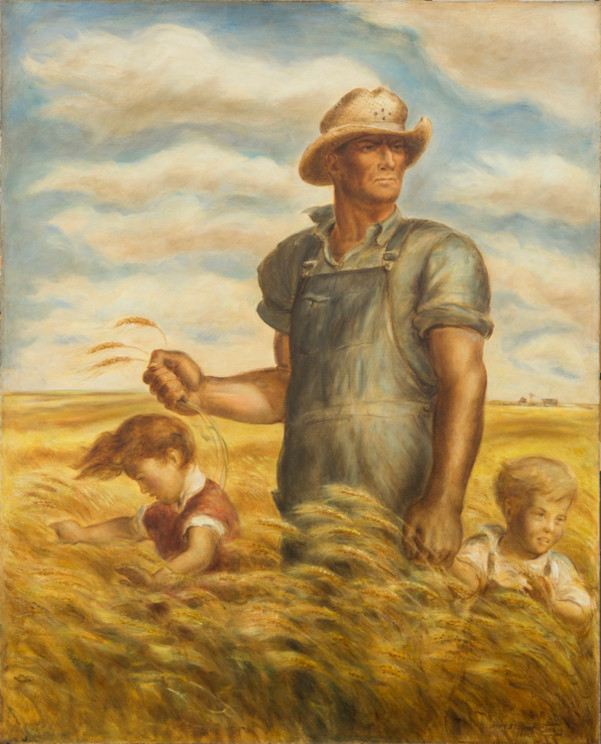
Our Good Earth
1942 painting and its related prints and wartime imagery.
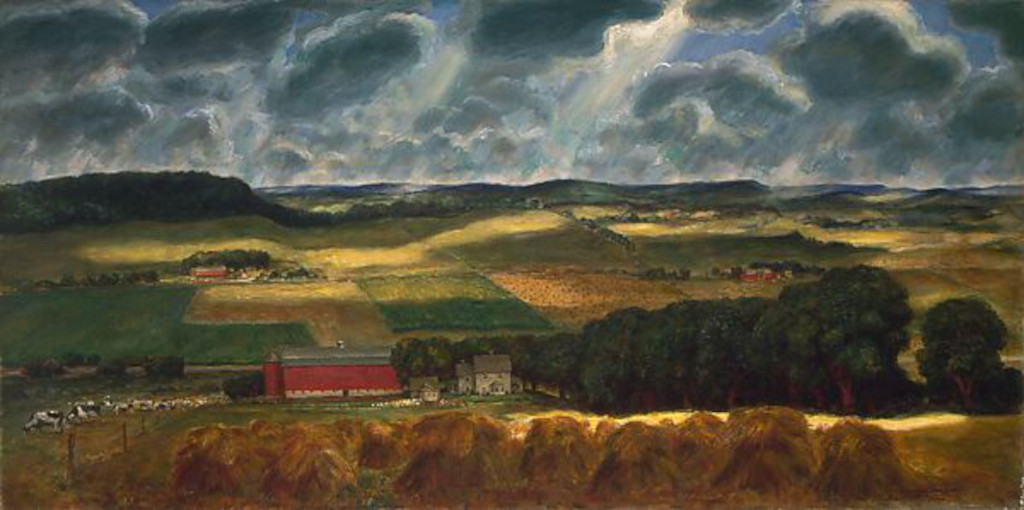
Wisconsin Landscape
1938–39 panorama of working farmland, held by The Met.


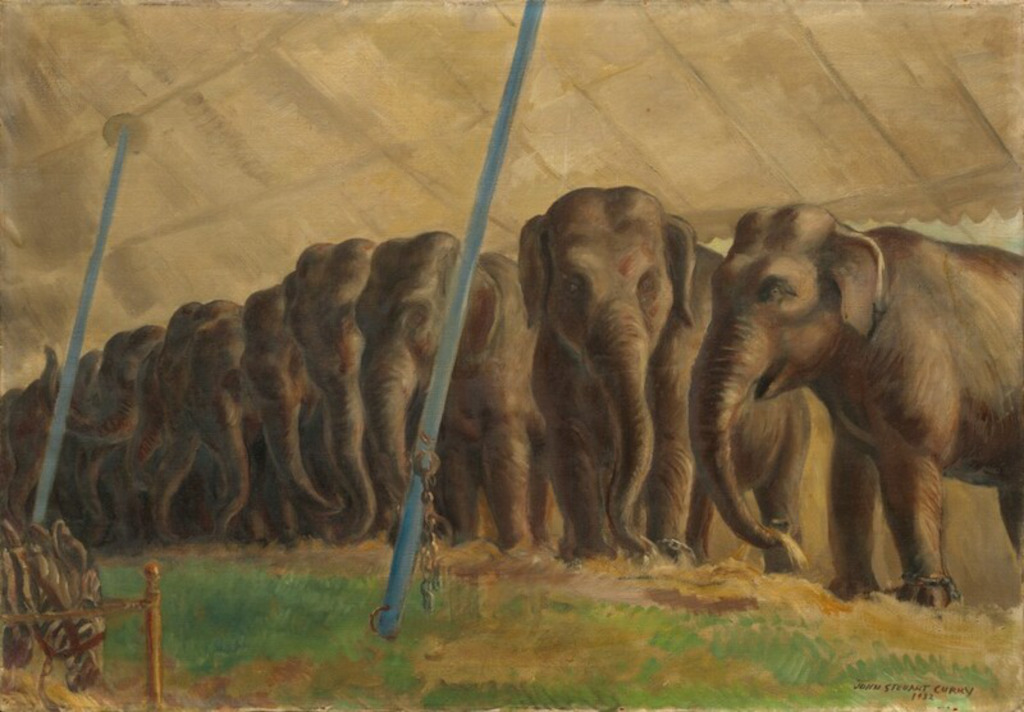
Circus Elephants
1932 painting of elephants, handlers and the work behind the circus.