


 by
Tom Gurney
Tom Gurney BSc (Hons) is an art history expert with over 20 years experience
Email:
tomgurney1@gmail.com
/ Phone:
+44 7429 011000
The Line Storm by John Steuart Curry: Introduction
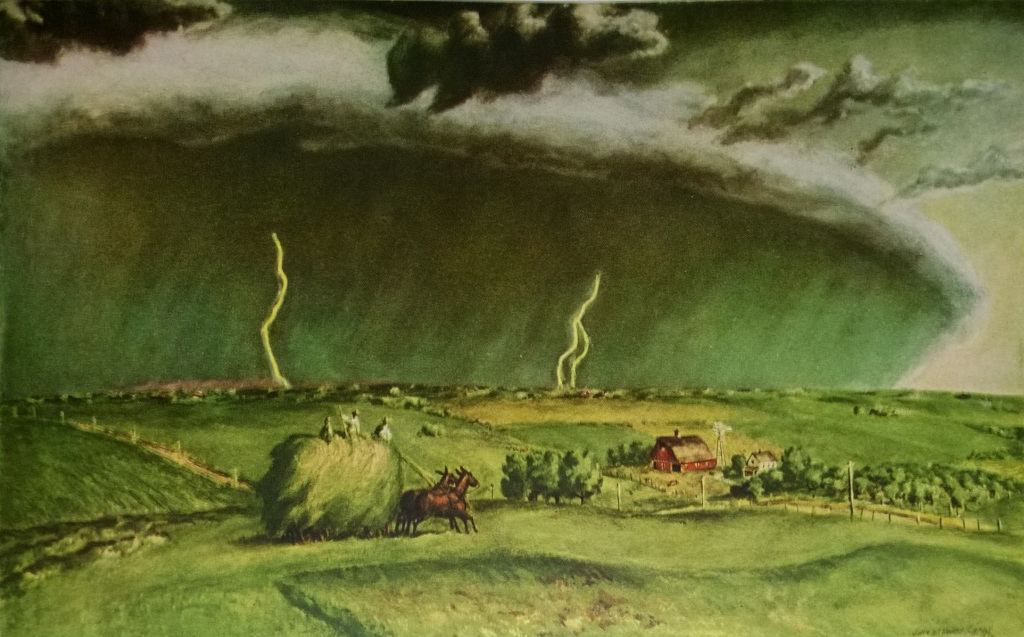
A dark cloud sweeps across farmland as a loaded hay wagon heads towards the buildings below. John Steuart Curry makes an approaching storm feel enormous without losing sight of the people working beneath it. His painting also preserves an important episode in his experiments with materials: conservators Lance Mayer and Gay Myers date the examined work to November 1934. [1]
At a Glance
- Artist John Steuart Curry, 1897–1946.
- Title The Line Storm .
- Date November 1934, according to the published conservation account.
- Medium Tempera and oil on canvas in that account.
- Dimensions 76.3 × 121.9 centimetres in the conservation study.
- Historical catalogue credit Babcock Galleries, New York, in the 2002 study.
- Related print A separate lithograph dated 1935 at the Smithsonian American Art Museum.
This work across John Steuart Curry’s career
Circus Elephants
1932 paintingThe Line Storm (current article)
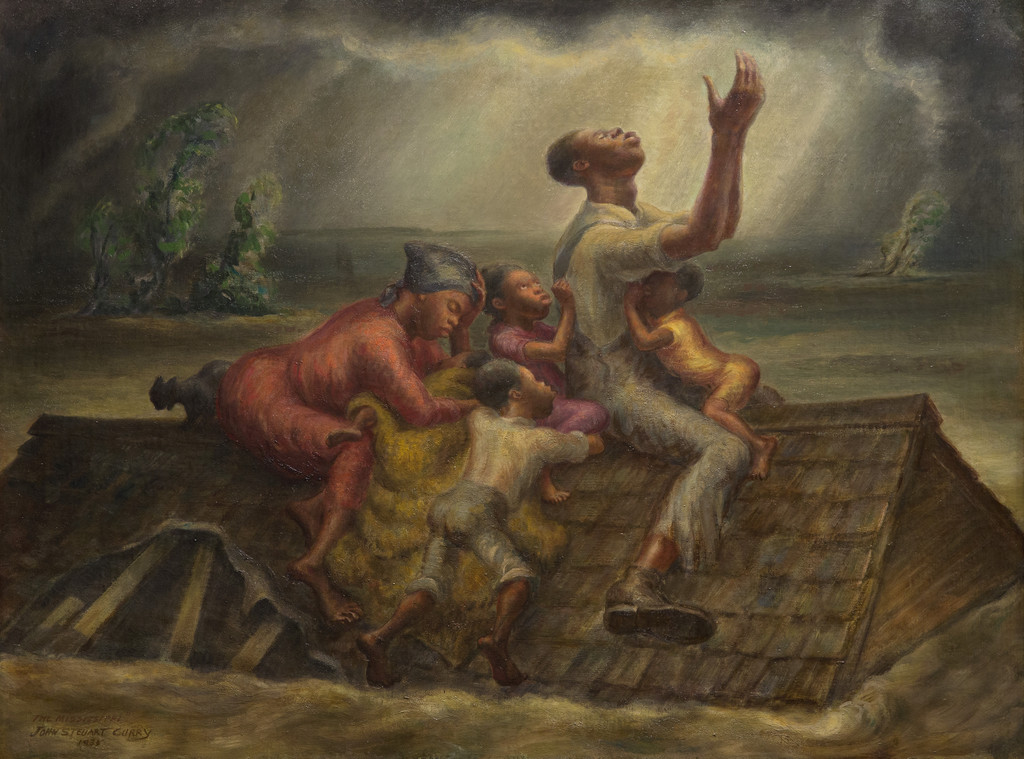
November 1934The Mississippi
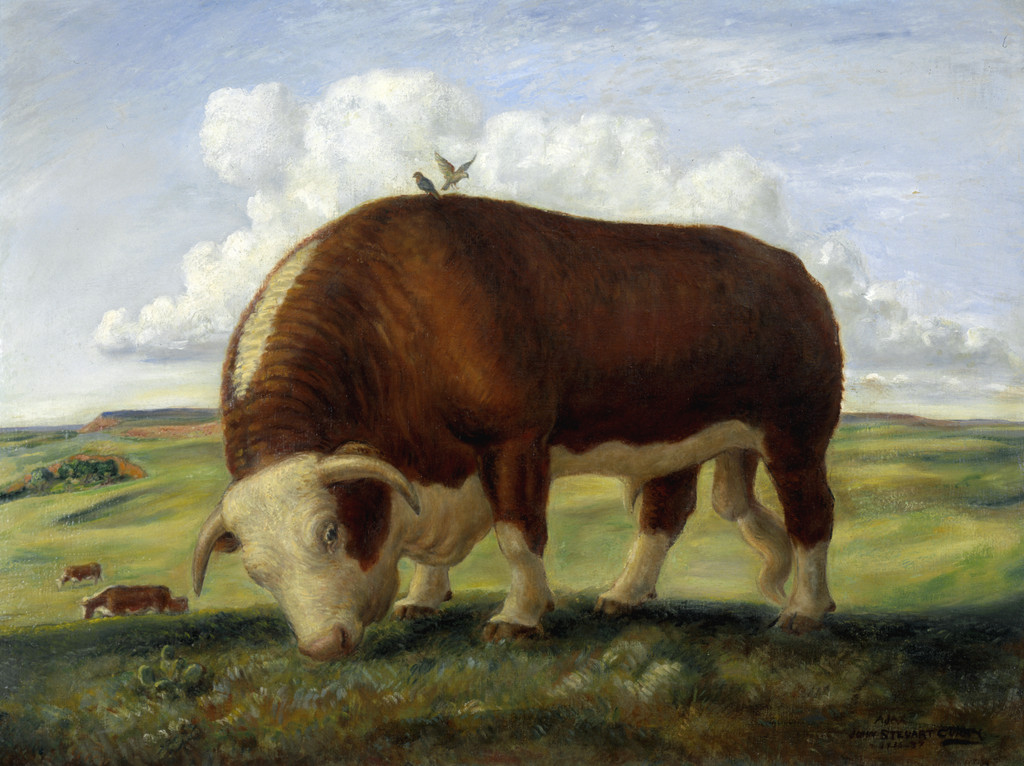
1935 paintingAjax
1936–37 oil paintingTragic Prelude
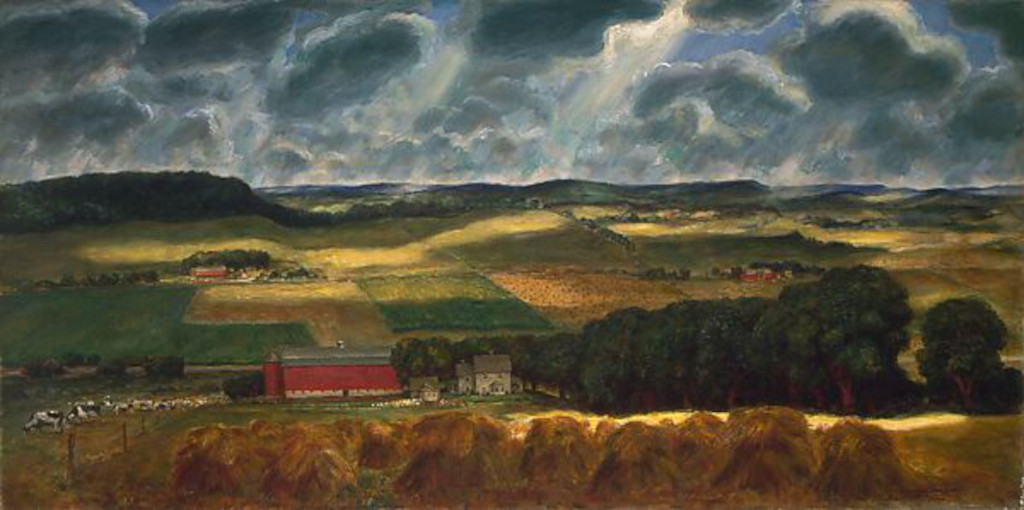
1938–40; project 1937–42Wisconsin Landscape
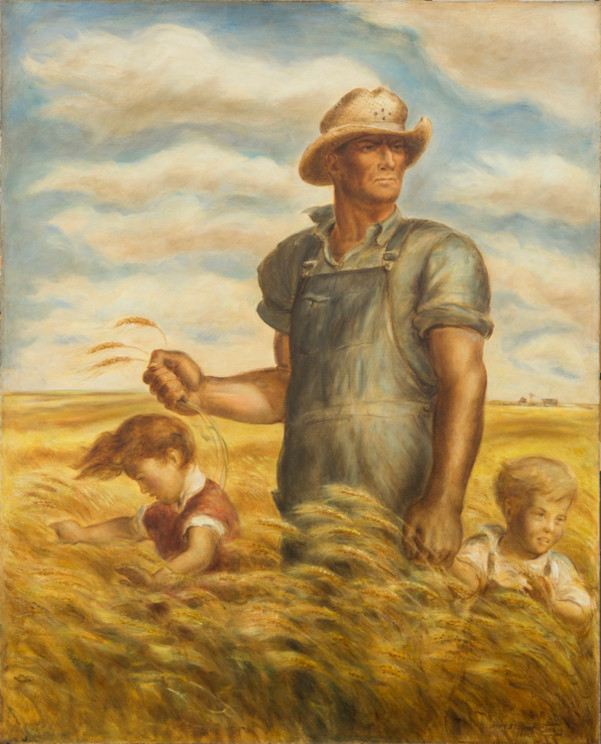
1938–39Our Good Earth
1942 oil paintingNotes and sources
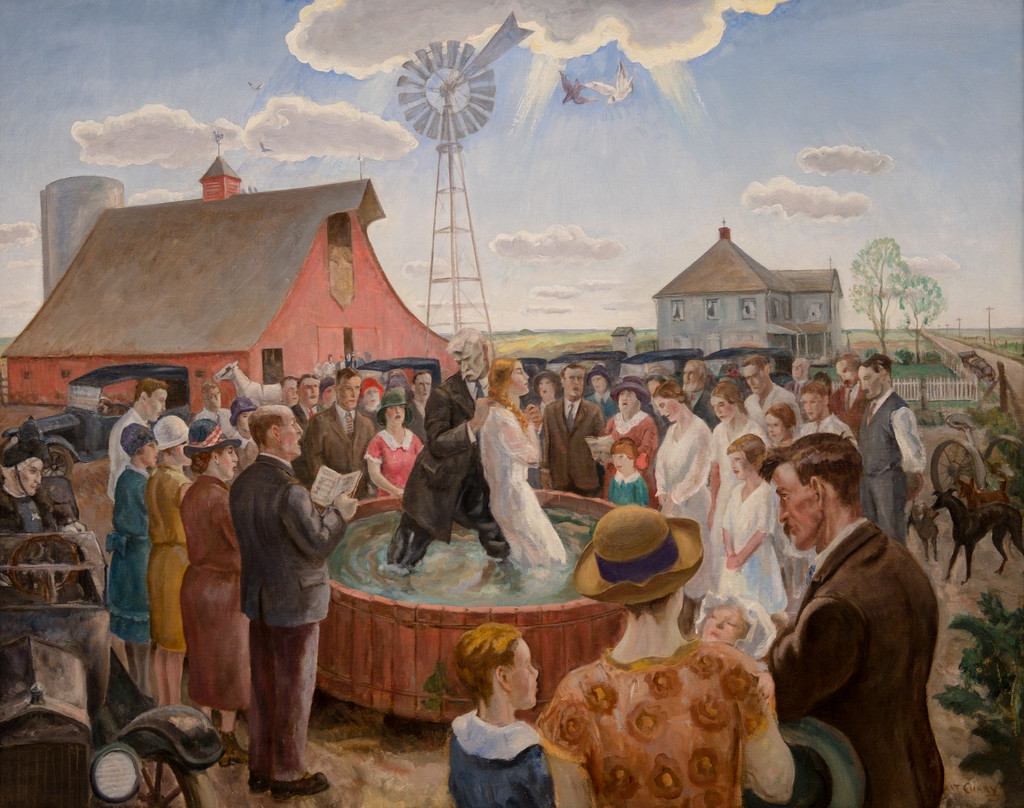
Baptism in Kansas. A remembered Kansas ceremony is staged within a working farmyard. [2]
Tornado Over Kansas. A Kansas storm and a family seeking shelter, painted in Curry’s Westport studio. [3]
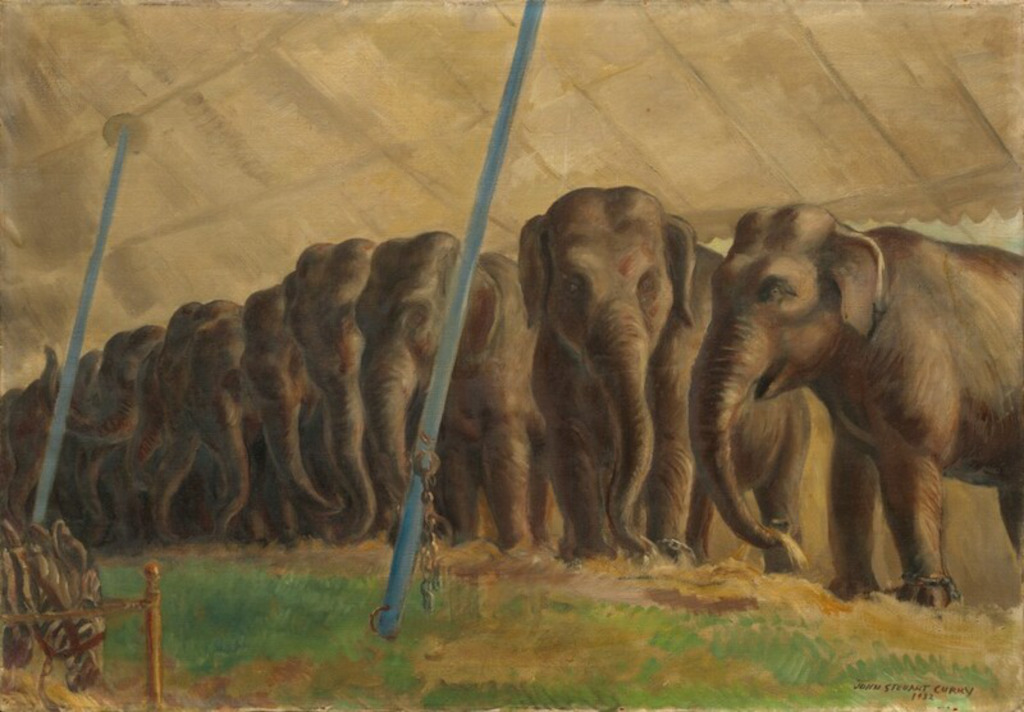
Circus Elephants. Elephants and handlers occupy the working space beneath a circus tent. [4]
The Line Storm (current article). The conservation account distinguishes the layered painting from later prints and reproductions. [1]
The Mississippi. A family occupies a roof amid floodwater; the painting is tempera on canvas mounted on panel. [5]
Ajax. The monumental bull in the Smithsonian oil differs from the earlier lithograph. [6]
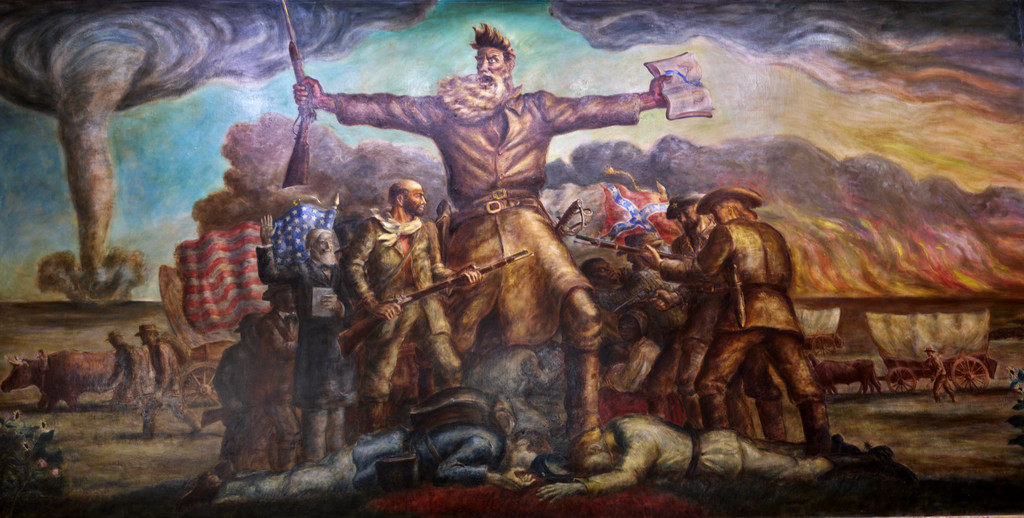
Tragic Prelude. John Brown stands at the centre of a Kansas State Capitol mural continuing across adjoining walls. [7]
Wisconsin Landscape. An extensive farm panorama, distinct from the separately catalogued preparatory study. [8]
Our Good Earth. The Chazen painting is distinct from the watercolour study, lithographs and wartime posters. [9]
Contents
- A storm subject in Curry's work
- The examined painting and its date
- Tempera underpainting and oil layers
- Shellac, adhesion and the surface
- The limits of a recipe
- The lithograph and colour reproductions
A storm subject in Curry's work
The most striking feature is the cloud's disproportionate scale. It occupies much of the picture, pressing down towards the horizon while the fields remain comparatively bright. Its long, curved underside makes the weather seem to advance across the whole countryside. There is no single small threat to avoid; the entire familiar landscape lies beneath the approaching mass.
Bright lightning traces break through this darkness. Their narrow, irregular paths contrast with the broad sweep of the cloud. Below, fences, roads and field boundaries divide the land into smaller spaces. These cultivated lines suggest an ordered working environment, while the sky follows a much larger movement that those boundaries cannot contain.
The hay wagon occupies the left foreground. Its tall load rises above the work animals, with small figures visible at the top. On the right, a red barn and lighter house form a compact group among trees. The separation creates a story through distance: the wagon and buildings can be read together, but they have not yet been brought safely into the same place.
Sue Slick's Fort Wayne Museum of Art account interprets the team as mules hurrying towards the barn. She emphasizes the tension between approaching weather and rural work. That reading gives the scene a practical urgency: the storm threatens people, animals and the result of their labour, rather than serving only as an impressive sky. [10]
The smaller buildings farther away extend this vulnerability across the countryside. Curry allows us to see beyond the immediate wagon, across fields that rise towards the horizon. The eye can follow a road or a fence into that distance, but the lightning repeatedly draws it back upwards. Near and far remain joined beneath one unsettled sky.
In the published colour image, green connects the foreground with the fields beneath the cloud. The red barn provides a small, concentrated interruption within that expanse. This relationship makes the farm buildings easy to locate even though the sky commands far more space. Colour helps establish the destination of the wagon's journey, while the bright lightning marks a distant danger that remains outside human control.
The wagon also brings a different kind of mass into the picture. Its rounded load of hay rises above the animals and conceals much of the vehicle. Against the long sweep of cloud, it becomes a small, vulnerable mound. The labourers appear smaller still. Their placement above the load makes them visible, but it also leaves their bodies exposed against the open fields. Curry builds the drama through these changing proportions, moving from people to animals, accumulated hay, cultivated land and finally the enormous sky. The scene asks us to imagine movement across that space without showing the outcome of the journey.
The examined painting and its date
Mayer and Myers identify the painting they treated as tempera and oil on canvas, measuring 76.3 by 121.9 centimetres. Their 2002 article credits Babcock Galleries. [1] Those details describe a documented examination; the gallery credit records a historical location rather than establishing today's owner or display arrangements.
Other published labels vary. The Commons record for a photograph of a plate in Thomas Craven's 1939 A Treasury of Art Masterpieces gives 1935, oil on panel and a different height. Its colour image is useful for following the composition, but those fields conflict with the examined account. A reproduction of the front cannot independently establish what supports the paint. [11]
This distinction helps explain why an image title alone is insufficient identification. A painted work, a photographed book plate and an original print can share a subject while presenting different kinds of evidence. For the physical painting discussed here, the conservation account provides the more direct description of its materials.
Tempera underpainting and oil layers
Through Curry's notebook, Mayer and Myers report egg-tempera underpainting, a shellac layer and oil overpainting using stand oil and turpentine. [1]
Underpainting establishes an earlier stage beneath the final surface. The completed picture combines decisions made at different moments, some of which later paint partly conceals. Knowing this sequence encourages a distinction between the scene's apparent immediacy and the time involved in making it. The sudden arrival of weather is the subject; a succession of applications is the means of representing it.
That difference is especially suggestive here. Cloud, lightning, farm buildings and moving wagon must read together as one moment. Curry's painting technique had to serve the coherence of that moment even when its materials were applied in separate stages. A record of the layers explains part of the construction without dictating how every visible passage should be interpreted.
Watch: John Steuart Curry
Choose a film to explore the artist’s work, its interpretation and its wider setting.
Look at This: John Steuart Curry at MOWA
An exhibition interview with Graeme Reid considers Curry’s work and life in Wisconsin.
Watch on YouTubeShellac, adhesion and the surface
The conservators describe traction cracking and propose that a glossy shellac layer may have weakened adhesion above it. Different drying rates may also have contributed. Their explanation remains a proposed combination of causes. [1]
It would be misleading to identify every visible dark line in a reproduction as damage. Painted edges, shadows, printing marks and surface changes can all appear as contrasting lines. The conservation account concerns the physical object, examined under conditions unavailable in an ordinary book illustration. Its findings add material history to the landscape; they do not turn the reproduced image into a complete condition report.
The limits of a recipe
Mayer and Myers also place Curry's tempera experiments in 1932, before the English publication of Max Doerner's book in 1934. [1] The chronology complicates an account in which reading one book immediately produces one entirely new method.
A short materials note is valuable, but it is not the whole act of painting. It does not automatically specify every brush movement, interval between applications or later intervention. In The Line Storm , the visible relationship between cloud and field remains a compositional achievement as well as a material construction. The recipe and the picture answer related questions about Curry's work, each contributing something the other cannot supply alone.
The lithograph and colour reproductions
The Smithsonian American Art Museum owns a separate The Line Storm , dated 1935: a lithograph on paper printed by George C. Miller. Its image measures 25.1 by 35.4 centimetres. Given by Maltby Sykes, it has accession number 1976.103.17. These details belong to that print, rather than replacing the dimensions or mixed painting materials in the conservation study. [12]
Reproductions extended the painting's circulation further. Slick reports finding a 1937 reproduction among Fort Wayne's library materials. [10] Windisch and Cole's AAA index separately lists Line Storm as a Gelatone colour reproduction offered in 1951, entry 2644. Its place in the colour-reproduction section distinguishes it from an original lithographic edition. The publication year dates that offering, not Curry's execution of the painting. [13]
Across these formats, the subject invites comparison with Tornado Over Kansas . Both place rural activity beneath threatening weather. In The Line Storm , the broad cloud and lightning make the whole horizon active, while the wagon's journey directs attention towards a possible refuge. The tension depends on the interval before arrival: the farm remains visible, work continues, and the storm has yet to occupy the foreground.
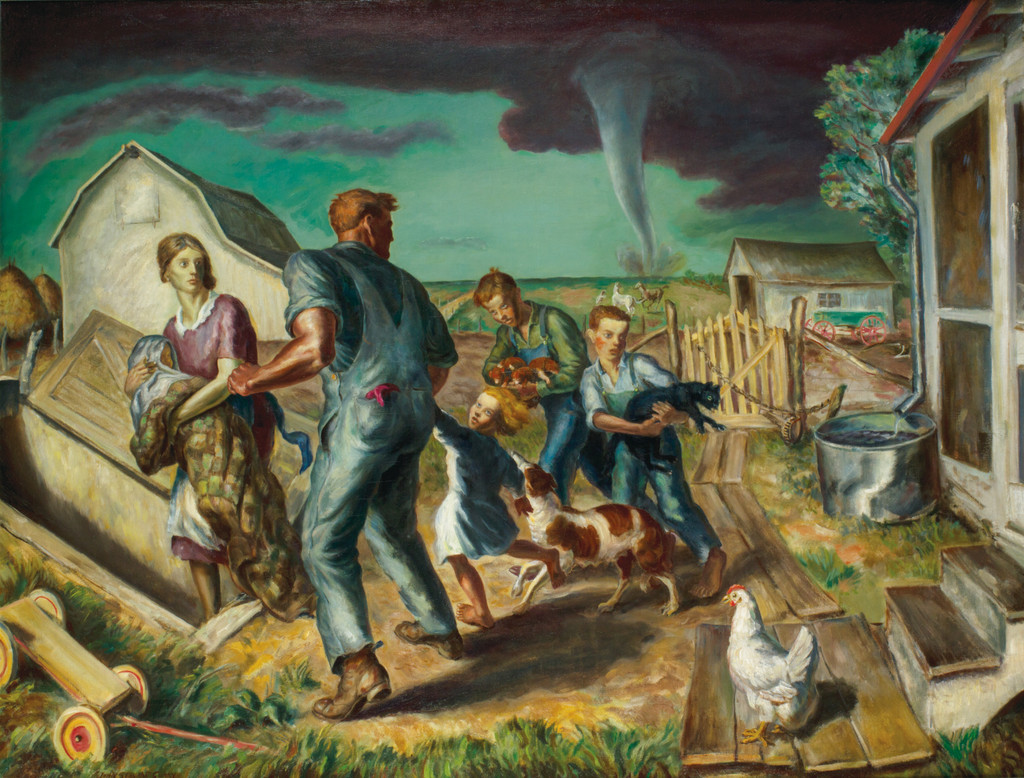
John Steuart Curry, The Tornado (Tornado Over Kansas), 1929, oil on canvas. Muskegon Museum of Art.
Image source
.
Public domain
. Proportionally resized; original appearance retained.
Artworks and versions directory
Browse 84 selected object, version, edition and reproduction records. Several concern related images or different impressions; this is not a complete lifetime catalogue or a count of unique compositions. Search also finds prints, photographs and reproductions; the medium filter groups paintings and drawings.
Frequently Asked Questions
The published conservation account dates the examined painting to November 1934. The Smithsonian's lithograph is dated 1935.
Both a mixed-media painting and a separate lithograph exist. Their materials and dimensions differ.
No. The AAA index records a colour-reproduction offering in 1951, after Curry's death.
The evidence discussed here does not establish a specific dated weather event or identify the farm as a documented location.
Discussion
Look again at the images and ideas explored in The Line Storm by John Steuart Curry. These editorial prompts invite your observations.
Reader Insights
Which detail first makes the approaching weather feel urgent?
How does the distance between the wagon and farm buildings affect your reading?
Does knowing about the painting's layers change how spontaneous the scene appears?
Join the Conversation
Share a detail, comparison or question about The Line Storm by John Steuart Curry below.
References
- Lance Mayer and Gay Myers , Old Master Recipes in the 1920s, 1930s, and 1940s: Curry, Marsh, Doerner, and Maroger, section 2: The Line Storm examination and notebook evidence. View source
- Whitney Museum of American Art, John Steuart Curry | Baptism in Kansas | Whitney Museum of American Art. View source
- Muskegon Museum of Art, Tornado Over Kansas - Muskegon Museum of Art. View source
- National Gallery of Art, Circus Elephants: collection object record. View source
- Saint Louis Art Museum, The Mississippi,1935,7:1937: collection record and provenance. View source
- Smithsonian American Art Museum, Ajax. View source
- Kansas Historical Society, Kansas State Capitol - Online tour - Tragic Prelude - Kansas Historical Society. View source
- Metropolitan Museum of Art, Wisconsin Landscape. View source
- Chazen Museum of Art, Our Good Earth | 1873 |Chazen Museum of Art. View source
- Sue Slick , Fort Wayne Museum of Art, In the News: The Weather Report, 2022: Curry's storm scene and a 1937 reproduction. View source
- Wikimedia Commons , John Steuart Curry — The Line Storm: photograph of a plate in Thomas Craven's 1939 A Treasury of Art Masterpieces and conflicting catalogue fields. View source
- Smithsonian American Art Museum , The Line Storm, 1935, lithograph on paper, 1976.103.17. View source
- Gail Windisch and Sylvan Cole Jr. , Art for Every Home: An Illustrated Index, 2016, printed page 292, entry 2644. View source
More CURRY Paintings
Our Good Earth
1942 painting and its related prints and wartime imagery.
Wisconsin Landscape
1938–39 panorama of working farmland, held by The Met.


Circus Elephants
1932 painting of elephants, handlers and the work behind the circus.