


 by
Tom Gurney
Tom Gurney BSc (Hons) is an art history expert with over 20 years experience
Email:
tomgurney1@gmail.com
/ Phone:
+44 7429 011000
Hogs Killing a Snake by John Steuart Curry: Introduction
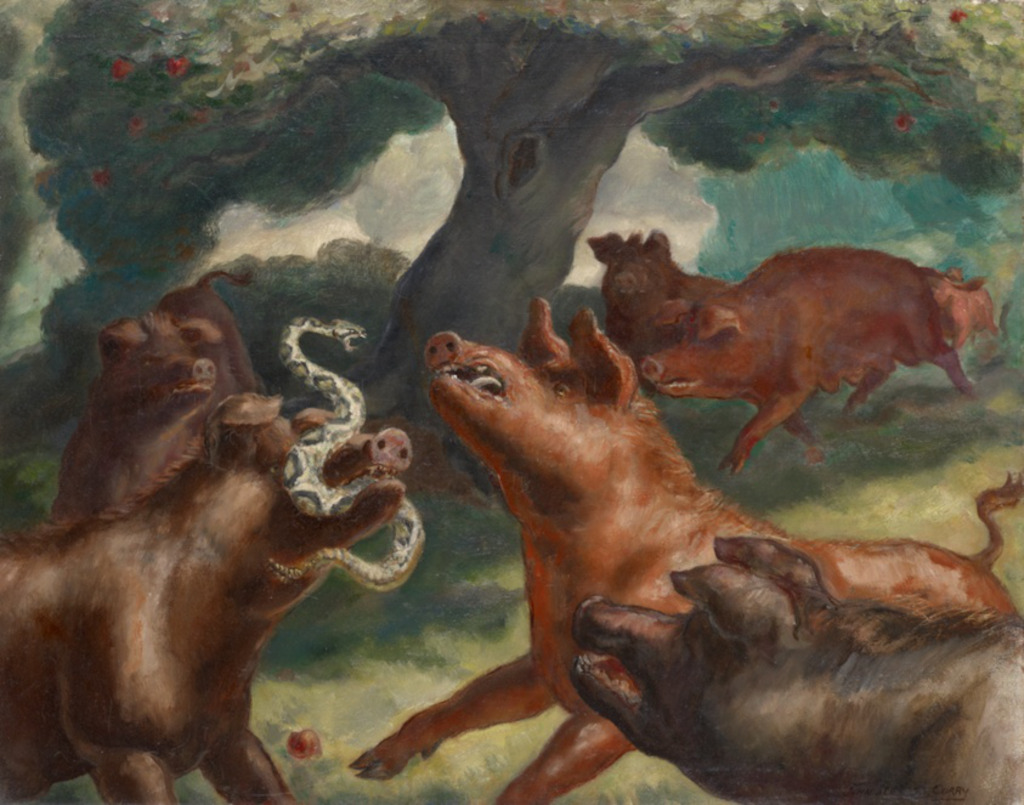
Hogs rush towards a twisting snake beneath a spreading tree. Their bodies enter from several directions, crowding the encounter into a small space. John Steuart Curry makes the animals' heavy forms and the snake's narrow coils part of one turbulent movement. There is little room for the viewer to stand outside the action.
The Art Institute of Chicago dates Hogs Killing a Snake to about 1930. It is an oil painting on canvas, accession 1947.392. [1] Earlier treatments of the subject survive in a separate Syracuse watercolour and an archive photograph of a composition described as a first sketch.
At a Glance
- Artist John Steuart Curry, 1897–1946.
- Title Hogs Killing a Snake .
- Date About 1930.
- Medium Oil on canvas.
- Dimensions 76.5 × 97.3 centimetres.
- Collection Art Institute of Chicago.
- Credit Purchased with funds provided by an anonymous donor.
- Accession 1947.392.
- Separate earlier work Hogs Killing a Rattlesnake , 1925, watercolour, Syracuse University Art Museum.
This work across John Steuart Curry’s career
Hogs Killing a Snake (current article)
Circa 1930 oilCircus Elephants
1932 paintingThe Mississippi
1935 paintingAjax
1936–37 oil paintingTragic Prelude
1938–40; project 1937–42Wisconsin Landscape
1938–39Our Good Earth
1942 oil paintingNotes and sources
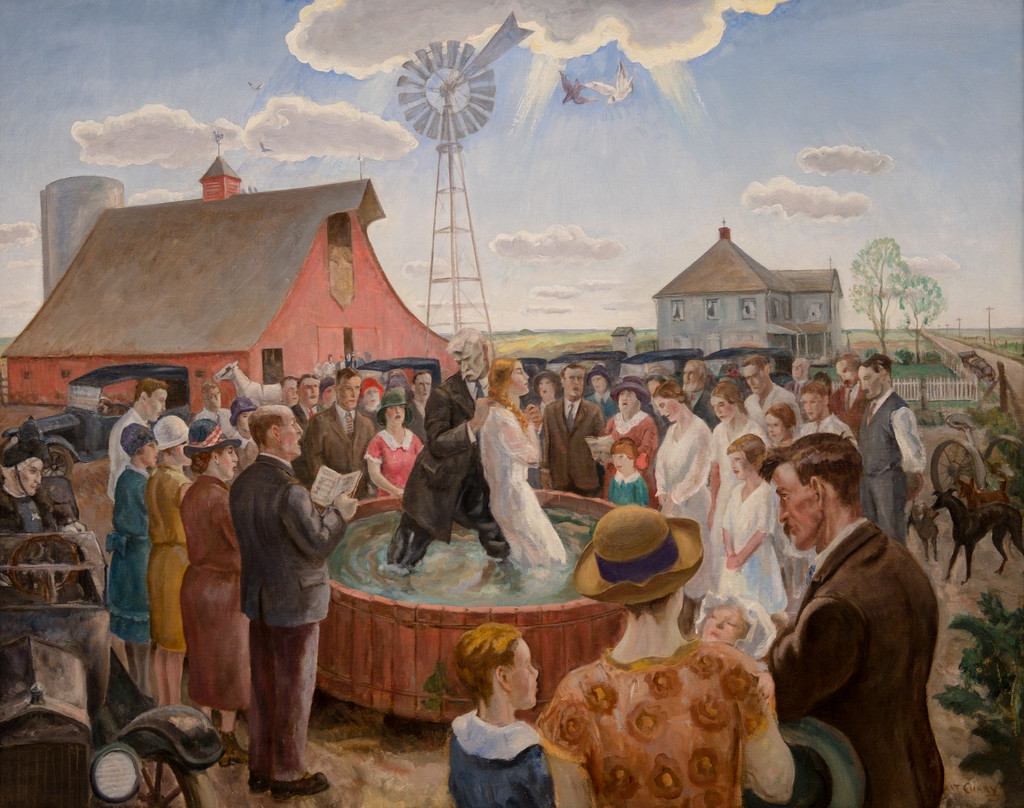
Baptism in Kansas. A remembered Kansas ceremony is staged within a working farmyard. [2]
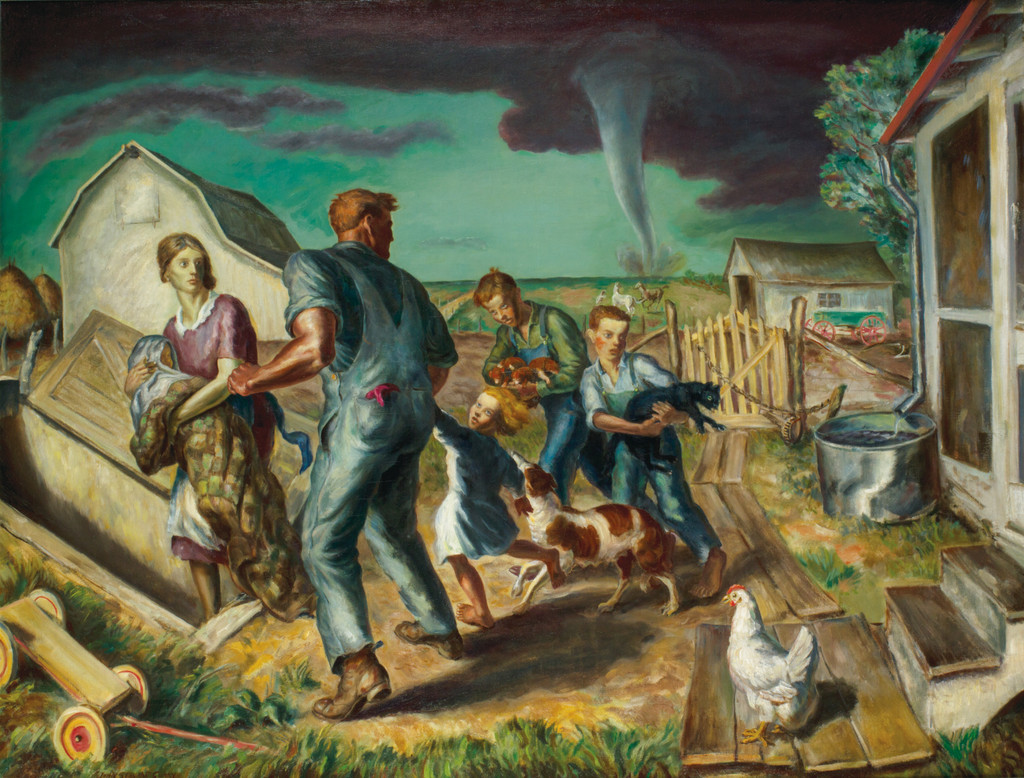
Tornado Over Kansas. A Kansas storm and a family seeking shelter, painted in Curry’s Westport studio. [3]
Hogs Killing a Snake (current article). The Chicago oil is distinct from the 1925 watercolour and the archive photograph of an early composition. [1]
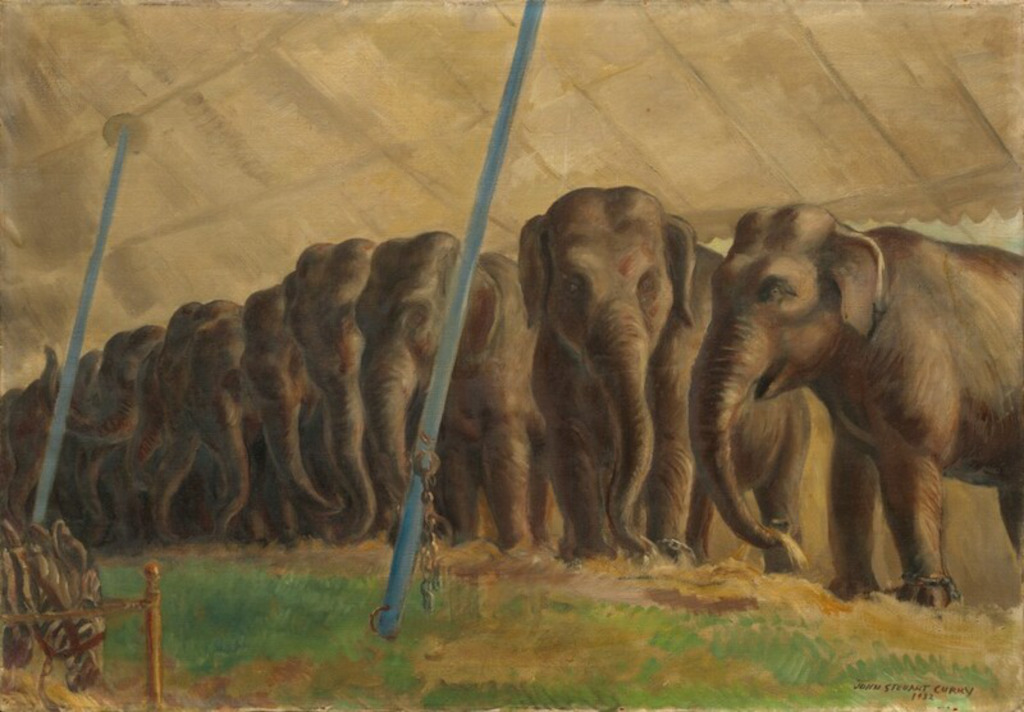
Circus Elephants. Elephants and handlers occupy the working space beneath a circus tent. [4]
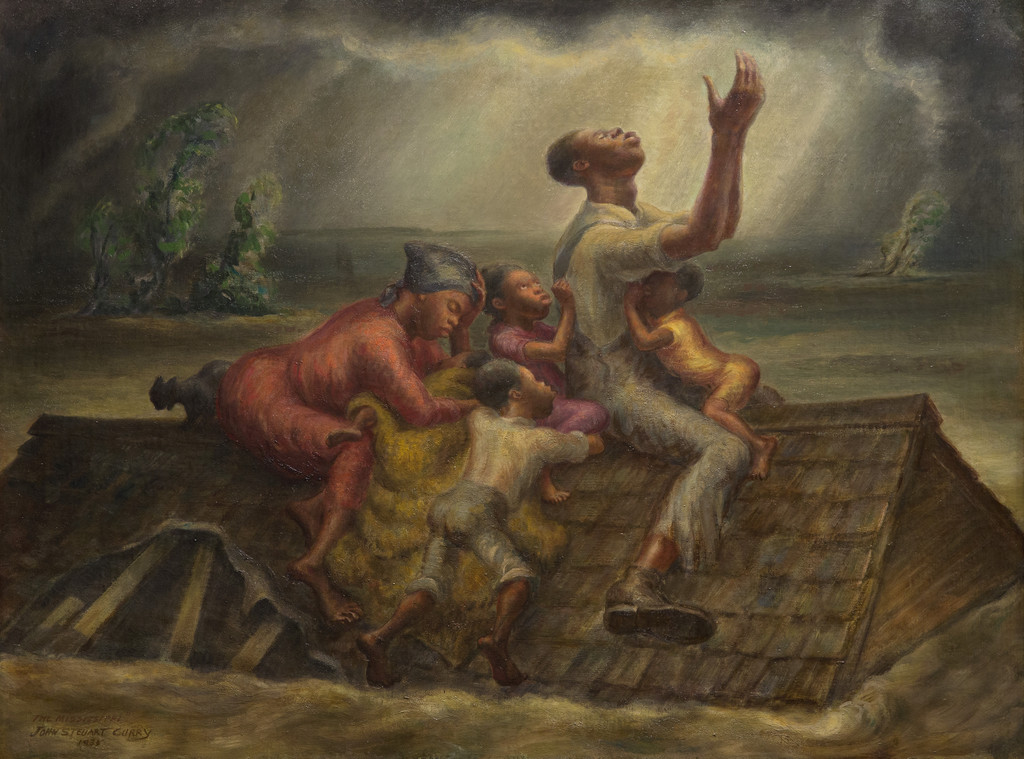
The Mississippi. A family occupies a roof amid floodwater; the painting is tempera on canvas mounted on panel. [5]
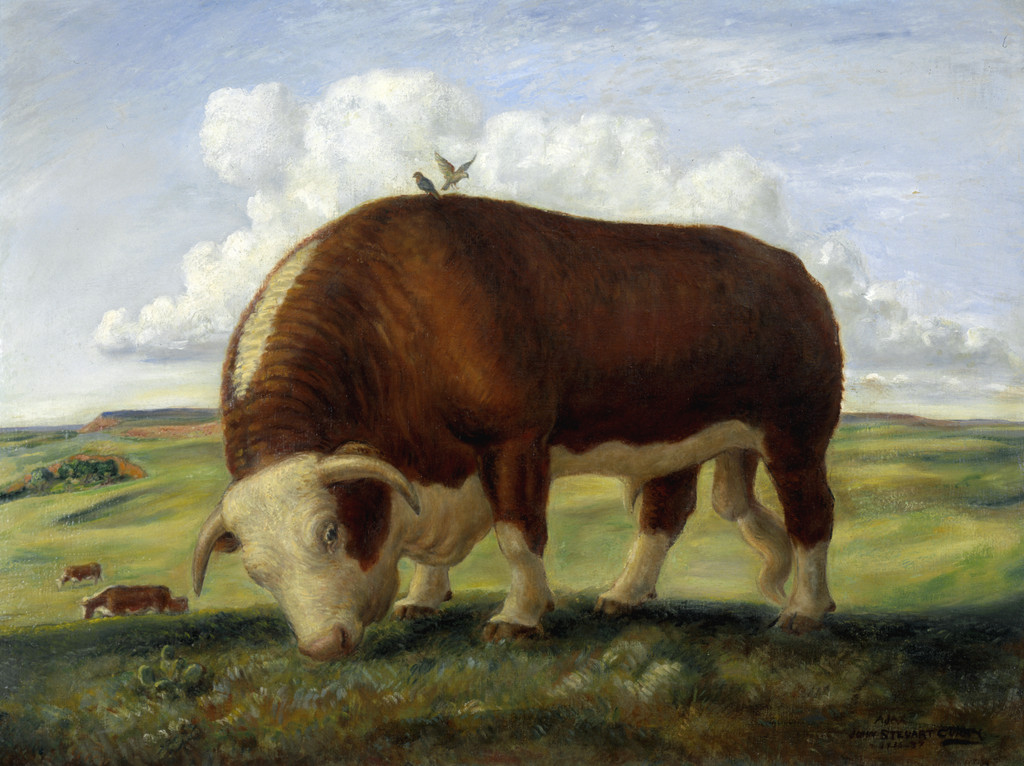
Ajax. The monumental bull in the Smithsonian oil differs from the earlier lithograph. [6]
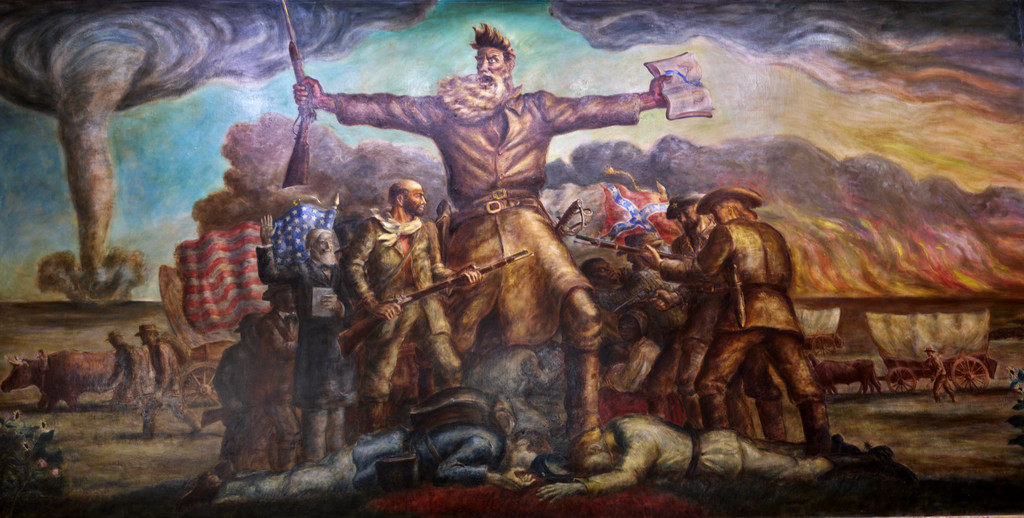
Tragic Prelude. John Brown stands at the centre of a Kansas State Capitol mural continuing across adjoining walls. [7]
Wisconsin Landscape. An extensive farm panorama, distinct from the separately catalogued preparatory study. [8]
Our Good Earth. The Chazen painting is distinct from the watercolour study, lithographs and wartime posters. [9]
Contents
- An animal encounter at close range
- The group and the snake
- Bristles and the scratched paint surface
- The oil painting and the earlier watercolour
- An early composition in an archive photograph
- Ownership and exhibition history
- Annotated details
An animal encounter at close range
The foreground hogs are large enough to extend beyond the picture's edges. Their partial bodies make the scene feel crowded before the eye reaches the snake. A dark animal at the lower right presses into the viewer's space, while another turns inward from the opposite side. The frame seems to cut through a moving group rather than contain a neatly separated set of animals.
Behind them, a red-brown hog approaches from the right. Its extended legs give the encounter a further direction of movement. Curry combines animals already at the centre with others still entering it, suggesting that the action continues beyond the instant represented. Different distances remain legible through overlap, even though the bodies occupy most of the available space.
The broad tree trunk provides a comparatively stable centre. Its branches spread across the upper picture, enclosing the animals beneath a canopy. Small patches of red fruit and glimpses of brighter ground introduce quieter details around the confrontation. Their presence makes the scene recognizably rural while the close viewpoint concentrates attention on the struggle.
Colour reinforces these spatial relationships. The warm orange of the large central hog catches attention beside the darker heads in front of it. Beyond the animals, cooler greens help establish the shaded setting beneath the tree. Light areas of ground appear between the bodies, giving brief openings within the crowded group. The pale snake remains particularly conspicuous against the dark trunk and surrounding animals. Following these changes of light and colour helps disentangle the encounter: Curry keeps individual forms readable even while bringing them into close contact and allowing their movements to overlap.
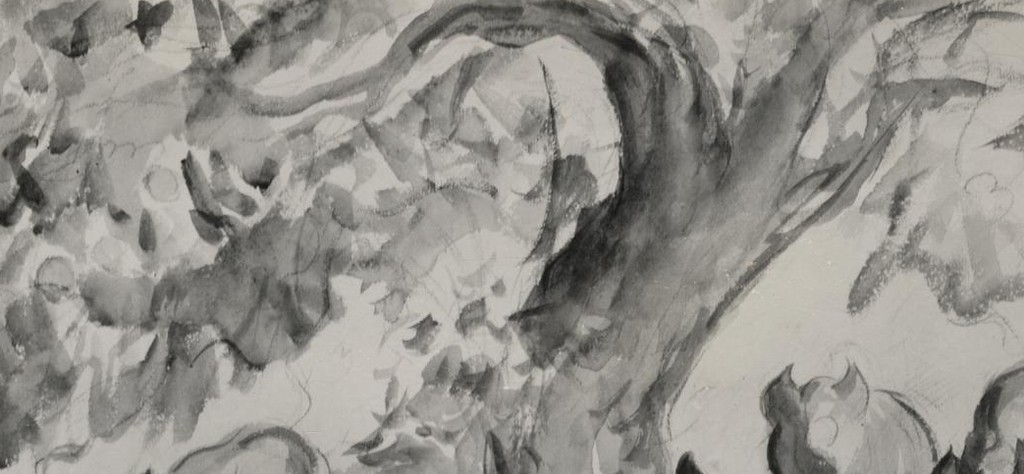
Annotated Details from An early Hogs composition in an archive photograph
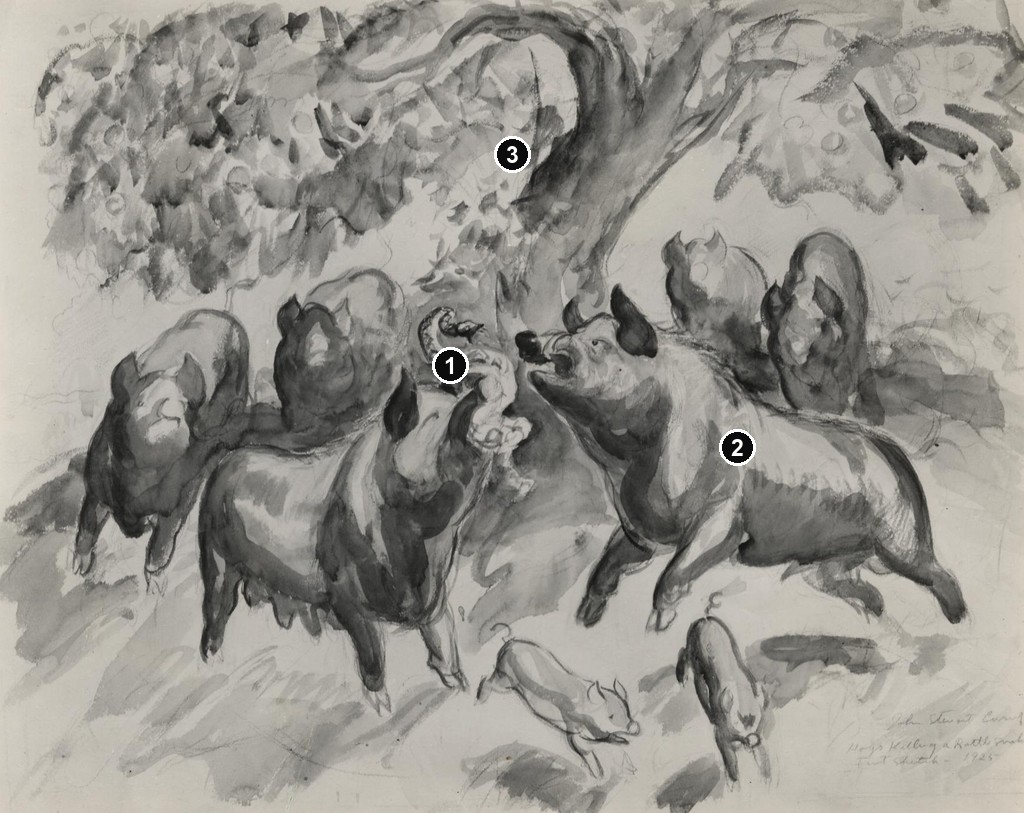
The numbered points identify visible features discussed in this article. Return from each detail to the whole composition. Photograph of an early Hogs Killing a Rattlesnake composition, circa 1925. University of Wisconsin–Madison Archives, S16236. This archival photograph is distinct from the Chicago oil and the Syracuse watercolour. Image source. No copyright (U.S.), institution rights statement. Editorial numbers added to the overview; detail crops retain the source image’s appearance.
Details from AN EARLY HOGS COMPOSITION IN AN ARCHIVE PHOTOGRAPH
These details belong to an archive photograph of an early composition. Compare its open arrangement with the article’s account of the Chicago oil painting.
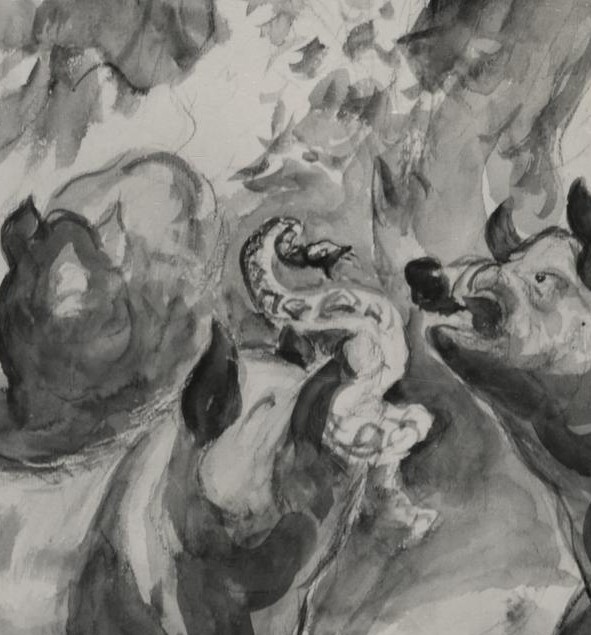
The snake between converging heads
The snake’s raised head and curved body occupy the interval between the larger animals. That small central shape gives their different directions a shared point of attention.
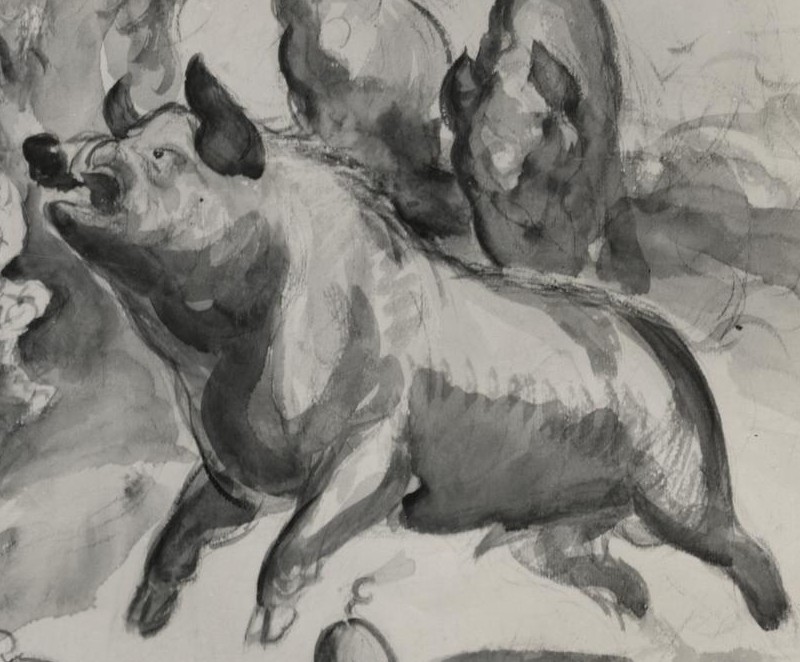
A hog bounds in from the right
The right-hand animal stretches towards the group with lifted feet. Its horizontal body introduces an energetic diagonal beside the more frontal heads nearer the centre.
The tree and open tonal marks
Broad branches curve over the encounter, with light spaces remaining between dark tonal shapes. The archive photograph preserves this relatively open arrangement for comparison with the more crowded oil painting.
The group and the snake
The snake stands out through its pale, patterned body and repeated curves. Its shape is much narrower than the hogs' heads and torsos, but its position gives it exceptional visual importance. Several directions of attention converge around it. The animals' mouths, snouts and turned heads organize a group whose movement might otherwise seem chaotic.
Curry uses the difference between kinds of body to sharpen the encounter. The hogs supply weight and broad surfaces; the snake supplies a more tightly twisting line. Those contrasting forms remain distinct even where they overlap. The picture's energy depends on their relationship, rather than on a simple accumulation of rushing animals.
The title identifies the struggle's outcome, while the composition dwells on its unfolding action. The raised snake, opened mouths and changing positions keep the scene active. The viewer encounters an unstable arrangement, with bodies still turning and approaching. This gives the painting a compressed sense of time: the group is brought together at a particularly charged moment.
Bristles and the scratched paint surface
The Art Institute describes short, abrupt brushwork and scratching into the paint to suggest the hogs' bristling hair. [1] These marks connect the handling of the surface with the subject's roughness. The animals are represented through both rounded volumes and a more agitated texture.
That combination helps explain why the painting feels forceful at different viewing distances. Seen as a whole, the overlapping bodies create a strong pattern of movement. Closer attention introduces the smaller marks that distinguish hair, skin and surrounding vegetation. The museum's account identifies scratching as a deliberate pictorial device; it does not specify a particular implement or establish a general method for all of Curry's paintings.
Watch: John Steuart Curry
Choose a film to explore the artist’s work, its interpretation and its wider setting.
Look at This: John Steuart Curry at MOWA
An exhibition interview with Graeme Reid considers Curry’s work and life in Wisconsin.
Watch on YouTubeThe oil painting and the earlier watercolour
Syracuse University Art Museum owns Hogs Killing a Rattlesnake , a watercolour dated 1925, object 1964.006. Its current record gives dimensions of 20 by 27 inches and credits the gift of Mr. Harry and Maria Wickey. [10] This is a separate work from the later Chicago oil.
The university's 1975 Varieties of American Realism catalogue lists the watercolour as entry 17, using the earlier number SU 64.06 and measurements of 20¼ by 27¼ inches. [11] Those historical measurements should remain attached to that catalogue. They neither replace the current Syracuse record nor describe the dimensions of the Chicago canvas.
The shared subject shows Curry returning to an animal encounter over several years. It does not make the two works interchangeable. Their dates, media, dimensions and collection histories identify different objects, each requiring its own caption and interpretation.
An early composition in an archive photograph
UW–Madison Libraries preserves a black-and-white photograph catalogued as Hogs killing a rattlesnake , dated approximately 1925, local identifier S16236. The library describes the depicted work as a first sketch. [12] The photograph shows a looser composition with conspicuous areas of light paper, a large hog entering from the right and small animals below the central encounter.
The image offers a useful comparison with the dense arrangement of the oil painting. Lines and washes remain relatively open around the animals, making individual gestures easy to follow. The Chicago work brings larger foreground bodies closer to the picture's edges. Recognizing these differences does not require identifying the photographed sheet as the Syracuse watercolour: the archive record does not establish that identity or specify the original work's medium.
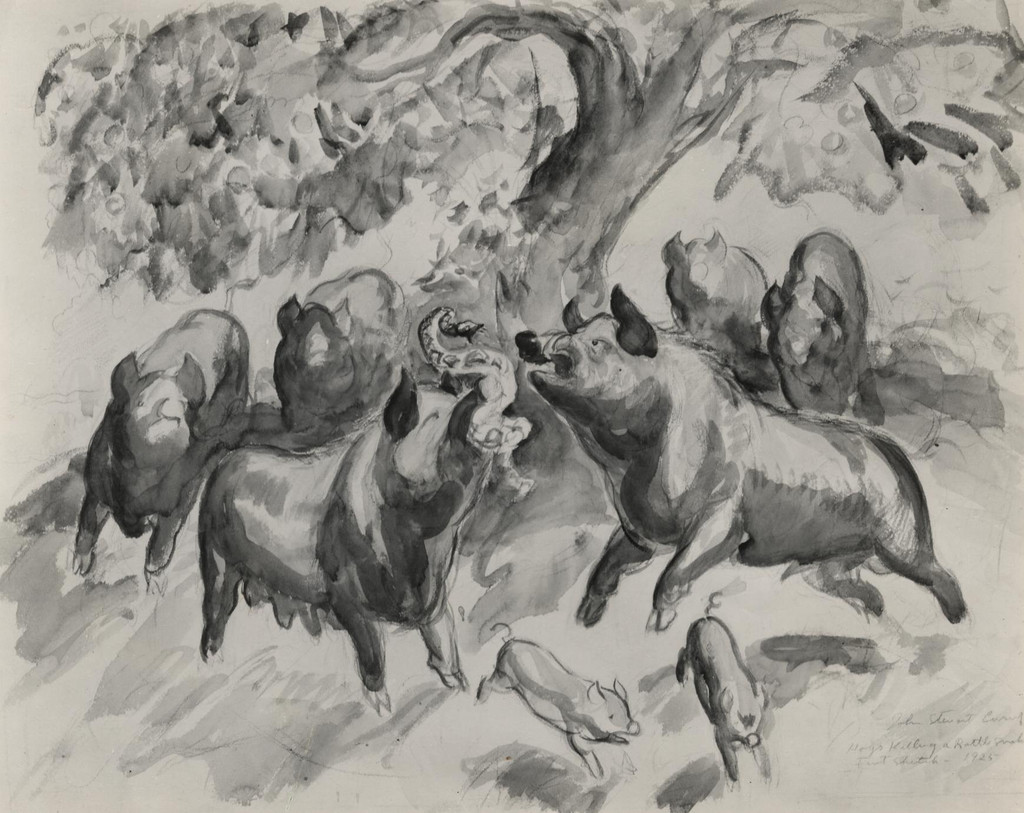
Photograph of an early Hogs Killing a Rattlesnake composition, circa 1925. University of Wisconsin–Madison Archives, S16236. This archival photograph is distinct from the Chicago oil and the Syracuse watercolour.
Image source
.
No copyright (U.S.), institution rights statement
. Proportionally resized; original appearance retained.
Ownership and exhibition history
The Art Institute traces the oil from Curry to Associated American Artists and then to the museum in 1947. Its exhibition history lists a 1931 Ferargil show and a 1943–44 appearance in the Museum of Modern Art's Romantic Painting in America . [1] These records place the painting within Curry's lifetime exhibition career before its museum acquisition.
Beside Ajax , Hogs Killing a Snake demonstrates another way of giving farm animals substantial pictorial presence. The bull's broad body occupies an open pasture; the hogs form a crowded, converging group. In each, scale, gesture and the relationship between large and small creatures make an animal subject sustain far more than incidental landscape detail.
Artworks and versions directory
Browse 84 selected object, version, edition and reproduction records. Several concern related images or different impressions; this is not a complete lifetime catalogue or a count of unique compositions. Search also finds prints, photographs and reproductions; the medium filter groups paintings and drawings.
Frequently Asked Questions
The Art Institute dates it to about 1930.
No. Syracuse owns the earlier watercolour, 1964.006; Chicago owns the oil on canvas, 1947.392.
The Art Institute describes brushwork and scratching into the painted surface to suggest bristles.
The UW–Madison record describes a first sketch. It should be identified as an archive photograph of an earlier composition.
Discussion
Look again at the images and ideas explored in Hogs Killing a Snake by John Steuart Curry. These editorial prompts invite your observations.
Reader Insights
How does the cropped foreground change your sense of proximity to the animals?
Which contrast between the snake and the hogs most strongly directs your attention?
What changes when you compare the open early composition with the crowded oil painting?
Join the Conversation
Share a detail, comparison or question about Hogs Killing a Snake by John Steuart Curry below.
References
- Art Institute of Chicago , Hogs Killing a Snake, about 1930, oil on canvas, 1947.392: interpretation, provenance and exhibition history. View source
- Whitney Museum of American Art, John Steuart Curry | Baptism in Kansas | Whitney Museum of American Art. View source
- Muskegon Museum of Art, Tornado Over Kansas - Muskegon Museum of Art. View source
- National Gallery of Art, Circus Elephants: collection object record. View source
- Saint Louis Art Museum, The Mississippi,1935,7:1937: collection record and provenance. View source
- Smithsonian American Art Museum, Ajax. View source
- Kansas Historical Society, Kansas State Capitol - Online tour - Tragic Prelude - Kansas Historical Society. View source
- Metropolitan Museum of Art, Wisconsin Landscape. View source
- Chazen Museum of Art, Our Good Earth | 1873 |Chazen Museum of Art. View source
- Syracuse University Art Museum , Hogs Killing a Rattlesnake, 1925, watercolour, 1964.006: current object record. View source
- Syracuse University Art Galleries , Varieties of American Realism, 1975, physical PDF page 4, entry 17. View source
- UW–Madison Libraries , Hogs killing a rattlesnake, approximately 1925, archive photograph, Photomedia Collection, S16236. View source
More CURRY Paintings
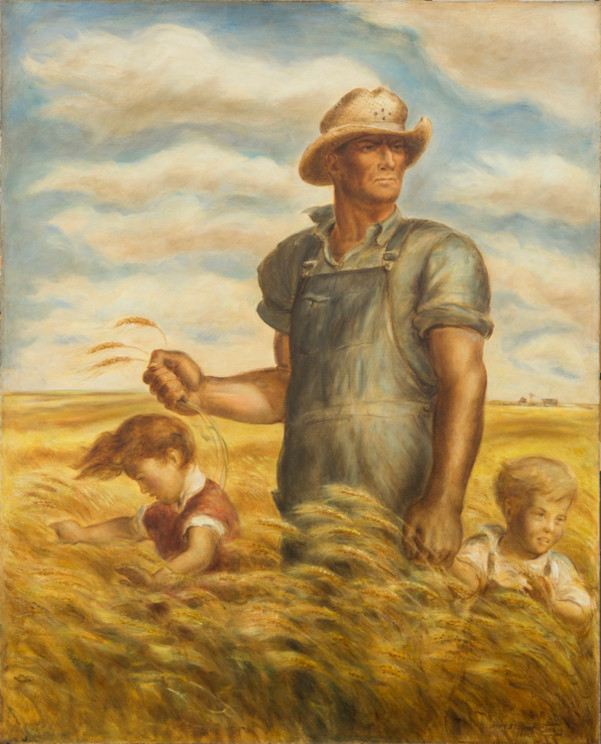
Our Good Earth
1942 painting and its related prints and wartime imagery.
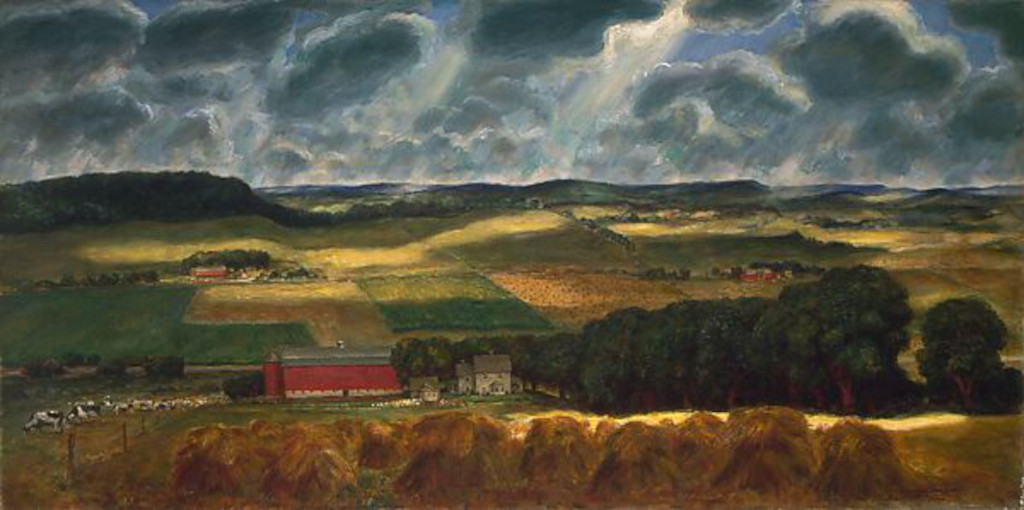
Wisconsin Landscape
1938–39 panorama of working farmland, held by The Met.


Circus Elephants
1932 painting of elephants, handlers and the work behind the circus.