


 by Tom Gurney
Tom Gurney BSc (Hons) is an art history expert with over 20 years experience
Page created on March 2, 2018 / Page updated on October 6, 2026
Email: tomgurney1@gmail.com / Phone: +44 7429 011000
Introduction
A “Frida Kahlo print” can mean an original work made through printmaking, a later reproduction of a painting, a poster or an image transferred to canvas. Those objects may all be worth looking at, but they have different makers, histories, materials and prices. The useful first question is not whether a listing says “fine art” or “limited edition”; it is what object the seller is offering and what evidence supports its description. [1] [2]
This guide concerns modern purchases for display, not the authentication or valuation of an alleged Kahlo original. No individual product, seller, affiliate link or image has been verified for recommendation here. The questions below allow a reader to assess a listing without confusing a numbered reproduction with an impression made from Kahlo’s own design. [1] [2] [3]
At a Glance
- Original print: A work conceived as a print, not a printed copy of a pre-existing painting. Kahlo’s documented 1932 lithograph is the relevant example, but its surviving proofs have individual histories. [1] [3] [4]
- Reproduction: A later printed image of an existing painting, drawing or photograph; it may be carefully made and authorised without becoming an original Kahlo print. [1] [2]
- Edition number: A statement about an impression’s place in a stated edition, not independent proof of authorship, permission or quality. [5] [6]
- Print details: Process, image source, materials, dimensions, edition, publisher and seller vary by impression. [1] [6] [7]
- Rights and care: Ask who authorised the image and what materials and display conditions the object requires. Neither “giclée” nor “archival” answers those questions alone. [8] [9] [10]
Contents
- Introduction
- Original Prints and Later Reproductions
- Understand the Process and the Surface
- Edition Numbers, Signatures and Certificates
- Check the Image Being Sold
- Ask Who Authorised the Reproduction
- Assess Framing and Care
- Check the Seller, Total Cost and Returns
- How Commercial Recommendations Would Be Disclosed
Original Prints and Later Reproductions
The Victoria and Albert Museum describes printmaking as a repeatable transfer of an image from one surface to another; each resulting image is an impression. An original print is conceived in that medium, so the print itself is the artwork. The Museum of Modern Art likewise distinguishes the print, its printer and its edition; the artist need not personally pull every impression for a work to be an original print. [1] [2] [5]
By contrast, a reproduction starts from an image that already exists, such as a photograph of a painting. “Poster” usually describes a display product rather than a claim to an artist-made edition; “facsimile” implies an attempt to reproduce the appearance of a specific object closely. These are practical buying categories, not guarantees of quality or legal status: a poster can be expertly printed, and a numbered reproduction is still a reproduction. [1] [5] [7]
Kahlo made a lithograph titled El Aborto, also known as Frida and the Miscarriage, in 1932. Fine Arts Museums of San Francisco calls it her first and only lithograph and records an impression given to Juan O’Gorman and signed in 1936. Sotheby’s identifies a different proof as 7/19, while Christie’s records proof 13; their paper, inscriptions, measurements and ownership details must not be transferred from one impression to another. [3] [4] [11]
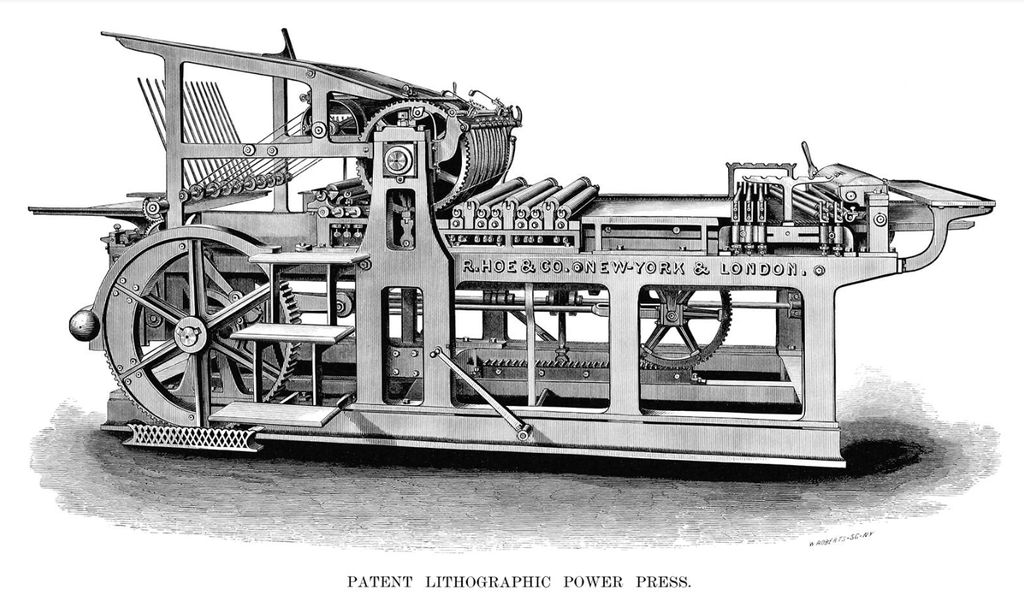
That bounded example establishes the category without suggesting a large Kahlo printmaking oeuvre. A modern inkjet image of The Two Fridas, even if numbered, signed by its publisher or printed on expensive paper, is not another impression of her 1932 lithograph. Claims that a newly offered object is hand-signed by Kahlo, who died in 1954, require documented provenance and qualified specialist scrutiny rather than a decision made from a listing photograph. [1] [3] [4] [11]
Watch: Frida Kahlo
Five perspectives to view here alongside the article.
Frida Kahlo’s The Two Fridas: Great Art Explained
A focused visual introduction to the painting and its context.
Understand the Process and the Surface
Printmaking encompasses relief, intaglio, planographic and digital methods; lithography belongs to the planographic family. A process name does not alone establish originality: the V&A notes that engraving has been used both for original works and to reproduce other art. Likewise, offset lithography, screenprinting and inkjet can serve different artistic or reproductive purposes. [1]
“Giclée” is commonly offered as a selling term for digital printing, but the word alone does not identify an artist’s involvement, a licence, the source file, colour fidelity, ink, paper, edition or expected permanence. That is an inference from the separate questions posed by printmaking and conservation guidance, not a claim that all inkjet prints are poor. Ask for the actual printer or process, pigment- or dye-based ink where known, substrate and any named permanence test. [1] [8] [9]
A reproduction on canvas is still a reproduction; texture or a wrapped edge does not turn it into Kahlo’s painting. If canvas is stretched around a support, ask whether the image is mirrored at the sides, extended, or cropped to wrap the edges. On paper, ask whether “fine art,” “museum quality” or “archival” refers to a specified fibre, coating, ink system or test rather than an undefined adjective. [6] [7] [8]
The substrate matters for appearance as well as care. A glossy coating, matte cotton paper, inexpensive poster sheet and canvas receive ink differently; no small screen preview can establish the exact colour or surface of the delivered object. Capture, editing, display settings, print process, ink and support can all contribute to a difference, so a seller’s sample or stated return route is more useful than an absolute promise of monitor-to-print identity. [8] [9]
Edition Numbers, Signatures and Certificates
An edition groups impressions made under a stated production decision. A fraction such as 7/19 conventionally identifies one impression and the stated edition size, while proofs can sit outside the regular numbered run. It does not answer who conceived the image, whether it was made from an original matrix, who authorised reproduction or how many sizes and substrates the publisher also issued. [5] [6]
The Fine Art Trade Guild’s voluntary print standards call for disclosure of the total edition across variants and proofs and recommend editions below 850 impressions. That is a trade scheme, not a statute or a universal definition of “limited.” An authorised open-edition reproduction can be well made, and a scarce reproduction can be poorly made: scarcity, artistic originality, lawful authorisation, material quality and longevity are separate questions. [6]
“Signed” is incomplete without the signer and method. A hand signature by a living publisher, printer or other contributor differs from a facsimile or signature printed in the image, and none should be described as Kahlo’s hand signature. If a modern listing claims the latter, stop treating it as an ordinary décor purchase and seek a documented chain of ownership and independent specialist advice. [3] [4] [11]
A certificate is only as informative as its issuer and precise claim. Ask whether it identifies this object, its process, size, edition and number, publisher or printer, signer and source of authorisation, and whether those particulars match the actual item. A publisher’s certificate may truthfully certify its own reproduction edition without authenticating a work made by Kahlo. [6] [7]
Check the Image Being Sold
A listing should name the source artwork accurately, with its collection when known, then describe the separate object offered for sale. Are you buying the entire composition, a detail, a re-coloured version or an image fitted to a new aspect ratio? State separately the printed image size, sheet size and outside dimensions of any frame; “50 × 70 cm” is not useful if the seller will not say which of those it measures. [7]
Cropping is more than a packaging detail. In her Spanish study of Kahlo’s image across popular consumer objects, Sofía Anaya Wittman argues that graphic design selects and transforms motifs rather than transporting an unchanged artistic identity. Her example of the brows functioning as shorthand helps explain why a product can evoke Kahlo while showing little of a particular painting; a buyer seeking a close reproduction should therefore ask about the complete composition, source file, borders and alterations. [12]
Heloisa de Oliveira Moutinho’s Portuguese study of shirts from one Brazilian brand likewise treats the buyer as an interpreter, not merely a passive recipient of a miniature painting. She describes recognition and identity work, but also decorative uses that can remove context or create new meanings. The study’s twenty-three shirts and small response group—fifteen contacts, nine initial respondents and five completing a second stage—cannot establish what all Kahlo buyers want or whether any particular product is authorised. [13]
The two studies make an interpretive point distinct from a product-quality verdict. A striking crop may be an intentional design choice, yet it should not be silently sold as a faithful, full-image facsimile. Nor does the cultural resonance of a printed brow, flower or self-portrait establish the seller’s permission to use the underlying image. [12] [13]
Alicia Díaz Mayordomo’s 2024 Spanish study approaches Kahlo merchandise through the history of portraiture and images of power. She argues that serial consumer objects can extend the circulation of an artist’s image while detaching it from a work’s earlier setting; she expressly avoids claiming that Kahlo directly borrowed every convention of the ruler’s portrait. For this guide, the useful distinction is between buying an image of Kahlo—possibly derived from a photograph—and buying a reproduction of a specific Kahlo painting. [31]
Ask Who Authorised the Reproduction
Permission is not a single worldwide badge. Rights in an underlying work, a photograph or scan of it, the supplied image file and the commercial product can involve different people and terms; contractual, moral-rights, trademark and Mexican artistic-monument questions may also matter. The UK Intellectual Property Office cautions that an image-library agreement can constrain use even when the underlying artwork’s copyright status differs, and acknowledges uncertainty around some exact-copy photographs. [14] [15]
Mexico’s current federal copyright law distinguishes the author’s economic and moral rights and generally sets the economic term at the author’s life plus one hundred years. Its provisions for visual works make physical ownership and permission to reproduce commercially different matters. Kahlo’s works were also declared artistic monuments in 1984; the current INBAL commercial-reproduction procedure asks for specified application materials and, where applicable, other permissions. [16] [17] [18]
Museo Frida Kahlo directs reproduction requests inside Mexico to the Banco de México trust and requests outside Mexico to Artists Rights Society. This is an institutional route for questions, not evidence that a particular shop has—or lacks—a licence. A seller describing a product as “official” should be able to identify the relevant licensor or documented permission for that image, product type and territory; inability to find a public licence record is a reason to ask, not sufficient ground to accuse the seller of infringement. [19]
Other jurisdictions require their own analysis. UK guidance says artistic-work copyright usually lasts for seventy years after the creator’s death but warns that older works need checking; US rules for works published before 1978 depend on historical facts, and the US Copyright Office’s 2026 public-domain table does not place all of Kahlo’s later works into one category. A broad claim that “Kahlo is public domain everywhere” therefore cannot settle the status of a modern image file or product. [14] [20] [21]
For a buyer, the practical questions are who supplied the image, who authorised this use and whether the seller will state the basis of its claim. A documented licensing route is more informative than a decorative seal or an unexplained copyright line. This is general editorial guidance, not a legal opinion on any identified object or retailer. [14] [16] [19]
Assess Framing and Care
A framed print is more than its image. Check the frame’s outside dimensions, glazing, mount or mat, contact between image and glazing, hanging provision and whether the backing and adhesives suit the sold paper. For an unframed sheet, ask whether it will arrive flat or rolled, what protects the surface in transit and what the frame will need to accommodate. [7] [8] [9]
The Library of Congress warns that all light can damage paper; glazing can mitigate some risks but does not make a display permanent or risk-free. Canadian Conservation Institute guidance distinguishes fading from visible light and weakening or yellowing associated with ultraviolet exposure. Display away from strong direct light and damp, and ask for named materials rather than assuming that “UV-protected” or “archival” removes every risk. [8] [9]
Acidic mounts, cardboard and pressure-sensitive tape can damage paper over time. Suitable matting and hinges are worth discussing with a competent framer, especially for an expensive sheet, while cleaning, tape removal or repair of a valuable or uncertain work should be left to a paper conservator. Ordinary inexpensive décor need not be managed like a museum collection, but basic material information helps a buyer understand the lifespan being promised. [9] [10]
No universal number of years can be assigned to an unidentified inkjet print. The Library of Congress records substantially different stability for the same ink and printer on different supports, along with possible sensitivity to light, moisture and airborne pollutants; pigment ink alone is not a perpetual-life guarantee. A named lightfastness or material standard, such as the voluntary ArtSure scheme for registered digital prints, is more testable than a floating claim of “museum quality,” though lack of registration does not prove an item is poor. [6] [8] [9] [32]
Check the Seller, Total Cost and Returns
Before paying, identify the business actually selling the item, not just the marketplace carrying the listing. The page should state the exact variation selected, process, materials, all relevant dimensions, whether framing is included, total price including taxes and delivery, fulfilment location, dispatch and delivery terms, and a reachable contact and return route. Save the dated listing and order confirmation so a later dispute can be compared with what was promised. [7] [22]
For UK distance purchases, current government guidance requires sellers to provide business identity, an accurate description, total cost, delivery and cancellation information. Most distance buyers generally have fourteen days after receipt to cancel and another fourteen days to return, while delivery is normally due within thirty days unless another period is agreed. These are UK-specific general rules, not this site’s promise about a particular seller or a guarantee for buyers elsewhere. [22] [23]
Personalised or custom-made items may be excepted from the ordinary change-of-mind cancellation right. That does not remove statutory remedies for an item that is faulty or misdescribed, and a seller’s “made to order” label should not be read as a blanket exclusion of every remedy. Check the actual item, destination and current transaction terms before relying on any short summary. [23]
How Commercial Recommendations Would Be Disclosed
No individual print product is recommended here. Before one could be recommended, its exact seller, variation, process, materials, authorisation claim, image-use terms, availability and return information would need checking. A generic short link or category image supplies none of that evidence. [7]
Commercial relationships would need to be unmistakable to the reader before engagement and near each relevant recommendation or link. UK ASA/CAP and US FTC guidance both favour clear disclosure of the commission relationship over an ambiguous “affiliate link” label; Amazon Associates adds its required site statement and programme-specific rules. Paid links also need the applicable search-link qualification, with Google preferring rel="sponsored" over an unlabeled paid link. [24] [25] [26] [27]
Amazon’s programme rules for images, prices, availability, reviews and relationship claims require a publication-date check; they do not authorise permanent copying of a product image or a stale price into editorial prose. An affiliate relationship cannot certify an image licence or justify a weak product. The absence of a print-product shopping gallery is deliberate: no candidate has passed that check. [26] [28]
Books for Looking Beyond a Product Listing
A well-documented book can help a reader identify the source artwork and understand how a printed image differs from it. Frida Kahlo: The Complete Paintings by Luis-Martín Lozano, Andrea Kettenmann and Marina Vázquez Ramos is a substantial 624-page reference-volume candidate confirmed through TASCHEN’s publisher record; Gannit Ankori’s Frida Kahlo in Reaktion’s Critical Lives series is a more compact biographical and reception-oriented choice. Neither complete commercial book has been consulted for this guide, so these are further-reading suggestions, not first-hand reviews or proof that a retailer’s reproduction is faithful. [29] [30]
The Museum of Fine Arts, Houston’s 2026 exhibition catalogue Frida: The Making of an Icon, edited by Mari Carmen Ramírez and published with Yale University Press, is a particularly relevant further lead for the distinction between Kahlo’s works and her later commercial image. Its publisher-level description identifies essays and a seven-part treatment of her cultural, political, artistic and commercial legacy, but the volume itself has not been read here. No argument from a named chapter—including its contribution on Kahlo as a commodity—is imported from a contents list. [33]
For the original-print distinction, an independent Fine Arts Museums of San Francisco label for Kahlo’s 1932 lithograph gives a more exact object route than an unverified sales image. The full edition and state history is not established by the public records consulted here, and it would be misleading to use the museum’s description of one impression as a certificate for another. A book cover or museum image does not confer permission to reproduce the underlying artwork merely because the book or record is recommended. [3] [4] [11]
A Practical Decision Before Buying
First classify the object: original print, later reproduction, poster, facsimile or another product. Then verify what image will be delivered, its process and support, three dimensions where framing is involved, any edition and signer, the seller and claimed authorisation. Finally check the all-in cost, delivery and return conditions, preserve the dated listing and decide whether the evidence justifies the price and purpose. [1] [5] [7] [22]
If the description rests mainly on words such as “rare,” “archival,” “official” or “Kahlo signed,” pause until the seller explains those claims. A buyer looking for attractive décor can choose an openly described reproduction; a buyer seeking an original work faces a different provenance and specialist-review problem. Neither needs an invented product endorsement to make a better-informed choice. [3] [6] [7]
Related Reading
The drawings guide distinguishes works on paper from later reproductions. Technique and materials explains why a printed surface, painting support and production method need different evidence, while How to Read Frida Kahlo offers a method for checking a visual claim against its source.
Frequently Asked Questions
No. Numbering may identify a publisher’s limited reproduction edition; it does not change a printed copy of an existing image into a work Kahlo conceived through printmaking. Ask what was printed, by whom, from which source and with what permission. [1] [5] [6]
Not by itself. Ask for the ink, printer, support and any stated test or standard, then account for light, moisture and framing. A lifespan claim without the specific production system and conditions is not established by the word. [1] [6] [8] [9]
Not merely by existing. It may certify a publisher’s own reproduction, so inspect the issuer, object identity and exact assertions; an alleged original requires documented provenance and qualified independent assessment. A seller’s certificate should never silently transform the category of the object. [3] [7]
It depends on the item, seller and jurisdiction. Current UK guidance distinguishes the exception for personalised or custom-made goods from remedies for faulty or misdescribed goods; buyers elsewhere should check their local rules and the seller’s transaction terms. Do not infer an unconditional right or an unconditional exclusion from a brief marketplace label. [22] [23]
Discussion
Use the cited evidence and your own close looking to explain your view. The prompts below are starting points, not fixed interpretations.
Reader Insights
What evidence distinguishes an original Kahlo lithograph from a later reproduction?
Which listing details would you verify before buying a print?
Why can an edition number or certificate not independently establish authorship?
Join the Conversation
Which reading best fits the evidence, and where does uncertainty remain?
References
- Victoria and Albert Museum, “What is a print?”, relevant definitions and process sections. View source text.
- Museum of Modern Art, Art Terms: Print and Printer, and What Is a Print? View source text 1; View source text 2.
- Fine Arts Museums of San Francisco, label for El Aborto / Frida and the Miscarriage. View source text.
- Sotheby’s, The Miscarriage (Frida and the Miscarriage), 2023 lot record. View source text.
- Museum of Modern Art, Art Terms: Edition. View source text.
- Fine Art Trade Guild, Guild print standards with ArtSure. Its scheme is voluntary. View source text.
- Print-buying checklist synthesised from the V&A print-process definitions, the Fine Art Trade Guild's voluntary print standards, Canadian Conservation Institute guidance on paper and GOV.UK online-selling requirements, with rights and affiliate conditions identified separately in references 14–19 and 24–28. This is a comparison framework, not a review or approval of an individual retail product. View source text 1; View source text 2; View source text 3; View source text 4.
- Library of Congress, preservation questions about paper. View source text.
- Canadian Conservation Institute, “Caring for paper objects”. View source text.
- Canadian Conservation Institute, “Basic care: works of art on paper”. View source text.
- Christie’s, Frida Kahlo, The Miscarriage, lot record. View source text.
- Sofía Anaya Wittman, “Diseño gráfico, transmedialidad e identidad: Frida Kahlo en los objetos de consumo popular”, Zincografía 6, no. 11 (2022), 169–183. View source text.
- Heloisa de Oliveira Moutinho, O Consumo da Imagem de Frida Kahlo em Produtos da Marca Chico Rei, master’s dissertation, Universidade Estadual Paulista, 2021, relevant introduction and conclusion; complete work obtained but not read in full. View source text.
- UK Intellectual Property Office, “Copyright notice: digital images, photographs and the internet”. View source text.
- Lario Albarrán, “Owning Frida Kahlo”, Emory International Law Review 35 (2021), 627; abstract and metadata only, not used for a legal holding. View source text.
- Cámara de Diputados, Ley Federal del Derecho de Autor, arts 16, 18–21, 27, 29, 88–89; consolidation checked through 14 May 2026. View source text.
- Diario Oficial de la Federación, 1984 decree declaring Kahlo’s works artistic monuments, arts 1 and 5. View source text.
- Secretaría de Gobernación, 2026 INBA-03-002 commercial-reproduction procedure; see also INBAL’s 2025 notice. View source text 1; View source text 2.
- Museo Frida Kahlo, reproduction-request information. View source text.
- GOV.UK, “How long copyright lasts”. View source text.
- US Copyright Office, copyright-duration FAQ and Circular 15A, 2026 table. View source text 1; View source text 2.
- GOV.UK, online and distance selling for businesses and online-selling requirements. View source text 1; View source text 2.
- GOV.UK, “Accepting returns and giving refunds”. View source text.
- ASA/CAP, “Affiliate marketing”. View source text.
- US Federal Trade Commission, Endorsement Guides FAQ. View source text.
- Amazon Associates UK, disclosure guidance and programme policies; terms require rechecking before implementation. View source text 1; View source text 2.
- Google Search Central, “Qualify outbound links”. View source text.
- Amazon Associates UK, programme-content licence and participation requirements; terms require rechecking before implementation. View source text 1; View source text 2.
- TASCHEN, Frida Kahlo: The Complete Paintings publisher record, 624 pp., ISBN 978-3-8365-7420-4; complete book unread. View source text.
- Reaktion Books, Frida Kahlo by Gannit Ankori; complete book unread. View source text.
- Alicia Díaz Mayordomo, “Una reflexión en torno a la perpetuidad de la imagen del poder en la industria del merchandising: el «Universo Frida Kahlo»”, Potestas 24 (2024), 111–132, especially 116–119 and 130–131. View source text.
- Library of Congress, “Care, Handling, and Storage of Photographs,” digital-output and inkjet sections, lines 197–204 in the online text; general conservation guidance, not a test of a current product. View source text.
- Museum of Fine Arts, Houston / ICAA, Frida: The Making of an Icon publication record, 2026; catalogue not read. View source text.
Image Credits
- Patent lithographic power press, R. Hoe & Co. (1881) — R. Hoe & Co. (manufacturer attribution; individual engraver unverified). Public domain. Resized and converted to JPEG/sRGB; no crop.
