


 by Tom Gurney
Tom Gurney BSc (Hons) is an art history expert with over 20 years experience
Page created on March 2, 2018 / Page updated on October 6, 2026
Email: tomgurney1@gmail.com / Phone: +44 7429 011000
Introduction
Frida Kahlo and Diego Rivera shared marriages, homes, political commitments and international artistic networks, but they did not make one interchangeable body of work. Rivera was already an established muralist when their adult relationship developed around 1928; Kahlo brought paintings and a visual formation of her own. Their partnership created opportunities and demands within an unequal professional world, while each continued to pursue a distinct practice. [1] [2] [3]
Letters reveal more than the familiar sequence of marriage, rupture and reunion. Kahlo could act as an affectionate partner, translator and practical intermediary for Rivera while also developing paintings, friendships and exhibition ambitions independently of him. A history of the couple is therefore also a history of work: making art, sustaining contacts, managing travel and organising care. [3] [4] [5] [6]
At a Glance
- First marriage: 21 August 1929, in Coyoacán. [1] [2]
- Divorce: 6 November 1939. [1] [7]
- Remarriage: 8 December 1940, in San Francisco. [1] [7]
- Principal Mexican homes: Casa Azul and the separate house-studios at San Ángel. [1] [8]
- Artistic partnership: shared networks and cultural interests; distinct paintings and mural practices. [2] [3] [9]
A partnership and two careers
Close adult contact
about 1928First marriage
21 August 1929–6 November 1939Second marriage
8 December 1940–13 July 1954First American period
1930–33San Ángel houses occupied
from 1934; household later changedRivera’s fresco and Kahlo’s San Francisco care
1940Kahlo principally at Casa Azul
after remarriageNew York and Paris exhibitions
1938–39Portrait of Diego written
1949Mexico City solo exhibition
1953Guatemala protest
2 July 1954Selected periods and events. Kahlo chronology [1], Rivera chronology [2] and San Ángel history [8].
Contents
- Introduction
- Before Marriage: Two Developing Careers
- The Civil Marriage of 1929
- America: Travel, Patronage and Independent Work
- A Letter of Affection from 1932
- Distinct Studios at San Ángel
- Crisis, Separation and a Public Career
- A Friend Offers an Alternative
- San Francisco and the Remarriage of 1940
Watch: Frida Kahlo
Five perspectives to view here alongside the article.
Frida Kahlo’s The Two Fridas: Great Art Explained
A focused visual introduction to the painting and its context.
Before Marriage: Two Developing Careers
Kahlo encountered Rivera’s public work at the National Preparatory School, where he began painting in the Bolívar Amphitheatre in 1922. She was then a schoolgirl, and the episode should not be confused with their later adult relationship. The museum chronology places close contact with Rivera around 1928, within the artistic and political circles that also included Tina Modotti. [1] [2]
By that time Kahlo had already worked with photographic images, drawn and painted during recovery from the 1925 accident. She sought Rivera’s response to paintings that existed before their partnership, not permission to possess an artistic vocation. The later importance of his encouragement does not make him the sole discoverer of her ability. [1]
Rivera’s position nevertheless mattered. Born on 8 December 1886, he was more than twenty years older than Kahlo, who was born on 6 July 1907, and he had major commissions and an international reputation. Their relationship began with a difference in experience, access and public status that the language of an equal artistic couple can obscure. [1] [2]
That difference was not permanent in every respect. Kahlo’s practice developed through portraits, small-scale narrative paintings and eventually exhibitions organised around her own work. Rivera remained important to the network through which she moved, but the network also included friends, photographers, patrons, doctors, writers and other artists. [1] [3] [9]
The Civil Marriage of 1929
The two married at Coyoacán’s town hall on 21 August 1929. Kahlo was twenty-two and Rivera forty-two, turning forty-three that December. Both the Museo Frida Kahlo and MoMA’s Rivera chronology identify the date, although the original civil entry is not reproduced in those accounts. [1] [2]
The artist museum’s chronology associates the first married period with Rivera’s work in Cuernavaca. Marriage thus joined a domestic relationship to the movements required by public commissions almost immediately. Those movements supplied settings for Kahlo’s own looking and painting without making every picture an illustration of her husband’s career. [1] [2]
The paired portrait Frieda and Diego Rivera gives a more complex contemporary statement than the later caricature of a small wife beside a large husband. Painted in 1931, it shows Rivera with palette and brushes, while the banner announces that Kahlo made the picture and names Albert Bender as its intended recipient. Professional tools and the assertion of authorship do not belong to the same figure. [9]
That arrangement does not prove how either artist privately valued the other. It does show Kahlo constructing an image of marriage for a patron, with her own name and act of painting inside the work. The separate object study follows its visual structure, inscription and exhibition record in detail. [9]
America: Travel, Patronage and Independent Work
The couple’s first extended American period began in San Francisco in November 1930. Rivera’s commissions brought them into contact with the city’s artistic networks, while Kahlo formed friendships, met Dr Leo Eloesser and continued portrait painting. Their shared journey therefore generated different forms of professional activity for each artist. [1] [2] [6] [9]
New York and Detroit followed within the 1931–33 itinerary. Rivera worked on highly visible projects, including the Detroit Institute of Arts murals and the disputed Rockefeller Center commission, while Kahlo made paintings, tried lithography and maintained correspondence with people in Mexico and the United States. The American-years study follows those cities and the interruptions between them. [1] [2] [3]
The Rockefeller correspondence offers a precise view of work less visible than a mural. In their archive-based Spanish study, Servando Ortoll and Annette B. Ramírez de Arellano describe Kahlo interpreting, explaining Rivera’s progress, managing social communication and attending to his practical needs. Their term “esposa empresaria,” rendered as “corporate wife” in the English abstract, identifies historically gendered labour within an asymmetrical partnership. [3]
Kahlo’s letters to Abby Aldrich Rockefeller also discuss her own painting and printmaking, sometimes in sharply self-deprecating language. Such remarks should not be turned into a neutral verdict on her ability or proof that she had no professional ambitions. They belong to particular exchanges with a patron at a time when substantial works were already being made. [3]
This is not simply a choice between independence and dependence. Her artistic activity could coexist with labour that supported Rivera’s career, just as access gained through the marriage could become useful to her own contacts and future exhibitions. The correspondence makes that coexistence more visible than a story in which a passive companion suddenly becomes an autonomous artist. [1] [3] [9]
A Letter of Affection from 1932
An INBAL-published passage from Kahlo’s letter to Rivera dated 10 September 1932 preserves a different register. Writing from Coyoacán, she reassures him about his appearance, wishes she could kiss and care for him, and describes the house as empty without him. The affection is expressed through diminutives and an imaginative reversal in which the older, celebrated artist becomes someone she wants to protect. [4]
The official PDF reproduces an excerpt previously published by Hayden Herrera, not the complete surviving letter. The passage can establish the voice of this particular exchange without supplying everything either partner felt in September 1932. Intimacy in a letter is evidence of an address to someone, not a transparent measure of the relationship at every other moment. [4]
Kahlo’s own family correspondence supplies another perspective on the American household. The NMWA transcription of her 21 November 1930 letter to her mother places Rivera, Eloesser and the San Francisco experience within an ongoing conversation with Mexico. Married travel did not end her place in the Kahlo family or make the couple’s public life the only subject that mattered. [6]
Distinct Studios at San Ángel
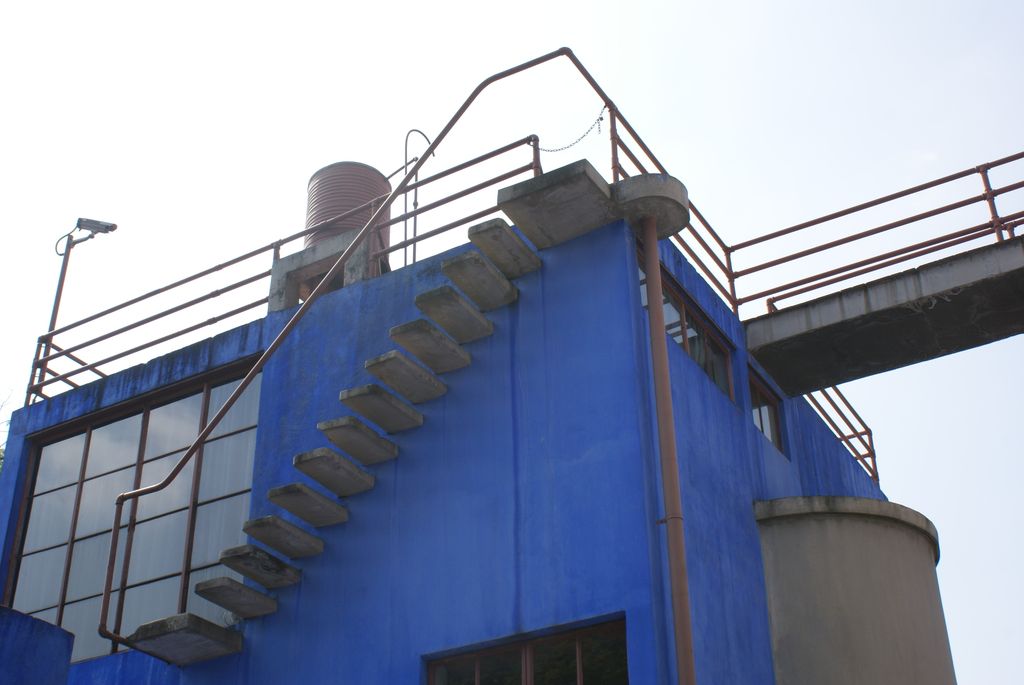
After the American period, Kahlo and Rivera moved into Juan O’Gorman’s paired houses and studios in San Ángel in 1934. The buildings were distinct from Casa Azul in Coyoacán, where Kahlo had grown up and later principally lived. Their separate work spaces and connecting bridge gave an architectural form to living together without sharing one studio. [1] [8]
The bridge is often treated as an irresistible metaphor for attachment and independence. That metaphor should follow the literal history rather than replace it: the houses organised movement, light, work and domestic activity, and their meaning changed as the artists’ residences changed. A building cannot disclose the complete emotional terms of a marriage. [8]
After the 1940 remarriage, the museum chronology describes a more independent arrangement, with Kahlo based at Casa Azul and Rivera retaining the San Ángel studio. The two places thus belong to an evolving domestic geography, not a single unchanged married home. The San Ángel study examines the buildings and their subsequent museum life. [1] [8]
Crisis, Separation and a Public Career
The Museo Frida Kahlo chronology places the crisis involving Rivera’s relationship with Cristina Kahlo in 1935 and records Frida spending time in New York with Bertram and Ella Wolfe. It is a significant episode in the institutional biography, but that summary does not establish the complete private sequence or motives of the three people involved. Cristina’s place in Kahlo’s family and later life also extends beyond her role in this crisis. [1]
Political commitments continued to shape the household. Rivera helped secure asylum in Mexico for Leon Trotsky, and Kahlo and Rivera hosted Trotsky and Natalia Sedova at Casa Azul from 1937. The connection belongs to the international political history of the period as well as to the history of a particular home. [1]
Kahlo’s late-1930s exhibitions altered the terms of her travel. She went to New York in 1938 for the Julien Levy exhibition of her own paintings, then to Paris in 1939, where her work appeared in Mexique and The Frame entered the French state collection. These were career events centred on Kahlo’s work rather than journeys principally organised around Rivera’s mural commissions. [1] [7]
The museum chronology dates the divorce to 6 November 1939. A single cause cannot be established from that date or read directly out of the paintings made around it. Separation, changing residences, professional recognition and continuing attachments form an intertwined history whose legal and intimate aspects are not identical. [1] [7]
The Two Fridas was painted in 1939, and Self-Portrait with Cropped Hair in 1940. Both have been interpreted in relation to separation and changed self-presentation, but neither provides a divorce petition or a complete explanation of the marriage. Their formal choices and public histories deserve attention alongside the biographical context. [12] [13]
A Friend Offers an Alternative
Mary Sklar’s letter of 7 October, catalogued by NMWA without a year, offers Kahlo a bright room in New York where she could paint. Sklar knew that living without Rivera had been difficult and asked what Kahlo would do next. The invitation combined friendship, accommodation, working space and an alternative to reunion rather than simply offering advice from a distance. [10]
The letter’s references to St Luke’s Hospital and Trotsky’s death place it within a later context than the initial separation, but the archive’s undated status remains important. Sklar’s comments about the press and politics are her own reactions, not Kahlo’s testimony. What the document securely reveals is a friend trying to make another course of life materially possible. [10]
San Francisco and the Remarriage of 1940
In 1940 Rivera was working on the Pan American Unity fresco at Treasure Island, while Kahlo came to San Francisco for medical care. A note preserved among Emmy Lou Packard’s papers anticipates reunion after the fresco is finished and expresses a desire for life together without arguments. Packard’s identification supplies the circumstances in which the note was left at Rivera’s studio; those circumstances should remain distinct from the words of the note itself. [5]
Packard also recalled practical care in her oral history of May 1964. She described driving Rivera from work to visit Kahlo at St Luke’s Hospital and, after discharge, taking Kahlo or the pair around the city. Recorded about twenty-four years later, the recollection gives a witness’s view of transport, hospital visits and social life, not a contemporary diary or an explanation of why they remarried. [11]
The Museo Frida Kahlo and NMWA chronology date the civil remarriage to 8 December 1940, Rivera’s fifty-fourth birthday. Two altered clocks preserved at Casa Azul commemorate the rupture of 1939 and the reunion of 1940 in the museum’s interpretation. They are objects through which the relationship was marked, not legal records of everything agreed at the second ceremony. [1] [7]
The artist museum describes the renewed relationship as allowing greater independence. That is a more defensible account than the frequently repeated claim of a precisely worded agreement governing sex and money, for which the original terms have not been established in the sources cited here. The note’s affectionate hope and the museum’s account of later arrangements can stand without an invented contract. [1] [5]
Shared Interests, Different Artistic Languages
Both artists participated in debates over post-revolutionary Mexican culture and collected popular and pre-Columbian objects. Yet shared interests did not produce identical pictures: Rivera’s murals addressed history, labour and politics at architectural scale, while Kahlo developed self-portraiture, still life, family imagery and bodily subjects mainly in smaller paintings. The difference was one of practice and construction, not a simple division between a political man and an emotional woman. [1] [2] [3]
Kahlo’s works involving Rivera likewise use several pictorial forms. The 1931 paired portrait makes a social and marital image; later self-portraits place his image within hers; the 1944 anniversary works join the two names and figures in another arrangement. Rivera was an enduring subject, but the transformations of his presence show Kahlo making images rather than merely reporting the state of a marriage. [1] [9]
In Diego and I of 1949, the embedded image of Rivera on Kahlo’s forehead is especially conspicuous. It has encouraged readings of preoccupation and emotional attachment, but the object study distinguishes those interpretations from evidence about specific events or rumours. A painted relationship between figures is not a transparent record of conduct outside the picture. [1]
The public exchange also included writing. In 1949 Kahlo contributed Portrait of Diego to a Palacio de Bellas Artes publication marking fifty years of Rivera’s work. That act belongs to her participation in his public reputation, while her own developing exhibition history prevents it from being treated as the only role available to her. [1]
Work, Care and Politics in the Later Years
Kahlo’s teaching, painting and domestic life continued after remarriage, with Casa Azul becoming an important working and social place. Rivera maintained his studio and commissions, while friends, students and doctors formed parts of the wider network around the couple. Neither later illness nor the marriage erased Kahlo’s work as a teacher and artist. [1] [7] [8]
Rivera was present at Kahlo’s 1953 solo exhibition in Mexico City, an event centred on her paintings despite the practical demands of her attendance. The museum chronology also records the two with Juan O’Gorman at the 2 July 1954 protest over intervention in Guatemala. Their final shared public history combined artistic recognition and political action. [1]
Kahlo died at Casa Azul on 13 July 1954, ending the second marriage after more than thirteen years. Rivera’s arrangements helped preserve Casa Azul and its collections through the museum trust, while the San Ángel buildings followed a separate history of acquisition in 1981 and museum opening in 1986. These institutional legacies are important without becoming proof of a final private reconciliation or a complete verdict on the relationship. [1] [7] [8]
The Couple in Later Exhibitions
Later exhibitions have repeatedly placed the artists together while proposing different ways of understanding that pairing. The Musée de l’Orangerie’s 2013 L’art en fusion framed their artistic worlds as different but complementary; the Barbican’s 2018 Modern Couples considered them within a wider history of creative partnerships. These are curatorial arguments about how to present the work, not neutral findings about the equality of the marriage. [14] [15]
Carlos Monsiváis’s introduction to the Museo del Estanquillo catalogue El amor amoroso de una pareja dispar treats the pair with affection and irony. He describes figures endlessly reproduced and collectively appropriated, whose public life extends well beyond judgments of their paintings. His account helps explain the appeal of the couple as a cultural image while also making that image a subject for examination. [16]
The familiar pair can bring viewers to the art, but it can also overshadow the paintings. Reading the paintings, letters, studios and dated career records together restores the difference between a powerful later image and the historical relationship from which it developed. Kahlo and Rivera were connected artists, not two halves of a single author. [1] [3] [9] [14] [16]
Frequently Asked Questions
Their first civil marriage took place on 21 August 1929 in Coyoacán. After divorce on 6 November 1939, they remarried in San Francisco on 8 December 1940. [1] [2] [7]
Rivera was born on 8 December 1886 and Kahlo on 6 July 1907, a difference of slightly more than twenty years. At the first wedding they were forty-two and twenty-two respectively. [1] [2]
His encouragement and professional network were important, but Kahlo had already made paintings before their adult partnership developed. Calling her simply his pupil obscures that earlier visual work and her distinct later practice. [1] [3] [9]
Institutional chronology documents the divorce and remarriage dates, while letters illuminate affection, separation and hopes for reunion. The evidence does not establish one definitive cause or the exact private terms often attributed to the second marriage. [1] [5] [7] [10]
Discussion
Use the cited evidence and your own close looking to explain your view. The prompts below are starting points, not fixed interpretations.
Reader Insights
How does the correspondence change a relationship history centred on marriage and separation?
What did separate working spaces make possible for the two artists?
How have later exhibitions shaped the idea of Kahlo and Rivera as a couple?
Join the Conversation
Which reading best fits the evidence, and where does uncertainty remain?
References
- Museo Frida Kahlo, Frida: bilingual chronology, 1922–54; relationship, residences, altered clocks, career and later public events. View source text.
- MoMA, Diego Rivera: Murals for The Museum of Modern Art: chronology; school mural, 1929 wedding and American commissions. View source text.
- Servando Ortoll and Annette B. Ramírez de Arellano, “Frida Kahlo: Retrato de la artista como esposa empresaria,” Desacatos 11 (2003), pp.120–131; complete Spanish article and Rockefeller-letter discussion. View source text.
- Frida Kahlo to Diego Rivera, Coyoacán, 10 September 1932; complete published one-page excerpt reproduced by INBAL from Herrera, not the complete letter. View source text.
- Frida Kahlo letter to Diego Rivera, 1940, Emmy Lou Packard Papers, Archives of American Art; supplied translation and Packard’s identification. View source text.
- Frida Kahlo to Matilde Calderón de Kahlo, 21 November 1930; NMWA institutional transcription. View source text.
- NMWA, Frida Kahlo Papers finding aid, June2022, biographical chronology pp.5–8; not the underlying civil files. View source text.
- INBAL, 30 años Museo Casa Estudio Diego Rivera y Frida Kahlo, selected house-studio history, PDF pp.6,16; construction, occupation, work spaces and subsequent museum history. View source text.
- SFMOMA, Frieda and Diego Rivera, 1931; owner record, inscription and audio transcripts. View source text.
- Mary Sklar to Frida Kahlo, 7 October, no year; NMWA, complete ten-page transcription, especially pp.5–9. View source text.
- Emmy Lou Packard oral history, 11–12 May1964, interviewer Mary Fuller McChesney, Archives of American Art; relevant indexed passages on the1940 San Francisco mural, hospital visits and driving. Complete transcript download not acquired. View source text.
- MoMA, Self-Portrait with Cropped Hair, 1940; collection record and interpretation. View source text.
- Museo de Arte Moderno, Las dos Fridas; owner collection display. View source text.
- Musée de l’Orangerie, Frida Kahlo / Diego Rivera: L’art en fusion (2013), French exhibition record; reception framing, not intimate testimony. View source text.
- Barbican, Modern Couples (2018), large-print exhibition guide, PDF p.12; selected Kahlo/Rivera entry. View source text.
- Museo del Estanquillo, El amor amoroso de una pareja dispar, presentation and Carlos Monsiváis introduction, selected PDF pp.9,11–13 (printed pp.10–14); reception source. View source text.
Image Credits
- Photo: Enriquesrz / Wikimedia Commons, CC BY-SA 4.0. Resized to 1024 px wide; no crop. Source record.
