


 by Tom Gurney
Tom Gurney BSc (Hons) is an art history expert with over 20 years experience
Page created on March 2, 2018 / Page updated on October 6, 2026
Email: tomgurney1@gmail.com / Phone: +44 7429 011000
Introduction
Painted in 1939, The Two Fridas (Las dos Fridas) is a double self-portrait on an exceptional scale within Frida Kahlo's work. Two seated versions of the artist meet the viewer at almost life size: their hands join, their hearts are exposed and a branching blood vessel passes between them, yet their clothing and bodily condition sharply differ. The result is immediately legible as an image of connection and division, but no single biography, costume label or national allegory explains all that the painting contains. [1] [3]
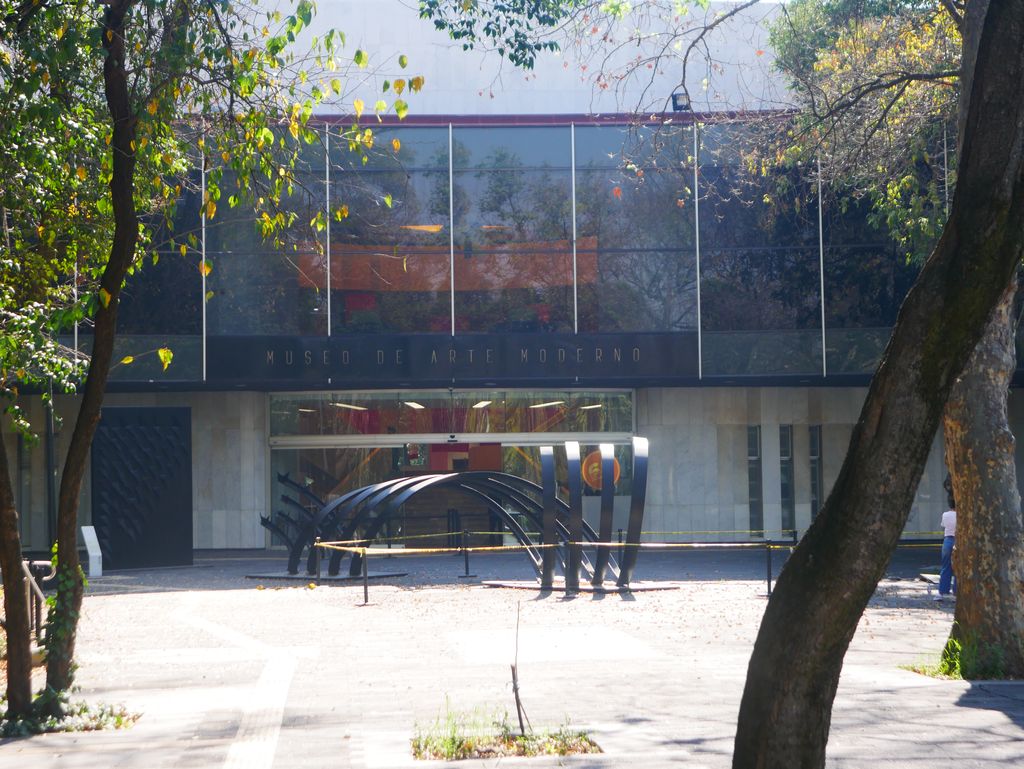
Kahlo made the picture during her separation from Diego Rivera, and the Museo de Arte Moderno (MAM) interprets it partly through that crisis. The chronology is secure; the claim that the painting means only romantic rejection is not. Its material revisions, paired costumes, exhibition history and later critical readings disclose an argument about making and remaking a self as much as a record of one relationship. [1] [6] [7]
At a Glance
- Original title: Las dos Fridas
- English title: The Two Fridas
- Artist: Frida Kahlo (1907–1954)
- Date: 1939; MAM dates its execution to October–December
- Medium: Oil on medium-weave cotton canvas
- Current dimensions: 173.5 × 173.5 cm in the 2025 technical study
- Collection: Museo de Arte Moderno, INBAL, Mexico City
- Acquisition: Bought directly from Kahlo by INBA in 1947; assigned to MAM in 1966
- First documented exhibition: International Exhibition of Surrealism, Galería de Arte Mexicano, January 1940
- Technical record: imaging and ten selected local paint samples reveal changes beneath the final composition
Contents
- Introduction
- How to Look at the Painting
- A Double Portrait, Not a Simple Diagram
- What Technical Examination Revealed
- Zinc White, Cracking and Conservation
- Two Costumes, Several Histories
- 1939: Separation, Return and a New Scale
- Childhood Memory and the Imagined Companion
- Storm Clouds and Emblems of Love
- Books for Further Study
MAM's public record supplies the title, year, medium, collection and owner interpretation, while an owner-authored acquisition history records the 1947 purchase and the transfer to MAM on 28 December 1966. [1] [2] A recent scientific study identifies the support more precisely as cotton and gives the present 173.5-centimetre-square measurement; MoMA's 1940 catalogue recorded 171 × 171 centimetres, so the small discrepancy is best treated as measurement history rather than evidence of another version. [3] [4]
How to Look at the Painting
The square canvas is filled by two front-facing women seated close together on a low woven or caned bench. Their heads and knees broadly align, and the repeated face establishes likeness without creating a mechanical mirror image. A clouded grey-blue sky occupies nearly all the background, while a narrow strip of brown ground offers only slight spatial anchoring. [1]
Begin at the joined hands near the centre. That ordinary human contact forms one connection between the figures; the exposed circulatory system forms another. Because the handclasp and the blood vessel cross the space in different ways, the double is neither simply divided nor neatly reunited.
The figure on the viewer's right wears a blue-and-yellow upper garment with a green-olive skirt and white flounce, an ensemble identified in the museum literature as Tehuana. Her heart appears intact, and she holds a small oval portrait identified as Diego Rivera. A vessel rises from the miniature, travels through the heart and crosses toward the second figure. [1] [7]
The figure on the viewer's left wears a high-necked white ensemble with lace or embroidered passages and a broad layered hem. Her heart is open or damaged, and a vessel descends across the fabric to a surgical-looking clamp held in her right hand; red drops mark the white skirt. The instrument seems to arrest the flow but does not stop it entirely, turning the clothing into part of the body's visible drama.
The lower edge of that skirt rewards closer attention. Armida de la Garza and Maggie Borowitz both draw attention to the way red drops approach or merge visually with the floral decoration: blood can resemble flowers, while flowers can begin to look bodily. [7] [20] This is an interpretation of a deliberately ambiguous painted passage, not botanical identification or proof of a fixed symbol.
The painting's scale changes the encounter. Kahlo's doubled figures do not appear as small emblems waiting to be decoded; they share the spectator's space with the authority of paired portrait sitters. Makoto Sugimae has accordingly proposed that scale, mestizaje and Mexican nationalism complicate a reading confined to divorce, although his further comparison with José Clemente Orozco remains a research proposal rather than demonstrated influence. [10]
The Two Fridas in Kahlo’s career
Frieda and Diego Rivera
1931The Two Fridas
1939Self-Portrait with Cropped Hair
1940The Broken Column
1944Viva la Vida
c. 1950–54Selected works; not a complete chronology.
Watch: Frida Kahlo
Five perspectives to view here alongside the article.
Frida Kahlo’s The Two Fridas: Great Art Explained
A focused visual introduction to the painting and its context.
A Double Portrait, Not a Simple Diagram
It is tempting to assign one fixed label to each woman: Mexican and European, loved and rejected, strong and wounded. The picture encourages such contrasts, yet it also frustrates them. The figures share a face, a bench, a handclasp and one continuous vascular system; neither can be isolated without cutting through the relations that make the composition work.
Fabiano Seixas Fernandes reads this interdependence against a rigid national-versus-foreign division. In his account, the vascular line and joined hands create a more unstable internal map in which apparently opposed identities remain mutually implicated. [8] Eli Bartra and John Mraz offer a related but more explicitly transcultural interpretation, treating the connected bodies as a way to think about entangled histories between Mexico and the developed world. [9]
These readings do not cancel the 1939 marital context. They show why chronology should establish the circumstances of the painting without dictating the meaning of every motif. The scarred heart, miniature and interrupted blood flow can sustain a biographical interpretation, while the costumes, monumental scale and doubled structure open questions about nation, class, gender, modernity and self-fashioning. [1] [6] [8] [9]
Arturo S. Mujica's 2010 hermeneutic essay is useful as evidence of the biographical interpretive tradition itself. He treats doubling as separation, opposition and conflict but also as a possible equilibrium, and reads the large format as an assertion of artistic identity. [18] Because the essay relies heavily on earlier biography and general theories of symbolism, these are attributed critical propositions rather than independent facts about Kahlo's intention.
Lilliana Ramos Collado approaches the structure from another direction. She describes the principal figures as an “inverse symmetry,” notes that the clouds suppress a definite location, and connects their calm seated pose with older paired portrait conventions even as exposed hearts turn the image into an anatomical theatre. [19] Her further idea that the body contains a second, interior “anatomy of the heart” is a formal reading: it helps explain the painting's nested bodily spaces without converting them into medical illustration.
What Technical Examination Revealed
A 2025 study by a Mexican conservation-science team brings unusually detailed physical evidence to a painting often discussed almost entirely through biography. The researchers combined imaging undertaken in 2008 with the analysis of ten microsamples collected that year and further microscopy in 2024. Six samples came from white passages and four from areas associated with compositional change, so the results are strong local evidence rather than a chemical map of the whole canvas. [3]
The support is a medium-weave cotton canvas stretched over a light wooden structure with six members and cross-bracing. The study found no consistent conventional ground in the sampled areas; in places, oil penetrated the fabric, while poor adhesion between layers contributed to cracking, erosion and paint loss. These material conditions are particularly important in the broad white skirt, where a visually dominant surface is also one of the painting's most vulnerable zones. [3]
Infrared, visible-light and ultraviolet examination revealed that the final image was not fixed from the outset. Kahlo moved the heart of the Tehuana-clad figure toward the centre, strengthening its relation to the other heart and to the composition's vertical axis. Beneath the present white skirt, the investigators also found an earlier purple treatment, material proof that one of the painting's most heavily interpreted costumes changed during its making. [3]
The palette results are similarly specific but limited. Samples contained zinc and lead whites, along with evidence for vermilion, cadmium and iron-based reds, chrome yellow and ochre, earth colours, and tentatively identified blues. Comparison with artists' palettes and paint tubes from around 1940 helps establish what materials were available, but it does not show that Kahlo used a named brand or a particular surviving tube. [3]
Zinc White, Cracking and Conservation
The white ensemble is not merely an iconographic field; it is also a chemically active paint structure. The researchers propose that reactions involving zinc white, linseed oil and oxidation products from the canvas contributed to the formation of zinc lactates and to the loss of cohesion between layers. This is an evidence-based mechanism proposed from the samples, not a final explanation for every crack or loss visible across the painting. [3]
No fungi were identified in the material examined, and the authors recommend avoiding water-based cleaning because of the altered paint system. They also detected DDT, but no documentation establishes who applied it, when or for what purpose. The finding belongs to the object's conservation history and cannot responsibly be turned into a claim about Kahlo's health, studio practice or intentions. [3]
The study's material evidence changes interpretation in a quieter way. The relocated heart shows Kahlo recalibrating the bodily relationship between the two figures, while the buried purple skirt proves that the apparent opposition between “white” and “Tehuana” selves emerged through revision. Conservation science cannot tell us why she made those choices, but it can prevent a finished composition from being mistaken for an instantaneous confession.
The painting's later travel has required corresponding care. In a 2014 interview, MAM subdirector Marisol Argüelles described vibration, temperature and humidity monitoring during transport, low-light display conditions and periods of rest, while stressing that the museum retained a fuller travel file. [14] Those comments document institutional practice at that date; they are not a complete condition report or loan history.
Two Costumes, Several Histories
The right-hand ensemble is commonly identified as Tehuana, but that term should name a specific regional tradition rather than function as shorthand for all Mexican dress. Kahlo's wider wardrobe combined garments and accessories from several Mexican regions with Guatemalan, European, Asian and modern commercial elements. The guide to Kahlo's fashion and Tehuana dress examines that material history in full; here the question is what the paired outfits do within this painting.
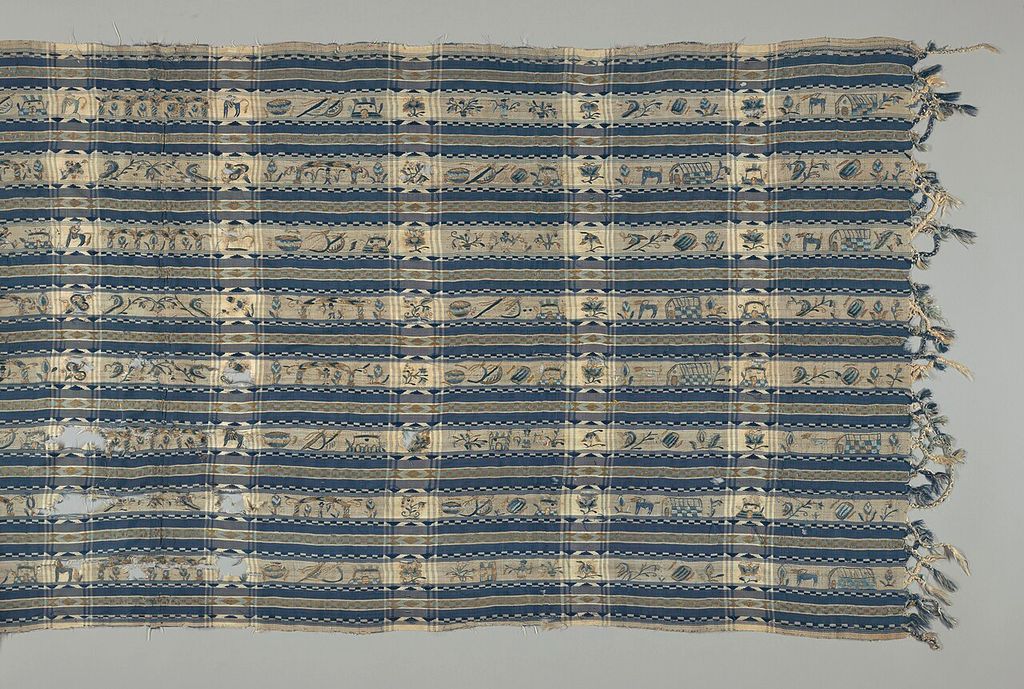
MAM compares the left-hand clothing to a Victorian wedding dress associated with Kahlo's mother. Armida de la Garza disputes the familiar shorthand, arguing that it is better understood as a multipart 1930s ensemble shaped by Romantic and historicising fashion: skirt, blouse and lace vest rather than one inherited bridal garment. Her analysis makes the two figures less like a simple opposition between modern Mexico and old Europe, because both costumes become deliberate twentieth-century constructions. [1] [7]
Prignitz-Poda develops the older-dress comparison differently. She argues that the high collar and lace evoke clothing before Kahlo's birth, encountered through old photographs and associated with her mother's wedding, rather than ordinary European fashion in 1939. De la Garza's historicising-fashion argument challenges that separation between an earlier garment and contemporary dress, revealing how the same painted costume can lead historians towards different material contexts. [7] [23]
De la Garza further proposes that a surviving purple silk-taffeta skirt may have served as the model for the earlier state discovered beneath the white paint. The technical study securely establishes a purple underlayer; the identification of a particular surviving garment remains a reasoned hypothesis because the exact catalogue and textile-source pages behind it have not yet been read. [3] [7]
De la Garza also asks whether the red line may be seen as thread as well as vein. The pleats make the garment shift between surface and bodily interior, while wear and mending in the proposed surviving skirt lead her to read repair—not purity or rupture alone—as part of the doubled identity. [7] This “both-and” account is especially suggestive because it connects clothing construction to bodily connection, but it remains her feminist interpretation rather than a documented statement by Kahlo.
The distinction matters. The purple layer is a physical fact about the canvas, while the proposed model and the interpretation of thread, repair and mending are scholarly arguments. Keeping those categories separate allows dress history to enrich the painting without making textiles say more than the evidence permits.
1939: Separation, Return and a New Scale
Kahlo returned to Mexico from Paris in 1939 and made the painting during her separation from Rivera. MAM dates The Two Fridas to October–December of that year and describes it as a response to the rupture. [1] [6] The sequence makes emotional crisis an unavoidable context, but a date cannot prove that every formal choice was generated by the separation.
The work was also a major enlargement of Kahlo's pictorial field. Its square cotton support allowed two nearly life-size figures to sit side by side, while the repeated body turned the self-portrait into a staged encounter. Rather than simply magnifying the intimate scale associated with many of her paintings, Kahlo organised a composition capable of meeting collective exhibition spaces and public histories.
That change of scale coincided with intense international exposure. In New York and Paris, Kahlo had encountered collectors, artists, critics and Surrealist advocacy, sometimes productively and sometimes with frustration. The study of Kahlo, Surrealism and reality follows those relationships; for The Two Fridas, the important point is that personal experience, transatlantic viewing and Mexican exhibition culture converged without becoming one stable stylistic allegiance.
Childhood Memory and the Imagined Companion
MAM's 2019 documentary exhibition connected the painting with Kahlo's later diary recollection of an imaginary childhood friend. A transcription reproduced by María de la Luz Hurtado carries the heading Origen de las dos Fridas. Recuerdo and a 1950 date. The title makes the recollection relevant, but its retrospective character matters: it is not a statement written while the canvas was being painted in 1939. [6] [24]
In that account, the child draws a door on a misted window and imagines passing through it to meet a laughing, weightless companion. She remembers sharing secrets but not the friend's appearance. The double therefore need not be understood exclusively as a second adult costume or a figure created by divorce; remembered friendship offers another form of imagined company. [24]
Hurtado cautions that intimate writing is not automatically transparent. Prignitz-Poda also develops the childhood-companion reading, while her broader reconstruction of childhood injury remains speculative. The recollection can illuminate doubling without identifying either painted woman as one securely recoverable psychological state. [23] [24]
Storm Clouds and Emblems of Love
The sky has an active role despite supplying no recognisable location. Dark and light passages surge behind the repeated heads, linking the two figures within a shared atmosphere while their clothing separates them below. The cloud field makes a theatrical setting for the encounter without illustrating an identifiable weather event.
In Hidden Frida Kahlo, Helga Prignitz-Poda compares this stormy atmosphere with El Greco's View of Toledo, a painting in New York's Metropolitan Museum of Art. She proposes that its clouds became a pictorial resource for Kahlo, not merely a backdrop; MAM likewise attributes the background to inspiration from El Greco's landscapes. The Met's record confirms the comparator's identity and its entry into the collection through a 1929 bequest. [1] [23] [25]
Kahlo's own correspondence gives the comparison a firmer historical setting. Writing to her mother from New York on 20 November 1931, she describes a long museum visit and singles out View of Toledo for its extraordinary colour. Her enthusiasm appears alongside admiration for Goya and an emphatic preference for ancient Mexican sculpture, showing an artist evaluating several traditions rather than passively receiving European models. [26]
The letter establishes viewing and admiration eight years before The Two Fridas, not a decision to transplant El Greco's sky. Prignitz-Poda's proposal is consequently more than a comparison between pictures Kahlo might never have encountered, but it still requires a distinction between documented experience and inferred artistic use. [23] [26]
The comparison is most useful as a way of looking. In each case the sky contributes to an emotionally charged construction rather than serving as neutral scenery, although Kahlo suppresses the city and places the repeated body at the centre. The resemblance can sharpen attention to atmosphere without becoming a proven chain of influence. [23]
Prignitz-Poda proposes another historical repertoire: emblems pairing divine and earthly love, often embodied by women joined through touch. Read in that light, Kahlo's joined hands connect a painting of personal division with older ways of representing related but conflicting forms of love. No particular emblem is identified as an image Kahlo demonstrably studied, so this remains a comparative interpretation rather than an authenticated source. [23]
Kahlo's exposed hearts and circulating vessel also complicate the comparison. The figures are not simply two separate virtues or categories placed side by side; their anatomical connection makes each body's condition consequential for the other. Historical emblematic structures can enlarge the interpretive field without absorbing this materially specific and unusually bodily portrait.
Did Paintings in the Louvre Influence It?
Jaime Moreno Villarreal proposes a more specific Paris route. In Frida en París, 1939, he writes that Jacqueline Lamba showed Kahlo the anonymous Gabrielle d'Estrées and Her Sister and Théodore Chassériau's The Two Sisters at the Louvre, and he treats those paired female figures as iconographic sources for The Two Fridas. [11]
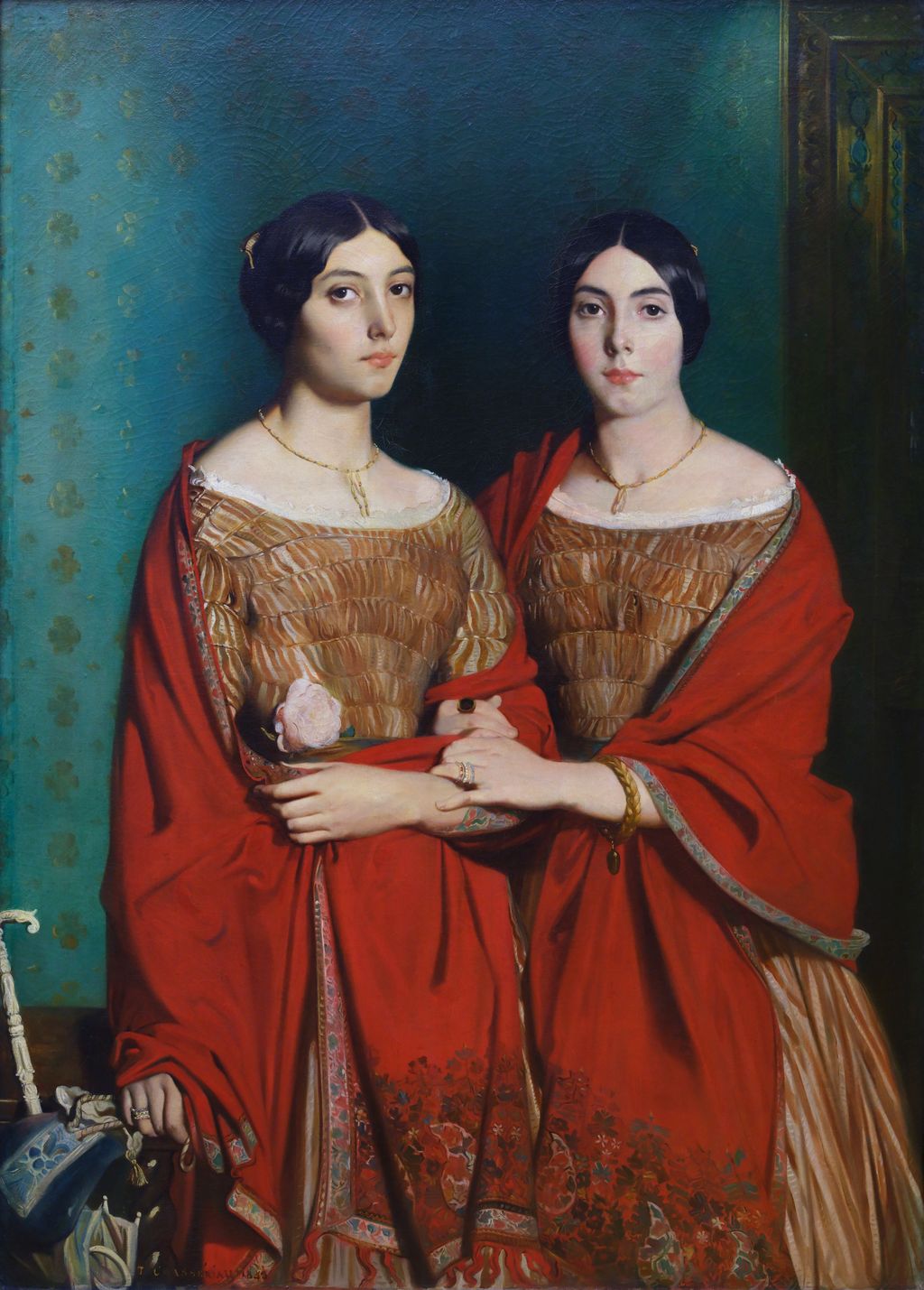
The claim is traceable but not fully closed. Moreno's note says that Salomon Grimberg reported the Louvre visit and its influence from personal communications with Lamba and Fernando Gamboa; the exact Grimberg and exhibition-catalogue pages he cites have not been consulted directly. [11] The responsible formulation is therefore that Moreno advances a documented, indirectly transmitted proposal—not that visual resemblance proves Kahlo copied either painting.
The comparison is nevertheless useful when treated as a question rather than a verdict. It places The Two Fridas within a history of paired female portraiture and bodily contact while preserving Kahlo's distinct additions: duplicated selfhood, exposed anatomy, regional dress, active blood flow and the tension between handclasp and surgical instrument.
Surrealist Exhibition, Contested Label
The painting's first documented public setting was the International Exhibition of Surrealism at Galería de Arte Mexicano in January 1940. A checklist published by UNAM's Instituto de Investigaciones Estéticas in 1941 records Las dos Fridas as item 44 and La mesa herida as item 45, providing near-contemporary item-level confirmation rather than a later recollection. [5] [6]
In May 1940, the painting travelled to MoMA's Twenty Centuries of Mexican Art, where catalogue entry 125 listed it as lent by the artist. The same catalogue framed Kahlo's paintings as autobiographical episodes rendered through Surrealist dream language and psychological states. [4] That description is valuable evidence of contemporary institutional reception; it is not Kahlo's own definition of her practice.
Exhibiting a painting in a Surrealist exhibition establishes an artistic and historical relationship, not compulsory membership or one method of making. The Two Fridas can therefore be studied within Surrealism's international networks while also being understood through Mexican portraiture, clothing histories, political debates and the documentary circumstances of Kahlo's life. The tension between those frames is part of the work's history, not a problem that requires a one-word solution.
From Kahlo's Studio to the Museo de Arte Moderno
The 1940 MoMA catalogue's “lent by the artist” credit shows that Kahlo still owned the painting during its New York display. [4] MAM's owner-authored history records that the Instituto Nacional de Bellas Artes acquired it directly from her in 1947 and that it was assigned to the Museo de Arte Moderno on 28 December 1966. [2] This specific record is preferable to the unreferenced 1948 date repeated in the scientific article. [3]
More recent institutional records document loans to the Grand Palais and Dallas before the painting's 2017 return to MAM. [12] These points establish selected appearances, not an exhaustive provenance or exhibition history. A 2014 press claim about a 1953 display has been excluded because its named venue conflicts with the Museo Frida Kahlo's chronology and no primary checklist was found. [14] [17]
The work's condition makes international visibility inseparable from conservation. MAM described unusually high loan demand in 2017, while the earlier Argüelles interview explained why requests were restricted and why travel and display were followed by periods of rest. [12] [14] The painting's fame has thus increased the need to manage the physical risks created by the circulation that produced that fame.
In 2019–20, MAM organised Las dos Fridas. Historia de dos ciudades around documents from Paris and Mexico City. In 2026, the museum returned to the work through Las dos Fridas. Una identidad global, placing it among later appropriations and reinterpretations; an official notice dated 27 May stated that the painting would remain for a collection display opening on 5 June. [6] [13] That is a dated display record, not a promise of permanent visibility, so visitors should consult the Museo de Arte Moderno before travelling.
How Later Artists Reworked the Double
The painting's afterlife is more than a trail of reproductions. Around 1978, Mexican artist Magali Lara made a negative photostat that cropped out the doubled faces and hearts to concentrate on the laps, interlaced hands, clamp, miniature and overlapping skirts. Maggie Borowitz reads that act of selection as an early investigation of contact and interior complexity: Lara shifted attention from iconic likeness to what the two bodies hold and where they meet. [20]
Other artists have used the double to address bodies and communities under pressure. Tate's 2026 exhibition guide describes how the Chilean duo Las Yeguas del Apocalipsis reenacted the composition in 1989, linking their open hearts with a vein during the closing years of dictatorship; its curators read the work through queer discrimination during the HIV/AIDS pandemic as well as affection and communal connection. [21] In 2013, Germain Machuca and Giuseppe Campuzano restaged that performance with drag clothing, neck braces, straps and a wheelchair, which the same guide frames through disabled and queer identity, pain, pleasure, memory and survival. [21]
These works do not reveal what Kahlo privately intended in 1939. They show instead how a composition built from bodily difference, touch and circulation became available for later feminist, queer, disability and political histories. MAM's 2026 Una identidad global exhibition placed Lara among a broader field of artists appropriating and reinterpreting Kahlo, making this continuing use of The Two Fridas part of the museum's own account of the painting's public life. [22]
Why the Painting Still Resists a Single Meaning
The painting's most durable achievement is not that it hides one answer behind a set of symbols. It gives several systems equal visual force: likeness and difference, touch and circulation, costume and anatomy, personal chronology and public history. Each system clarifies another, but none absorbs the rest.
The divorce-centred account remains important because the date, the Rivera miniature and MAM's own interpretation support it. Dress scholarship then shows that the two costumes are more historically complex than a binary between authentic Mexico and inherited Europe, while conservation research proves that heart placement and skirt colour changed during construction. [1] [3] [7] Transcultural and national readings ask what those revisions and connections mean beyond the marriage, but they remain interpretations rather than recovered statements of intention. [8] [9] [10]
This layered method also guards against two opposite errors. Reducing the painting to heartbreak makes its material and political intelligence disappear; removing biography entirely ignores evidence embedded in the date, miniature and institutional record. The Two Fridas is strongest when read as a deliberately constructed image in which intimate rupture, bodily vulnerability, dress, nation and artistic self-possession remain in active relation.
Books for Further Study
Jaime Moreno Villarreal's Frida en París, 1939 is the most focused book for the Paris background and the proposed Louvre comparisons. Exact passages concerning the two double portraits and the source note have been checked for this article, but the book has not been reviewed cover to cover; its underlying Grimberg and Electa citations remain on the acquisition list. [11]
Luis-Martín Lozano, Andrea Kettenmann and Marina Vázquez Ramos's Frida Kahlo: The Complete Paintings is the major catalogue-style volume to consult for a future object-level upgrade. The 624-page book is prominent and directly relevant, but only its publisher description and edition record have been checked here, so no claim in this article depends on unread pages. [15]
Gannit Ankori's Frida Kahlo in Reaktion's Critical Lives series offers a shorter study of the artist's life, work, identity and later cultural status. It is included as a relevant next book rather than a reviewed authority: the publisher record has been verified, but the complete text has not been consulted in full. [16]
Prignitz-Poda's Hidden Frida Kahlo widens the discussion through works that are lost, rarely shown or difficult to access and through extensive comparative interpretation. The selected pages used here address the double portrait's clouds, costumes and childhood-companion reading; they do not represent a reading of the complete book. Its proposals are valuable alongside the technical study and newer dress scholarship, especially where those approaches disagree. [3] [7] [23]
Frequently Asked Questions
There is no surviving evidence that fixes one complete meaning. MAM relates the work to Kahlo's 1939 separation from Rivera, while other scholars examine the doubled figure through dress, national and transcultural identity, bodily connection and artistic self-construction. [1] [8] [9]
The figure on the viewer's right wears the ensemble identified as Tehuana and holds the Rivera miniature. Calling her simply “the Mexican Frida,” however, can make the left-hand figure seem non-Mexican and can obscure how both costumes were assembled within modern, mobile histories. [1] [7] [8]
MAM reports a comparison with the Victorian wedding dress worn by Kahlo's mother, but current dress scholarship disputes a literal, single-garment identification. De la Garza instead analyses the clothing as a multipart 1930s historicising ensemble. [1] [7]
The exposed hearts and vessels make emotional and bodily connection visible, but their exact meaning remains interpretive. Technical examination adds one firm fact: Kahlo moved the right-hand heart toward the centre while developing the composition. [3]
It was first exhibited in an International Exhibition of Surrealism in January 1940 and was framed in Surrealist terms by MoMA later that year. [4] [5] Those records establish reception and context, not an uncontested self-definition by Kahlo or a single Surrealist method.
Discussion
Use the cited evidence and your own close looking to explain your view. The prompts below are starting points, not fixed interpretations.
Reader Insights
Which visual connection between the two figures—hands, hearts or vessel—first anchors your reading?
Compare the painting’s paired portrait structure with the separately documented Louvre comparison, without assuming direct copying.
Does the 1939 separation clarify the work, or does it leave important formal and public histories unexplained?
Join the Conversation
Which reading best fits the evidence, and where does uncertainty remain?
References
- Museo de Arte Moderno, “Obras destacadas: Las dos Fridas” (in Spanish). View source text.
- Museo de Arte Moderno / Google Arts & Culture, “The Two Fridas” acquisition record (in Spanish). View source text.
- Pablo Aguilar-Rodríguez et al., “Characterization by Spectroscopic and Microscopic Techniques of Degraded Zinc White Pigment in Las Dos Fridas,” ACS Omega 10 (2025), pp. 16309–16318. View source text.
- Museum of Modern Art, Twenty Centuries of Mexican Art / Veinte siglos de arte mexicano (1940), p. 160. View source text.
- “Catálogo de Exposiciones, 1940,” Anales del Instituto de Investigaciones Estéticas II, no. 7 (1941), p. 92 (in Spanish). View source text.
- INBAL, “Las dos Fridas cumple 80 años” (2019) (in Spanish). View source text.
- Armida de la Garza, “Two Fridas, Three Dresses: Feminist Representations of Kahlo's ‘White Dress’ from Print to Digital,” Feminist Media Histories 12, no. 3 (2026), pp. 128–141. View source text.
- Fabiano Seixas Fernandes, “O mapa íntimo: três telas de Frida Kahlo,” Revista Estudos Feministas 16, no. 1 (2008), pp. 35–44 (in Portuguese). View source text.
- Eli Bartra and John Mraz, “As duas Fridas: história e identidades transculturais,” Revista Estudos Feministas 13, no. 1 (2005), pp. 69–79 (in Portuguese). View source text.
- Makoto Sugimae, “Frida Kahlo and Contemporary Art: Focusing on The Two Fridas,” Art History Society of Japan conference abstract (2017) (in Japanese). View source text.
- Jaime Moreno Villarreal, Frida en París, 1939 (Turner Noema, 2021) (in Spanish). View source text.
- INBAL, “Las dos Fridas regresan a México después de su visita a París y Dallas” (2017) (in Spanish). View source text.
- INBAL, “Últimos días para visitar la exposición Las dos Fridas: una identidad global en el MAM” (2026) (in Spanish). View source text.
- Leticia Sánchez Medel, “Las dos Fridas, viajeras frecuentes,” Milenio (2014) (in Spanish). View source text.
- Luis-Martín Lozano, Andrea Kettenmann and Marina Vázquez Ramos, Frida Kahlo: The Complete Paintings (TASCHEN). View source text.
- Gannit Ankori, Frida Kahlo, Critical Lives (Reaktion Books). View source text.
- Museo Frida Kahlo, “Frida” chronology, 1953 entry. View source text.
- Arturo S. Mujica J., “Frente al espejo: Una aproximación a las obras Autorretrato, Las dos Fridas y La venadita,” Revista de Investigación 34, no. 69 (2010), pp. 67–70 (in Spanish). View source text.
- Lilliana Ramos Collado, “Elogio de la muñeca: las anatomías fantásticas de Frida Kahlo,” Identidades 6 (2008), especially pp. 84–85 and 97–99 (in Spanish). View source text.
- Maggie Borowitz, Caught by Surprise: Affect and Feminist Politics in the Art of Magali Lara (University of Chicago doctoral dissertation, 2022), pp. 168–170. View source text.
- Tate Modern, Frida: The Making of an Icon large-print guide (2026), pp. 158–160. View source text.
- INBAL, “El Museo de Arte Moderno presenta Las dos Fridas. Una identidad global” (2026) (in Spanish). View source text.
- Helga Prignitz-Poda, Hidden Frida Kahlo: Lost, Destroyed or Little-Known Works, translated by Cynthia Hall (Prestel, 2017), selected printed pp. 109–111 and endnotes pp. 208–209, note 76. Complete book not read. View source text.
- María de la Luz Hurtado, “Frida Kahlo. Del imaginario al lenguaje: un circuito de doble vía,” Revista Chilena de Literatura 61 (November 2002), selected pp. 114–120, 136–144; complete reproduced diary transcript, Appendix 1, p. 142. Original diary and complete published edition not examined. View source text.
- Metropolitan Museum of Art, El Greco, View of Toledo, object 29.100.6; owner record, 1929 bequest and landscape interpretation. View source text.
- Frida Kahlo, letter to Matilde Calderón de Kahlo, New York, 20 November 1931, NMWA Archives of Women Artists, Folder 129; complete six-page Spanish transcription, especially pp. 2–4. View source text.
Image Credits
- Photo: Luisalvaz / Wikimedia Commons, CC BY-SA 4.0. Resized to 1024 px wide; no crop. Source record.
- Théodore Chassériau, The Two Sisters, 1843, Musée du Louvre, RF 2214. Public domain; digital image via Wikimedia Commons. Resized to 1024 px wide; no crop. Source record.
- Unknown artist Unknown artist. Public domain. Source: Wikimedia Commons (File:Rebozo (Mexico), late 18th or early 19th century (CH 18612807).jpg). 1024px proportional sRGB JPG derivative; no crop. Licence. Source record.
