


 by Tom Gurney
Tom Gurney BSc (Hons) is an art history expert with over 20 years experience
Page created on March 2, 2018 / Page updated on October 6, 2026
Email: tomgurney1@gmail.com / Phone: +44 7429 011000
Introduction
Frida Kahlo was born in Coyoacán on 6 July 1907, into a household formed by the photographer Guillermo Kahlo and Matilde Calderón. She grew up with three sisters from their marriage—Matilde, Adriana and Cristina—and had two surviving older half-sisters from Guillermo’s first marriage. That wider family matters: reducing her childhood to a single parent, a single illness or a later self-portrait obscures the people who worked, studied and kept in touch around her. [1] [2]
The evidence for this family is uneven. A museum chronology supplies the main sequence of births and moves, an archival collection documents Guillermo’s career, and Kahlo’s later letters show how the family continued to communicate. Some familiar stories about ancestry and childhood come from recollection or later biography rather than records examined here; they can still be illuminating if their status is kept clear. [1] [3] [4]
At a Glance
- Birth: Kahlo was born in Coyoacán on 6 July 1907. [1]
- Siblings: She grew up with three full sisters and had two surviving paternal half-sisters. [1] [2]
- Working household: Guillermo practised architectural photography; Matilde’s reported work and encouragement also shaped the family’s livelihood. [1] [3] [5]
- School: Kahlo entered the National Preparatory School in 1922, among roughly three dozen female students. [1] [5]
Contents
- Introduction
- Two Marriages and a Larger Family
- Work and Home in Coyoacán
- Illness, Play and Remembered Childhood
- A School Beyond the Household
- The 1925 Accident as a Family Turning Point
- What the Later Letters Reveal
- Family as a Subject of Art
- A Family History with Open Edges
Two Marriages and a Larger Family
Guillermo was born Carl Wilhelm Kahlo Kaufmann in Pforzheim, Germany, in 1871, according to the Universidad Nacional Autónoma de México’s description of his photographic archive. The same record places his emigration to Mexico in May 1890. A scholarly review of later archival genealogical research gives the more precise date of 26 October 1871 and reports that the documented paternal line was Protestant and did not originate in Hungary. [3] [4]
This differs from a story repeated in older accounts, including the accessible early chapters of Hayden Herrera’s biography, which place Guillermo’s birth in Baden-Baden in 1872 and describe Hungarian Jewish parents. Herrera’s text is important to the history of Kahlo biography, but the later archival reconstruction and UNAM collection record do not support treating that older account as established genealogy. The correction rests on the later researchers’ account of the German records, rather than on those registers themselves. [4] [5]
Guillermo first married María Cardeña. The Museo Frida Kahlo chronology names daughters María Luisa and Margarita, both of whom survived, and an infant María who died at birth; Cardeña died after the final childbirth. A separate essay on the museum’s site names the two surviving daughters but omits María and gives a first-marriage date incompatible with Guillermo’s documented arrival in Mexico. The secure point for a family portrait is that Frida had two surviving paternal half-sisters, not that she was one of only four children of Guillermo. [1] [2]
Guillermo married Matilde Calderón in 1898, according to the museum chronology. Their daughters were Matilde, born in 1899; Adriana, born in 1902; Frida; and Cristina, born in 1908. One later museum essay also reports a short-lived son named Guillermo between Adriana and Frida, but the running chronology omits him and no birth or death record is supplied. A definitive sibling count cannot rest on that report alone. [1] [2]
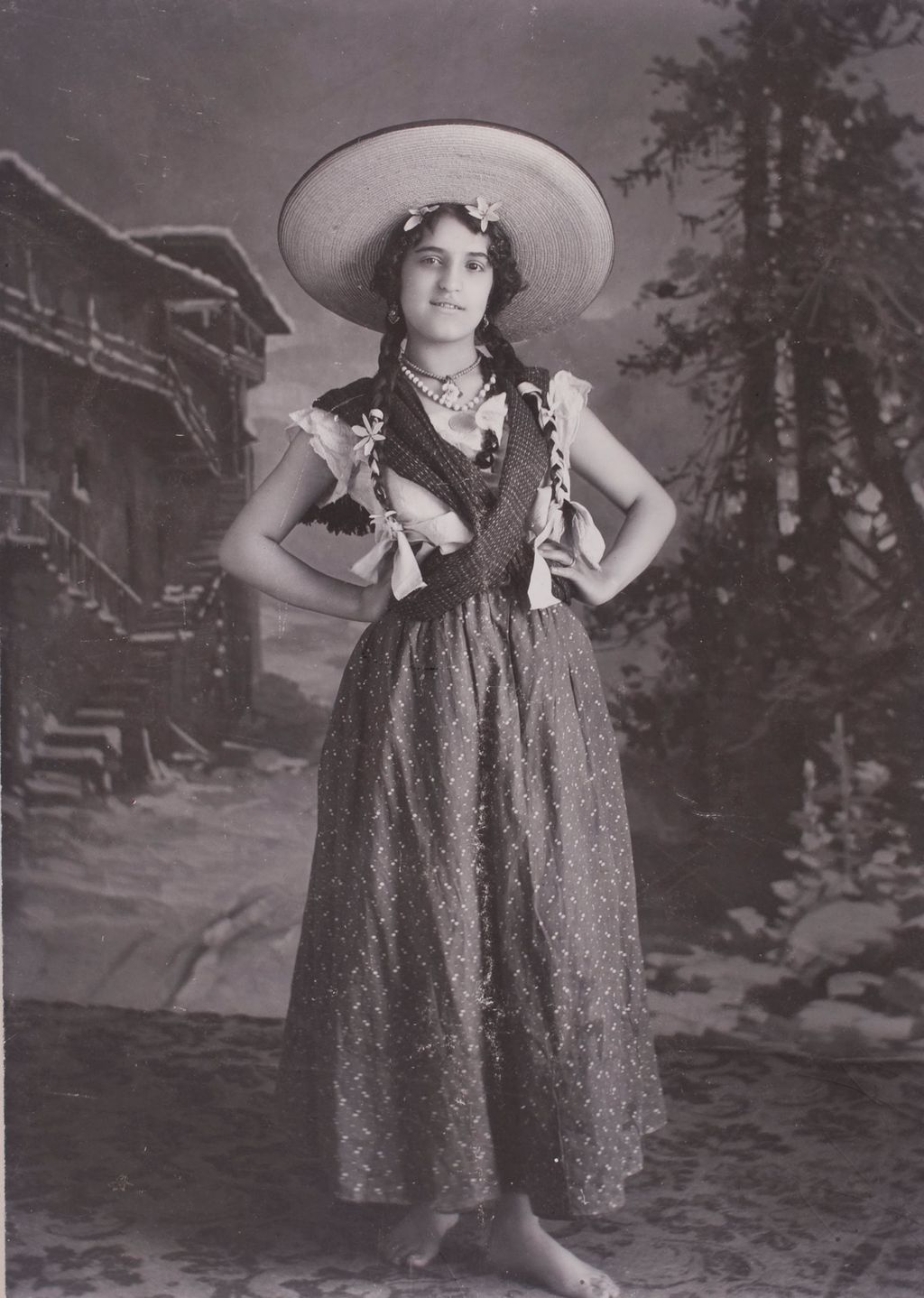
Matilde’s family connected this household to photography before Frida began working in her father’s studio. The museum identifies her father, Antonio Calderón, as a photographer. Herrera’s accessible chapter reports that Matilde worked alongside Guillermo at the La Perla business and transmits Kahlo’s later recollection that her mother encouraged him towards photography and Antonio lent him a camera. These accounts make Matilde an active participant in the family’s work, though neither supplies a contemporary employment record or resolves exactly how Guillermo learned the craft. [1] [2] [5] [3]
Watch: Frida Kahlo
Five perspectives to view here alongside the article.
Frida Kahlo’s The Two Fridas: Great Art Explained
A focused visual introduction to the painting and its context.
Work and Home in Coyoacán
Guillermo was a professional photographer with a career beyond the family portraits for which he is now remembered. UNAM’s Archivo Fotográfico Manuel Toussaint describes his commercial and architectural work, including a federal commission to photograph temples in 1904; its collection holds hundreds of his prints. That year also appears in the Museo chronology as the time the family house was built and occupied in Coyoacán. The archive itself cautions that accounts differ over whether he first learned photography from his father in Germany or from his father-in-law in Mexico. [3] [1]
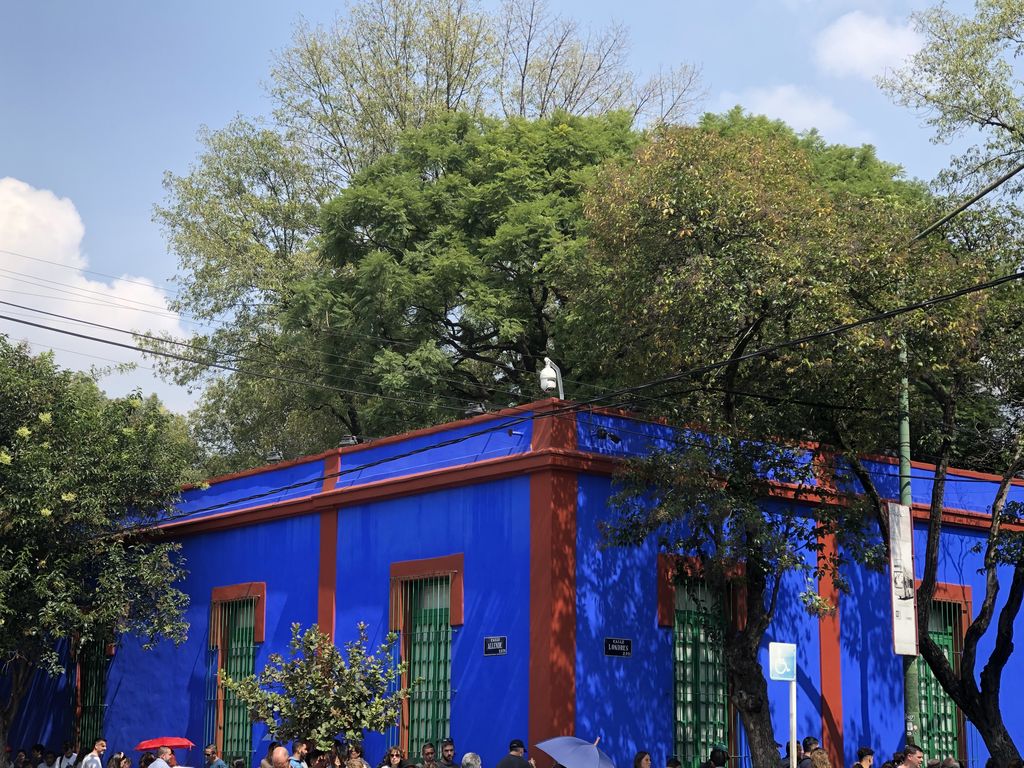
The home on Londres at Allende was therefore part of a working household, not simply the museum it later became. The sources establish the family’s residence and Guillermo’s photographic practice, but not every detail of the building’s financing or later mortgages. Those questions belong to the fuller history of Casa Azul rather than a childhood narrative that turns the house into a timeless stage set. [1] [2]
The museum chronology describes Kahlo recording entries and exits at a lumberyard during her school years and learning to colour photographs with a brush in Guillermo’s studio. A V&A account of the family photographic archive adds the more tangible work of retouching glass plates and sometimes assisting in the darkroom. These accounts show her contact with image-making as a material practice; the V&A’s proposed influence on later self-portraits is a curatorial interpretation, not proof that one studio task caused all their compositional choices. [1] [16]
Illness, Play and Remembered Childhood
The Museo chronology dates Kahlo’s bout of polio to about 1913, when she was six, and says Guillermo encouraged her to exercise afterwards. The separate museum essay specifies activities such as swimming and cycling; Herrera’s accessible childhood chapter also transmits later recollections of sport and the teasing she encountered because of her thinner right leg. These records supply an outline and reported memories of a formative episode, not a childhood clinical chart or a retrospective medical diagnosis. [1] [2] [5]
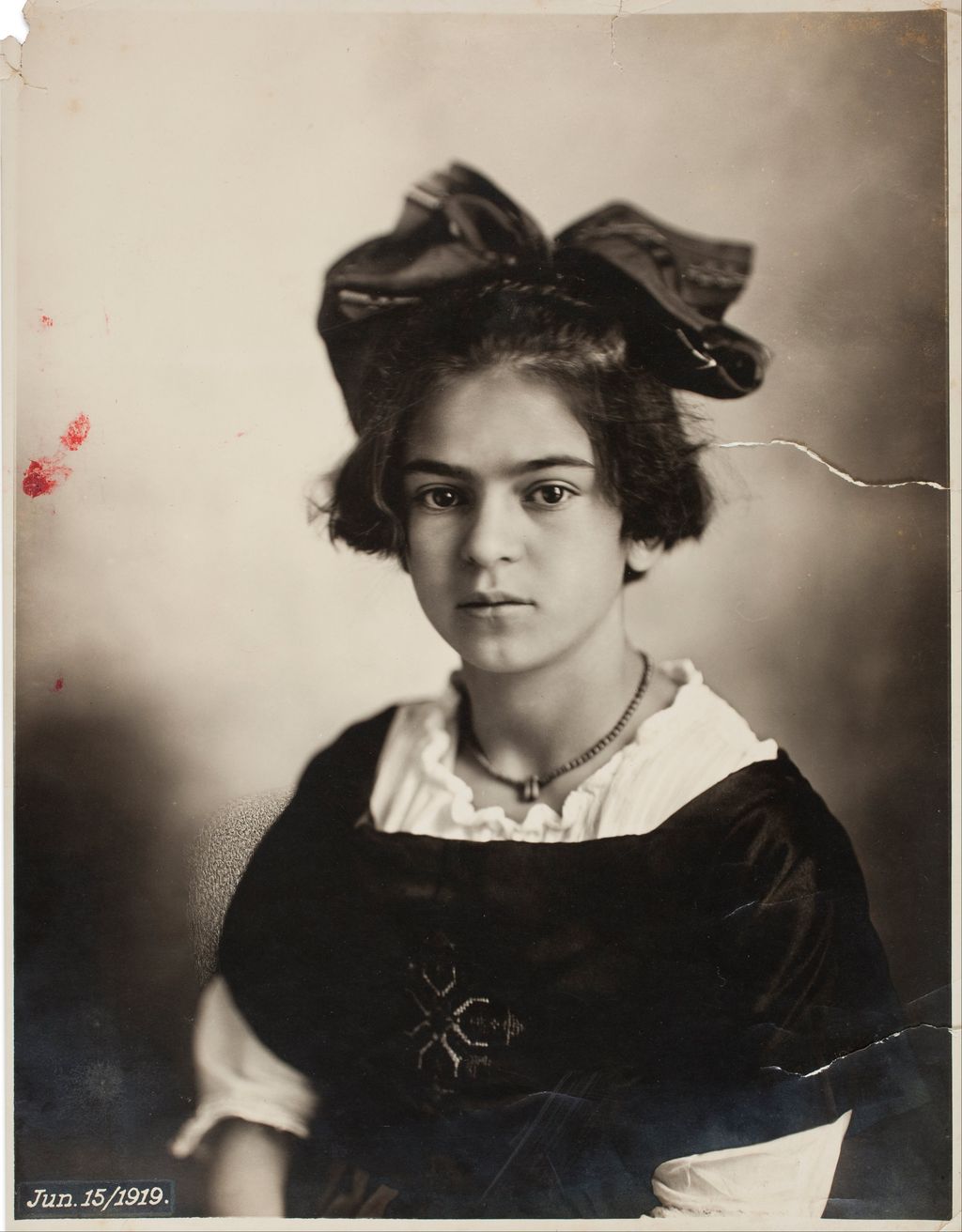
Kahlo’s childhood was not only a prelude to pain. Herrera reproduces a passage from her later diary recalling an imaginary companion reached through a drawn doorway on the bedroom window; the story is compelling because it shows how the adult artist remembered solitude and imaginative play. The passage reaches us through Herrera’s book, and it cannot tell us exactly how often the child played this way or what every part of the memory meant. Neither should later paintings be treated as photographs of an inward childhood that nobody directly witnessed. [5]
Herrera also relays the painter Aurora Reyes’s recollection of children mocking Kahlo’s leg, alongside Kahlo’s own retrospective description of how the teasing came to matter to her. Those voices give the story a social dimension absent from a bare diagnosis. They do not justify a single psychological formula—such as “polio made her solitary”—for a childhood that also involved sisters, movement through Coyoacán, study and the practical demands of a working home. [5] [1]
The Mexican Revolution formed the wider environment of these years, though it is tempting to make every childhood anecdote into an eyewitness political episode. Herrera’s excerpt passes on a later diary memory of Matilde helping wounded people during the conflict, but the diary original and Herrera’s underlying notes are not available in the cited excerpt. If recalled at all, this is Kahlo’s retrospective family memory, not a verified account of a precisely dated battle outside the house. [5]
A School Beyond the Household
Kahlo entered the Escuela Nacional Preparatoria in 1922 with the possibility of studying medicine ahead of her, according to the Museo chronology. Women were a small minority: the museum and Herrera both give about thirty-five among roughly two thousand students, while other accounts vary by one and the original enrolment roll has not been inspected. “One of roughly three dozen female students” conveys the unusual educational setting more honestly than an exact figure presented as though copied from the school register. [1] [2] [5]
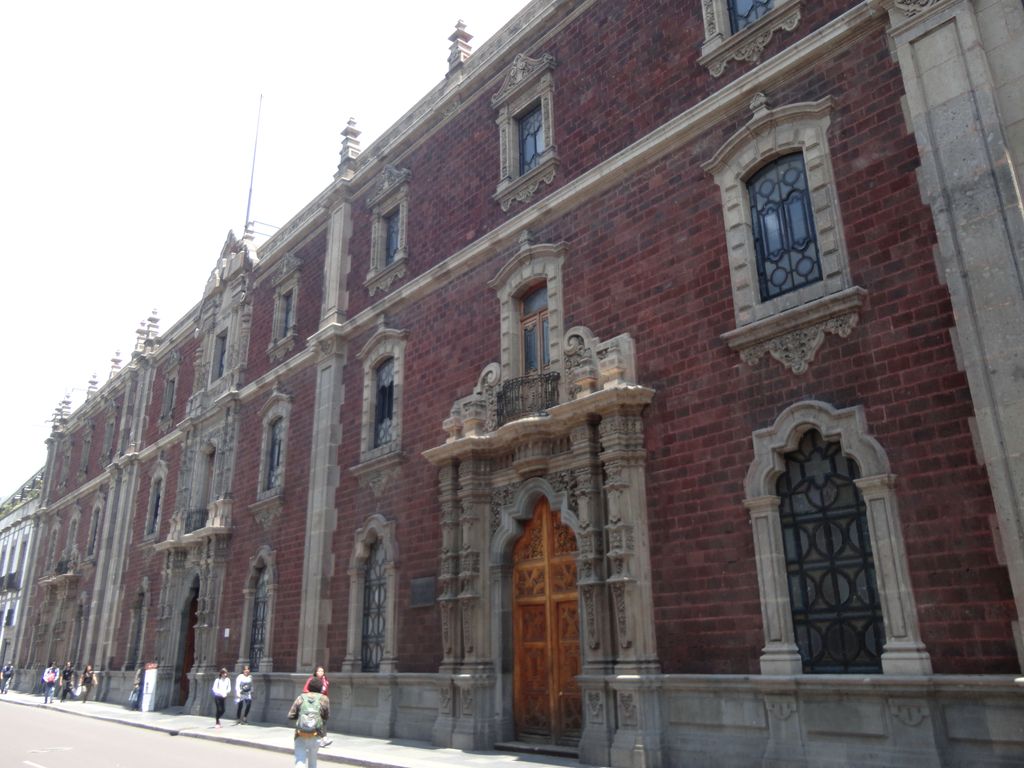
The school offered more than preparation for a profession. Herrera’s accessible chapter describes a campus shaped by debate over Mexico’s post-revolutionary culture, educational reform and differing political commitments. This broader setting helps explain why Kahlo’s school years placed her among intellectually active young people, though the chapter’s scene-setting and named anecdotes are biographical synthesis rather than independently checked school records. A UNAM historical-archive report confirms that records including Kahlo’s grades survive; the records themselves have not been read here. [5] [7]
The museum places Kahlo with Los Cachuchas in 1923, a circle of nine students including Alejandro Gómez Arias and Carmen Jaime. Their interests crossed literature, politics, conversation and youthful humour, giving her companions outside the family and a relationship with Gómez Arias that would remain significant through the following years. The sources support the group and its place in her school life; particular prank stories and claims about exactly where every girl could stand during recess need firmer contemporary evidence before they become the article’s texture. [1] [2]
The chronology also says Matilde kept Kahlo from school for a time in 1924 amid political unrest. Herrera speculates that Matilde may have objected to sending a daughter into a male-dominated environment, but that inference is not a documented statement of her motive. A specific interruption should not be enlarged into a permanent ban on Frida’s education or a complete verdict on mother and daughter. [1] [5]
Kahlo’s school ambitions and work for the household belonged to the same young life. The museum’s entries connect her to the lumberyard and to the colouring of photographs, while her father’s commissions and Matilde’s reported commercial work show a family sustained by several forms of labour. A portrait of these years that shows only the spirited pupil misses the economic and domestic setting in which she studied. [1] [3] [5]
The 1925 Accident as a Family Turning Point
On 17 September 1925, a bus collision injured Kahlo while she was travelling with Gómez Arias. This event has its own place in the cluster’s account of the accident and her health; here its importance is how a school-age life was interrupted and how relatives responded. The Museo chronology says her elder sister Matilde visited her during hospitalisation and that her parents later supported the beginning of her painting with colours and an adapted easel. [1]
Those details show practical family involvement without making her art the automatic product of injury. Kahlo had already encountered image-making through Guillermo’s photographic studio, and the account of her education shows ambitions that preceded convalescence. The accident changed the conditions in which she lived and worked; it did not erase the school, household and social world that came before it. [1] [3]
Guillermo continued to make family images, too. The V&A identifies a photograph of the Kahlo-Calderón family dated 7 February 1926, several months after the collision. The dated frame records family photography but cannot disclose how every sitter felt. [16]
What the Later Letters Reveal
Kahlo’s letters to her mother from adult travels offer a different kind of evidence from childhood biography. In a complete Spanish letter catalogued 10 November 1930 by the National Museum of Women in the Arts, she asks whether Guillermo has work, offers to send financial help, wants news of Cristina and Isolda, and says that what she writes to Matilde should be passed to her father. This is direct evidence of a family managing distance, employment and care together, not a memory of childhood. The facsimile labels say 9 November while the transcription and catalogue say 10; they cannot establish an exact travel day. [17]
Another complete Spanish letter, catalogued 21 November 1930, addresses Matilde warmly, asks for news from Guillermo, and moves among references to Cristina, her sister Matilde and her niece Isolda. Its own wording about a Sunday does not fit its catalogue date, so it should not be used to place a family outing on a precise day. The letter nevertheless reinforces the mixture of affection and practical concern in this adult exchange. [8]
Her long letter of 18 December 1931 opens with the arrival of messages from Cristina, Guillermo, Matilde and Adriana. Later she remembers Isolda while playing with another child, says she has wanted to write to Cristina and her father, and ends with further family greetings. These details make the separation of a New York stay tangible: news travelled through several relatives, and her mother was both a correspondent and a channel to the others. Adult correspondence cannot settle how each relationship felt in childhood. [9]
In another complete letter, written on 8 January 1932, Kahlo again asks after family members and requests a photograph of Isolda in regional dress. The request is a small but revealing combination of kinship, clothing and image-making: a niece was someone she wanted to see from afar, not just a name in a genealogy. The letter also concerns travel, money and illness, subjects best developed on their own pages rather than imported wholesale into a childhood account. [10]
The museum’s Mamacita Linda exhibition drew on letters to emphasise affection between Kahlo and her mother in Matilde’s final years. A separate museum essay on Guillermo’s letters from 1932–33 describes paternal concern but notes that Kahlo’s replies to that particular sequence are missing. It also quotes his criticism of her painting in 1933; the precise work he meant is not established in the source, and a psychological effect cannot be read directly from the criticism. These selections resist both a simplistic “cold mother, loving father” division and an entirely indulgent portrait of Guillermo. [11] [12]
Cristina appears in still another small correspondence trail. Three short letters from Ella Wolfe held by the National Museum of Women in the Arts show her asking Cristina about Frida or suggesting that Cristina write on Frida’s behalf; two have no secure year and a third refers to an unidentified enclosure. They establish Cristina’s role as an adult contact and intermediary, but do not warrant a larger claim about childhood closeness or the content of the lost enclosure. [13]
Family as a Subject of Art
Kahlo later made ancestry visible in My Grandparents, My Parents, and I (1936). The Museum of Modern Art describes the family tree joining paternal German and maternal Mexican lines through a painted young Frida. It is an artist’s arrangement of identity and descent, not a civil register that can settle disputed births or every claim about ethnicity; MoMA’s comparison with the contemporary Nuremberg laws is a curatorial interpretation that should be identified as such. [14]
An earlier portrait gives a more direct example of an artwork moving within the family. Christie's catalogue records that Kahlo gave her 1928 Portrait of Cristina, My Sister to Cristina and that it subsequently passed to Cristina’s daughter Isolda. The gift and descent document an artistic and familial exchange. The catalogue’s later suggestion that the portrait foreshadows Diego Rivera’s affair with Cristina is a retrospective reading, not evidence that Kahlo intended a prophecy in 1928. [6]
My Grandparents, My Parents, and I has its own object study. Here the two works show that family was not merely the background to Kahlo’s career. It supplied people she painted, people who received and preserved paintings, and relationships she later revisited in images as well as letters. [14] [6]
A Family History with Open Edges
The strongest account of Kahlo’s early years holds several things together: a German-born photographer with a documented professional archive, a Mexican mother whose practical work deserves more attention, a household spanning two marriages, childhood illness and play, a demanding school, and correspondence that continued across distance. No single later self-portrait or family reminiscence replaces those different kinds of evidence. The remaining uncertainty over an infant brother, precise maternal ancestry, the original school roll and some reported childhood experiences is a reason for careful wording, not for flattening the story to its most familiar anecdotes. [1] [3] [4] [5]
The cited early chapters of Herrera’s Frida contribute reported memories and school context; the complete biography and its numbered source notes remain beyond this account. The full photographic book by Pablo Ortiz Monasterio and Héctor Jaimes’s edition of fifty-four letters also remain unread; the latter’s publisher describes a significant group written from Mexico before 1930. Original vital records, the school archive and the complete underlying diary could sharpen those particular claims. [5] [7] [15]
Kahlo’s family was a working, changing group rather than a fixed cast assigned roles in advance of her art. Her letters show ongoing dependence, affection and practical conversation in adulthood, while the school and studio records show a young woman making choices within—and sometimes beyond—the household. That is a fuller beginning for her story than either an idealised childhood or one explained entirely by later suffering. [1] [3] [8] [9] [10]
Related Reading
Casa Azul follows the family house beyond childhood. My Grandparents, My Parents, and I examines Kahlo’s later family tree, while Health and Disability develops the medical history kept brief here. Portrait of Isolda Pinedo Kahlo follows her niece as a separate artistic subject.
Discussion
Use the cited evidence and your own close looking to explain your view. The prompts below are starting points, not fixed interpretations.
Reader Insights
How do the records of Guillermo’s two marriages change the shape of Kahlo’s family story?
What can later letters tell us about adult family ties, and what can they not prove about childhood?
How did photography and school place Kahlo in working and intellectual worlds beyond the home?
Join the Conversation
Which reading best fits the evidence, and where does uncertainty remain?
References
- Museo Frida Kahlo, Spanish artist chronology, entries for 1890–1926, especially family births, 1904 home and commission, 1913 polio, 1922–24 school and work, and the 1925–26 accident and early painting. Institutional chronology, not original civil or school records. View source text.
- Museo Frida Kahlo, Biografías Frida Kahlo, PDF pp. 1, 4–6. Separate museum essay with Matilde, infant-son and school details; its Guillermo birth and first-marriage dates conflict with other evidence and are not adopted. View source text.
- UNAM, Archivo Fotográfico Manuel Toussaint, Guillermo Kahlo collection, collection description, lines 24–60 and 69–93: name, Pforzheim birth, 1890 emigration, commissions and uncertainty over photographic training. Original prints are not reproduced. View source text.
- Peter Krieger, review in Anales del Instituto de Investigaciones Estéticas 29, no. 90 (2007), lines 43–55, reporting Franger and Huhle’s archival genealogy. The German monograph and original registers were not read here. View source text.
- Hayden Herrera, Frida, official Penguin Spanish-edition excerpt, displayed chapters 1–3, especially lines 481–492, 518–553 and 595–645. Only the accessible excerpt was read; the full biography and numbered source notes were not. Older paternal genealogy in this excerpt is contradicted by later archival research. View source text.
- Christie’s, Abby McEwen, Portrait of Cristina, My Sister lot essay, provenance and essay lines 9–24, 61–79. The family gift and subsequent descent are distinct from the essay’s retrospective interpretation and its references to books unread here. View source text.
- UNAM, Gaceta UNAM, 20 January 2020, PDF p. 17, lines 1201–1216, report of National Preparatory School archive records including Kahlo’s grades; the original record was not inspected. View source text.
- National Museum of Women in the Arts, Kahlo to Matilde Calderón de Kahlo, catalogued 21 November 1930, complete two-page Spanish transcription, lines 140–205. The weekday wording conflicts with the catalogue date; no letter image is reproduced. View source text.
- National Museum of Women in the Arts, Kahlo to Matilde Calderón de Kahlo, 18 December 1931, complete eight-page Spanish transcription, lines 155–390, especially 166–175, 248–259 and 352–390. No facsimile is reproduced. View source text.
- National Museum of Women in the Arts, Kahlo to Matilde Calderón de Kahlo, 8 January 1932, complete nine-page Spanish transcription, lines 161–385. No facsimile is reproduced. View source text.
- National Museum of Women in the Arts, Mamacita Linda exhibition, lines 103–126, institutional selection and interpretation of later mother-daughter correspondence. View source text.
- National Museum of Women in the Arts, “Dearest Frieducha!” essay on Guillermo’s letters, lines 103–145 and 183–190, selected interpretation of 1932–33 letters, note that Frida’s replies to the set are absent, and quoted paternal criticism of painting. Individual originals were not read here. View source text.
- National Museum of Women in the Arts, Ella Wolfe to Frida, 15 March, year unknown, two-page transcription, lines 139–187; Wolfe to Cristina, undated, lines 136–160; and Wolfe to Frida, 21 February 1944, lines 137–157. All three short transcriptions read; absent dates and unidentified enclosure remain so. View source text 1; View source text 2; View source text 3.
- Museum of Modern Art, My Grandparents, My Parents, and I object record, lines 61–102, 1936 family-tree painting and curatorial interpretation. Not a vital record or reproduction licence. View source text.
- Siglo XXI Editores, Héctor Jaimes, Tu hija Frida, publisher description, lines 128–136, edition scope only. Complete fifty-four-letter volume unread. View source text.
- Victoria and Albert Museum, “Photographing Frida Kahlo”, lines 29–62, especially 39–50 on Guillermo’s work and Kahlo’s glass-plate retouching, and 57–62 on the 7 February 1926 family photograph. The V&A’s painted-portrait influence argument is curatorial interpretation; no family image is reproduced here. View source text.
- National Museum of Women in the Arts, Kahlo to Matilde Calderón de Kahlo, catalogued 10 November 1930, complete six-page Spanish transcription, lines 149–320, especially 284–320. Facsimile labels say 9 November; no facsimile is reproduced. View source text.
Image Credits
- Photo: A01655306 / Wikimedia Commons, CC BY-SA 4.0. Resized to 1024 px wide; no crop. Source record.
- Photo: Juan Carlos Fonseca Mata / Wikimedia Commons, CC BY-SA 4.0. Resized to 1024 px wide; no crop. Source record.
- Guillermo Kahlo, 1919; Museo Frida Kahlo / Google Art Project. Public domain. Source: Wikimedia Commons. Resized to 1024 px wide; no crop. Source record.
- Guillermo Kahlo, 1897; Museo Frida Kahlo / Google Art Project. Public domain. Source: Wikimedia Commons. Resized to 1024 px wide; no crop. Source record.
