


 by Tom Gurney
Tom Gurney BSc (Hons) is an art history expert with over 20 years experience
Page created on March 2, 2018 / Page updated on October 6, 2026
Email: tomgurney1@gmail.com / Phone: +44 7429 011000
Introduction
Frida Kahlo lived among dogs, monkeys, birds and garden plants, but she did not simply copy her household into paintings. A ribbon can join a person and a monkey, a deer can bear her face, and roots can appear to pass through a reclining body. Across these works, nature is at once part of a lived environment and a set of forms she rearranged for a particular picture. [1] [5] [12] [14]
The same animal does not mean the same thing each time it appears. A named companion in one portrait differs from a bird in a still life or a hybrid creature in a forest. Looking first at the documented object, and then at the interpretations offered by museums and scholars, allows those differences to remain visible. [5] [7] [11] [12]
At a Glance
- Casa Azul companions: The Museo Frida Kahlo names Bonito the parakeet, Fulang-Chang the monkey, Granizo the deer, two dogs and other animals in its account of the 1941 garden. [1]
- Named animal: MoMA identifies Fulang-Chang in a 1937 self-portrait later joined to a separate mirror. [5]
- Botanical range: A 2015 New York Botanical Garden exhibition assembled fourteen Kahlo works and works on paper around plants and the natural world. [3]
- Making and meaning: Technical study found that Kahlo added the embryo-like element in Sun and Life late in the painting process; it did not establish why. [16]
Contents
- Introduction
- The Living World at Casa Azul
- A Monkey, a Ribbon and a Mirror
- Monkeys and Parrots Are Not One Picture
- The Forest and the Wounded Deer
- Bodies That Become Plants
- Looking Without a Fixed Key
- Related Reading
The Living World at Casa Azul
The Museo Frida Kahlo records that artist Emmy Lou Packard walked through the Casa Azul gardens with Kahlo in 1941 while a lively group of animals lived there. Its list includes Bonito, the dogs Capulina and Señor Xólotl, the monkey Fulang-Chang, the young deer Granizo, cats, tortoises, ducks and geese. The museum also preserves Kahlo’s drawing of the house, made for a visitor around 1940, in which she included the animals that accompanied her. [1]
These records show that the creatures were not imagined additions to her surroundings. They do not, however, establish that every painted parrot was Bonito or that every monkey belonged to one named individual. Even the garden cannot be treated as a fixed backdrop: the household property and studio changed, and the plants visible at the museum today need not match those growing there at a particular moment in the 1930s or 1940s. [1] [2] [4]
The New York Botanical Garden confronted that distinction when it created Frida Kahlo: Art, Garden, Life in 2015. Its Bronx installation drew on photographs of the historic garden, plants seen in Kahlo’s work and wider Mexican horticulture to evoke Casa Azul; it did not claim to move the original garden into a conservatory. The exhibition’s art gallery, curated by Adriana Zavala, selected fourteen paintings and works on paper to demonstrate that plants were integral to Kahlo’s artistic choices, not merely agreeable scenery behind a better-known life story. [3] [4]
Zavala later said that she wanted viewers to move beyond sensational biography and recognise Kahlo as a careful observer of the natural world. She also reported finding books on science, medicine and medicinal plants in the artist’s house. Those observations can inform the way we look at Kahlo’s pictures, though they do not prove that a specific flower was copied from a particular volume or that every plant belongs to a botanical diagram. [4]
Watch: Frida Kahlo
Five perspectives to view here alongside the article.
Frida Kahlo’s The Two Fridas: Great Art Explained
A focused visual introduction to the painting and its context.
A Monkey, a Ribbon and a Mirror
In Fulang-Chang and I, Kahlo places herself beside the spider monkey named in the title. A pink ribbon crosses the painted space between them, while their outward-facing eyes make the portrait feel less like a person posed with a decorative accessory than a meeting of two presences. The Museum of Modern Art dates the oil-on-board picture to 1937, but the complete work includes a separate mirror and painted frames added after 1939. [5]
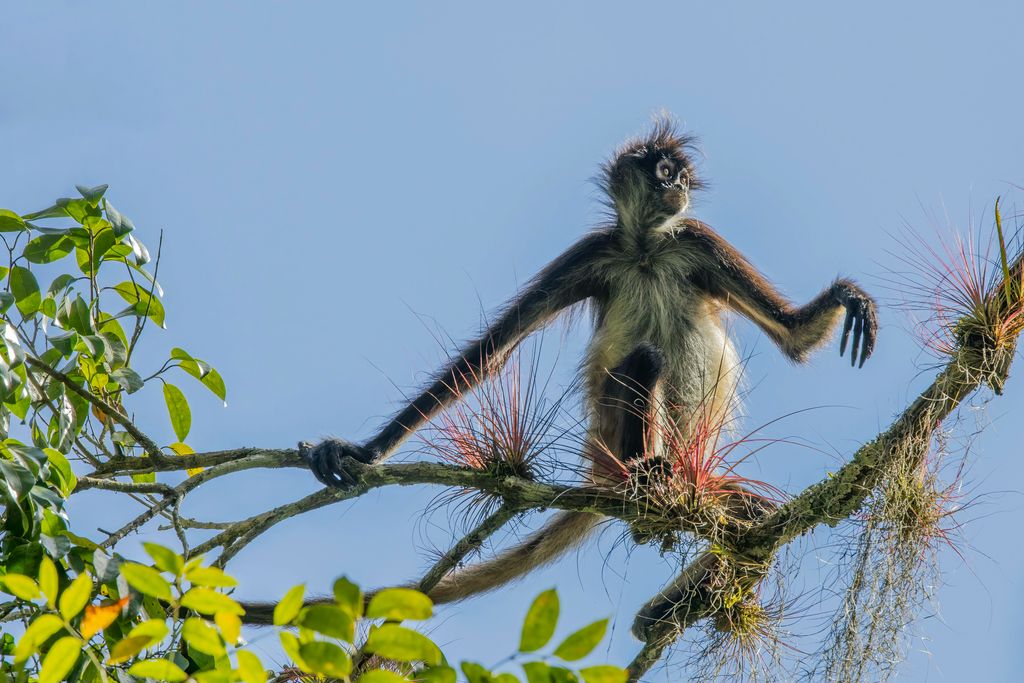
The mirror matters because it changed the picture’s use. MoMA curator Veronica Roberts reports from the museum’s files that Kahlo combined it with the portrait when she gave the ensemble to her New York friend Mary Sklar, after the painting had appeared at the Julien Levy Gallery in 1938. Roberts relates Kahlo’s explanation that the mirror would let the friends remain together; that gift history makes human friendship, as well as companionship with an animal, part of the work’s later life. [6]
Monkeys in Kahlo’s portraits have often been described as substitutes for the children she could not have. Roberts does not dismiss that possibility, but she also draws attention to humour, shared hair and the contradictory associations a monkey could carry. In this particular composition, the ribbon, the two faces and the later mirror offer more to consider than one biographical label. [6]
Art historian Yaxkin Melchy proposes a further reading in his study of this picture and a different 1945 self-portrait. He notices that Fulang-Chang and I names the monkey first, that the bodies and hair are formally paired, and that the animal seems to meet the viewer rather than disappear behind the human subject. For Melchy, Kahlo’s pictures can be understood as relationships among species rather than as portraits in which animals serve only the painter’s story. [7]
That reading is interpretive, not a recovered statement of Kahlo’s intention. Melchy connects the portraits with ideas of nahualli, but the Spanish-language cultural history he cites describes varied traditions of linked human and nonhuman beings, sometimes animal and sometimes plant or other forms. Roberto Martínez González’s study does not name Kahlo or identify Fulang-Chang as her personal nahualli, so the historical concept should not become an automatic “spirit animal” label for the painting. [7] [8]
Monkeys and Parrots Are Not One Picture
Kahlo returned to close portrait groupings of people, animals and vegetation, but their similar English titles can conceal different works. Her 1938 Self-Portrait with Monkey in Buffalo has its own documented commission history, while Me and My Parrots of 1941 is a separate private painting. The 1942 Self-Portrait with Monkey and Parrot belongs to MALBA in Buenos Aires, and a 1945 Self-Portrait with Small Monkey belongs to the Museo Dolores Olmedo; a different 1945 monkey portrait is held by the Museo Robert Brady. [9] [10] [11]
The 1941 parrot portrait allows a compact comparison with Fulang-Chang and I. Kahlo sits among birds rather than next to a single monkey, and one parrot turns outward toward the viewer. In a later Whitney Museum audio commentary, the muralist Judith Baca noticed a resemblance between that bird’s gaze and Kahlo’s own; the observation is a modern artist’s response, not a symbolic explanation left by Kahlo. [9]
MALBA’s 1942 portrait gathers a monkey, parrot and densely arranged dry-looking plants around Kahlo’s upper body. James Oles, writing for the museum, likens the plants to bromeliad inflorescences and suggests that they might have come from a garden or market. His language is deliberately tentative: the resemblance is worth noticing, but it does not identify the plant species or recover where Kahlo obtained it. [10]
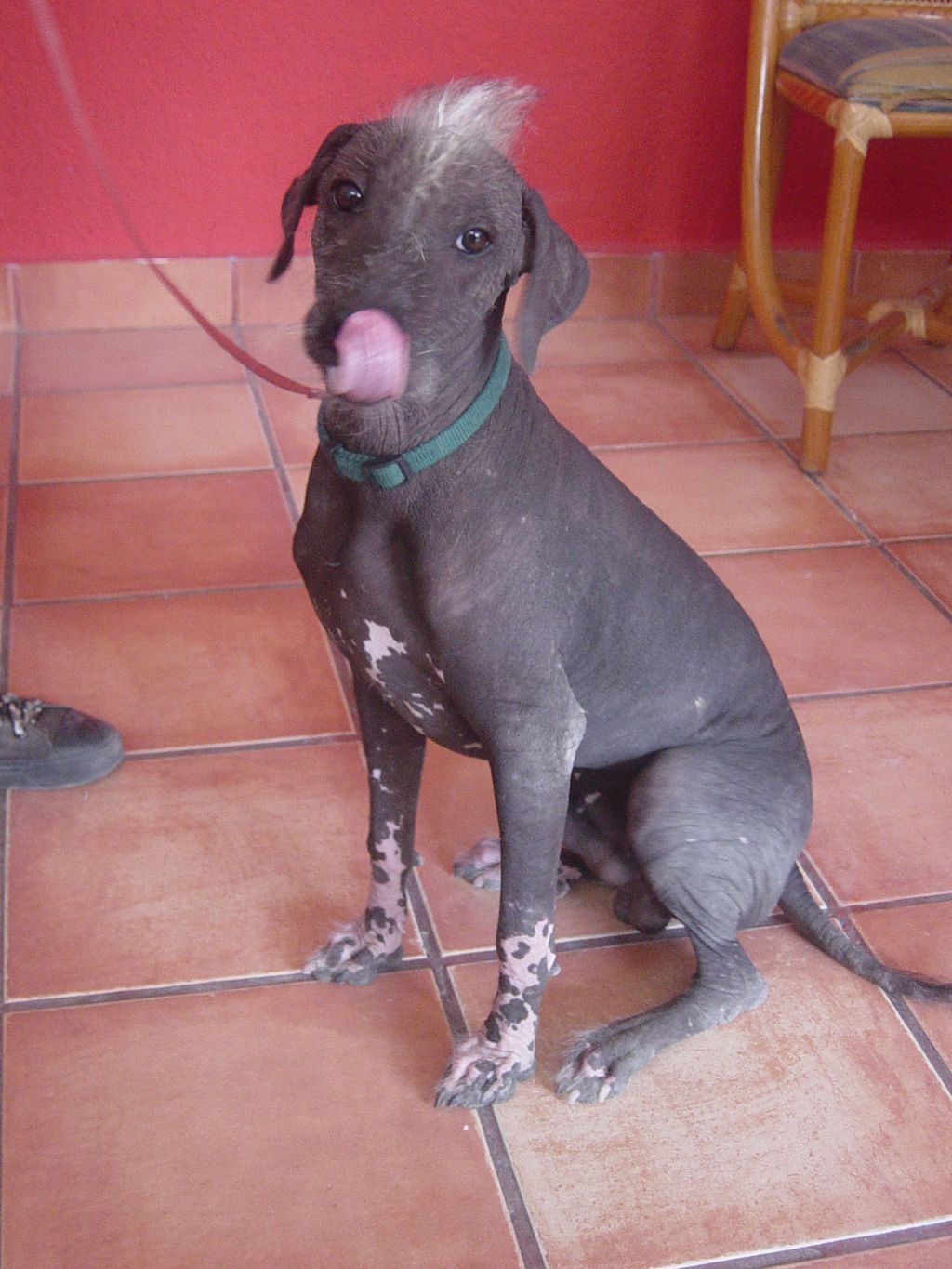
The 1945 Olmedo picture changes the company again. A monkey, Mexican hairless dog and small ceramic figure surround Kahlo, and a gold ribbon links their spaces; the official catalogue records the work as Autorretrato con changuito, oil on Masonite, 56 by 41.5 centimetres. Melchy reads the grouping as a visual community among living beings, while the identity of the individual monkey and the precise origin of the ceramic figure remain uncertain. The Brady painting of the same year is another work, not a second title for this composition. [7] [11]
Birds also move beyond portraits into Kahlo’s later still lifes. The Harry Ransom Center’s Still Life with Parrot and Fruit places a green parrot above cut watermelon and other fruit, while the separate 1951 Still Life with Parrot and Flag brings a bird and a Mexican flag into a crowded arrangement. The New York Botanical Garden’s checklist lists both paintings independently, with different supports, dimensions and lenders; the bird in one must not be silently transferred to the other. [3] [17]
Neither parrot is simply another household portrait. In these paintings the bird participates in a composition of food, colour and, in the flag picture, national imagery, whereas the 1941 Me and My Parrots gathers living birds around Kahlo’s own seated figure. The three works allow a comparison across genres without asserting that any depicted parrot is the named Bonito or that every bright fruit has one symbolic meaning. [1] [9] [17]
The Forest and the Wounded Deer
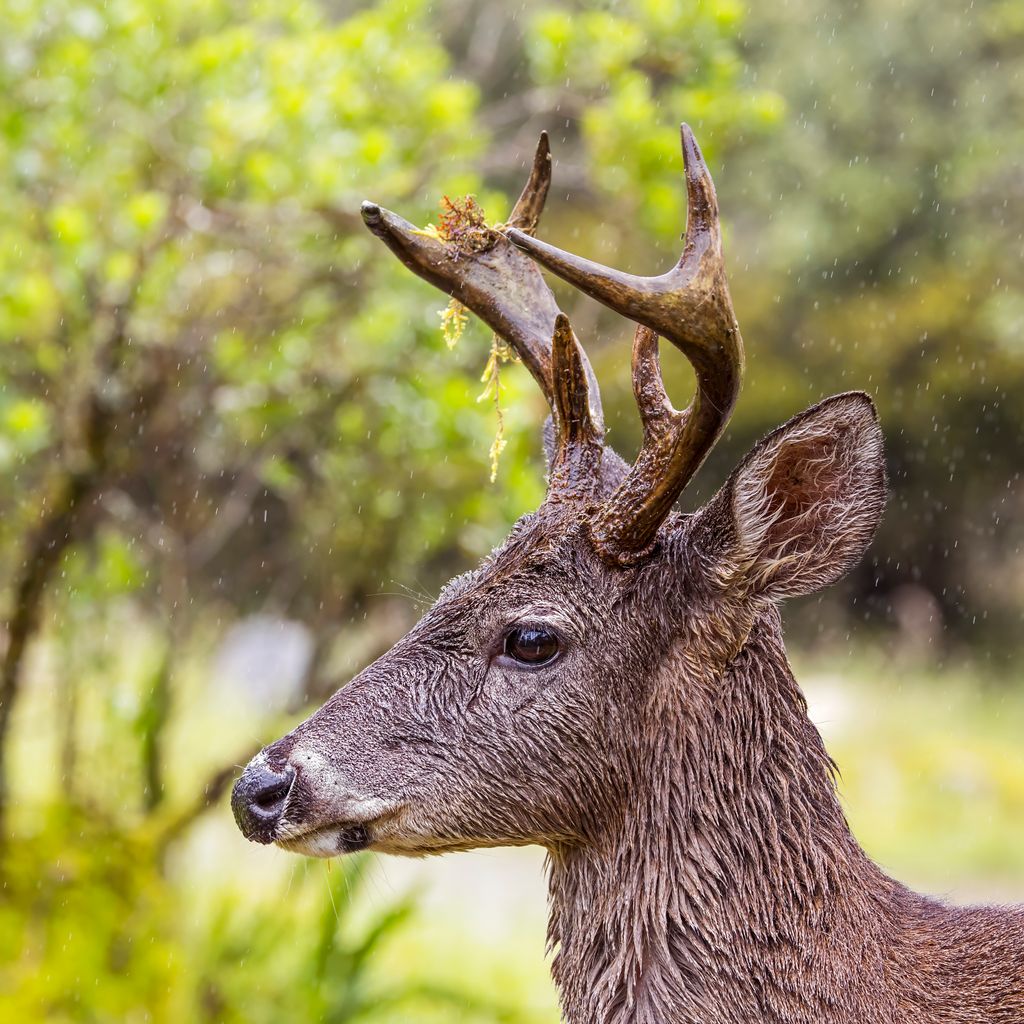
The Wounded Deer presents a different relationship between person and animal. Instead of placing a companion near Kahlo, it joins her head to a deer’s body in a forest crossed by arrows; the surrounding trees, broken branch and distant water give the hybrid figure a setting of its own. The picture can invite thoughts about injury and vulnerability, but its specific making chronology prevents an often repeated explanation. [12]
An official presentation of Kahlo’s accompanying Spanish Corrido para A y L states that she painted the deer in April 1946 and gave it to Lina and Arcady Boytler on 3 May. Her letter of 30 June places the relevant spinal operation only about three weeks before that later date. The painting therefore cannot have been made in reaction to the outcome of the June surgery, although earlier physical difficulty and an uncertain future could still matter to an interpretation. [12] [13]
Granizo appears in the museum’s account of the Casa Azul animals. Nothing in the inspected object documents or the corrido proves that this named deer modelled the painted body, however, so the connection must remain a possibility rather than an identification. The stronger contrast is formal: the monkey portraits create relations among separate figures, while the deer painting makes human and animal physically inseparable. [1] [12]
Bodies That Become Plants
Kahlo used vegetal forms to change human anatomy and pictorial space as well as to fill backgrounds. In Portrait of Luther Burbank (1931), the horticulturist’s upper body rises from a tree-like trunk with roots reaching toward a body beneath the ground. A Museo Dolores Olmedo-linked account reads the picture through cycles of nourishment and death, but it qualifies the buried figure as one that may represent Burbank; neither that identity nor the exact plant species can be determined simply by looking. [14]
The 1943 Roots / Raíces is less like a conventional portrait. Kahlo’s reclining figure occupies fractured volcanic ground, with green stems passing through an opening in her torso and finer red lines extending toward the terrain. The painting is oil on metal, not canvas, according to Sotheby’s 2006 object record and an earlier Museo de Arte Moderno checklist; its physical support and depicted setting should not be replaced by the more familiar idea that it is only a picture of motherhood. [15]
Sotheby’s catalogue essay proposes that Roots reverses an earlier relation in My Nurse and I: here, the figure appears to nourish vegetation or land rather than receive sustenance. Other scholars have asked whether the roots originate in the body at all or pass through it from elsewhere. These readings take the visible lines seriously, yet none is a biological description of what the painting literally shows or a final statement of Kahlo’s intention. [15]
Sun and Life (1947) pushes the plant–body comparison toward a more compressed, solar image. A red humanised sun is surrounded by opening pods, roots and an embryo-like form; different curators have read the face and vegetal forms through fertility, life cycles and even a double portrait. The Dallas Museum of Art’s technical examination adds a rarer kind of evidence: X-radiography showed that Kahlo widened some pod openings and added the embryo-like element late, over a pod that had earlier been closed. [4] [16]
That finding changes the account of how the picture was made, not the certainty of what it means. It shows that the embryo-like form was part of a revision, but it cannot tell us whether Kahlo was recalling a particular pregnancy, expressing hope, testing a composition or pursuing another idea. Alongside the already hybrid Burbank and Roots images, it shows a painter repeatedly rebuilding the boundary between body and environment rather than applying one ready-made motif. [14] [15] [16]
Looking Without a Fixed Key
The animals and plants in Kahlo’s art enter through different routes: a named pet, a painted pair of gazes, a human–deer body, a horticulturist joined to a tree, or stems spreading across volcanic ground. Her household and garden make some of those choices historically intelligible, while materials, gifts, exhibitions and technical evidence explain how particular pictures came to exist. A strong interpretation begins with those differences and says whose idea is being offered when the evidence moves from description to meaning. [1] [3] [5] [12] [14] [15] [16]
The New York Botanical Garden’s exhibition made the natural world more prominent in Kahlo’s public reception, but its reconstruction also demonstrates why historical care matters. Neither a modern garden nor a species name supplied by a later writer can stand in for the painting and its own record. Kahlo’s images are richer when companionship, Mexican cultural history, pictorial invention and later viewers’ responses are allowed to coexist without being forced into a single symbol key. [3] [4] [6] [7] [8]
Related Reading
Fulang-Chang and I examines the monkey portrait and its later mirror. The Wounded Deer follows the hybrid forest picture and its primary chronology. Roots and Sun and Life develop two different plant–body constructions, while Still Life with Parrot and Fruit and Still Life with Parrot and Flag keep the 1951 bird paintings distinct.
Discussion
Use the cited evidence and your own close looking to explain your view. The prompts below are starting points, not fixed interpretations.
Reader Insights
How does a named household animal differ from a bird or deer inside a painting?
What changes when an animal is paired with Kahlo, joined to her body or placed in a still life?
Which plant-body detail can a technical study establish, and which meanings remain interpretation?
Join the Conversation
Which reading best fits the evidence, and where does uncertainty remain?
References
- Museo Frida Kahlo, “Frida,” Spanish and English chronology, circa-1940 house plan, 1941 household animals and selected 1943 paintings. The household list does not identify every depicted animal. View source text.
- Museo Frida Kahlo, La Casa Azul: El universo íntimo de Frida Kahlo (updated June 2022), PDF pp. 2–4, house and garden changes. View source text.
- New York Botanical Garden, Frida Kahlo: Art, Garden, Life gallery press document (2015), PDF p. 3, fourteen-work botanical grouping. View source text.
- New York Botanical Garden, conservatory exhibition document (2015), PDF pp. 1–2, reconstruction method; Marjorie Howard, “Frida Kahlo’s Green Thumb,” Tufts, 4 June 2015, interview with curator Adriana Zavala. View garden document; view interview. View source text 1; View source text 2.
- Museum of Modern Art, Fulang-Chang and I, object 277.1987.a–b, current object record, lines 62–109. View museum record. View source text.
- Veronica Roberts, “A Close Look: Frida Kahlo’s Fulang-Chang and I,” MoMA, 3 December 2009, lines 7–20. View source text.
- Yaxkin Melchy, “Fulang-Chang and Frida Kahlo: An Animalist Vision on Self-identity,” Annual Review of Cultural Studies 9 (2021), pp. 97–113, especially pp. 106–111. Interpretation, not artist testimony. View article PDF. View source text.
- Roberto Martínez González, El nahualismo (UNAM, 2011), “Síntesis y conclusiones finales,” printed pp. 502–503. The cultural-history synthesis does not discuss Kahlo. View UNAM book and open chapter. View source text.
- Whitney Museum of American Art, Me and My Parrots bilingual audio transcripts from Vida Americana (2020), including Judith Baca’s commentary; the K021 object pack controls the privately held painting. View English transcript; view Spanish transcript. View source text 1; View source text 2.
- MALBA, Autorretrato con chango y loro (1942), owner record and James Oles essay; the ready K025 object pack preserves exact identity and Oles’s tentative plant comparison. View museum source. View source text.
- Fundación Casa de México en España with Museo Dolores Olmedo, Frida Kahlo: Alas para volar (2022), Autorretrato con changuito checklist and plate, printed pp. 58–60; Museo Robert Brady distinct 1945 object. View exhibition archive; view Brady record. View source text 1; View source text 2.
- Museo Frida Kahlo, 1946 The Wounded Deer chronology; INBAL, “Corrido para A y L,” PDF p. 1, on April making and 3 May delivery. View museum chronology; view primary document. View source text 1; View source text 2.
- Frida Kahlo, letter to Alejandro Gómez Arias, 30 June 1946, page 1 transcription and metadata, preserved by Museo Dolores Olmedo; chronological control in K008. View source text.
- Fundación Casa de México en España with Museo Dolores Olmedo, Portrait of Luther Burbank bilingual object text and 2022 catalogue; K062 preserves owner-linked object and photo-source controls. View museum-authored text. View source text.
- Sotheby’s, Roots / Raíces, 24 May 2006, lot 6, object details and Hayden Herrera essay; K078 records the 1967 MAM checklist and later interpretive dispute. View source text.
- Mark A. Castro and Laura Eva Hartman, “Conserving Kahlo’s ‘Sun and Life,’” Dallas Museum of Art, 25 March 2021, full technical account of infrared, X-ray and microscopy results. View source text.
- Harry Ransom Center, 1951 Still Life with Parrot and Fruit, accession 66.7, as controlled in ready K045; New York Botanical Garden, Frida Kahlo: Art, Garden, Life official artwork checklist, items 11–12, distinguishes it from the private Masonite Still Life with Parrot and Flag, controlled in ready K073. View owner finding aid; view exhibition checklist. View source text 1; View source text 2.
Image Credits
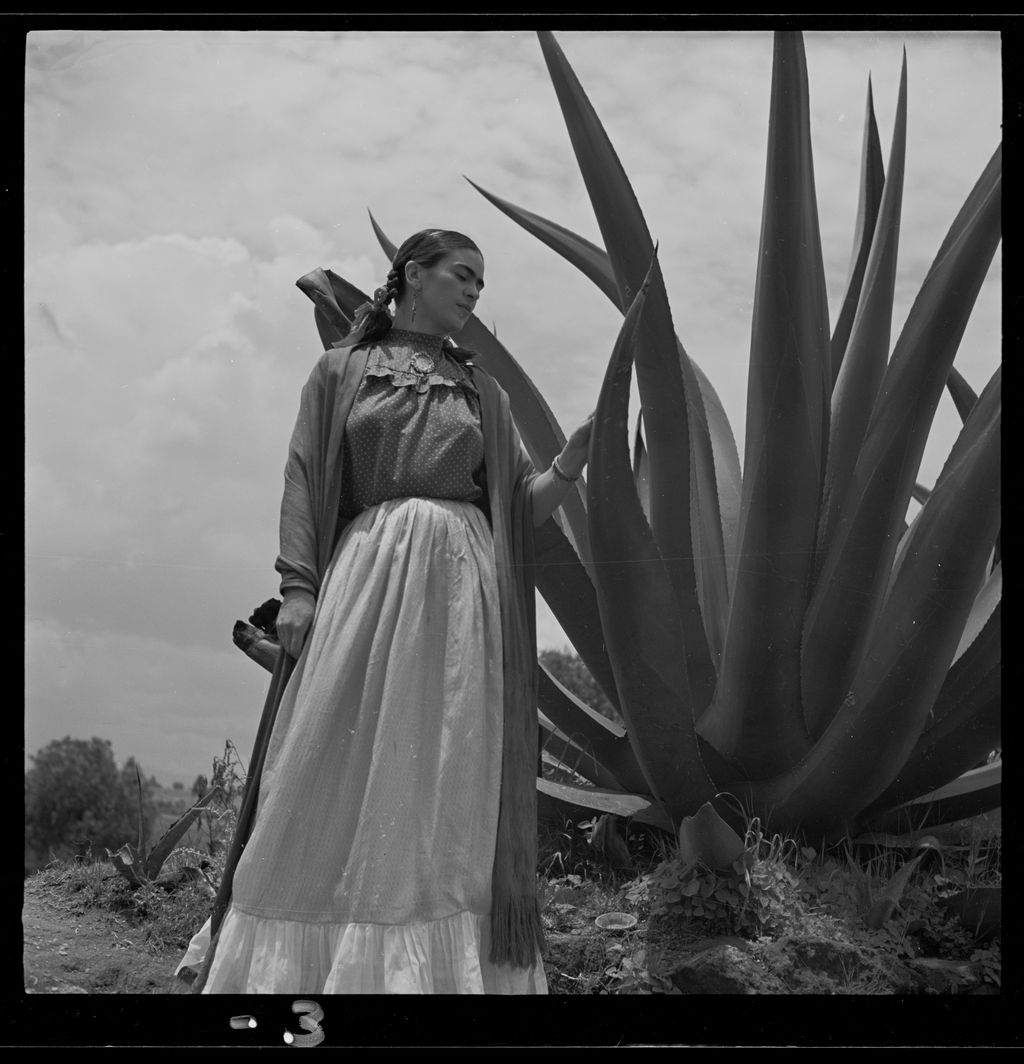
- Toni Frissell, 1937. Library of Congress, Prints & Photographs Division, Toni Frissell Photograph Collection, LC-F9-01-3707-25, no. 3; digital ID ds.05049. Source record.
- Canek (Xoloitzcuintle sitting) — Micyaotl G.T. CC BY 2.0. Resized and converted to JPEG/sRGB; no crop.
- Geoffroy's spider monkey (Ateles geoffroyi yucatanensis) Peten 2 — Charles J. Sharp / Sharp Photography. CC BY-SA 4.0. Resized and converted to JPEG/sRGB; no crop.
- White-tailed deer (Odocoileus virginianus goudotii) male head Chingaza — Charles J. Sharp / Sharp Photography. CC BY-SA 4.0. Resized and converted to JPEG/sRGB; no crop.
