


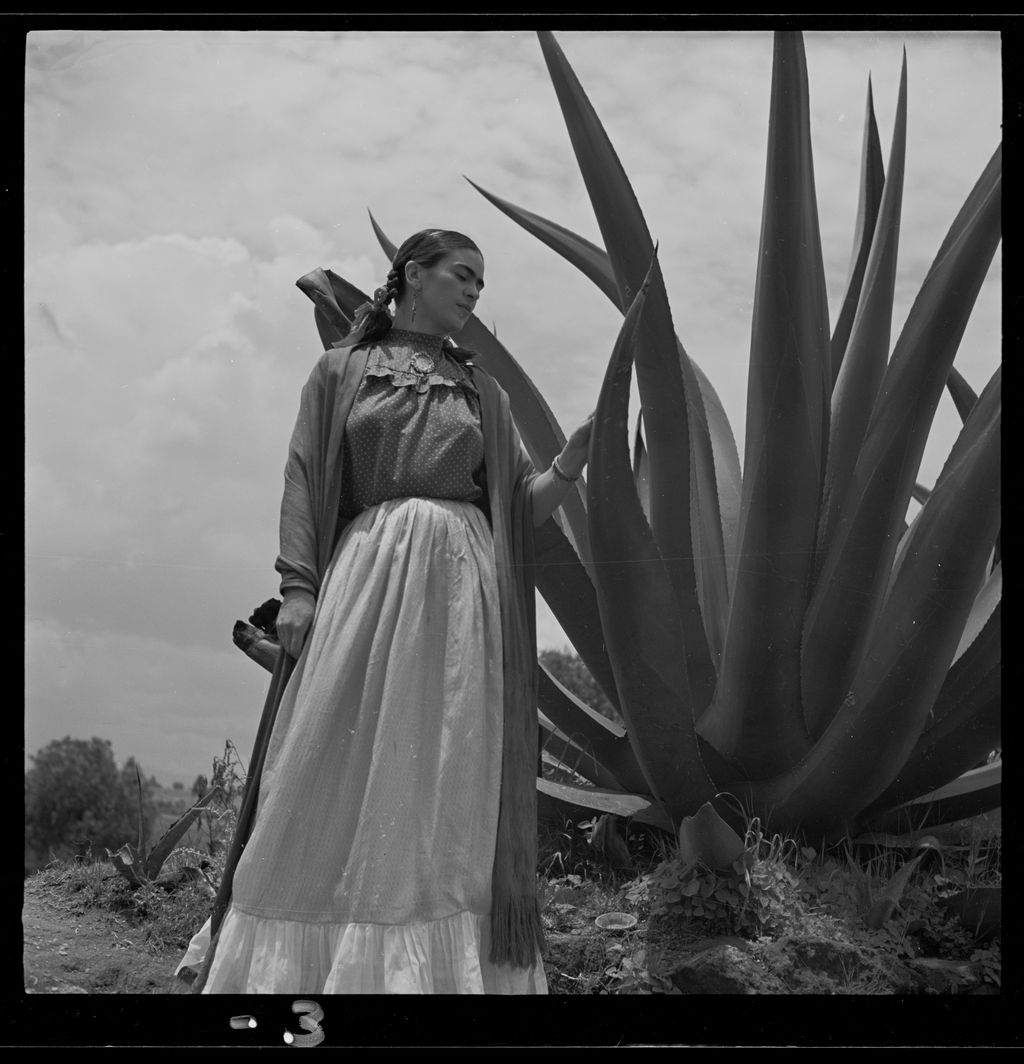
 by Tom Gurney
Tom Gurney BSc (Hons) is an art history expert with over 20 years experience
Page created on March 2, 2018 / Page updated on October 6, 2026
Email: tomgurney1@gmail.com / Phone: +44 7429 011000
Introduction
Frida Kahlo (1907–1954) made paintings in which a face, a garment, a plant or a bodily form could be both precisely described and insistently strange. Her self-portraits are central to that achievement, but they do not exhaust it: she also painted other people, still lifes, family histories and political subjects, while drawing, writing and teaching formed part of her artistic life. To approach the work only as a record of suffering is to miss how deliberately she chose its materials, scales, poses, settings and forms of address. [2] [3]
The life is indispensable, but it cannot be used as a universal key. An accident in 1925 altered Kahlo's circumstances; her marriage to Diego Rivera opened shared artistic and political worlds; and her movement between Mexico and the United States shaped what she could see and make. Each event supplies historical context, not a ready-made translation of every picture. Her later status as a feminist emblem and a global commercial image is another history again, one that must be distinguished from both the paintings and their reception during her lifetime. [1] [3] [10] [11]
At a Glance
- Born: 6 July 1907, Coyoacán, Mexico City
- Died: 13 July 1954, aged 47
- Principal subjects: self-portraits, other portraits, still lifes, family histories and political imagery
- Painting supports: canvas, metal and rigid board
- New York solo debut: Julien Levy Gallery, 1–15 November 1938
- Mexico solo exhibition: Galería de Arte Contemporáneo, opened 13 April 1953. [1] [3] [4] [5]
Frida Kahlo in artistic context
Mexican Muralism
from the early 1920s; band to chart edgeKahlo’s Surrealist exhibition encounters
1938–40José Clemente Orozco
1883–1949Diego Rivera
1886–1957David Alfaro Siqueiros
1896–1974Frida Kahlo
1907–1954Selected comparisons, not an end date for Mexican Muralism. Dates follow the museum chronology [1], object records [20]–late-work label [24] and artist [36]–movement records [39] cited below.
Contents
- Introduction
- Before Painting: Coyoacán, School and Photographic Looking
- The Accident and the Start of Sustained Painting
- Self-Portraits and a Wider Artistic Practice
- Painting for Friends and Viewers
- Five Works Across a Changing Career
- Mexican Popular Forms, Adapted Rather Than Copied
- Intimate Scale and Political Context
- Rivera, Travel and the American Years
Watch: Frida Kahlo
Five perspectives to view here alongside the article.
Frida Kahlo’s The Two Fridas: Great Art Explained
A focused visual introduction to the painting and its context.
Four stages of Kahlo’s career
Portraits, partnership and American encounters
An early self-portrait in 1926 was followed by increasingly varied painting. Marriage to Rivera in 1929 and visits to San Francisco, Detroit and New York widened Kahlo’s artistic and political contacts without making her work an offshoot of his commissions. [1][3][20]
Family images, New York and Paris exhibitions
Kahlo made the 1936 family picture, showed work in New York in 1938 and took part in the mixed Paris exhibition Mexique in 1939. The French state bought The Frame; Surrealist exhibition networks were part of this public career, not a complete definition of her method. [1][4][5][7]
Teaching, political work and new forms of the body
Kahlo taught students later known as Los Fridos, continued to paint and exhibited in Mexico. The 1944 Broken Column and unfinished 1954 Marxism Will Give Health to the Sick approach bodily constraint through very different forms; political commitment also remained publicly visible. [1][2][23][24]
Before Painting: Coyoacán, School and Photographic Looking
Magdalena Carmen Frida Kahlo Calderón was born in Coyoacán on 6 July 1907. The Museo Frida Kahlo chronology records polio in 1913 and her admission to the National Preparatory School in 1922, placing her early years amid family photographic work, formal study and the political and intellectual life of post-revolutionary Mexico. Those facts matter more than a retrospective story in which illness alone predicts the artist she would become. [1] [2]
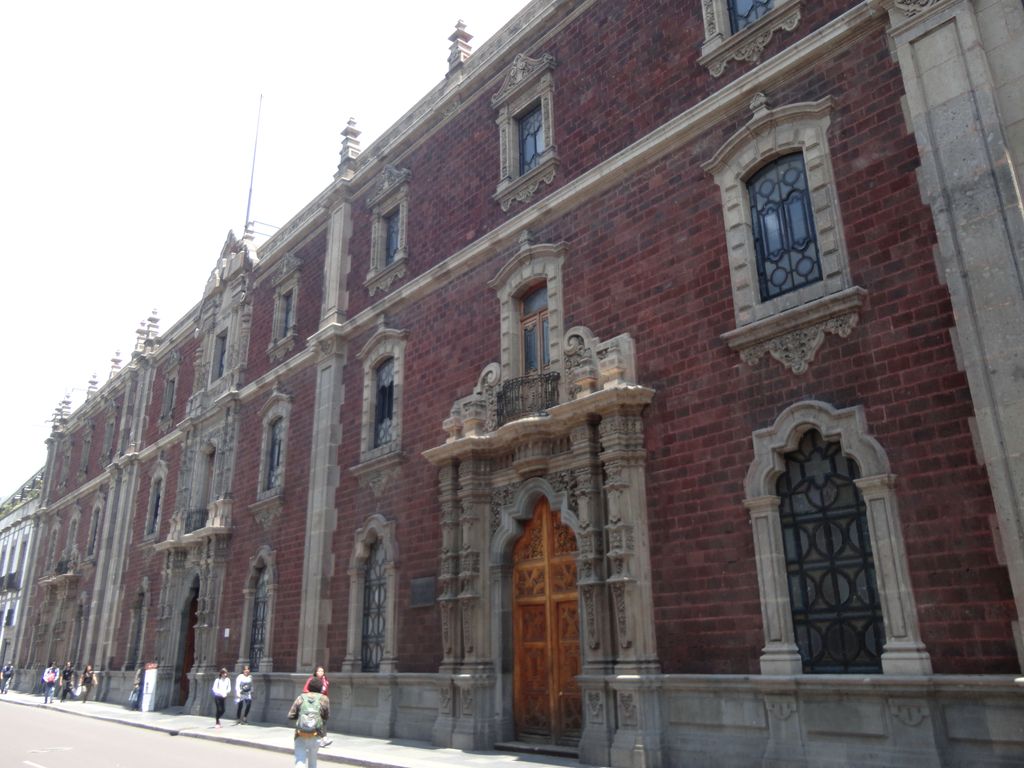
Her father, Guillermo Kahlo, worked as a photographer, and the museum's biographical materials record Frida helping with hand-colouring and studio tasks. Tere Arcq likewise stresses the attention to faces, gestures and pose that photographic practice could teach, though the transmission of any particular painted device should not be assumed from that background alone. The family studio was a place of visual work before painting became Kahlo's sustained occupation. [1] [2] [11]
At school she encountered friends and debates that made art, politics and modern Mexican identity live questions rather than topics encountered only through Rivera. The later artist's intense visual self-presentation—through photographs as well as paintings—has to be considered alongside those earlier experiences, but her painted identities were decisions made over time, not the automatic expression of a fixed ancestry or one childhood environment. [1] [11]
The Accident and the Start of Sustained Painting
On 17 September 1925, a bus carrying Kahlo and Alejandro Gómez Arias collided with a streetcar. The museum chronology records a period in the Red Cross hospital followed by months of recovery at home; in 1926 she made the painting now known as Self-Portrait in a Velvet Dress for Gómez Arias. It is securely described as an early or first self-portrait, not as her first completed artwork of any kind. [1] [4]
Recovery created time and circumstances for sustained painting, but the accident did not mechanically produce her style or determine the value of later work. Portrait-making required repeated choices about likeness, posture, scale and paint, and Kahlo went on developing these choices through changing relationships and artistic encounters. The full biography and accident and recovery study examine the chronology and testimony in detail, including how adapted equipment helped her work. [1] [3] [11]
Self-Portraits and a Wider Artistic Practice
Kahlo returned to her own face throughout her career, but even the word “self-portrait” covers different operations. She could use a direct gaze and compact setting, appear with an animal or another person, double her body, change clothing or hair, or make a family image in which her own place had to be read among others. These are constructed pictures, not interchangeable pages from a private diary; their scale, inscriptions and settings affect what the viewer can know. [3] [5]
It is tempting to give a single total for her self-portraits, but published counts depend on which drawings, double portraits, uncertain attributions and lost works are included. More important here is the range beyond the familiar face: portraits of friends and family, still lifes of fruit and plants, small paintings on metal, pictures on canvas and board, and drawings and diary pages. The individual object studies distinguish securely identified works from disputed or unavailable ones rather than turn a convenient number into an oeuvre census. [2] [3] [6]
The material diversity matters to interpretation. A metal plate, a rigid board and a large canvas offer different surfaces and public presences; a painted inscription can address a recipient or direct the story differently from an image alone. Kahlo's choices sometimes borrowed a familiar format and then changed its function, so neither “folk” nor “modern” can be assigned by support alone. [5] [6]
Painting for Friends and Viewers
The self-portraits also moved between people. Self-Portrait in a Velvet Dress was made for Gómez Arias, while MoMA's Veronica Roberts reports that Kahlo gave Fulang-Chang and I to her friend Mary Sklar. The face that later became a mass-circulated emblem could first be an image addressed to someone particular, with friendship and gratitude forming part of its history. [1] [4]
Fulang-Chang and I makes that exchange unusually tangible. MoMA dates the oil-on-board painting to 1937 and the assembled painting-and-mirror work to after 1939; the portrait and separate mirror have painted frames. As Caitlin Ryan explains in the museum's audio commentary, the viewer can appear in the mirror beside Kahlo's painted image, turning an encounter with an absent artist into a temporary physical pairing. [34] [35]
Roberts interprets the arrangement as a generous invitation into the portrait rather than only a record of loss. Her discussion of the monkey and the image's humour similarly resists reducing every animal companion to an emblem of suffering. A self-portrait can describe Kahlo and still make room for another person: recipient, companion or reflected spectator. [4] [35]
Essential Works
These six works show how Kahlo varied portraiture, family history, materials, bodily experience and politics across her career.
Frieda and Diego Rivera
1931 · A paired portrait that names Kahlo as its maker and Albert Bender as its recipient. [20]
My Grandparents, My Parents, and I
1936 · A family image that constructs lineage across land, sea and stages of life. [21]
The Two Fridas
1939 · A large double portrait that holds paired figures together without yielding one fixed meaning. [22]
The Broken Column
1944 · A braced and opened figure made amid documented spinal difficulty. [23]
Marxism Will Give Health to the Sick
1954 · An unfinished late picture linking bodily support to political imagery. [24]
Five Works Across a Changing Career
The 1931 painting Frieda and Diego Rivera places the couple side by side in San Francisco. Rivera holds a palette and brushes, but the bird-carried banner declares in Kahlo's first person that she painted the paired portraits for their friend Albert Bender. The represented roles and the making of the picture are therefore not identical: a wife appears beside an established muralist, while the object itself announces her authorship and a network of friendship and patronage. [20]
In My Grandparents, My Parents, and I (1936), Kahlo did something different with a small metal surface. MoMA records oil and tempera on zinc; the painting arranges grandparents, parents and versions of Kahlo as a branching family tree against land and sea. That is a pictorial construction of ancestry rather than proof of every identity later attached to the figures, and MoMA's comparison with the racial genealogies of 1930s Nazi Germany should be understood as a present-day curatorial interpretation, not a documented statement of Kahlo's purpose. [21]
The Museo de Arte Moderno dates The Two Fridas to 1939 and identifies it as an oil-on-canvas double portrait. Two seated figures join hands but differ in dress and bodily detail, moving the self-portrait from a compact presentation of one face to a large, paired composition. The museum relates it to Kahlo's separation from Rivera, while the specific meanings of the dresses and the doubled bodies remain interpretive questions for the individual painting study, not a fixed genealogical or marital code to impose here. [22]
Another change appears in The Broken Column (1944), where a braced figure and fractured architectural spine bring bodily damage into a highly made image. Kahlo's letter to Julien Levy of 20 April that year says an iron corset was making painting difficult and describes an operation as a feared possibility; the documented spinal fusion followed in 1946, so the picture cannot be explained as a response to that later operation. The letter supplies dated context, while the column, brace and opened body remain artistic forms rather than a medical chart. [1] [23]
The unfinished Marxism Will Give Health to the Sick, dated 1954 by the Museo Frida Kahlo, brings the body's support together with overt political imagery. The museum's bilingual label identifies Marx, huge hands holding Kahlo and the crutches she appears able to release; this is the institution's reading of a deliberately symbolic scene, not evidence that a political belief literally relieved illness. Read beside the 1931 partnership picture, the late work shows how far Kahlo's subjects and scale of imagined agency had travelled, without making either painting a simple diary entry. [1] [24]
Mexican Popular Forms, Adapted Rather Than Copied
Teresa del Conde's 1976 Spanish study describes Kahlo as a painter who deliberately drew from Mexican popular forms, including small metal supports and the pictorial conventions of retablos and ex-votos. Its value is partly its insistence on difference: a painting may resemble a devotional thanksgiving image in scale, framing or narrative compression without serving the same ritual purpose. Del Conde's account is historical criticism, not a blanket licence to call every small Kahlo picture an ex-voto. [6]
The Frame (1938) makes the material question unusually tangible. According to the Centre Pompidou's object record, Kahlo painted the self-portrait in oil on a thin aluminium plate and set it within Mexican reverse-painted glass, with a painted wooden artist's frame. The glass was produced as a separate craft object associated with Juquila; the result joins portraiture, framing and an existing popular-art form rather than illustrating a generic idea of “Mexican colour.” [5]
Such examples should also prevent Mexican popular art from becoming one undifferentiated category. Devotional pictures, regional textiles, Indigenous objects, commercial garments and post-revolutionary cultural programmes had different makers and histories. Kahlo's fashion and Tehuana dress deserve that specificity, just as a painting's support or frame deserves identification before symbolism is proposed. [5] [6] [7]
Intimate Scale and Political Context
MoMA contrasts the small, meticulous character of many Kahlo paintings with the monumental public murals associated with Rivera, José Clemente Orozco and David Alfaro Siqueiros. That is a helpful difference of scale and working method, but it is not a division between private feeling and public history. Kahlo's staged identities, Mexican references and political commitments show why a picture addressed to one viewer can still engage a wider culture. [3]
Alyce Mahon argues for a transnational modernism in which the poetic, political and Mexican dimensions of Kahlo's work met the artistic networks of New York and Paris. Her interpretation does not make a small painting into a mural or prove a political meaning for every motif; it asks that scale and biography not be mistaken for the boundaries of the art. Looking at a picture's form and documented setting is more reliable than assuming that an intimate subject must be apolitical. [7]
The broader issue is method. A painting may refer to a relationship or a bodily experience while reorganising it through pose, doubled figures, impossible anatomy, material juxtaposition or text. Contemporary critic José Moreno Villa addressed the relation of reality and desire in 1953, but the cited scholarly synopsis establishes only the broad critical question; his complete article has not been consulted for a closer account. The guide to reading Kahlo develops this approach through the objects themselves. [25]
Rivera, Travel and the American Years
Kahlo and Rivera married in Coyoacán on 21 August 1929. Their partnership joined artistic work, political life and travel, but it did not make her an appendage of his mural commissions. The relationship also changed over time: they divorced on 6 November 1939 and remarried in San Francisco on 8 December 1940, dates that anchor a history more complicated than a single romance narrative. [1]
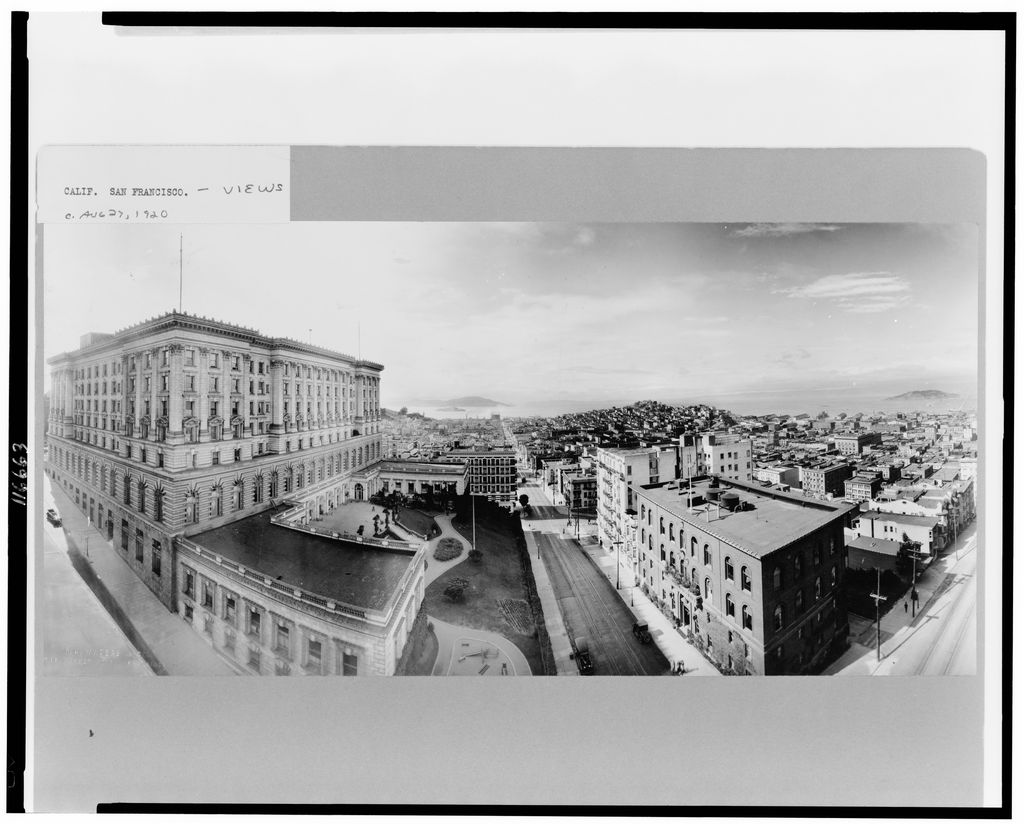
Their extended United States period began in San Francisco in November 1930 and continued through Detroit and New York before the return to Mexico late in 1933. These places offered museums, industrial landscapes, patrons, artists and varied forms of public display; Kahlo also made paintings whose subjects and materials cannot be reduced to Rivera's commissions. Celia Stahr's Frida in America argues that the encounters mattered to her development, although only its opening excerpt and publisher material have been consulted here; the American-years pages examine the itinerary in greater detail. [1] [14]
The broader partnership and its tensions belong in the study of Kahlo and Diego Rivera. The important distinction here is between documented travel and an explanation of artistic causation. Being in Detroit or New York could change available subjects and contacts, but no city name by itself tells us what a finished painting means. [1] [3] [7]
Her public exhibition history began before the New York solo debut. An item-level catalogue record in the Smithsonian Archives of American Art dates the sixth San Francisco Society of Women Artists exhibition to 4 November–3 December 1931 and identifies it as Kahlo's first public showing; the work was Frieda and Diego Rivera. Only the cover and two sample pages are digitised, and a separate collection-level Smithsonian note gives 1932, so the dated exhibition item provides the stronger basis for the 1931 account. [20] [26]
New York, Paris and Recognition During Her Lifetime
Kahlo's first one-person New York exhibition ran at Julien Levy Gallery from 1 to 15 November 1938. MoMA's Veronica Roberts records sales, visits by fellow artists and substantial press attention, while also noting the patronising language in some reviews. The episode is neither proof that Kahlo was already famous on today's scale nor evidence that she was overlooked until after death: she entered an active international artistic and commercial network. [4] [7]
The following year, her paintings appeared at the Renou et Colle gallery in Paris in the mixed exhibition Mexique, from 10 to 25 March 1939. It was not the solo Paris show she had expected, but it brought an important institutional acquisition: the French state bought The Frame in 1939. That precise record is preferable to the common shorthand that “the Louvre bought” a Kahlo painting, which names the wrong acquiring body and obscures the work's later collection history. [1] [5] [7]
The international sequence continued in 1940, when Kahlo exhibited in the International Exhibition of Surrealism in Mexico City and in MoMA's Twenty Centuries of Mexican Art. Her public career also developed in Mexico through teaching and group exhibitions. These events complicate the idea of an artist hidden from view in her own lifetime, even though the far wider circulation of her name and image was still to come. [1] [3] [7]
Surrealism, Reality and the Problem of Labels
André Breton promoted Kahlo's work through Surrealist networks, and her participation in the 1940 Mexico City exhibition made that connection public. Yet association, exhibition, critical classification and artistic method are different matters. MoMA's curatorial account records Breton's enthusiasm while also attending to Mexican popular art, politics and Kahlo's careful staging of identity; Mahon's study places the encounter within a wider transnational argument rather than treating it as one artist's discovery of another. [3] [7]
In a report published by TIME on 27 April 1953, Kahlo rejected the classification: “I never painted dreams. I painted my own reality.” The sentence is a documented late statement, not a retrospective instruction to erase the earlier exhibitions or the uncanny arrangements visible in her pictures. It is also safer to cite the article and date than a disputed print-page number; the full study of style, Surrealism and reality considers the longer disagreement. [8]
Calling the art simply “Surrealist” or “naïve” would conceal as much as it explains. The paintings could engage dreamlike juxtaposition without becoming records of dreams, and Kahlo's adaptations of popular formats were informed choices rather than proof of an unthinking or isolated practice. A more useful question is what a particular work does with observed likeness, altered anatomy, text, clothing or space—and how contemporary viewers described it. [3] [6] [7] [8]
Teaching: From Public Employment to Los Fridos
Kahlo's teaching experience began before her celebrated association with La Esmeralda. A signed oath preserved by Mexico's Archivo General de la Nación records a drawing and manual-work teaching post on 1 June 1929, before her marriage to Rivera that August. It places the young artist within public educational employment rather than presenting teaching as an unexpected occupation adopted only late in life. [27]
Her later school appointment is also documented. A 1943 record reproduced in Jorge Morales Moreno's Spanish history of La Esmeralda names her Professor C of vocational teaching, with twelve weekly class hours; the school's roster identifies painting and muralism among her responsibilities. This is evidence of a particular appointment, not proof that 1943 was her first experience of teaching or that no earlier informal work at the school occurred. [28] [29]
Fanny Rabel, Guillermo Monroy, Arturo García Bustos and Arturo Estrada became known as Los Fridos, but they were not the whole of her class. An INBA retrospective describes approximately twenty-five initial students, distinguishing the four particularly enduring artistic relationships from the larger teaching role. As travel became difficult, Kahlo also worked with students at Casa Azul, bringing the educational exchange into her own working environment. [1] [28] [30]
The archive's account stresses observation of familiar people and surroundings, including work outdoors, rather than only the imitation of a teacher's pictures. Captions reproduced in Morales Moreno's study identify student mural work at the La Rosita pulquería in 1943 under Kahlo's supervision. The small-scale painter could therefore participate in mural education without the students' wall paintings becoming part of her own painted corpus. [28] [29]
The pupils' later careers also resist the idea of a miniature school devoted to copying Kahlo. In INBA's report of the Los Fridos catalogue presentation, curator Javier Roque Vázquez emphasises their shared attention to reality and their individual visions, while Guillermina Guadarrama traces different developments beyond early social and figurative concerns. The study of Kahlo as a teacher follows those exchanges beyond the four familiar names. [31]
Writing, Politics and Late Work
Her correspondence and diary preserve writing and images that belong to the history of her practice, as well as the practical circumstances of friendships, work and travel. The National Museum of Women in the Arts holds a substantial collection of letters, notes, clippings and drawings related to Kahlo, though the existence of an archive does not authenticate every circulating quotation or settle the authorship of every drawing associated with her. The surviving paper record makes the career less solitary than the familiar image of an artist painting alone in bed. [1] [13]
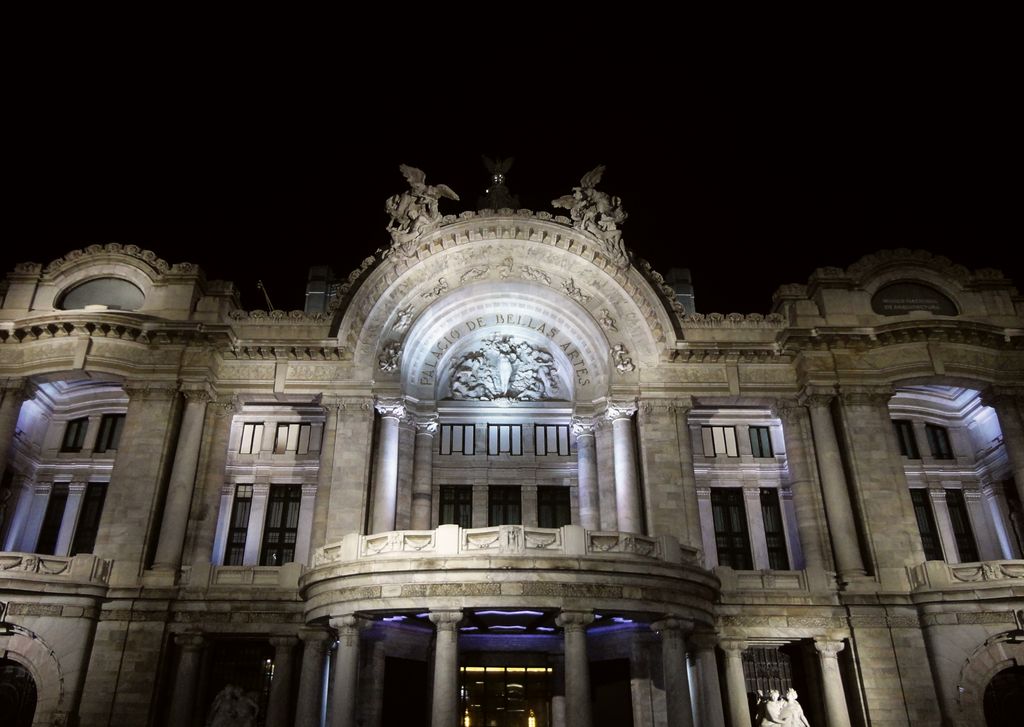
On 13 April 1953, Lola Álvarez Bravo opened Kahlo's only one-person exhibition in Mexico during the artist's lifetime. Kahlo arrived by ambulance and attended from a bed, an event that drew contemporary attention but should not be made to stand for the whole late career. The paintings, teaching, relationships, political activity and decisions about exhibition continued to matter even as her health deteriorated. [1] [2] [8]
Kahlo took part in a protest against United States intervention in Guatemala on 2 July 1954 and died on 13 July, aged 47. The proximity of those dates does not establish a medical cause of death, and the available overview sources do not justify turning her final public action into a causal account of her death. What they do establish is that political commitment remained publicly visible at the end of her life. [1] [2]
How Kahlo Became a Global Artist
Kahlo's present visibility cannot be projected backwards unchanged into the 1930s or 1950s. She had a New York solo exhibition, a Paris presentation, a French-state acquisition and Mexican recognition during her lifetime, yet the scale and meanings of her later celebrity developed through new exhibitions, books, movements and media. The useful historical question is not whether she was “known” or “unknown,” but who encountered the work, in which settings, and for what purposes. [4] [5] [9] [10]
The curator and critic Peter Wollen gives a particularly valuable first-person account of one turning point. He and Laura Mulvey organised a joint Kahlo–Tina Modotti exhibition that opened at London's Whitechapel Gallery in May 1982, travelled in Europe and reached New York in 1983. Wollen links its impact with the publication of Hayden Herrera's biography that year, proposing that the conjunction helped launch the American enthusiasm later called “Fridamania.” That is a participant's explanation of an important sequence, not proof that two events alone created the worldwide phenomenon. [9]
Other forms of reception were already underway. Rupert García's Frida Kahlo (September), made for the Galería de la Raza's 1975 calendar, is a screenprint on paper now represented in the Smithsonian American Art Museum's collection. The dated object precedes Whitechapel and places Kahlo within a different medium and setting: a calendar image rather than a painting encountered only in a major museum retrospective. [32]
Tere Arcq places renewed attention to Kahlo within the feminist reclamations of the 1970s and 1980s and warns that fascination with her dramatic life can overshadow her artistic contribution. Lisa Riedl's selected German-language study likewise examines the later construction of the suffering woman artist through biography, fiction and reception. These arguments differ in method, but both caution against turning the artist into a character who merely illustrates a familiar script. [11] [12]
The Museum of Fine Arts, Houston made that later history the subject of Frida: The Making of an Icon, shown there from 18 January to 17 May 2026 and announced for Tate Modern from 25 June 2026 to 3 January 2027. Its curators placed more than thirty Kahlo works alongside 120 works by five generations of responding artists and traced distinct Surrealist, Chicana/o, feminist, gay-rights and later identity-focused engagements. The exhibition's “Fridamania” section also addressed mass-produced merchandise, allowing artistic influence, political adoption and commercial branding to be examined without pretending they are the same form of reception. [10]
The later works take markedly different forms. Tate's lender records identify Amalia Mesa-Bains's Frida Temple (1987) as an installation and Yasumasa Morimura's An Inner Dialogue with Frida Kahlo (Hand Shaped Earring) (2001) as a chromogenic print on canvas. Their titles name Kahlo, but their media already distinguish them from García's calendar print and from her own oil paintings. [33]
A print that circulates, an installation and a photographic dialogue do not constitute one undifferentiated act of homage. These examples make the broader reception history concrete without assuming that each artist adopted Kahlo for the same reasons. Her legacy includes the transformations that later makers performed, not merely the increasing number of people who recognised her face. [32] [33]
These later communities did not all seek the same Kahlo. A Chicana/o artist's claim on her Mexican identity, a feminist reading of self-representation, a queer reworking of her public image and a disability-oriented encounter with the body may each be historically productive, but none by itself proves that Kahlo used contemporary labels for herself. The reception is part of her legacy precisely because later viewers made new work and arguments from what they saw; it should not be smuggled back into the artist's intentions. [10] [11] [12]
Her face now circulates far beyond the paintings. Wollen's account of the growing cult, Arcq's concern about the life overwhelming the art and the Houston exhibition's distinction between the artist and the phenomenon all point to the same risk: the portable icon can lose the specificity of materials, politics, Mexican histories and artistic decisions. The response is not to discard popular interest but to lead it back toward the works and the evidence that makes each one more than an illustration of a legend. [9] [10] [11]
Books for Deeper Reading
Books can take a reader beyond this overview, but their different purposes should remain visible. Hayden Herrera's Frida: The Biography of Frida Kahlo is a major full-life route, while Celia Stahr's Frida in America concentrates on the United States years. The large-format Frida Kahlo: The Complete Paintings, edited and written by Luis-Martín Lozano with Andrea Kettenmann and Marina Vázquez Ramos, is the principal published corpus lead for checking objects rather than relying on internet lists. [14] [15] [16]
For the problem of Kahlo's image and its interpretation, Gannit Ankori's Frida Kahlo, Margaret A. Lindauer's Devouring Frida and Patricia Mayayo's Spanish Frida Kahlo: Contra el mito offer three distinct critical routes. Their publishers' descriptions establish why they are relevant, but complete copies of these six commercial books have not been consulted here. The account above rests on the specific institutional, contemporary and scholarly sources cited below, not on unexamined chapters or publishers' promotional claims. [17] [18] [19]
Where to Go Next
The biography and timeline provide fuller chronology. The style and Surrealism study, fashion guide and American-years overview pursue questions kept brief here. Each route asks the reader to distinguish what an object shows, what documents establish and what a critic has proposed.
The Paintings guide brings together all 117 individual work articles, including separate works on paper and attribution-qualified records. The Quotes and their sources study distinguishes documented writing, unverified sayings and modern misattributions.
Kahlo artworks directory
Explore the 117 individual works featured in this cluster, including works on paper and records with questioned attributions. This is a guide to the featured articles, not a catalogue raisonné of Kahlo’s complete work.
Frequently Asked Questions
She exhibited in Surrealist settings and was championed by André Breton, but she rejected the label in a documented 1953 statement. Exhibition history and self-description are both relevant; neither alone supplies an adequate account of every painting. The Surrealism and reality study examines that tension in detail. [3] [7] [8]
No. Self-portraiture was central, but she also made portraits of others, still lifes, drawings and works in which her own body is absent or only one element of a broader composition. A fixed self-portrait total would require an agreed corpus boundary that the sources used here do not provide. [2] [3] [5] [6]
Yes, though not with the global reach she acquired after death. Her 1938 New York solo show, 1939 Paris presentation and French-state purchase, 1940 exhibitions and 1953 one-person show in Mexico document a substantial career. Later exhibitions, books and political and cultural movements changed the scale and character of that recognition. [1] [4] [5] [9] [10]
Discussion
Use the cited evidence and your own close looking to explain your view. The prompts below are starting points, not fixed interpretations.
Reader Insights
Which of Kahlo’s different subjects most changes how you understand her achievement beyond self-portraiture?
Compare a dated document with a painting discussed here: what can each establish, and what remains interpretive?
How did later exhibitions and popular culture reshape the reputation formed during Kahlo’s lifetime?
Join the Conversation
Which reading best fits the evidence, and where does uncertainty remain?
References
- Museo Frida Kahlo, “Frida” interactive chronology, consulted at the 1907, 1913, 1922, 17 September 1925, 1926, 21 August 1929, 1930, 1938–40, 1942–43, 13 April 1953 and July 1954 entries. Event-level source; its internal headings and interpretive claims require checking. View source text.
- Museo Frida Kahlo, Biografía de Frida Kahlo, short institutional biography, PDF pp. 1–3, and Gerardo Ochoa Sandy, printed pp. 1–10, especially pp. 8–10. Used selectively; the PDF's disputed genealogy and causal medical claims are not adopted. View source text.
- Charlotte Barat, “Frida Kahlo,” The Museum of Modern Art, 2016, complete curatorial essay, especially the passages on painting, self-portraiture, muralism, popular art, politics and Surrealist reception. View source text.
- Veronica Roberts, “A Close Look: Frida Kahlo's Fulang-Chang and I,” MoMA, 3 December 2009, complete online essay, especially “Kahlo's New York Debut,” “Mirroring a Friend” and the opening animal-companionship discussion. The underlying departmental files and reported gift conversation were not independently inspected; the current owner record supplies the assembly date. View source text.
- Centre Pompidou, “The Frame” (Le cadre), object and component descriptions, support, artist frame, Julien Levy exhibition and 1939 French-state acquisition fields. View source text.
- Teresa del Conde, “Lo popular en la pintura de Frida Kahlo,” Anales del Instituto de Investigaciones Estéticas 13, no. 45 (1976), pp. 195–203, complete Spanish article. Its biographical date errors and reductive judgements are not repeated. View source text.
- Alyce Mahon, “The Lost Secret: Frida Kahlo and the Surrealist Imaginary,” Journal of Surrealism and the Americas 5, nos. 1–2 (2011), pp. 33–54, complete article, especially pp. 33–38 and 43–50. Interpretive arguments remain attributed. View source text.
- “Art: Mexican Autobiography,” TIME, 27 April 1953, final three paragraphs. The online article is the verified quotation route; the disputed print-page number is omitted. View source text.
- Peter Wollen, “Fridamania,” New Left Review 22 (July–August 2003), available opening paragraphs 1–23. Later paywalled text was not used. View source text.
- Museum of Fine Arts, Houston, Frida: The Making of an Icon exhibition overview and official press release, 2025–26, on the exhibition's curatorial structure, responding artists, activist histories and mass-market reception. Catalogue essays remain unread. View source text 1; View source text 2.
- Tere Arcq, “Defining Frida Kahlo's Place in Art History,” Google Arts & Culture, accessible English editorial feature, opening and influence sections. Used as the named curator's interpretation, not as primary proof of ancestry or individual artistic influence. View source text.
- Lisa Riedl, Frida Kahlo: Zur Repräsentation weiblicher Künstlerschaft, University of Vienna, 2013, selected German-language thesis sections, pp. 43–50 and 60–68. The full thesis has not been read. View source text.
- National Museum of Women in the Arts, “Frida Kahlo Papers” and finding-aid overview, collection and arrangement descriptions; individual item attribution is not assumed from the collection title. View source text 1; View source text 2.
- Celia Stahr, Frida in America: The Creative Awakening of a Great Artist, St. Martin's Press, 2020, publisher opening excerpt and edition record only. Complete book and notes unread. View source text.
- Hayden Herrera, Frida: The Biography of Frida Kahlo, Bloomsbury edition record, ISBN 9781526608536. Complete book unread. View source text.
- Luis-Martín Lozano, Andrea Kettenmann and Marina Vázquez Ramos, Frida Kahlo: The Complete Paintings, TASCHEN, 624-page English edition, ISBN 9783836574204. Publisher record only; complete volume unread. View source text.
- Gannit Ankori, Frida Kahlo, Reaktion Books, Critical Lives, publisher description only; complete book unread. View source text.
- Margaret A. Lindauer, Devouring Frida: The Art History and Popular Celebrity of Frida Kahlo, Wesleyan University Press, publisher synopsis and contents only; complete book unread. View source text.
- Patricia Mayayo, Frida Kahlo: Contra el mito, Cátedra, 2008, publisher catalogue only; complete Spanish book unread. View source text.
- SFMOMA, Frieda and Diego Rivera, 1931, owner object metadata and audio-description transcript, especially the translated banner and artist-attribute paragraphs. The audio's dramatised announcer is not a historic recording. View source text.
- MoMA, My Grandparents, My Parents, and I, 1936, owner title, medium and Vital Signs gallery label. The Nazi-law comparison is a later curatorial reading; the painting does not independently verify family identities or intent. View source text.
- Museo de Arte Moderno, “Obras destacadas,” Las dos Fridas, Spanish owner entry headed “Frida Kahlo (1907–1954),” object line and interpretive paragraphs. Its separation reading is attributed, while exact dress meanings remain under review on the object page. View source text.
- Getty Research Institute, “Intimate Addresses: Frida Kahlo”, original Kahlo letter to Julien Levy dated 20 April 1944, accession 2022.M.20, and published transcript's corset and prospective-operation passage. Getty's isolated “oil on metal” image caption for The Broken Column is not adopted. View source text.
- Museo Frida Kahlo, Cédulas infantiles, bilingual “Sala uno/Room One” label for El marxismo dará salud a los enfermos (1954); read with the museum chronology's unfinished-work entry. Symbolic explanation remains attributed to the museum. View source text.
- ICAA/MFAH, José Moreno Villa, “La realidad y el deseo en Frida Kahlo”, item 753110, Spanish scholarly synopsis, first two paragraphs. The underlying 1953 article scan requires login and has not been read. View source text.
- Smithsonian Archives of American Art, Sixth Annual Exhibition of the San Francisco Society of Women Artists catalogue record, item 17928, dated 1931, with 4 November–3 December dates and first-public-viewing description. The complete catalogue is not digitised; a conflicting collection-level 1932 note is not adopted. View source text.
- Archivo General de la Nación, “Un documento de la reconocida pintora Frida Kahlo en la Vitrina de Maravillas de la Historia”, 8 May 2023, complete article and inspected public facsimile of the 1 June 1929 oath, typed post and signature. Catalogue reference in the archive's contract feature: Administración Pública Federal siglo XX, SEP, Personal Sobresaliente, letra K, Kahlo Calderón Frida, 392908/caja 1, expediente 1. The complete personnel file was not read. View source text.
- Archivo General de la Nación, “La práctica docente de Frida Kahlo”, complete Spanish feature, appointment, teaching-environment and Casa Azul passages, read alongside the archive's 13 July 2018 teaching article. Catalogue-year labels do not establish an exact appointment day, and a transmitted Tibol recollection is not an independently inspected original. View source text.
- Jorge Morales Moreno, “Notas para una historia crítica de ‘La Esmeralda’: la cuestión de sus orígenes (1927, 1943)”, Discurso Visual 36 (July–December 2015), pp. 7–42, selected pp. 7–16 and 29–31. Inspected appointment facsimile at p. 16 and student mural captions at pp. 13 and 15 reproduce Frida maestra. Un reencuentro con los fridos (2005), pp. 23, 33 and 22 respectively. Neither the complete article nor the complete 2005 catalogue was read. View source text.
- INBA, “Especialistas abordarán la producción plástica de los alumnos más destacados de Frida Kahlo”, bulletin 599, 22 May 2018, complete report, especially the 1943 faculty and approximately twenty-five-student class paragraphs. The class size is a retrospective estimate, not an inspected attendance roll. View source text.
- INBA, “Presentaron el catálogo de Los Fridos. Una génesis permanente”, bulletin 1801, 12 December 2018, complete report, especially the attributed comments of Javier Roque Vázquez and Guillermina Guadarrama. The catalogue's essays were not read. View source text.
- Smithsonian American Art Museum, Rupert García, Frida Kahlo (September), from Galería de la Raza 1975 Calendario, 1975, complete owner record, screenprint on paper, accession 2019.52.19. This impression is not conflated with a separate 1993 poster or another collection's calendar proof. View source text.
- Tate, official lender records for Frida: The Making of an Icon, selected complete entries: Amalia Mesa-Bains, Frida Temple (1987), installation, X102193, and Yasumasa Morimura, An Inner Dialogue with Frida Kahlo (Hand Shaped Earring) (2001), chromogenic print on canvas, edition 2/5, Minneapolis Institute of Art 2010.25, X102209. Object identity and media, not a record of the artists' intentions or an onsite inspection. View source text.
- MoMA, Fulang-Chang and I, complete current owner metadata and label, checked 5 October 2026: 1937, assembled after 1939, oil on board with painted frame and separate framed mirror, bequest of Mary Sklar, 277.1987.a–b. This assembly wording takes precedence over the older essay's “after 1938.” View source text.
- Caitlin Ryan, MoMA audio transcript 585 for Fulang-Chang and I, complete public transcript, especially the mirror and reflected-viewer passages. The commentary is a later curatorial interpretation, not a recording of Kahlo's reported gift conversation. View source text.
- SFMOMA, Diego Rivera artist record, life dates 1886–1957 and overview of his Mexican muralist work. View source text.
- National Gallery of Art, José Clemente Orozco artist record, life dates 1883–1949 and account of Mexican Muralism. View source text.
- British Museum, David Alfaro Siqueiros biography, life dates 1896–1974 and artistic/political context. View source text.
- Museum of Modern Art, Mexican Muralism art term, beginning in the early 1920s and the principal muralists. The homepage timeline shows a selected comparison window, not a terminal date for the movement. View source text.
Image Credits
- Toni Frissell, 1937. Library of Congress, Prints & Photographs Division, Toni Frissell Photograph Collection, LC-F9-01-3707-25, no. 3; digital ID ds.05049. Source record.
- Photo: Juan Carlos Fonseca Mata / Wikimedia Commons, CC BY-SA 4.0. Resized to 1024 px wide; no crop. Source record.
- R. J. Waters & Co., about 1920. Library of Congress, item 96514400; public domain. Resized to 1024 px wide; no crop. Source record.
- Photo: Juan Carlos Fonseca Mata / Wikimedia Commons, CC BY-SA 4.0. Resized to 1024 px wide; no crop. Source record.
