


 by Tom Gurney
Tom Gurney BSc (Hons) is an art history expert with over 20 years experience
Page created on March 2, 2018 / Page updated on October 6, 2026
Email: tomgurney1@gmail.com / Phone: +44 7429 011000
Introduction
Five pink-red cactus fruits fill most of Frida Kahlo's Pitahayas (1938). Three have been cut to expose pale flesh stippled with black seeds; beyond them, a tiny jointed skeleton lifts a scythe above the rocks. The contrast is immediate, but the painting does not offer a simple choice between a celebration of fruit and a warning about death. [1] [2]
The original painted sheet measures just 10 by 14 inches. It is an oil painting on aluminium, now in the Madison Museum of Contemporary Art (MMoCA), where its broad pale frame enlarges the object's overall size to 29¼ by 33¼ inches. These are different measurements, not competing estimates of the same surface. [1] [3]
At a Glance
- Artist and date: Frida Kahlo, 1938. [1] [4]
- Title: Pitahayas. MMoCA teaching material also calls it Still Life: Pitahayas; the lifetime Paris catalogue retains the Spanish plural. [1] [3] [4]
- Medium and measurements: Oil on aluminium; 10 × 14 inches unframed and 29¼ × 33¼ inches framed. [1] [3]
- Collection: Madison Museum of Contemporary Art, accession 69.1.51, credited by the museum to the bequest of Rudolph and Louise Langer. [1] [3]
- Viewing: The museum’s Mexican Modernists study centre says no works from that collection are currently on view. [5]
Contents
- Introduction
- Looking Closely at the Fruit
- What the Title Can—and Cannot—Identify
- Aluminium, Popular Art and the Small Skeleton
- A Smile Changed After the Painting Travelled
- New York and the 1939 Paris Catalogue
- From San Francisco to Madison
- More Than One Reading of a Living Still Life
- Further Reading and Open Questions
Looking Closely at the Fruit
The fruits are crowded together near the picture's front edge. Two large, almost circular cut faces rise at centre and left, while a smaller opening appears on the lower fruit. Their grey-white interiors are densely dotted with dark seeds, enclosed by narrow red rims and irregular pink, crimson and orange skins. [2]
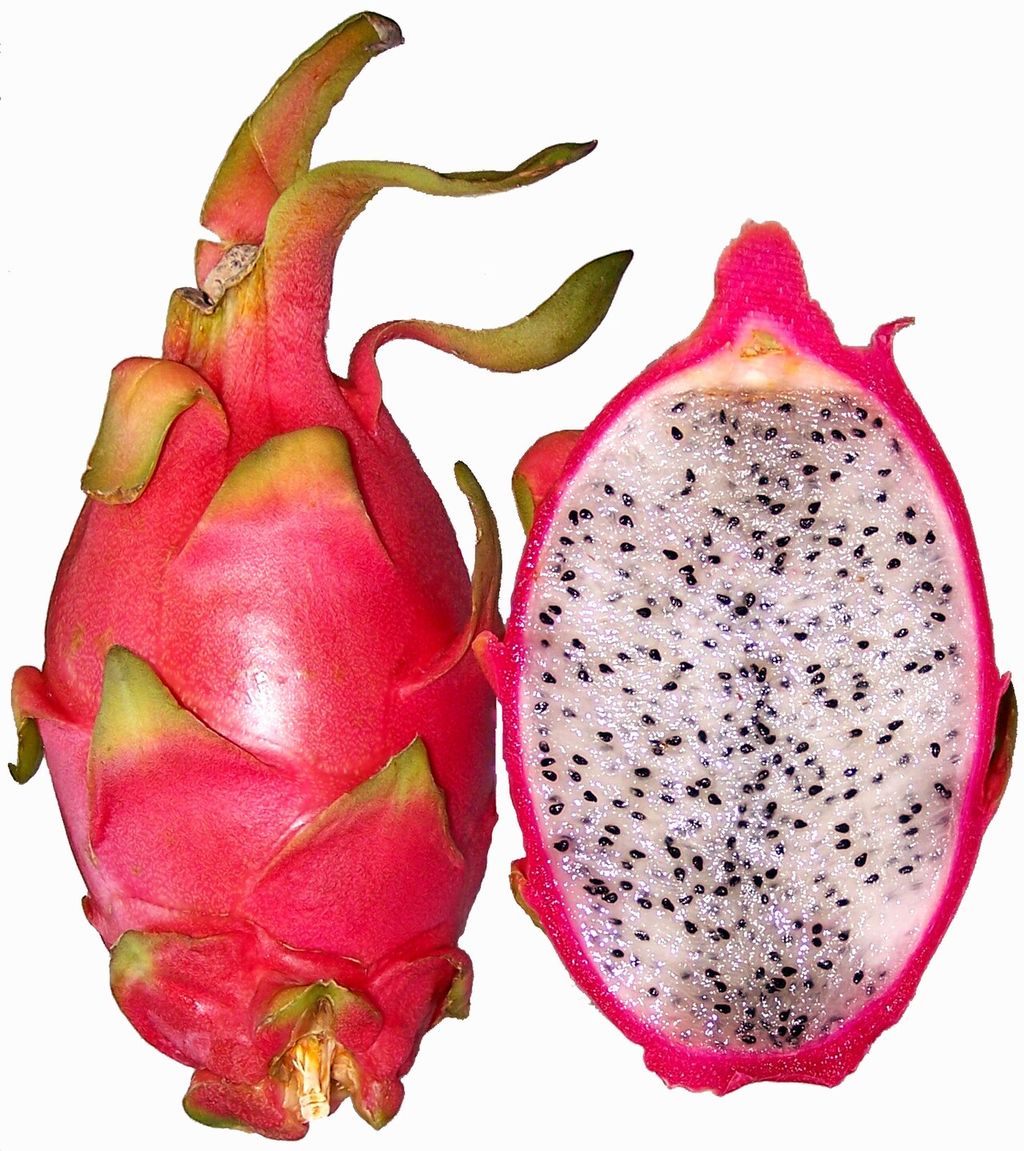
Curled yellow-green bracts interrupt the smooth outer colour. Brown and ochre marks appear on several skins, but a digital image cannot establish whether those marks depict bruising, ripeness, decay or some combination. MMoCA specifically describes the fruit as ripe rather than rotten; a Mexican government agriculture article uses the language of maturing and beginning to decompose. The visible browning is firmer evidence than either diagnosis. [2] [6] [7]
A detached green leaf lies at lower left, its pale central and branching veins clearly drawn. Behind the fruits on the left sits a rounded cactus covered in fine whitish hair or spines. The museum identifies the leaf as young philodendron and connects the cactus with Kahlo's garden, but neither species nor the precise individual plant can be established by looking at the painting alone. [2] [6] [8]
Jagged dark-grey forms rise behind the upper fruit, while a porous-looking brown mass supports the skeleton at right. The museum relates the rocks to El Pedregal, the volcanic landscape south of Mexico City; no record examined here establishes that these exact stones were collected there. Above them a shallow blue-green field has little of the depth of a conventional landscape, making the fruit arrangement feel both placed and strangely unlocated. [2] [9]
The skeleton is much smaller than any one fruit. Its pale skull, rib cage and hands contrast with dark joints that make it look articulated, like a toy, and one outstretched arm carries the curved blade the museum calls a scythe. Its downward eye sockets and mouth form a frowning expression in the painting's present state. No human body, saint, written prayer or explicit narrative of rescue appears elsewhere in the image. [2] [6]
The fruit's rounded modelling and overlapping shadows create a convincing sense of volume, even as the rocks, cactus and tiny figure pull the eye toward unlike textures. The broad white or cream wooden frame, marked with brown-red rubbing, adds a second, much larger rectangle around the compact painted scene. Google Arts & Culture's museum-supplied metadata calls the frame original, but that historical designation has not been tested against a frame or conservation file. [2] [10]
Watch: Frida Kahlo
Five perspectives to view here alongside the article.
Frida Kahlo’s The Two Fridas: Great Art Explained
A focused visual introduction to the painting and its context.
What the Title Can—and Cannot—Identify
Pitahayas names the cactus fruit rather than a person, place or episode. The Spanish plural appears in the 1939 Mexique catalogue, so it is not merely a later English-language marketing title. MMoCA's teaching title, Still Life: Pitahayas, explains the genre while referring to the same object, not another painting. The museum's later Portuguese-language partner story calls it Pitaias; that is a translation, not a second work or evidence of an historical retitling. [3] [4] [21]
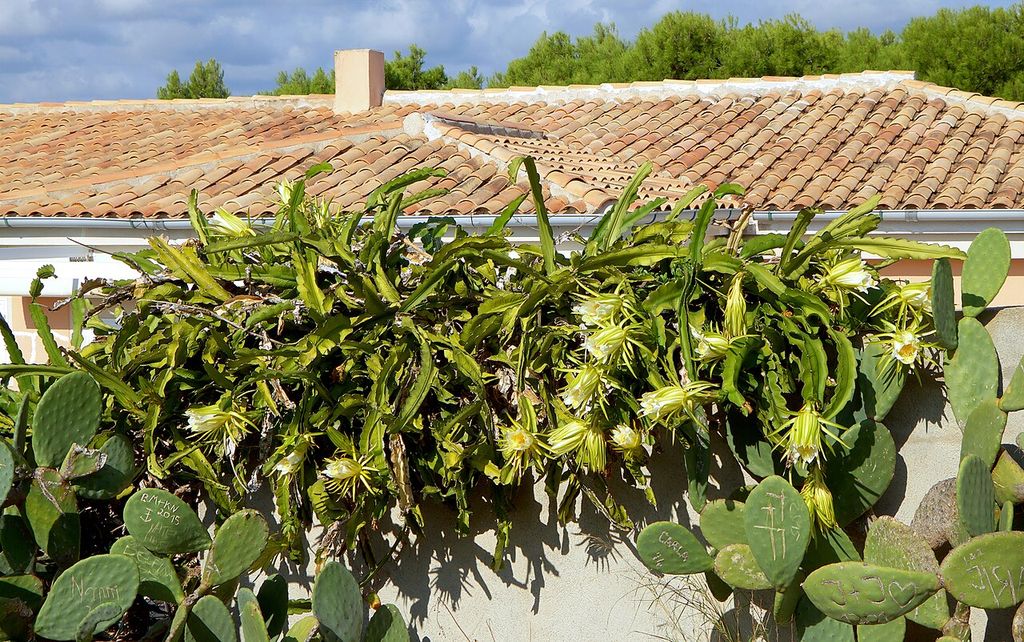
The museum's educational text connects the fruit with Hylocereus. Today's Royal Botanic Gardens, Kew accepts Selenicereus undatus and lists Hylocereus undatus as a synonym. Mexican botanical sources also show that regional names such as pitaya and pitahaya cross more than one cactus taxon; no visual inspection of a painted fruit can securely assign all five forms to an exact species. [9] [11]
Kahlo's home and garden matter without supplying a perfect reconstruction of the scene. MMoCA says the fruit came from her garden, and a New York Botanical Garden–Museo Frida Kahlo project identifies old man cacti in Casa Azul photographs from around 1940. Those sources support a domestic plant context, but later garden photographs do not prove the precise 1938 harvest, planting or arrangement that Kahlo used here. [1] [8]
The museum transmits Kahlo's enthusiasm for the fuchsia skin and subtly coloured seeded pulp. Paula Rabinowitz points to Frida's Fiestas, page 188, for a related recollection, but the original page and its full speaking context have not been consulted. The fruit's particular appearance can be described from the painting without treating a mediated quotation as an independently checked diary entry. [1] [12]
Pitahayas in Kahlo’s career
Timeline source: Museo Frida Kahlo chronology [23].
Aluminium, Popular Art and the Small Skeleton
MMoCA records the support as aluminium in its current object entry and older education material. A Google Arts & Culture object asset says “tin,” but it is the present owner's repeated, more specific aluminium specification that controls this article. The distinction matters: a comparison with devotional pictures painted on metal does not convert Kahlo's actual support into tin. [1] [3] [10]
The museum compares the work's small scale and metal support with Mexican ex-votos, paintings given in thanks for an answered prayer or escape from danger. Kahlo collected such works, and the comparison illuminates her interest in their materials and directness. Yet Pitahayas shows no saintly intervention, supplicant or written miracle; it is safer to describe an ex-voto affinity than to classify the still life as a devotional offering. [1] [9] [13]
MMoCA also compares the jointed skeleton with toys associated with Día de Muertos, the Day of the Dead. The Museum of Fine Arts, Boston, later placed the painting near small springy skeletons made around 1940 as it explored Kahlo's use of Mexican arte popular. These contextual comparisons are stronger than claiming that the picture was painted for the holiday, or that one figure carries a fixed, timeless Mexican meaning. [9] [13]
The scythe introduces another visual tradition: a familiar personification of death. Its small bearer looks manufactured rather than anatomically naturalistic, and the curved implement makes mortality present without overwhelming the fruit by scale. A Spanish thesis names the figure an Angel of Death; that is the scholar's interpretation, not an inscription within the painting. [2] [14]
A Smile Changed After the Painting Travelled
The present frown has an unusually specific history. MMoCA curator Mel Becker Solomon describes an earlier photograph in which the skeleton had rounder eyes and a smile. According to her research, Kahlo changed it after returning from France in 1939 and learning that Diego Rivera wanted a divorce; the museum's present object text repeats the account. [1] [15]
This makes the skeleton different from a symbol imagined to have had one unchanging meaning from 1938 onward. It provides museum-supported evidence that the work was revised, while leaving open the exact day, technique and complete extent of the alteration. The photograph's original negative, date and archival identifiers, and any technical examination of the paint layers, have not been read here. [15]
The revision gives a biographical interpretation real traction, but it cannot explain every element retrospectively. Kahlo had already made and exhibited the painting before the reported change of expression; the cut fruit, garden associations, material choices and international circulation have histories of their own. A changed face at the edge of the composition invites a personal reading without proving that the whole still life is a secret diary of the divorce. [4] [15]
New York and the 1939 Paris Catalogue
The original Julien Levy Gallery invitation establishes Kahlo's New York exhibition at 15 East 57th Street from 1 to 15 November 1938. Solomon reports that Pitahayas was included, and she relates André Breton's enthusiastic description of the fruit in the exhibition text. The invitation alone is not an object checklist; the surviving list of works in the Philadelphia Museum of Art Library's Julien Levy records may clarify inclusion, title, price and sales status. [15] [16]
Paris is documented more directly. The original catalogue for Mexique at Galerie Renou et Colle, held 10–25 March 1939, lists “Pitahayas” as item 74 among eighteen works under “Frida Kahlo de Rivera.” Its unchanged Spanish title in a French-language exhibition record is especially useful evidence of the painting's lifetime identity and international display. [4]
Solomon says the work remained unsold in Paris and returned with Kahlo to Mexico before the skeleton was revised. The catalogue itself proves inclusion, not whether a buyer appeared or how the painting travelled back; those details currently rest on the curator's account pending gallery correspondence and shipping papers. Breton's advocacy also documents an encounter with Surrealist circles, not a definitive classification of Kahlo's methods or intentions. [4] [15]
From San Francisco to Madison
Solomon next places Pitahayas in Contemporary Mexican Painting and Graphic Art at San Francisco's Palace of Fine Arts in 1940, during the Golden Gate International Exposition. Her account says Aline Barnsdall bought it there alongside Rivera's Modesta Sewing and sent both paintings on long-term loan to the former Los Angeles Museum of History, Science and Art at Exposition Park. That was a loan, not a transfer of title to the Los Angeles museum. [15]
After Barnsdall's death in 1946, Solomon traces the work through her estate to Kende Galleries in New York in 1952. Rudolph and Louise Langer bought it there, and Solomon says it remained in Rudolph's home office until its 1969 transfer to the Madison institution. The underlying 1940 invoice, Los Angeles loan card, estate inventory and Kende sales record have not been examined; the chain is a substantial museum-curatorial reconstruction, not a claim that every transaction document is in hand. [15]
MMoCA's broader collection history says the Langers gave the Madison Art Center more than a thousand works in 1968, including nearly two hundred by artists active in Mexico. That collection-level date should not be substituted for this painting's 1969 accession history; the owner's education publication gives accession 69.1.51, while its present bilingual credit uses the English term “Bequest.” The legal detail of the transfer needs the incoming museum file before those formulations can be reconciled more precisely. [1] [3] [5] [15]
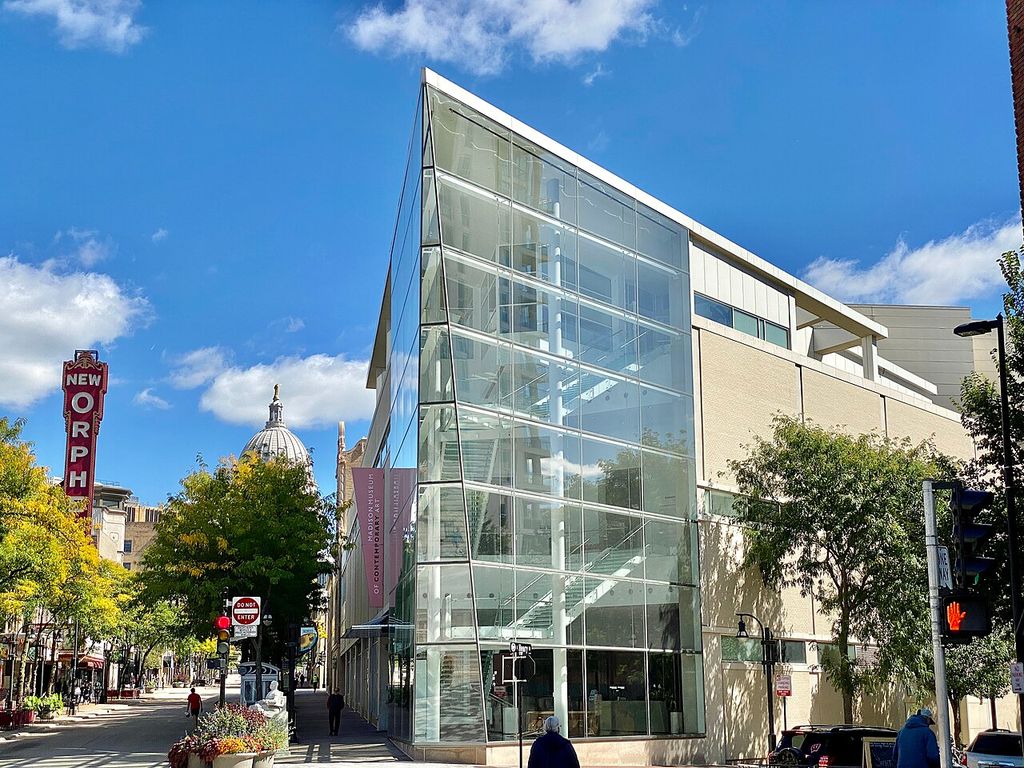
The painting's later exhibition record is selective but informative. MMoCA devoted a focus exhibition to it from October 2018 to February 2019; two museum pages differ by one day over the opening, so the month is safer than a precise start date. The Museum of Fine Arts, Boston, explicitly named it in Frida Kahlo and Arte Popular in 2019, alongside two later Kahlo still lifes and a painting by María Izquierdo. [13] [17]
MMoCA also listed Pitahayas in its Los Grandes del Arte Moderno Mexicano presentation and described it through death, Surrealism and “magical realism.” That language is evidence of the museum's later framing, not proof that Kahlo assigned the work a permanent style label. Its Caja de visiones online material similarly puts the painting within Mexican modernism and Midwestern collecting without proving continuous physical display. [5] [22]
Other retrospective records do not yet establish an exhaustive exhibition list. General pages for the 2007–08 Kahlo retrospective and Milan's 2018 Beyond the Myth do not by themselves prove that this particular work was hung, even where local reporting suggests a loan. An owner loan file and exact exhibition checklists would be needed to turn those leads into secure additions. [18]
More Than One Reading of a Living Still Life
The owner museum proposes that a cut fruit recalls a dissected cell and reads the group through fertility, regeneration, reproductive loss and bodily experience. One of its interpretive texts specifically invokes meiosis and miscarriage, then suggests that the still life can function as an intimate indirect self-portrait. These are attributed curatorial readings; no matching medical textbook diagram or statement in which Kahlo explains this painting that way has been located. [1] [6]
The Boston museum uses a different frame, naturalezas vivas or “living still lifes.” It argues that Kahlo's fruit and popular-art objects unsettle divisions between animate and inanimate, living and dead. In Pitahayas, soft seeded interiors, hard rock, a living cactus and a mobile-looking skeleton make that argument visually intelligible without requiring the fruit to stand for one particular bodily event. [2] [13]
Paula Rabinowitz reads the browned fruit, volcanic-looking basalt and playful figure through the coexistence of desire and decay. Olga Grzesiuk's Polish essay instead assembles questions of childlessness, sexuality, Mexican identity, retablo echoes and tragicomic death around the painting and its late-1930s neighbours. María Nieves González Castillo's Spanish thesis emphasises a natural habitat and an Angel-of-Death figure; these sources record contrasting scholarly reception rather than independently verifying the artist's private intention. [12] [14] [19]
The readings need not cancel one another, but they should not be stacked as if each image element had a fixed dictionary definition. The once-smiling skeleton supports a documented emotional revision, while the Paris catalogue and ownership trail locate the object in public history. Its fruit can be a closely observed garden subject, a form inviting cellular comparison, and a formal counterweight to death without any one proposal becoming an unquestionable fact. [4] [6] [13] [15]
Further Reading and Open Questions
Salomón Grimberg's Frida Kahlo: The Still Lifes is the most targeted specialist book for this work, and Nancy Deffebach's chapter “Picantes pero sabrosas” offers an important critical route into Kahlo's still-life practice. The relevant entries in Frida Kahlo: The Complete Paintings and Gannit Ankori's Frida Kahlo may also offer useful context. Publisher descriptions and catalogue listings identify these books, but their complete discussions are not sources for the claims made here. [20]
The owner's object, accession, frame, conservation and loan files would answer different questions. They could clarify the apparent signature, original-frame claim, aluminium support and treatment history, the early photograph and skeleton alteration, the Langer transfer, and the fuller sequence of exhibitions. The Philadelphia Levy checklist, original 1940 San Francisco record, Barnsdall estate papers and 1952 Kende transaction are likewise unconsulted; without them, prices and a complete provenance cannot be verified. [15] [16] [20]
Related Reading
Compare the later fruit paintings Still Life with Parrot and Fruit, Weeping Coconuts and Viva la Vida. The technique and materials guide distinguishes visible effects from conservation evidence, while the Frida Kahlo overview places the 1938 Julien Levy exhibition in her wider career.
Questions Readers Often Ask
It is a still life on a small metal sheet. MMoCA compares that material and scale with Mexican ex-votos, which Kahlo collected, but the picture contains no visible saint, supplicant or written thanksgiving. “Ex-voto-like” is therefore a useful comparison, not a documented classification of the work as a devotional offering. [1] [9]
According to MMoCA curator Mel Becker Solomon, an earlier photograph shows it smiling, and Kahlo changed the face after the news of Rivera's intended divorce in 1939. The present painting has downward features. The exact date and physical method of repainting remain unverified because the archival photograph and technical file have not been directly examined. [1] [2] [15]
Brown areas are visible on the skins, but the two institutional accounts differ: MMoCA describes ripeness, while a Mexican government article mentions the start of decomposition. A digital reproduction does not provide a botanical diagnosis. This account describes the marks and leaves the competing readings attributed. [2] [6] [7]
Fruit, History and an Open Meaning
Kahlo made a compact painting in which five large fruits and a miniature death figure share an improbable rocky setting. The owner documents its 1938 date and aluminium support, the contemporary Paris catalogue secures its 1939 appearance, and museum research reconstructs the striking alteration and path to Madison. Each kind of evidence tells us something different about the work. [1] [4] [15]
The picture rewards close looking precisely because those histories do not reduce it to a single allegory. Its skins, seeded openings, leaf, cactus, stones, articulated skeleton and frame can be described; the botanical identity of every specimen and Kahlo's final symbolic intention cannot. Museum and scholarly interpretations enlarge the conversation when their authorship and limits remain visible. [2] [6] [12] [13]
Discussion
Use the cited evidence and your own close looking to explain your view. The prompts below are starting points, not fixed interpretations.
Reader Insights
How does the tiny skeleton alter the scale and tone of the fruit scene?
What is known about the frame, and what remains a museum-attributed description?
How do the New York and Paris records trace the painting's early public life?
Join the Conversation
Which reading best fits the evidence, and where does uncertainty remain?
References
- Madison Museum of Contemporary Art, Pitahayas object record, current title, date, oil-on-aluminium support, framed dimensions, Langer credit and institutional interpretation; rechecked 3 October 2026. Its quotations and interpretations are not substituted for an unread artist document. View source text.
- Author's visual observations of the MMoCA object image, including the frame. The reproduction supports broad composition and colour description, not pigment analysis or frame history; the painting is not reproduced here. View source text.
- MMoCA, Classroom Activities: Pitahayas, 2006, caption on PDF pp. 1–2, for the 10 × 14 inch unframed size, oil-on-aluminium medium and accession 69.1.51; institution-authored PDF preserved on a docent education site. See also the museum's teaching page. Current owner record in reference 1 controls the framed dimensions. View source text 1; View source text 2.
- Original Mexique catalogue, Galerie Renou et Colle, 10–25 March 1939, Frida Kahlo de Rivera list nos.68–85, Pitahayas at no.74; original checklist consulted in a research scan. This primary checklist proves lifetime title and Paris inclusion, not sale or shipment.
- MMoCA, Mexican Modernists study centre, introduction and “Artworks on View” notice, rechecked 3 October 2026. The collection-level 1968 Langer history and current no-works-on-view statement have different evidential roles. View source text.
- MMoCA / Google Arts & Culture, object interpretation panels for Pitahayas, on garden, cactus, leaf, ripeness, skeleton, ex-voto, cellular division, meiosis and indirect self-portrait. These are museum interpretations, not independently obtained artist testimony or medical diagrams. View source text.
- Secretaría de Agricultura y Desarrollo Rural, “Obras de Frida Kahlo en las que pintó productos del campo,” indexed Mexican government article (the live page currently denies access), for Mexican public-cultural reception and decomposition wording; not an object conservation or botanical record.
- New York Botanical Garden and Museo Frida Kahlo, Casa Azul garden project, for old man cactus in circa-1940 garden photographs; MMoCA interpretation in reference 6 for the leaf and fruit-garden connections. Neither identifies this painting's exact 1938 specimens. View source text.
- MMoCA teaching page and classroom material, for El Pedregal, the toy-skeleton and ex-voto comparisons; their teaching propositions are kept separate from visual observation. View source text 1; View source text 2.
- MMoCA / Google Arts & Culture, Pitahayas partner asset, for the attributed original-white-frame note and conflicting “tin” metadata. Owner reference 1 controls aluminium. View source text.
- Royal Botanic Gardens, Kew, Selenicereus undatus record, accepted name and Hylocereus undatus synonym; ECOSUR and CONABIO Spanish botanical materials cited in the research record for common-name breadth. None identifies the pictured specimens to species. View source text.
- Paula Rabinowitz, “Kahlo and O'Keeffe: Portrait of the Artist as Fashion Icon,” in Extravagances (2015), full chapter PDF, PDF p. 18 / printed p. 183 and footnote 41 on PDF p.28; Frida's Fiestas, p. 188, is Rabinowitz's cited underlying source; that book page has not been consulted directly. View source text.
- Museum of Fine Arts, Boston, “Frida Kahlo and Arte Popular”, “Living Still Lifes / Naturalezas Vivas” section, explicitly naming Still Life: Pitahayas and the comparative skeletons, later Kahlo fruit paintings and María Izquierdo. View source text.
- María Nieves González Castillo, La identidad cultural mexicana en la obra de Frida Kahlo (Universidad de La Laguna, 2016), university repository thesis, printed p. 67, for attributed Spanish reception only; its habitat and Angel-of-Death language are not owner object facts. View source text.
- Mel Becker Solomon for MMoCA, “Pitahayas: more than a still life—a self-portrait of Frida Kahlo”, complete 1938–69 curator essay and earlier-state photograph surrogate, rechecked 3 October 2026. Its provenance and revision account is attributed until underlying photographs, checklists and transfer files are read. View source text.
- Julien Levy Gallery, original Frida Kahlo exhibition invitation, 1–15 November 1938, 15 East 57th Street, Philadelphia Museum of Art invitation record, checked against a research scan; the Philadelphia Museum of Art Library's Julien Levy Gallery records finding aid, Box 16 Folder 1, identifies an unread list of works. The invitation alone does not prove that Pitahayas was included. View source text.
- MMoCA, Frida Kahlo: Pitahayas exhibition page and past-exhibition archive, for October 2018–3 February 2019, with a one-day opening discrepancy; MFA Boston record in reference 13 for 27 February–19 June 2019. View source text 1; View source text 2.
- Walker Art Center, Philadelphia Museum of Art and SFMOMA 2007–08 retrospective overviews, and MUDEC's 2018 Beyond the Myth overview. Their general exhibition descriptions do not establish this object's exact inclusion.
- Olga Grzesiuk, “Kim jest Frida Kahlo? Wokół biografii artystki”, Roczniki Humanistyczne LIX/4 (2011), printed p. 16, for an attributed Polish reading of Pitahayas and related 1937–38 works. View source text.
- Salomón Grimberg, Frida Kahlo: The Still Lifes (Merrell, 2008), access-restricted; Nancy Deffebach, María Izquierdo and Frida Kahlo, chapter 7, publisher contents only; Luis-Martín Lozano, Andrea Kettenmann and Marina Vázquez Ramos, Frida Kahlo: The Complete Paintings, publisher metadata only; Gannit Ankori, Frida Kahlo, bibliographic route only. The relevant object entries, owner files and transaction documents have not been consulted and do not support the article's factual claims.
- MMoCA / Google Arts & Culture, Portuguese delivery of Solomon's story, headed Pitaias. It is a translation of the same museum story, not independent historical corroboration. View source text.
- MMoCA, Los Grandes del Arte Moderno Mexicano exhibition page naming Still Life: Pitahayas, and Caja de visiones presentation, for later exhibition language and collection reception. Neither controls the work's original style label or current on-view status. View source text 1; View source text 2.
- Museo Frida Kahlo, Frida interactive chronology, selected work dates used for the comparison timeline. The current work's date follows its cited object record. View source text.
Image Credits
- Warren LeMay from Covington, KY, United States. CC BY-SA 2.0. Source: Wikimedia Commons (File:Madison Museum of Contemporary Art, Overture Center for the Arts, State Street and Henry Street, Madison, WI (52733354447).jpg). 1024px proportional sRGB JPG derivative; no crop. Licence. Source record.
- T.Voekler. CC BY-SA 3.0. Source: Wikimedia Commons (File:Hylocereus undatus red pitahaya.jpg). 1024px proportional sRGB JPG derivative; no crop. Licence. Source record.
- H. Zell. CC BY-SA 3.0. Source: Wikimedia Commons (File:Hylocereus undatus 004.JPG). 1024px proportional sRGB JPG derivative; no crop. Licence. Source record.
