


 by Tom Gurney
Tom Gurney BSc (Hons) is an art history expert with over 20 years experience
Page created on March 2, 2018 / Page updated on October 6, 2026
Email: tomgurney1@gmail.com / Phone: +44 7429 011000
Introduction
Frida Kahlo’s clothing deserves more precise language than the familiar phrase “Mexican costume”. Her wardrobe brought together garments from the Isthmus of Tehuantepec and other parts of Mexico, pieces from Guatemala, European and Asian elements, modern cosmetics, jewellery and medical supports. It was assembled through repeated acts of selection rather than inherited as one fixed regional ensemble. [1] [2] [3]
That material variety matters because dress did several kinds of work at once. Clothes could offer pleasure and practicality, carry regional and national associations, accommodate a body requiring support, and help shape the figure presented to a camera or an exhibition audience. None of those functions proves a single private motive, and wearing Tehuana clothing does not by itself establish Zapotec ancestry or community membership.
At a Glance
- Central regional reference: Tehuana dress from the Isthmus of Tehuantepec
- Named components: huipil, enagua, holán, rebozo and resplandor
- Wardrobe character: regional, international, handmade, commercial and repeatedly recombined
- Material archive: clothing, jewellery, cosmetics, corsets, braces and a prosthetic leg
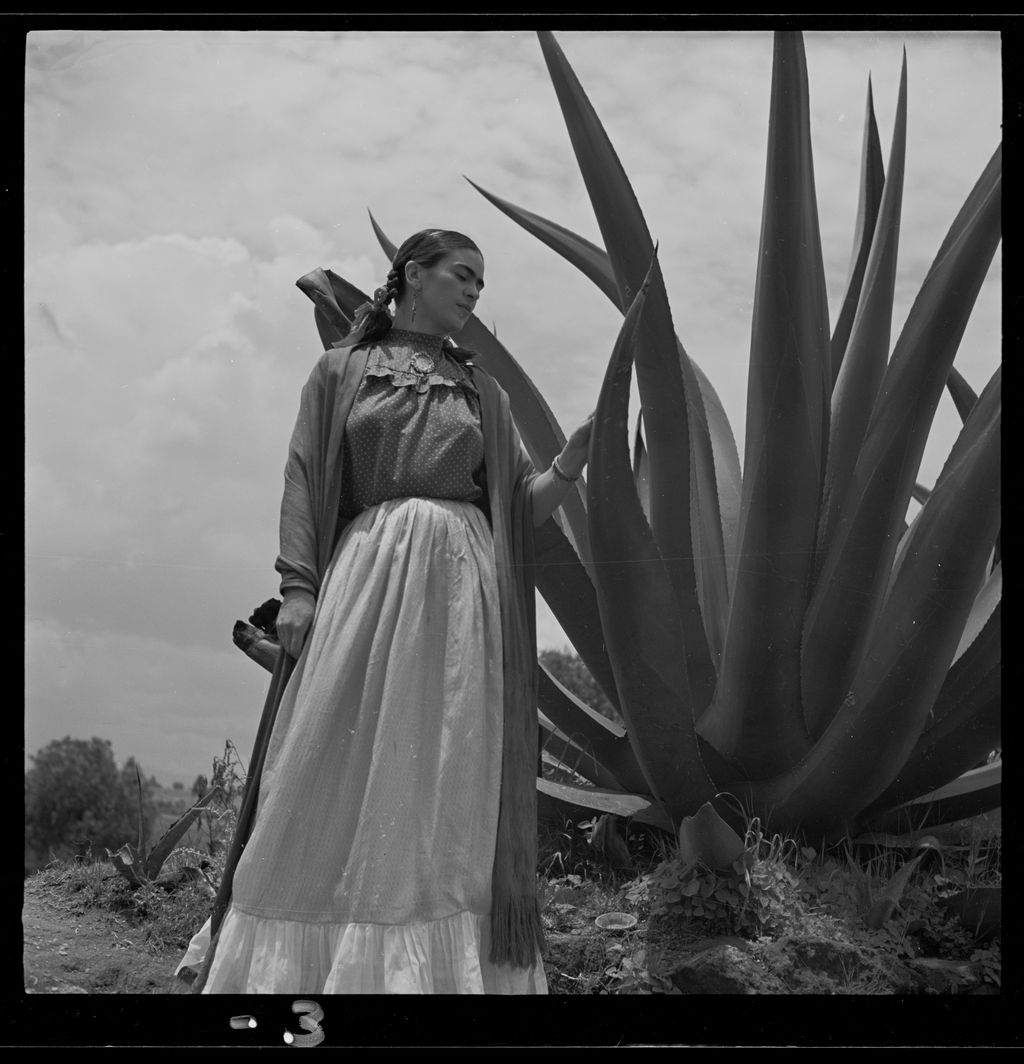
- Photographic record: Toni Frissell’s standing and seated portraits for Vogue, 1937
- Public image: regional dress recombined with international clothes and accessories
Contents
- Introduction
- What “Tehuana Dress” Means
- Tehuana Strength and the “Matriarchy” Claim
- Huipil, Enagua, Holán, Rebozo and Resplandor
- A Wardrobe Both Traditional and Modern
- Dressing Abroad
- Dress, Disability and the Supported Body
- Cosmetics and Hair
- Jewellery and Reassembled Antiquity
- Books for Further Study
What “Tehuana Dress” Means
Tehuana refers to the Zapotec women of the Isthmus of Tehuantepec, in southern Mexico, and to clothing traditions associated with that region. After the Mexican Revolution, images of Tehuana women acquired wider national significance, so the dress could carry both a specific regional identity and a broader symbolic place in modern Mexican culture. [1] Those levels should not be collapsed: a garment can be locally rooted while its image circulates nationally and internationally.
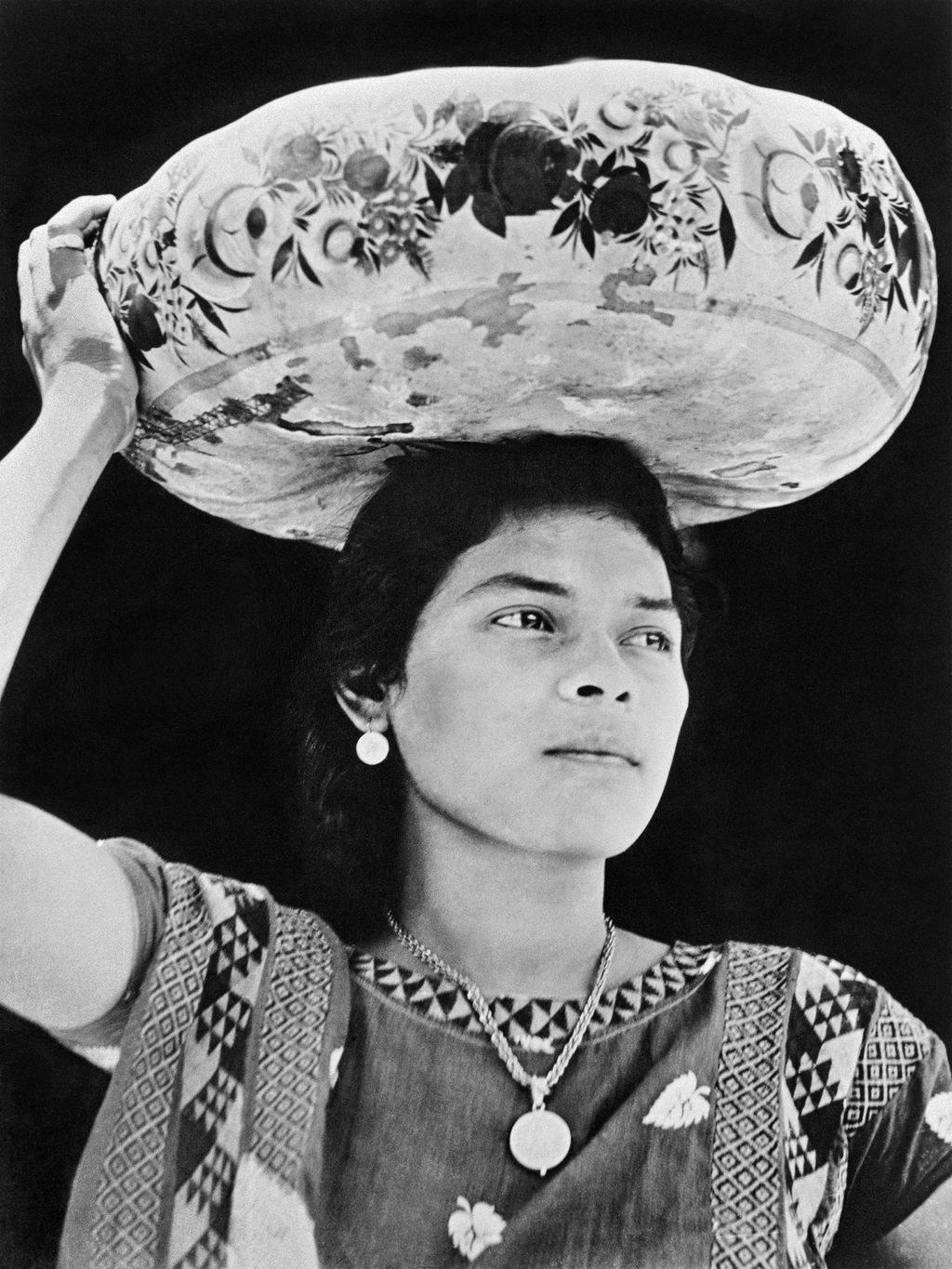
The clothing was never outside history. Fabrics, decoration and combinations changed as materials and machines became available, and formal or ceremonial forms existed beside clothes for daily use. Describing Kahlo as wearing an untouched survival from an ancient past therefore distorts both the makers’ continuing creativity and the modern circumstances in which she dressed. [1]
Pamela Scheinman’s study of Isthmus textiles begins from an apparently paradoxical fact: fashion thrives in communities often represented from outside as timelessly traditional. Women in Tehuantepec, Juchitán and Ixtepec, as well as neighbouring Mixe and Huave villages, continually updated the patterns on their clothes, while the image of the splendidly dressed “Tehuana” circulated through song, film, painting and advertising. [18] Regional continuity and fashion-led change were therefore parts of the same history.
Kahlo also did not wear a single complete Tehuana outfit on every occasion. The V&A identifies combinations drawn from several Mexican regions and Guatemala, sometimes joined by European or Asian garments and accessories. [1] Adriana Zavala’s broader study of women in Mexican art provides a useful framework for this mixture: “modern” and “traditional” were not simple opposites but categories through which femininity and national culture were actively represented. [13]
Watch: Frida Kahlo
Five perspectives to view here alongside the article.
Frida Kahlo’s The Two Fridas: Great Art Explained
A focused visual introduction to the painting and its context.
Tehuana Strength and the “Matriarchy” Claim
The public image of the Tehuana woman carried associations of physical presence, economic activity and female independence. Yet calling the Isthmus a “matriarchy” converts a powerful representation into a simple sociological fact. Howard Campbell and Susanne Green’s history traces how outsiders constructed an image of Isthmus Zapotec women as matriarchal and Amazon-like, then uses women’s self-representations and ethnographic fieldwork to question the attempt to make one unified, “authentic” Zapotec female subject. [19]
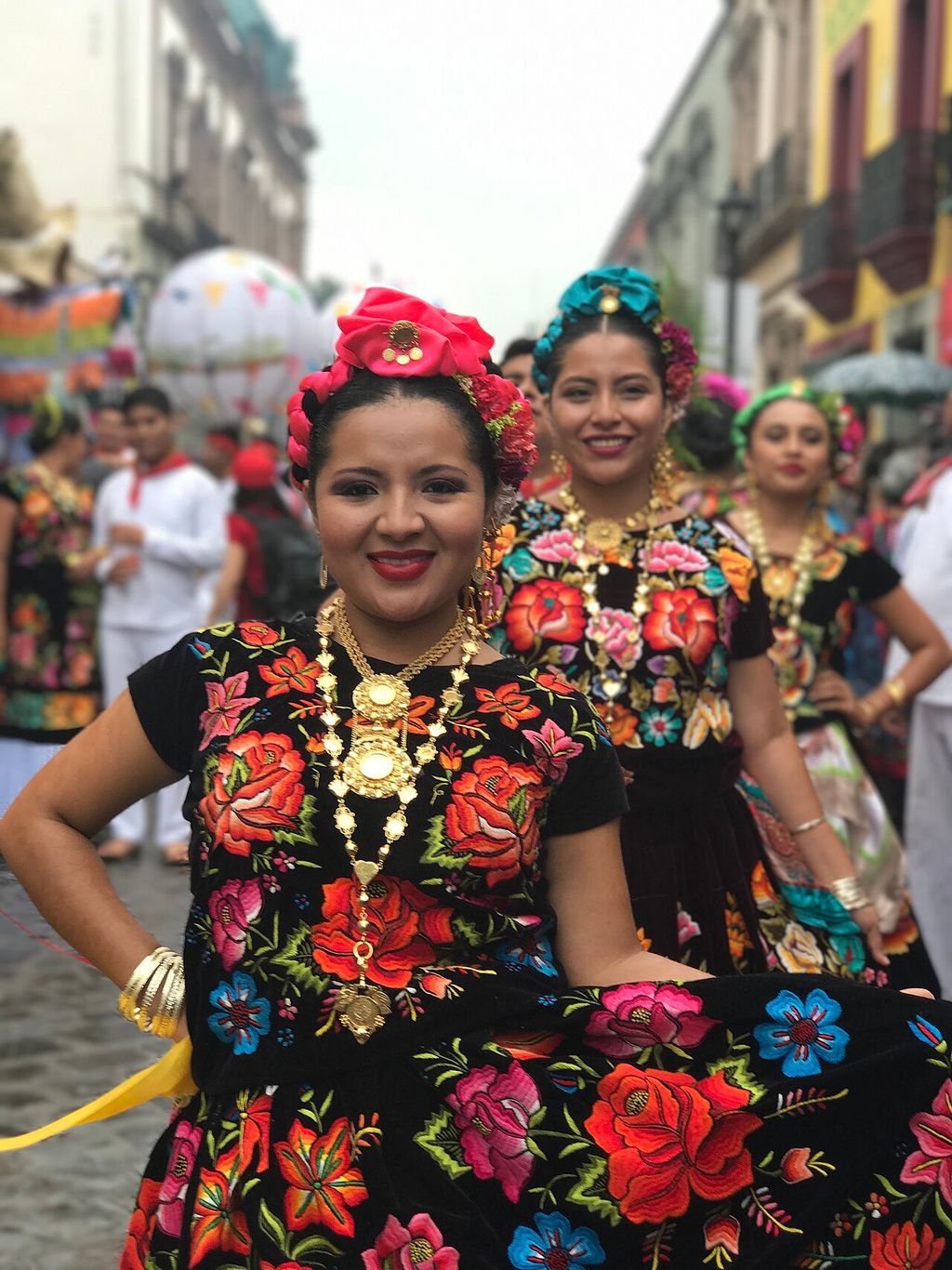
Alessandro Michael Morosin’s later research makes the distinction especially relevant to Kahlo. He places portraits of Kahlo among paintings, writing and journalism that helped create a storyline of Juchitán as a utopia ruled by entrepreneurial women, but describes the region more cautiously as known for relatively more egalitarian gender relations and records sharply divergent views among respondents. [20] The scare quotes in his chapter titles—“Where Women Rule?” and “Matriarchy”—are part of the argument, not decorative hesitation.
Kahlo’s dress could consequently invoke a widely circulating image of Tehuana authority without proving that she endorsed every claim attached to it. Nor can her clothes establish the gender order of the Isthmus itself. This page therefore treats female strength as an important history of representation and avoids “matriarchy” as an unqualified description. [19] [20]
Huipil, Enagua, Holán, Rebozo and Resplandor
The huipil is a tunic built from rectangular sections of cloth. It may be woven on a backstrap loom or made from purchased fabric, while pattern can be brocaded into the textile or added through embroidery and other forms of decoration. This construction helps explain its broad, relatively geometric shape instead of treating that silhouette as a picturesque effect. [1]
Below it, a Tehuana ensemble may include an enagua, or skirt, secured with side ties. A separate flounced hem called a holán can be detached for washing and starching, a practical detail that reveals clothing as maintained material rather than static display. The V&A also distinguishes the rabona, a less elaborate form associated with everyday wear. [1]
The rebozo is a long rectangular shawl with many uses, from carrying and warmth to formal presentation. Its woven patterns can be produced through ikat, in which sections of thread are resist-dyed before weaving. Rebozos came to signify both womanhood and Mexican national identity, yet their materials, workshops and local designs remain more specific than that national symbolism. [1]
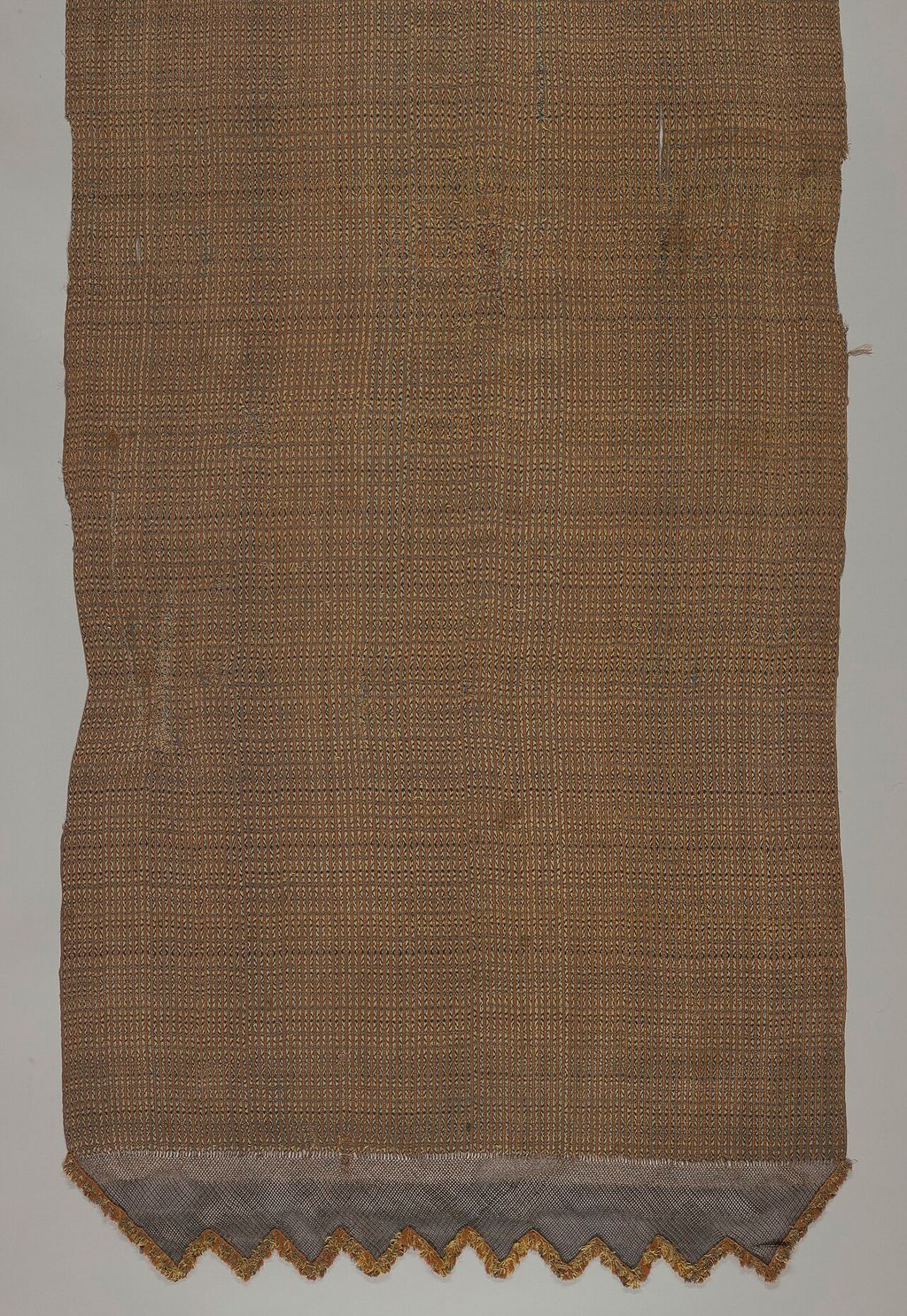
The resplandor, also known as the huipil grande, has two arrangements that use different parts of the garment. On full-dress occasions its broad lower frill surrounds the face, whereas for Mass it rests over the shoulders like a cape, with the smaller collar framing the face and its unused sleeves falling in front and behind. [1] [21] Its origins remain uncertain; Sayer identifies the second arrangement in Kahlo’s Self-Portrait as a Tehuana, whose composition and meanings are explored in the dedicated artwork study.
A Wardrobe Both Traditional and Modern
The word “traditional” can hide the modern economies within these garments. Printed cotton used for skirts was sometimes imported from Manchester, while the spread of Singer sewing machines in the early twentieth century encouraged increasingly dense chain-stitch decoration. A commercial textile could therefore enter a regional form without making that form culturally meaningless. [1]
This history also makes authenticity a poor all-or-nothing test. Kahlo’s outfits could join a Tehuana huipil to a skirt from another region, a European or Asian garment, Guatemalan textiles or jewellery assembled from older beads. The important questions are which component is present, how it was made or altered, and what the particular combination did in a particular setting. [1] [3]
The de Young museum’s detailed exhibition labels make that mixture concrete. One ensemble pairs a hand-embroidered cotton huipil from Juchitán with a silk skirt made in Coyoacán; another joins a handwoven Q’eqchi’ huipil from Cobán, Guatemala, to a Coyoacán skirt and a rayon ikat rebozo from San Luis Potosí. [21] A third combines a European-style blouse made in Mexico with an Isthmus rabona and a cotton ikat rebozo from Tenancingo—the same kind of mixed outfit seen in Toni Frissell’s 1937 Vogue sitting. [21]
Kahlo’s public wardrobe also extended beyond this regional recombination. For an exhibition opening and dinner in New York in 1933, she wore a silk-velvet evening cape with a skirt made from French silk. [21] Placed beside her Tehuana clothes in the museum display, the ensemble shows that cosmopolitan evening dress and regional Mexican clothing were alternatives within one wardrobe rather than opposite identities assigned to different people.
Even the Asian strand is object-specific rather than a vague idea of exotic influence. The same labels identify an early twentieth-century embroidered silk skirt made for Han Chinese women during the Qing dynasty, displayed with a cotton shawl from Altepexi, Puebla; the curators suggest, without claiming certainty, that Kahlo may have acquired the skirt in San Francisco’s Chinatown in 1930–31. [21] The careful wording matters because the object is documented, while the circumstances of acquisition remain an inference.
The surviving clothes confirm that these were handled objects. Conservators have recorded repairs, cigarette burns, ink splashes and paint traces, evidence that at least some garments moved between daily wear, studio work and public presentation. [3] Such marks establish use; they do not disclose a single feeling or political intention on their own.
Dressing Abroad
Kahlo’s letters from New York reveal practical decisions beneath the celebrated public image. On 16 November 1931 she anticipated buying another bonnet and two more wool dresses for outdoor use, explaining that the present heat might suddenly give way to snow. [23] Her plans show a wardrobe responding to expected weather instead of obeying a permanent costume formula; they do not document completed purchases.
Four days later she described the demands of keeping up appearances among women whom she said bought her paintings. She needed multiple dresses and shoes, and felt unable to appear badly dressed without hostile comment. [24] Clothing thus belonged to the social labour of her own developing career, not simply to her appearance beside Rivera.
Her Paris visit in 1939 brings fashion and physical accommodation into another setting. In the Palais Galliera catalogue extract, Jaime Moreno-Villarreal describes her interest in Schiaparelli’s designs associated with Salvador Dalí and Léonor Fini, alongside an account of a doctor arranging orthopaedic shoes intended to remain elegant. [3] In his account, practical footwear and an interest in contemporary couture coexist; medical need did not remove dress from the sphere of choice and pleasure.
The international response could also flatten regional distinctions. Moreno-Villarreal challenges the description of her Paris appearance as a Mexican national costume, emphasising its regional components and Kahlo’s combinations. [3] The difference matters: spectators saw an immediately recognisable Mexican figure, while the clothes themselves retained particular makers, techniques and local histories.
Dress, Disability and the Supported Body
Kahlo’s wardrobe archive includes plaster corsets, supportive braces and a prosthetic leg as well as blouses, skirts and shawls. [2] [3] These objects make disability part of the material history of dress, not an invisible biographical footnote. The health and medical-history guide examines the chronology of injuries, operations and treatments; here the concern is how clothing and supports occupied the same dressed body.
Some garment structures offered practical possibilities. The V&A notes that the huipil’s geometric cut can fall without bunching when its wearer is seated, while adjustable skirts and detachable hems allow changes in fit and care. [1] It is reasonable to discuss those properties, but not to claim that every huipil or long skirt was selected solely to disguise impairment.
The Palais Galliera curators connect clothing adaptations, orthopaedic supports and self-presentation, and surviving objects show that medical apparatus could itself be worked upon visually. [3] This evidence resists a simple opposition between concealment and display. Comfort, bodily support, cultural association and pleasure in appearance could coexist, even when the balance between them cannot be recovered for a specific day or garment.
The casts also differed materially. FAMSF identifies a painted 1944 example made from plaster and medical bandages, while a 1950 example incorporates cotton and mirrors as well as paint. [21] Their surfaces belong to the history of Kahlo’s making, rather than functioning only as illustrations of a medical biography.
Footwear offers especially precise evidence of adaptation. The Museo Frida Kahlo records a circa-1952 right ankle boot in magenta silk, decorated with Chinese dragon motifs, beads and imitation jewellery; a separate black suede shoe was deliberately left open at the toe. [25] Neither object supports a single general explanation for all her shoes, but both show the attention given to individual construction and appearance.
The later prosthesis is a different object, not that magenta ankle boot. Dated 1953 in the museum’s display, it combines a metal support with a red leather boot, silk embroidery, ribbons and two metal bells. [25] The decoration belongs to the device itself, making the supported limb part of the dressed figure rather than an apparatus wholly outside fashion.
Cosmetics and Hair
The face seen in Kahlo’s portraits was not produced by clothing alone. Surviving possessions include a Revlon ebony eyebrow pencil, Clear Red blusher and Everything’s Rosy lipstick, together with nail varnishes, emery boards and Pond’s dry-skin cream. [4] These objects provide firmer evidence than a general claim that she either rejected cosmetics or followed one complete commercial beauty routine.
A second evidence stream comes from testimony. Olga Campos, who interviewed and observed Kahlo in 1949–50, recalled rice powder and blush, strong lipstick and nail polish, and black powder used around the eyes. [4] The recollection and the surviving products are complementary but not interchangeable: Campos named Coty powder, whereas the preserved colour cosmetics prominently include Revlon products.
Braids, ribbons, flowers and earrings extended the composition above the neckline. In Toni Frissell’s two 1937 outdoor photographs, Kahlo wears braided hair with ribbon bows, dangling earrings and a prominent pendant or brooch; those are observations from the photographs, not a complete identification of each object. [14] [15] A fuller account of how photographic portraits shaped her public image appears in the photography essay.
Jewellery and Reassembled Antiquity
Jewellery could be assembled rather than simply purchased as a finished statement. Wilcox and Henestrosa describe pre-Columbian jade beads that Kahlo restrung, including one bearing a green brushstroke; their English introduction caption proposes probable Maya origin, and FAMSF similarly labels a group of greenstone beads as probably Maya. [26] [21] These are qualified attributions, not evidence of an identified excavation site or a securely documented buying expedition.
The relationship between necklace and picture is more suggestive than certain. The curators compare the green-painted bead with Kahlo’s painted jewellery and propose that she may have adjusted its colour to suit an image. [3] [26] The surviving brushstroke connects an ancient material with modern handling, while the reason for that intervention remains their interpretation.
Gold chains provide a different regional connection. The documented torzales necklaces use linked, four-lobed forms to create a rope-like pattern; their ornaments include a gold-and-pearl slide and a United States twenty-dollar coin dated 1903. [21] Coin-bearing necklaces belonged to an Oaxacan tradition of displaying family wealth, but that context does not make Kahlo’s examples proof of her own dowry.
Other jewellery connects the wardrobe with twentieth-century designers. The exhibition identifies a 1940s silver-and-amethyst bracelet by Antonio Pineda and, more tentatively, a silver-and-jade necklace attributed to Héctor Aguilar. [21] Ancient beads, regional gold chains and modern silverwork consequently occupy the same archive without sharing one origin or one meaning.
Pineda’s work also complicates the division between inherited craft and modern fashion. The Fowler Museum places him within the Taxco silver movement, whose designers combined pre-Columbian, colonial and popular-art references with modern forms; he apprenticed in William Spratling’s workshop before developing an independent enterprise. [27] The growth of his workforce from ten smiths to one hundred belongs to the history of organised production, showing that artisan design could be innovative and commercially expansive rather than isolated from modern markets.
Fashioning a Photographic Image
Photographs are indispensable evidence for Kahlo’s dress, but they are not neutral wardrobe inventories. She had grown up around her father Guillermo Kahlo’s photographic work and, according to the V&A, learned darkroom processes and the retouching of glass negatives. [5] That technical background provides context for her later portrait sittings, although it cannot by itself establish her decisions in any one session.
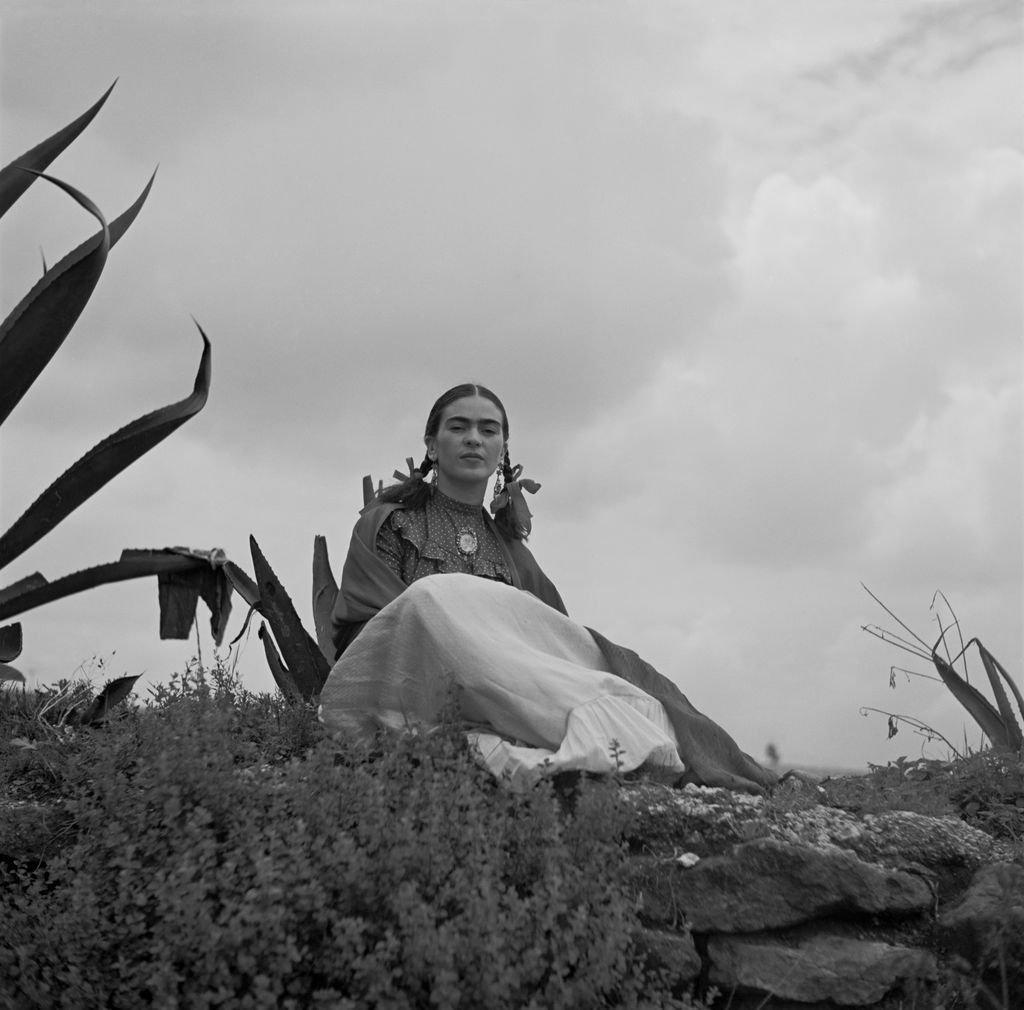
Frissell’s standing and seated photographs from 1937 demonstrate the value of comparison. Both show a dark, small-patterned upper garment with a ruffled front, a light full skirt with a deep lower flounce and a long shawl; the standing view clarifies the silhouette, while the low seated view shows how fabric gathers around the body. [14] [15] Because the photographs are monochrome and do not provide an object catalogue, it would be unsafe to label every visible piece as Tehuana.
Colour could be orchestrated more explicitly. Discussing Nickolas Muray’s 1939 portrait, the V&A relates the magenta rebozo to the flowers, lipstick and nail varnish within the photograph and describes Kahlo and Muray as collaborators in composition and framing. [5] This account recognises the sitter’s active self-presentation while preserving the distinction between her contribution and the photographer’s authorship.
The Spanish scholar Nieves Limón Serrano develops the argument further by analysing pose and mise-en-scène as places where Kahlo’s agency remains visible inside photographs made by others. [6] Her approach is especially useful because it avoids treating the sitter as either a passive object or the sole maker of the photograph. The result is a more exact idea of collaboration: photographer, sitter, clothes, camera and eventual audience all participate, but not in identical ways.
Clothing in Paintings and Writing
A surviving dress, a photographed outfit and a painted garment are related but different forms of evidence. The first retains material traces; the second records a staged encounter at a particular moment; the third belongs to an invented pictorial structure. Treating all three as transparent autobiography would erase the decisions specific to each medium.
In a Portuguese literary study, Tamira Fernandes Pimenta considers material, painted and written clothes together as vehicles through which memory and identity are constructed. [7] That is an interpretive proposal rather than proof that every garment corresponds to one event in Kahlo’s life. Its value is to keep clothing active across objects and language while allowing fabrication, recollection and lived experience to remain distinct.
Rachel Viné-Krupa’s French essay similarly reads clothing as a changing political and gendered language, drawing particular attention to the absent wearer in My Dress Hangs There and the transformation staged in Self-Portrait with Cropped Hair. [8] Those readings should remain attributed and tested against each work’s visible details and object history. Readers can continue with the guide to My Dress Hangs There and the study of Self-Portrait with Cropped Hair rather than making marital biography the automatic explanation for either picture.
Saúl Iván Hernández Juárez places the hanging Tehuana outfit in My Dress Hangs There within a wider contest over Mexican national imagery. He contrasts it with the china poblana, which post-revolutionary institutions promoted as a mestizo emblem of Mexican womanhood, and reads Kahlo’s unworn huipil and skirt against the painting’s New York setting as an alternative, critical Mexicanidad. [22] This is a historian’s interpretation rather than a statement of Kahlo’s intention, but it reveals that “Mexican dress” was never one uncontested national symbol.
The Reopened Wardrobe and Its Afterlives
The evidential basis of this subject changed when locked rooms at Casa Azul were opened and their contents studied in 2004. Conservators encountered worn and paint-flecked clothes, jewellery, cosmetics, letters, decorated corsets and orthopaedic devices, while cataloguing made it possible to compare objects that had long been known mainly through paintings and photographs. [2] The collection was publicly announced in 2007, and selections have been displayed at Casa Azul in Las apariencias engañan since 2012. [2]
That archive also requires strict attention to ownership. An exhibition may place a regional garment beside Kahlo’s art without claiming that she wore it: the Museum of Fine Arts Boston, for example, discussed a dress in the Phillips collection that had been acquired with Kahlo’s assistance, not a dress from her personal wardrobe. [9] Collection history is therefore part of identification, not an administrative detail added after interpretation.
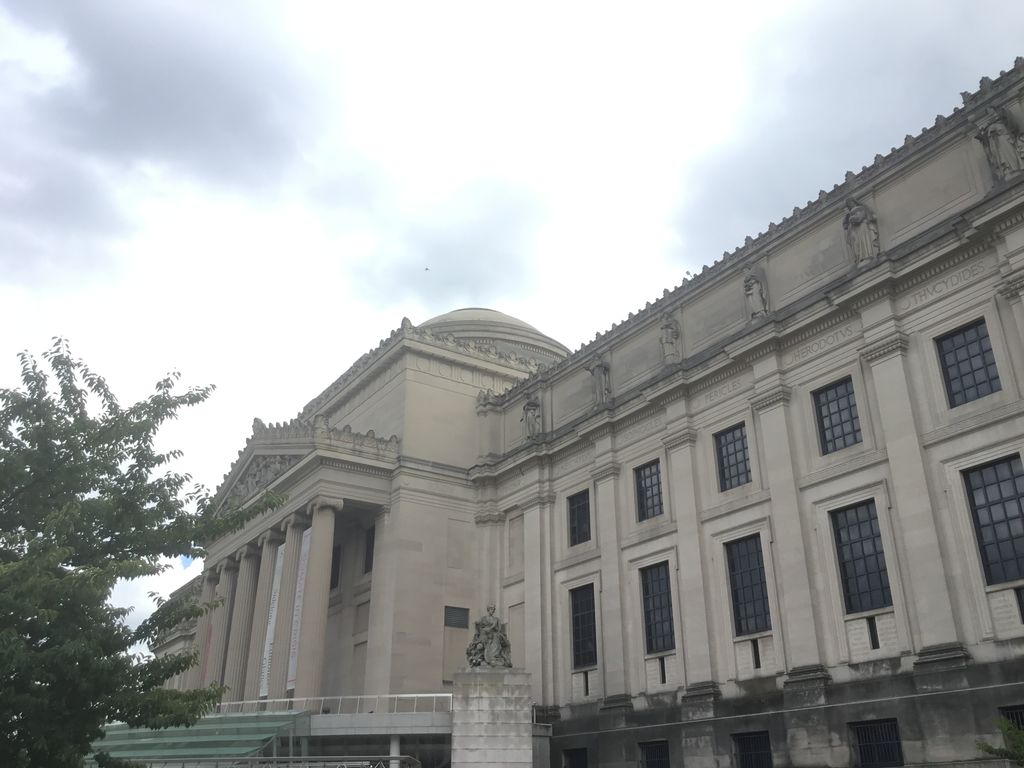
Dress and possessions later became organising themes for major exhibitions. The V&A’s Frida Kahlo: Making Her Self Up ran in London from 16 June to 18 November 2018, followed by the Brooklyn Museum’s Frida Kahlo: Appearances Can Be Deceiving from 8 February to 12 May 2019. [10] [11] Successive presentations of the archive made clothing central to Kahlo’s institutional image, extending an exhibition history that began in Mexico.
Ishiuchi Miyako’s photographic project offers a different afterlife. The Yokohama Museum of Art placed Frida (begun in 2012) beside Ishiuchi’s series about her mother’s possessions and the belongings of people exposed to the Hiroshima atomic bomb, framing such objects as carriers of accumulated time that can loosen fixed public images. [12] In this interpretation, Kahlo’s clothes become material residues to examine rather than celebrity relics alone.
From Worn Clothes to Museum Ensembles
Conservation reveals an aspect of the wardrobe that a polished display can obscure. Preparing the London exhibition, specialists examined pigment embedded in textile fibres, surface brush traces and ink marks alongside repaired and worn areas. [26] [3] Such evidence makes clothes part of the working environment: they could receive the palette, brushes and other materials as Kahlo painted, even when no surviving mark can be assigned to a specific canvas.
Exhibition presentation introduces another set of makers. The Museo Frida Kahlo credits conservation, specially made mannequins and Angelo Seminara’s hair styling, while Wilcox and Henestrosa describe conserved garments assembled for the V&A display. [25] [26] A museum ensemble is therefore a modern interpretation of historical objects, not a body preserved exactly as it appeared on an ordinary day.
That distinction extends to the clothes themselves. Some FAMSF outfits explicitly contain modern reproduction skirts, so the displayed grouping must not automatically be identified as an untouched original combination. [21] The individual blouse, skirt, shawl and ornament remain valuable evidence, but their ownership, date and relationship to a photographed appearance are separate questions.
The catalogue’s design makes this movement between evidence types visible. Six inset booklets reproduce archival photographs and possessions alongside the main essays and displays of clothing. [26] The sequence encourages comparison between lived objects, staged portraits and painted garments, without making any one of them a complete substitute for the others.
Books for Further Study
The most directly relevant book is Claire Wilcox and Circe Henestrosa’s edited catalogue Frida Kahlo: Making Her Self Up. Produced for the V&A exhibition, it brings dress and personal possessions into sustained conversation with Kahlo’s self-presentation and provides substantially more object context than a general biography. [16]
Its introductory essay gives particular attention to conserved textiles, the assembled exhibition figure and jewellery altered through painting. [26] These approaches make the catalogue a strong companion for readers interested in how apparently separate histories of fashion, material conservation and art meet in Kahlo’s possessions.
Frida Kahlo: Her Photos, with texts by Pablo Ortiz Monasterio and other contributors, approaches the photographic collection preserved at Casa Azul. [17] It is a useful companion to a fashion study because it shifts attention from a small set of famous portraits to the larger visual archive preserved there.
For a wider account of gender and national representation, Adriana Zavala’s Becoming Modern, Becoming Tradition places Kahlo within a comparative history of women in Mexican art. [13] It helps readers question the easy opposition between cosmopolitan modernity and an unchanging tradition—the same opposition that a close look at Kahlo’s mixed wardrobe complicates.
Frequently Asked Questions
The evidence supports several overlapping functions rather than one exclusive reason: regional and national association, visual pleasure, public presentation and, for some garments, practical accommodation of the body. [1] [2] [3] A specific motive should be claimed only when a dated object, statement or context supports it.
Wearing Tehuana clothing does not establish Zapotec ancestry or membership of an Isthmus community. The garments document cultural selection and affiliation; genealogy requires separate family and archival evidence and is addressed in the Indigenous identity and Mexicanidad essay.
A huipil is a tunic constructed from joined sections of cloth, traditionally woven or made from commercially produced fabric and then decorated in several possible ways. [1] Its form, technique and regional origin should be identified object by object instead of calling every embroidered blouse a huipil.
Her archive documents medical supports and clothing adaptations, and some garment structures offered practical advantages. [1] [2] [3] That does not prove a universal wish to conceal disability, so comfort, support, fashion and public presentation should not be reduced to one psychological explanation.
The Isthmus became famous through images of economically active, commanding women, and that association formed part of the cultural meaning available to Kahlo. [19] [20] Ethnographic scholarship treats “matriarchy” as a contested outsider construction and records both comparatively egalitarian features and divergent local experiences, so the term should not be presented as a settled description of Zapotec society.
Yes. Surviving cosmetics include Revlon eyebrow, cheek and lip products, nail items and skin cream, while Olga Campos separately recalled Kahlo’s use of powder, blush, lipstick and eye makeup in 1949–50. [4] The physical objects and the recollection should be reported as distinct evidence.
Discussion
Use the cited evidence and your own close looking to explain your view. The prompts below are starting points, not fixed interpretations.
Reader Insights
Which surviving garment or photograph most changes how you understand Kahlo’s dress?
Look for the difference between a garment’s origin, its later combination with other pieces and its appearance in a staged photograph.
When does a description of Tehuana dress help, and when does it flatten a changing regional tradition?
Join the Conversation
Which reading best fits the evidence, and where does uncertainty remain?
References
- Chloë Sayer, “Traditional Mexican dress,” Victoria and Albert Museum. View source text.
- “Unlocking Frida Kahlo’s wardrobe,” Victoria and Albert Museum. View source text.
- Palais Galliera / Paris Musées, Frida Kahlo, au-delà des apparences press dossier (in French). View source text.
- Claire Wilcox, “Making her self up,” Victoria and Albert Museum. View source text.
- “Photographing Frida Kahlo,” Victoria and Albert Museum. View source text.
- Nieves Limón Serrano, “Frida Kahlo y el problema de la autoría fotográfica,” Cuadernos Kóre 8 (2013), pp. 215–236 (in Spanish). View source text.
- Tamira Fernandes Pimenta, Entre as palavras, o corpo e as imagens, Universidade Federal de Uberlândia dissertation (2020) (in Portuguese). View source text.
- Rachel Viné-Krupa, “Le vêtement comme seconde peau,” Jef Klak (20 November 2017) (in French). View source text.
- “Frida Kahlo and Arte Popular,” Museum of Fine Arts Boston (25 January 2019). View source text.
- Frida Kahlo: Making Her Self Up, Victoria and Albert Museum exhibition record. View source text.
- Frida Kahlo: Appearances Can Be Deceiving, Brooklyn Museum exhibition record. View source text.
- Ishiuchi Miyako: Grain and Image, Yokohama Museum of Art, “Belongings” section. View source text.
- Adriana Zavala, Becoming Modern, Becoming Tradition, Penn State University Press. View source text.
- Toni Frissell, Frida Kahlo standing next to an agave plant, 1937, Library of Congress negative via Wikimedia Commons. View source text.
- Toni Frissell, Frida Kahlo seated next to an agave, 1937, Library of Congress negative; restoration by Adam Cuerden. View source text.
- Claire Wilcox and Circe Henestrosa, eds., Frida Kahlo: Making Her Self Up, ABRAMS / V&A. View source text.
- Frida Kahlo: Her Photos, Editorial RM. View source text.
- Pamela Scheinman, “A Line at a Time: Innovative Patterning in the Isthmus of (Isthmian) Mexico,” in Textile Traditions of Mesoamerica and the Andes, pp. 63–88. View source text.
- Howard Campbell and Susanne Green, “A History of Representations of Isthmus Zapotec Women,” Identities 3, nos. 1–2 (1996), pp. 155–182. View source text.
- Alessandro Michael Morosin, Confronting Dispossession, University of California, Riverside dissertation (2019), especially pp. 135 and 163. View source text.
- Fine Arts Museums of San Francisco, Frida Kahlo: Appearances Can Be Deceiving exhibition labels. View source text.
- Saúl Iván Hernández Juárez, “Una china poblana en Tamaulipas,” Revista de El Colegio de San Luis 11, no. 22 (2021), especially pp. 25–26 (in Spanish). View source text.
- Frida Kahlo, letter to Matilde Calderón de Kahlo, 16 November 1931, p.3; original Spanish manuscript, National Museum of Women in the Arts. View source text.
- Frida Kahlo, letter to Matilde Calderón de Kahlo, 20 November 1931, pp.1–2; original Spanish manuscript, National Museum of Women in the Arts. View source text.
- Museo Frida Kahlo, Las apariencias engañan, Spanish digital exhibition; footwear object descriptions and exhibition credits. View source text.
- Claire Wilcox and Circe Henestrosa, “Introduction: Fashioning Frida,” in Frida Kahlo: Making Her Self Up (2018), pp.13–18; complete introduction in the authors’ repository extract, not the complete catalogue. View source text.
- Fowler Museum at UCLA, Silver Seduction: The Art of Mexican Modernist Antonio Pineda (2008–09), “Exhibition In Depth.” View source text.
Image Credits
- Toni Frissell, 1937. Library of Congress, Prints & Photographs Division, Toni Frissell Photograph Collection, LC-F9-01-3707-25, no. 3; digital ID ds.05049. Source record.
- Toni Frissell, 1937. Library of Congress, Prints & Photographs Division, Toni Frissell Photograph Collection, LC-F9-01-3707-25, no. 4; digital ID ds.05050. Restoration: Adam Cuerden. Source record.
- Tina Modotti, Woman in Tehuantepec, c.1920s. Public domain. Source: Wikimedia Commons. Resized to 1024 px wide; no crop. Source record.
- DianaFacio. CC BY-SA 4.0. Source: Wikimedia Commons (File:La sonrisa de las tehuanas.jpg). 1024px proportional sRGB JPG derivative; no crop. Licence. Source record.
- Unknown artist Unknown artist. Public domain. Source: Wikimedia Commons (File:Rebozo (Mexico), late 18th–early 19th century (CH 18443891).jpg). 1024px proportional sRGB JPG derivative; no crop. Licence. Source record.
- Exterior of the Brooklyn Museum — Kidfly182. CC BY-SA 4.0. Resized and converted to JPEG/sRGB; no crop.
