


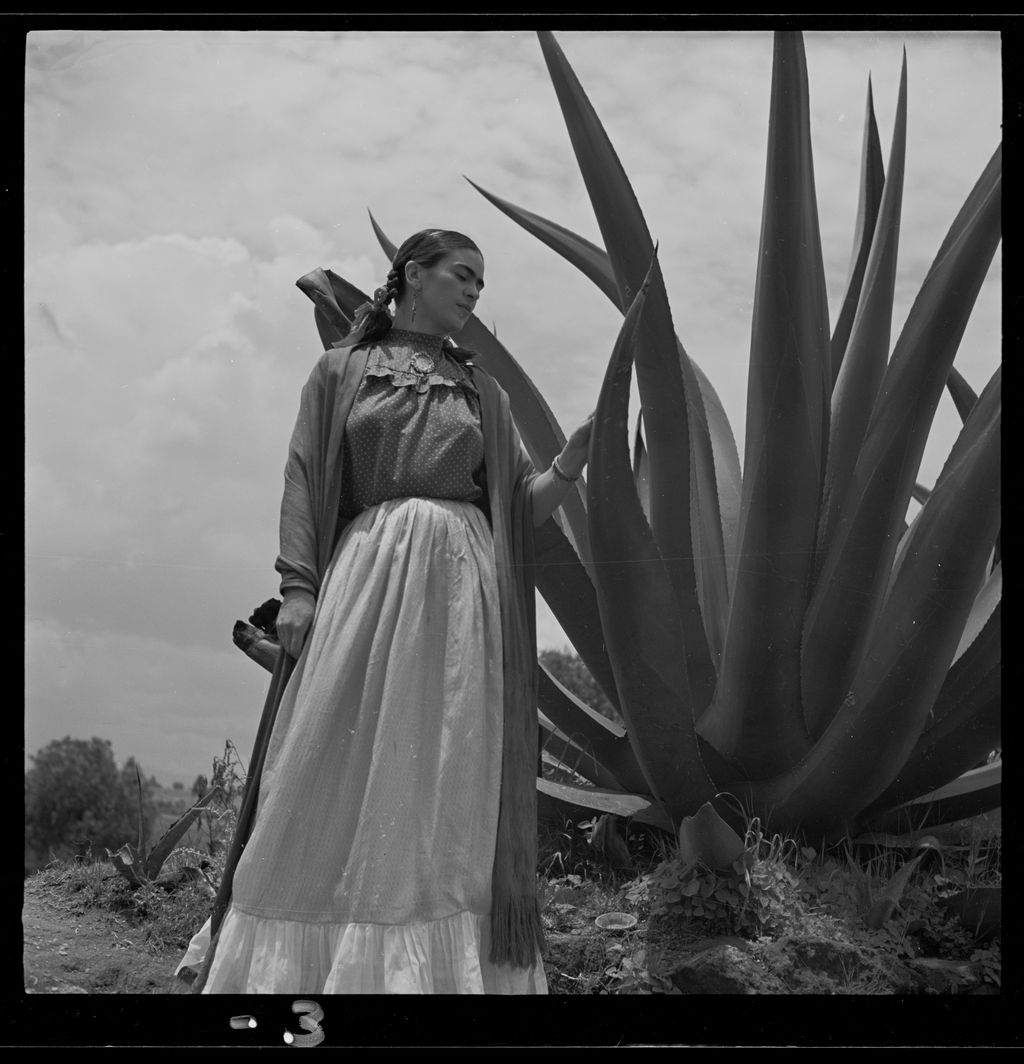
 by Tom Gurney
Tom Gurney BSc (Hons) is an art history expert with over 20 years experience
Page created on March 2, 2018 / Page updated on October 6, 2026
Email: tomgurney1@gmail.com / Phone: +44 7429 011000
Introduction
Frida Kahlo's life joined an unusually varied set of working worlds: a family photographic business, a politically active school circle, the households and commissions of Diego Rivera, international galleries, a Mexican art school and the changing rooms of Casa Azul. Illness and injury altered her mobility and the circumstances in which she painted, but the career also required the everyday work of making pictures, corresponding with friends and dealers, preparing exhibitions and teaching. A chronological account makes those activities visible alongside the episodes for which she is most often remembered. [1] [2] [3]
The strongest record combines dated correspondence with exhibition catalogues, collection histories and institutional chronologies. Letters preserve what a writer wanted to tell a particular person; paintings transform experience through form; later scholarship asks how the famous life has been narrated. Keeping those differences in view allows Kahlo's biography to include suffering, affection and political commitment without treating every image as an unmediated confession. [4] [5] [6]
At a Glance
- Life: 6 July 1907–13 July 1954, born and died in Coyoacán, Mexico City
- Early formation: National Preparatory School from 1922; photographic work in her father's household; sustained painting during recovery after the 1925 accident
- Marriage: married Diego Rivera in 1929, divorced in 1939 and remarried in 1940
- International career: United States residence in 1930–33; New York solo exhibition in 1938; paintings in the mixed Paris exhibition Mexique in 1939
- Teaching and recognition: La Esmeralda from 1943; honourable mention for Moses in 1946; a lifetime solo exhibition in Mexico in 1953. [1] [7] [8]
Kahlo’s life and career
Childhood and school
1907–1925Accident and convalescence
1925–1927First marriage
1929–1939Second marriage
1940–1954San Francisco public showing
1931New York solo exhibition
1938Mexico solo exhibition
1953First American period
1930–1933San Ángel household
from 1934; later household changedNew York and Paris exhibitions
1938–39Casa Azul as principal later home
1940–1954Selected periods and milestones. Chronology [1], teaching [7] and the 1931 exhibition record [13].
Contents
- Introduction
- Coyoacán and the Family Home
- Polio and the National Preparatory School
- The Accident and Painting During Recovery
- Political Networks and Marriage in 1929
- San Francisco and an Early Public Showing
- New York and Detroit in Her Letters
- San Ángel and Continuing Friendships
- A Gallery Career in New York
Watch: Frida Kahlo
Five perspectives to view here alongside the article.
Frida Kahlo’s The Two Fridas: Great Art Explained
A focused visual introduction to the painting and its context.
Coyoacán and the Family Home
Magdalena Carmen Frida Kahlo Calderón was born on 6 July 1907 in Coyoacán, in the house later known as Casa Azul. Her parents were the photographer Guillermo Kahlo and Matilde Calderón, and she was the third daughter of their marriage. The home remained an important point of return through travel, different marital arrangements and changing working conditions; it eventually became the museum that preserves much of her personal environment. [1] [2]
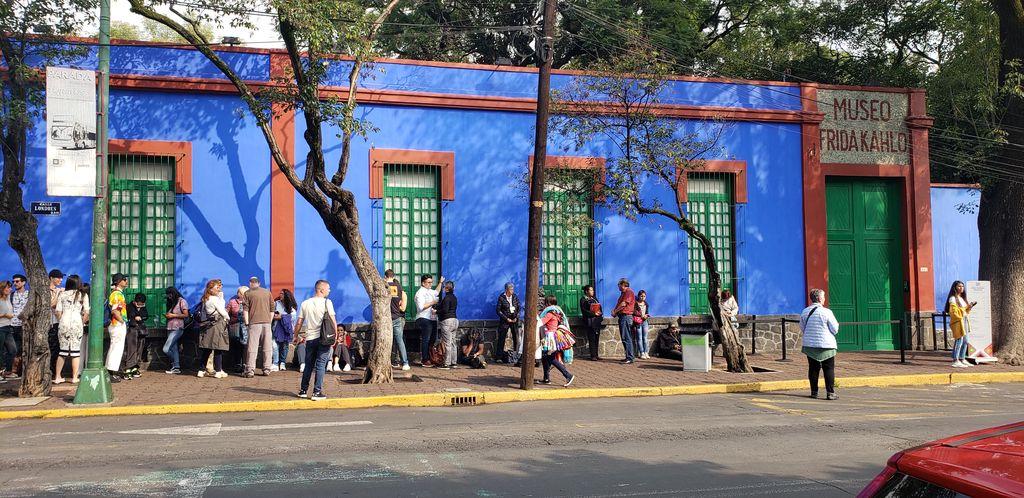
Kahlo later associated her birth with 1910, the beginning of the Mexican Revolution. That alternative date belongs to her presentation of herself within Mexico's history; it does not replace the documented 1907 chronology. The distinction is a small but revealing example of the distance between a dated event and the identity an artist subsequently makes from it. [1] [5]
Guillermo's photography placed visual work inside the household before Frida adopted painting as her principal occupation. The museum records her colouring photographs for him and undertaking other paid work as a young woman. Colouring a photographic image involved close attention and practical labour, although the surviving account does not establish a formal painting apprenticeship or explain every device she later used in portraits. [1] [2]
Casa Azul was also a family setting with obligations, affection and friction. The later letters to Matilde are useful because they preserve ordinary communication alongside major events: news, invitations, travel plans and concern for relatives. They give a fuller sense of a relationship than a biographical formula in which one parent represents affection and the other rejection. [4] [9] [10]
Polio and the National Preparatory School
At the age of six Kahlo contracted polio, which left lasting effects in her right leg. Institutional summaries place the illness in different calendar years, so her age provides the firmer formulation. Museo Frida Kahlo also records activities including swimming, cycling and other sports; their presence in her childhood need not be converted into an unsupported story about a psychological cure. [1] [4]
She entered the National Preparatory School in Mexico City in 1922 with an ambition to study medicine. She was one of roughly three dozen girls in a school with about two thousand boys, a striking educational circumstance even though published summaries differ over the exact female enrolment. The school supplied an intellectual and social environment that preceded her marriage and cannot be attributed to Rivera's influence. [1] [2]
Kahlo belonged to the Cachuchas, a circle of students associated with lively debate and irreverent behaviour, and formed a relationship with Alejandro Gómez Arias. Reading, friendship and left politics became part of her development there. Rivera began his mural in the school's Bolívar Amphitheatre in 1922, but encountering an established artist's public work is different from the adult relationship that developed later. [1] [2]
Her education did not lead to the medical career she had envisaged. Yet the school years remain significant beyond that unrealised plan: they gave her friends, political questions and a practice of looking and argument before prolonged convalescence changed her daily life. A biography that starts with the accident loses this earlier formation. [1] [5]
The Accident and Painting During Recovery
On 17 September 1925, the bus in which Kahlo and Gómez Arias were travelling collided with a streetcar. The museum chronology describes a month in the Red Cross hospital followed by months of recovery at home. She was eighteen, and the interruption reached beyond immediate injury to her education, movement and contact with friends. [1] [2]
An adapted easel and a mirror over her bed allowed her to work while lying down. In 1926 she painted Self-Portrait in a Velvet Dress for Gómez Arias, a work the museum identifies as her first self-portrait. The qualification matters: it establishes a beginning within self-portraiture without claiming that no earlier drawing, painted object or other image existed. [1] [2]
The painting also marks an act of communication. Kahlo presented herself to a particular recipient through a carefully arranged painted likeness, rather than merely documenting the body as it lay in recovery. Her subsequent portraits developed that capacity to address other people, construct a presence and make an image that could move beyond the room in which it was produced. [1] [6]
Convalescence therefore belongs to the history of her practice, but the familiar assertion that the accident instantly made her an artist compresses a longer development. Earlier visual work, education and relationships continued to matter, as did the paintings and artistic encounters that followed. The accident and recovery study examines the competing testimony and the limits of the surviving medical account in greater detail. [1] [5] [6]
Political Networks and Marriage in 1929
By about 1928 Kahlo was closely involved with Communist youth networks and with people including the photographer Tina Modotti and Diego Rivera. Rivera was an established muralist whose public work and international experience were very different from her emerging practice. His encouragement mattered, but a teacher-and-pupil formula gives an incomplete account of a young artist who already had paintings, friends and interests of her own. [1] [2]
They married in Coyoacán on 21 August 1929, when Kahlo was twenty-two. The partnership brought new residences, contacts and travel while preserving a marked difference in age and professional standing. Rivera's commissions helped shape their movements, and Kahlo's own work developed within those changing circumstances. [1] [11]
The couple spent time in Cuernavaca while Rivera worked at the Cortés Palace. In November 1930 they travelled to San Francisco, the first extended American chapter of the marriage. Celia Stahr's published opening excerpt dates their arrival to 9 November and describes the help of Ralph Stackpole and Albert Bender with the visa arrangements; the wider argument of her complete book requires a fuller reading than that excerpt supplies. [1] [25]
San Francisco and an Early Public Showing
In San Francisco Kahlo met Dr Leo Eloesser, formed friendships and continued making portraits. Her 1931 Frieda and Diego Rivera, now at SFMOMA, portrays the couple together while its banner identifies Kahlo as the artist who made the picture for Albert Bender. Rivera holds the palette and brushes, yet her authorship is announced within the work itself. [11]
That distinction helps explain the unequal partnership without erasing her agency. The public figure with established commissions appears beside a younger painter who was developing her own subjects and making an object for a specific patron. The painting supplies evidence of work and exchange in the American period, rather than a simple illustration of married happiness. [11]
The Smithsonian's dated catalogue record places the sixth San Francisco Society of Women Artists exhibition at the California Palace of the Legion of Honor from 4 November to 3 December 1931 and describes it as Kahlo's first public showing. SFMOMA identifies the exhibited work as the double portrait. Only part of the historic catalogue is digitised, and a separate archival summary gives 1932, but the item dated 1931 provides the stronger event record. [11] [13]
The distinction between this group exhibition and the later solo debut is important. Kahlo's work reached a public exhibition setting well before the Julien Levy show of 1938. The 1931 evidence does not establish her physical attendance throughout the run; it establishes a stage in the circulation of her painting. [11] [13]
New York and Detroit in Her Letters
After a return to Mexico in June 1931, the couple travelled to New York later that year. Kahlo's January 1932 letters to Matilde give a direct view of social obligations, Rivera's exhibition activity and uncertainty over the next journey. Her letter of 8 January reports a crowded schedule, while the one dated 14 January discusses intended travel and possible destinations. [1] [9] [12]
Plans in a letter should be read as plans. The January correspondence shows Kahlo thinking ahead and explaining circumstances to her mother, but it cannot by itself prove that every proposed departure occurred. It also restores her as a writer with a particular audience, choosing which experiences to recount and how to make them intelligible from abroad. [9] [12]
The Detroit period began in April 1932. In July Kahlo experienced a pregnancy loss and hospitalisation, events associated with the making of Henry Ford Hospital. The dated episode is central to that year; a confident claim that the 1925 accident made every pregnancy impossible, or that the painting gives a clinical inventory, goes beyond the evidence considered here. [1] [4]
Family correspondence gives the same period a less schematic emotional history. Matilde's letter of 15 August 1932 expresses affection, and the NMWA exhibition of mother-and-daughter letters emphasised the warmth found in selected surviving documents. These sources complicate a story of simple maternal rejection while leaving room for tensions that one affectionate letter cannot settle. [10] [29]
Kahlo returned to Mexico during her mother's final illness in September. Rivera's commissions subsequently took the couple through Detroit and New York before they returned to Mexico in December 1933. The American-years study develops the cities, work and networks; the biographical sequence also needs the correspondence that kept Kahlo connected with people beyond the immediate household. [1] [4]
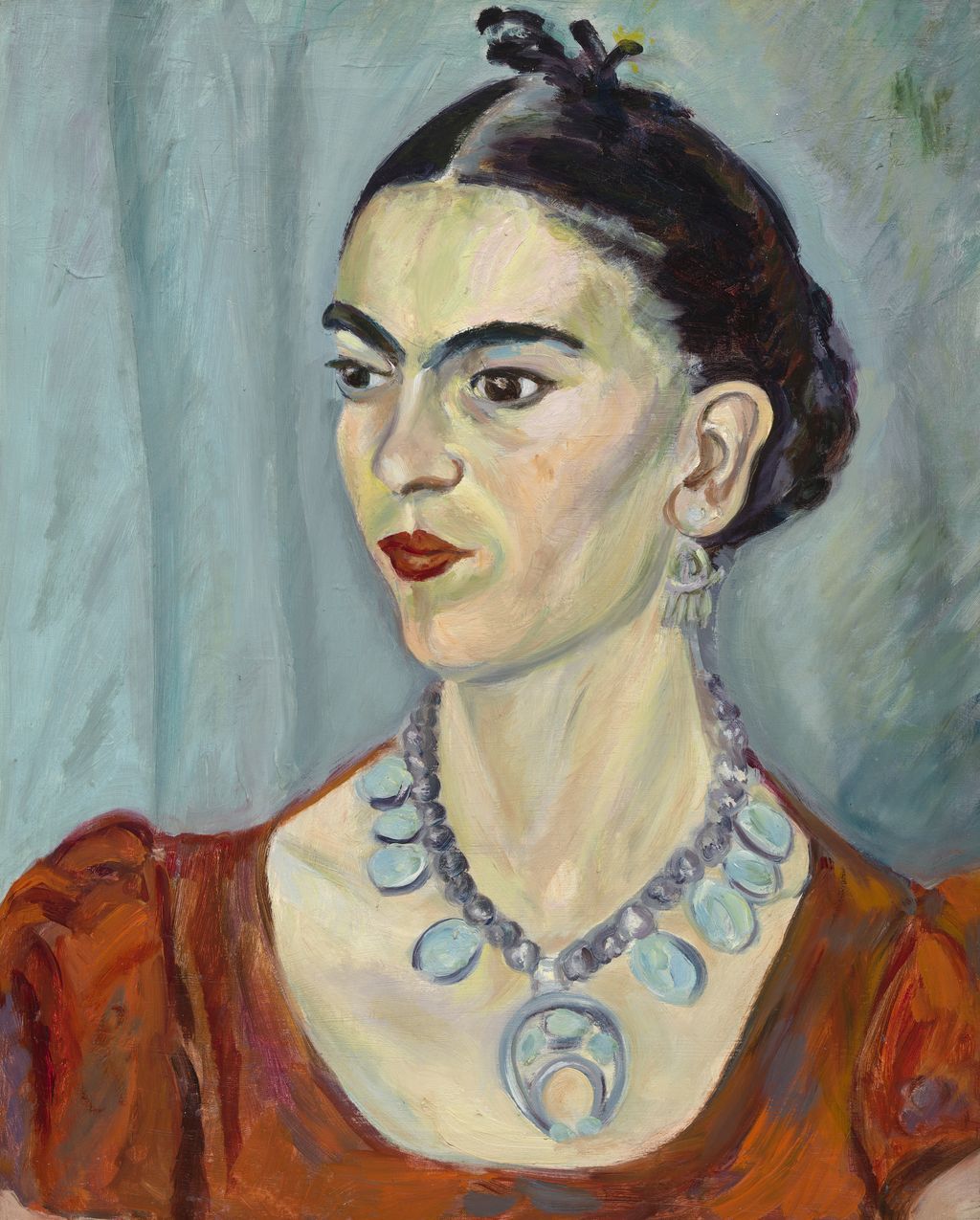
San Ángel and Continuing Friendships
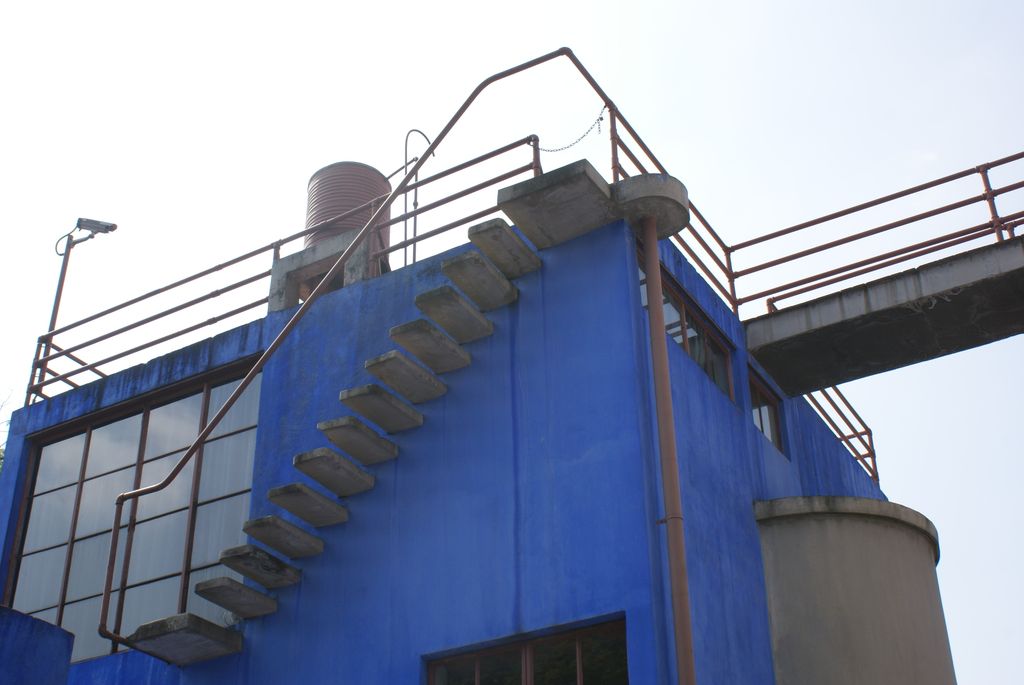
In 1934 Kahlo and Rivera occupied Juan O'Gorman's paired houses and studios at San Ángel. This was a different place from Casa Azul, with separate working spaces joined architecturally. The buildings make the organisation of the household visible, although their bridge cannot establish what either artist privately felt about the marriage. [1] [2]
A letter from Lucienne Bloch on 15 September 1934 offers another view of the social world carried back from America. Bloch writes affectionately, remembers their differing reactions to an eclipse in Detroit, and begins an account of her own fresco work after hearing that Kahlo was in hospital. The exchange places Kahlo within an enduring friendship between working artists, rather than showing the American friendships ending with the return to Mexico. [14]
Bloch's account is also a reminder that art was discussed through practical detail. She describes collaboration, money, plaster and exhausting daily labour, then teaching work undertaken to secure food and accommodation. These are Bloch's circumstances, but their communication to Kahlo shows the ordinary professional conversation that coexisted with illness and the more famous events of her biography. [14]
The museum chronology records difficult changes in the marriage during the mid-1930s, including Rivera's relationship with Cristina Kahlo. The broad crisis belongs in the chronology, but its private motives and exact sequence require closer documentary evidence than the institutional summary exposes. The partnership study examines the documented shared career, residences and separation without assigning one cause to every later painting. [1]
Political activity also continued. Kahlo supported the Spanish Republican cause, and Leon Trotsky and Natalia Sedova were hosted at Casa Azul after arriving in Mexico in 1937. Hosting is part of the documented history of the house and political network; it does not by itself authenticate every intimate story subsequently attached to the visit. [1] [2]
A Gallery Career in New York
Kahlo's first one-person United States exhibition ran at Julien Levy Gallery from 1 to 15 November 1938. André Breton had encountered her work in Mexico that year, and the exhibition brought sales, artist visitors and press attention. MoMA curator Veronica Roberts also describes the patronising language through which some reviewers continued to present her in relation to Rivera. [15] [17]
That reception is part of the career's historical setting. The exhibition does not show that Kahlo was famous on today's scale, but it establishes that she was selling and showing work internationally under her own name. Her success occurred within networks of dealers, patrons, friends and Surrealist promotion, whose contribution can be recognised without making any one man the discoverer of her art. [15]
The difference from the early American residence is substantial. In 1930–33 Rivera's commissions largely supplied the reason for travel; in 1938 Kahlo travelled for an exhibition of her own paintings. Those two circumstances belong to the same developing career, yet they required different forms of professional action. [1] [15]
Paris and the French State Purchase
Kahlo reached Paris in January 1939, but the exhibition that followed was a mixed presentation rather than a solo show. Didier Schulmann's French curatorial account describes eighteen of her paintings among more than 150 items in Mexique at Renou et Colle. The display opened on 10 March, bringing the paintings into a heterogeneous selection of Mexican objects and images. [16]
Schulmann also distinguishes Breton's role from the practical assistance of Marcel Duchamp and Jacqueline Lamba. That account gives the episode a more complicated structure than a triumphant arrival followed by universal acclaim. It shows an artist negotiating an exhibition environment that did not coincide with the individual show she had expected. [16]
The French state bought The Frame in 1939. Centre Pompidou's collection record identifies the acquiring body, while Schulmann records notification of the purchase on 22 May and registration at the Jeu de Paume on 4 July. The familiar claim that the Louvre bought the painting obscures this institutional sequence. [16] [17]
The object itself joined a small painted self-portrait with a Mexican reverse-painted glass surround and a wooden artist's frame. The acquisition therefore placed a materially distinctive work, combining portraiture and a separate craft object, inside a European public collection. Its construction is evidence of artistic choice, rather than a generic illustration of colourful national identity. [17]
Divorce and Remarriage in 1939 and 1940
Kahlo and Rivera divorced on 6 November 1939. The Two Fridas, made that year, belongs to the period of separation, but its joined figures, differentiated clothing and exposed hearts remain a constructed painting rather than a complete account of the divorce. The double-portrait study considers the formal and interpretive questions separately. [1]
Her exhibition activity continued in 1940, including the International Exhibition of Surrealism in Mexico City and MoMA's Twenty Centuries of Mexican Art. The latter ran from 15 May to 30 September and its original catalogue supplies a firmer basis for participation than a general retrospective biography. The career had public institutional settings while the marriage was changing. [1] [18]
In 1940 Kahlo travelled to San Francisco for medical care while Rivera worked on Pan American Unity. They remarried there on 8 December. These are useful chronological anchors, but neither the surviving institutional sequence nor the paintings justify inventing a private proposal scene, fixed contractual terms or a single explanation for the reunion. [1] [4]
Following remarriage, Casa Azul became Kahlo's principal home while Rivera retained his San Ángel studio. The separate residences and work spaces help explain their later circumstances more concretely than a claim that remarriage restored the earlier household unchanged. Their artistic exchange continued alongside different routines, commitments and public careers. [1] [2]
Exhibitions and Teaching in the Early 1940s
Guillermo Kahlo died on 14 April 1941. In the following years Kahlo continued exhibiting and entered new professional settings in Mexico. She became a founding member of the Seminario de Cultura Mexicana in 1942, an affiliation visible again on the letterhead she used when writing to Levy in 1944. [1] [3]
MoMA's Twentieth Century Portraits, held from 9 December 1942 to 24 January 1943, included her 1941 self-portrait. Its original catalogue locates her among a wide field of modern portraiture. This group exhibition offers another form of recognition, distinct from a solo gallery show or a state purchase. [19]
Kahlo began teaching at the school later known as La Esmeralda in 1943. INBAL's institutional history describes Antonio Ruiz inviting a group of artists to teach and estimates that Kahlo's class initially contained about twenty-five students. The teaching date should be kept distinct from the 1942 Seminario affiliation, which some biographical summaries conflate with it. [7]
Her health prevented her from continuing the whole school term in the original building. She subsequently worked with a smaller group around Casa Azul, adapting teaching to the places she could use. Fanny Rabel, Arturo Estrada, Guillermo Monroy and Arturo García Bustos later became known as Los Fridos; they were the best-known continuing pupils, rather than the only students she ever taught. [2] [7]
Teaching changes the picture of Kahlo as a solitary painter. It involved sustained relationships with younger artists and professional authority acquired through her own practice. The later careers of the four pupils also make clear that the relationship did not require them to become copies of her. [7]
Working with Dealers and Collectors
Kahlo's letter to Julien Levy dated 20 April 1944 places artistic labour and bodily constraint together in unusually concrete form. She discusses papers, the difficulty of shipping paintings during wartime and the intention to send four works. In the same letter she describes an iron corset that makes painting difficult and an operation she fears may become necessary. [3]
The letter is valuable because it presents an artist managing work, rather than simply a patient explaining pain. Shipping, permissions and promises to a dealer belonged to the same day as the corset. The documents show how physical circumstances affected professional activity while leaving her decisions and responsibilities visible. [3]
They also establish a chronology that matters to the paintings. The 1944 Broken Column cannot be described as a response to the spinal fusion recorded in 1946. The April letter supplies contemporary context for working under a brace and contemplating treatment; it does not decode the painted column, nails and divided landscape into clinical facts. [1] [3]
Kahlo's increasingly elaborate use of clothes, hair and jewellery developed within this public and private life. Surviving possessions and photographs help establish that she fashioned an appearance as deliberately as she arranged a painted self-portrait. The fashion and Tehuana dress study examines particular garments and regional traditions, whose histories are more specific than a universal claim about Mexican costume. [2] [6]
Recognition and Treatment in 1946
In 1945 Kahlo painted Moses for José Domingo Lavín in response to Freud's Moses and Monotheism. On 11 September 1946 she received an honourable mention for the painting in Mexico's National Sciences and Arts Prize. That precise distinction belongs to her public career; descriptions of a national painting-prize victory or a second prize alter the museum's recorded wording. [1] [8]
The same year brought spinal fusion in New York and a prolonged period of treatment. Museo Frida Kahlo records a return to a steel corset, while the dated 1944 letter shows that restrictive treatment and anticipated surgery already belonged to her working life before the operation. The sequence is more useful than a single lifetime operation total, which varies between later accounts. [1] [3]
Casa Azul also changed during this period. O'Gorman's extension added studio and bedroom spaces, giving the house an enlarged role as a place of work and adapted daily life. Architecture, supports and the organisation of a room could affect what Kahlo was able to do, just as dealers and exhibitions affected where a completed work might travel. [1] [2]
The simultaneous presence of recognition and treatment resists a simple division between an early productive life and a late inactive one. Kahlo's career did not end when medical care became more demanding. It continued through paintings, sales, teaching relationships and participation in Mexican cultural institutions. [1] [2] [3]
Late Painting and Mexican Exhibitions
Institutional accounts place Kahlo in the 1947 Mexican self-portrait exhibition and the inaugural Salón de la Plástica Mexicana exhibition in 1949. The original checklists would be needed to reconstruct every exhibited object, but the documented events establish a continuing Mexican public presence. They belong alongside the better-known New York and Paris episodes. [2]
Repeated hospital treatment in 1950 altered the circumstances of work, and the museum chronology describes a turn towards still lifes in 1951. Fruit, plants, vessels and other arrangements offered subjects beyond the face and body. The late pictures should be considered within that wider practice rather than assumed to mark the disappearance of artistic purpose. [1] [2]
The surviving medical record is narrower than many retellings suggest. INBAL's account of the 2024 exhibition Kahlo sin fronteras identifies the surviving ABC hospital clinical file as covering 1952 to October 1953. A late file can establish what it actually contains; it cannot stand in for a continuous chart reaching back to childhood or authenticate every retrospective diagnosis. [21]
Museo Frida Kahlo continues to record painting, sales and exhibition activity in 1952–54. Increased dependence on assistance and nursing therefore coexisted with professional activity. These last years remained part of her working career, even as the circumstances in which she could make and show paintings changed. [1] [2]
The Mexico Exhibition of 1953
On 13 April 1953 Lola Álvarez Bravo opened Kahlo's only one-person exhibition in Mexico during the artist's lifetime at the Galería de Arte Contemporáneo. Álvarez Bravo had established the gallery in 1951; INBAL's institutional account confirms her role in the show. The organiser's work is part of the milestone, rather than a detail to lose in the story of Kahlo's arrival. [1] [20]
Kahlo came by ambulance and received visitors from a bed installed in the gallery. This adaptation enabled her presence at an exhibition of her work despite limited mobility. It was a significant professional event as well as a memorable public scene, and neither aspect needs to erase the other. [1] [2]
TIME reported the exhibition that April and recorded Kahlo's response to the Surrealist label: “I never painted dreams. I painted my own reality.” The late statement gives her own position at a particular moment in a career that had already included Surrealist promotion and exhibitions. It does not remove those earlier associations or decide how every painting should be classified. [23]
The style and Surrealism study considers that disagreement at greater length. For biography, the statement matters because Kahlo was still addressing how the work should be encountered. The artist attending from a bed was also an artist making a public claim about her practice. [23]
Amputation and the Final Year
In August 1953 Kahlo's right leg was amputated below the knee following gangrene. The event changed daily life and mobility, but retrospective descriptions of a single emotional response cannot capture everything she did or wrote afterwards. Her continuing work and political activity must remain within the account of that period. [1] [4]
The museum chronology records hospitalisation with pneumonia in June 1954 and her attendance at a demonstration against United States intervention in Guatemala on 2 July. The protest is a final documented public political act. The proximity of demonstration, illness and death does not establish that attending the protest caused her death. [1] [2]
Kahlo died at Casa Azul on 13 July 1954, aged forty-seven. NMWA's finding-aid chronology and a UNAM account report pulmonary embolism as the official cause; the death certificate itself has not been inspected for this account. Later speculation about overdose or suicide remains outside the established sequence. [1] [4] [22]
The end of her life should not retroactively turn its earlier stages into steps towards an inevitable legend. Her letters, exhibition records and paintings preserve a career made through repeated choices within changing circumstances. The global meanings later given to her name and image belong to the subsequent history of reception. [5] [6]
The House and the Later Biography
Casa Azul opened as a museum in 1958, four years after Kahlo's death. Preserved rooms and possessions gave later visitors a powerful way to encounter the artist's environment, while books, exhibitions and other media carried the life far beyond the house. A present-day visit brings together material survival and later interpretation, rather than restoring the household exactly as it once was. [28]
Lisa Riedl's German study examines how accounts of Kahlo repeatedly organise themselves around fate, the wounded body and the suffering woman artist. Brígida Medeiros's Portuguese dissertation takes a different route through verbal and visual self-construction, arguing that Kahlo selects and reshapes biographical fragments. Both approaches help explain why a chronological life and a painted identity can inform each other without becoming interchangeable. [5] [6]
That distinction also protects the career from the appeal of its most vivid episodes. A marriage, an operation or a journey may explain circumstances without exhausting a painting's formal decisions; an exhibition can establish recognition without measuring everything a public understood. Following the dated record makes space for the artistic labour that a familiar legend can leave behind. [3] [5] [6]
Books for a Fuller Life
Hayden Herrera's Frida: The Biography of Frida Kahlo offers a substantial full-life route, while Gannit Ankori's Frida Kahlo in the Critical Lives series addresses identity and mythmaking. Celia Stahr's Frida in America concentrates on the American years, and Héctor Jaimes's edition Tu hija Frida: Cartas a mamá brings together fifty-four letters to Kahlo's mother. These books have different purposes and can be read together rather than treated as equivalent summaries. [24] [25] [26] [27]
Their complete texts have not been consulted for this biography. The American arrival detail above comes from Stahr's accessible opening excerpt; the family correspondence comes from the specifically cited NMWA transcripts. The narrative's present limits therefore remain clear even as those books offer routes to a more extensive account. [9] [10] [12] [24] [25] [26] [27]
Frequently Asked Questions
Her sustained painting developed during recovery after the 1925 accident, following earlier photographic work and school experience. The 1926 Self-Portrait in a Velvet Dress is identified as her first self-portrait, while later paintings, networks and exhibitions show continuing development. A single event cannot account for the entire formation. [1] [2]
Yes. The 1931 San Francisco group exhibition, 1938 New York solo show, 1939 French state purchase, later museum exhibitions, teaching and the 1953 Mexico exhibition document different forms of public recognition. The much larger global celebrity developed later and should be distinguished from those contemporary achievements. [7] [13] [15] [17] [18] [20]
They can be situated through dates, materials, recipients and documented circumstances, then considered as works that transform those circumstances. A painted body or doubled figure does not provide a clinical diagnosis or settle a private motive. The guide to reading Kahlo develops this approach through individual works. [5] [6]
Discussion
Use the cited evidence and your own close looking to explain your view. The prompts below are starting points, not fixed interpretations.
Reader Insights
How do letters, exhibition records and paintings illuminate different parts of Kahlo’s life?
Which career milestone most changes a biography centred on illness and marriage?
How did work spaces, teaching and friendships shape the later career?
Join the Conversation
Which reading best fits the evidence, and where does uncertainty remain?
References
- Museo Frida Kahlo, bilingual chronology, dated entries for 1907, childhood, school, 1925–33, San Ángel, politics, 1938–40, the 1940s and 1950–54; used with event-specific corrections. View source text.
- Museo Frida Kahlo, Biografías de Frida Kahlo, short biography and extended Gerardo Ochoa Sandy account, relevant family, work, residence and late-exhibition passages; unsupported medical causation and genealogy are not adopted. View source text.
- Getty Research Institute, Kahlo to Julien Levy, 20 April 1944, accession 2022.M.20, complete published transcript, especially shipping, four promised works, corset and prospective operation. View source text.
- NMWA, Frida Kahlo Papers finding aid, June 2022, collection/access pp. 3–4 and biographical chronology pp. 5–8; the underlying collection was not read in full. View source text.
- Lisa Riedl, Frida Kahlo: Zur Repräsentation weiblicher Künstlerschaft, Vienna, 2013, selected introduction and printed pp. 42–68 on biography and representation; complete thesis unread. View source text.
- Brígida Duarte de Oliveira Medeiros, Frida Kahlo: uma autoficção verbo-visual, 2019, selected PDF pp. 10–13, 34–51 and 128–131; later analytical framework, not Kahlo's own label. View source text.
- INBAL, “Especialistas abordarán la producción plástica de los alumnos más destacados de Frida Kahlo,” 2018, final school-history paragraphs: 1943 appointment, approximately twenty-five pupils and the four later Los Fridos. View source text.
- Museo Frida Kahlo, chronology entry, 11 September 1946, honourable mention for Moses. View source text.
- Frida Kahlo to Matilde Calderón, 8 January 1932, NMWA complete Spanish transcript, especially pp. 1–3 on New York schedules and Detroit uncertainty. View source text.
- Matilde Calderón to Frida Kahlo, 15 August 1932, NMWA complete transcript, affectionate family communication. View source text.
- SFMOMA, Frieda and Diego Rivera, object record and audio transcripts, banner, Albert Bender and early showing. View source text.
- Frida Kahlo to Matilde Calderón, 14 January 1932, NMWA complete Spanish transcript, especially pp. 7–8 on proposed travel. View source text.
- Smithsonian Archives of American Art, sixth San Francisco Society of Women Artists exhibition catalogue record, 1931, digital ID 17928, Item Information and Description; full catalogue not digitised. View source text.
- Lucienne Bloch to Frida Kahlo, 15 September 1934, NMWA, directly consulted transcript pp. 1–2; remaining four pages not used here. View source text.
- Veronica Roberts, “A Close Look: Frida Kahlo's Fulang-Chang and I,” MoMA, 2009, “Kahlo's New York Debut” section, paragraphs 1–3. View source text.
- Didier Schulmann, “Frida Kahlo à Paris,” complete French Centre Pompidou curatorial story, exhibition structure, opening, purchase notification and registration. View source text.
- Centre Pompidou, The Frame, object components, 1938 Levy exhibition and 1939 French state acquisition. View source text.
- MoMA, Twenty Centuries of Mexican Art, 1940, exhibition 15 May–30 September, original catalogue's modern section and Kahlo entries, including printed p. 160. View source text.
- Monroe Wheeler, Twentieth Century Portraits, MoMA, 1942–43, original catalogue, printed pp. 133 onward, Kahlo's 1941 Self-Portrait entry; exhibition 9 December 1942–24 January 1943. View source text.
- INBAL, Lola Álvarez Bravo institutional biography, gallery founded in 1951 and Kahlo's 1953 exhibition. View source text.
- INBAL, “La exposición Kahlo sin fronteras exhibe documentos y fotografías inéditas sobre la historia clínica de la pintora,” 24 October 2024, surviving ABC file and hospital photographs. View source text.
- Fernando Guzmán Aguilar, “Frida Kahlo: arte e icono de México,” Gaceta UNAM, 13 July 2020, official cause of death reported as pulmonary embolism; certificate not inspected. View source text.
- “Art: Mexican Autobiography,” TIME, 27 April 1953, exhibition report and final paragraphs on Surrealism. View source text.
- Hayden Herrera, Frida: The Biography of Frida Kahlo, Bloomsbury edition record, ISBN 9781526608536; metadata only, complete book unread. View source text.
- Celia Stahr, Frida in America, Macmillan, complete accessible opening excerpt and edition record; remaining book and notes unread. View source text.
- Héctor Jaimes, ed., Tu hija Frida: Cartas a mamá, Siglo XXI, publisher description of fifty-four letters; complete edition unread. View source text.
- Gannit Ankori, Frida Kahlo, Reaktion Critical Lives, publisher metadata and contents; complete book unread. View source text.
- Museo Frida Kahlo, museum narrative, Casa Azul's preserved working environment and opening in 1958. View source text.
- NMWA, Mamacita Linda, 2012 exhibition account of selected family correspondence. View source text.
Image Credits
- Toni Frissell, 1937. Library of Congress, Prints & Photographs Division, Toni Frissell Photograph Collection, LC-F9-01-3707-25, no. 3; digital ID ds.05049. Source record.
- Photo: Alex1210O / Wikimedia Commons, CC BY-SA 4.0. Resized to 1024 px wide; no crop. Source record.
- Photo: Enriquesrz / Wikimedia Commons, CC BY-SA 4.0. Resized to 1024 px wide; no crop. Source record.
- Magda Pach, Frida Kahlo, 1933. National Portrait Gallery, Smithsonian Institution (NPG.2015.136). CC0. Resized to 1024 px wide; no crop. Source record.
