


 by Tom Gurney
Tom Gurney BSc (Hons) is an art history expert with over 20 years experience
Page created on March 2, 2018 / Page updated on October 6, 2026
Email: tomgurney1@gmail.com / Phone: +44 7429 011000
Introduction
Frida Kahlo made fruit, flowers and ordinary objects behave in ways that a still life was not expected to behave. A coconut seems to cry, a small skeleton perches among pitahayas, and a painted banner addresses the person for whom a picture was made. These are not merely substitutes for the self-portraits: across different decades, her arrangements also entered exhibitions, a proposed government commission, friendships and private collections. [1] [5] [8] [10]
The paintings do not form a single symbolic code. A plate of prickly pears differs from a crowded Mexican food arrangement, while two 1951 works with parrots are separate objects on different supports. This selected account follows securely identified examples from the 1930s to Kahlo’s last years, preserving the differences among what can be seen, what a museum records and what a later writer interprets. [1] [3] [4] [9] [10]
At a Glance
- Range: The selected works run from compact 1930s fruit paintings to late pictures with birds, flags, faces and dedications. [1] [3] [9] [10]
- Palace project: A 1941–42 proposal brought circular copper still lifes into a planned Palacio Nacional dining room; payment remains disputed. [5]
- Catalogue count: Deffebach’s abstract says over twenty-five still-life paintings; Grimberg’s roughly forty is reported by Eckmann. [2] [13]
- Last inscription: Viva la Vida began around 1950 and received its words shortly before Kahlo died in 1954. [12]
Contents
- Introduction
- When Still Life Became “Living Nature”
- Fruit and Metal in the Late 1930s
- The Palace Commission and a Public Still Life
- Birds, Flags and Dedications in 1951
- Coconuts, Watermelons and the Final Words
- More Than Disguised Self-Portraits
- Related Reading
When Still Life Became “Living Nature”
The Museum of Fine Arts, Boston grouped three Kahlo paintings in a 2019 exhibition section called “Living Still Lifes / Naturalezas Vivas”: Pitahayas (1938), Still Life with Parrot and Fruit (1951) and Weeping Coconuts (1951). Its curators described fruit and rocks that seem to have eyes, skin and feeling, so that a collection of things starts to hover between the inanimate and the alive. María Izquierdo’s Cupboard was displayed nearby, placing Kahlo in conversation with another Mexican woman painter and collector of popular art. [1]
That curatorial phrase is an invitation to look closely, not a label Kahlo is known to have applied to every painting. In Pitahayas, the five fruit bodies press forward between rocks and a white-haired cactus, while a tiny articulated skeleton changes the scale of the whole scene. In Weeping Coconuts, two pale strokes beneath the pores of one coconut create the impression of tears. The effects are different: one makes a garden-like arrangement into a theatre for a miniature figure; the other makes a familiar fruit appear to return a viewer’s gaze. [1] [4] [10]
Spanish-language and Portuguese-language scholarship has used naturalezas vivas or naturezas vivas more broadly. Teresa Arcq, writing for Instituto Tomie Ohtake, places Kahlo and Izquierdo’s food pictures beside questions of sexuality, women’s artistic work and domestic space. These are a curator’s interpretations of a genre, not proof that every cut fruit represents a specific organ or that Kahlo left a fixed key to the arrangement. [14]
Watch: Frida Kahlo
Five perspectives to view here alongside the article.
Frida Kahlo’s The Two Fridas: Great Art Explained
A focused visual introduction to the painting and its context.
Fruit and Metal in the Late 1930s
The small Naturaleza muerta con tunas presents three prickly pears on a white plate. Tate’s current label dates the oil-on-tin picture to 1938, though other publications use 1937. Two fruits reveal red interiors, and their juice marks the plate and cloth; a heart-and-blood analogy and a sequence of ripeness are later interpretations of those visible features, not biological facts established by the colours alone. [3]
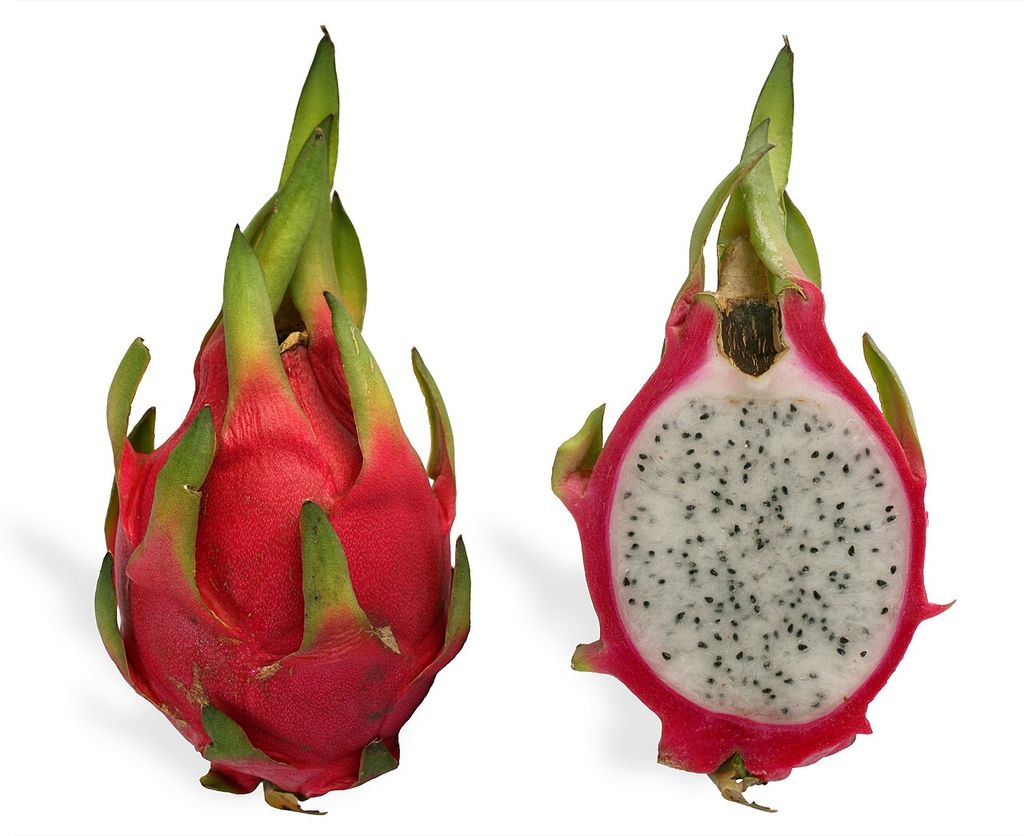
Madison Museum of Contemporary Art’s Pitahayas is also dated 1938, but its oil-painted support is aluminium and its arrangement is much denser. The cut and intact fruits, cactus, rock and jointed skeleton make the MFA’s idea of an animated still life especially clear. Madison’s curator has reported an earlier photograph in which the skeleton’s expression differs from its present state, connecting the change to Kahlo’s news of Diego Rivera’s wish for a divorce in 1939; the account is museum research, not an alteration that can be established from the present image alone. [1] [4]
Fruits of the Earth takes another approach to density. Banco Nacional de México records the 1938 picture as oil on Masonite under the title Los frutos de la tierra, while its entry in the 1939 Paris Mexique exhibition used the French title Nourriture de la terre. Food-like forms crowd a dish on a wooden surface, rather than surrounding a skeleton or resting as three discrete fruits on a plate. [6]
Arcq reads the composition through Mexican culinary materials, naming maize, prickly-pear-type fruit, sweet potato, sapodilla and chayote root. Her Portuguese text connects the kitchen and market to the work of Kahlo and other women artists, but the names should be understood as curatorial identifications rather than a species-by-species key verifiable from the painting. The French exhibition title records the picture’s public history; it does not establish which language Kahlo first used to name it. [6] [14]
An earlier Detroit work shows where this genre begins to blur. Window Display on a Detroit Street is signed 1931 and catalogued as painted in 1931–32. Its array of a lion, horse, presidential likeness and civic emblems has the assembled quality of a still life, but the setting is a shop window facing a city street, not a plate or table of fruit. Christie’s recounts Lucienne Bloch’s later memory of seeing the display with Kahlo; that remembered episode reaches us through later books rather than an original interview read for this page. [7]
The Palace Commission and a Public Still Life
Still life was not only a private, modest form for Kahlo. The Flower Basket is a signed 1941 oil painting on a circular copper plate, with flowers gathered in an ordered outer wreath and a more crowded central basket. Christie’s traces the painting to Paulette Goddard, who acquired it directly from Kahlo, and publishes essays connecting it to a proposed decoration for the Palacio Nacional reception dining room. [5]
Luis-Martín Lozano’s auction essay recounts a commission that first called for portraits of historical Mexican women and was then redirected toward still lifes. It transmits Kahlo’s correspondence about the change, two round paintings delivered for the project and her effort to obtain payment after the scheme stalled. The same Christie’s catalogue records a later account suggesting the government may have paid her, so the financial outcome cannot be stated as settled; the original letters and contract have not been independently read here. [5]
The second copper picture, a 1942 Still Life now associated with Museo Frida Kahlo, is identifiable in that commission account, but it is not The Flower Basket under another name. Art historian Maggie Borowitz interprets the 1942 work through female desire and the possibilities of a genre often treated as decorative. Her vivid account of the First Lady rejecting it as indecent cites Salomón Grimberg’s book; the underlying record has not been checked independently, so the reported rejection remains uncertain. [5] [15]
The circular format, proposed palace setting and later Goddard purchase all make The Flower Basket more than an illustrated private feeling. Teresa Eckmann’s essay contrasts the disciplined wreath with flowers beginning to wilt, and treats the sale as part of Kahlo’s professional activity rather than a romantic gift legend. Mortality may be a persuasive reading of the cut flowers, but it remains Eckmann’s interpretation of a painting with a documented material and social history. [5]
Kahlo’s 1943 The Bride Frightened at Seeing Life Opened brings a different object into a fruit arrangement: a miniature white-clad bride stands beside opened watermelon and papaya, with pineapple, bananas, coconut and smaller forms crowded around her. Fundación Proa records the work as an oil on canvas, and the title asks the viewer to imagine the doll confronting “life opened” in the cut fruit. The little face does not itself disclose an emotion, so the sense of fright comes from the words and the scene they prompt us to construct. [19]
A later study connects the doll with figures Kahlo bought at the Saint-Ouen flea market in Paris in 1939 and associates this one with the artist Jacqueline Lamba. That possible personal connection adds a different layer to the 1943 still life, but the purchase does not prove that a simpler painting existed in 1939 and was then revised with the doll. The picture can be compared with the palace tondi for its fruit and theatrical arrangement without turning the whole composition into one confirmed erotic or autobiographical message. [19]
Birds, Flags and Dedications in 1951
Several works dated 1951 share fruit and birds without sharing an identity. The Harry Ransom Center’s Untitled [Still life with parrot and fruit] is a small oil on canvas that the MFA Boston chose for its “living still lifes” section. Still Life with Parrot and Flag is a separate oil on Masonite in a private collection, combining fruit, a bird and the Mexican flag. The New York Botanical Garden listed them as different paintings; their supports, measurements and collection records should not be blended. [1] [8] [9]
The flag picture offers unusually direct evidence of Kahlo’s method. Dallas Museum of Art conservators used infrared photography, X-radiography and microscopy to identify underdrawing and alterations, including changes around the parrot and adjacent fruit. They also recorded varied brushwork and fingerprints in the paint. These technical observations show planning and revision in this particular late picture; they do not reveal a private symbolism for each change, and published measurements for the work still disagree. [9]
In another 1951 composition, Naturaleza muerta (Soy de Samuel Fastlicht), a painted banner declares that the picture belongs to Samuel Fastlicht. A dark ceramic dog, fruit and a tricolour flag share its densely arranged space. Museum and later family accounts disagree about whether the painting was a gift, payment connected with dental care or a purchase, so the inscription securely names an intended recipient without settling the legal transaction. Kahlo made a different, longer still life for Fastlicht in 1952; it should not be mistaken for this one. [16]
Flags and tricolours invite a national reading, especially beside Kahlo’s engagement with Mexican popular art. They are actual features of these paintings, while the claim that every red fruit or flag communicates one party-political doctrine would be an interpretation beyond the evidence. The dedication also reminds us that a still life could address a person directly, not just present things for detached inspection. [1] [9] [16]
Coconuts, Watermelons and the Final Words
The 1951 coconut paintings form another pair that must be kept apart. LACMA owns Weeping Coconuts (Cocos gimientes), in which two prominent coconuts sit among other fruit and one seems to cry. The Museo de Arte Moderno in Mexico City owns a different 1951 picture titled Los cocos, made from paired watermelons, oranges and coconuts. Its museum text itself refers to the other tearful composition; neither painting’s owner, dedication or later history belongs to the other. [10] [11]
LACMA’s fruit personification can be described without treating it as a medical diagnosis or a straightforward self-portrait. A faint dedication to Elena Boder has been read by a Christie’s catalogue, but the available owner image does not permit that name to be verified visually; LACMA’s own transcription is shorter. The secure effect is that pale marks turn coconut pores into a face, an economical pictorial move that the MFA placed within its broader “living” category. [1] [10]
The Museo de Arte Moderno’s Still Life with Watermelons is dated 1953. Cut and whole fruit spread across a striated surface, with an open central fruit that different writers have called a mango or a mamey; its dimensions also differ substantially between sources. It is not the later-inscribed Viva la Vida in the Museo Frida Kahlo, despite the shared presence of watermelons. [12] [17]
The museum dates the base of Viva la Vida to around 1950 and says Kahlo returned to the painting years later, adding the phrase shortly before she died in July 1954. The owner describes it as the last painting she intervened in, a more exact and interesting history than the familiar claim that she painted the entire work in her final days. The words and vigorous fruit remain open to different readings: the museum emphasizes hope and resilience, while a later anti-fascist interpretation should be identified as that writer’s reading, not as a verified explanation supplied by Kahlo. [12]
More Than Disguised Self-Portraits
An influential 1976 Spanish essay by Teresa del Conde proposed that almost everything Kahlo painted could be understood, somehow, as a self-portrait. Later work by Deffebach and Borowitz pushes against reducing the still lifes to an account of marriage, illness or disguised anatomy: it attends to the genre’s lower status beside muralism and to the opportunities women artists found within it. The disagreement is productive when it sends us back to the particular pictures instead of requiring all fruit to mean the same thing. [2] [13] [15] [18]
Kahlo’s selected still lifes encompass a tiny metal plate, a crowded food arrangement, copper tondi proposed for a palace, objects given a human face, gifts or sales addressed to other people, and a watermelon picture revised years after it began. Their visible forms, materials and documented exchanges do not cancel personal interpretation; they make it more precise. A viewer can recognise fertility, mortality, national identity or defiance as possible readings while still asking which painting, which source and which moment supports each claim. [1] [5] [6] [9] [10] [12] [14] [15]
Related Reading
Pitahayas and Fruits of the Earth develop two different 1938 arrangements. The Bride Frightened at Seeing Life Opened follows the 1943 fruit-and-doll composition. Still Life with Parrot and Fruit is distinct from Still Life with Parrot and Flag; Weeping Coconuts is distinct from MAM’s Coconuts. Viva la Vida examines the final inscription in detail.
Discussion
Use the cited evidence and your own close looking to explain your view. The prompts below are starting points, not fixed interpretations.
Reader Insights
How did Kahlo make fruit and household things seem alive?
What changed when a still life was made for a palace, a patron or a friend?
Why do the 1951 parrot and coconut paintings need distinct identities?
Join the Conversation
Which reading best fits the evidence, and where does uncertainty remain?
References
- Museum of Fine Arts, Boston, “Frida Kahlo and Arte Popular” (2019), especially “Living Still Lifes / Naturalezas Vivas,” lines 32–35. Its three-work grouping and Izquierdo comparison are curatorial choices. View source text.
- Nancy Deffebach, María Izquierdo and Frida Kahlo: Challenging Visions in Modern Mexican Art (2015), chapter “Picantes pero sabrosas,” pp. 135–48; only the JSTOR chapter abstract and contents were read for N022, not the complete chapter. View chapter listing. View source text.
- Tate Modern, Frida: The Making of an Icon large-print guide (2026), Naturaleza muerta con tunas label, printed p. 52; K068 records the 1937 alternative and visual observation. View exhibition guide. View source text.
- Madison Museum of Contemporary Art, Pitahayas object page, current title, support, date and institutional interpretation; separate curator research in K048 documents the reported skeleton revision. View museum record. View source text.
- Christie’s, The Flower Basket, 2019 lot object and provenance lines 9–23; Luis-Martín Lozano and Teresa Eckmann essays lines 65–105. Original correspondence and the complete Grimberg/Deffebach books remain unread here. View source text.
- Fomento Cultural Banamex, Los frutos de la tierra current exhibition/object record; original Mexique Paris catalogue (1939), checklist item 76, Nourriture de la terre. View owner text; view Paris catalogue. View source text 1; View source text 2.
- Christie’s, Window Display on a Detroit Street (2025), object lines 9–14 and essay lines 73–94; Bloch testimony is mediated and the auction text contains unrelated typographical errors. View source text.
- Harry Ransom Center, Nickolas Muray Collection of Mexican Art finding aid, p. 12, accession 66.7, Still Life (with Parrot and Fruit), 1951, oil on canvas, 25.7 × 28.2 cm. View finding aid. View source text.
- New York Botanical Garden, Frida Kahlo: Art, Garden, Life official checklist (2015), p. 4 items 10–12; Dallas Museum of Art, Laura Eva Hartman, “Conserving Kahlo” (2021), technical account of Still Life with Parrot and Flag. View checklist; view conservation account. View source text 1; View source text 2.
- Los Angeles County Museum of Art, Weeping Coconuts (Cocos gimientes) current object record and inscription; the K052 source pack distinguishes its image and catalogue dedication from Los cocos. View museum record. View source text.
- Museo de Arte Moderno, Mexico City, owner-supplied Los cocos object text, identifying the separate 1951 picture and three fruit pairs. View museum text. View source text.
- Museo Frida Kahlo, Viva la Vida collection card and chronology, distinguishing the circa-1950 base from the 1954 inscription; K050 records the later attributed anti-fascist reading. View museum collection. View source text.
- Teresa Eckmann’s essay in Christie’s The Flower Basket lot, lines 88–93 and note 4, reports Deffebach’s and Grimberg’s differing totals; the complete books were not read for this page. View source text.
- Teresa Arcq, “Frida Kahlo: Conexões entre mulheres surrealistas no México,” Instituto Tomie Ohtake, lines 313–20. Her food identifications and interpretation are attributed; the footnote for a purported Kahlo quotation is not currently accessible. View source text.
- Maggie Borowitz, Caught by Surprise (University of Chicago dissertation, 2022), printed pp. 162–63 and 171–72, on genre, female-oriented looking and the 1942 copper work. Her First Lady account cites Grimberg and is not an original-document finding here. View repository record. View source text.
- Tate Modern, Frida large-print guide (2026), Fastlicht still-life label, printed pp. 82–83; Museo Frida Kahlo 1951 chronology and K069 controlled inscription/transaction comparison. View museum chronology. View source text.
- Museo de Arte Moderno, Mexico City, owner-supplied Naturaleza muerta con sandías (1953) object account; K075 source pack records divergent dimensions and rival central-fruit identifications. View museum text. View source text.
- Teresa del Conde, “Lo popular en la pintura de Frida Kahlo,” Anales del Instituto de Investigaciones Estéticas 13, no. 45 (1976), pp. 195–203, especially p. 195 on self-portraiture and popular-art method. View source text.
- Fundación Proa, La novia que se espanta de ver la vida abierta owner-linked object record, 1943, oil on canvas, 63 × 81.5 cm; Jaime Moreno Villarreal’s 2021 study on the doll purchase and Jacqueline Lamba as checked in K072. The original letters and an asserted 1939 first painted state remain unverified. View museum object text. View source text.
Image Credits
- Underwood & Underwood, publisher. Public domain. Source: Wikimedia Commons (File:Mexico---Prickly-pear.jpg). 1024px proportional sRGB JPG derivative; no crop. Licence. Source record.
- SMasters. CC BY-SA 3.0. Source: Wikimedia Commons (File:Pitaya cross section ed2.jpg). 1024px proportional sRGB JPG derivative; no crop. Licence. Source record.
