


 by Tom Gurney
Tom Gurney BSc (Hons) is an art history expert with over 20 years experience
Page created on March 2, 2018 / Page updated on October 6, 2026
Email: tomgurney1@gmail.com / Phone: +44 7429 011000
Introduction
Frida Kahlo’s exhibitions tell two connected histories. During her lifetime, her paintings moved among a New York gallery, a mixed presentation of Mexican art in Paris, international group exhibitions and, near the end, a one-person show in Mexico City. After her death, artists and museums repeatedly changed the company her work kept: photographs, Diego Rivera’s paintings, other women artists, her clothing and the responses of later generations each brought a different question into the gallery. [1] [2] [3]
This is a selection of consequential exhibitions, not a complete list of every work loan or venue. That distinction matters because an exhibition catalogue, a museum’s later recollection and a press release prove different things. The dates and formats below come from specific institutional records; a curator’s interpretation is identified as such rather than presented as Kahlo’s own declaration. [2] [4]
At a Glance
- 1938, New York: Julien Levy gave Kahlo a one-person gallery show from 1 to 15 November. [1]
- 1939, Paris: Mexique included a numbered Kahlo section but was a mixed exhibition, not her Paris solo. [2] [3]
- 1940 and 1953: Her work appeared in international group contexts; Lola Álvarez Bravo organised her only one-person exhibition in Mexico during her lifetime in 1953. [4] [5] [6]
- After 1954: A 1978 San Francisco tribute, the paired 1982–83 Frida Kahlo and Tina Modotti exhibitions and later retrospectives show different phases of her reception. [7] [8] [9]
- Recent displays: Museums have placed the paintings alongside dress, archives, other artists’ work and popular imagery. Those choices are interpretations, not a single definitive way to see Kahlo. [10] [11] [12]
Contents
- Introduction
- New York, 1938: Kahlo in Her Own Gallery Show
- Paris, 1939: A Mixed Exhibition and a State Purchase
- Two Group Contexts in 1940
- Mexico City, 1953: The One-Person Show at Home
- Between Lifetime Recognition and the Large Retrospectives
- Retrospectives, Audiences and the Company of Photographs
- Couple, City and Women-Artist Network
- Clothing, Photographs and the Casa Azul Archive
New York, 1938: Kahlo in Her Own Gallery Show
The Julien Levy Gallery presented Kahlo’s paintings in New York from 1 to 15 November 1938. Its invitation and a folder concerning works are identified in the Philadelphia Museum of Art’s Levy archive; Centre Pompidou’s record for The Frame identifies that painting as no. 23 in the exhibition catalogue. These records establish a genuine one-person presentation without requiring an invented reconstruction of the full hanging. [1] [2]
MoMA estimates that approximately half the paintings sold. Without the gallery’s original sales ledger, that remains an estimate, though it indicates a significant commercial response. Contemporary New Yorker and TIME coverage also looked at Kahlo through Rivera’s reputation, her dress and an exoticised idea of Mexico; the attention was real, but it was not neutral recognition of the paintings alone. [1] [31] [32]
The New York show was not her first-ever sale or the beginning of her artistic life. It did, however, give her a sustained individual presentation in a city with collectors and critics able to carry the work into other settings. Her subsequent exhibitions are more revealing when the 1938 event is treated as one important opening, rather than a miraculous discovery from obscurity. [1] [13]
Watch: Frida Kahlo
Five perspectives to view here alongside the article.
Frida Kahlo’s The Two Fridas: Great Art Explained
A focused visual introduction to the painting and its context.
Paris, 1939: A Mixed Exhibition and a State Purchase
Kahlo travelled to Paris expecting a more individual opportunity, but the exhibition Mexique at Renou & Colle, 10–25 March 1939, brought her paintings into a larger display of Mexican material. Its catalogue gives Kahlo eighteen numbered entries, 68–85, examined more closely in the Paris study. That is a count of catalogue entries, not proof that every listed work hung throughout the run. [2] [3]
André Breton’s Surrealist framing was part of the exhibition’s presentation of Mexico, not a direct statement of Kahlo’s intentions. A French institutional account by Didier Schulmann also records her difficulties with the arrangements and the assistance of Marcel Duchamp and Mary Reynolds. Her participation therefore involved negotiation and frustration as well as visibility, complicating any simple story of a Parisian embrace. [3] [14]
One concrete result survives in an owner’s record. Centre Pompidou identifies The Frame as no. 84 in the Mexique catalogue and records its purchase by the French state in 1939. It was a significant acquisition, but not a purchase by the Louvre and not evidence that all French criticism admired the show. [2]
Two Group Contexts in 1940
The Exposición Internacional del Surrealismo in Mexico City and MoMA’s Twenty Centuries of Mexican Art in New York placed Kahlo before audiences in markedly different group contexts in 1940. The first associated her with an international avant-garde, while MoMA’s survey ranged across ancient, colonial, folk and modern Mexican art and ran from 15 May to 30 September. Neither was a Kahlo retrospective. [4] [5]
MoMA’s printed catalogue described The Two Fridas in autobiographical and Surrealist terms. That language is evidence of a contemporary institutional reading, not proof that Kahlo painted it as a dream image or accepted a fixed movement label. A published synopsis of César Moro’s Mexico City catalogue introduction likewise helps locate that show’s frame, although it does not replace the complete original text. The style study and painting study develop those distinctions further. [4] [5]
Taken together, the two events show the difficulty of giving Kahlo one exhibition category. Her paintings could be placed within Surrealism and within a broad history of Mexican art in the same year. The categories tell us about organisers and audiences as well as the work itself. [4] [5]
Mexico City, 1953: The One-Person Show at Home
On 13 April 1953, Lola Álvarez Bravo opened a Kahlo exhibition at her Galería de Arte Contemporáneo in Mexico City. The Museo Frida Kahlo chronology calls it Kahlo’s only one-person exhibition in Mexico during her lifetime; the qualifier is essential because Julien Levy had already mounted the New York show. INBAL independently identifies Álvarez Bravo’s gallery and her role in organising the 1953 event. [6] [15]
The museum chronology says Kahlo arrived by ambulance and attended while lying in a hospital bed. It is a vivid scene, yet it belongs to this particular exhibition and cannot stand in for all of her professional life. The available institutional accounts do not supply a complete original checklist or the full range of contemporary critical response. [6]
The 1953 show also unsettles an easy fame story. Kahlo was neither wholly ignored in life nor the mass-cultural icon she later became. A New York solo, a Paris mixed show, two 1940 group presentations and this Mexican solo establish a more uneven and geographically dispersed pattern of recognition. [1] [2] [4] [5] [6]
Between Lifetime Recognition and the Large Retrospectives
Posthumous reception was built through people and institutions long before the best-known touring retrospectives. SFMOMA’s later programme records that San Francisco’s Galería de la Raza held Homenaje a Frida Kahlo: El Día de los Muertos in 1978. Artists and curators who took part recalled it in 2008 as a moment in the changing reputation of Kahlo across the 1970s and 1980s. The available programme establishes a tribute, not a checklist of original Kahlo paintings. [7]
Whitechapel Gallery’s exhibition history dates Frida Kahlo and Tina Modotti in its Upper Gallery to 26 March–2 May 1982. Laura Mulvey and Peter Wollen curated it, with Mark Francis as exhibition organiser; the Gallery’s archive retains an exhibition file. New York University’s Grey Art Museum records the same titled presentation from 1 March to 16 April 1983. Pairing Kahlo’s painting with Modotti’s photography made an interpretive choice visible, rather than simply setting Kahlo alone before an audience; the original catalogue and installation files would support a fuller account of its arguments and tour. [8] [9] [29]
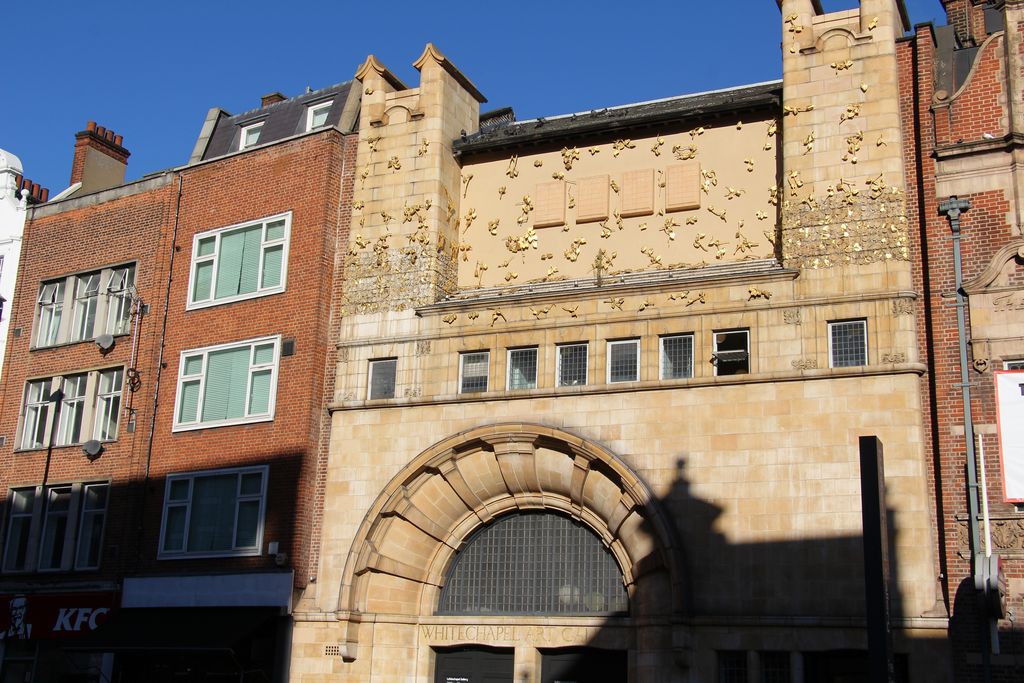
These shows complicate a claim sometimes made in publicity that Kahlo suddenly became visible only in the twenty-first century. They do not, by themselves, measure how widely she was known; an exhibition date is not an audience survey. They establish that artists and institutions were already actively shaping her afterlife. [7] [8] [9]
Retrospectives, Audiences and the Company of Photographs
Tate Modern presented a Kahlo retrospective in 2005, followed by the 2007–08 exhibition that travelled through the Walker Art Center, the Philadelphia Museum of Art and SFMOMA. Walker’s final account specified 46 paintings and 90 photographs from personal albums, narrower than an earlier projection of roughly 50 paintings. Photographs can help situate a painter’s life and self-presentation, but they are not paintings or an explanation of every image on the wall. [2] [16]
SFMOMA reported 115,405 admissions at Walker, 194,322 in Philadelphia and 412,244 at its own venue. Its 2008 attendance was then a museum record, and its press release said 22 percent of its Kahlo exhibition visitors were from the Latino community. These are the museum’s venue-specific admissions and participation figures, not a count of distinct individuals across the tour or a demographic description of all three audiences. [17]
The scale matters because it demonstrates a striking public encounter with the art, but the kind of encounter still depends on the exhibition’s selection and interpretation. Walker’s published catalogue has an exhibition-history apparatus; a definitive international chronology would need to examine that fuller record alongside other archives rather than infer completeness from this tour alone. [16]
Couple, City and Women-Artist Network
Later exhibitions have changed Kahlo’s companions in the gallery. The Musée de l’Orangerie’s Frida Kahlo / Diego Rivera: L’art en fusion ran from 9 October 2013 to 13 January 2014, with exceptional loans from Museo Dolores Olmedo. Its emphasis on the couple is a curatorial frame, not a rule that her painting must be interpreted through Rivera’s career. [18]
The Detroit Institute of Arts took a more place-specific paired approach in 2015. Its Diego Rivera and Frida Kahlo in Detroit brought together nearly 70 works, including 23 by Kahlo, around their time in that city. A shared setting makes certain connections available to visitors, while the Detroit article can distinguish their separate commissions, paintings and experiences more closely. [19]
In São Paulo, the Instituto Tomie Ohtake made a different decision. Teresa Arcq’s Conexões entre mulheres surrealistas no México, from 27 September 2015 to 10 January 2016, brought about 100 works by fifteen women artists into conversation, including María Izquierdo, Remedios Varo and Leonora Carrington. The institute described around twenty Kahlo paintings and thirteen works on paper. Those are figures for this exhibition, not an audited count of her lifetime output; the more productive point is that her work was shown within a network rather than isolated as an exception. [20]
Clothing, Photographs and the Casa Azul Archive
Some exhibitions changed the kind of object visitors came to see. MUDEC’s 2018 Milan Oltre il mito was presented as an effort to move beyond familiar biographical myth; its official companion page confirms a 1 February–3 June run, while its underlying archival research is a separate matter from that public description. The V&A’s Frida Kahlo: Making Her Self Up, 16 June–18 November that year, displayed clothing, jewellery, prosthetics and other possessions from the Casa Azul collection. [21] [10]
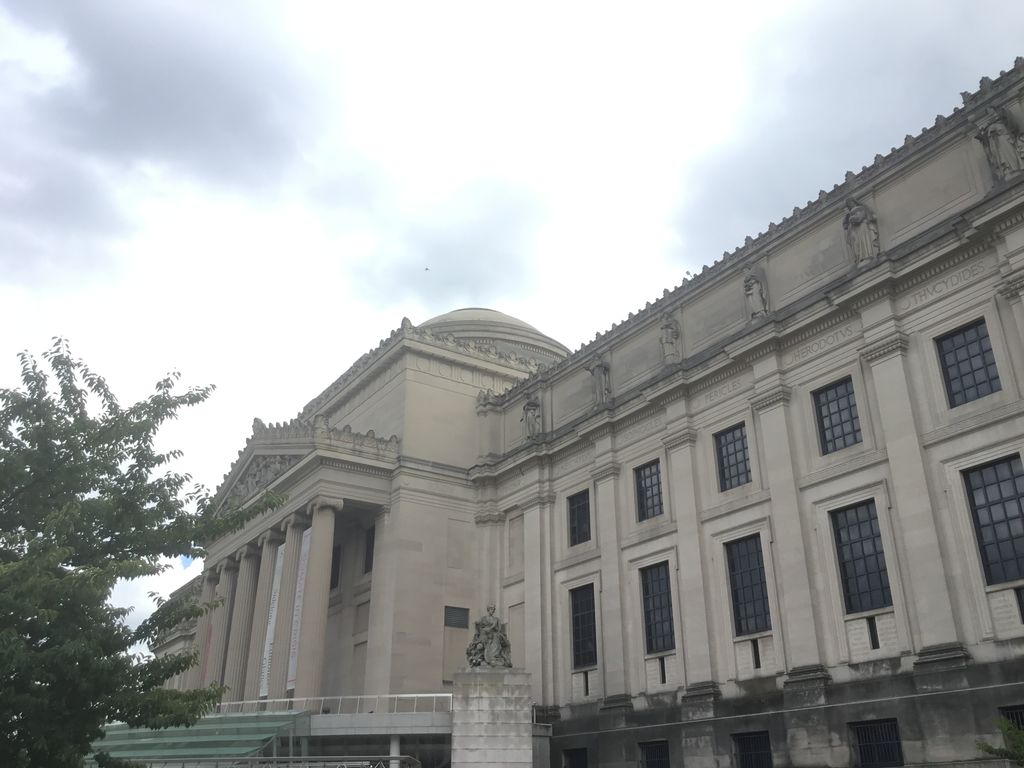
The V&A called this the first presentation of that collection outside Mexico. It did not mean Kahlo’s paintings had never travelled abroad. Brooklyn Museum’s Frida Kahlo: Appearances Can Be Deceiving followed from 8 February to 12 May 2019 and explicitly acknowledged the earlier 2012 Frida Kahlo Museum and 2018 V&A projects. They were related exhibitions, not three independent discoveries of a sealed wardrobe. [10] [22]
The Drents Museum’s Viva la Frida!, 8 October 2021–18 April 2022, brought Museo Dolores Olmedo artworks together with Casa Azul possessions. A different 2021 presentation, Frida Kahlo: Timeless at the Cleve Carney Museum of Art, displayed 26 original works—an inclusive description, not a count of paintings alone. Such exhibitions make the relationship between work, personal objects and collection lending part of the visitor’s experience, without making every garment an automatic key to a canvas. [23] [24]
What the 2026 Exhibitions Ask
The Museum of Fine Arts, Houston presented Frida: The Making of an Icon from 19 January to 17 May 2026. It set more than thirty Kahlo works beside 120 works by later artists, archival material and popular imagery. The museum’s assertion that Kahlo was “practically unknown” to mainstream audiences in her lifetime is best read as part of its argument about the scale of later fame, not as a denial of her documented 1938–53 exhibitions. [11]
The exhibition continued at Tate Modern in London from 25 June 2026, with an announced closing date of 3 January 2027. Its subject is not simply how many Kahlo paintings can be assembled, but how other people have made her into an icon. The accompanying catalogue offers a route into the curators’ fuller arguments beyond the short public description. [25]
Other 2026 shows ask narrower questions. MoMA’s Frida and Diego: The Last Dream, 21 March–12 September, placed work in a theatrical setting connected with a Metropolitan Opera production; the collaboration is contemporary, not one directed by the artists during their lives. Mexico City’s Museo de Arte Moderno mounted Las dos Fridas: una identidad global around its painting and responses by Nahúm B. Zenil, Magalí Lara and Graciela Iturbide. An initial notice proposed a 24 May close, but INBAL’s later announcement extended the display to 31 May; the painting then remained on view in a different installation. Neither event was a second full retrospective. [12] [26] [30]
Faro Santander’s Modern Mexico in the Gelman Santander Collection opened on 8 September 2026 and is scheduled through 10 January 2027. It includes Kahlo within a broader Mexican-modernism collection, rather than presenting a Kahlo solo. The exhibition title does not establish that Santander owns the collection: the institution has distinguished its management role from the Zambrano family’s ownership. Loan, display and title to an artwork are different things. [27] [28]
How to Read an Exhibition History
An exhibition can answer a precise question: was this work documented at this venue, and how did its organisers place it? It cannot automatically answer who made a disputed picture, whether every listed object stayed on the wall, what Kahlo intended, or how every visitor understood it. The 1939 catalogue, 2008 admissions report and 2026 museum pages are all valuable because their claims are kept in their own lanes. [2] [3] [17]
Kahlo’s exhibition history is therefore a history of changing relationships as well as movement across cities. Her own opportunities ranged from individual presentation to group classification; later organisers set her work alongside other women, Rivera, her possessions, photographs and new art made in response. The strongest account preserves the paintings at the centre while showing who framed them, when, and for what audience. [1] [7] [10] [11]
Related Reading
The New York and Paris articles examine the two late-1930s episodes in more detail. The Two Fridas, fashion and Tehuana dress and photography develop works and materials that exhibitions repeatedly connect. For longer study, the books and further reading guide distinguishes exhibition catalogues from biographies and primary documents.
Discussion
Use the cited evidence and your own close looking to explain your view. The prompts below are starting points, not fixed interpretations.
Reader Insights
What can an exhibition catalogue establish that a later museum recollection cannot?
How did the 1938 New York one-person show differ from the mixed 1939 Paris exhibition?
How does an exhibition's choice of other artists, photographs or personal objects change the way Kahlo is understood?
Join the Conversation
Which reading best fits the evidence, and where does uncertainty remain?
References
- MoMA, curatorial account of Kahlo’s Julien Levy exhibition, 1–15 November 1938, with qualified sales statement. View source text.
- Centre Pompidou, The Frame object record and exhibition bibliography, including 1938 catalogue no. 23, 1939 Mexique no. 84 and 1939 French-state acquisition. View source text.
- Mexique original catalogue, Kahlo entries 68–85, previously inspected in the research for the Paris article; its original online facsimile is currently inaccessible. Centre Pompidou independently records its no. 84 entry for The Frame. View source text.
- ICAA/MFAH, scholarly synopsis of César Moro’s introduction to the 1940 Mexico City Surrealist exhibition; original scan access-limited. View source text.
- MoMA, Twenty Centuries of Mexican Art, 15 May–30 September 1940; the printed catalogue’s p. 160 was inspected for the style research. View source text.
- Museo Frida Kahlo, chronology, 1953 entry for Lola Álvarez Bravo’s exhibition and Kahlo’s attendance. View source text.
- SFMOMA, 2008 Homage: Presenting Frida Kahlo programme, recalling Galería de la Raza’s 1978 tribute. View source text.
- Whitechapel Gallery, historical exhibitions list, 1982 entry, and exhibition archive file WAG/EXH/2/338. View source text.
- Grey Art Museum, chronological exhibitions list, 1 March–16 April 1983 entry. View source text.
- V&A, Frida Kahlo: Making Her Self Up, 16 June–18 November 2018, description of Casa Azul possessions. View source text.
- Museum of Fine Arts, Houston, Frida: The Making of an Icon, current exhibition record, 19 January–17 May 2026. View source text.
- MoMA, Frida and Diego: The Last Dream, 21 March–12 September 2026. View source text.
- Philadelphia Museum of Art, Julien Levy archive finding aid, Box 16 folder 1 and Box 35 folder 7; original folders and ledger not read. View source text.
- Didier Schulmann, institutional French account of Kahlo in Paris, with mediated correspondence. View source text.
- INBAL, account of Lola Álvarez Bravo’s gallery and 1953 Kahlo exhibition. View source text.
- Walker Art Center, final 2007 exhibition release, 46 paintings, 90 photographs and tour. View source text.
- SFMOMA, 7 October 2008 final attendance release, venue-specific admission and outreach figures. View source text.
- Musée de l’Orangerie, Frida Kahlo / Diego Rivera: L’art en fusion, 2013–14 event record. View source text.
- Detroit Institute of Arts, Diego Rivera and Frida Kahlo in Detroit, 2015 event record. View source text.
- Instituto Tomie Ohtake, Portuguese Frida Kahlo: Conexões entre mulheres surrealistas no México, 2015–16 event record. View source text.
- MUDEC, official companion record for the 2018 Milan exhibition; underlying archives not read. View source text.
- Brooklyn Museum, indexed official Appearances Can Be Deceiving record, 2019; direct current page access-limited. View source text.
- Drents Museum, Dutch Viva la Frida! record, 2021–22, describing Olmedo and Casa Azul loans. View source text.
- Cleve Carney Museum of Art, Frida Kahlo: Timeless, final 2021 event record and 26 original works. View source text.
- Tate, official exhibition-related dates, 25 June 2026–3 January 2027; main exhibition route access-limited. View source text.
- INBAL, Las dos Fridas: una identidad global, 19 March 2026 initial press release, PDF pp. 1–2, including the subsequently revised 24 May closing plan. View source text.
- Faro Santander, Modern Mexico in the Gelman Santander Collection, current programme and scheduled closing. View source text.
- Banco Santander, January 2026 announcement of its management agreement with the Zambrano family; this institutional account distinguishes management from ownership. View source text.
- Whitechapel Gallery, 2016 retrospective programme identifying Mulvey, Wollen and Francis’s 1982 roles; its first-retrospective claim is not independently adopted here. View source text.
- INBAL, 27 May 2026 final-days notice specifying 31 May close and continued display of the painting in a different exhibition. View source text.
- Geoffrey T. Hellman and Harold Ross, “Ribbon Around Bomb,” The New Yorker, 12 November 1938 issue; contemporary reception with biographical errors. View source text.
- “Art: Bomb Beribboned,” TIME, 14 November 1938; contemporary reception rather than authority for Kahlo’s age or artistic intention. View source text.
Image Credits
- London - Whitechapel Gallery — Fred Romero. CC BY 2.0. Resized and converted to JPEG/sRGB; no crop.
- Exterior of the Brooklyn Museum — Kidfly182. CC BY-SA 4.0. Resized and converted to JPEG/sRGB; no crop.
