


 by Tom Gurney
Tom Gurney BSc (Hons) is an art history expert with over 20 years experience
Page created on March 2, 2018 / Page updated on October 6, 2026
Email: tomgurney1@gmail.com / Phone: +44 7429 011000
Introduction
Frida Kahlo's Magnolias is a close, crowded view of flowers arranged in a vessel that is almost outside the picture. Pale buds radiate across dark leaves; below them, one open flower exposes a warm-coloured centre and another curls into a white funnel. The painting invites a reading of growth and change, but its visible differences between flowers do not, by themselves, disclose a single symbolic message. [1] [2]
The Virginia Museum of Fine Arts labelled the work Magnolias, dated it 1945, and described it as oil on Masonite from a private collection when it exhibited the painting in 2025. The label does not name the owner or give dimensions. A University of Monterrey educational record and a Spanish doctoral thesis converge on a horizontal format of approximately 41 centimetres high by 57 centimetres wide; neither is a current owner measurement. [1] [3] [4]
At a Glance
- Artist and title: Frida Kahlo, Magnolias. [1] [3]
- Date and material: 1945, oil on Masonite according to the 2025 VMFA label. [1]
- Approximate size: About 41 × 57 cm (height × width); published sources reverse the order, and no owner measurement settles it. [3] [4]
- Collection and access: Private collection in VMFA’s 2025 label. Its exhibition closed in September; current location and access are undisclosed. [1] [5]
Contents
- Introduction
- Looking Closely at the Bouquet
- Which Flowers Are Shown?
- A Still Life in Kahlo's World
- Opening Flowers, Bodies and Meaning
- Does It Derive from Georgia O'Keeffe?
- Ownership and Selected Exhibitions
- Where the Record Remains Open
- Related Reading
Looking Closely at the Bouquet
Several long, pale buds and partly open blossoms spread left, right and upward from a compact centre. Their cream surfaces carry grey and faint pinkish shadows, making the individual forms seem rounded rather than flat. Dark green foliage fills most gaps between them, while ochre and brown leaves interrupt the mass and echo the reddish-brown upper background. [2]
The fullest flower lies below the middle of the arrangement. Broad pale segments surround an upright golden-orange and reddish cluster, making this bloom structurally different from the elongated buds around it. At lower right a second pale flower has a curved, funnel-like form and a darker interior; it, too, resists being folded into a description of identical magnolia blossoms. [2] [3]
Only the upper fragment of a pale decorated container appears along the bottom edge. Black curving marks are visible on it, but this cropped detail cannot identify a maker, region, ceramic tradition or even the vessel's complete shape. The painting presents an arrangement in a container, not an outdoor tree or a documented view of the Casa Azul garden. [2]
The background shifts from mottled red-brown above to a cooler grey below. There is no firm architectural line proving a wall and tabletop, and the flowers create depth mainly by overlapping one another. Closed and open, pale and dark, and green and brown are observable contrasts; interpreting them as birth and death is a further step. [2] [3]
Watch: Frida Kahlo
Five perspectives to view here alongside the article.
Frida Kahlo’s The Two Fridas: Great Art Explained
A focused visual introduction to the painting and its context.
Which Flowers Are Shown?
The title and repeated museum use make magnolias the secure name for the principal subject, though they do not determine a species or cultivar. A UDEM educational text calls the central open flower a pear- or prickly-pear-cactus bloom and the lower-right flower an alcatraz, the Mexican Spanish name commonly used for a calla. Those are useful institutional identifications, not a botanist's determination from a specimen; the original UDEM file was not located for direct inspection, and its relevant passage was read through a search-indexed record. [1] [3] [6]
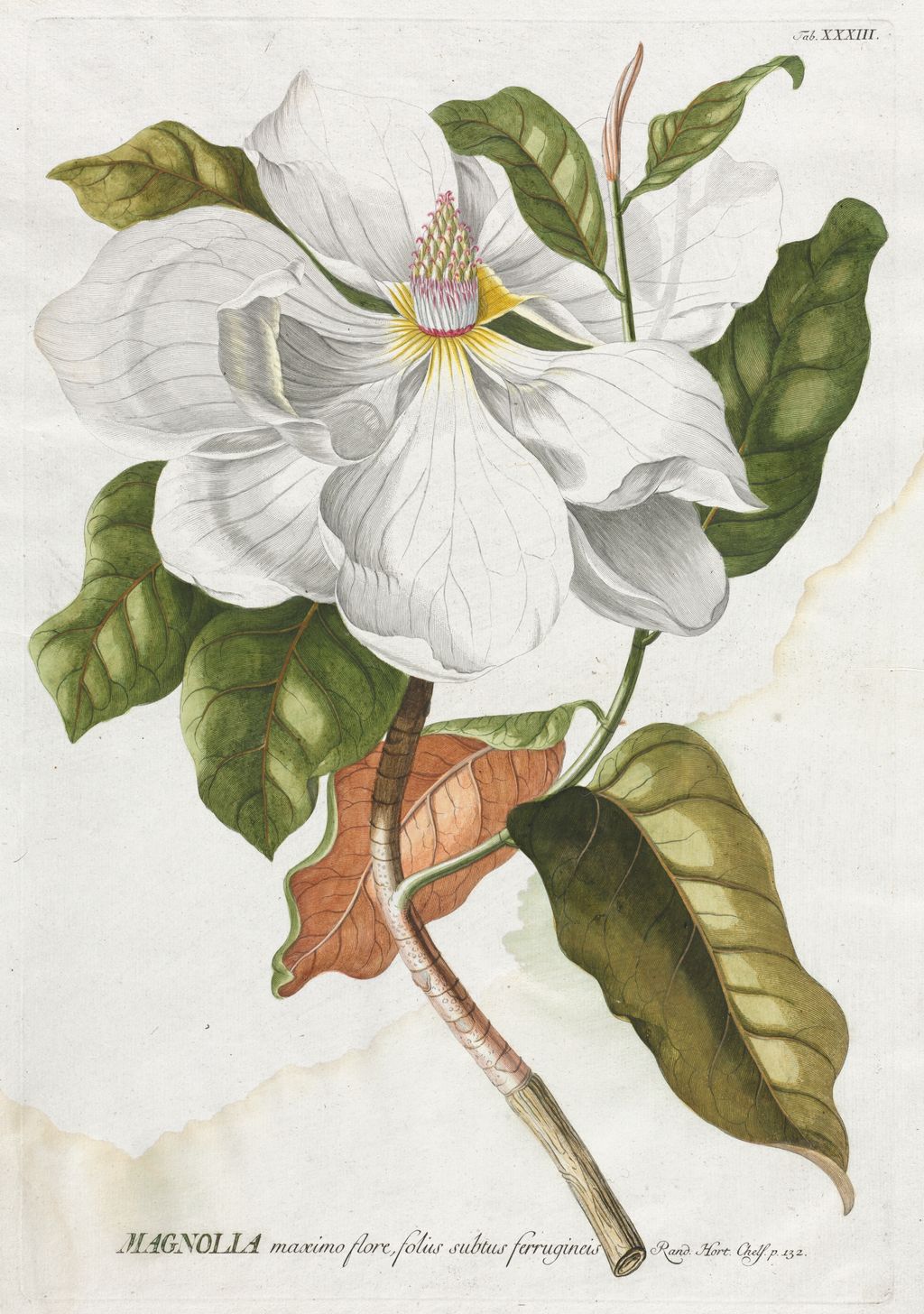
That distinction matters especially for the lower-right form. The familiar white calla, Zantedeschia aethiopica, belongs to the arum family, not the true lilies, and Kew records a southern-African native range. The painted flower can be described as calla-like and the UDEM name reported, but neither the small available image nor the museum label establishes that exact species or makes it a native Mexican plant. [2] [3] [6]
The crowded arrangement also prevents every leaf from being assigned to a particular blossom. Brown colouring can look dry or aged, but it is not proof that a leaf was dead when painted. Claims that one cactus flower blooms only at night or lasts a certain number of hours require a species and a source that this picture does not supply. [2] [3] [6]
Magnolias in Kahlo’s career
Timeline source: Museo Frida Kahlo chronology [26].
A Still Life in Kahlo's World
Kahlo's still lifes are less familiar than her self-portraits, yet they are a substantial way of looking at her treatment of Mexican plants and arranged objects. The New York Botanical Garden has emphasised their botanical interest while distinguishing research into paintings, letters and photographs from a literal inventory of one historical garden. This picture's cropped vessel and densely arranged flowers place it first within the still-life tradition rather than making it a transparent record of a particular tree at home. [2] [7]
The Museo Frida Kahlo's account of Casa Azul describes nineteenth-century still lifes on the dining-room walls and flower and fruit arrangements on the table. It also explains how Mexican popular art stylises flowers and fruits and changes their scale. Those details establish a domestic visual environment in which arrangements and transformed natural forms mattered; they do not identify the actual 1945 bouquet, the pictured container or a model Kahlo copied. [8]
The limits of garden reconstruction are instructive. An American Alliance of Museums account of Frida Kahlo: Art, Garden, Life says that little concrete evidence survives for the exact historic planting, so curators combined paintings, photographs, market research and botanical expertise. It would be a mistake to infer a particular magnolia or calla growing at Casa Azul in 1945 from either a present-day garden or this composed painting. [9]
Spanish-language scholarship also places Mexican still life within the post-Revolutionary revaluation of popular art and a national visual language. Alejandra Ortiz Castañares discusses this broader field, including artists who worked outside muralism. Her argument supplies historical context for Kahlo's interest in the genre, not evidence that Magnolias was designed as a nationalist allegory or that each plant was selected as a national emblem. [10]
Opening Flowers, Bodies and Meaning
The UDEM guide proposes a tension between life and death in the differing states of the flowers and leaves. It also raises a possible connection with Diego Rivera. The first reading begins from real visual variation; the second has no confirmed inscription, artist statement or depicted portrait to make Rivera a factual subject of this painting. [2] [3]
In her Universidad Politècnica de València thesis, Melinda Vodermayer Sohl groups Magnolias with Kahlo flower paintings that can be interpreted as sensual euphemisms for female reproductive anatomy. This is an attributed scholarly analogy, not an anatomical depiction or evidence that Kahlo assigned a fixed sexual meaning to every blossom. It need not displace a close account of their differing forms, colour and surface. [2] [4]
Amparo Serrano de Haro offers a related but broader feminist account of vegetation, fertility, roots and the female body in Kahlo's work. Her argument attends to changing relationships among symbols across different pictures, and it is not a painting-specific declaration of the artist's intention. Reading Magnolias through that framework can open a question about bodily associations without converting a flower into a one-word code. [11]
James Oles, reviewing the catalogue of the 2007–08 retrospective, instead calls attention to the sensory quality of the rarely seen painting's wax-like petals. His description is a critic's response to painted appearance, not a technical finding that the petals contain wax. Placed beside the symbolic readings, it reminds us that Kahlo's formal decisions—the compressed crop, overlapping foliage and alternating pale surfaces—are part of the painting's force. [2] [12]
These interpretations illuminate different aspects of one arrangement. None proves an exact emotional episode in 1945, a statement about Kahlo's medical history, or a universal dictionary in which magnolia means dignity and calla means purity. The strongest reading keeps the actual bouquet in view, names the critic or institution responsible for a proposed meaning, and leaves room for the work's ambiguity. [2] [3] [4] [11] [12]
Does It Derive from Georgia O'Keeffe?
Large flowers in the work of both Kahlo and Georgia O'Keeffe make a comparison reasonable. They do not prove that Kahlo borrowed this composition from a particular O'Keeffe painting. The Georgia O'Keeffe Museum describes Access O'Keeffe as a catalogue of all known works; a search for “magnolia” returned no object with that title, although the catalogue includes O'Keeffe's other flower pictures. [13]
One often encountered modernist title, Magnolia Blossom of 1925, belongs to photographer Imogen Cunningham, as museum records show. That is a reason to check names carefully, not proof of how any mistaken comparison arose. Neither a specific O'Keeffe source image nor a documentary route by which Kahlo saw it has been established in the material checked for this article. [13] [14]
Martha Zamora's 1990 book Frida Kahlo: Brush of Anguish may contain an object-specific comparison, but the exact page has not been consulted. The bibliographic record establishes the book's existence, not a documented line of direct influence. A careful comparison may still be valuable, provided it is not recast as a demonstrated borrowing. [15]
Ownership and Selected Exhibitions
An older catalogue line reproduced in Vodermayer Sohl's thesis places Magnolias in the collection of Balbina M. de Azcárraga in Mexico City. That is a historical attribution, not a chain of title: the thesis supplies no dated acquisition, transfer or current-owner document. The 2025 VMFA label simply says “Private collection,” which is the responsible present public wording. [1] [4]
The Walker Art Center's 2007 announcement named Magnolias among paintings that had not previously been publicly seen in the United States. Its retrospective opened in Minneapolis on 27 October 2007 and travelled to Philadelphia and San Francisco in 2008. The announcement establishes a United States access milestone, not the painting's first display anywhere or a complete account of every earlier loan. [16]
In 2010, an Associated Press installation photograph published by TIME specifically identified Magnolias in the Berlin retrospective at Gropius Bau. The venue dates the exhibition 30 April to 9 August; an onward stop in Vienna should not be assigned to this privately lent object without its own item-level record. A photograph of an exhibition is evidence of presence, not a transfer of ownership. [17] [18]
The Centro Roberto Garza Sada at the Universidad de Monterrey later presented Nada inerte nunca from 16 November to 14 December 2023 and again from 8 January to 25 February 2024. A UDEM-affiliated feature captions Magnolias in that exhibition, supplying the object link missing from a general show notice. The university's broader description of regional collections does not identify this painting's lender. [19] [20]
Vogue México discussed Magnolias in the Dallas Museum of Art's Frida: Beyond the Myth, staged from August 2024 to February 2025. The Dallas Museum's own programme confirms the show dates but does not supply a Magnolias label in the checked release, so the work's Dallas inclusion relies on that secondary item-specific account. The subsequent VMFA guide gives direct label evidence for Richmond from April to September 2025 and is the latest checked public object record. [1] [5] [21]
These are selected, documented appearances rather than a complete exhibition history. No item checklist cited here puts the work in Kahlo's 1953 Mexico City solo exhibition, and no dated item-level record proves that it is currently on view. Its presence in a museum show does not mean the exhibiting museum owns it. [1] [2]
Where the Record Remains Open
Salomón Grimberg's Frida Kahlo: The Still Lifes, the exact Magnolias entry in TASCHEN's complete-paintings catalogue and Nancy Deffebach's still-life chapter are relevant books, but their pertinent pages have not been consulted. Their published bibliographic records do not establish a catalogue number, current owner, technical history or interpretation for this picture. [22] [23] [24] The consulted 2007–08 Walker announcement, 2010 Berlin installation record and 2025 VMFA label provide firmer evidence for specific public appearances. [1] [16] [18]
A current owner or conservation record would be needed to settle the painting's dimensions, inscriptions and material details. The exact original UDEM guide remains unavailable, so its botanical and symbolic proposals are presented as an indexed institutional excerpt, not as directly inspected pages. [2] [3] None of these gaps licenses a claim of direct O'Keeffe influence or an identified owner after the VMFA's private-collection credit. [1] [13] [15]
Related Reading
The Flower of Life study examines a very different floral image, while Pitahayas and Fruits of the Earth place plants and fruit within other Kahlo still lifes. The style and Surrealism guide addresses the movement label without making it a key to this bouquet.
Frequently Asked Questions
The VMFA label dates it 1945 and describes oil on Masonite. The UDEM and UPV records together support an approximately 41 × 57 cm horizontal picture, but a current owner measurement is still needed for exact dimensions. [1] [3] [4]
Magnolias are the title subject and dominant pale buds. UDEM additionally identifies the open centre as a cactus flower and the lower-right bloom as an alcatraz, or calla; the small available image does not establish botanical species. [1] [2] [3]
VMFA credited a private collection in 2025 without naming its owner. The latest checked item-level public display is the VMFA exhibition that closed in September 2025; present access must be checked anew before planning a visit. [1] [5]
No particular O'Keeffe source work or documentary link has been verified. The O'Keeffe Museum catalogue search did not identify a titled magnolia work, and the 1925 Magnolia Blossom sometimes encountered in this context is by Imogen Cunningham. A comparison between the artists is possible, but direct borrowing remains unproven. [13] [14] [15]
Discussion
Use the cited evidence and your own close looking to explain your view. The prompts below are starting points, not fixed interpretations.
Reader Insights
How do the stages of opening flowers organise the bouquet?
What supports identification as magnolias, and what remains visual inference?
Why is an O'Keeffe comparison not proof of direct borrowing?
Join the Conversation
Which reading best fits the evidence, and where does uncertainty remain?
References
- Virginia Museum of Fine Arts, Frida: Beyond the Myth large-print guide, PDF physical p.117 of 169: Magnolias, 1945, oil on Masonite, private collection. The guide's exhibition dates close on 28 September 2025. View source text.
- UDEM 360's captioned image of Magnolias, consulted for broad flower, vessel and colour relations alongside the limited reference image. Neither a reproduction licence nor a physical or species-level examination is implied. View source text.
- Universidad de Monterrey, Exposición de Pintura Mexicana Contemporánea educational guide, search-indexed Magnolias passage: title, 1945, oil on Masonite, 57 × 41 cm; magnolia buds, centre cactus flower, alcatraz, life/death and Rivera proposals. The original institutional PDF was not located; this limited access is stated in the text.
- Melinda Anna Vodermayer Sohl, Claves de representación corporal en las poéticas de las pintoras surrealistas, UPV doctoral thesis (2012), PDF physical p.342 / printed p.327 for the reproductive floral analogy and physical p.867 / printed p.846 for the Magnolias line, 41 × 57 cm and historical Balbina M. de Azcárraga credit. The latter cites Gerry Souter and is not a present deed. View source text.
- Virginia Museum of Fine Arts, Frida: Beyond the Myth guide, 5 April–28 September 2025; Magnolias label on physical p.117. No later item-specific display is verified. View source text.
- Royal Botanic Gardens, Kew, Zantedeschia aethiopica taxon record and Plants of the World Online's Magnoliaceae family account: arum-family placement, southern-African native range and broad family diversity. Neither identifies the painted species. View source text 1; View source text 2.
- Karen Daubmann, New York Botanical Garden, “The Botany That Inspired the Artist,” Plant Talk, 30 April 2015, relevant still-life and garden-research passages. Context, not botanical identification of this painting. View source text.
- Museo Frida Kahlo, La Casa Azul booklet, PDF physical p.7 on popular art's changed scale and p.12 on dining-room still lifes and table arrangements. No direct model for Magnolias is named. View source text.
- American Alliance of Museums, Frida Kahlo: Art, Garden, Life case study (2016), PDF, physical p.4 / printed pp.63–64, on limited concrete evidence for the historic garden and the reconstruction method. View source text.
- Alejandra Ortiz Castañares, “La estética mexicana de la alimentación como sometimiento y liberación. De la Colonia a la Revolución”, Quaderni Culturali IILA 2, no.2 (2022), pp.67–82, discussion of post-Revolutionary still life and popular-art models. Broad genre context only. View source text.
- Amparo Serrano de Haro, “Frida Kahlo: Bodegón con cuerpo de mujer,” Espacio, Tiempo y Forma VII, no.10 (1997), pp.355–366, especially pp.361–365. Broader feminist-symbolic argument, not an object label for Magnolias. View source text.
- James Oles, review of Frida Kahlo, CAA Reviews, 20 August 2008, DOI 10.3202/caa.reviews.2008.84, object-specific comment on the rare Magnolias and wax-like petals. Critical description, not technical analysis. View source text.
- Georgia O'Keeffe Museum, Access O'Keeffe and researcher information, comprehensive-catalogue description and live “magnolia” search; actual flower records compared. A negative title search does not exclude every possible formal comparison. View source text 1; View source text 2.
- Oklahoma City Museum of Art, Magnolia Blossom (1925) record for Imogen Cunningham; Whitney Museum's object and installation record places Cunningham's work beside O'Keeffe's Flower Abstraction. This establishes the photograph's authorship, not a historical cause for confusion. View source text 1; View source text 2.
- Martha Zamora, Frida Kahlo: Brush of Anguish, Chronicle Books, 1990, 143 pp., bibliographic record only. The exact passage about a possible Magnolias–O'Keeffe comparison has not been consulted; no unseen argument is used. View source text.
- Walker Art Center, 2007 retrospective announcement, 28 September 2007, paragraph naming Magnolias among works not previously publicly viewed in the United States and giving the Minneapolis, Philadelphia and San Francisco tour. View source text.
- Gropius Bau, official Frida Kahlo retrospective page, Berlin, 30 April–9 August 2010. Official venue record controls the dates only; item presence is independently attested by reference 18. View source text.
- TIME/Associated Press, “Frida Takes Berlin”, 10 May 2010, installation caption naming Magnolias at Gropius Bau. This does not prove Vienna inclusion. View source text.
- Universidad de Monterrey, official Nada inerte nunca release, 17 November 2023, show dates and collection context. View source text.
- UDEM 360, “Mujeres revolucionarias en el arte”, image caption explicitly identifying Magnolias in Nada inerte nunca; item evidence, not owner metadata. View source text.
- Dallas Museum of Art, Frida: Beyond the Myth programme, through 23 February 2025; Vogue México's painting-specific paragraph names Magnolias. The museum controls show dates; the article supplies item inclusion. View source text 1; View source text 2.
- Salomón Grimberg, Frida Kahlo: The Still Lifes (2008), bibliographic record, 175 pp.; the complete volume and exact Magnolias entry have not been consulted. View source text.
- TASCHEN publisher record for Luis-Martín Lozano, Andrea Kettenmann and Marina Vázquez Ramos, Frida Kahlo: The Complete Paintings, 624-page edition. The exact Magnolias entry has not been consulted, so its catalogue number is not adopted. View source text.
- University of Texas Press, Nancy Deffebach, María Izquierdo and Frida Kahlo: Challenging Visions in Modern Mexican Art, contents for chapter 7, “Picantes pero sabrosas: Kahlo's Still-Life Paintings and Related Images,” pp.135–148. Publisher contents consulted; the chapter itself has not been read. View source text.
- Walker Art Center, Frida Kahlo catalogue announcement, 320 pp.; Gannit Ankori, Frida Kahlo publisher record. The pertinent pages in both books have not been consulted. View source text 1; View source text 2.
- Museo Frida Kahlo's chronology supplies comparison-work dates; the 1945 marker for Magnolias follows the Virginia Museum of Fine Arts label (reference 1), not an assumed exact execution interval. View source text.
Image Credits
- Georg Dionysius Ehret (German, 1708–1770); Christopher Jacob Trew (German, 1695–1769). CC0. Source: Cleveland Museum of Art (Plantae Selectae: No. 33 - Magnolia). 1024px proportional sRGB JPG derivative; no crop. Licence. Source record.
