


 by Tom Gurney
Tom Gurney BSc (Hons) is an art history expert with over 20 years experience
Page created on March 2, 2018 / Page updated on October 6, 2026
Email: tomgurney1@gmail.com / Phone: +44 7429 011000
Introduction
Frida Kahlo places herself among a spider monkey, a hairless dog and a ceramic figure in Self-Portrait with Small Monkey (1945). A narrow golden-looking ribbon loops through the crowded group, runs towards a painted nail and encloses her name and the year. The companions are unmistakably part of the composition; what they meant to Kahlo is less certain than their visible arrangement. [1] [2]
This is the painting called Autorretrato con changuito in Mexican institutional records, not every Kahlo self-portrait that contains a monkey. It is an oil painting on Masonite measuring 56 × 41.5 centimetres and belongs to the Museo Dolores Olmedo in Mexico City. The museum reopened at its original La Noria site in Xochimilco in May 2026, and a July gallery report placed the painting there, although that dated report is not a guarantee of its position on a later visit. [1] [3] [4]
At a Glance
- Artist and date: Frida Kahlo, 1945; her name and the year appear inside the painting in a pale oval. [1] [2]
- Titles: Self-Portrait with Small Monkey / Autorretrato con changuito; also Autoportrait au petit singe in a French exhibition dossier. [1] [3] [5]
- Medium and size: Oil on Masonite, 56 × 41.5 cm in matching institutional records; a smaller online figure conflicts with them. [1] [3]
- Collection and viewing: Museo Dolores Olmedo, Mexico City; documented in its reopened Kahlo galleries in July 2026. Present display may change. [4]
Contents
- Introduction
- Four Figures in a Shallow Space
- The Ribbon, Nail and Signature
- Which Monkey and Which Dog?
- The Ceramic Figure and Mexican Self-Presentation
- Companionship, Children and Animalist Readings
- How the Painting Entered the Olmedo Collection
- Exhibitions and Public Life
- Further Reading and Open Questions
Four Figures in a Shallow Space
Kahlo's face occupies the centre of an upright, tightly filled picture. Her head turns slightly towards the viewer's right, while her eyes look outward, directly or nearly directly. The joined eyebrows, dark hair above the lip and closed red mouth are carefully defined, but the face alone does not establish sadness, defiance or any other particular state of mind. [2]
Her dark hair is drawn upward into a high braided or coiled arrangement, with red-striped wrapping visible on the viewer's left. A pale collar shows at the throat, and a broad dark maroon-brown shawl marked by fine light stripes crosses her shoulders. The Casa de México catalogue calls the outer garment a rebozo and relates the hairstyle to women of the Isthmus of Tehuantepec; those cultural identifications come from the catalogue rather than from colour and outline alone. [1] [2]
A small dark monkey appears behind her viewer-left shoulder. Its pale eye-rings and lighter muzzle stand out against charcoal fur, and its face, like Kahlo's, turns towards the viewer. The animal presses close to her, but the catalogue plate does not clearly show both arms embracing her shoulders; proximity and an embrace are not identical observations. [1] [2]
An orange-brown figure rises behind her viewer-right shoulder, facing inwards and somewhat downwards. Its compact body and modelled or incised head look sculptural beside the living faces. The catalogue identifies it as a pre-Hispanic ceramic figure from the Rivera–Kahlo collection; the reproduction alone cannot establish its material, archaeological culture, date, sex or divine identity. [1] [2]
A grey hairless dog fills the lower foreground. Upright ears frame its narrow head, reddish-brown eyes look outward, and folds and mottled tones run across the visible skin. Its body is cut by the painting's lower edge, giving it more breadth than any other companion while leaving the face of Kahlo as the strongest vertical centre. [1] [2]
The pale background is mottled with cream, grey-blue, pink and lavender, with a small green area near the ceramic figure. There is no clearly depicted jungle or continuous screen of leaves. A French education text describes luxuriant nature, but its generic wording does not match this particular catalogue plate; the portrait's shallow space is built chiefly from overlapping figures, not a landscape. [2] [5]
Dark hair and shawl, dark monkey fur, the dog's cooler grey and the figure's warm orange-brown produce a compact colour structure. Red recurs in Kahlo's lips and hair wrapping, the dog's eyes and the written signature; the light ribbon travels through these areas. Such relationships can be described from the plate, but a digital reproduction cannot establish original pigment, metallic material, paint order or condition. [2]
Watch: Frida Kahlo
Five perspectives to view here alongside the article.
Frida Kahlo’s The Two Fridas: Great Art Explained
A focused visual introduction to the painting and its context.
The Ribbon, Nail and Signature
The yellow-gold band is the most mobile element in the picture. It reaches a small represented nail near the upper-left edge, makes loops among the bodies and rises into an oval at upper right containing the painted words “Frida Kahlo. 1945.” Its crossings are sometimes difficult to resolve from the reproduction, so the safest description is that it moves among and around the four figures rather than that every loop binds every neck in precisely the same way. [1] [2]
The nail is part of the image, not visible hardware suspending the actual painting. The oval is likewise painted within the composition, not a later museum label. Kahlo's name and the year therefore take part in the same visual network as the human, animals and ceramic figure, even though the significance of that arrangement remains open. [2]
Casa de México compares the ribbon and integrated writing to Mexican ex-votos. That analogy is worth considering, but the painting is on Masonite and contains no narrated peril, saintly intervention or sentence of thanks. Calling it ex-voto-like is more precise than classifying it as a conventional retablo; a visual resemblance is not a documented account of Kahlo's purpose. [1]
Yaxkin Melchy reads the band differently, as a form of communion among beings rather than a device that places a human subject above decorative animals. The painting gives that argument a formal basis—the line repeatedly approaches each figure and even the signature—but it does not provide a verbal key choosing communion over kinship, enclosure, protection or a purely compositional purpose. Melchy's equality claim is a modern scholarly interpretation, not a statement Kahlo is known to have made about this picture. [6]
Self-Portrait with Small Monkey in Kahlo’s career
The Two Fridas
1939Timeline source: Museo Frida Kahlo chronology [25].
Which Monkey and Which Dog?
The Casa de México catalogue identifies the spider monkey as Fulang-Chang. Melchy, comparing Kahlo's animal portraits, allows that the individual here might instead be Fulang-Chang or Caimito de Guayabal. The animal is recognisably a monkey in the image, but it carries no written name; a dated pet photograph, letter, inventory or owner file would be needed to settle the disagreement. [1] [6]
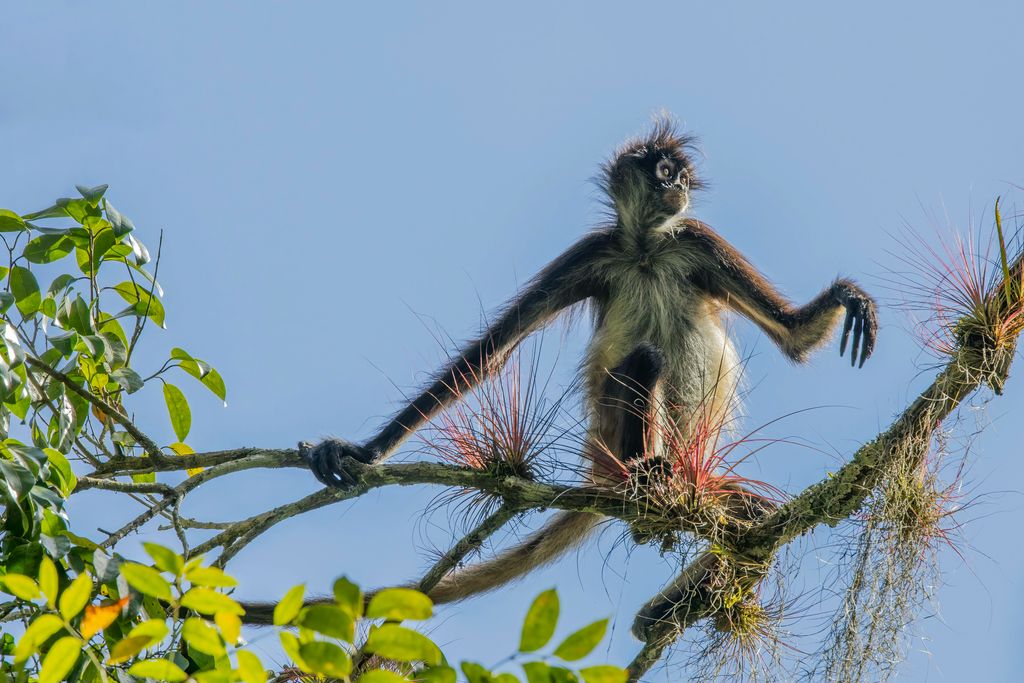
This uncertainty matters because Fulang-Chang and I is also the title of a separate 1937 Kahlo work, now at the Museum of Modern Art, with a different format that includes a mirror. Other self-portraits with monkeys were painted in 1938 and 1942. A familiar animal name should not erase differences among objects merely because a search query calls them all “self-portraits with monkeys.” [6] [7]
The Casa catalogue names the dog Señor Xólotl and identifies it as a xoloitzcuintli, or Mexican hairless dog. Hairlessness and upright ears are visible; the individual name comes from the caption. The catalogue also relates xoloitzcuintli imagery to the deity Xólotl and guidance towards Mictlán, the realm of the dead, but that culturally situated reading does not prove Kahlo inserted this dog as a literal guide to the afterlife. [1] [2]
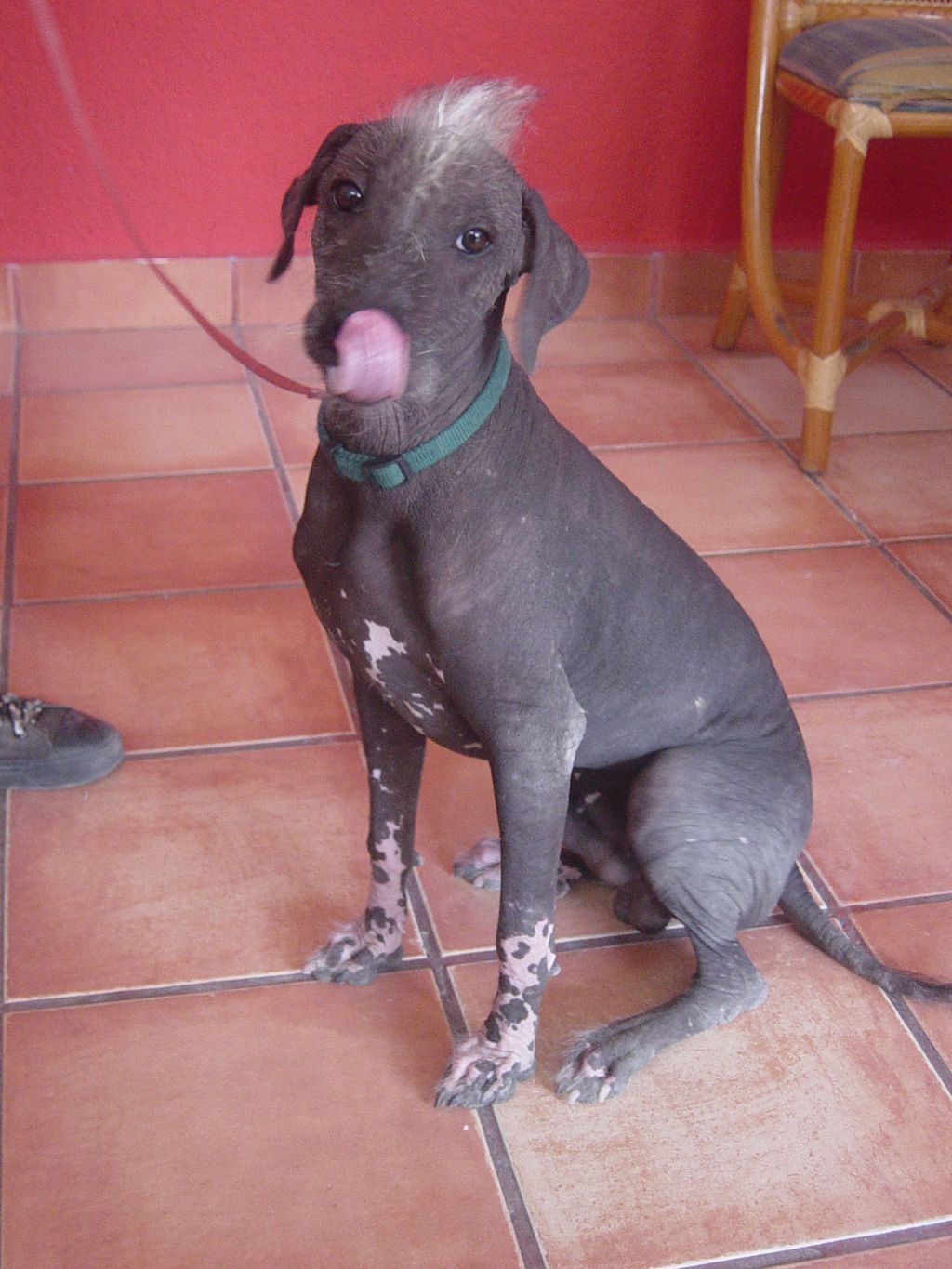
The dog is no small accessory. It crosses the foreground and returns the viewer's attention, while the monkey faces outward from behind the shoulder. Their independent gazes and substantial pictorial space help explain why Melchy resists treating animals only as signs of Kahlo's psychology; the observation supports a discussion of animal presence without proving that Kahlo gave each companion an equal philosophical status. [2] [6]
The Ceramic Figure and Mexican Self-Presentation
Casa de México describes the orange-brown object as a pre-Hispanic figurine associated with the collection Kahlo and Diego Rivera assembled. Melchy tentatively compares it with ceramics from western Mexico, perhaps Colima, and suggests that it may be feminine. No inspected object catalogue matches the painted form to a surviving artefact, so “Colima goddess” or a named deity would be more precise than the evidence allows. [1] [6]
The figure is visually close to Kahlo rather than set apart on a distant plinth. It faces inward, unlike the outward-looking human and animals, and its warm colour answers the monkey's dark mass on the other side. These are formal relations visible in the picture; whether the collected object was intended to stand for ancestry, Mexican history or a spiritual companion must be argued by a named interpreter rather than stated as a fact of the ceramic itself. [2]
Casa de México places the rebozo, Tehuantepec-related hair, xoloitzcuintli and figurine within Kahlo's mature self-presentation. Smarthistory similarly discusses emotional, political and social identity through the company she paints around herself. Such readings make sense of why these particular forms share a portrait, but no single braid, stripe, breed or artefact is a complete explanation of Mexican identity. [1] [8]
In a 2022 interview, Museo Dolores Olmedo collections director Josefina García Hernández described Kahlo in this painting as almost a Mexican queen. The phrase catches the frontal presence and elaborate arrangement, but it is the curator's metaphor, not a royal title or one Kahlo assigned to herself. The portrait can be both a carefully staged public image and a depiction of specific companions without being reduced to a nationalist emblem. [9]
Companionship, Children and Animalist Readings
Some critics have described Kahlo's monkeys as substitutes for children she could not have, a reception tradition summarised by a Google Arts and Culture story. The available evidence does not show Kahlo naming the monkey in this painting as a surrogate child or saying that she painted it to compensate for childlessness. The interpretation is relevant as part of the work's later reception, not as a recovered motive. [10]
Melchy proposes a different emphasis. In a peer-reviewed essay comparing this work with Fulang-Chang and I and a European hunting self-portrait, he argues that Kahlo's self-image may be understood through relations with nonhuman beings rather than an exclusively human centre. His reading attends to the returning gazes, proximity and looping ribbon; it need not deny Kahlo's documented medical history, but it refuses to make each animal merely a symptom or absence. [6]
The European comparison is Alexandre-François Desportes's Self-Portrait in Hunting Dress, where animals can be read in relation to the human hunter's status and mastery. Melchy uses that contrast to ask what changes when Kahlo's animals look back and occupy space with her rather than serving as trophies or inert props. It is a comparison chosen by a twenty-first-century scholar, not evidence that Kahlo studied Desportes or designed the painting as a rebuttal to him. [6]
Melchy also brings the concept of nahualli to the picture. Roberto Martínez González's UNAM study explains models in which a person and a protective nonhuman co-essence share a consequential relation, while the study's broad Mesoamerican scope warns against imposing one formula on every tradition or artwork. Neither the cultural concept nor Melchy's comparison establishes that Kahlo practised a specific belief or declared this monkey or dog to be her own nahualli. [6] [11]
The nonliving ceramic figure complicates a simple “artist with pets” description. Kahlo gathered one human, two animals, a collected object and her written name into a single shallow field; the ribbon gives them a visible relation without settling whether it is domestic, spiritual, national or ecological. Keeping several readings in view is more faithful to the available sources than replacing the surrogate-child cliché with another fixed symbolic key. [1] [2] [6]
How the Painting Entered the Olmedo Collection
A Museo Dolores Olmedo wall label transcribed by Brown University's visual archive says Dolores Olmedo bought the painting in 1955 from the widow of Eduardo Morillo Safa, after his death. This is a useful provenance anchor, but it is a label transcription rather than an invoice or probate document. It does not establish how Morillo Safa first acquired the work, the widow's full identity, the exact purchase day or a price. [12]
Morillo Safa is often described as a patron and collector of Kahlo's paintings. That wider relationship should not be turned into a claim that he commissioned this particular self-portrait: no request, payment record, first-transfer document or dedication has been inspected. The bounded public chain is the painting's association with Morillo Safa, the reported 1955 purchase from his widow, and its present place in the Olmedo collection. [12] [13]
The museum opened at La Noria in 1994, closed in 2020 and reopened at the same Xochimilco residence on 30 May 2026. A move to Chapultepec was discussed during the closure but abandoned; it was not a stage in the painting's ownership or display history. Loans to exhibitions elsewhere likewise changed where viewers could encounter Self-Portrait with Small Monkey without transferring it out of the Olmedo collection. [4] [14]
Exhibitions and Public Life
The painting has a documented international exhibition history, although the owner's complete loan file has not been read. Centro Cultural La Moneda used an explicitly credited detail for Frida y Diego: Vidas Compartidas in Santiago in 2008–09; the Mexican culture ministry's object-level record and the Musée de l'Orangerie establish its inclusion in L'art en fusion in Paris in 2013–14. These records support selected appearances, not an exhaustive list reaching back to Kahlo's lifetime. [3] [15] [16]
The State Hermitage Museum listed the work in a presentation running from November 2015 to January 2016. Mexico's culture ministry then reported its movement into a larger St Petersburg retrospective at the Fabergé Museum in February–April 2016, although the inspected venue page does not name it in an object checklist. The Dalí Museum in Florida explicitly captioned Self-Portrait with Small Monkey in its Frida Kahlo at the Dalí exhibition of December 2016–April 2017. [17] [18] [19]
Casa de México en España included Autorretrato con changuito in Frida Kahlo: Alas para volar during 2022 and made its catalogue available. Its surviving web pages disagree about the exact opening date, so the year is more dependable here than a single day. An archive poster for a 1987 Los Angeles exhibition bearing the painting's title is only a lead: without a checklist or loan record, it does not prove the original canvas travelled there. [1] [20] [21]
The work also circulated beyond exhibitions. A Mexican government decree for a stamp commemorating Kahlo's 2007 birth centenary specifies a design using this portrait, including its nail, ribbon and signature, and credits the Olmedo collection. The decree was published in 2009 while describing the 2007 issue; it documents state use of the image, not permission for this site to reproduce either painting or stamp. [22]
The decree's detailed description makes the stamp more than a passing claim that Kahlo became famous. It specifies the designer, Luis Quezada Villalpando, a 40 × 48 mm format, 200,000 copies and a 13-peso face value; it also names the monkey, dog and ceramic figure as elements of the design. A government image thus carried this particular four-part portrait into circulation, although selection for a centenary issue cannot settle the original painting's meaning or turn state reception into artist intention. [22]
In July 2026, a museum-partner report pictured Self-Portrait with Small Monkey at the far end of one of the reopened La Noria Kahlo galleries and said all the museum's Kahlo paintings were being shown for reopening. The museum's site confirms the La Noria address, but neither source promises that every work will remain continuously on view. Current gallery placement should be checked before a visit. [4] [14]
Further Reading and Open Questions
The complete catalogue entry in Frida Kahlo: The Complete Paintings and the relevant discussions in Gannit Ankori's Frida Kahlo and Imaging Her Selves remain unconsulted. Those books may refine the title history, companion identifications, provenance, exhibition record or interpretation; publisher and library descriptions alone cannot be substituted for their exact pages. [24]
The Museo Dolores Olmedo object and conservation files would answer different questions: whether the painted ceramic can be matched to a collected artefact, how and when Morillo Safa acquired the painting, whether any original document names the monkey or dog, and how the support, frame and painted surface have been recorded. Until those materials are inspected, the 1955 wall-label chain and visible front remain useful but incomplete. A museum-partner gallery photograph likewise cannot reveal a permanent display schedule or supply reproduction rights for this site. [2] [12] [14] [24]
Related Reading
Compare the distinct Fulang-Chang and I and Self-Portrait with Monkey for Kahlo's other monkey portraits. Frida's Fashion and Tehuana Dress explores her dress and self-presentation in greater depth, while The Love Embrace of the Universe gives Señor Xólotl a different pictorial role.
Questions Readers Often Ask
No. The Robert Brady museum's different Self-Portrait with Monkey is also dated 1945, but its record gives 59 × 42 cm and describes a dark stump, black velvet huipil and green hair ribbon. The Olmedo painting is 56 × 41.5 cm and contains the foreground dog, ceramic figure, nail, looping gold-coloured band and signature oval. [1] [3] [23]
The 2022 Casa de México catalogue identifies it as Fulang-Chang, while Yaxkin Melchy says it may be that spider monkey or Caimito de Guayabal. The image cannot decide between individual animals. Until a stronger dated record is found, “a spider monkey” is the secure visual identification and the personal name should stay attributed. [1] [6]
That is one later critical reading of Kahlo's monkeys, not an artist statement about this portrait. The monkey and dog have visible placement, gaze and scale, while Melchy offers a different account of interdependence with animals. None of these observations proves a single private meaning Kahlo assigned to each companion. [2] [6] [10]
It belongs to the Museo Dolores Olmedo at La Noria in Xochimilco. A July 2026 gallery caption placed it there after the museum reopened, but a current on-view position has not been independently confirmed for every later date. Check the museum's live visitor and gallery information before travelling specifically to see it. [4] [14]
A Network Without a Single Key
Kahlo did not paint herself alone in Self-Portrait with Small Monkey. The monkey, xoloitzcuintli and ceramic figure crowd her image, while a ribbon passes through their shared space and encloses the written signature. The exact names and cultural meanings proposed for the companions come from catalogues and scholars; their arrangement is visible to anyone who examines the work closely. [1] [2] [6]
The painting's strongest documented facts are specific: the 1945 signed image, oil-on-Masonite support, Olmedo ownership, official dimensions and selected public appearances. Pet identity, the ceramic figure's origin, the ribbon's intended meaning, complete provenance and technical history remain open. Those limits do not prevent a substantial reading; they keep the many relationships Kahlo painted from being flattened into one biographical formula. [1] [3] [6] [12]
Discussion
Use the cited evidence and your own close looking to explain your view. The prompts below are starting points, not fixed interpretations.
Reader Insights
How do the monkey, dog and ceramic figure frame Kahlo's self-presentation?
Which records identify the animals, and where does identification remain uncertain?
How does the Olmedo collection history differ from the painting's original occasion?
Join the Conversation
Which reading best fits the evidence, and where does uncertainty remain?
References
- Fundación Casa de México en España, Frida Kahlo: Alas para volar catalogue access, 2022; relevant Spanish catalogue passage and checklist at printed pp.58–60 / PDF pp.62–64, with full-page plate at PDF p.14. The catalogue supplies the title, 1945 date, oil-on-Masonite support, 56 × 41.5 cm size, Museo Dolores Olmedo credit, animal and figurine identifications, rebozo and attributed ex-voto reading. The catalogue plate is cited for description; the artwork is not reproduced here. View source text.
- Author's visual observations from the official Casa de México catalogue, full-page plate at PDF p.14. The reproduction supports broad composition, approximate colour and visible signature, not pet names, archaeological identification, original materials or condition; the painting is not reproduced here. View source text.
- Secretaría de Cultura de México, 2013 Frida Kahlo / Diego Rivera: L'art en fusion object record, object listing at current web line 12: Autorretrato con Changuito, 1945, oil on Masonite, 56 × 41.5 cm, Museo Dolores Olmedo. Used with reference 1 for identity, not a generic web measurement. View source text.
- Museo Dolores Olmedo, current museum page, lines 29–31 and 57–78, confirming the continuing La Noria, Xochimilco site and visitor address; Secretaría de Cultura, museum registry, lines 266–296, for 30 May 2026 reopening. Neither is an object-specific present on-view notice. View source text 1; View source text 2.
- Académie de Normandie / Musée de l'Orangerie, 2013 French education dossier, PDF p.14, for the French title and a reception question about the monkey. Its generic vegetation claim is not used as observation. View source text.
- Yaxkin Melchy, “Fulang-Chang and Frida Kahlo: An Animalist Vision on Self-identity”, Annual Review of Cultural Studies 9 (2021), 97–113, especially printed pp.108–11 / PDF pp.12–15. Complete article read for the qualified monkey identification and attributed animalist, ribbon and nahualli arguments; it is not artist testimony. View source text.
- Museum of Modern Art, object record for Fulang-Chang and I, a separate 1937 painting paired with a mirror after 1939. The 1938 and 1942 monkey portraits are likewise distinct works; their dates and collection details are not assigned to this painting. View source text.
- Smarthistory's discussion of Self-Portrait with Small Monkey, hosted by Google Arts and Culture, object section at lines 168–180. Its emotional, political and social-identity framework is attributed analysis, not proof of Kahlo's fixed intentions. View source text.
- Fundación Casa de México en España, interview with Josefina García Hernández, 13 June 2022, lines 68–77. The “queen” expression is dated curatorial reception, not a formal title. View source text.
- Google Arts and Culture, “Can You Find Frida Kahlo?”, section on this painting, recording what “some critics” say about surrogate children. Platform narrative is evidence of reception only, not Kahlo's stated motive. View source text.
- Roberto Martínez González, El nahualismo, UNAM-IIH (2011), synthesis chapter, PDF pp.2–6 / printed pp.499–503, especially pp.502–03. Read for a bounded explanation of nonhuman co-essence; the synthetic model is not imposed as a universal belief or object-specific statement by Kahlo. View source text.
- Brown University Archivision Digital Research Library, indexed transcription of the Museo Dolores Olmedo wall label for Self-Portrait with Small Monkey, giving unframed 56 × 41.5 cm and Olmedo's reported 1955 purchase from Eduardo Morillo Safa's widow. The public LUNA record is currently inaccessible behind a verification page. The original invoice, probate and Kahlo-to-Morillo transfer documents were not read.
- Museo Dolores Olmedo, institutional collection overview, read with the labelled provenance transcription in reference 12. Neither record documents a commission, Kahlo's transfer to Morillo Safa, price or exact transaction date; those remain open. View source text.
- Christie's museum-partner feature, 24 July 2026, lines 70–74 for the gallery caption identifying this painting and lines 81–82 for the abandoned Chapultepec proposal. Read with the current owner and government records in reference 4; 2026 gallery photography is not cleared for this site's publication. View source text.
- Centro Cultural La Moneda, Frida y Diego: Vidas Compartidas official archive, 17 November 2008–28 February 2009, with a detail of this painting credited to Museo Dolores Olmedo. An explicitly object-linked record rather than a generic show notice. View source text.
- Musée de l'Orangerie, Frida Kahlo / Diego Rivera: L'art en fusion, 9 October 2013–13 January 2014; inclusion of this painting is established by the Mexican ministry's object listing in reference 3. View source text.
- State Hermitage Museum, 2015 annual report, entry naming this painting for “Masterpieces of World Museums,” 3 November 2015–20 January 2016. Official annual report controls the dates. View source text.
- Secretaría de Cultura de México, Russia exhibition announcement, 22 January 2016, for the Hermitage-to-Fabergé sequence; Fabergé Museum exhibition record, 3 February–30 April 2016. The venue's public page gives general loan context, not a checklist naming this painting. View source text 1; View source text 2.
- Dalí Museum, Frida Kahlo at the Dalí, 17 December 2016–17 April 2017, with a caption identifying this painting and Museo Dolores Olmedo credit. View source text.
- Casa de México, Alas para volar exhibition archive, naming Autorretrato con changuito among the displayed self-portraits. Surviving institutional pages give conflicting exact openings; the 2022 inclusion is secure. View source text.
- Hoover Institution Library & Archives, 1987 Plaza de la Raza poster record, 17 January–29 March 1987. The poster names an exhibition but is not an object-level checklist or loan document. View source text.
- Diario Oficial de la Federación, Kahlo centenary-stamp decree, published 16 December 2009, PDF p.18 / printed p.19, lines 864–91. Records the 2007 issue, designer Luis Quezada Villalpando, 40 × 48 mm format, run of 200,000, 13-peso face value, description of the Autorretrato con changuito stamp image and Olmedo credit; no republication right inferred. View source text.
- María Celia Fontana Calvo for Museo Robert Brady, museum-authored essay and object metadata, on the distinct 1945 59 × 42 cm Brady self-portrait. Used only for non-conflation. View source text 1; View source text 2.
- Luis-Martín Lozano, Andrea Kettenmann and Marina Vázquez Ramos, Frida Kahlo: The Complete Paintings, publisher metadata only; Gannit Ankori, Frida Kahlo and Imaging Her Selves, publisher records only. No entry or full discussion of this painting from these commercial books was consulted. The owner object, technical, provenance and loan files also remain unavailable. View source text 1; View source text 2; View source text 3.
- Museo Frida Kahlo, Frida interactive chronology, selected work dates used for the comparison timeline. The current work's date follows its cited object record. View source text.
Image Credits
- Canek (Xoloitzcuintle sitting) — Micyaotl G.T. CC BY 2.0. Resized and converted to JPEG/sRGB; no crop.
- Geoffroy's spider monkey (Ateles geoffroyi yucatanensis) Peten 2 — Charles J. Sharp / Sharp Photography. CC BY-SA 4.0. Resized and converted to JPEG/sRGB; no crop.
