


 by Tom Gurney
Tom Gurney BSc (Hons) is an art history expert with over 20 years experience
Page created on March 2, 2018 / Page updated on October 6, 2026
Email: tomgurney1@gmail.com / Phone: +44 7429 011000
Introduction
Frida Kahlo's Girl with Death Mask places a small child with a yellow flower beneath a sky that occupies most of a painting scarcely fifteen centimetres high. A skull mask hides the child's face; another, animal-like mask lies beside her feet. The image brings childhood and death into the same scene, but its painted face cannot tell us who the child is or which one of several later explanations Kahlo intended. [1] [3] [4]
Made in 1938, the oil-on-metal painting belongs to Nagoya City Art Museum. Its documented path through the collection of actor Dolores del Río, a 1989 New York sale, a California collection and a Japanese dealer is unusually specific, while the meaning of its two masks remains disputed. The work was recorded on loan to Tate Modern in 2026; that temporary exhibition status is distinct from its ownership in Nagoya. [1] [2] [5]
At a Glance
- Work and titles: Girl with Death Mask; Nagoya and Tate use different Spanish titles. She Plays Alone is a later exhibition alias. [1] [2] [5]
- Artist and date: Frida Kahlo, 1938.
- Medium and size: oil on metal plate in Nagoya's record; Tate describes the support as tin plate. Both give 14.9 × 11.0 centimetres for the painting.
- Owner and numbers: Nagoya City Art Museum, accession 1997.02.337.001. Tate's X101435 is a temporary loan identifier. [1] [2]
- Exhibition and photograph: Tate lists the painting for its exhibition through 3 January 2027. A 1938 photograph supplies a historical title, but its details have not been compared securely with the painting. [1] [2] [5] [6] [17]
Contents
- Introduction
- Looking at the Small Painting
- A Small Support with a Large Landscape
- Whose Face Is Behind the Skull?
- Two Masks, and Two Animal Names
- Flower, Childhood and Days of the Dead
- Readings of Life, Death and the Landscape
- What the Grief Account Can and Cannot Establish
- Another Version and a 1938 Photograph
Looking at the Small Painting
The child stands nearly frontal and barefoot on green ground, with the feet apart and a sleeveless pink dress reaching below the knees. A lighter, patterned upper panel crosses the shoulders and chest. Both hands meet near the waist around the stem of one yellow flower; no second flower or visible toy is held. [4]
The white skull mask covers the head and all of the visible face. Two rounded yellow-green eye forms, a dark nasal opening and a wide band of teeth supply its fixed expression, while short red ties project from the sides. The wearer's actual eyes, hair and facial features cannot be seen through it, so apparent sadness, confidence or a likeness to Kahlo cannot be established by looking alone. [4]
On the ground at the viewer's right is a second mask-like head with rounded ears, pale eyes, a broad nose, bared teeth and a red open mouth with a protruding tongue. Its emphatic features differ from the still, pale skull above the child's shoulders. The visible form supports an animal or feline description, not a certain species or proof that it matches an object Kahlo owned. [4]
Low, pale-blue mountains divide the green field from a great expanse of layered blue, white and grey-blue cloud. The child's pink dress and light mask stand out against that space, making the little figure visually prominent despite the painting's tiny physical size. A dark signature-and-date-like mark appears near the lower left; without an owner transcription or technical image, its exact lettering and the paint's history should not be reconstructed. [1] [4]
Watch: Frida Kahlo
Five perspectives to view here alongside the article.
Frida Kahlo’s The Two Fridas: Great Art Explained
A focused visual introduction to the painting and its context.
Girl with Death Mask in Kahlo’s career
The Two Fridas
1939Timeline source: Museo Frida Kahlo chronology [27].
A Small Support with a Large Landscape
At 14.9 × 11.0 centimetres, the metal plate is much smaller than most on-screen reproductions make it appear. A Japanese national collection database, using data supplied by Nagoya, also records outer dimensions of 45.5 × 39.3 × 3.5 centimetres; these are not the painted plate's size or evidence for an original frame. The horizon sits low, the clouds occupy far more room than the child, and the pink dress and pale skull concentrate attention in the lower centre. [1] [4] [25]
For its 2019 Frida Kahlo and Arte Popular exhibition, the Museum of Fine Arts, Boston placed the work in a section called “Aesthetics of Childhood.” Its curators argued that the miniature scale and vivid presence of Mexican toys and other arte popular help explain the visual force Kahlo achieved in a small painting. That exhibition placed a late nineteenth-century wooden jaguar mask from the San Antonio Museum of Art nearby as an example of a type Kahlo collected, not as an authenticated model for the exact mask on the ground. [5]
Metal support alone does not make the picture an ex-voto, or painted devotional offering. The Boston exhibition treated childhood aesthetics and ex-votos in different sections, while the owner records identify this as an oil painting on metal or tin plate without supplying a votive dedication. The resemblance of scale can open a comparison, but cannot turn the picture into a documented prayer of thanks. [1] [3] [5]
Whose Face Is Behind the Skull?
The MFA calls the child likely to represent Kahlo herself, and a Spanish academic chapter records the common identification. Neither supplies a named sitter document or a statement by Kahlo identifying the figure. Because the mask replaces the face entirely, the picture also withholds the usual features by which a portrait likeness could be tested. [4] [5] [7]
The alternate title She Plays Alone gives solitude a place in the painting's reception, not a verified account of Kahlo's childhood. There is no second person in the landscape, but the child holds a flower rather than visibly playing with the animal mask. The openness around the figure can be described as spatial separation; calling the wearer lonely is an interpretation that requires more than the title and an empty field. [4] [5]
Jesús González Fisac's Spanish study makes the obstruction itself central. He argues that the painted skull offers a face and apparent eyes while hiding the wearer's own face and gaze; the mask on the ground, in contrast, resembles a face without anyone looking through it. His philosophical reading gives the two objects different roles in an exchange with the viewer, without settling the child's identity or diagnosing an emotion. [8]
Two Masks, and Two Animal Names
Nagoya's museum-supplied 1998 essay calls the object on the ground a tiger mask and describes it as a talisman against evil for children. Boston's curators call it a jaguar mask and associate it with physical and supernatural strength. The painting's small digital image cannot adjudicate those species names, and neither institution provides an exact surviving mask that Kahlo copied. [3] [4] [5]
Silvia Verónica Ariza Ampudia and Rocío Nohemí Torres Cardona use “tiger” in their Spanish study but acknowledge that the animal choice may not have been deliberate. They also report a comparison with a mask in Kahlo's dining room, without supplying a collection record that would establish a one-to-one source. The disagreements make “animal mask” the clearest descriptive term here, while tiger, jaguar, protection and strength remain attributed readings. [7]
The two painted masks nevertheless make a precise formal contrast. One is worn upright and obscures a living figure; the other lies unoccupied on the ground with its mouth open. Seen together, they let the child's still hands and flower sit between two forceful faces, without requiring the viewer to assign a single fixed meaning to either object. [4] [8]
Flower, Childhood and Days of the Dead
The flower is visibly yellow; its species is not discernible from the inspected reproduction. Nagoya's 1998 essay calls it a marigold and relates such flowers to guiding the dead, while Mexico's National Institute of Anthropology and History describes cempasúchil flowers as a common way of marking a route to an ofrenda, or offering. Those sources give a meaningful cultural association, not a botanical identification established by the painting alone. [3] [4] [9]
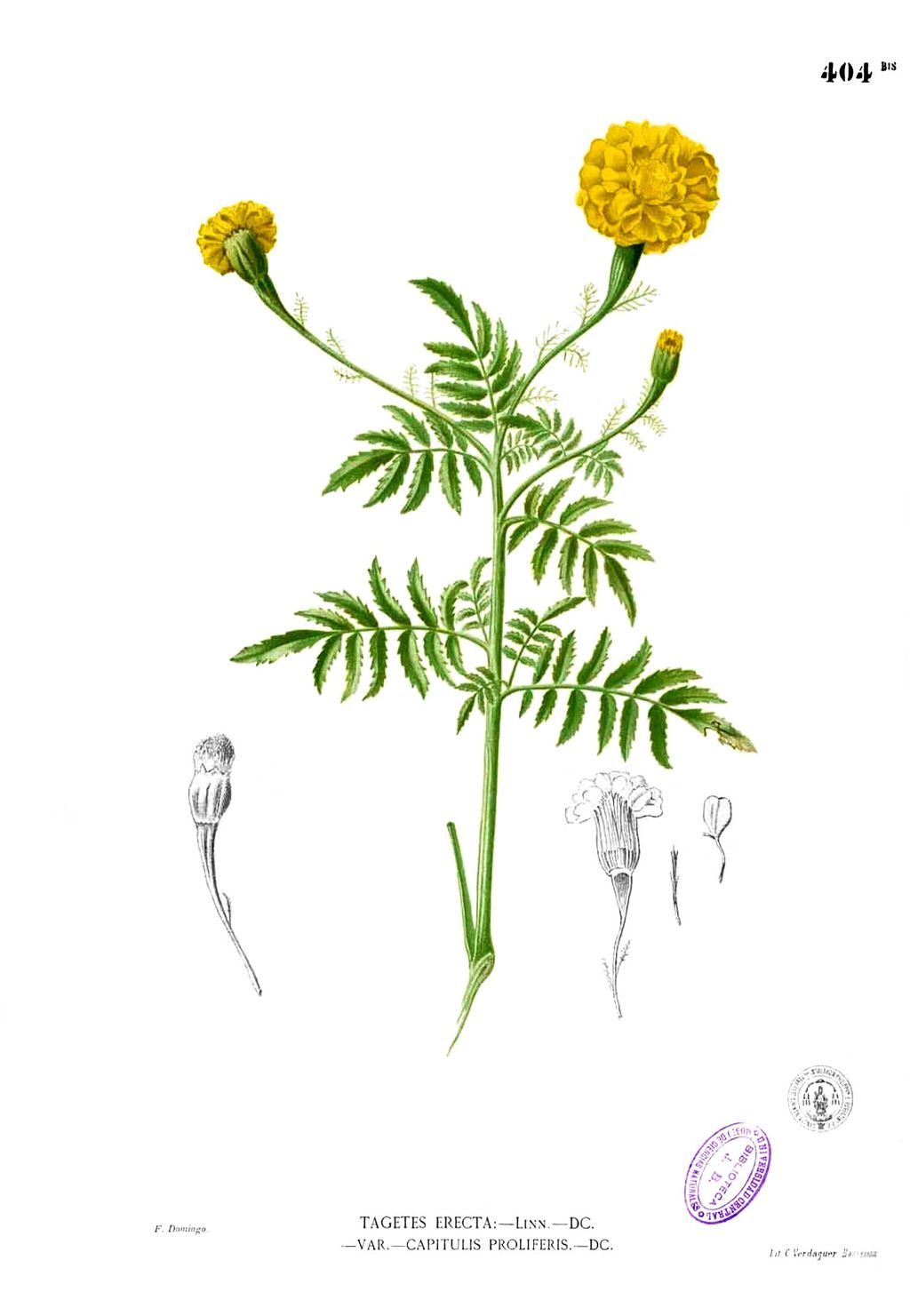
The institute also describes offerings for deceased children that may include favoured toys. Luis Roberto Vera reads Kahlo's child in relation to muertos chiquitos, an observance for dead children associated with the first of November in many communities. His reading joins the skull mask, flower and small figure, but the painting has no inscription naming a particular child, death or ritual, and the exact date of its making within 1938 is unknown. [10] [11]
This context needs more than the claim that Mexicans celebrate death rather than mourn it. Roberto Martínez González and Rocío Maza trace varied Indigenous, Catholic, domestic, civic and modern histories of the Days of the Dead, including remembrance, offerings, prayer, public festivity and later national imagery. INAH itself describes regional differences in dates and practices; another of its essays questions whether a simple “syncretism” story adequately describes the tradition's formation. The skull and flower can resonate with those histories without making one festival, one region or one emotional response stand for all of Mexico. [10] [11] [12]
Nagoya's essay presents the child's skull mask as a kind of holiday toy and the ground mask as a protective talisman. The Boston exhibition instead emphasised the scale and force of toys within Mexican arte popular. Read together, these institutional accounts offer a richer childhood context than a single assertion that every object in the scene is a fixed symbol of death. [3] [5]
Readings of Life, Death and the Landscape
Vera argues that living and dead presences coexist in the image rather than occupying separate worlds. He connects the mask's returning look with Mesoamerican death imagery and brings Xipe Totec, Coatlicue and skull-display traditions into comparison. These are his interpretive routes; no object record identifies an archaeological prototype or a specific ritual that Kahlo reproduced. [11]
Vera also calls the horizon Anáhuac and identifies the distant peaks as Popocatépetl and Iztaccíhuatl. The painting clearly has blue and pale mountains, but neither the Nagoya catalogue fields nor the reproduction labels them. His proposal can help a reader see the landscape as culturally situated while remaining a proposal, not a verified location depicted from life. [1] [4] [11]
Alfonso de Toro sets the picture beside José Guadalupe Posada's death imagery, George Grosz's Dada work and European memento mori, vanitas and Dance of Death traditions. That comparative network resists an either-or choice between Mexican and European frames; it does not document Kahlo borrowing one Grosz image. Tate's current exhibition likewise places the painting among masks, skeletons, dreams and Surrealist connections, which describes a curatorial grouping rather than a final style classification for this object. [13] [14]
What the Grief Account Can and Cannot Establish
Nagoya's museum-supplied essay says Kahlo made the work while mourning a baby lost through miscarriage. Andrea Kettenmann reports a more specific tradition: Dolores del Río, an early holder of the painting, said Kahlo wanted to express sorrow over a lost child. Kettenmann cites the 1988 catalogue Frida Kahlo. Oeuvre, p. 244, but that underlying page and any direct del Río interview or letter have not been consulted directly. [3] [15]
The testimony is relevant, yet it is not the same as an authenticated statement by Kahlo explaining every painted element. The masked child cannot be identified from visible features, and the flower and two masks can work within festival, childhood and life-and-death readings as well as a personal one. Boston curator Layla Bermeo's warning against using paintings only to illustrate Kahlo's biography is especially useful here: it leaves the del Río report in view without allowing it to erase the object's constructed scene. [4] [5] [15]
Nor does the title She Plays Alone prove a history of childhood loneliness, or the later grief interpretation establish which pregnancy event, if any, this 1938 object depicts. Kahlo's much wider reproductive and medical history belongs in the relevant life and medical studies. The sourced testimony does not establish a dated causal story for the painting. [5] [15]
Another Version and a 1938 Photograph
The Nagoya painting must not be conflated with a reported second work. Kettenmann's older caption calls a Girl with a Death-Mask (I) an oil-on-metal picture but gives 20 × 14.9 centimetres and a private-collection credit, both at odds with Nagoya's and Tate's matching 14.9 × 11.0 centimetres. Reporting connected with the later complete-paintings project describes a lost Girl with Death Mask II; the exact entries for both versions have not been read in that large commercial volume, so neither the second work's support nor its history can be assigned from Nagoya's record. [1] [2] [15] [16]
Nickolas Muray photographed a Kahlo painting catalogued by George Eastman Museum as The Girl Already has her Skull Mask in 1938. The museum owns a gelatin-silver print, accession 1977.0188.3126, made from an image measuring 24.1 × 17.1 centimetres on larger paper. Those dimensions and that accession belong to Muray's photograph, not to the painting shown within it; its public record alone does not resolve which version he photographed. [17]
The 1938 photograph provides a historical title and documentation route, but it reproduces the painting rather than depicting a separate context. Nagoya's institutional image supports visual description without resolving the disputed identity of the second version. [4] [6] [17]
From Dolores del Río to Nagoya
Tate's legal loan record begins its provenance with Dolores del Río in Mexico City in 1938. It then says that a private California collection purchased the painting from her at Christie's New York on 21 November 1989, lot 18; the dealer Ryo-Ko-Do in Higashimurayama acquired it from that collection, and Nagoya acquired it from the dealer in 1997. The record identifies transfers and places, but does not name the California buyer, give a sale price or supply every transaction document. [2]
Kettenmann writes that Kahlo gave the picture to del Río. Her note leads to the 1988 Oeuvre catalogue, p. 244, rather than to an inspected gift letter or del Río interview, while Tate's chain starts with del Río without specifying how she obtained it. The gift should therefore remain a reported account, not a document-backed step inserted into the legal record. [2] [15]
There is also a small acquisition-date conflict: Nagoya's museum-supplied Google Arts & Culture entry says “Purchased in 1996,” whereas Tate gives acquisition in 1997 and Nagoya's detailed record begins with 1997.02. No public source checked explains whether the different dates refer to purchase, transfer, registration or a later step. The secure present fact is Nagoya's ownership; an invented reconciliation would make the provenance less clear. [1] [2] [3]
Documented Displays, and Missing Checklists
The painting circulated publicly before its present loan, but the available records do not form a complete exhibition history. Teresa del Conde's contemporary 2007 review explicitly places the small metal picture from Japan in the Kahlo centenary exhibition at Mexico City's Palacio de Bellas Artes, describing it as often reproduced but rarely exhibited. The complete centenary catalogue has not been read here, so that review is evidence for a selected appearance rather than a full object file. [18]
Nagoya's 2015 annual report lists the picture in its collection rooms during both halves of the 18 April–23 September display, first under “Collection Analysis” and later with Mexican Renaissance works. Boston showed it in Frida Kahlo and Arte Popular from 27 February to 19 June 2019, where the exhibition's object-specific discussion supplied the childhood-scale and jaguar-mask readings. Nagoya's further official lists document January–March 2025, September–December 2025 and March–June 2026 runs; these selected intervals do not prove continuous display, and the later Tate loan makes “on display in Nagoya now” unreliable. [5] [19] [26]
The Julien Levy Gallery held Kahlo's first New York solo exhibition from 1 to 15 November 1938, and a list of works survives in the Philadelphia Museum of Art's archive. Secondary lists assign this painting number 20 as She Plays Alone, but the list itself has not been inspected, so New York object inclusion stays a precise archival question. Nor has an object-specific record been found to place Nagoya's work in the 1939 Paris exhibition; that event included Kahlo's The Frame, a different painting. [20] [21]
Tate's X101435 loan entry and 2026 press material directly identify this work for Frida: The Making of an Icon in London, scheduled from 25 June 2026 to 3 January 2027. The show originated in Houston, but the Houston event itinerary alone does not establish that this particular small painting appeared there. The cited loan record identifies a scheduled London appearance, not guaranteed individual display on a given day; Nagoya remains the owner. [2] [14]
Reception Beyond the Object
The alternate titles already show that later viewers have emphasised different aspects of this small image: a skull, death, a girl alone, or a girl already wearing her mask. Boston's childhood grouping and Tate's masks-and-dreams grouping are likewise distinct curatorial arguments, not changes to the painting itself. They make it possible to ask different questions of the same visible child without turning any one exhibition's theme into Kahlo's own label. [5] [14] [17]
Nagoya's annual report records a 17 May 2015 curator talk devoted to this painting. Curator Nakamura described its powerful effect despite its size and proposed that private experience and an expansive, almost cosmic vision meet in it. That is a documented Japanese institutional reading, useful alongside Boston's later childhood emphasis, not independent evidence that Kahlo intended a specific autobiographical event. [26]
Jennifer Givhan's 2018 poetry collection Girl with Death Mask includes a poem of that title. Indiana University Press describes a collection concerned with a Latina girl's movement toward motherhood, bodily experience, protection and healing; its public description does not establish that the whole book interprets Kahlo's painting. The shared title is a modest, documentable example of the image's later literary resonance, not an additional source for what Kahlo meant in 1938. [22]
Books, Catalogues and Open Questions
A key further object study is Luis-Martín Lozano, Andrea Kettenmann and Marina Vázquez Ramos's Frida Kahlo: The Complete Paintings. Its publisher verifies a 624-page volume, but the entries for Nagoya's painting and the reported lost second version have not been read here; a catalogue number, direct version comparison or technical conclusion cannot be borrowed from the book's title. Helga Prignitz-Poda and colleagues' 1988 Oeuvre, especially p. 244, may clarify the del Río testimony and older dimensions, but that page has not been consulted. [15] [16] [23]
Nagoya's 1998 Selected Works p. 61 has been consulted through museum-supplied Spanish and English excerpts about Girl with Death Mask, not through the complete Japanese catalogue. The 1989 Christie's lot 18 catalogue, the 1938 Julien Levy list, the complete 2007 and 2019 exhibition catalogues, and the 2026 Tate/Museum of Fine Arts, Houston volume remain uninspected. Gannit Ankori's Frida Kahlo is a relevant critical biography but has likewise been consulted only at publisher-description level; none of these books supplies an independently checked claim here. [2] [3] [15] [20] [23] [24]
No conservation report, support analysis, reverse image, frame history or owner transcription of the lower-left mark has been inspected. The owner and lender agree on a metal or tin support and the present dimensions, but the reproduction cannot establish the exact alloy, painting sequence, surface condition or whether the currently seen colour matches the work under gallery light. Those questions require Nagoya's technical and registrar files, not closer speculation from a JPEG. [1] [2] [4]
The painting's force rests partly in what it refuses to disclose. A child's face is entirely replaced by a skull, yet her hands hold a living flower; a second mask lies beside her; mountains recede beneath a sky far larger than the figure. Cultural histories, del Río's reported grief account and later scholarship can illuminate that arrangement, but none makes the hidden face or the work's exact original purpose fully knowable. [3] [4] [5] [8] [11] [15]
Questions About Girl with Death Mask
The MFA says the child is likely Kahlo, and that identification is common in later writing. No inspected document names a sitter, while the mask conceals every ordinary facial feature needed to test a likeness. “Often interpreted as Kahlo” is more accurate than presenting the painting as a verified childhood portrait. [4] [5] [7]
Nagoya calls it a tiger and Boston a jaguar; the small image shows an animal-like mask but cannot settle the species. The institutions also give different accounts of protection and strength. Tiger and jaguar therefore remain attributed interpretations rather than a single zoological fact. [3] [4] [5]
Nagoya's 1998 essay makes that reading, and Kettenmann reports Dolores del Río's account of Kahlo's sorrow over a lost child. The underlying 1988 catalogue page and any direct testimony were not inspected, and no authenticated statement by Kahlo explaining this painting was found. The grief account is significant but does not establish a specific medical event depicted in the child. [3] [15]
Related Reading
The Frida Kahlo overview supplies the wider chronology without assigning the masked child a documented identity. The style and Surrealism study examines the movement question raised by Tate's grouping; the dated sale and exhibition records above still do not prove inclusion in the 1938 New York checklist. [2] [14] [20]
Discussion
Use the cited evidence and your own close looking to explain your view. The prompts below are starting points, not fixed interpretations.
Reader Insights
What can the visible mask and flower tell us without identifying the child beneath?
How do the museum record and later grief account differ in evidential strength?
Which dimensions and collection records distinguish Nagoya's work from the reported second version?
Join the Conversation
Which reading best fits the evidence, and where does uncertainty remain?
References
- Nagoya City Art Museum, Girl with Death Mask collection record, object fields for title, date, medium, dimensions and record number 1997.02.337.001. View source text.
- Tate, immunity-from-seizure loan register, entry X101435, including owner, medium, dimensions, provenance and scheduled London loan. View source text.
- Nagoya City Art Museum, museum-supplied collection essay, Spanish description and detail fields citing Selected Works from the Collection of Nagoya City Art Museum (1998), p. 61; interpretations and the conflicting 1996 purchase date are attributed to this essay. View source text.
- Nagoya City Art Museum, Girl with Death Mask collection image, used for the figure, masks, flower, landscape and lower-left mark. This view does not establish the plate's reverse, physical condition or a secure transcription of the mark. View source text.
- Museum of Fine Arts, Boston, “Frida Kahlo and Arte Popular”, 2019, especially “Aesthetics of Childhood” and its discussion of Girl with Death Mask; exhibition dates, scale, likely identity and jaguar-mask interpretation. View source text.
- George Eastman Museum, Nickolas Muray photograph of a Kahlo painting, and Tate's loan record at reference 2. The photographic record and the painted object are distinct; neither public source grants this site reproduction rights. View source text.
- Silvia Verónica Ariza Ampudia and Rocío Nohemí Torres Cardona, “El arte y la mujer: la interpretación del tema de la muerte”, in Muerte impune: perspectivas y desafíos en México (2022), pp. 231–258, especially pp. 253–254. View source text.
- Jesús González Fisac, “Frida Kahlo: (auto)retrato y devenir-rostro”, Fedro 9 (2010), pp. 43–63, especially pp. 55–56 and 61–62; the complete article is available as an author-uploaded text. View source text.
- Instituto Nacional de Antropología e Historia (INAH), “Ofrendas para los muertos”, 1 November 2024; cempasúchil, offerings and regional variation. View source text.
- INAH, “Día de Muertos, un sincretismo religioso”, 1 November 2023, on dates and children; and Víctor Joel Santos Ramírez, “El origen del Día de Muertos”, on the limits of a simple origin story. View source text 1; View source text 2.
- Luis Roberto Vera, “Octavio Paz y Frida Kahlo: La herencia precolombina”, Casa del Tiempo, Época IV, no. 2–3 (December 2007–January 2008), pp. 41–56, especially pp. 45–46 and note on p. 53; life/death, muertos chiquitos and landscape readings. View source text.
- Roberto Martínez González and Rocío Maza, “Orígenes e historias de los días de muertos en México”, UNAM Global / Revista de la Universidad de México, 24 October 2023, full historical account. View source text.
- Alfonso de Toro, “Dispositivos transmediales, representación y anti-representación. Frida Kahlo: Transpictorialidad-Transmedialidad”, Comunicación 5 (2007), pp. 23–65, especially pp. 36–38. View source text.
- Tate, Frida: The Making of an Icon press pack, 20 January 2026, pp. 1–2; Girl with Death Mask highlight, curatorial grouping and scheduled London dates. The loan register in reference 2 is the object-specific status record. View source text.
- Andrea Kettenmann, Frida Kahlo and Diego Rivera (Prestel, 1999), digitised passage on Girl with Death Mask and note 28, which cites Helga Prignitz-Poda et al., Frida Kahlo. Oeuvre (1988), p. 244. Only the digitised 1999 passage was consulted; the cited 1988 page was not directly examined; the older dimensions and del Río account are reported, not independently verified.
- Holly Williams, “The unseen masterpieces of Frida Kahlo”, originally BBC Culture, July 2021, reporting on the lost second version and the later Complete Paintings research; that book's entries remain unread. View source text.
- George Eastman Museum, Nickolas Muray photographic-object record, 1938, accession 1977.0188.3126; title, medium and photograph dimensions, not painting dimensions. View source text.
- Teresa del Conde, “Frida Kahlo en Bellas Artes”, La Jornada, 19 June 2007, discussion of Girl with Death Mask in the contemporary exhibition review. View source text.
- Nagoya City Art Museum, official permanent-collection checklists for January–March 2025, September–December 2025 and March–June 2026, each listing item 503. View source text 1; View source text 2; View source text 3.
- Philadelphia Museum of Art Archives, Julien Levy Gallery Records, box 16, folder 1, finding-aid entry for Kahlo letters, preface and 1938 list of works; box 35, folder 7 records the November 1938 show. The underlying list was not inspected. View source text.
- Christie's, Survivor lot record, “Exhibited” field and essay confirming the 1–15 November 1938 Julien Levy exhibition, not this painting's inclusion; Tate press material in reference 14 identifies The Frame as a separate Paris-exhibited painting. View source text.
- Indiana University Press, Jennifer Givhan, Girl with Death Mask (2018), publisher description and contents. The poetry collection itself was not read. View source text.
- TASCHEN, Luis-Martín Lozano, Andrea Kettenmann and Marina Vázquez Ramos, Frida Kahlo: The Complete Paintings, publisher record for the 624-page volume; exact entries for this painting and the reported second version unconsulted. See also the unread 1988 Oeuvre p. 244 route in reference 15. View source text.
- Reaktion Books, Gannit Ankori, Frida Kahlo, publisher description only; the complete critical biography, 1998 Nagoya catalogue, 1989 sale catalogue and complete 2007, 2019 and 2026 exhibition volumes were not consulted for this account. View source text.
- Art Platform Japan, Nagoya-supplied object record W1080978, lines for painted dimensions, outer dimensions, owner and accession number; source data supplied by Nagoya on 29 March 2023, page updated 10 February 2026. Its machine-rendered text does not explain the outer structure's history. View source text.
- Nagoya City Art Museum, 2015 annual report, PDF p. 6 for the two-phase collection-room list and PDF pp. 42–43 for the 17 May 2015 “Kahlo's Modernity” curator talk and summary. The latter is Nakamura's interpretation, not Kahlo's own explanation. View source text.
- Museo Frida Kahlo, Frida interactive chronology, selected work dates used for the comparison timeline. The current work's date follows its cited object record. View source text.
Image Credits
- Tagetes erecta, Flora de Filipinas (c. 1880–1883) — Flora de Filipinas, associated with Francisco Manuel Blanco; individual illustrator unverified. Commons version cleaned, colour-adjusted and rotated by CarolSpears. Public domain. Resized and converted to JPEG/sRGB; no crop.
