


 by Tom Gurney
Tom Gurney BSc (Hons) is an art history expert with over 20 years experience
Page created on March 2, 2018 / Page updated on October 6, 2026
Email: tomgurney1@gmail.com / Phone: +44 7429 011000
Introduction
Four parrots crowd around Frida Kahlo in Me and My Parrots, but the face at the centre of the group still addresses the viewer. The birds turn in different directions, while Kahlo's white blouse, folded arms and small cigarette bring the encounter close to the foreground. Painted in 1941, the portrait is unusually well documented by a contemporary photograph of Kahlo beside the canvas, yet neither that photograph nor the birds supplies a single, settled explanation of what the painting means. [1] [2] [5]
Its later interpreters have read love, Christian imagery, affinity with animals and the act of photographic self-fashioning into the same arrangement. Those arguments are most illuminating when kept alongside the visible picture and the documentary record, not substituted for Kahlo's unrecorded account of her intentions. A distinct later response came in 2001, when Yasumasa Morimura returned specifically to the four-parrot composition in a photographic self-portrait. [6] [8] [9] [10] [18]
At a Glance
- Artist and titles: Frida Kahlo, Yo y mis pericos / Me and My Parrots; the museum also translates the title as Me and My Parakeets. [1] [3] [4]
- Date, medium and size: 1941, oil on canvas, 82 × 62.8 cm. Whitney also records 32 5/16 × 24 3/4 inches. [1] [3]
- Collection: Private collection in 2019–20 records; Kettenmann credited Mr and Mrs Harold H. Stream in 1999. Present legal ownership is unverified. [1] [3] [16]
- Documented display: Whitney listed the portrait in Vida Americana, which ended on 31 January 2021. Its current location and display are unverified. [3] [17]
Contents
- Introduction
- Looking at the Four-Bird Portrait
- What the 1941 Record Establishes
- The Muray Photograph and a Staged Encounter
- Parrots, Love and Competing Visual Traditions
- Face, Bird Gazes and a Later Artist's Response
- Pets, Clothing and Portrait Conventions
- The Gray and Stream Collection Problem
- Selected Exhibitions and Their Different Frames
Looking at the Four-Bird Portrait
The canvas is a vertical, closely cropped half-length portrait. Kahlo's face is nearly frontal with a slight turn, and both eyes look outward near the viewer; dark hair is arranged high above a continuous brow. The mouth is closed, but the pose cannot reliably be translated into “peaceful,” “grieving,” “defiant” or another psychological label. [2] [8]
One parrot rises by each shoulder, and two more occupy the lower field in front of the blouse and arms. The bird at the viewer's right shoulder is relatively frontal and seems to meet the viewer's direction of sight; the others turn inward or obliquely. Their bodies widen the sitter's outline, while varied feather marks form an animated perimeter around a face that remains the composition's stable centre. [2] [9]
Greens, blues, yellow and warmer accents appear in the birds' plumage, set against white clothing, warm skin and a dark mottled field. These are broad observations from reproductions, not calibrated statements about the canvas's physical colour or pigments. The background shows no secure garden, room, horizon or furniture that would tell us where Kahlo meant the scene to be set. [2]
Kahlo's forearms cross or overlap near the bottom of the picture, where two rings and a cigarette are visible among the birds. The reproduction does not securely show that the cigarette is lit, and the position of the hands need not be described as protective or nervous. The image can sustain careful looking at fingers, cloth and feathers without a technical claim about brush speed, paint thickness or the health of any depicted animal. [2] [8] [11]
Watch: Frida Kahlo
Five perspectives to view here alongside the article.
Frida Kahlo’s The Two Fridas: Great Art Explained
A focused visual introduction to the painting and its context.
Me and My Parrots in Kahlo’s career
The Two Fridas
1939Timeline source: Museo Frida Kahlo chronology [25].
What the 1941 Record Establishes
Andrea Kettenmann's exact 1999 Spanish page identifies Yo y mis pericos as a 1941 oil on canvas measuring 82 × 62.8 cm. Whitney's final Vida Americana press checklist repeats the year, medium and metric size in an individual entry. Those convergent records settle the basic object identity; neither supplies a month of execution, an artist's written explanation, a signature transcription or a conservation study. [1] [3]
The Museo Frida Kahlo chronology places the painting in 1941 and records that Kahlo and Diego Rivera had remarried in December 1940. It also dates Guillermo Kahlo's death to 14 April 1941. Since the painting is dated only by year in the checked records, no source establishes whether it was finished before or after her father's death, much less that bereavement caused the composition. [1] [4]
Kahlo's long experience of pain and disability also predates 1941. Nothing in this portrait documents a new onset of suffering that year, and no checked letter or medical note ties a particular illness episode to its making. Describing the gaze as an effort to attract attention or the birds as a refuge from marriage would turn later speculation into a diagnosis or biographical fact. [2] [4] [8]
The Muray Photograph and a Staged Encounter
Nickolas Muray photographed Kahlo with Me and My Parrots in 1941. George Eastman Museum catalogues a later gelatin-silver print under the subject “Frida Kahlo painting Me and My Parrots”; Fine Arts Museums of San Francisco independently locates the photograph in Coyoacán and dates it to the same year. Eastman's print was made around 2000 by Bruce Proctor, so its print date must not be mistaken for the date of Muray's exposure. [5] [24]
The photograph places the painted Kahlo, the photographed Kahlo and Muray in one scene. Nieves Limón Serrano argues that pose, dress and setting made such photographs forms of visual autobiography jointly shaped by the sitter and photographer; in this case, the painted and photographed figures create a particularly clear doubling. Her account is a scholarly interpretation of staging, not proof that the photograph records every stage of painting or that four living parrots were present as models. [5] [6]
Kettenmann's adjacent caption gives the Muray image an approximate 1939–40 date, whereas both photography museums give 1941. The museum records and the painting's convergent 1941 date are the stronger basis for discussing this photographed encounter. Limón likewise gives the painted work a 1939 date in one passage; that isolated error should not erase her analysis, but it cannot control the object's date. [1] [5] [6]
Muray and Kahlo's relationship is relevant context for Kettenmann's later interpretation of the birds. The photograph does not establish that Muray commissioned, owned or received the canvas, nor that his presence fixes its meaning. It is valuable precisely because it shows another carefully composed image of Kahlo alongside this one, while leaving the private circumstances of the painting incompletely documented. [1] [5] [6]
Parrots, Love and Competing Visual Traditions
Kettenmann reads the four parrots through Kama, the Hindu god of love, whose imagery she associates with parrots, and interprets them as erotic allusions to Kahlo's relationship with Muray. Her reading is precise enough to be considered rather than vaguely repeated as “birds mean love.” Yet the checked page supplies no letter, preparatory sketch or source image showing that Kahlo chose this visual tradition, so it remains Kettenmann's interpretation. [1]
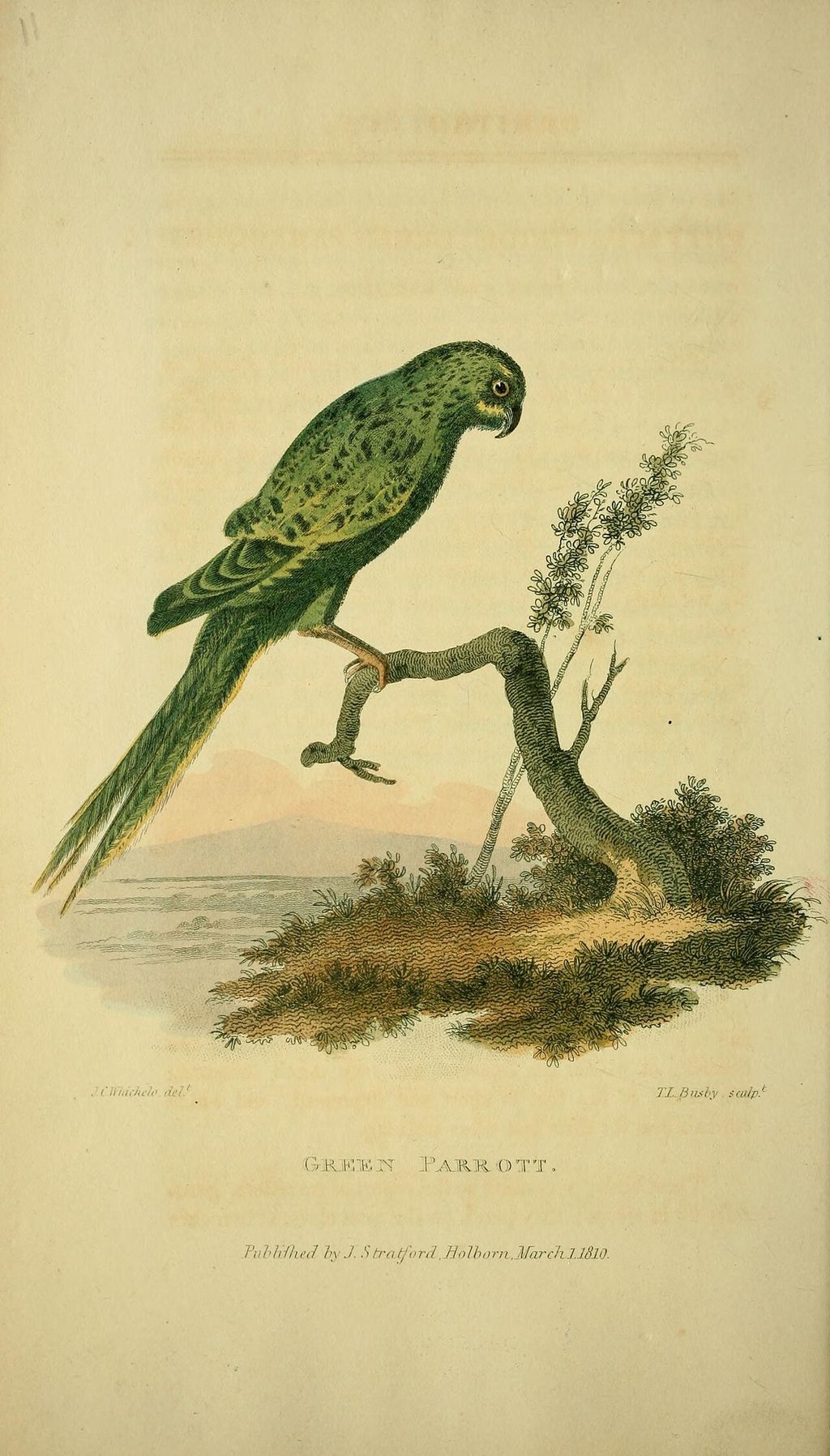
Uta Felten proposes a different historical comparison in her Spanish-language essay: she places Me and My Parrots beside Hans Baldung Grien's 1533 Virgin and Child with Parrots. She sees Kahlo's image as a fragmented reworking of Christian imagery within a layered field of European, pre-Columbian and Mexican popular forms. That “palimpsest” is a critical model, not documentary proof that Kahlo saw Baldung's painting or intended a Christian allegory. [10]
Whitney's educator guide associates parrots with sorcery and calls Kahlo la gran ocultadora, or a great concealer. The guide offers those terms without an underlying citation that would make them Kahlo's own words or a settled fact about the birds. Its value is as one later museum reading to set beside, rather than above, Kettenmann's and Felten's accounts. [7]
The competing readings need not cancel one another in order to remain unproved as authorial intent. A household animal can be a model, an arrangement of colour and feathers, an affectionate companion or an opening for later symbols; none of those roles follows automatically from the species. The painting establishes four bird forms around Kahlo, while claims about erotic code, sorcery or Christian recoding require their named interpreters. [1] [2] [7] [10] [11]
Face, Bird Gazes and a Later Artist's Response
In a Whitney audio guide, Chicana muralist Judith Baca notices that one parrot seems to look outward, echoing Kahlo's eyes. Baca reads a sense of identification with other creatures and goes on to discuss magical realism and a permeable boundary between life and death. This is a valuable artist's response in 2020, not testimony about what Kahlo privately believed in 1941. [9]
Jesús González Fisac, writing in Spanish on Kahlo's self-portraits, gives the face a different theoretical role: its apparently restrained expression asks viewers to make meaning without declaring one emotion. He suggests that birds often remain in profile whereas Kahlo's monkeys and dogs more directly return a gaze. The relatively frontal parrot at the viewer's right shoulder complicates that generalisation and helps explain why Baca could experience this bird as an eye-to-eye partner. [2] [8] [9]
The contrast among eyes matters more than a label such as “serenity.” Kahlo looks outward, one bird approaches that orientation, and others direct attention across the canvas; the face remains a visual anchor amid those divergent turns. That is a formal description open to viewers, while neither a painted gaze nor a scholar's response supplies a diagnosis of attention-seeking, grief or contentment. [2] [8] [9]
Pets, Clothing and Portrait Conventions
James Oles's study of Kahlo's related 1942 Self-Portrait with Monkey and Parrot offers a comparative method rather than a key to this canvas. He documents a changing animal household at Casa Azul and considers pets, alter egos, colour contrasts and possible child substitutes without awarding any one function to every animal portrait. His related work is a separate painting: its monkey, parrot, composition, collection and provenance cannot be silently transferred to Me and My Parrots. [11]
Nor can one of this portrait's four birds be confidently named Bonito because a neighbouring 1941 portrait has that title. No checked record identifies these individuals or their exact species, establishes that all posed live, or diagnoses their feather condition. Oles relays a specialist suggestion about feather-plucking and cigarette smoke, but that secondary possibility is not a veterinary examination of real birds or a technical analysis of paint. [2] [11]
The white blouse has a broad squared neckline, short sleeves and fine folds or gathers visible in the reproduction. Whitney identifies the garment with the clothing of Zapotec women from Tehuantepec; the visible cloth alone cannot establish its fibre, maker, community or precise mode of wearing. Oles and Limón place dress and hair within Kahlo's active presentation of herself, but the much wider history of her Tehuana wardrobe belongs on the dedicated fashion page. [2] [6] [7] [11]
Oles also situates early-1940s half-length portraits within nineteenth-century Mexican popular portraiture rather than treating Kahlo's close frontal format as simply naïve. European paintings of women with parrots, including works by Manet and Courbet now catalogued by the Metropolitan Museum, show that a parrot could participate in several portrait traditions. They broaden a viewer's comparison; there is no checked evidence that Kahlo used either one as a direct source for this canvas. [11] [12]
The Gray and Stream Collection Problem
The first named collection credit found in an exact printed source is Kettenmann's 1999 attribution to Mr and Mrs Harold H. Stream in New Orleans. A 2020 El Universal investigation reports that the unread 1988 catalogue raisonné said “Mattilda Gray” acquired the painting in 1941 while in Mexico for a portrait by Rivera. This is a secondary report of a catalogue entry, not an inspected invoice, and it does not by itself establish whether that acquisition was a purchase, gift or another arrangement. [1] [13]
The same newspaper names Mireya Escalante as curator of the Stream collection and reports her account that the family acquired this painting and several works by Rivera during a Mexican visit. She placed the painting in that family's holdings from 1941. This named custodian's account strengthens the early collection link, but the interview is not a surviving transaction record and cannot settle which Matilda acquired it or who holds legal title now. [13]
Christie's 2026 family history distinguishes the collector Matilda Geddings Gray from her niece Matilda Gray Stream, who later collected with Harold H. Stream. It dates a Latin American trip involving the two women to 1942 and says Kahlo gave the younger Matilda a painting, but does not name that painting as Me and My Parrots. The difference between the reported 1941 catalogue story and the 1942 family account is a reason to seek the original entry and family papers, not proof that this portrait was the gift. [13] [14]
The documented ownership chain is therefore short: an early Gray and Stream acquisition is reported, the painting carried the Stream household credit in 1999, and 2019–20 institutions called it a private-collection work. The exact first acquirer and transaction papers, any later transfer, present owner and present physical location are not established. A 2025 Mexican newspaper repeated an unconfirmed report of a private Christie's transaction in 2021; no checked official sale record supports updating the ownership line from it. [1] [3] [13] [14] [16]
Selected Exhibitions and Their Different Frames
The Walker Art Center's own page identifies Me and My Parrots with its Frida Kahlo retrospective of 27 October 2007–20 January 2008. The exhibition later travelled to Philadelphia and San Francisco, but no item-level checklist has been found for this portrait at those stops. A travelling exhibition's itinerary should not be mistaken for a documented itinerary of every painting in it. [15]
Di Donna Galleries named the portrait among four Kahlo paintings in Surrealism in Mexico, held from 26 April to 28 June 2019. That inclusion records how a later exhibition framed Kahlo among artists active in Mexico and debates about Surrealism. It does not prove that she conceived this particular work as a Surrealist manifesto or accepted the label for her own practice. [16]
Whitney's final checklist gives the portrait an individual entry in Vida Americana: Mexican Muralists Remake American Art, 1925–1945. The exhibition's long run, from February 2020 to January 2021 with a pandemic interruption, placed Kahlo in a discussion of artistic exchange between Mexico and the United States. Its museum audio and educator materials added new voices to that public encounter; the exhibition frame is not evidence that a private 1941 self-portrait was made as muralist propaganda. [3] [7] [9] [17]
These are selected appearances, not a complete exhibition history. Whitney supplies the latest item-level exhibition record identified here; its end date is the show's, not a documented day when the painting left the gallery. Later display, ownership and physical location have not been established from the available records. [3] [17]
Morimura's Four-Parrot Reply
Yasumasa Morimura's An Inner Dialogue with Frida Kahlo (Four Parrots) makes the painting's later life unusually concrete. Luhring Augustine's checklist for his September–October 2001 Self-Portraits: An Inner Dialogue with Frida Kahlo lists the work as a colour photograph in an edition of five. The title and four-parrot restaging connect it to Me and My Parrots specifically, not merely to Kahlo's celebrity in general. [18]
The Institute of Contemporary Art, Miami catalogues a chromogenic print of Four Parrots and records its accession in 2023 as a gift from the collection of Felipe Grimberg and Eduardo Ojeda. A separate Luhring Augustine record identifies edition #2/5, mounted on canvas at 150 × 120 cm, in the gallery's January–March 2026 Morimura presentation. The museum and gallery list different print sizes; they describe edition objects and should not be collapsed into one physical photograph or treated as measurements of Kahlo's painting. [19] [21]
Morimura's work also travelled through later interpretive frames. A Portuguese accessible guide for MASP's 2024–25 Histórias LGBTQIA+ names Four Parrots by its full title; MASP's curators describe his drag self-portrait as a queer reworking of canonical imagery. That account concerns what a later Japanese artist and Brazilian museum made of Kahlo's picture, not evidence that Kahlo encoded the same argument in 1941. [20]
Such reception demonstrates why the portrait's format remains productive: four surrounding birds, frontal address and carefully fashioned appearance can be recognised and reconfigured across time. It does not allow a return journey from Morimura's 2001 choices to Kahlo's undocumented motive.
Books and Questions That Remain Open
Kettenmann's 1999 Spanish book is useful here because its exact printed page supplies the historic Stream credit, a period interpretation of the parrots and an adjacent Muray photograph. Only the selected page and relevant object-list material were read, not the complete book. Frida Kahlo: The Complete Paintings may provide a fuller catalogue account: its publisher record establishes the volume, but an indexed clue to an entry for this portrait is not a checked catalogue page and cannot supply an inscription or finished provenance. [1] [22]
The 1988 catalogue raisonné is especially important for testing the reported “Mattilda Gray” acquisition and separating the two women in the Gray family. Salomon Grimberg's exact pages on Muray, the Walker and Di Donna catalogues, and a conservation or private collection file could also alter the story. Those sources remain unconsulted; later summaries cannot replace the underlying transaction and object records. [13] [14] [22]
The painting invites close description, but neither its printed colour nor its visible cigarette establishes pigment, condition, treatment, bird species or symbolism. A 2022 quantitative study coded no direct pain or anger event for this work; that result is a property of the study's categories, not a scientific proof of peace or emotional neutrality. For now, the soundest reading keeps the visual relationships, the 1941 records and the several named interpretations in productive tension. [2] [8] [23]
Frequently Asked Questions
The checked catalogue, museum and exhibition records agree on 1941, but none supplies a secure completion month. Guillermo Kahlo died in April of that year; the records do not show whether the painting preceded or followed his death. [1] [3] [4]
Four birds are visible, two near Kahlo's shoulders and two lower against her torso and arms. No checked object-specific source names them, proves that one is Bonito, or establishes that all four posed live. [2] [11]
A cigarette is visible in Kahlo's hand, but the reproduction does not securely show it burning and no artist statement explains its intended role. It can be described as part of the painted pose without treating it as a medical clue or a fixed erotic symbol. [2] [6]
That is unproved. The work and Guillermo Kahlo's death are both dated 1941, but the painting lacks a month-level date and no checked letter or contemporary account links the composition to that bereavement. [1] [4]
Related Reading
Fashion and Tehuana Dress explores Kahlo's wider self-presentation; Style: Surrealism and Reality examines later movement labels; and Self-Portrait with Bonito concerns a separate animal portrait. None replaces this picture's own evidence.
Discussion
Use the cited evidence and your own close looking to explain your view. The prompts below are starting points, not fixed interpretations.
Reader Insights
How do the birds' different gazes change the apparent intimacy of the portrait?
What can Muray's 1941 photograph establish about the painting without explaining its symbolism?
How does Morimura's 2001 response demonstrate a later reading rather than Kahlo's intention?
Join the Conversation
Which reading best fits the evidence, and where does uncertainty remain?
References
- Andrea Kettenmann, Frida Kahlo 1907–1954: Dolor y pasión (1999 Spanish edition), exact printed p. 64 and relevant object-list entry. These selected pages, not the complete 96-page book, were checked.
- Andrea Kettenmann, Frida Kahlo 1907–1954: Dolor y pasión (1999 Spanish edition), printed p. 64 reproduction; Whitney Museum, Vida Americana teacher guide, printed p. 10 / PDF p. 11 image. The visual description is drawn from those reproductions, not a physical examination of the canvas.
- Whitney Museum, Vida Americana final press checklist, 10 February 2020, PDF p. 3 / printed p. 3, Me and My Parrots item; Whitney wall-label PDF p. 6 and teacher guide printed p. 10 were also consulted. View source text.
- Museo Frida Kahlo, chronology, 1940–41 blocks for remarriage, Yo y mis pericos, continued work and Guillermo Kahlo's death. View source text.
- George Eastman Museum, Muray photograph object record, object 2009.0247.0002; Fine Arts Museums of San Francisco, Muray label, 1941 Coyoacán entry. The later print is a separate photographic object, not a record of the painting's ownership. View source text 1; View source text 2.
- Nieves Limón Serrano, “Frida Kahlo's Photographic Posing: A Theoretical Approach to Visual Autobiographies,” Journal of Latin American Cultural Studies 28.2 (2019), pp. 277–290, especially accepted manuscript PDF p. 8, lines 239–267 and note 14; complete accepted manuscript consulted. Its isolated 1939 date for Me and My Parrots conflicts with the 1941 object records.
- Whitney Museum, Vida Americana teacher guide, printed p. 10 / PDF p. 11; complete relevant page read. Its bird symbolism and garment identification are attributed museum interpretation.
- Jesús González Fisac, “Frida Kahlo: (auto) retrato y devenir-rostro”, Fedro 9 (2010), pp. 43–63, especially pp. 54–59; complete article read. View source text.
- Whitney Museum, Me and My Parrots audio guide, Judith Baca transcript, 22 January 2020; Spanish version checked as a translation, not an independent witness. View source text.
- Uta Felten, “Juegos subversivos: Re-codificaciones de mitos cristianos en Frida Kahlo”, iMex 3.5 (2013–14), pp. 127–136, discussion of Me and My Parrots on p. 132; complete article consulted. View source text.
- James Oles, “Autorretrato con chango y loro”, MALBA collection essay and notes on a different 1942 object; comparative context only. View source text.
- Metropolitan Museum of Art, Manet, Young Lady in 1866 and Courbet, Woman with a Parrot, official object records; broad comparative tradition, no claimed direct source. View source text 1; View source text 2.
- El Universal, investigation of a false Me and My Parrots theft claim, 9 July 2020; its 1988 catalogue summary and interview with Stream collection curator Mireya Escalante provide a secondary account of early ownership. No original transaction document was inspected; its quoted 23 3/4-inch width is superseded by Whitney's direct 24 3/4-inch checklist entry. View source text.
- Christie's, Matilda Geddings Gray and Matilda Gray Stream collection history, 27 May 2026; unnamed Kahlo gift, not a confirmed gift of Me and My Parrots. View source text.
- Walker Art Center, Frida Kahlo, 27 October 2007–20 January 2008; Me and My Parrots image/caption and exhibition record. The later tour venues have no item-level record for this painting among the sources consulted. View source text.
- Di Donna Galleries, Surrealism in Mexico, 26 April–28 June 2019, Me and My Parrots-specific press and exhibition records; curatorial frame is later reception. View source text.
- Whitney Museum, Vida Americana press and dates, 17 February 2020–31 January 2021; item-level identity is in reference 3. View source text.
- Luhring Augustine, 2001 Morimura exhibition checklist, Self-Portraits: An Inner Dialogue with Frida Kahlo, item 4; complete item list read. View source text.
- Institute of Contemporary Art, Miami, Morimura Four Parrots collection record, 2001 work, 2023 accession, gift and edition-specific material/dimensions. View source text.
- MASP, Histórias LGBTQIA+ exhibition, 13 December 2024–13 April 2025; Portuguese accessible guide, PDF pp. 29–30, item and curatorial context. These sources concern Morimura's response. View source text 1; View source text 2.
- Luhring Augustine, Yasumasa Morimura / Charles Atlas: Anamneses, 30 January–28 March 2026, Four Parrots item #2/5. View source text.
- TASCHEN, Frida Kahlo: The Complete Paintings, publisher metadata only; 1988 Prignitz-Poda/Kettenmann/Grimberg catalogue raisonné, Grimberg's Nunca te olvidaré and complete Walker and Di Donna catalogues have not been consulted. View source text.
- “The art of pain: A quantitative color analysis of the self-portraits of Frida Kahlo”, Frontiers in Human Neuroscience (2022), table entry 87; its binary pain/anger coding is not a diagnosis or explanation of Me and My Parrots. View source text.
- George Eastman Museum, Muray's 1941 portrait of Kahlo beside Me and My Parrots, object 2009.0247.0002; Fine Arts Museums of San Francisco, corresponding Coyoacán label. These identify a distinct photographic object and do not establish rights to reproduce it here. View source text 1; View source text 2.
- Museo Frida Kahlo, Frida interactive chronology, selected work dates used for the comparison timeline. The current work's date follows its cited object record. View source text.
Image Credits
- Busby, Thomas Lord; Mathews, Gregory M.; Perry, George. Public domain. Source: Wikimedia Commons (File:Green Parrot illustration - Arcana (Pl. 11) (6927536578).jpg). 1024px proportional sRGB JPG derivative; no crop. Licence. Source record.
