by Tom Gurney
Tom Gurney BSc (Hons) is an art history expert with over 20 years experience
Published on June 19, 2020 / Updated on October 11, 2026
Email: tomgurney1@gmail.com / Phone: +44 7429 011000
Rothko quotes: Introduction
Mark Rothko wrote about art, debated it with other painters, answered critics, taught students and gave unusually precise advice about exhibitions. His words range from public declarations to private letters. Read in their historical settings, they offer a much richer account of his ambitions than a collection of slogans about colour. They also reveal a persistent problem: how can an artist explain a painting without deciding in advance what another person must experience?
At a Glance
- ArtistMark Rothko (1903–1970)
- ThemesScale, emotion, portraiture and myth
- 1943 statementCo-written with Adolph Gottlieb [1]
- 1951 symposiumLarge paintings and intimacy [15]
Contents
- 1943: a joint defence of serious subject matter
- 1943: portraits, myths and the radio audience
- 1947 and 1949: companionship and clarity
- 1951: large pictures and intimacy
- 1954: a letter about how to hang the paintings
- 1956: basic human emotions
- 1957–58: emotional range, mortality and the lecture notes
- Painting as an experience
- 1966: the challenge of the Chapel
- Silence and the limits of a short saying
- Rothko’s words in published books
- Later voices and the artist’s own voice
This guide gives brief, documented quotations and fuller accounts of the ideas around them. The 1943 statements signed with Adolph Gottlieb have joint credit. Later recollections and interpretations are identified by their speakers. Links lead to institutional transcriptions, original exhibition catalogues, published scholarship and authorised book excerpts.
1943: a joint defence of serious subject matter
“We favor the simple expression of the complex thought.” — Mark Rothko and Adolph Gottlieb, 1943.
Rothko and Gottlieb addressed New York Times critic Edward Alden Jewell after his review of an exhibition containing their mythic pictures. The Gottlieb Foundation preserves separate drafts and describes how the painters combined their replies, with Barnett Newman helping formulate the final text. The resulting five principles defend imaginative risk, substantial subject matter and large, simple forms. The often repeated claim that there is no good painting “about nothing” comes from this same joint letter.[1]
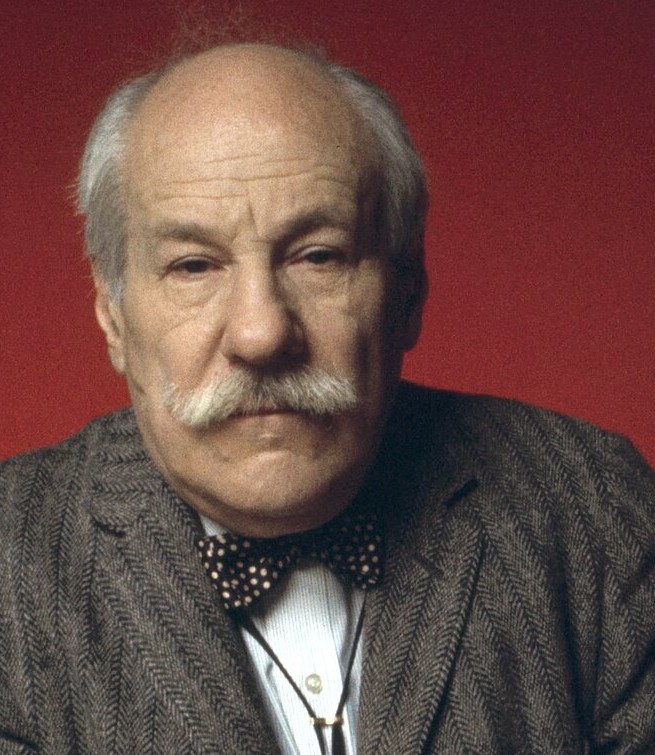
Barnett Newman, circa 1969, in a portrait detail by Bernard Gotfryd. Newman helped formulate Rothko and Gottlieb’s joint response to Edward Alden Jewell in 1943.
Library of Congress, Prints & Photographs Division. Photograph: Bernard Gotfryd. Faithful portrait crop; no retouching or colour changes. [18]
The phrase about complexity does considerable work. It allows an image to be visually economical while remaining intellectually or emotionally demanding. A straightforward shape need not communicate a straightforward feeling. Equally, the letter does not tell a viewer to praise an image merely because it is difficult. The painters were responding to a particular misunderstanding: their unfamiliar subjects were being treated as a failure to supply meaningful content. Their reply asserts the seriousness of what they were attempting.
For the paintings of this period, see Hierarchical Birds and Slow Swirl at the Edge of the Sea. Their creaturelike forms make the relationship between recognisable story and pictorial invention a visible question. The 1943 letter belongs to this moment, years before the classic colour-field format settled.
1943: portraits, myths and the radio audience
“In short, in the human drama.” — Rothko, WNYC discussion, 13 October 1943.
The WNYC conversation with Gottlieb opens the argument to an audience asking what modern portraiture could mean. In the transcript, Rothko distinguishes a portrait’s capacity to communicate human character and emotion from its usefulness as a likeness. He invokes Rembrandt to explain why knowledge of a sitter’s identity is unnecessary to experience the painting’s drama. Gottlieb answers a question about mythic characters; Rothko later discusses the relationship between literary titles and psychological subjects.[2]
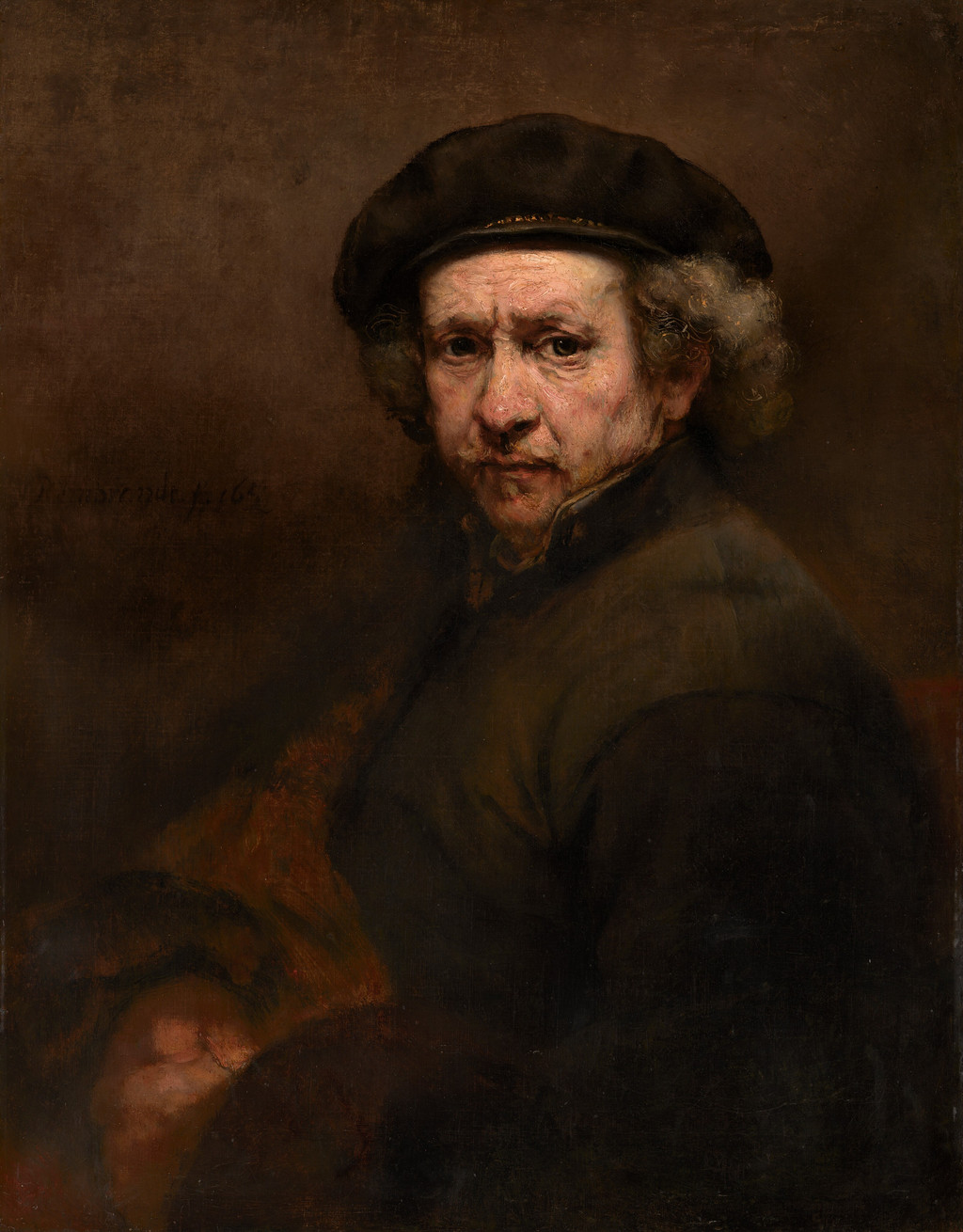
Rembrandt, Self-Portrait, 1659. This is an illustrative example of the older artist’s portraiture: Rothko named Rembrandt in the 1943 radio discussion without identifying this particular painting.
National Gallery of Art, Washington, Andrew W. Mellon Collection, 1937.1.72. [19]
The transcript’s speaker labels matter. A broadcast shared by two painters contains individual answers, whereas their newspaper letter presents a jointly signed position. Both documents show artists thinking about communication in public. They also show why the disappearance of an identifiable person from Rothko’s later paintings did not require the disappearance of human concerns. A reader can follow the changing forms of that ambition through the biography and paintings guide.
The radio discussion presents a useful question for looking: what does a portrait give us when we cannot name the person? Expression, posture, spatial relationships and the viewer’s own response can all remain. Moving from this question to an abstract painting requires another step, since the figure itself has disappeared. Rothko’s later work makes that step the subject of a continuing experiment.
1947 and 1949: companionship and clarity
“A picture lives by companionship.” — Rothko, statement reprinted in 15 Americans, 1952.
“Toward clarity.” — Rothko, statement first published in The Tiger’s Eye, October 1949.
MoMA’s original 1952 catalogue prints two short statements on the same page. One describes a painting as gaining life through a responsive observer and becoming vulnerable when sent into the world. The other describes artistic development as removing impediments between painter, idea and viewer. The acknowledgments identify texts from the December 1947 and October 1949 issues of The Tiger’s Eye. MoMA’s 1959 New American Painting catalogue explicitly identifies the clarity passage with October 1949.[3][4]
These statements concern a relationship. Clarity does not necessarily mean that a picture can be translated into a single explanation. It can mean that distracting conventions have been removed so the encounter has greater force. Companionship, meanwhile, gives the observer an active role. A painting’s reception becomes part of its existence in the world.
Placed together, the statements pose a tension that helps explain Rothko’s later concern with hanging and lighting. He wants to reduce obstacles, yet depends on an observer whose response he cannot control. A room can bring someone close to a canvas; it cannot guarantee what they feel. The artist can make conditions for attention and still leave the transaction open.
This tension is worth testing against MoMA’s No. 10 and White Center. Their economy of form leaves relatively few elements to follow, while differences in ground, interval and edge complicate the experience. The words help formulate the question; the particular paintings give it substance.
1951: large pictures and intimacy
A statement associated with the MoMA symposium on architecture, painting and sculpture in March 1951 explains why a large canvas could serve intimacy. Rothko opposed the assumption that large pictures necessarily announce grandeur. Eric K. Lum’s MIT dissertation cites the symposium transcript, dates the discussion to 19 March and examines Rothko’s attempt to make the viewer’s physical presence central to painting.[15]
That account is useful because scale and monumentality are often treated as synonyms. A large picture seen across a hall can remain distant; a large picture encountered nearby can occupy much of the field of vision. The viewer’s body, the placement of the picture and the available space together determine the relationship. Canvas dimensions alone cannot settle it.
The Phillips Rothko Room[23] offers one way to consider the question. Compare the experience of a dedicated room with a photograph of one canvas cropped to the edge. In the photograph the proportions may survive, but the relation between wall, floor, seat and viewer has gone. Rothko’s statement concerns precisely the physical encounter that such a reproduction cannot supply.
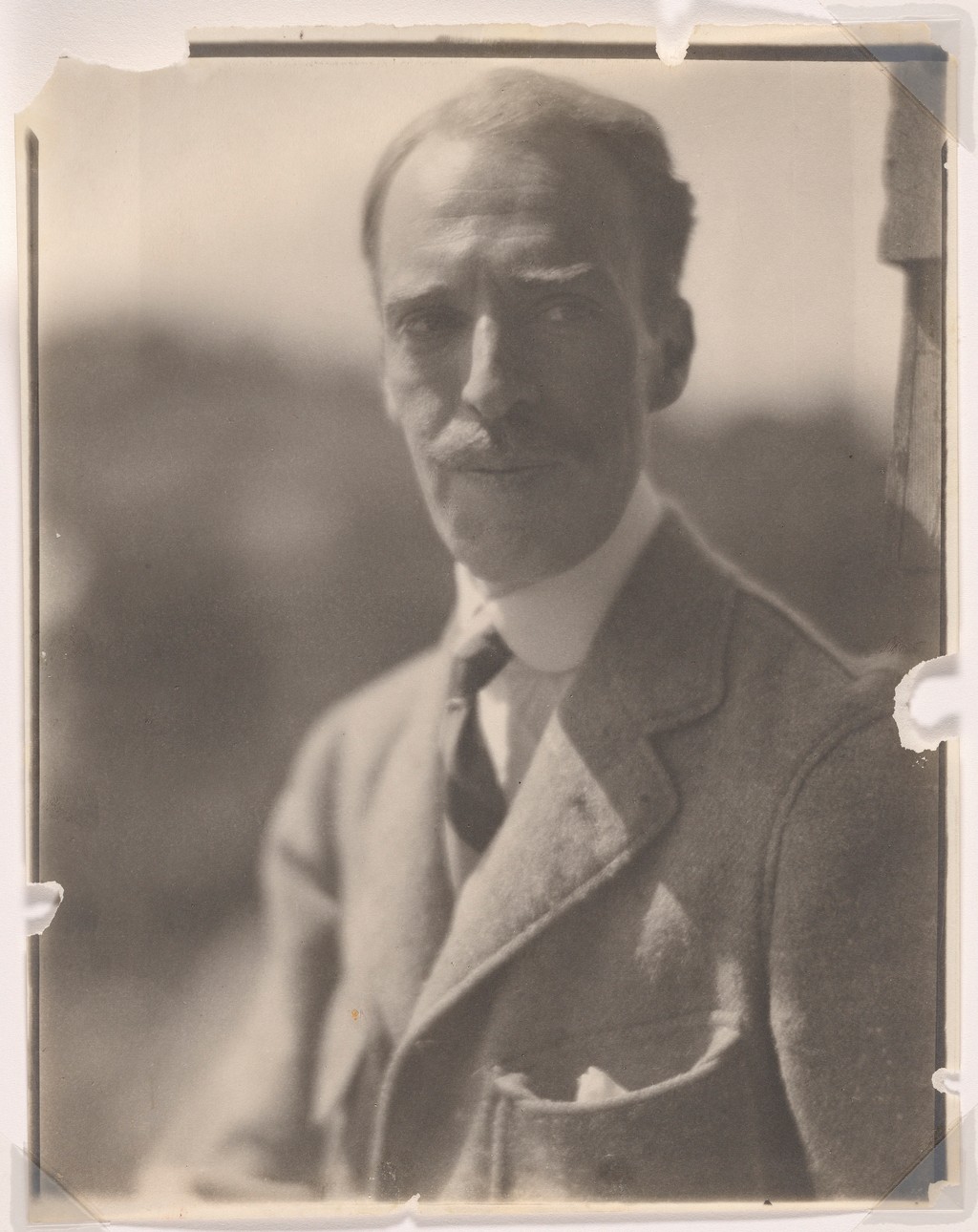
Duncan Phillips, circa 1921, photographed by Clara Sipprell. He later acquired the paintings assembled in the Phillips Collection’s Rothko Room.
Clara Sipprell; National Portrait Gallery, Smithsonian Institution; bequest of Phyllis Fenner; NPG.82.200. Resized without cropping. [20]
1954: a letter about how to hang the paintings
In a letter to Katharine Kuh dated 25 September 1954, excerpted by the National Gallery, Rothko discusses the first encounter with the largest canvases, hanging them low and the usefulness of confined spaces. His advice responds to the Chicago exhibition’s actual architecture. It describes proximity as a way for the viewer to begin within the picture’s influence.[5]
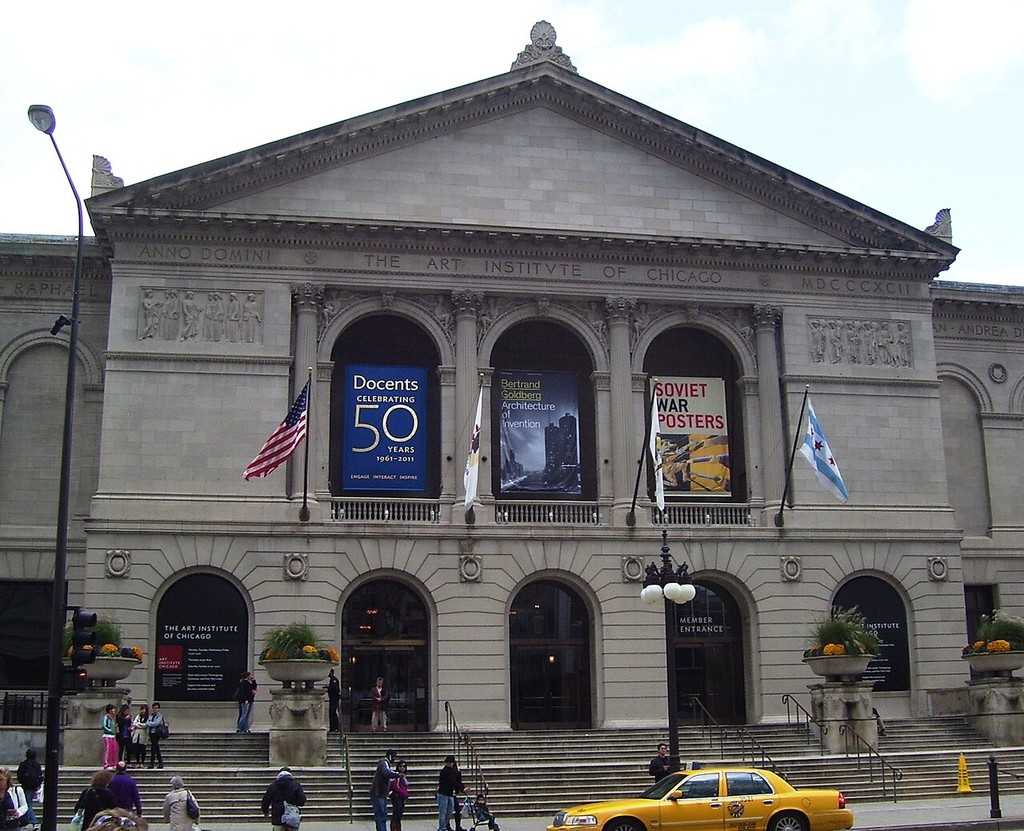
The Art Institute of Chicago in 2011. Rothko’s 1954 correspondence with its curator Katharine Kuh addressed how his paintings should be installed.
Photograph: Beyond My Ken. Photograph remains CC BY-SA 4.0. Resized without cropping. [21]
This is a practical letter as well as a statement about art. Its recommendations involve walls and human movement. When read beside the 1951 scale discussion, it shows an idea being converted into installation decisions. The question becomes how a visitor reaches the painting, what appears first and whether the work occupies the room with the viewer.
A useful way to read the letter is to distinguish a principle from its application. Intimacy is a principle; a particular wall height or entrance arrangement is an application in one setting. Repeating an instruction mechanically in another building may produce a different effect. The paintings guide compares the Phillips, Seagram, Harvard and Chapel contexts so that these differences remain visible.
1956: basic human emotions
“Basic human emotions.” — Rothko, conversation with Selden Rodman.
The National Gallery recounts Rothko’s discussion with Selden Rodman, in which he resists an account centred on colour relationships and identifies human emotion as his concern. Tragedy, ecstasy and doom form part of the range he names. The response belongs to one conversation; its clauses are often separated into several apparently independent sayings.[7]
The range is broader than sadness. Ecstasy introduces intensity and transport; tragedy concerns the weight of human experience; doom brings expectation and threat. No particular colour is assigned a permanent meaning in this short extract. It would therefore go beyond the statement to give every red painting the same emotion or every black painting the same interpretation.
For a reader, the useful question is whether formal description can connect to experience. It is possible to describe the number of fields, their dimensions and their arrangement without yet discussing what the painting does. It is also possible to declare an emotion without noticing how the painting creates its conditions. Reading the statement beside a particular work encourages these two accounts to meet.
1957–58: emotional range, mortality and the lecture notes
“I exclude no emotion.” — Rothko, as quoted by Elaine de Kooning.
The National Gallery of Australia’s essay on 1957 # 20 cites Elaine de Kooning’s 1958 Artnews Annual account for Rothko’s insistence that a wide emotional range remained available to him. The same museum essay identifies Dore Ashton’s New York Times report of 31 October 1958 as an early published account of his Pratt Institute lecture. It also identifies Ashton’s About Rothko and Anna Chave’s Subjects in Abstraction among its scholarly sources.[6]
The National Gallery of Art’s 1998 press packet dates the lecture notes to 27 October 1958. Its extract lists mortality, sensuality, tension, irony, wit and play, chance, and hope among the elements Rothko considered. He describes the proportions among such elements as affecting the resulting form.[5]
The list is revealing because mortality sits beside play and hope. A reading that retains only the first item loses the internal balance of the statement. Sensuality locates painting in a relationship with the concrete world; tension introduces opposition or restraint; irony makes room for self-questioning. These terms help explain why a seemingly quiet painting can sustain competing impulses.
The language of ingredients should also be read with care. It offers a way to describe judgement and proportion, rather than a literal set of materials in a paint mixture. A conservator analysing binders is answering a different question from Rothko describing an emotional composition. Both approaches can be valuable, provided they remain connected to what each actually establishes.
Painting as an experience
“A painting is not a picture of an experience; it is an experience.” — Rothko, as transcribed by the National Gallery of Art.
The National Gallery prints this sentence in its study of Rothko’s paintings on paper. That page supplies the wording but does not identify the original occasion, so the quotation is attributed here to the institutional transcription without an invented interview date.[8]
The distinction between a represented event and an event experienced by the viewer is central to the sentence. A painting might show a landscape, a person or a ritual; it also exists as a thing encountered here and now. In the classic abstractions, the absence of a depicted scene makes the second aspect unusually prominent. Colour, scale and duration become part of the visitor’s experience.
Ruth Christensen’s peer-reviewed 2017 study treats the relationship between viewer and Chapel paintings as an interaction involving possibilities and limits. Her inquiry asks what allows meaning to emerge and what remains inaccessible. It supplies a scholarly context for thinking about experience without assuming that every visit produces the same revelation.[17]
A practical reading is to notice what changes during looking. The initial impression may concern the overall palette. Later attention might move to a boundary, then to the relation between two fields, then back to the whole surface. These changes need no prescribed emotional conclusion. They are ways to observe how an encounter develops.
1966: the challenge of the Chapel
“Exceeds all of my preconceptions.” — Rothko, letter to the de Menils, 1966.
The Rothko Chapel publishes an extract from a 1966 letter in which the painter describes the project’s scale in terms of experience and meaning, and says the task was extending what he thought possible. The letter belongs to the years of making the Houston ensemble, before the building opened in 1971.[10]
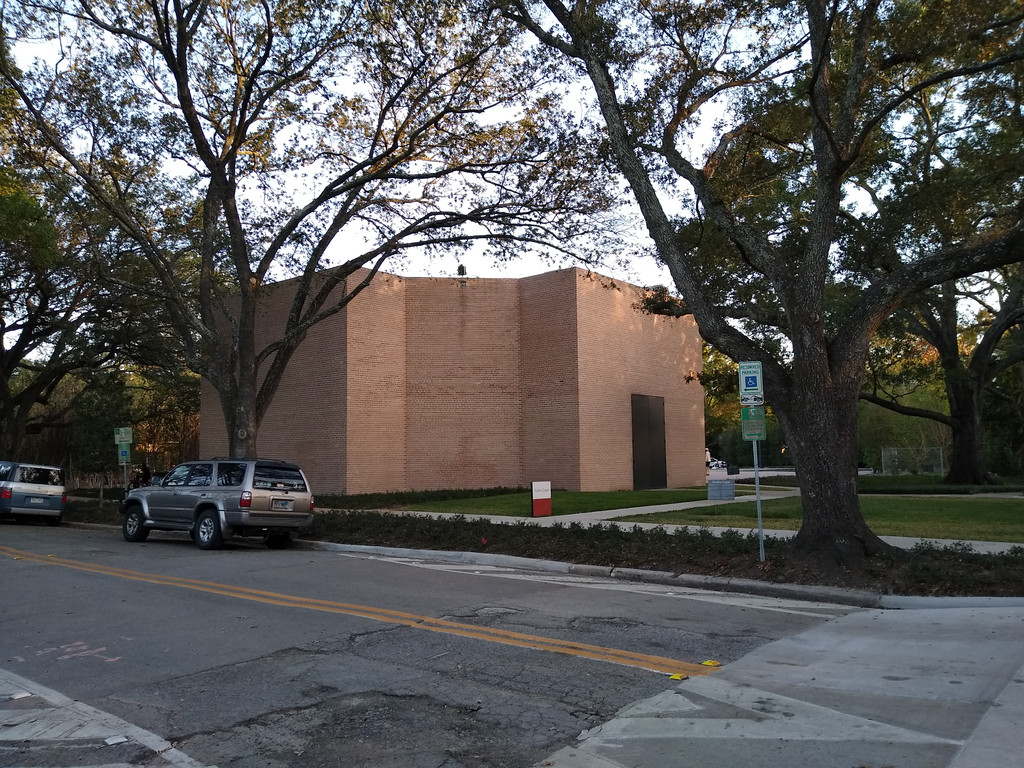
The Rothko Chapel exterior on 21 November 2020. This later view gives context for the Houston project discussed in Rothko’s 1966 letter, before the building opened.
Photograph: WhisperToMe. [22]
Its value is the glimpse it gives of an established painter confronted by a new problem. A whole environment required relationships among canvases, walls and light that an individual painting did not have to resolve. The statement also describes possibility and effort. Reading it only as a prophecy of darkness would miss the active work it records.
The Chapel essay follows that work through architectural changes, the chosen fourteen paintings, conservation research and later public use. The private letter explains something of the task’s significance to Rothko; the institutional and material record explains how the task took form.
Silence and the limits of a short saying
“Silence is so accurate.” — attributed to a Rothko notebook by the Rothko Museum.
The Daugavpils museum gives the notebook attribution but no date or shelfmark on its public page.[9] The phrase can introduce a reflection on the limits of explanation, though its precise manuscript setting remains unresolved.
Silence in a gallery can mean several things: an absence of speech, concentration, uncertainty or a pause before judgement. Those are possible responses a visitor might recognise, rather than meanings established by the four-word phrase. A quiet setting can allow attention to persist without supplying a ready interpretation.
The saying becomes particularly interesting beside Rothko’s numerous letters and statements. His surviving verbal record demonstrates that silence and discussion both mattered. He could argue about paintings, negotiate exhibitions and communicate with patrons while recognising that an explanation could never deliver the experience of standing before the work.
Rothko’s words in published books
Writings on Art, edited by Miguel López-Remiro and published by Yale in 2006, brings together about ninety documents from 1934 to 1969: essays, letters, statements, lectures and other texts, with annotation and chronology. Its scope is valuable for anyone tracing a sentence back to its document. A collection arranged across decades also makes changes of occasion and audience visible.[11]
The Artist’s Reality: Philosophies of Art is a different kind of publication. The manuscript was probably written around 1940–41 and appeared posthumously in 2004. The 2023 edition adds an expanded introduction by Christopher Rothko, discussion of the teaching-related Scribble Book, and an afterword by Makoto Fujimura.[12] Its likely date places it before the mature colour fields, which matters whenever its ideas are used to explain later paintings.
Fujimura’s authorised afterword excerpt stresses the interval between the early writing and the paintings of the following decade. He interprets that interval in the light of the Holocaust and the atomic bomb, and reflects on artistic ideals and the work’s gift to an audience.[13] These are Fujimura’s later arguments. They help show how Rothko’s writings continue to generate interpretations, while retaining the distinction between the artist’s text and a subsequent reader’s framework.
The Getty volume Seeing Rothko, edited by Glenn Phillips and Thomas Crow in 2005, adds another kind of evidence through facsimiles of the Scribble Book and an early sketchbook, alongside critical essays and a bibliography of Rothko’s writings.[14] A facsimile can disclose arrangement, correction and handwriting that a clean quotation omits. An edited transcription can make the document easier to read. Each supplies a different part of the record.
Later voices and the artist’s own voice
Christopher Rothko’s 2019 interview discusses form, preparatory drawing and the viewer’s contribution. He describes his father’s art as beginning a conversation in which the viewer helps complete what has been left open. He also argues that monochrome pen-and-ink studies complicate a purely colour-centred account of the classic works.[16]
The interview is a valuable later interpretation by the artist’s son and steward. Its sentences remain Christopher’s. The same distinction applies to a curator explaining an exhibition or a theologian discussing the Chapel. Their arguments can illuminate the work without becoming additional “Mark Rothko quotes.”
When using Rothko’s words, retain the author, document and date wherever they are established. A joint letter, a symposium contribution, an exhibition instruction and an edited recollection each answer a different question. The words gain force when those differences remain intact and when the painting itself continues to receive attention.
Rothko works in this guide
| Name | Date | Medium |
|---|---|---|
| Entrance to Subway | 1938 | Painting |
| Hierarchical Birds | 1944 | Painting |
| Slow Swirl at the Edge of the Sea | 1944 | Painting |
| No. 3/No. 13 | 1949 | Painting |
| Untitled (Violet, Black, Orange, Yellow on White and Red) | 1949 | Painting |
| White Center | 1950 | Painting |
| No. 10 | 1950 | Painting |
| No. 6 (Violet, Green and Red) | 1951 | Painting |
| Untitled | 1952 | Painting |
| No. 61 (Rust and Blue) | 1953 | Painting |
| No. 1 (Royal Red and Blue) | 1954 | Painting |
| Untitled (Yellow and Blue) | 1954 | Painting |
| Orange and Yellow | 1956 | Painting |
| Light Red over Black | 1957 | Painting |
| Four Darks in Red | 1958 | Painting |
| Black on Maroon | 1958 | Painting |
| No. 14 | 1960 | Painting |
| Orange, Red, Yellow | 1961 | Painting |
| Untitled (brown and gray) | 1969 | Painting |
| Untitled (Red on Red) | 1969 | Painting |
| Untitled (Black and Gray) | 1970 | Painting |
| Tentacles of Memory | 1945–46 | Drawing |
Frequently Asked Questions
Yes. His surviving words include letters, exhibition statements, lectures and an early book manuscript. Writings on Art, edited by Miguel López-Remiro, collects shorter documents, while The Artist’s Reality presents a sustained philosophical manuscript published after Rothko’s death.[11][12]
No. Rothko and Adolph Gottlieb jointly signed their response to critic Edward Alden Jewell. The authorship matters when a short sentence is lifted from the statement: an argument shared by the two painters should not be presented as Rothko’s solitary declaration.[1]
In his 1951 symposium remarks, size was linked to the viewer’s involvement in the picture rather than simply to grandeur. A large canvas could bring the encounter close to human scale. The claim concerns the relationship between painting and observer, not a guarantee that every viewer will feel the same emotion.[15]
The manuscript is generally dated to around 1940–41 and was first published posthumously in 2004. It therefore predates Rothko’s mature colour-field format. Its ideas can illuminate his thinking, but the early date matters when relating the text to paintings made much later.[12]
His recorded statements place the emotional encounter and serious subject matter beyond colour relationships alone. His conversation with Selden Rodman and earlier joint statements with Gottlieb are different occasions with different wording. Reading them together offers more context than treating one short saying as an explanation of every canvas.[1][6][7]
Discussion
Which documented work or source changed your understanding of Rothko quotes?
Reader Insights
Begin with a specific work, title and date.
Compare the object record with this career guide.
What still needs a catalogue or archive check?
Join the Conversation
Share an observation grounded in the work or its history.
References
- Adolph & Esther Gottlieb Foundation, “From the Archive: The Jewell Letters” (2021), original drafts, joint authorship and 1943 newspaper exchange.
- Pace Gallery, transcript of the Rothko–Gottlieb WNYC broadcast, 13 October 1943, with named speakers.
- Dorothy C. Miller, ed., 15 Americans (MoMA, 1952), p. 18 and acknowledgments; authorised complete catalogue consulted.
- MoMA, The New American Painting as Shown in Eight European Countries, 1958–1959 (1959), p. 68, identifying the October 1949 Tiger’s Eye source.
- NGA, 1998 Rothko exhibition press packet, “Rothko’s Statements,” p. 4, institutional extracts from the 25 September 1954 Kuh letter and lecture notes dated 27 October 1958; indexed text consulted.
- National Gallery of Australia, 1957 # 20, American Masters collection essay, quoting Elaine de Kooning’s 1958 essay and identifying Dore Ashton’s October 1958 lecture report.
- NGA, “Who Is Mark Rothko? 9 Things to Know”, institutional account of the conversation with Selden Rodman.
- Michaela Milgrom, “How Mark Rothko Made Paintings on Paper,” NGA (2023), wording of the experience statement and technical evidence.
- Rothko Museum, Daugavpils, “Forms of silence and emptiness”, notebook attribution without a dated manuscript reference.
- Rothko Chapel, institutional history, excerpt from Rothko’s 1966 letter to the de Menils.
- Mark Rothko, Writings on Art, ed. Miguel López-Remiro (Yale University Press, 2006), publisher’s account of the collection; the whole book was not accessed.
- Mark Rothko, The Artist’s Reality: Philosophies of Art, 2nd ed., ed. Christopher Rothko (Yale University Press, 2023), publication history and scope; whole book not accessed.
- Makoto Fujimura, “Mark Rothko, A Painter of Ideas” (Yale University Press, 2023), authorised afterword excerpt.
- Glenn Phillips and Thomas Crow, eds., Seeing Rothko (Getty Research Institute, 2005), publisher’s description of essays and manuscript facsimiles; whole volume not accessed.
- Eric K. Lum, Architecture as Artform: Drawing, Painting, Collage, and Architecture 1945–1965 (MIT doctoral thesis, 1999), discussion and archival citation of Rothko’s 19 March 1951 MoMA symposium statement.
- Christopher Rothko interviewed by Maïa Morgensztern, “Mark Rothko—From the Inside Out,” Dorotheum (8 March 2019), a later interpretation by the artist’s son.
- Ruth Christensen, “Mark Rothko: Art as an Experience,” RIHA Journal 0183 (15 December 2017), peer-reviewed study of the encounter between viewer and Chapel paintings; abstract and article text consulted.
- Newman Barnett.jpg. Library of Congress, Prints & Photographs Division. Photograph: Bernard Gotfryd. Faithful portrait crop; no retouching or colour changes. Source · Public domain; LOC donor release.
- Rembrandt, Self-Portrait, 1659. National Gallery of Art, Washington, Andrew W. Mellon Collection, 1937.1.72. Source · NGA Open Access / public domain.
- Duncan Phillips. Clara Sipprell; National Portrait Gallery, Smithsonian Institution; bequest of Phyllis Fenner; NPG.82.200. Resized without cropping. Source · CC0 1.0.
- Art Institute of Chicago from across Michigan Avenue.jpg. Photograph: Beyond My Ken. Photograph remains CC BY-SA 4.0. Resized without cropping. Source · CC BY-SA 4.0.
- Rothko Chapel exterior from across the street, 2020. Photograph: WhisperToMe. Source · CC0 1.0.
- Phillips Rothko Room.