by Tom Gurney
Tom Gurney BSc (Hons) is an art history expert with over 20 years experience
Published on June 19, 2020 / Updated on October 11, 2026
Email: tomgurney1@gmail.com / Phone: +44 7429 011000
Slow Swirl at the Edge of the Sea: Introduction
The Museum of Modern Art dates Mark Rothko's Slow Swirl at the Edge of the Sea to 1944 and records it as an oil painting on canvas measuring 191.4 × 215.2 cm, object 429.1981.[1] Those details correct two persistent problems in older accounts: the title has at, not “by,” and the painting belongs to 1944, not 1945. The latter year is important for its first documented exhibition and Peggy Guggenheim's acquisition, but it is not MoMA's creation date.
At a Glance
- ArtistMark Rothko
- Date1944 [1]
- MediumOil on canvas [1]
- Dimensions191.4 × 215.2 cm [1]
- CollectionMoMA, 429.1981 [1]
This work in Rothko’s career
No. 3/No. 13
1949Contents
Two figures in a changing space
MoMA's gallery label describes two creatures dancing amid spirals, arabesques and stripes in a setting poised between sea and sky.[1] A viewer can find figurelike forms without being able to name them as people, birds or mythical beings. The broad canvas gives those forms room to turn around one another. Thin lines and curved marks carry the eye across the surface, while larger coloured passages hold the movement together. The title suggests a coastal edge, but the museum's children's label says the scene came from Rothko's imagination rather than a specific recorded location.[1]
This distinction matters when choosing a contextual photograph. An image of Gloucester or another coast may evoke a landscape setting, but it cannot be captioned as the actual place depicted by Slow Swirl. The painting is a constructed, unstable world, not a documented seaside view. MoMA's wording points to a meeting of natural allusion and invention. Looking closely at where forms overlap is more fruitful than trying to identify a single shoreline.
The title itself is unusually evocative for a painter later associated with numbers and “Untitled.” It names speed and position without resolving the painting's subject. A slow swirl can describe the movement of water, air, living forms or the viewer's own path through the composition. None is a compulsory interpretation. The work keeps several readings active at once.
The Surrealist moment
Rothko's 1940s paintings drew on mythology and Surrealism. The National Gallery of Art describes his interest in automatic drawing and in forms that allude to human and animal life during the period ending around 1946.[2] MoMA likewise connects Slow Swirl with the Surrealists whom Rothko encountered in New York.[1] These contexts explain the fluid, ambiguous figures without making the painting an illustration of a specific myth. Rothko would later remove such figurative allusions and develop the soft-edged colour fields associated with his mature work. Slow Swirl helps show the process before that change was complete.
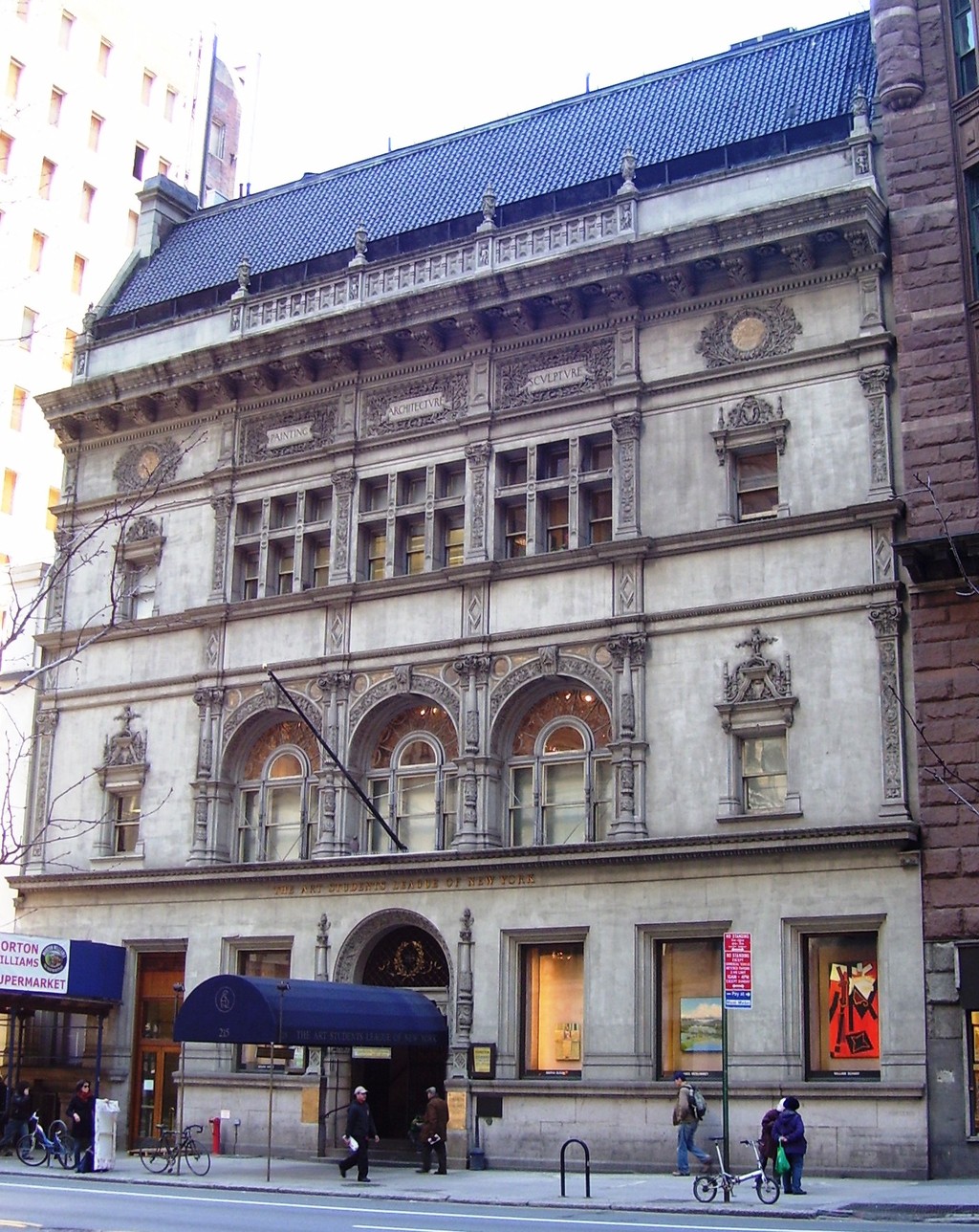
The Art Students League’s New York building in 2011. Rothko’s earlier study with Max Weber preceded the mythic and Surrealist paintings of the 1940s.
Photograph: Beyond My Ken. Photograph remains CC BY-SA 4.0. Resized without cropping. [7]
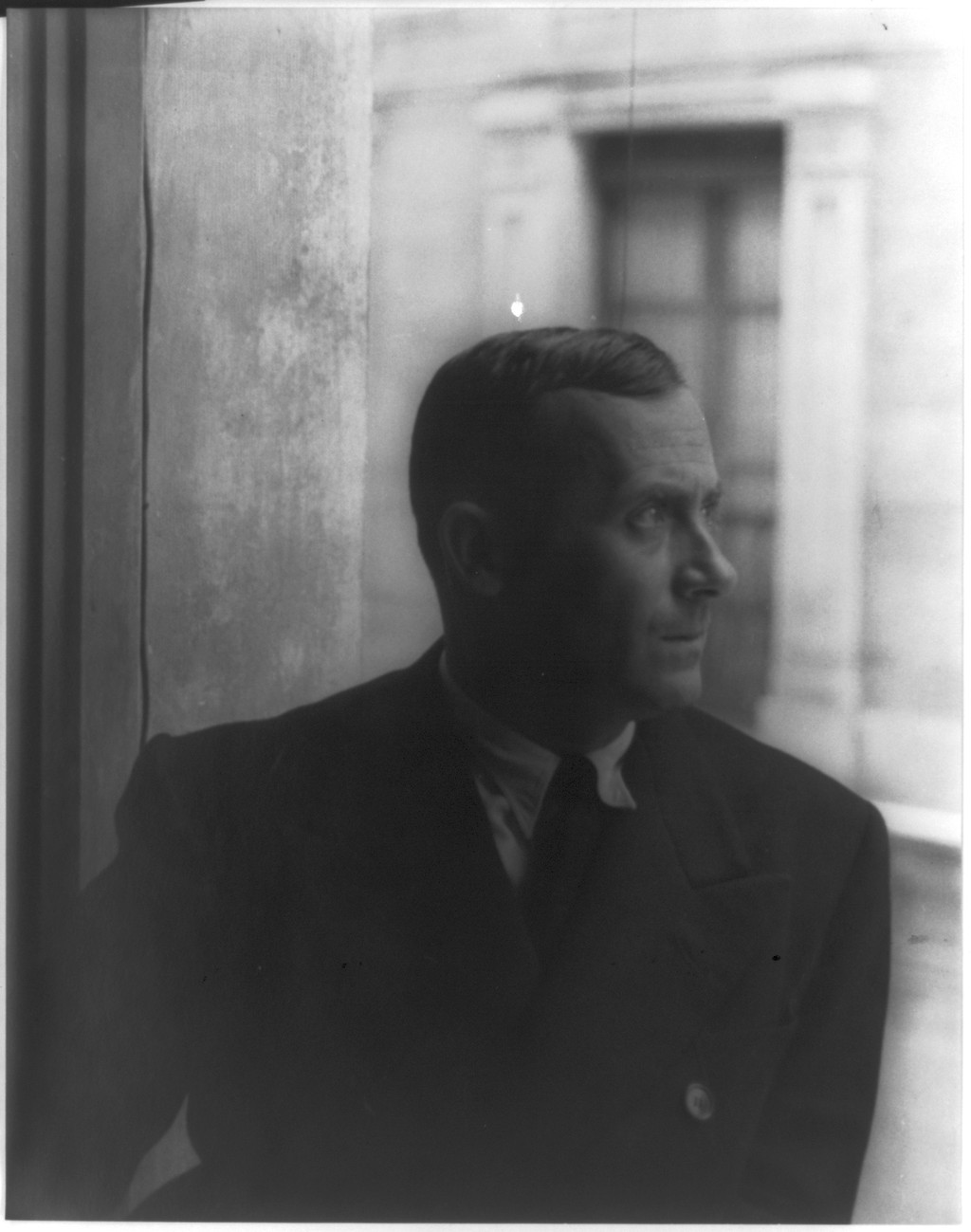
Joan Miró in Barcelona, 13 June 1935, photographed by Carl Van Vechten. The National Gallery identifies Miró among Rothko’s Surrealist influences.
Library of Congress, Prints & Photographs Division, Carl Van Vechten Collection; LC-USZ62-42511. Resized without cropping. [8]
Compare the NGA's Hierarchical Birds, also dated 1944. Both works have creaturelike imagery, but Hierarchical Birds is a smaller vertical canvas organised in coloured horizontal zones. Slow Swirl is a broad horizontal field whose forms seem to turn and dance. The pairing demonstrates experimentation within a year, not simply a single “Surrealist style” repeated.
Art of This Century and Guggenheim
MoMA records that the painting was exhibited at Peggy Guggenheim's Art of This Century in 1945 and that Guggenheim subsequently acquired it for her personal collection.[1] This is a useful anchor for its early reception. The exhibition date should be kept separate from its 1944 date of making. Art of This Century was an important New York setting for Rothko's work at the time, and the acquisition means the painting moved from public display into a major modern-art collection.
MoMA's audio guide adds a family account to that exhibition record. Christopher Rothko remembers the canvas hanging over the sofa in the family brownstone and says his father painted it for his mother, Mell, after they met.[4] He also identifies a family subtitle, “Mell Ecstatic,” and reads the paired forms as a possible image of his parents. His first-person recollection is unusually valuable, but it should be identified as a family interpretation rather than treated as proof that each painted line encodes a specific person. It also complicates a purely formal story of Rothko's development: this 1944 canvas had an intimate life at home as well as a life in the gallery.
MoMA's digital exhibition history identifies the work in installation views of its 1970 memorial exhibition and later displays.[1] The 1970 checklist describes it as a promised gift of Mrs. Mark Rothko, whereas the current collection credit is her bequest through the Foundation.[5] Those two records describe different stages in the collection's history; they need not be forced into a single transaction date. They also leave a provenance question between Guggenheim's earlier acquisition and its later place in the Rothko household, which the museum's public caption alone does not resolve.
MoMA credits the work as a bequest of Mrs. Mark Rothko through the Mark Rothko Foundation.[1] This present credit line does not by itself narrate every transfer between Guggenheim's ownership and the museum's later acquisition. A fuller provenance would require the museum's archival records or a directly checked catalogue entry. David Anfam's canvas catalogue is a likely source for that deeper reconstruction, but its entry has not yet been consulted for this page.[3]
How to look
Begin by locating the two principal beings, then trace the curves that link or separate them. The lines may seem light and playful at one distance, while a closer view can reveal how they interrupt the larger painted areas. Ask where the “edge” of the sea might be, and whether the image permits a stable answer. The most important shift may be in how long the forms resist settling into names. That open-ended quality belongs to the painting's historical place before Rothko's later non-objective compositions.
MoMA currently marks the work as on view in Gallery 522, but display information changes and should be checked directly.[1] The museum's object page supplies its image and copyright notice. This guide links to it rather than reusing the protected artwork. The route name retains the legacy wording, while the visible title and canonical description use MoMA's current object title.
Related works
- Hierarchical Birds is a same-year comparison.
- Tentacles of Memory belongs to the following paper phase.
- Rothko's biography places the 1945 exhibition in context.
Rothko works in this guide
| Name | Date | Medium |
|---|---|---|
| Entrance to Subway | 1938 | Painting |
| Hierarchical Birds | 1944 | Painting |
| Slow Swirl at the Edge of the Sea | 1944 | Painting |
| No. 3/No. 13 | 1949 | Painting |
| Untitled (Violet, Black, Orange, Yellow on White and Red) | 1949 | Painting |
| White Center | 1950 | Painting |
| No. 10 | 1950 | Painting |
| No. 6 (Violet, Green and Red) | 1951 | Painting |
| Untitled | 1952 | Painting |
| No. 61 (Rust and Blue) | 1953 | Painting |
| No. 1 (Royal Red and Blue) | 1954 | Painting |
| Untitled (Yellow and Blue) | 1954 | Painting |
| Orange and Yellow | 1956 | Painting |
| Light Red over Black | 1957 | Painting |
| Four Darks in Red | 1958 | Painting |
| Black on Maroon | 1958 | Painting |
| No. 14 | 1960 | Painting |
| Orange, Red, Yellow | 1961 | Painting |
| Untitled (brown and gray) | 1969 | Painting |
| Untitled (Red on Red) | 1969 | Painting |
| Untitled (Black and Gray) | 1970 | Painting |
| Tentacles of Memory | 1945–46 | Drawing |
Frequently Asked Questions
MoMA dates the painting to 1944. The 1945 date belongs to its early exhibition and acquisition history, rather than the canvas’s creation date. The museum’s title uses at the Edge of the Sea, rather than ‘by the Edge of the Sea’.[1]
MoMA describes two creatures dancing among spirals, arabesques and stripes in a space between sea and sky. The figures are suggestive without settling into one clear identity. The broad composition holds organic motion and larger coloured passages together.[1]
MoMA’s account describes an imagined scene rather than a recorded view of a specific coast. The title evokes a shoreline and movement, but it does not establish an identifiable beach. Coastal photographs can supply context without documenting the place depicted.[1]
It is an oil painting on canvas measuring 191.4 × 215.2 cm in the Museum of Modern Art, New York, object 429.1981. Its wide format gives the two forms and surrounding marks room to move across the viewer’s field of attention.[1]
It comes from his mythic and Surrealist period, when ambiguous living forms still organised the image. The broad colour fields of his mature practice emerged later. Comparing it with No. 3/No. 13 of 1949 makes that change particularly clear.[2]
Discussion
What changes when you look at Slow Swirl at the Edge of the Sea as a physical painting rather than a small reproduction?
Use the questions below to compare the work with its neighbours in Rothko’s career.
Reader Insights
Which edge or interval asks you to slow down?
How does this painting differ from the earlier and later works linked here?
What remains uncertain after reading the museum record and looking closely?
Join the Conversation
Share an observation grounded in the work or its documented history.
References
- Museum of Modern Art, Slow Swirl at the Edge of the Sea, object 429.1981.
- National Gallery of Art, “Mark Rothko,” artist chronology.
- David Anfam, Mark Rothko: The Works on Canvas: A Catalogue Raisonné (National Gallery of Art and Yale University Press, 1998), bibliography at NGA; specific entry not yet verified.
- MoMA audio, Christopher Rothko on Slow Swirl at the Edge of the Sea.
- MoMA, 1970 exhibition checklist for Mark Rothko 1903–1970.
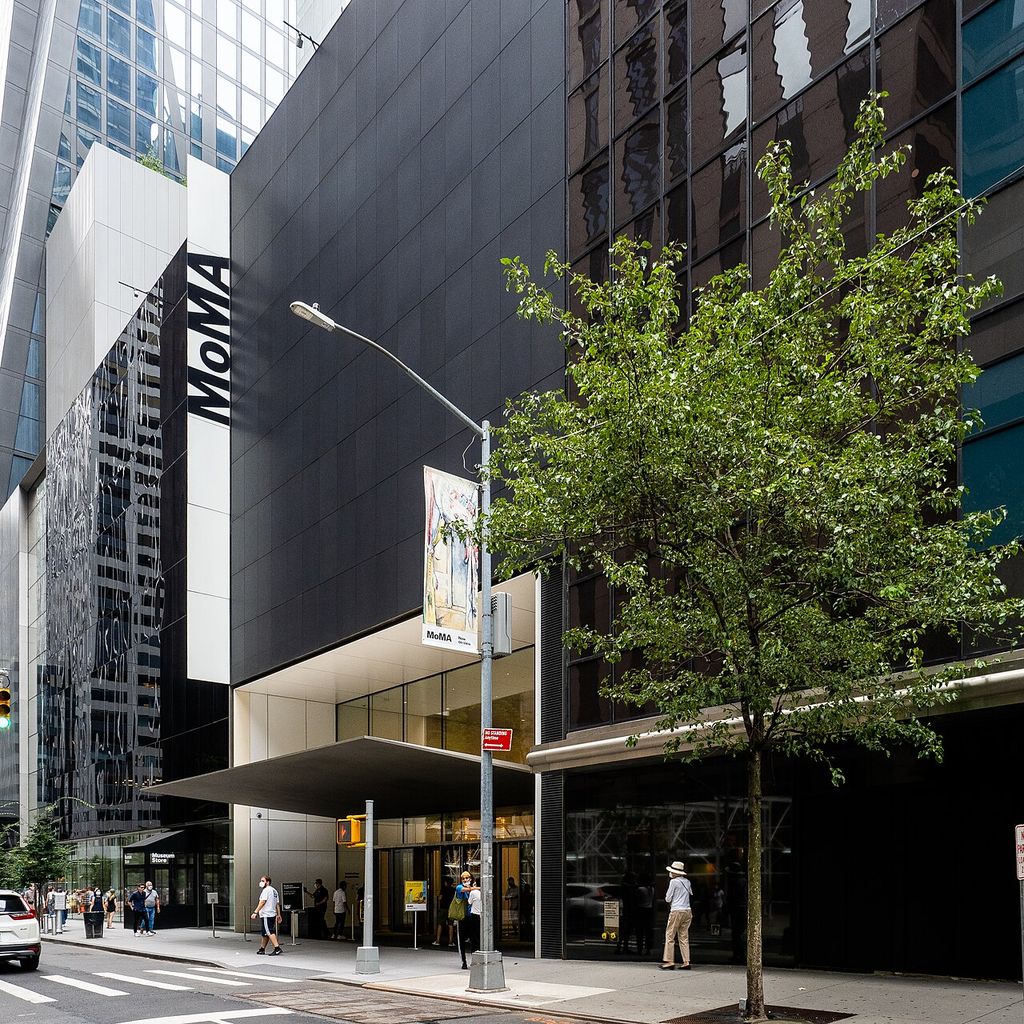
- The Museum of Modern Art exterior in 2021. MoMA holds Slow Swirl at the Edge of the Sea; this photograph does not show the painting. Photograph: ajay_suresh; source record; CC BY 2.0. Resized to 1024px without cropping.
- Art Students League 215 West 57th Street.jpg. Photograph: Beyond My Ken. Photograph remains CC BY-SA 4.0. Resized without cropping. Source · CC BY-SA 4.0.
- Joan Miró, Barcelona. Library of Congress, Prints & Photographs Division, Carl Van Vechten Collection; LC-USZ62-42511. Resized without cropping. Source · Public domain; LOC gift record.