by Tom Gurney
Tom Gurney BSc (Hons) is an art history expert with over 20 years experience
Published on June 19, 2020 / Updated on October 11, 2026
Email: tomgurney1@gmail.com / Phone: +44 7429 011000
Tentacles of Memory: Introduction
Tentacles of Memory is an ink and watercolour drawing on paper, dated about 1945–46, in the San Francisco Museum of Modern Art. SFMOMA records its dimensions as 55.4 × 76.2 cm and its accession as 46.2794.[1] It was acquired in 1946 through the Albert M. Bender Collection, Albert M. Bender Bequest Fund purchase. These precise details matter because a general label such as “Rothko painting” would hide both its paper support and its early place in the museum's holdings.
At a Glance
- ArtistMark Rothko
- Datecirca 1945–46 [1]
- MediumInk and watercolor on paper [1]
- Dimensions55.4 × 76.2 cm [1]
- CollectionSFMOMA, 46.2794 [1]
This work in Rothko’s career
No. 3/No. 13
1949Contents
- A work from the Surrealist years
- Paper was a substantial practice
- SFMOMA's early acquisition
- A close-looking route
A work from the Surrealist years
The date puts Tentacles of Memory at the end of Rothko's figurative and myth-inflected period, before his familiar stacked colour fields. The National Gallery of Art describes his paintings and watercolours from the later 1930s to 1946 as engaged with Greek mythology, Surrealism and forms that allude to living beings.[2] SFMOMA classifies this particular work as a drawing and specifies ink and watercolour on paper.[1] A reader should therefore encounter it as an object within Rothko's active experimentation, not as a miniature version of a mature canvas.
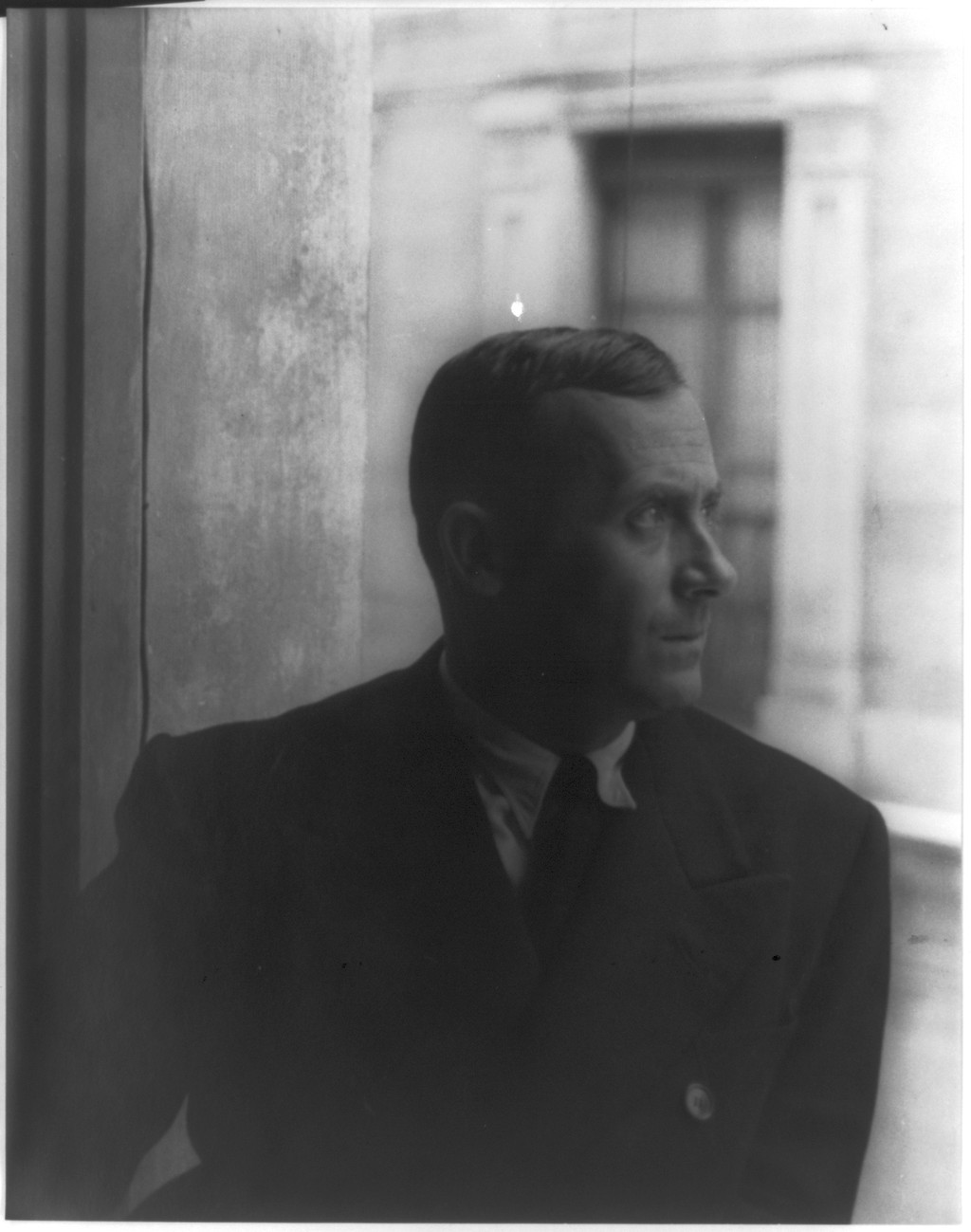
Joan Miró in Barcelona, 13 June 1935, photographed by Carl Van Vechten. The National Gallery identifies Miró among Rothko’s Surrealist influences.
Library of Congress, Prints & Photographs Division, Carl Van Vechten Collection; LC-USZ62-42511. Resized without cropping. [6]
The title invites associations with organic forms and recollection, but it is not a key that unlocks a fixed story. Rothko's works of these years often leave figures unstable and resistant to a single identification. The image in SFMOMA's collection record allows the viewer to follow the ink structures and wash areas directly. One can ask how a line connects, branches or stops, and how transparent colour changes the sense of depth without assuming that every form represents a named creature or memory.
The contrast with Slow Swirl at the Edge of the Sea is instructive. MoMA dates that large oil painting to 1944, while Tentacles of Memory is later and on paper. They share an interest in ambiguous organic motion, yet the media and scale give each a different visual pace. Such a comparison describes a development in Rothko's practice; it does not make the two works sketches for each other.
Paper was a substantial practice
The National Gallery of Art notes that Rothko made more than 1,000 paintings on paper over his life and treated many as finished works. Its conservation study explains how he taped sheets to boards, worked with wet paper, adjusted edges, and later made decisions about mounting and display.[3] Those findings are about documented works examined by NGA; they should not automatically be assigned as the making procedure for Tentacles of Memory. Here SFMOMA's medium line establishes ink and watercolour, but the exact sequence of application requires object-specific technical study.
The distinction between a drawing and a painting on paper is useful rather than merely administrative. A support can receive line, wash, opaque paint or combinations of them. Museum cataloguing reflects the individual object's materials and curatorial classification. On this site, the drawings guide discusses works whose line and paper support are central, while the paintings guide covers both canvases and paintings on paper. Tentacles of Memory belongs in the former directory because SFMOMA calls it a drawing; that placement does not diminish its significance.
SFMOMA's early acquisition
SFMOMA's 1946 acquisition date is remarkably close to the work's creation. The credit line names the Bender collection and purchase fund.[1] That is a concrete collection-history fact; it should not be expanded into an imagined account of who first saw the work, why it was selected, or how Rothko discussed it. Those questions would need the museum's accession papers or contemporary correspondence.
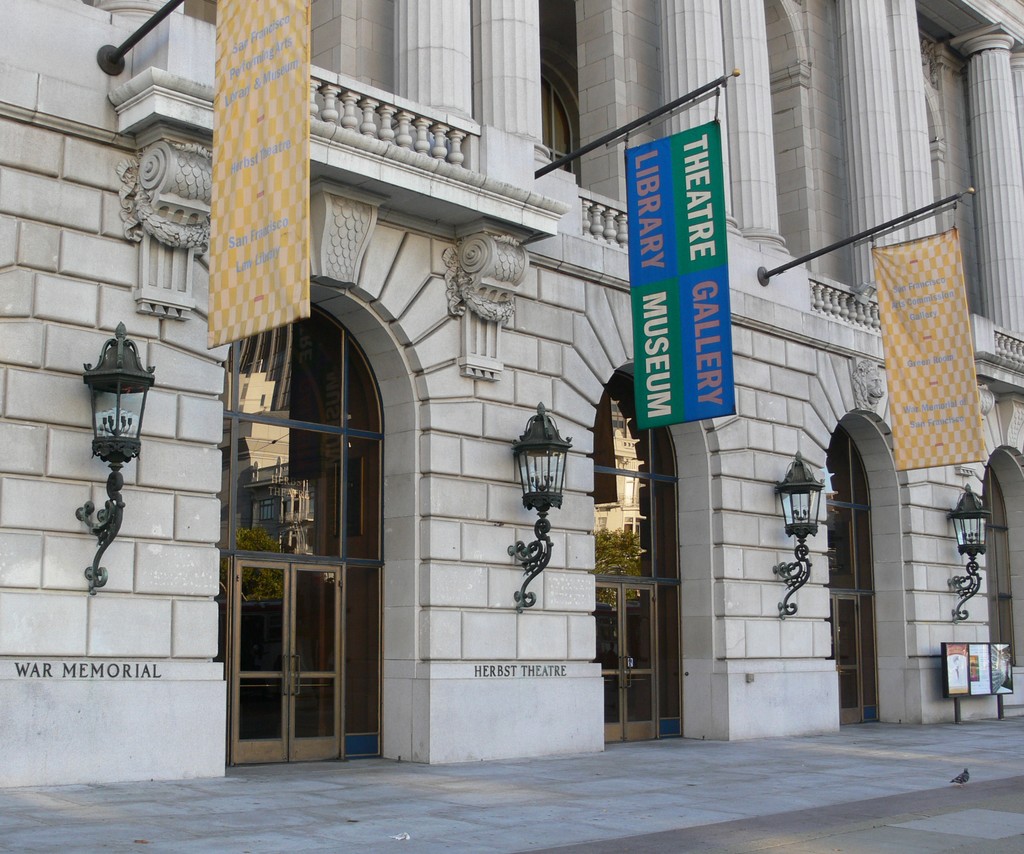
The War Memorial Veterans Building entrance in 2008. The San Francisco Museum of Art occupied its fourth floor when Tentacles of Memory entered the collection in 1946.
Photograph: Photo: Andreas Praefcke. Resized without cropping. [7]
The National Gallery's checklist for its 2023 Mark Rothko: Paintings on Paper exhibition lists this very sheet as catalogue no. 32, with a sheet size of 55.3 × 76.2 cm and SFMOMA as lender.[4] SFMOMA's current object page rounds the height to 55.4 cm.[1] That one-millimetre discrepancy is a measurement or rounding difference between institutional records, not a reason to split the work into two objects: the title, date, medium, width and owner align. The Washington exhibition placed the sheet among other 1945–46 watercolours, including Prehistoric Memory and Incantation. It is therefore part of a documented paper practice at this stage, not an isolated detour from canvas painting.
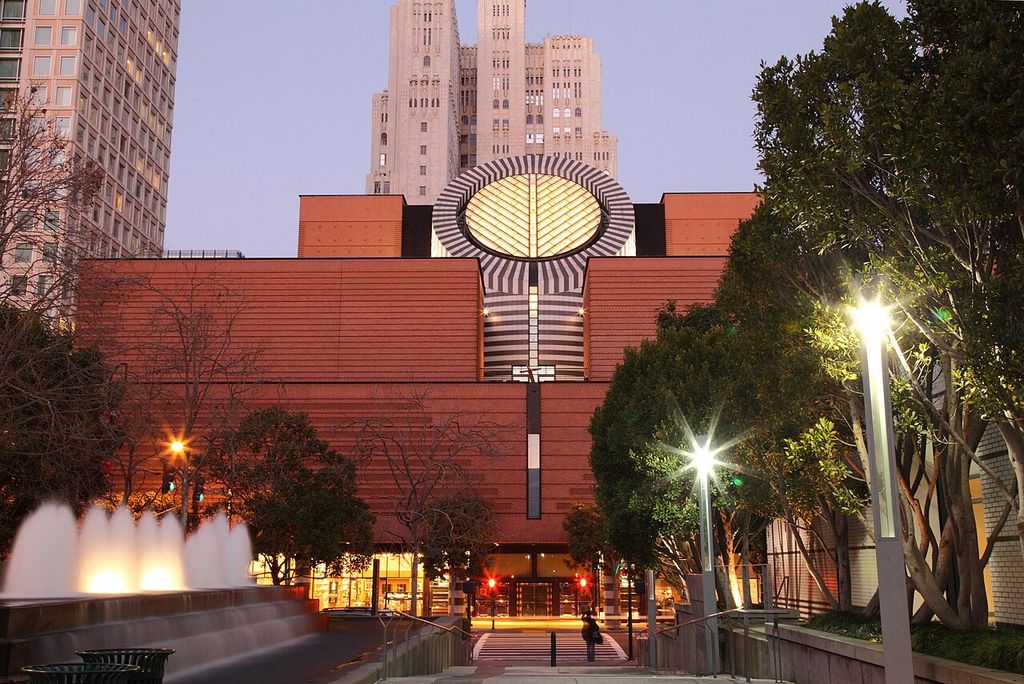
The museum currently marks the work as not on view, but collection displays change. Its object page is the place to check before a visit. SFMOMA's record also carries a copyright notice for the Rothko heirs through Artists Rights Society and states that its images require permission for reproduction.[1] This guide consequently links readers to the collection image without copying it. The accompanying exterior photograph is a view of SFMOMA, not of Rothko's drawing.
A close-looking route
Begin with the paper's horizontal spread and trace the dark lines before trying to name a subject. Then attend to areas where watercolour and ink work together: line can define a boundary, but a wash may make it uncertain again. Ask whether the title changes what you see or only changes the metaphors you bring to it. Finally compare the sheet with a late paper work such as Untitled (brown and gray). The two belong to quite different moments and use different materials, showing why “Rothko on paper” is a broad category rather than a single style.
Related works
- Rothko's drawings provides a wider medium guide.
- Slow Swirl at the Edge of the Sea is a 1944 comparison.
- Untitled (brown and gray) is a late paper comparison.
Rothko works in this guide
| Name | Date | Medium |
|---|---|---|
| Entrance to Subway | 1938 | Painting |
| Hierarchical Birds | 1944 | Painting |
| Slow Swirl at the Edge of the Sea | 1944 | Painting |
| No. 3/No. 13 | 1949 | Painting |
| Untitled (Violet, Black, Orange, Yellow on White and Red) | 1949 | Painting |
| White Center | 1950 | Painting |
| No. 10 | 1950 | Painting |
| No. 6 (Violet, Green and Red) | 1951 | Painting |
| Untitled | 1952 | Painting |
| No. 61 (Rust and Blue) | 1953 | Painting |
| No. 1 (Royal Red and Blue) | 1954 | Painting |
| Untitled (Yellow and Blue) | 1954 | Painting |
| Orange and Yellow | 1956 | Painting |
| Light Red over Black | 1957 | Painting |
| Four Darks in Red | 1958 | Painting |
| Black on Maroon | 1958 | Painting |
| No. 14 | 1960 | Painting |
| Orange, Red, Yellow | 1961 | Painting |
| Untitled (brown and gray) | 1969 | Painting |
| Untitled (Red on Red) | 1969 | Painting |
| Untitled (Black and Gray) | 1970 | Painting |
| Tentacles of Memory | 1945–46 | Drawing |
Frequently Asked Questions
It is an ink and watercolour drawing on paper, dated about 1945–46, in SFMOMA, accession 46.2794. The museum gives dimensions of 55.4 × 76.2 cm. Its drawing classification and paper support distinguish it from Rothko’s later large canvases.[1]
The title invites associations with organic motion and memory without specifying one narrative. Following the dark lines and coloured washes lets the forms remain open to attention. The sheet belongs to Rothko’s period of mythic and Surrealist experimentation.[1][2]
The museum acquired it in 1946 through the Albert M. Bender Collection, Albert M. Bender Bequest Fund purchase. That date places its museum entry close to its creation, giving it a particularly early place in SFMOMA’s Rothko holdings.[1]
A comparison can reveal shared interest in ambiguous organic motion, but it does not establish a preparatory relationship. Slow Swirl is a larger 1944 oil canvas, while Tentacles of Memory is a later drawing on paper. They should retain their separate identities.
Discussion
What changes when you look at Tentacles of Memory as a physical painting rather than a small reproduction?
Use the questions below to compare the work with its neighbours in Rothko’s career.
Reader Insights
Which edge or interval asks you to slow down?
How does this painting differ from the earlier and later works linked here?
What remains uncertain after reading the museum record and looking closely?
Join the Conversation
Share an observation grounded in the work or its documented history.
References
- San Francisco Museum of Modern Art, Tentacles of Memory, ca. 1945–46, accession 46.2794.
- National Gallery of Art, “Mark Rothko,” artist chronology.
- Michaela Milgrom, “How Mark Rothko Made Paintings on Paper,” National Gallery of Art, 2023.
- National Gallery of Art, Mark Rothko: Paintings on Paper, exhibition checklist, cat. 32.
- SFMOMA exterior in 2011. The museum holds Tentacles of Memory; this contextual photograph does not show the drawing. Photograph: (User: Wgreaves ); source record; CC BY-SA 3.0. Resized to 1024px without cropping.
- Joan Miró, Barcelona. Library of Congress, Prints & Photographs Division, Carl Van Vechten Collection; LC-USZ62-42511. Resized without cropping. Source · Public domain; LOC gift record.
- War Memorial Veterans Building entrance.jpg. Photograph: Photo: Andreas Praefcke. Resized without cropping. Source · CC BY 3.0.