by Tom Gurney
Tom Gurney BSc (Hons) is an art history expert with over 20 years experience
Published on June 19, 2020 / Updated on October 11, 2026
Email: tomgurney1@gmail.com / Phone: +44 7429 011000
About Mark Rothko: Introduction
Mark Rothko (1903–1970) was an American painter born Marcus Rothkowitz in Dvinsk, then in the Russian Empire and now Daugavpils, Latvia. He moved with his family to Portland, Oregon, as a child and later worked in New York.[1] His best-known paintings place broad, soft-edged areas of colour on large canvases, but that familiar format emerged only after decades of figurative painting, mythic imagery and experimentation. The short introduction here identifies the artist and the main paths through this site; the biography follows the chronology in detail.
At a Glance
- Lived1903–1970 [1]
- ArtistAmerican painter, born in Dvinsk [1]
- SubjectsFigures, mythic forms and colour fields [1]
- Major commissionsSeagram, Harvard and the Rothko Chapel [1]
Contents
- The person and the places
- How his painting changed
- Painting, paper and rooms
- His work in collections today
- How to use this cluster
The person and the places
The National Gallery of Art records Rothko's birth in 1903 and the family's immigration to America when he was ten. He attended Yale from 1921 to 1923, then moved to New York and studied at the Art Students League.[1] New York became the setting for his early exhibitions and long teaching career. He taught children at the Center Academy of the Brooklyn Jewish Center for more than twenty years, a sustained part of his life that a simple “self-taught genius” story can obscure.[1]
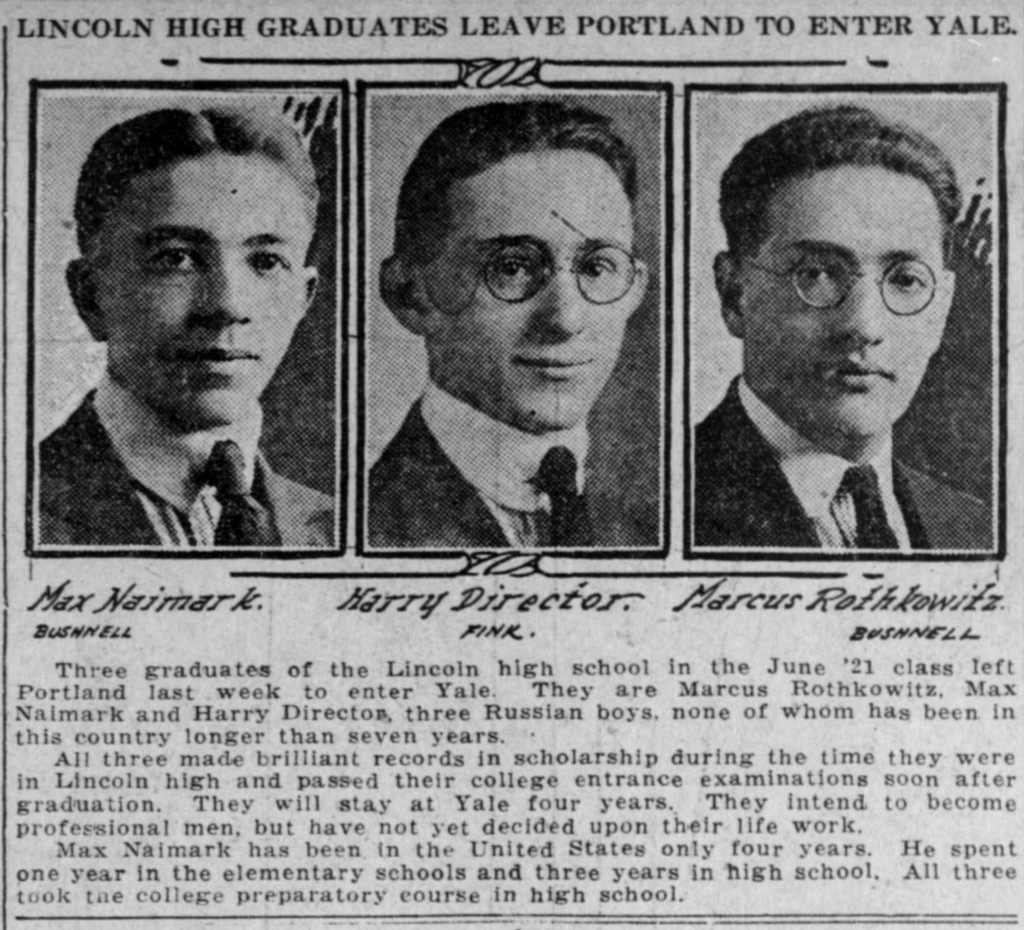
Marcus Rothkowitz, later Mark Rothko, at right in a Yale-bound students item published in The Sunday Oregonian, 18 September 1921. Max Naimark is at left and Harry Director at centre, as named in the newspaper.
Portrait credits printed in the item: Bushnell and Fink. Historic Oregon Newspapers, University of Oregon Libraries. [8]
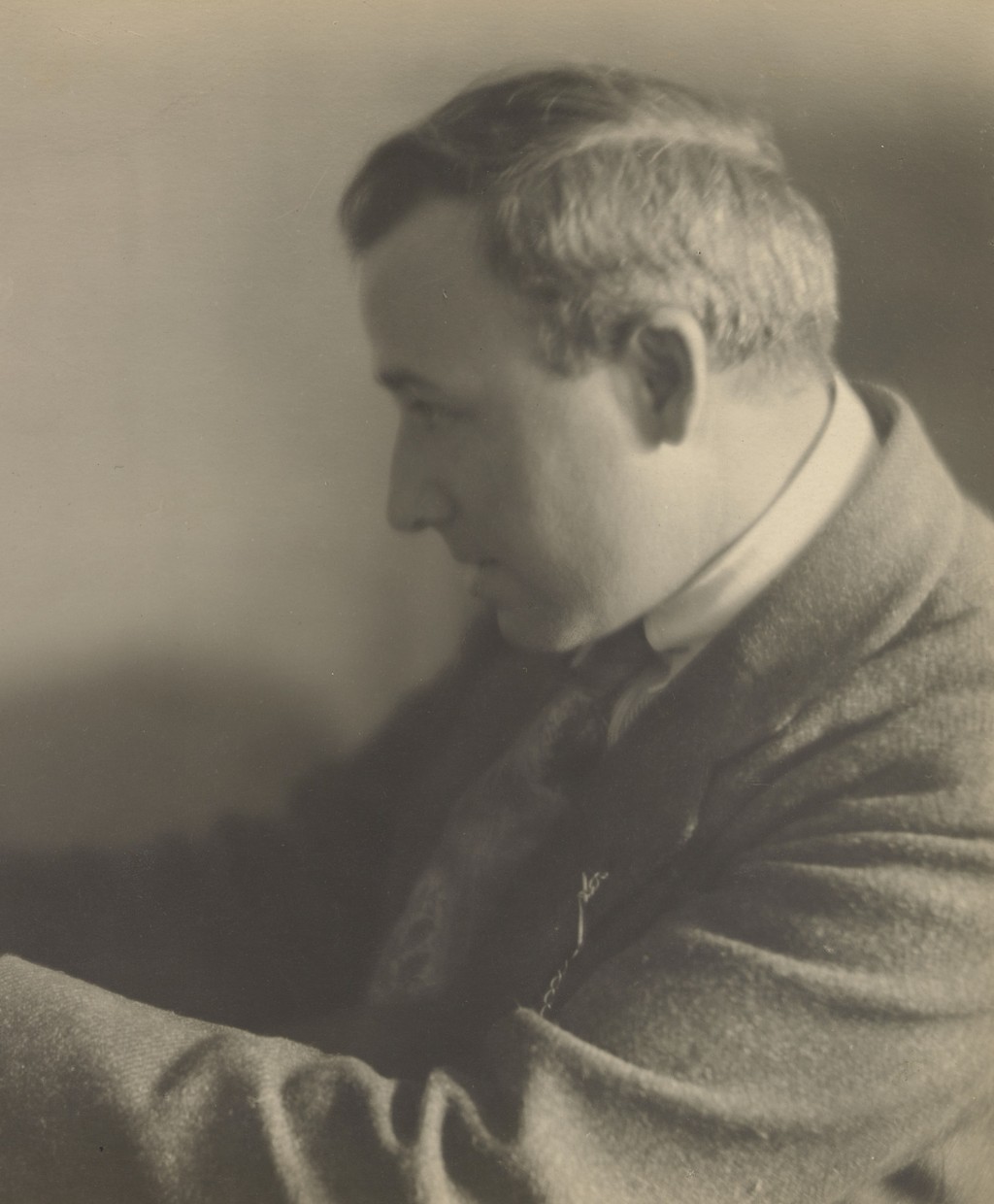
Max Weber, circa 1916, in a portrait detail by Clara Sipprell. Rothko studied with Weber at the Art Students League in the 1920s.
Clara Sipprell; National Portrait Gallery, Smithsonian Institution; bequest of Phyllis Fenner; NPG.82.202. Faithful portrait detail crop; no retouching or colour changes. [9]
His childhood city is now known as Daugavpils. A present-day photograph of its fortress or Rothko Museum is useful geographical context, but it is not a photograph of Rothko's home in 1903. Similarly, a photograph of a New York subway car can evoke the urban world of his 1930s paintings without documenting the exact place he painted. This site labels contextual images for what they actually show.
How his painting changed
Rothko's first solo exhibitions in 1933 included landscapes, portraits, nudes and city scenes. In the later 1930s he painted subway subjects; Entrance to Subway of 1938 is one example. During the 1940s, myth, Surrealism and ambiguous organic forms became more important. Hierarchical Birds and Slow Swirl at the Edge of the Sea show that period. By about 1950, Rothko had arrived at the format of hovering colour areas for which he is most recognised.[1]
That change should not be described as progress from “bad early paintings” to “good abstract ones.” The earlier works show different questions: how figures occupy urban space, how mythic forms can carry meaning, and how shapes can become less tied to objects. The mature fields retained Rothko's concern with the human scale and emotional force of painting even as they removed depicted people. White Center and No. 10 from 1950 offer two specific examples of the emerging language.
Painting, paper and rooms
Rothko worked on canvas and extensively on paper. NGA reports more than 1,000 paintings on paper and shows that he exhibited and sold them as finished works.[2] A Rothko sheet may be a drawing, a watercolour or an acrylic painting; it is not automatically a preparatory sketch. The drawings, paintings and prints guides separate original objects from later commercial reproductions.
Rothko also made paintings for spaces. He withdrew works intended for the Four Seasons restaurant in the Seagram Building, completed paintings for Harvard, and made the fourteen installed canvases for the Houston Rothko Chapel.[1][3] Those commissions show how much he cared about a viewer's experience in a room. They also have distinct histories: the Seagram works were never installed at their intended venue, while the Chapel opened after his death.
The Phillips Collection offers a third type of room. Duncan Phillips bought individual Rothko canvases from 1957 onward and gave them a dedicated, intimate space in 1960; a fourth was added in 1964.[4] The museum records Rothko's 1961 visit and suggestions about low lighting and a bench. Unlike the Chapel, this setting gathered paintings already made, yet Rothko could still influence how they were encountered. The small room and the large canvas worked together. Its history helps explain why “Rothko painting” can mean both an independent object and part of a deliberately shaped experience.
His work in collections today
Different institutions make different aspects of Rothko visible. The Rothko Museum in Daugavpils rotates family-collection works in the city of his birth, connecting a local life story to paintings made after emigration.[5] Guggenheim Bilbao's Spanish collection account focuses on the extraordinary scale and installation history of its Untitled (1952–53), while its 2004 retrospective ranged across the early, mythic and mature periods.[6] The Fondation Louis Vuitton's French account of its 2023–24 retrospective likewise moves through the full career and explicitly resists an account in which all late painting becomes dark.[7] These curatorial narratives can illuminate a life, but an exhibition is a dated selection; it is not a complete inventory of every Rothko work or a substitute for each holding museum's object record.
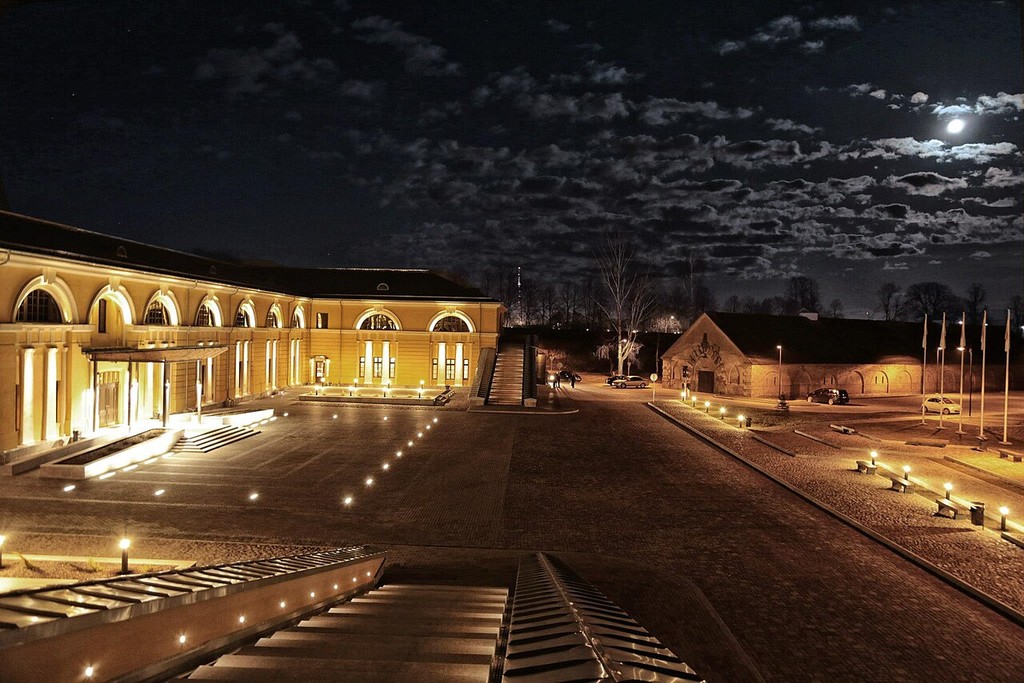
The former artillery arsenal housing the Daugavpils Rothko Art Centre, photographed at night in 2013. The institution is now called the Rothko Museum.
Photograph: Karlis.Rasis. Photograph remains CC BY-SA 3.0. Resized without cropping. [10]
How to use this cluster
Begin with the biography for the chronology, then use the paintings directory to follow individual works. The same number or colour phrase may identify different paintings, so each object page gives a museum accession or specific sale record where possible. The two No. 61 routes refer to one MOCA canvas, while the NGA's late brown-and-gray paper work is different from MOCA's black-and-gray canvas. These distinctions make the cluster reliable for readers tracing a work from an old bookmark or search result.
Rothko's paintings remain copyrighted. Museum images and auction photographs are linked as evidence, not copied without a licence. Contextual photographs in this guide are labelled as locations or buildings, never as the paintings themselves. David Anfam's catalogue raisonné is an important reference for the canvases; exact entry numbers are used only when a public primary source quotes them or the book can be checked directly.
Rothko works in this guide
| Name | Date | Medium |
|---|---|---|
| Entrance to Subway | 1938 | Painting |
| Hierarchical Birds | 1944 | Painting |
| Slow Swirl at the Edge of the Sea | 1944 | Painting |
| No. 3/No. 13 | 1949 | Painting |
| Untitled (Violet, Black, Orange, Yellow on White and Red) | 1949 | Painting |
| White Center | 1950 | Painting |
| No. 10 | 1950 | Painting |
| No. 6 (Violet, Green and Red) | 1951 | Painting |
| Untitled | 1952 | Painting |
| No. 61 (Rust and Blue) | 1953 | Painting |
| No. 1 (Royal Red and Blue) | 1954 | Painting |
| Untitled (Yellow and Blue) | 1954 | Painting |
| Orange and Yellow | 1956 | Painting |
| Light Red over Black | 1957 | Painting |
| Four Darks in Red | 1958 | Painting |
| Black on Maroon | 1958 | Painting |
| No. 14 | 1960 | Painting |
| Orange, Red, Yellow | 1961 | Painting |
| Untitled (brown and gray) | 1969 | Painting |
| Untitled (Red on Red) | 1969 | Painting |
| Untitled (Black and Gray) | 1970 | Painting |
| Tentacles of Memory | 1945–46 | Drawing |
Frequently Asked Questions
Mark Rothko was an American painter who lived from 1903 to 1970. Born Marcus Rothkowitz in Dvinsk, now Daugavpils, Latvia, he immigrated to America as a child and later worked in New York. His large colour-field paintings became a distinctive part of Abstract Expressionism.[1]
His work ranges from portraits, landscapes and subway scenes to mythic figures and abstract colour fields. He also made drawings and paintings on paper. The familiar rectangles represent one substantial phase of a career with many changes of subject, material and scale.[1][2]
The Phillips Collection’s Rothko Room brings four paintings together in an intimate museum space. Its history differs from the purpose-built Houston Chapel. Both help explain Rothko’s interest in how scale, lighting, seating and neighbouring paintings affect a viewer’s encounter with the work.[3][4]
No. Some paper works are preparatory studies, but others are independent finished paintings or drawings. Rothko exhibited, sold and gave paintings on paper. The medium and history of the individual object are more useful than assuming that its paper support makes it unfinished.[2]
Use the biography for the chronological story, the paintings guide to choose individual works, and the drawings guide for paper. The Rothko Chapel and Seagram Murals pages examine his painted environments.
Discussion
Which documented work or source changed your understanding of About Mark Rothko?
Reader Insights
Begin with a specific work, title and date.
Compare the object record with this career guide.
What still needs a catalogue or archive check?
Join the Conversation
Share an observation grounded in the work or its history.
References
- National Gallery of Art, “Mark Rothko,” artist chronology.
- Michaela Milgrom, “How Mark Rothko Made Paintings on Paper,” National Gallery of Art, 2023.
- Rothko Chapel, institutional history.
- The Phillips Collection, “The Rothko Room”, installation and acquisition history.
- Rothko Museum, Daugavpils, family collection display.
- Guggenheim Bilbao Museoa, Spanish collection essay on its Sin título and Paredes de luz exhibition account.
- Fondation Louis Vuitton, Mark Rothko retrospective account, French.
- Lincoln graduates leaving Portland for Yale: Naimark, Director and Rothkowitz. Portrait credits printed in the item: Bushnell and Fink. Historic Oregon Newspapers, University of Oregon Libraries. Source · Public domain; archive reuse policy.
- Max Weber, portrait detail. Clara Sipprell; National Portrait Gallery, Smithsonian Institution; bequest of Phyllis Fenner; NPG.82.202. Faithful portrait detail crop; no retouching or colour changes. Source · CC0 1.0.
- Rothko In Night.jpg. Photograph: Karlis.Rasis. Photograph remains CC BY-SA 3.0. Resized without cropping. Source · CC BY-SA 3.0.