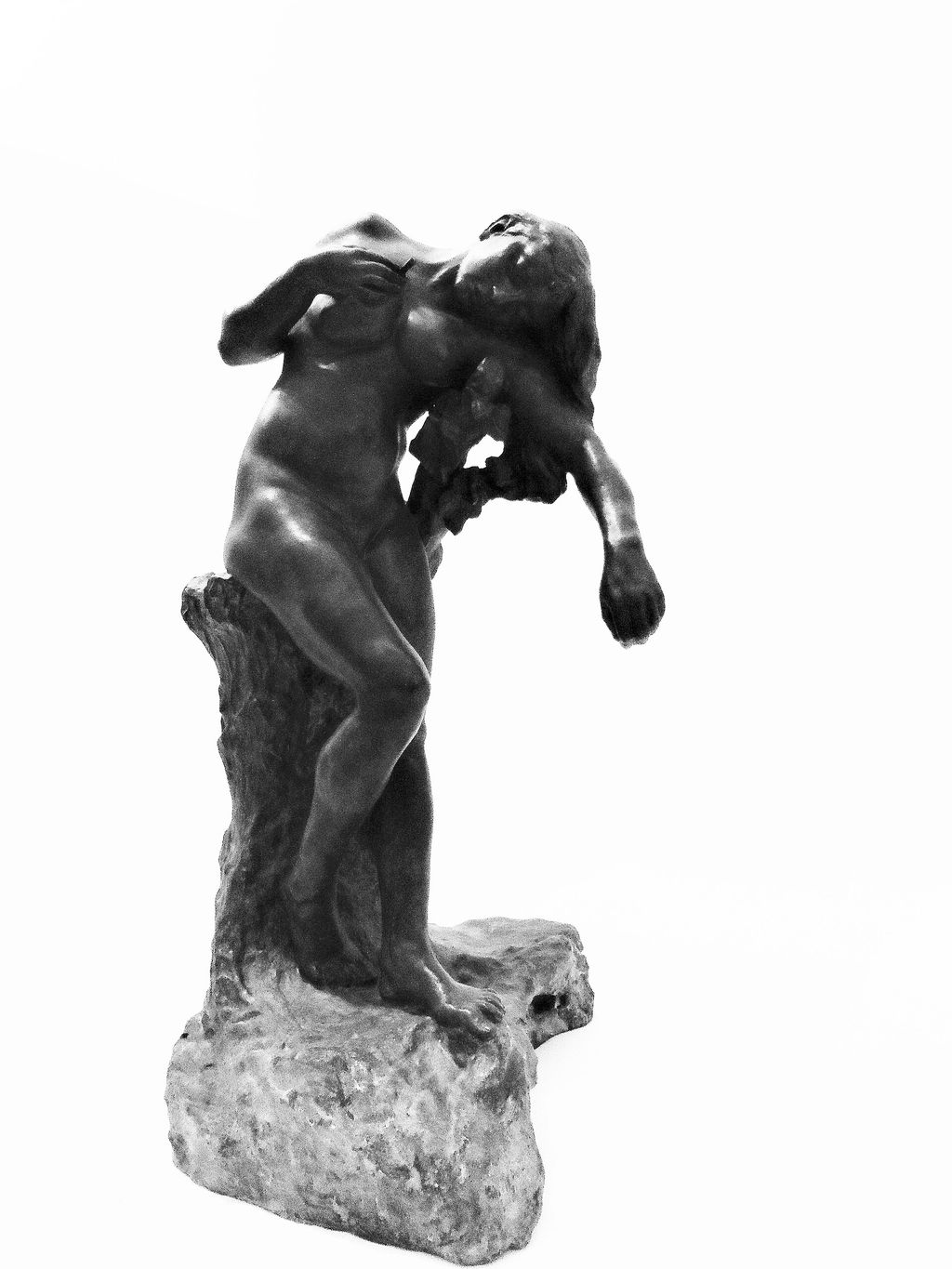
The Wounded Niobid photographed at La Piscine, Roubaix, in 2015. Photograph by Pierre André Leclercq. Image source. CC BY-SA 4.0. Resized photograph, shared under CC BY-SA 4.0.
 by Tom Gurney
Tom Gurney BSc (Hons) is an art history expert with over 20 years experience
Email: tomgurney1@gmail.com / Phone: +44 7429 011000
The Wounded Niobid: Introduction
Camille Claudel’s The Wounded Niobid (La Niobide blessée) is upright by a narrow margin. The young woman’s head tips towards one shoulder, her left arm hangs towards the ground, and the fingers of her right hand gather near a wound high on her chest. A tree-like support rises from the rough base against her hip and back. Claudel modelled the figure in 1906, and Eugène Blot cast the bronze in 1907. That bronze, FNAC 2161, belongs to the French national collection administered by the Centre national des arts plastiques (Cnap) and is on deposit at the Musée Sainte-Croix in Poitiers. [1] [2]
At a Glance
- French titleLa Niobide blessée
Camille Claudel in context
Old Hélène
c. 1881–82Sakuntala
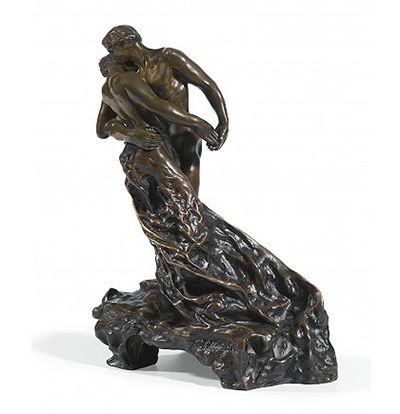
Plaster shown in 1888The Waltz
Developed c. 1889–93The Little Châtelaine
First model c. 1892–93The Gossips
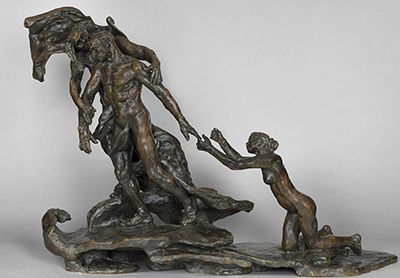
Described in 1893, shown in 1895The Mature Age
First and second versions, c. 1894–99The Wave
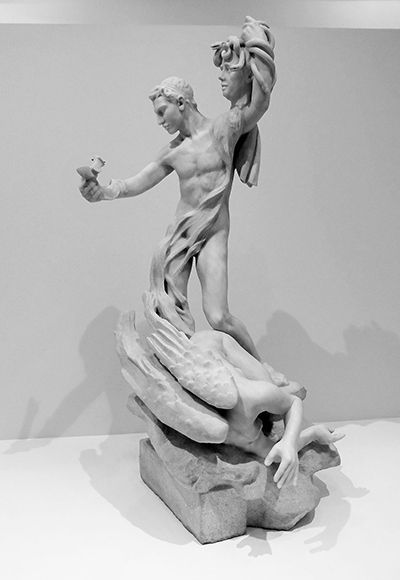
Plaster shown in 1897, mixed-material object dated 1897–1903 (?)Perseus and the Gorgon
Nogent design and marble, c. 1897–1902The Wounded Niobid
Modelled in 1906Contents
- A hand at the wound
- A daughter of Niobe
- The figure Claudel took out of a group
- From a plaster order to the Poitiers bronze
A hand at the wound
In Christian Vignaud’s photograph published by the Getty, the woman’s right elbow projects to the side. Follow the forearm inward and the hand draws the eye to a small projection above the right breast. An educational sheet for the Poitiers bronze identifies it as the end of the arrow. The fingers curve close to the point of injury, while the left hand hangs with its fingers loosely gathered. The figure’s eyes are lowered and her mouth is quiet. The uneven action of the two arms gives a clearer sense of what has happened than the face alone. [1] [3]
The lower half of the figure gives the impression that she has come to a stop partway through a movement. One leg bends in front of the other, with the feet meeting the base at different depths. The support comes up to the hip, then reaches higher behind the torso in a spray of rough, leaf-like forms. The light in the Poitiers photograph catches the smoother skin in long patches and breaks into smaller marks on the support. Both surfaces are cast in bronze. Claudel uses their contrast to make the relatively smooth body seem capable of moving against something that appears fixed. [1] [4]
From the front the branch-like forms are glimpsed in the space between the lowered arm and the torso. In a profile photograph reproduced by the Poitiers educational sheet, the base extends behind the heels and the hip rests against the upright. From the rear the form rises almost like a seat beneath her, and the slant of the bare back carries the gesture even when the hand at her chest is hidden. The Musée des beaux-arts de Quimper built a looking exercise around four photographs of the bronze, asking viewers to arrange front, rear and profile views in order on a turntable. The changing views explain how a body in this position can look both precarious and firmly held. [3] [5]
A daughter of Niobe
The title names one of Niobe’s daughters. In Book VI of Ovid’s Metamorphoses, Niobe sets her many children against the two of Latona, the Roman name for Leto. Apollo and Diana, also known as Artemis, avenge their mother. Ovid slows down as the daughters are struck. One grasps the arrow in her side, another bends in pain from a hidden wound, and others attempt to flee or hide. Niobe tries to shield the youngest with her own body. Only after losing her children does Niobe herself turn to stone. [6]
Claudel leaves the archers and the rest of the family outside the composition. The Nogent museum reads the figure as a daughter succumbing to an arrow from Apollo or Artemis, leaving the shooter open. The bronze gives the viewer a bodily consequence to follow. The hand curling towards the wound fixes the eye on one part of the chest, while the hanging wrist and the incline through the trunk suggest that the injury has affected the whole body. The rough mass offers support but also makes the distinction between moving body and motionless surroundings unusually clear. Ovid’s account of a mother becoming stone gives that contrast another resonance, even though the figure here is her daughter. [4] [6]
The figure Claudel took out of a group
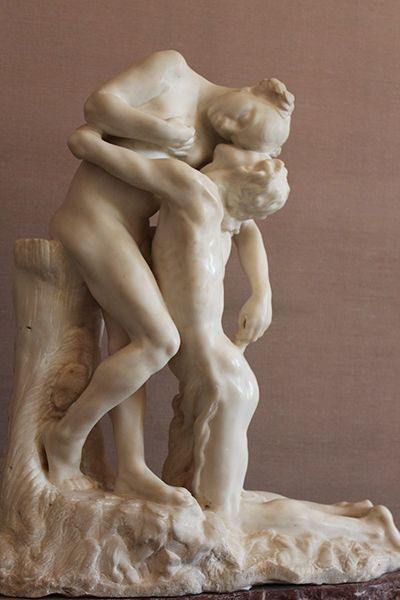
The female figure derives from Sakuntala, the two-figure composition Claudel exhibited in plaster in 1888. The 1905 marble Vertumne et Pomone at the Musée Rodin makes the connection easy to see. In the marble, the woman's body bends towards the kneeling man, and the lowered arm hangs beyond their point of contact. The movement of that arm has somewhere to lead the eye because the man’s body and arms complete the group. In The Wounded Niobid, the hanging hand leads the eye down towards the base. The other hand now turns back towards her own chest. The tilt that once brought two people together becomes the lean of a single body against an inanimate support. [1] [4] [7]
The related sculptures came into being through different arrangements. The Countess de Maigret enabled the 1905 marble, while Blot issued the paired group in bronze as L’Abandon. Blot also handled the casting of the Niobid, but here he produced a single bronze commissioned by the state, according to the Musée Camille Claudel. The French state separately acquired a bronze of L’Abandon in 1907. Two objects thus entered the national record in the same year, one through the purchase of an edition cast and the other through a commission to realise an independent figure. The distinctions matter when tracing Claudel’s patrons and editions across the surviving works. [1] [4] [7] [8]
From a plaster order to the Poitiers bronze
The Musée Camille Claudel credits the fine arts inspector Armand Dayot with selecting the figure for the state commission. An exhibition loan schedule published in the Gazette officielle du Québec identifies the underlying documents in the French Archives nationales, dossier F/21/4189. It lists a plaster order dated 26 April 1906 and a note authorising a payment on account for the plaster dated 9 July. A separate order for the bronze followed on 15 February 1907. The sequence puts the 1906 model and the 1907 bronze on distinct administrative footing as well as giving them different dates in the work’s material history. [4] [8]
The same schedule lists a report by Eugène Morand about the bronze, registered on 15 October 1907, and a December note to Claudel concerning delivery to the Dépôt des marbres. A note on the bronze’s entry in the inventory is dated 20 December. These records let one follow the bronze from an order through reports and into the state inventory. The schedule also lists the sculpture itself under the Poitiers number D.985-1-1 and gives its height as 90 centimetres. Quimper’s exhibition records give the same height and width of 50 centimetres. The two listings give depths of 51.5 and 55 centimetres respectively. An educational sheet for the Poitiers bronze records a height of 88 centimetres and a width of 49, with a depth of 51.5. The sheet also records the artist’s signature. Its wording and position remain undocumented in the records cited here. [3] [5] [8]
According to the Musée Camille Claudel, Anne Rivière rediscovered the bronze in a basin. It was damaged when the limescale that had accumulated around it was removed. The bronze was restored and transferred to the Musée Sainte-Croix in 1984. Cnap lists it as a long-term deposit in Poitiers, and Nogent identified it under the national inventory number when it brought together related works for its 2024–25 Sakountala exhibition. The national number follows the bronze between institutions. The Poitiers number records it at the receiving museum. Both can point to the same bronze, as the guide to collections of Claudel’s sculpture explains for works on deposit. [2] [4] [9]
The Nogent exhibition made it possible to follow the same inclination of the head and the fall of the arm across compositions. The earlier group supplies a person towards whom the woman can lean. In the Niobid one hand draws the gesture back towards the wound, while the other falls into the space where an answering gesture might have been. From the front, the bronze can look as if it has caught the instant in which she stops moving. From the side, the long contact between body and support makes the pose look as if she has already had time to sag against it. Each view gives a different sense of how long the wounded figure can stay upright. [2] [4] [5]
A closer look at The Wounded Niobid
Annotated Details from The Wounded Niobid
The Wounded Niobid photographed at La Piscine, Roubaix, in 2015. Photograph by Pierre André Leclercq. Image source. CC BY-SA 4.0. Overview numbered and details cropped. Both are shared under CC BY-SA 4.0.
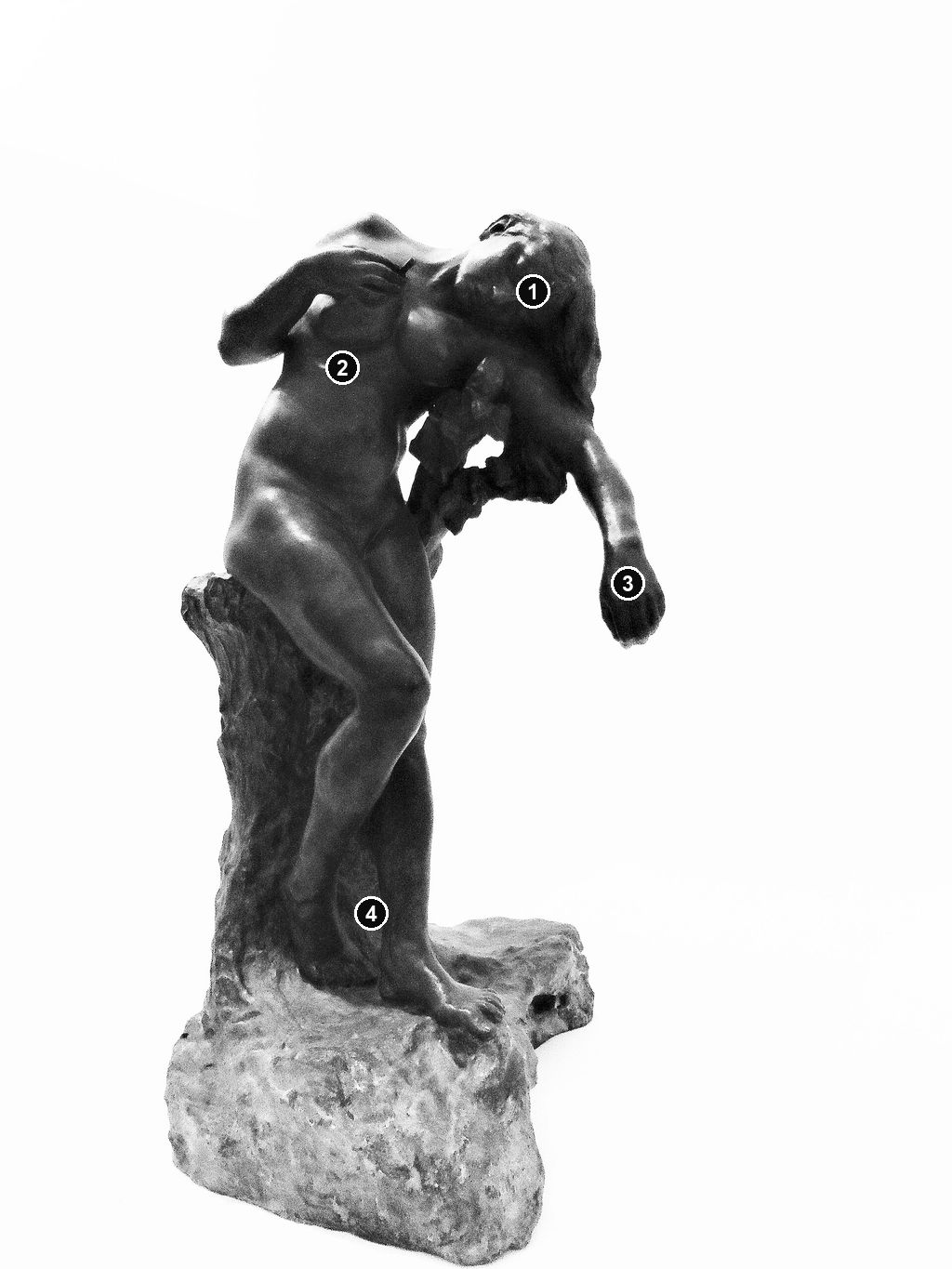
Details from THE WOUNDED NIOBID
Follow the numbered details, then return to the complete view.
The thrown-back head
The face tips upward while the hair follows the head behind the shoulder.
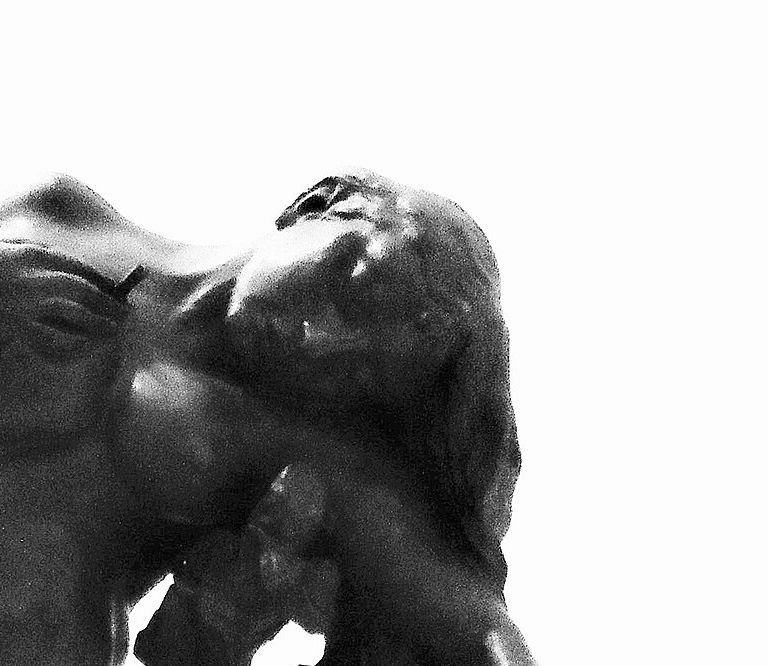
The hand beside the shoulder
The bent arm brings one hand to the chest, close to the rising line of the shoulder.
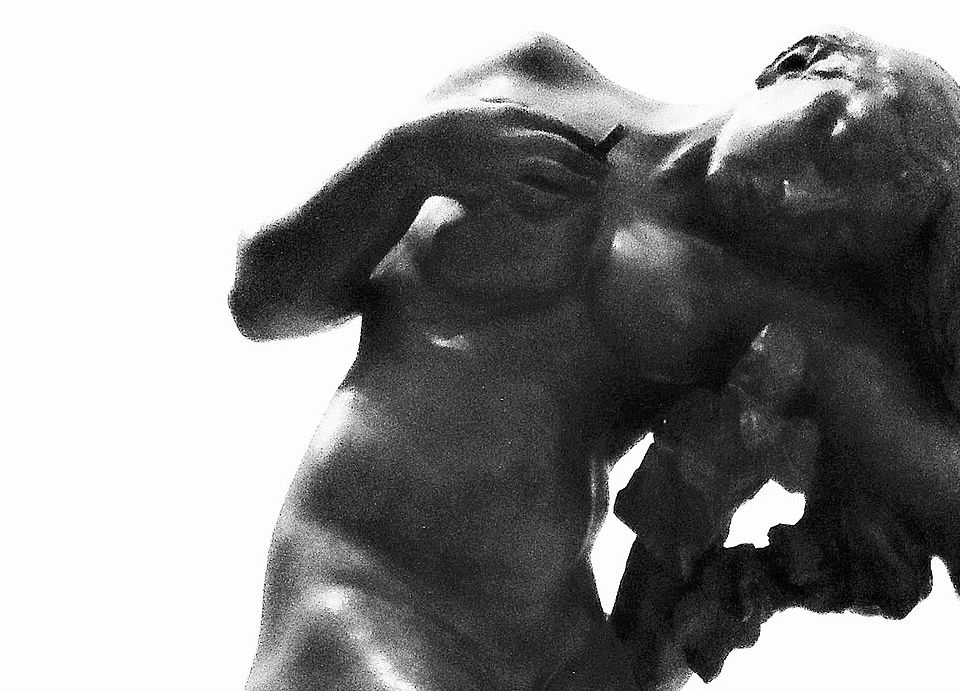
The other arm hangs
The lower arm and hand hang away from the body, leaving a clear gap in the silhouette.
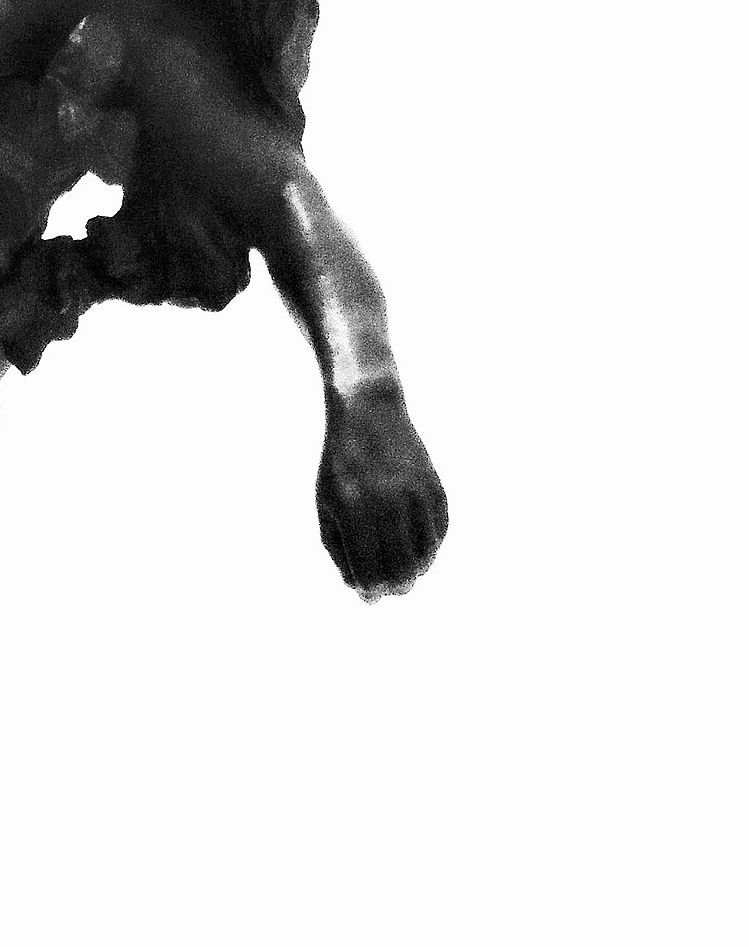
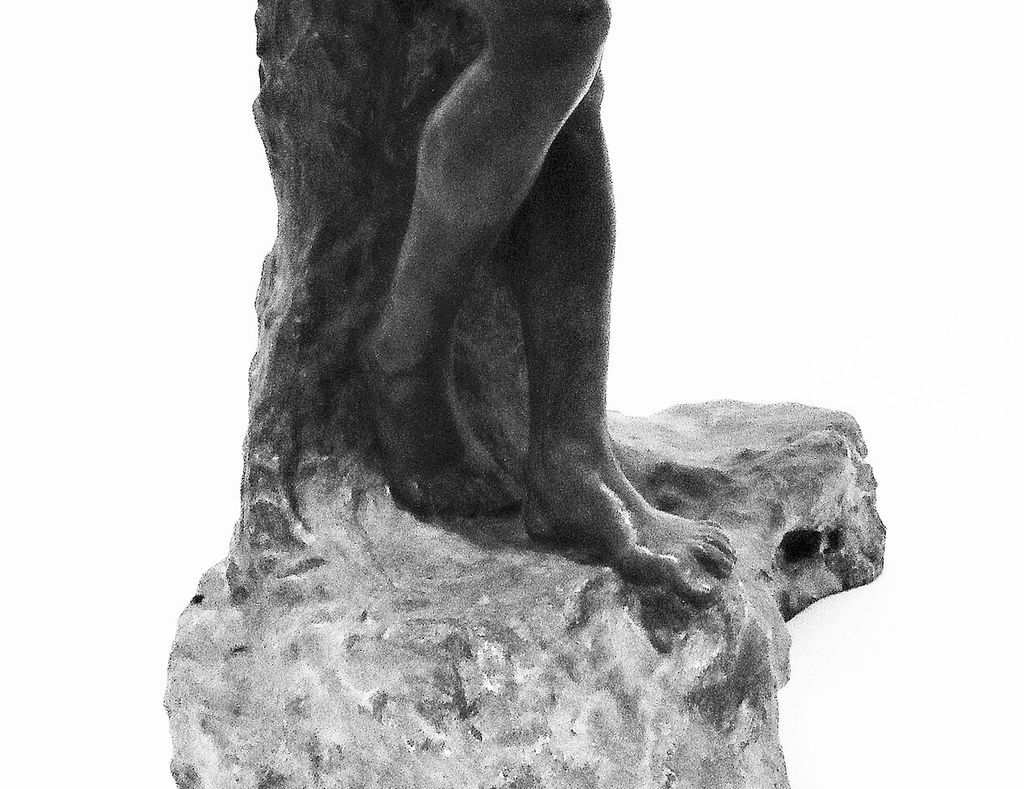
Figure and support
The upright support stands close to the leg and broadens into the irregular base.
Artworks directory
| Name | Date | Medium |
|---|---|---|
| The Mature Age | 1894–99 | Sculpture |
| The Waltz | c. 1889–93 | Sculpture |
| Sakuntala | 1886–88 | Sculpture |
| The Little Châtelaine | 1892–93 | Sculpture |
| The Gossips | c. 1893 | Sculpture |
| The Wave | 1897–1903 | Sculpture |
| Perseus and the Gorgon | c. 1897–1902 | Sculpture |
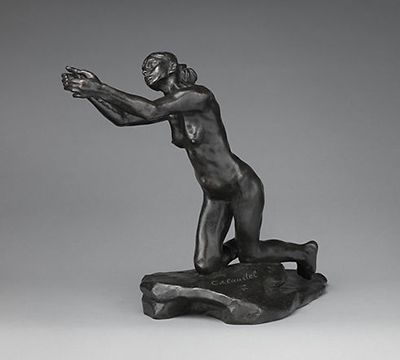
| The Implorer | c. 1894–99 | Sculpture |
| Clotho | 1893 | Sculpture |
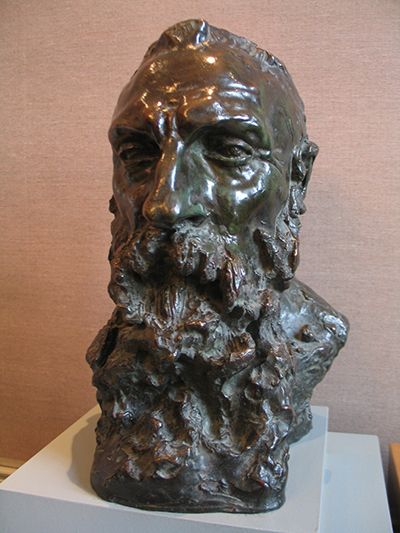
| Bust of Auguste Rodin | c. 1886–89 | Sculpture |
| Paul Claudel at Sixteen Years Old | c. 1882–87 | Sculpture |
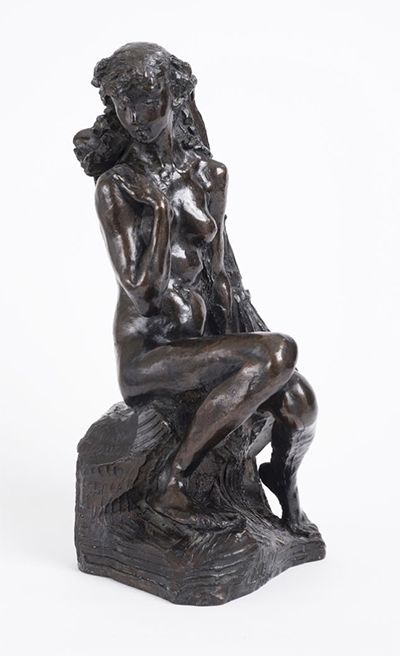
| Young Girl with a Sheaf | c. 1886–87 | Sculpture |
| Giganti | c. 1885 | Sculpture |
| Crouching Woman | c. 1884–85 | Sculpture |
| The Hungry Dog | c. 1893 | Sculpture |
| Old Hélène | c. 1881–82 | Sculpture |
| Fortune | c. 1902–05 | Sculpture |
| The Wounded Niobid | 1906 | Sculpture |
| The Siren, or The Flute Player | c. 1904–05 | Sculpture |
| Deep Thought | c. 1898 | Sculpture |
| Dream by the Fireside | c. 1899 | Sculpture |
| Paul Claudel at Thirty-Seven | 1905 | Sculpture |
| Portrait de Madame Claudel | c. 1883 | Sculpture Musée Camille Claudel. |
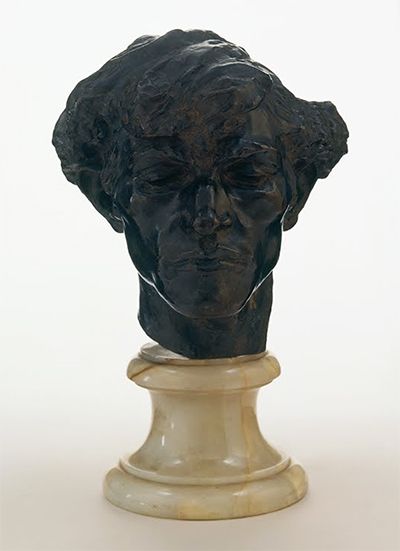
| Jeune Femme aux yeux clos | c. 1885 | Sculpture Musée Camille Claudel. |
| Ferdinande de Massary | 1888 | Sculpture Musée Camille Claudel. |
| Léon Lhermitte | 1889 | Sculpture Musée Camille Claudel. |
| Étude de main gauche | c. 1889 | Sculpture Musée Camille Claudel. |
| Vieil aveugle chantant | c. 1894 | Sculpture Musée Camille Claudel. |
| Tête de vieillard | c. 1890 | Sculpture Musée Camille Claudel. |
| Étude pour la tête d’Hamadryade | c. 1895 | Sculpture Musée Camille Claudel. |
| Aurore | c. 1900 | Sculpture Musée Camille Claudel. |
Discussion
Look again at the images and ideas explored in The Wounded Niobid. These editorial prompts invite your observations.
Reader Insights
How does the line of the dropped arm change the sense of movement?
How does the upward turn of the head affect the way you read the pose?
Join the Conversation
Share a detail, comparison or question about The Wounded Niobid below.
References
- J. Paul Getty Museum, Camille Claudel, “The Last Decade” and “Tales of Passion”,. View source.
- Centre national des arts plastiques, Modern Collection, FNAC 2161, p. 11,. View source.
- Johnatan Savarit, Notice MBA Poitiers / Musée Sainte-Croix. La Niobide blessée, object sheet, September 2020,. View source.
- Musée Camille Claudel, Camille Claudel à l’œuvre. Sakountala, press dossier, “Les avatars de Sakountala. 1895–1907”, pp. 10–12,. View source.
- Musée des beaux-arts de Quimper, Rodin, Les Ombres, teaching dossier, object caption and viewing exercise,. View source.
- Ovid, Metamorphoses, Book VI, lines 146–312, translated by A. S. Kline,. View source.
- Musée Rodin, Vertumne et Pomone, S.01293,. View source.
- Gazette officielle du Québec, 6 April 2005, vol. 137, no. 14, pp. 1160 and 1167–68, exhibition loan schedule, including Archives nationales F/21/4189,. View source.
- Musée Camille Claudel, Camille Claudel at Work. Sakountala, English press kit, exhibition dates and object credits for FNAC 2161,. View source.