


 by Tom Gurney
Tom Gurney BSc (Hons) is an art history expert with over 20 years experience
Page created on March 2, 2018 / Page updated on October 6, 2026
Email: tomgurney1@gmail.com / Phone: +44 7429 011000
Introduction
Frida Kahlo's work has travelled through exhibitions, public collections, books and the responses of other artists. Yet a painting shown in Paris, a feminist reading in Berlin and a museum display of personal belongings in Japan are not simply stages in one story of increasing fame. Each presents a choice about which Kahlo to place before a particular public—and which artistic relationships or histories to leave at the edge. [1] [2] [3]
Her international reception is therefore more revealing as a comparison than as a league table of countries. The available records are uneven: German press criticism has a substantial historical study, while other places are documented here through particular museums, writers or viewers. These sources allow a close account of selected encounters, not a claim about what all German, Brazilian, French, Dutch or Japanese people thought. [2] [4] [5]
At a Glance
- Mexican and foreign histories: Mexican critics discussed her 1953 solo exhibition, while New York and Paris had shown her work years earlier. [1] [22] [23]
- Different German readings: Press responses to the 1982 Kahlo–Tina Modotti exhibition ranged from formal and feminist interpretations to sensational emphasis on pain. [2]
- Brazilian women-artists frame: A 2015–16 São Paulo exhibition placed Kahlo among fifteen artists, including María Izquierdo, Remedios Varo and Leonora Carrington. [4]
- Dutch reach and disagreement: Drents Museum reported about 140,000 admissions to Viva la Frida!; an individual Dutch interview also records resistance to a commodified image. [5] [6]
- Japanese collecting and dialogue: Nagoya's Mexican-art collection and Yokohama's presentation of Ishiuchi Miyako show two different ways of encountering Kahlo in Japan. [7] [8]
Contents
- Introduction
- Before the Later Exhibitions
- Mexico Was Not Merely the Point of Departure
- Germany: What Viewers Saw in 1982
- Brazil: From Solitary Icon to a Network of Women
- France: A Painting, a Feminist Reading, a Couple
- The Netherlands: Attendance Is Not Agreement
- Japan: Collecting and Artistic Dialogue
- No Single International Kahlo
Before the Later Exhibitions
Kahlo did not have to wait until after her death to be seen outside Mexico. Her 1938 New York exhibition and participation in the mixed Mexique presentation in Paris the following year establish lifetime international visibility. A French public collection acquired The Frame, giving the Paris encounter an institutional consequence beyond a temporary display. [1]
That evidence does not tell us how many people knew her name or how they understood the paintings. It does, however, rule out the frequently implied idea that a 1980s exhibition first revealed her to the world. Later curators were working with an artist who already had a cross-border history, even if her subsequent prominence far exceeded it. [1] [2]
Watch: Frida Kahlo
Five perspectives to view here alongside the article.
Frida Kahlo’s The Two Fridas: Great Art Explained
A focused visual introduction to the painting and its context.
Mexico Was Not Merely the Point of Departure
Kahlo's only solo exhibition in Mexico during her lifetime was organised by Lola Álvarez Bravo at her Galería de Arte Contemporáneo in 1953, according to Mexico's National Institute of Fine Arts and Literature. That may sound surprising beside the New York show of 1938, but solo-exhibition dates do not tell the whole story of local recognition. They show how access to a dedicated gallery presentation differed across places and stages of her career. [22]
José Moreno Villa reviewed the 1953 Mexico City exhibition for Novedades: México en la Cultura. The ICAA/MFAH archive's synopsis of his article says he considered Kahlo's work difficult to separate from her life and addressed pain, folk-art feeling and recurring images. Even through that editorial synopsis, the review is a dated example of the biographical emphasis that later audiences would also encounter; it offers no measure of a nationwide Mexican audience. [23]
Mexican collections and artists developed other relationships with the paintings. The Museo de Arte Moderno says The Two Fridas entered the public collection from which that museum grew; its 2019 documentary exhibition later examined the painting through Paris and Mexico City, rather than treating its image as self-explanatory. The artist Mónica Mayer gave a more personal account: Kahlo freed her to use dark humour, but Helen Escobedo offered a preferable model for a woman artist's life. Public collecting, an evolving museum interpretation and a selective artist's response are not one uniform “Mexican view.” [24] [25] [26]
The museum's Paris–Mexico City comparison also unsettles an easy division between “home” and “abroad.” Kahlo's international journeys became part of a later Mexican institution's way of interpreting a painting held in Mexico, while Mayer's response arose from her own artistic choices rather than from an imported exhibition. Reception moves in more than one direction: the questions asked elsewhere can return to a work's local context, and a local artist may take from Kahlo something quite different from a foreign curator's preferred story. [24] [25] [26]
Germany: What Viewers Saw in 1982
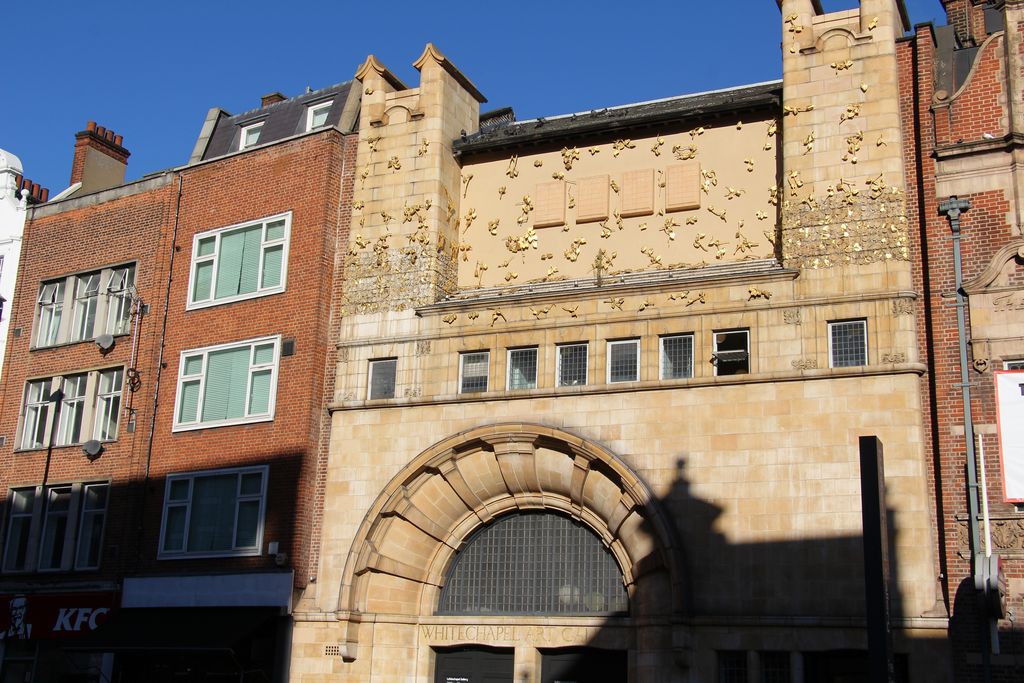
The paired exhibition Frida Kahlo and Tina Modotti ran at London's Whitechapel Gallery from 26 March to 2 May 1982 and reached Berlin's Haus am Waldsee during the Horizonte festival that year. Pairing a painter with a photographer invited comparison between two women whose work and political circumstances were different. Co-curator Peter Wollen later recalled that he and Laura Mulvey intended a dialogue in which photography would stand beside painting rather than serve merely as illustration. [2] [9] [10]
The Mexican historian Graciela Schmilchuk studied written responses to exhibitions of Mexican art in Berlin, using press reports, catalogues and interviews. In her account, earlier German–Mexican artistic connections, publications and displays of Mexican art had helped prepare the 1982 audience. That makes the Berlin presentation an encounter within an existing network, not a miraculous first discovery. [2]
What critics made of the exhibition was strikingly inconsistent. Schmilchuk reports one response that linked Kahlo's painting to Symbolism and the German Neue Sachlichkeit; another emphasised the exhibition's feminist and political dimensions. One critic treated her art as principally introspective and only occasionally directly political, while a sensationalist headline reduced its attraction to blood. These are readings recorded and compared by Schmilchuk, not a set of verdicts about what the work really means or a survey of all visitors. [2]
The disagreement is itself historical evidence. Kahlo could appear beside Modotti as an artist of private experience, as a figure in a Latin American struggle, as a woman asserting selfhood, or as the subject of a lurid story about pain. Each emphasis promoted a different route into the paintings. The German press did not offer one coherent national interpretation, and the prominence of biography in some accounts should not erase the formal and political discussion in others. [2]
Schmilchuk's study needs care on particular facts. She recounts a 1955 critic's suspicion that Kahlo paintings had been withheld from an East Berlin exhibition, but says she could not confirm the allegation in the archives; it cannot be repeated as an event. Her dates for a later Mexico City stop and her account of who originated the Kahlo–Modotti pairing conflict with other records, so her strongest contribution here is her documented comparison of the German press, not a definitive tour chronology. [2] [9] [10]
Subsequent German exhibitions put forward other versions of Kahlo. Frankfurt's Schirn later recalled its 1993 Die Welt der Frida Kahlo – Das Blaue Haus; Hamburg's Bucerius Kunst Forum held a Kahlo exhibition from June to September 2006; and Berlin's Martin-Gropius-Bau presented a retrospective in 2010 with a separate photographic display associated with Cristina Kahlo. Bucerius later reported about 190,000 admissions to its show, a venue figure rather than a count of distinct German admirers. The range of home, paintings, biography and photography in these formats helps explain why “German reception” cannot be reduced to what critics wrote in 1982. [11] [12] [13] [27]
Brazil: From Solitary Icon to a Network of Women
São Paulo's Instituto Tomie Ohtake offered a different curatorial proposition with Frida Kahlo – conexões entre mulheres surrealistas no México, held from 27 September 2015 to 10 January 2016. Curator Teresa Arcq assembled approximately one hundred works by fifteen artists, including Kahlo, María Izquierdo, Remedios Varo and Leonora Carrington. The venue says that around twenty Kahlo paintings and thirteen works on paper formed part of the exhibition. [4]
Those numbers describe the display, not Kahlo's whole output. More important, the exhibition asked visitors to see her among women making art in Mexico rather than alone as a singular face. Its title and artist selection are curatorial choices; they do not mean all the participants had the same relationship to Surrealism or to one another. Arcq's network can open useful comparisons while each artist's work retains its own history. [4]
Brazilian writing has also examined how Kahlo's image circulates beyond galleries. Communications researcher Cátia Inês Schuh argued in a 2007 interview that the 2002 feature film contributed to a globalised Kahlo image in fashion. That is Schuh's interpretation of visual culture, not a measured demonstration that the film caused particular purchases or made every Brazilian viewer see Kahlo through clothing. [14]
These two Brazilian sources look at different things: a museum's reconfiguration of artistic company and a scholar's concern with a repeatable public image. Together they suggest that international reception can deepen attention to the work or turn the artist into an easily recognised sign. Neither establishes a single Brazilian response. [4] [14]
The São Paulo grouping is especially revealing beside the familiar convention of displaying Kahlo with Rivera. In one arrangement her artistic peers are other women working in Mexico; in the other, a celebrated marriage becomes the visitor's main route into the work. Neither arrangement is neutral, and neither need be dismissed outright. They direct attention to different relationships, making the exhibition's choice of company part of the history of reception rather than just a matter of gallery design. [4] [16]
France: A Painting, a Feminist Reading, a Couple
The French record contains more than one historical moment. Kahlo's work appeared in Paris in 1939, and the French state acquired The Frame. In 1976, Aline Dallier wrote about Kahlo in a French feminist journal, reading Henry Ford Hospital through reproductive suffering and the industrial setting. Dallier's text shows a specific interpretation in circulation before the better-known 1982 London exhibition; it does not serve as a complete inventory of the painting or as proof that all French readers agreed. [1] [15]
Musée de l'Orangerie chose another frame for its exhibition of 9 October 2013 to 13 January 2014: Frida Kahlo / Diego Rivera: L'art en fusion. Its own description stressed the painters' sharply different art while presenting their relationship and shared Mexican commitments as a way to view the works together. The institution listed loans from the Museo Dolores Olmedo and named a curatorial team spanning French and Mexican collections. [16]
Such a pairing may help viewers compare scale, subject and political imagery. It can also draw attention back to an unusually famous marriage when a painting demands independent scrutiny. Those possibilities are not a judgment about the exhibition's visitors; they follow from the museum's stated organising idea. Dallier's earlier reading, a state acquisition and a later couple show demonstrate that France, too, has no single reception story. [1] [15] [16]
Milan's MUDEC made the contrary phrase “beyond the myth” the title of its 2018 Kahlo exhibition, open from 1 February to 3 June. Its exhibition account described an archival-research approach to the familiar life story. The title states the museum's ambition; it does not by itself verify what the underlying documents establish. [17] [28]
The Netherlands: Attendance Is Not Agreement
In 2021, Museum Cobra's Frida Kahlo & Diego Rivera: A Love Revolution brought twenty-three Kahlo works into a wider presentation of Mexican art. Its Dutch institutional account used contemporary language about politics, emancipation and intersectionality. These words describe the museum's frame for viewers today, not terms Kahlo herself is documented using to label her art. [18]
Drents Museum's Viva la Frida! opened in October 2021 and was extended into 2022. The museum later reported around 140,000 admissions over the run, and selected annual-report pages record about 1,500 participants in an associated art competition. Admissions are not necessarily unique people, while competition participants are a separate group; neither number tells us how visitors interpreted an individual painting. The museum's approximately 185,000 total for 2022 covered all of its exhibitions, not this one Kahlo show. [5] [19]
One museum conversation offers a more personal view than attendance figures can. Mira Thompson described feeling distanced by products bearing Kahlo's face and by stories centred narrowly on suffering, before finding a different connection through a photograph of Kahlo with an animal. Her response does not speak for every Dutch viewer, but it shows why reach and understanding must be kept apart. A widely attended exhibition can meet people who admire, resist or revise an inherited image. [6]
Japan: Collecting and Artistic Dialogue
Nagoya City Art Museum explains its Mexican modern-art collection partly through the Mexico connection of local painter Tamiji Kitagawa. Its Japanese collection-policy text places Kahlo alongside Diego Rivera, José Clemente Orozco, David Alfaro Siqueiros, Rufino Tamayo, María Izquierdo and Tina Modotti within a “Mexican Renaissance” collecting strand. This is an institutional way to organise holdings and relationships, not a claim that Kahlo belongs exclusively to one style. [7]
Yokohama Museum of Art created a different encounter in its 2017–18 Ishiuchi Miyako presentation. It situated the photographer's images of Kahlo's belongings beside Ishiuchi's work with her mother's possessions and objects left by Hiroshima survivors. The museum's arrangement invited reflection on material traces and memory rather than simply presenting another likeness of Kahlo. That is a Japanese curatorial interpretation of Ishiuchi's work, not evidence of a general Japanese response or permission to reproduce the photographs. [8]
These two cases have different starting points. Nagoya's policy makes Kahlo part of a collected history of Mexican modern art; Yokohama uses another artist's practice to reconsider what possessions can convey about a life. Both differ from the Mexican museum's work of returning to a painting already held in its own collection. [7] [8] [24]
No Single International Kahlo
Swedish and Czech records show why even an expansive country list would mislead without enough evidence. A Gothenburg University account identifies Eva Zetterman's 2003 doctoral study of Kahlo, establishing a scholarly encounter but not how Swedish museum visitors responded. National Gallery Prague's Rousseau exhibition placed Kahlo within a comparison of artists; without its complete object list, that comparison cannot prove either direct artistic influence or the presence of a particular Kahlo painting. [20] [21]
Across these places, the most telling difference is often not the number of exhibitions but the question an institution asked. Mexican reviewers and museums connected life, painting and public collection; Berlin critics contested form, gender and politics; São Paulo put Kahlo among women artists; Paris paired her with Rivera; Dutch museums registered crowds and disagreement; Nagoya collected her within Mexican art; and Yokohama approached her through another artist's photographs of things left behind. Each encounter is selective. Seeing those selections clearly is a better way to understand Kahlo's international reception than imagining that a single “global icon” meant the same thing everywhere. [2] [4] [5] [7] [8] [16] [23] [24]
Related Reading
The exhibitions history follows the venue chronology in detail. The cultural-icon study, feminism article and books guide explore other ways Kahlo's art and image have travelled.
Discussion
Use the cited evidence and your own close looking to explain your view. The prompts below are starting points, not fixed interpretations.
Reader Insights
How did Mexican critics, museums and artists respond to Kahlo before her later international celebrity?
Why did German critics in 1982 offer such different readings of her work?
What changes when museums present Kahlo among women artists, beside Rivera, or through collected belongings?
Join the Conversation
Which reading best fits the evidence, and where does uncertainty remain?
References
- Centre Pompidou, The Frame collection and exhibition record, including Paris 1939; MoMA, record of the 1938 New York exhibition. View source text.
- Graciela Schmilchuk, Arte de México en Alemania: un estudio de recepción, CENIDIAP/INBAL, 2007, introduction and Kahlo–Modotti section, PDF pp. 5–7 and 31–35. View source text.
- Whitechapel Gallery, historical exhibition list, Frida Kahlo and Tina Modotti, 26 March–2 May 1982. View source text.
- Instituto Tomie Ohtake, Frida Kahlo – conexões entre mulheres surrealistas no México, 2015–16, Portuguese exhibition record. View source text.
- Drents Museum, 29 December 2022 report of Viva la Frida! attendance; 140,000 refers to the Kahlo exhibition, not the museum's whole-year figure. View source text.
- Drents Museum, Dutch transcript of Mira Thompson's Op Frida's Vleugels conversation, episode 4. View source text.
- Nagoya City Art Museum, Japanese collection-characteristics page, “Mexican Renaissance” section. View source text.
- Yokohama Museum of Art, Japanese exhibition account of Ishiuchi Miyako's Belongings section, 2017–18. View source text.
- Peter Wollen, “Fridamania,” New Left Review, July–August 2003, accessible opening recollection of the paired-show plan. View source text.
- Whitechapel Gallery, original 1982 exhibition listing; the complete catalogue and tour files have not been read. View source text.
- Schirn Kunsthalle Frankfurt, institutional retrospective account of its 1993 Die Welt der Frida Kahlo – Das Blaue Haus. View source text.
- Bucerius Kunst Forum, historical record of its 2006 Kahlo exhibition and later institutional attendance reporting. View source text.
- Berliner Festspiele, Martin-Gropius-Bau 2010 Kahlo exhibition record; access to the direct event page was intermittent in the source audit. View source text.
- Cátia Inês Schuh, 2007 Unisinos interview discussing Kahlo's later visual image; the complete 2006 doctorate has not been read. View source text.
- Aline Dallier, “L'image de la violence dans l'art des femmes,” Les Cahiers du GRIF 14–15 (1976), p. 114. View source text.
- Musée de l'Orangerie, Frida Kahlo / Diego Rivera: L'art en fusion, exhibition record, 2013–14. View source text.
- MUDEC, 2018 Frida Kahlo: Oltre il mito exhibition dates and related programme. View source text.
- Museum Cobra, Frida Kahlo & Diego Rivera: A Love Revolution, Dutch exhibition record, 2021. View source text.
- Drents Museum, Jaarverslag 2022, selected pp. 19–22, 42, 52 and 56–57; competition participants and exhibition admissions are different counts. View source text.
- University of Gothenburg, interview with Eva Zetterman identifying her 2003 Kahlo dissertation. View source text.
- National Gallery Prague, Henri Rousseau 2016–17 exhibition record and comparison. View source text.
- Instituto Nacional de Bellas Artes y Literatura, 2019 account of Lola Álvarez Bravo and Kahlo's 1953 Mexico solo exhibition. View source text.
- ICAA/MFAH Documents Project, archival record and editorial synopsis of José Moreno Villa's 26 April 1953 review; original article not read. View source text.
- Museo de Arte Moderno, collection history identifying The Two Fridas among the works acquired before the museum's establishment. View source text.
- MUAC, Mónica Mayer interview, printed p. 172, on selective artistic and life-model influence. View source text.
- INBAL, account of Museo de Arte Moderno's 2019 documentary exhibition Las dos Fridas: Historia de dos ciudades. View source text.
- Bucerius Kunst Forum, twentieth-anniversary institutional press summary reporting 190,000 admissions to the 2006 Kahlo exhibition. View source text.
- MUDEC, Frida Kahlo: Oltre il mito, exhibition account describing the archival-research premise. View source text.
Image Credits
- London - Whitechapel Gallery — Fred Romero. CC BY 2.0. Resized and converted to JPEG/sRGB; no crop.
