


 by Tom Gurney
Tom Gurney BSc (Hons) is an art history expert with over 20 years experience
Page created on March 2, 2018 / Page updated on October 6, 2026
Email: tomgurney1@gmail.com / Phone: +44 7429 011000
Introduction
Frida Kahlo did not need to call herself a member of a later feminist movement for her art to matter to feminist history. She made her own face and body recurring subjects, worked publicly as a painter and teacher, and fashioned an appearance that could move between conventions of femininity and masculinity. Later writers and viewers have found in those choices a powerful account of female agency, though their interpretations are not the same thing as Kahlo's stated intentions. [1] [2] [3]
The distinction matters because fame has often narrowed Kahlo to pain, marriage or clothes, even when presented as a celebration of her independence. A fuller account asks what she demonstrably made and did, how feminist scholars have read that work, and how exhibitions and popular culture have changed its meaning. Those three histories intersect, but none should be substituted for the others. [2] [4] [5]
At a Glance
- Artist and professional: Kahlo held a New York solo exhibition in 1938, sold paintings and taught at La Esmeralda by the early 1940s. [1]
- Self-representation: Her portraits place a woman artist's chosen image at the centre, rather than treating her only as another painter's subject. [2]
- Changing appearance: Photographs and paintings show suits, dresses, jewellery and varied hairstyles; no single outfit explains her gender or every motive. [3] [6]
- Feminist reception: French feminist writing discussed her work by 1976, before the 1982 London exhibition that paired her paintings with Tina Modotti's photography. [7] [8]
- Continuing debate: Feminist recovery of Kahlo's art coexists with criticism of turning her injury and intimate possessions into a marketable icon. [4] [5]
Contents
- Introduction
- Was Frida Kahlo a Feminist?
- The Woman Artist as Subject
- Gender in a National Image
- Clothing, Hair and the Possibility of More Than One Self
- How Feminist Readers Found Kahlo
- When Recovery Becomes an Icon
- Related Reading
Was Frida Kahlo a Feminist?
The question can refer either to Kahlo's own political vocabulary or to what her work has meant to later feminists. No statement cited below establishes that she adopted a modern feminist movement label, so a categorical declaration in her voice would be misleading. The documented record does establish a woman who worked within male-dominated artistic and political circles, claimed space for her own image, and pursued a career beyond her better-known relationship with Diego Rivera. [1] [2]
In November 1938 she had her first solo exhibition at Julien Levy Gallery in New York, where paintings sold. Museo Frida Kahlo also records her later participation in a 1943 New York exhibition of women artists and her teaching at La Esmeralda by the early 1940s. These are professional acts, not simply episodes in a biography of suffering; the precise appointment year varies between the museum's accounts, while the wider exhibition history belongs to its own page. [1]
Her political commitments likewise cannot be translated automatically into a later feminist programme. The Mexican Revolution and its cultural aftermath opened arguments about women, nation and popular art, but public images often gave men identifiable leadership while women appeared as workers, mothers or national allegories. Liza Bakewell argues that Kahlo's repeated presentation of herself as a subject challenged that unequal pictorial order; this is Bakewell's 1993 historical reading, not a manifesto left by Kahlo. [2]
Watch: Frida Kahlo
Five perspectives to view here alongside the article.
Frida Kahlo’s The Two Fridas: Great Art Explained
A focused visual introduction to the painting and its context.
The Woman Artist as Subject
Many of Kahlo's portraits meet the viewer directly, giving the person depicted a presence that cannot be reduced to an idealised muse. Bakewell contrasts her painted, sometimes wounded body with traditions in which a smooth female nude is arranged for a spectator's pleasure. Her claim is not that all nude painting had one meaning, but that Kahlo's self-representation made bodily experience and artistic authorship difficult to separate. [2]
The distinction is especially important for pictures associated with injury or reproduction. Henry Ford Hospital and My Birth have inspired feminist arguments about who may picture female blood, childbirth and loss. Their visual forms and historical circumstances are different, however, and neither painting is an untreated medical record or proof of every intention assigned to it later. [2] [15]
Eva Zetterman places the 1932 hospital painting within debates about women's reproductive knowledge and sexual education in Mexico. That scholarly context offers more than the familiar portrait of a frustrated mother, even though her assertion about the precise cause of Kahlo's later pregnancy loss conflicts with clinical and letter evidence cited in the same article. The fuller documentary history belongs to the motherhood and reproductive experience study; a feminist reading need not depend on a diagnosis it cannot establish. [15]
Kahlo's choice of herself as a subject also differed from the monumental public narratives associated with Rivera and other muralists. Bakewell reads the contrast as one between the woman assigned a place inside a national story and the woman constructing a story from her own position. That argument illuminates her achievement without implying that every self-portrait rejects Rivera, muralism or the post-revolutionary project. [2]
Gender in a National Image
Bakewell also places Kahlo within the gendered language of post-revolutionary Mexico. National rhetoric could present the land as a passive woman or mother, while giving men the role of actors who defined and defended it. Bakewell argues that Kahlo's pictured body unsettles that arrangement by making a woman at once the represented figure and the maker of the representation. [2]
Her argument becomes more specific in paintings that put a female figure into a Mexican landscape. Bakewell reads the 1932 border portrait, What the Water Gave Me and later still lifes as different ways of refusing a purely passive “mother earth.” Those works do not share one simple symbol: their settings, bodies, clothing and fruits pose different questions, and the critic's account of them remains an interpretation rather than Kahlo's own written explanation. [2]
Religious and popular forms further complicate a clean division between female victim and female author. Bakewell sees Kahlo borrowing the intimacy of ex-voto painting and the force of Christian bodily imagery while locating the painted experience in the material world. That reading helps explain why pain and self-definition can coexist without requiring the conclusion that suffering alone produced the art; the wider history of retablos and folk traditions deserves separate treatment. [2]
Clothing, Hair and the Possibility of More Than One Self
Kahlo's public appearance was not a fixed costume. The Victoria and Albert Museum identifies a photograph in which she wears a man's suit and others in more conventionally feminine attire, treating this variation as part of her self-presentation. Nieves Limón Serrano's Spanish-language study similarly cautions that a photograph of Kahlo is a staged encounter involving pose and presentation, not a transparent record of how she looked at every moment. [3] [9]
In Self-Portrait with Cropped Hair, a large suit, cut locks, earrings and the inscribed song all contribute to the figure Kahlo made. Anna Haynes reads the surviving feminine and masculine cues together rather than treating the haircut as a simple exchange of one identity for another. Rachel Viné-Krupa, writing in French, interprets the change as a deliberately authored transformation, although neither reading can certify a single private motive for the painting. [6] [10]
The two seated figures of The Two Fridas invite a related but different question. Haynes sees connection as well as difference between them, challenging a strict opposition between two sealed selves. Her interpretation is useful precisely as an interpretation: the painting's documented objects, dress and chronology require the separate study of that work, while a fashionable phrase about “dual identity” cannot finish the analysis. [6]
Dress also carried meanings of Mexican national culture, regional craft and bodily support. Kahlo's Tehuana garments were made within traditions associated with women of the Isthmus of Tehuantepec, but wearing them does not by itself demonstrate Zapotec ancestry or an unchanging political message. The surviving clothes and the fashion and Tehuana dress study show selection, mixture and changing use more clearly than a one-word label such as “disguise” or “empowerment.” [11]
How Feminist Readers Found Kahlo
Feminist interest did not begin at a single exhibition. Aline Dallier discussed Kahlo in the French feminist journal Les Cahiers du GRIF in 1976, relating reproductive imagery to violence and industrial surroundings. Her factual mistakes about dates and pictured details limit her authority on the painting itself, but the dated essay is clear evidence that such a reading existed before Kahlo became a ubiquitous international image. [7]
Mexican feminist artist Mónica Mayer recalls a further distinction between generations. In an interview for the Museo Universitario Arte Contemporáneo, she places organised feminist art discussion in Mexico in the 1970s, credits Kahlo's work with encouraging her own dark humour, and separately identifies María Izquierdo and Helen Escobedo as important models. Mayer's testimony shows influence without treating Kahlo's personal painting as identical to the later movement Mayer joined. [18]
The Whitechapel Gallery in London then presented Kahlo's paintings alongside Tina Modotti's photographs from 26 March to 2 May 1982. The pairing mattered to its organisers: co-curator Peter Wollen later explained that he and Laura Mulvey wanted a comparison between related women artists and wanted photography placed on equal footing with painting. An accompanying catalogue and later film extended the exhibition; the catalogue is recorded as an on-site holding, so its contents cannot be inferred from Wollen's later account. [8] [12] [13]
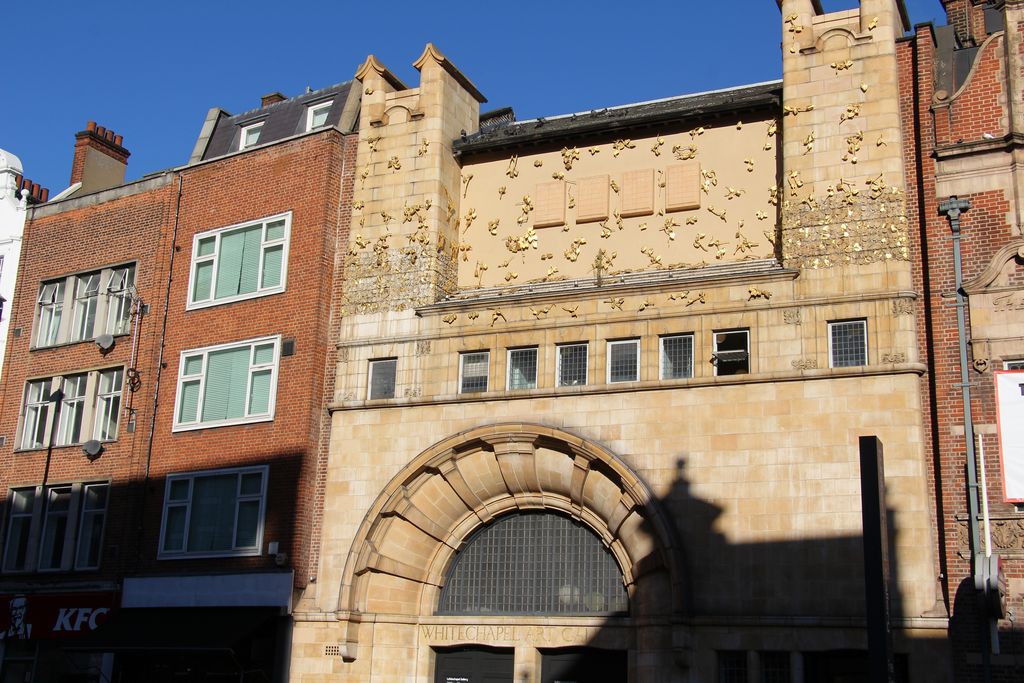
Wollen's retrospective is revealing for another reason. Reconsidering his own writing from 1979, he recognised how much he had emphasised Kahlo's injury and illness—an emphasis he associated with the making of her legend. His memory says the Whitechapel show opened in May; the gallery's dated archive establishes the March opening, a reminder that even a first-person account is not infallible about chronology. [8] [12]
Bakewell's 1993 article describes a further stage, when artists and visitors from different backgrounds were using Kahlo's pictures as models for self-representation. She argues that Kahlo's female and mestiza subjecthood had become important to feminist, Chicana and queer identity politics. This is an account of later reception, supported by Bakewell's research and argument, not evidence that Kahlo herself anticipated all those movements or spoke for every participant in them. [2]
When Recovery Becomes an Icon
Later museum displays have given viewers more material evidence with which to think about Kahlo's choices. The opening of long-stored Casa Azul belongings in 2004 revealed clothing, jewellery, cosmetics and decorated medical devices, and the V&A's 2018 exhibition placed such objects beside her art. These things complicate the separation of appearance from making, yet a surviving possession is not a statement about why it was worn on a particular day. [11]
The Rose Art Museum's 2021 POSE exhibition framed her work through posing, composing, exposing, queering and self-fashioning. In the Netherlands, Museum Cobra described a 2021 presentation through emancipation and intersectionality. These are visible examples of contemporary curatorial language, not terms that can be placed unqualified in Kahlo's own mouth. [14] [16]
Critical response to the V&A show demonstrates why such caution is useful. Natasha Morris asked whether exhibiting an artist's intimate medical supports risks making female suffering a spectacle and whether fashion imagery can crowd out serious attention to painting. Lisa Riedl's German study makes a related point about biographies and fiction that turn injury, fate and exceptional femininity into a familiar script for explaining a woman artist's life. [5] [17]
Neither criticism requires hiding disability or dress. It asks that viewers distinguish the objects and pictures Kahlo made, the experiences they may relate to, and the meanings subsequent audiences have attached to them. A feminist history that restores artistic agency while questioning its own appetite for a simplified icon is more faithful to the evidence than an uncomplicated celebration. [5] [17]
Frequently Asked Questions
The cited evidence contains no statement by Kahlo adopting that movement label. Her work has nevertheless been central to later feminist interpretations; those later arguments should be attributed to their authors rather than retroactively quoted as hers. [2] [7]
No. Dallier's French feminist article appeared in 1976, while the 1982 Whitechapel presentation was a later, prominent pairing of Kahlo and Modotti. Whitechapel's records give its London dates as 26 March–2 May 1982. [7] [8]
The painting brings a suit, short hair, earrings and a song into a deliberately complex self-image. Scholars disagree about how to weigh those signs, and no single painted outfit can establish a comprehensive identity label; the work's dedicated page examines its particular evidence. [6] [10]
Related Reading
Explore Kahlo's self-portraits and fashion for fuller accounts of image-making, or read the object studies of The Two Fridas and the cropped-hair portrait. The reproductive-experience essay treats medical and letter evidence, while international reception follows the wider exhibition history.
Discussion
Use the cited evidence and your own close looking to explain your view. The prompts below are starting points, not fixed interpretations.
Reader Insights
What is the difference between Kahlo's recorded choices and later feminist readings of her work?
How did French, Mexican and London-based artists and curators encounter Kahlo at different moments?
When can an exhibition of clothing and medical objects deepen understanding, and when can it narrow an artist to an icon?
Join the Conversation
Which reading best fits the evidence, and where does uncertainty remain?
References
- Museo Frida Kahlo, Spanish chronology, entries for the 1938 Julien Levy exhibition and early-1940s teaching and women's exhibition. Its separate biography and chronology vary on the precise La Esmeralda appointment year. View source text.
- Liza Bakewell, “Frida Kahlo: A Contemporary Feminist Reading,” Frontiers: A Journal of Women Studies 13, no. 3 (1993), pp. 165–189, especially pp. 167–75 and 181–83. Her interpretations and later-reception account are attributed; medical and private-intention claims are not adopted as independent facts. View source text.
- Victoria and Albert Museum, “Photographing Frida Kahlo,” “Photography and self-portraiture” section. View source text.
- Peter Wollen, “Fridamania,” New Left Review 22 (July–August 2003), publicly readable opening paragraphs and his reflections on the construction of Kahlo's legend. View source text.
- Natasha Morris, review of Frida Kahlo: Making Her Self Up, Courtauld Institute of Art, 2018, discussion of self-fashioning, intimacy, disability and reception. View source text.
- Anna Haynes, “Frida Kahlo: An Artist ‘In Between,’” Thinking Gender: The NEXT Generation, University of Leeds proceedings (2006), especially PDF pp. 6–7 and 11–13. Its close readings are used with attribution, not its erroneous paternal genealogy. View source text.
- Aline Dallier, “L'image de la violence dans l'art des femmes,” Les Cahiers du GRIF 14–15 (1976), printed p. 114. It establishes a dated feminist reading, not reliable birth or object metadata. View source text.
- Whitechapel Gallery, “Through the Decades: Exhibitions 1901–2020,” 1982 Frida Kahlo and Tina Modotti entries, both 26 March–2 May. View source text.
- Nieves Limón Serrano, “Frida Kahlo y el problema de la autoría fotográfica: una aproximación teórica,” Cuadernos Kóre 8 (2013), pp. 215–236, especially pp. 215–16 and 230–36 on pose and photographic self-presentation. View source text.
- Rachel Viné-Krupa, “Le vêtement comme seconde peau: Brève biographie textile de Frida Kahlo,” Jef Klak, 20 November 2017, passages on absent dress and cropped hair. Her claims about an exact self-portrait share, fertility and artistic priority are not treated as established. View source text.
- Victoria and Albert Museum, “Unlocking Frida Kahlo's wardrobe,” 2004 opening of the Casa Azul belongings and 2018 exhibition context. View source text.
- Peter Wollen, “Fridamania,” 2003, first-person account of the 1982 exhibition's comparative purpose and later self-criticism. His remembered May opening differs from the Whitechapel archive. View source text.
- e-ARTEXTE, Frida Kahlo and Tina Modotti, 1982 Whitechapel exhibition catalogue record, authorship, editorial credit and touring dates; the 80-page catalogue is listed for on-site consultation. View source text.
- Rose Art Museum, “Frida Kahlo: POSE,” 2021 exhibition summary and its five curatorial sections. View source text.
- Eva Zetterman, “Frida Kahlo's Abortions: With Reflections from a Gender Perspective on Sexual Education in Mexico,” Konsthistorisk tidskrift 75, no. 4 (2006), pp. 230–243. The gender-history analysis is distinguished from its disputed causal conclusion. View source text.
- Museum Cobra, “Frida Kahlo & Diego Rivera: A Love Revolution,” 2021 Dutch exhibition description and contemporary interpretive language. View source text.
- Lisa Riedl, Frida Kahlo: Zur Repräsentation weiblicher Künstlerschaft, University of Vienna MA thesis (2013), introduction and printed pp. 42–68 on gendered artist biography. View source text.
- Mónica Mayer in conversation with Pablo Helguera, “Weaving Ties of Mutual Understanding, Shaping Publics,” in Museo Universitario Arte Contemporáneo's Mayer catalogue (2016), printed p. 172, artist's recollection of Mexican feminist art and distinct influences. View source text.
Image Credits
- London - Whitechapel Gallery — Fred Romero. CC BY 2.0. Resized and converted to JPEG/sRGB; no crop.
