


 by Tom Gurney
Tom Gurney BSc (Hons) is an art history expert with over 20 years experience
Email: tomgurney1@gmail.com / Phone: +44 7429 011000
Introduction
In Science and Charity, a sick woman lies in a narrow bed while a doctor takes her pulse. At the opposite side, a nun holds a child. The scene is quiet, but its arrangement asks a large question: what can be offered to someone who is ill? Medicine and organised care appear together, neither able to remove the woman's vulnerability from view. Pablo Picasso painted the canvas in Barcelona in 1897, when he was fifteen. It is an ambitious work made for public exhibition by an artist still learning within an academic tradition, not a disguised early Cubist painting.[1][2]
The painting is now in the Museu Picasso Barcelona, where its catalogue number is MPB 110.046. The museum records it as oil on canvas measuring 197.5 by 250 centimetres. Picasso gave it to the museum in 1970. Those facts matter because many reproductions circulate under a short English title without the museum, medium or scale. This is a large, carefully staged picture whose effect would be very different from that of a small image on a screen.[1]
At a Glance
- Made: Barcelona, 1897
- Artist’s age: Fifteen
- Scene: A doctor examines a woman; a nun holds a child
- Collection: Museu Picasso Barcelona, MPB 110.046
Science and Charity in Picasso's career
The highlighted work is dated with the qualifications explained in the sources on this page. The other works are selective points of comparison, not the start or end of a style.
Contents
- What happens in the room
- A fifteen year old painter and a public ambition
- Studies and changes beneath the surface
- The title and the world of the exhibitions
- From family home to museum
- Why the painting still matters
What happens in the room
The woman occupies the centre of the scene but does not command it. She is lying down, enclosed by the bed, while the adults beside her appear upright and active. The doctor has her wrist in his hand and looks at his watch; the nun attends with a child in her arms. The child gives the room a sense of lives extending beyond the patient, though the museum does not identify the child as hers. A restrained reading starts with the positions and gestures that can be seen rather than inventing a family history or a precise medical diagnosis.[1][3]
The doctor and nun are often described as opposites: science on one side, charity on the other. The title encourages that comparison, and the museum explains the doctor as the sign of modern medicine and the nun as a figure of organised assistance. Yet the painting shows them in one room, participating in one visit. It does not stage an argument in which the doctor rejects care or the nun rejects medicine. Picasso gives each a task, while the patient remains the person whose circumstances make both forms of help necessary.[1][2]
The roles can also be read through their distance from the woman. The doctor bends towards her arm, but his gaze and watch make the encounter look measured. The nun, farther from the examination, turns attention towards the household. That contrast is a compositional observation, not evidence that one figure is emotionally cold or the other is the patient's relative. The museum's account of the work situates both within the late nineteenth-century theme of the doctor's visit, a subject legible to viewers of official exhibitions. Its interest lies partly in bringing professional medicine and charitable relief into a single image of poverty.[1][2]
The room reinforces the unequal balance between the patient's frailty and the visitors' purpose. Its shutters are closed. The wall is plain, with brown stains below the window; the Barcelona museum considers those marks more persuasive signs of poverty than the otherwise theatrical setting. A framed picture on the wall adds a more elaborate note. The museum points out that the frame replaced a crucifix in early sketches and sits uneasily against the room's austerity. Details like these make the scene less seamless than a quick first glance suggests. The room is meant to be believable, but it is also a constructed setting in a painting made for public judgment.[1]
Picasso has organised the figures so that a viewer can read the subject quickly: patient, doctor, nun, child. That clarity was useful in a competitive exhibition where a picture might be seen among many others. At the same time, it can make the woman seem an occasion for the encounter between the two systems named in the title. Her condition is not explained; the adults around her perform different responses. The work's seriousness does not depend on our knowing whether she will recover, and the available catalogue evidence gives no basis for claiming that Picasso intended to depict one named epidemic.[1][2]
A fifteen year old painter and a public ambition
Picasso began the painting early in 1897. He had moved with his family to Barcelona in 1895 and entered the city's La Llotja art school, where he learned drawing and painting through academic exercises. He was not discovering how to put a figure on canvas by instinct alone. The Paris Picasso museum describes a course of formal training, while the Barcelona museum's surviving studies show that this particular composition was prepared and revised. Science and Charity belongs to that training, but it also exceeds a routine classroom exercise in size and public ambition.[1][4]
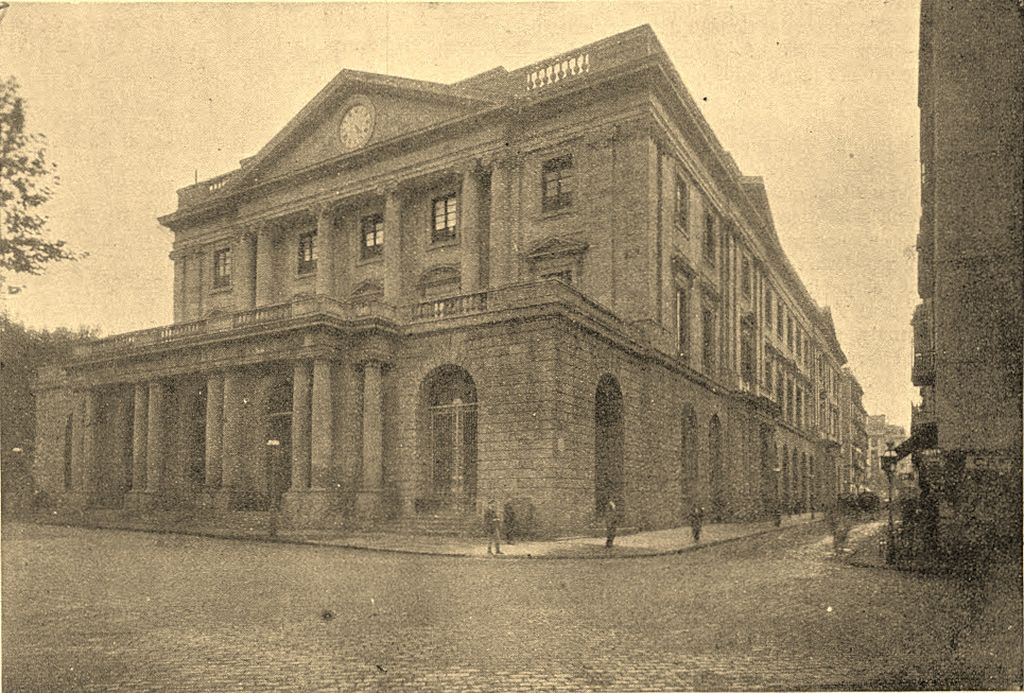
The subject was chosen with an exhibition in mind. According to the Barcelona museum, Picasso's father, José Ruiz Blasco, helped choose a theme he thought would appeal to a jury. Paintings about clinical care and social need were fashionable in official salons. He posed for the doctor and arranged a separate studio where his son could work. That parental involvement should neither be concealed nor made to stand in for the young painter's work. José supplied a model, a direction and practical support; Picasso had to resolve the figures, the room and a canvas almost two and a half metres wide.[1][5]
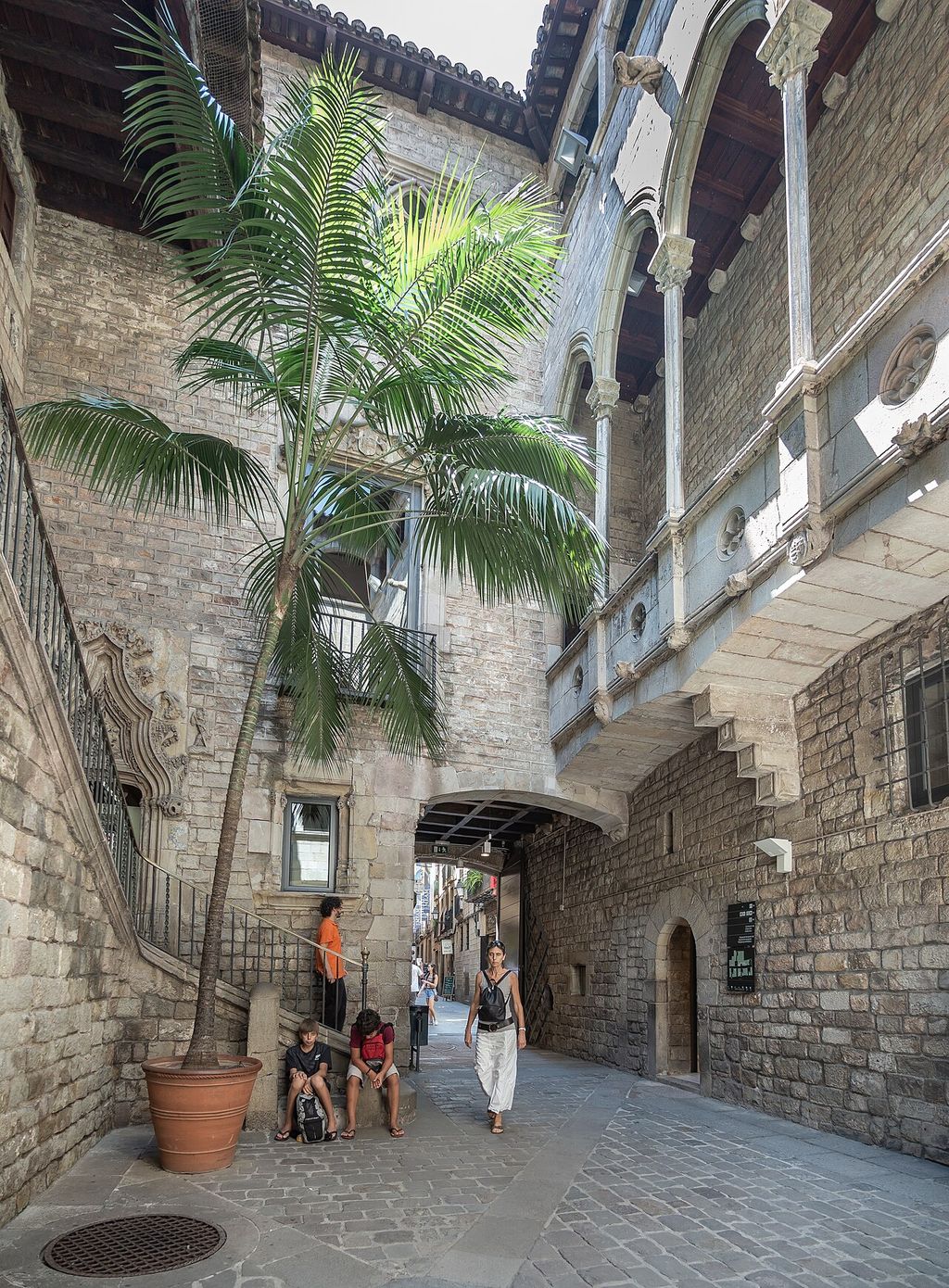
The studio was on Carrer de la Plata, between the family home and the school. Barcelona's museum records the place, though its virtual itinerary notes that recollections differ about whether the studio was at number 4 or 5. The important point is not an uncertain house number but the effort committed to the project: a teenager had a dedicated working space, an adult model close to hand and a painting intended to enter the Spanish art world. The result was a bid for recognition through a language its intended audience already knew.[6]
That language is often called social realism. In the museum's account, scenes of poverty, illness and the visit of a doctor were familiar subjects in the 1880s and 1890s. They allowed artists to display skill at arranging a narrative while addressing the social concerns of relatively well-off viewers. The genre did not simply document a hospital or a home. It selected a moment, presented legible social roles, and invited sympathy from the exhibition audience. Science and Charity participates in that convention, which is why its subject cannot be explained solely as an expression of Picasso's private experiences.[2]
Picasso's younger sister Conchita had died in 1895, and the Paris museum proposes that the memory may have lent personal resonance to a scene of illness. It is reasonable to mention that context as the museum does; it is not reasonable to turn it into proof that the painted woman is Conchita, that the child represents a particular family member, or that the picture records the cause of a sibling's death. The museum's two strands of explanation—an exhibition-oriented subject encouraged by José and a possible personal echo—can coexist without our pretending to know the fifteen-year-old artist's complete motive.[4]
Watch: Pablo Picasso
Explore Picasso through five videos from museums, broadcasters and art educators.
Picasso’s Guernica: Great Art Explained
Explore the composition and historical setting of Picasso’s best-known response to war.
Watch on YouTubeStudies and changes beneath the surface
The final picture can look settled, but its preparation tells a different story. The Barcelona museum knows nine small sketches related to Science and Charity and holds six of them. They include works in different materials, not a set of identical reduced versions of the finished oil. Some explore the arrangement of the people and the room. The museum notes a crucifix in early studies where the finished painting has a framed image. Looking across the studies is therefore a way to see choices being made, not to search for one perfect miniature blueprint.[1][7]
Picasso continued changing the composition as he painted. The museum says he applied oil directly to the canvas without a preliminary drawing beneath every passage, shifting the positions and gestures of figures to reach the final effect. Technical examination later made some of those revisions visible. In its 2010–11 display, the museum used X-rays to show pentimenti—earlier decisions that the painter changed—and presented the work with its studies and with paintings by contemporaries. The display was not merely a celebration of youthful skill. It asked how a young artist worked within a familiar genre and where his first solutions proved insufficient.[1][2][8]
The colours also reward a slower look. A reproduction may make the room appear simply brown and grey. Museum pigment analysis found that Picasso used sixteen commercial oil colours, working them into a comparatively sober range. That is a useful warning against assuming a quiet-looking palette was made with only a handful of paints. The museum's study of paint layers describes careful superposition to produce tones and textures. We need not turn the pigment count into a claim that every passage is technically exceptional; it shows that the restricted appearance was constructed through varied materials and adjustments.[2][8]
The doctor's face offers another point of concentration. The Barcelona catalogue says Picasso painted it alla prima, directly in the fresh paint, and relates its assured likeness to the portraits he had already made of his father. Much of the scene depends on obvious signs—bed, wrist, watch, religious dress—but the face is particular to a known sitter. The young artist could work with the general conventions of the doctor's visit and still make an individual presence within them. That combination helps explain why the painting is interesting beyond its status as a prodigy's large school picture.[1]
The studies and technical evidence complicate two easy stories. The first is that Picasso needed only instinct: the record shows planning and revision. The second is that academic work was necessarily mechanical: within a conventional subject, he experimented with positions, objects, colour and paint handling. The result can be judged both for its evident discipline and for its awkwardness. The Barcelona museum itself notes the artificial quality of parts of the décor and gestures. A serious account of the work does not have to pretend that every decision succeeded because its maker later became famous.[1][2]
The title and the world of the exhibitions
Science and Charity joined a public conversation about medicine, assistance and poverty. The title does much of the conceptual work. It names two ways that late nineteenth-century society might respond to sickness, and the picture gives each a recognisable representative. The painting does not, however, document the quality of medical care in Barcelona in 1897 or prove that physicians of the time lacked compassion. Such broader claims would require medical and social-historical evidence beyond the canvas and its museum record. The picture is a salon image of a doctor's visit, not a clinical report.[1][2]
Its social realism is likewise a convention rather than a guarantee of unfiltered truth. The stained wall and spare furnishings signal hardship. The clothes, positions and large scale make the scene readable from a distance. The doctor's watch is an especially efficient sign of observation and measurement, while the nun's clothing makes her institution legible without an explanatory label. Those devices speak to an audience already accustomed to hospital pictures. The museum's 2010 exhibition compared the painting with other works about doctors' visits, locating Picasso within a wider fashion instead of treating the subject as his invention.[1][8]
The painting was shown at the 1897 General Fine Arts Exposition in Madrid and received one of 125 honourable mentions. That is an achievement for a fifteen-year-old exhibiting a major canvas, but it is not the same as winning the exhibition's highest prize. The Paris Picasso museum also reports a later gold medal at a provincial exhibition in Málaga. Keeping the events distinct avoids the common confusion in which an honourable mention in Madrid becomes a gold medal there. The exhibition record shows that this work did what it was partly designed to do: it gave Picasso public visibility in the academic system.[1][4]
The painting's later place in Picasso's career can tempt a backwards reading. Because he went on to challenge academic naturalism, the 1897 canvas is sometimes presented only as something he had to escape. Yet the work was not made as a promise of Cubism. Its doctor, patient and nun were intended to be recognisable; its scale and title suited an exhibition culture that rewarded narrative clarity. What changed later was not that Picasso suddenly acquired the ability to draw, but that he pursued different problems and audiences. This canvas is evidence of what he could already do, and of the conventions he had learned well enough to leave behind.[1][4]
From family home to museum
Picasso retained Science and Charity for decades before giving it to the Barcelona museum in 1970. The museum describes its arrival in poor condition: it had been attached directly to a wall in the family home, without a stretcher. Conservation work was undertaken in 1970 so it could be shown. Later examination found that materials from that intervention had aged and affected the appearance of paint and varnish. The present canvas is not simply an untouched window onto an 1897 surface; its survival and display are part of its history.[9][10]
The museum studied the painting scientifically in 2008, and the results informed the 2010–11 exhibition devoted to it. A further conservation campaign in 2017–18 aimed chiefly to restore physical stability rather than to produce a cosmetically new picture. The museum subsequently installed a protective microclimate frame. These actions are worth mentioning because they explain why X-rays, close photography and paint analysis can tell us more than a photograph of the finished scene alone. They also show why a painting nearly two and a half metres wide needs continuing care.[2][9][10]
The museum's collection record lists later exhibitions in Madrid, New York and Paris as well as Barcelona. Such appearances testify to the work's importance for the history of Picasso's training. They do not prove that viewers in 1897 saw it as a masterpiece in the modern sense. Its reception has changed as Picasso's career and art-historical reputation changed. The safer claim is that the object was publicly recognised in its own year, preserved by the artist, and subsequently studied and displayed as a key work of his youth.[1]
Why the painting still matters
The interest of Science and Charity is not exhausted by the fact that a famous artist painted it young. It shows Picasso building a large narrative from the conventions available to him, with help from his father and with an eye on an exhibition jury. It also shows him revising that narrative: studies and X-rays reveal alternative positions and details, while pigment research finds a varied palette beneath a subdued effect. The picture is both a public bid for recognition and a working record of decisions.[1][2]
Its apparent moral opposition remains productive precisely because it is not resolved for us. A watch, a hand on a wrist, a nun, a child and a bedridden woman are enough to raise questions about measurement, assistance and vulnerability. They are not enough to identify a disease, specify the woman's fate or certify the artist's private philosophy of medicine. The best way to read the painting is to look closely at what Picasso made, then use the Barcelona museum's object record and research to separate documented history from appealing speculation.[1][2]
Discussion
Use the evidence and your own close looking to explain your view. These are editorial prompts, not reader comments.
Reader Insights
How do the doctor, nun and child direct your eye around the bed?
What does Picasso’s academic training explain that a prodigy story overlooks?
Does the composition favour one form of care, or hold several together?
Join the Conversation
Which reading best fits the evidence?
References
- Museu Picasso Barcelona, Science and Charity, MPB 110.046; Spanish collection record.
- Museu Picasso Barcelona, Science and Charity Revealed, 2010–11 exhibition; Catalan exhibition account.
- Museu Picasso Barcelona, 2020 account of the painting and protective frame.
- Musée national Picasso-Paris, “La formation de Picasso”.
- Museu Picasso Barcelona, José Ruiz's studio support.
- Museu Picasso Barcelona, virtual Barcelona itinerary.
- Museu Picasso Barcelona, 2014 display of preparatory studies.
- Museu Picasso Barcelona, Malén Gual on the 2010 research exhibition.
- Museu Picasso Barcelona, live restoration of Science and Charity.
- Museu Picasso Barcelona, Spanish report on the microclimate frame.
Image Credits
- Edgardo W. Olivera from Montevideo, Uruguay. CC BY 2.0. Source: Wikimedia Commons. Resized to 1024px; no crop. Source record. Licence.
- Creator as listed on source page. Public domain. Source: Wikimedia Commons (File:Façana de la Plaça del Palau (bibliotecammb10916).jpg). 1024px proportional sRGB JPG derivative; no crop. Source record. Licence.

.jpg)