


 by Tom Gurney
Tom Gurney BSc (Hons) is an art history expert with over 20 years experience
Email: tomgurney1@gmail.com / Phone: +44 7429 011000
Introduction
Animals appear in Picasso’s work so often that it is tempting to treat them as a private alphabet: bull for one idea, dove for another, owl for a third. The works are less orderly than that. A cat seizes a bird in a large painting made on the eve of the Second World War; a few curved marks can suggest a camel on a sheet of paper; an ordinary basket and pots become the body of a goat. These are not simply three variations on “Picasso’s animals.” Each belongs to a different moment, material and way of looking. [6]
The animal subjects are also a useful way to see what Picasso could do with a medium. A drawn line follows an outline; an aquatint print is worked on a plate and later printed on paper; a ceramic has volume and a surface that can be painted or incised; a found-object sculpture can transform things that once had entirely different uses. Sometimes Picasso observed a living creature. Sometimes he drew on fable, a book project, the bullring or an image he had made before. The same animal can therefore appear as a study, a character, an emblem or a construction without carrying a single meaning through them all. [6]
At a Glance
- Subjects: Bulls, doves, cats, goats, owls and many other creatures
- Media: Drawings, prints, paintings, sculpture and ceramics
- How to compare: Identify the exact object, date and material before interpreting a motif
Contents
- Looking at animals before the famous symbols
- A bestiary that was not published with Picasso’s pictures
- Buffon: animals made through printmaking
- Cat and Bird (1939): Cat Seizing a Bird
- The bull, the horse and the problem of reducing a shape
- The 1946 Antibes Goat
- A goat made of things
- Owls, ceramics and living companions
- Pigeons, doves and the danger of one easy meaning
- Roosters and the limits of a title
This guide follows those changes through selected documented works. It also helps readers distinguish an original drawing or print from the much later reproductions of Picasso’s animal designs. That distinction matters particularly for the one-line birds and mammals often advertised online as “1907 serigraphs.” A modern screenprint made after a drawing is not a serigraph made by Picasso in 1907. [6]
Looking at animals before the famous symbols
Picasso’s interest in animals began before the post-war doves and the familiar series of bull prints. The Museu Picasso in Barcelona records early animal drawings, including Goats of 1898 and Bullfight and Six Studies of Pigeons[8] of 1892 (MPB 110.869). These records do not make every later goat, bull or dove a return to one childhood picture. They show, more modestly and more usefully, that Picasso learned to observe and draw living forms while still young. [1] [6]
An especially small Barcelona sheet, Legs of a Horse (MPB 111.072), makes the point more clearly than a general claim about youthful talent. It dates from 1896, measures only 10.5 by 7.4 centimetres and uses Conté crayon on paper. The subject is not a horse in a dramatic setting but a portion of its body. The legs ask the draughtsman to notice joints, direction and weight before trying to convey the whole animal. That close study differs from an energetic bullfight scene and from the single-line horse design often reproduced as a decorative print. The subject is continuous; what Picasso wanted a drawing to do was not. [1] [6]
Barcelona also holds Studies of a Cat (MPB 111.524R), a small Madrid sheet of 1898 made with pen, ink and Conté crayon. Three postures occupy the page: an upper cat twists its body, a second sits upright with its back to us, and a lighter third study turns below them. The sheet asks us to follow a moving animal through successive attempts, not to decode a finished emblem of “the cat.” Stronger lines give weight to two figures, while the paler one retains the visible tentativeness of study. This is quite different from the aggressive encounter of Cat Seizing a Bird four decades later. It is different, too, from the free-standing cat-head drawing widely reproduced online. Similar animal names can mask differences of age, purpose and physical form; the Barcelona sheet makes those differences visible within a single page. [1] [6]
Animals offered quite different kinds of movement. A horse in the ring is part of an event unfolding among people; a pigeon on a ledge may be observed almost at rest; a cat or rooster can be described by a silhouette that remains legible even when Picasso alters its proportions. The Spanish-language Museo Picasso Málaga account of horses in his art follows them through the circus, the bullring and Guernica. The continuity lies in the subject’s capacity to be reworked, not in an unchanged meaning for the horse. [1] [6]
By the time Picasso lived and worked in France, the animal could also be part of a conversation with books and other artists. His association with the poet Guillaume Apollinaire led to a project for a bestiary, while later his engagement with the naturalist Buffon produced a very different set of prints. Both involve animals and texts. Their dates, physical objects and final published forms, however, must be kept apart. [1] [6]
Boris Friedewald's Picasso's Animals gives Picasso's early interest in animals a domestic setting. In the opening chapter available in the publisher's preview, he describes pigeons around the family's Málaga home and those kept by Picasso's father, José Ruiz Blasco, after the family moved to La Coruña. Friedewald also recounts a schoolroom story in which the young Picasso repeatedly drew a pigeon brought by his father. It is a transmitted anecdote, not a surviving record of every moment of Picasso's childhood. The 1892 sheet is firmer object evidence: it puts dove studies beside a bullfight subject on paper. Neither source makes the 1957 pigeon paintings an inevitable return to a boyhood memory. [1] [6]
The dogs before Lump
The dogs belong to this early account as well as to the familiar photographs of Picasso and Lump in later life. The Museu Picasso in Barcelona holds Cliper, the Artist’s Dog (MPB 110.083), painted at A Coruña in 1895. At 21.7 by 33 centimetres, the oil on canvas mounted on wood is a small, specific portrait of a named animal, rather than a generic design for a bestiary. It was given to the museum by Picasso in 1970. The painting establishes an early dog subject without asking a later pet story to stand in for it. [1] [6]
John Richardson’s account of Picasso’s Paris years names three dogs around the Bateau-Lavoir period: Gat, Feo and Frika. The first volume of his biography reproduces the drawings Feo and Gat (Paris, 1904–05) and Frika, Gat malade (Paris, 1906). Those drawings make the dogs part of Picasso’s work on paper, not merely companions remembered by later witnesses. Accounts differ over which dogs came from Barcelona and which were acquired in Montmartre, so the arrival sequence should remain unsettled here. What the named works show more securely is that Picasso returned to dogs in different moments and media long before Lump entered the story. [1] [6]
A bestiary that was not published with Picasso’s pictures
The Musée national Picasso-Paris preserves Sketches for a Project to Illustrate Apollinaire’s Bestiary of Orpheus, catalogued as MP1989-1. It is an ink drawing on paper, dated June 1907 and made on the back of a letter from Fernande Olivier dated 29 June. The 26 by 20.5 centimetre sheet makes the preparatory setting tangible: this was a working surface, not a separate large picture for every animal. The first element of the title, “sketches,” is as important as the named literary project. Picasso was exploring how creatures could be made from a few economical strokes. [2] [3]
The book Le Bestiaire ou Cortège d’Orphée eventually appeared in 1911 with wood engravings by Raoul Dufy. The Metropolitan Museum of Art’s book record credits Dufy, not Picasso, for those illustrations. Picasso’s 1907 drawings therefore belong to an unrealised illustration project; they are not plates in the finished 1911 book. Describing a camel, penguin or butterfly as though Picasso illustrated the published volume mistakes an idea for the object readers can actually consult. [2] [3]
Several small animal drawings associated with this early interest have been isolated, enlarged and sold much later as screenprint reproductions. The Kunstmuseum Pablo Picasso Münster shop currently groups designs labelled camel, butterfly, horse, mouse, sparrow, flamingo, grasshopper, penguin and squirrel in such a product range. Its description says the original figures appear together in a 1907 sketchbook, while the shop images present them as individual designs. The shop’s account is a useful warning about reproduction, but it is not an inventory-numbered catalogue of each original animal. Paris’s documented MP1989-1 sheet should not be declared the exact source of every modern print merely because it too belongs to the Apollinaire project. The Paris museum also catalogues a distinct 1907 notebook, MP1860, with cat studies. A date and an animal name do not collapse these different sheets into one. [2] [3]
What does a reader gain from the tiny designs even when an exact original sheet is not yet known? They show the graphic problem Picasso was pursuing: how few marks can keep a creature recognizable. A camel’s back and neck can be conveyed by a continuous contour; a bird may be distinguished by the position of its head, wing or feet. The resulting lightness is easy to enjoy. It is also easy for a later commercial print to obscure the scale, neighbouring marks and working context of the small drawings by presenting one enlarged figure, a printed signature and a decorative border. The sensible question is not whether the reproduced animal is attractive; it is what physical Picasso object the reproduction derives from, and who made the reproduction. [2] [3]
The camel line drawing
The camel offers a particularly clear instance. Its neck bends forward from a small head, and the line rises to a two-humped back before curling towards the legs. A loop below the body helps the figure read as an animal rather than a diagram of humps. Münster sells this central design as a modern Le Chameau screenprint, isolated and framed. That product helps trace the design's later circulation; it cannot establish that the original drawing was itself a 60-by-50-centimetre screenprint, or that a signature visible in a cropped digital reproduction was written on the physical print by Picasso. [2] [3]
The penguin line drawing
The penguin works by an almost opposite economy. One continuous outer stroke gives it a tall, tapering body; a short curved line inside creates a wing, and a small loop near the head locates an eye above the beak. Münster reproduces this figure as Le Pingouin. A penguin can consequently be recognized without naturalistic feathers, webbed feet or a landscape. The artistic interest lies in the line’s ability to suggest both body and posture. The historical limit is equally plain: the source drawing’s exact Paris inventory number has not been established from the shop page. “1907” on a product title describes the design’s proposed origin, not the production date of the screenprint on sale. [2] [3]
Online descriptions sometimes call this figure a “serigraph completed by Picasso in 1907.” That phrasing confuses the proposed date of the source design with the production of a much later screenprint. The Paris museum's secure 1907 bestiary evidence is of ink studies; it does not give the reproduced penguin an individual screenprint edition made by Picasso. Until the exact original is identified, the line design and its modern circulation can be explained without supplying a false print history. [2] [3]
The owl line drawing
An owl design from the same modern product family relies less on a standing contour and more on a rounded, almost mask-like enclosure. Two circular eyes are set close together under an upper arc; a broad curved stroke folds into the body. Its position on the page and its flatness are unlike the three-dimensional 1947 ceramic owl discussed below. Münster reproduces the line figure as Le Hibou, yet the product record does not settle which surviving original sheet holds it. This difference between a recognizable reproduction and a catalogued original is not pedantry. It is how a reader avoids transferring the date, medium or ownership of a clay owl to a separate drawing. [2] [3]
There is also a further correction to make about 1907. The Paris museum catalogues an Eagle and a Chick from May to July of that year as woodcut impressions pulled by Picasso himself. In each case the print was made through a carved wood matrix, not by the later screenprinting process used for the modern line-animal merchandise. It would be wrong to conclude that Picasso made no animal prints in 1907. The accurate distinction is between those specifically documented woodcuts, the ink studies connected with Apollinaire’s unrealised bestiary commission, and much later products that reproduce selected designs. [2] [3]
The horse line drawing
The reproduced Le Cheval design makes the difference between Picasso's horses particularly clear. A tiny head tilts above an abbreviated body; a circular turn supplies the hindquarter, and the open legs leave the viewer to complete the animal. Münster sells that motif as a later screenprint. Barcelona's 1896 Legs of a Horse, by contrast, examines joints and weight, while the horse in Guernica belongs to a painted scene of violence. Neither work authenticates the one-line design as an artist-pulled print. The separate Boy Leading a Horse page concerns a specific canvas; the bullfighting guide follows horses in the ring. Their shared species name should not merge their dates, materials or meanings. [2] [3] [6] [8]
The butterfly line drawing
The butterfly is built almost entirely from opposing curves. One side folds inward in a loop, while the other opens into longer lobes; a dark mark at the centre and short lines above it give the wing shapes a body and antennae. A modern Münster Le Papillon screenprint presents this design as a self-contained picture. That presentation does not establish whether the word papillon was written beside the figure on Picasso's working sheet, or whether the original was ever meant to be viewed at the scale of a wall print. [2] [3]
The Münster shop says its one-line animal reproductions derive from a sketchbook used in late June and early July 1907, with several designs close together rather than isolated as they appear in the products. That account explains the later print's generous blank background, but it does not supply an accession number for this exact butterfly drawing. Nor does the apparent continuity of a reproduced line prove the old site's claim that Picasso never lifted his implement from the paper. The identifiable object offered today is a later screenprint of the design, not an original print pulled by Picasso in 1907. [2] [3]
The flamingo line drawing
The flamingo relies on a doubled, bending neck and one long descending leg; its rounded body needs no feathers, pond or horizon to be read as a wading bird. Münster's later Le flamand rose screenprint isolates this spare figure as a wall print. In the small design, the curves bring the head almost back toward the body, making the neck carry most of the bird's character. A modern label identifies the subject and helps trace a reproduced design; it does not certify the date, dimensions or present holder of the original drawing. The point is the economy of the drawn bird, not a claim that Picasso pulled the screenprint sold today. [2] [3]
The sparrow line drawing
The sparrow answers the same problem differently. A curved back, small hooked head and angular body are balanced on two sketchy feet, producing a compact bird rather than the flamingo's long, looping silhouette. Münster's Le moineau screenprint also extracts its figure from a context the shop describes as a crowded sketchbook page. Enlarged and isolated, the design can look like a finished emblem. Its likely working-page setting asks a different question: how swiftly can a few marks establish head, wing and stance? The reproduced sparrow can be discussed as this recognizable design, but its exact original sheet has not been independently matched to a numbered museum object. [2] [3]
The mouse line drawing
The small mouse is less immediately legible than the horse above it. Two short loops suggest a projecting head, while a larger descending curve turns the figure into a body and tail. Münster sells the central motif as a modern La souris screenprint; the older reproduction carries the same shape. It is especially easy to mistake this enlarged, framed figure for an individual print by Picasso because the design depends on so few marks. What is established is the reproduction-family match. The original drawing's accession, size and exact position among any neighbouring studies remain unverified; the screenprint's dimensions and process belong to the later product. [2] [3]
The squirrel line drawing
The squirrel is more emphatic about one feature than the horse is about any. A small round head joins a sloping body, but a huge inward-curling tail occupies much of the design. That exaggerated spiral makes the animal legible even though the paws and fur are almost absent. The central figure appears both in an earlier online image and in Münster's later L'Écureuil screenprint. The comparison tells us which design was reproduced; it does not tell us whether the tail was drawn in a single uninterrupted movement or whether the isolated squirrel was originally one detail among many on a working sheet. A small original drawing and a large framed reproduction ask viewers to attend to different things: the former to a provisional graphic experiment, the latter to an extracted emblem. [2] [3]
The grasshopper line drawing
The grasshopper is quieter still. A nearly horizontal stroke crosses a sharp oblique mark; small loops at one end help turn what could be abstract shorthand into an insect. An older thumbnail presents it already framed, and its central figure matches Münster's modern La Sauterelle screenprint. That is a better explanation of this particular image's circulation than an identification based only on its French title. Picasso's Buffon book includes another La Sauterelle, but the catalogued print is a more elaborate composition with surrounding vegetation. The two works should not share one object's date, technique or publication history simply because both represent a grasshopper. The source drawing behind the one-line figure still needs an independently catalogued match. [2] [3]
Watch: Pablo Picasso
Explore Picasso through five videos from museums, broadcasters and art educators.
Picasso’s Guernica: Great Art Explained
Explore the composition and historical setting of Picasso’s best-known response to war.
Watch on YouTubeBuffon: animals made through printmaking
Picasso’s later encounter with a natural-history text had a different material outcome. In 1936 he made animal plates for an edition of writings by the French naturalist Georges-Louis Leclerc, Comte de Buffon. The volume, Histoire naturelle, was published in 1942. The British Museum describes 31 animal prints created in 1936 for the later book. The dates belong to different stages: making plates and publishing the collection. Calling each image simply a “1942 drawing” or a “1936 book” misses that interval. [4]
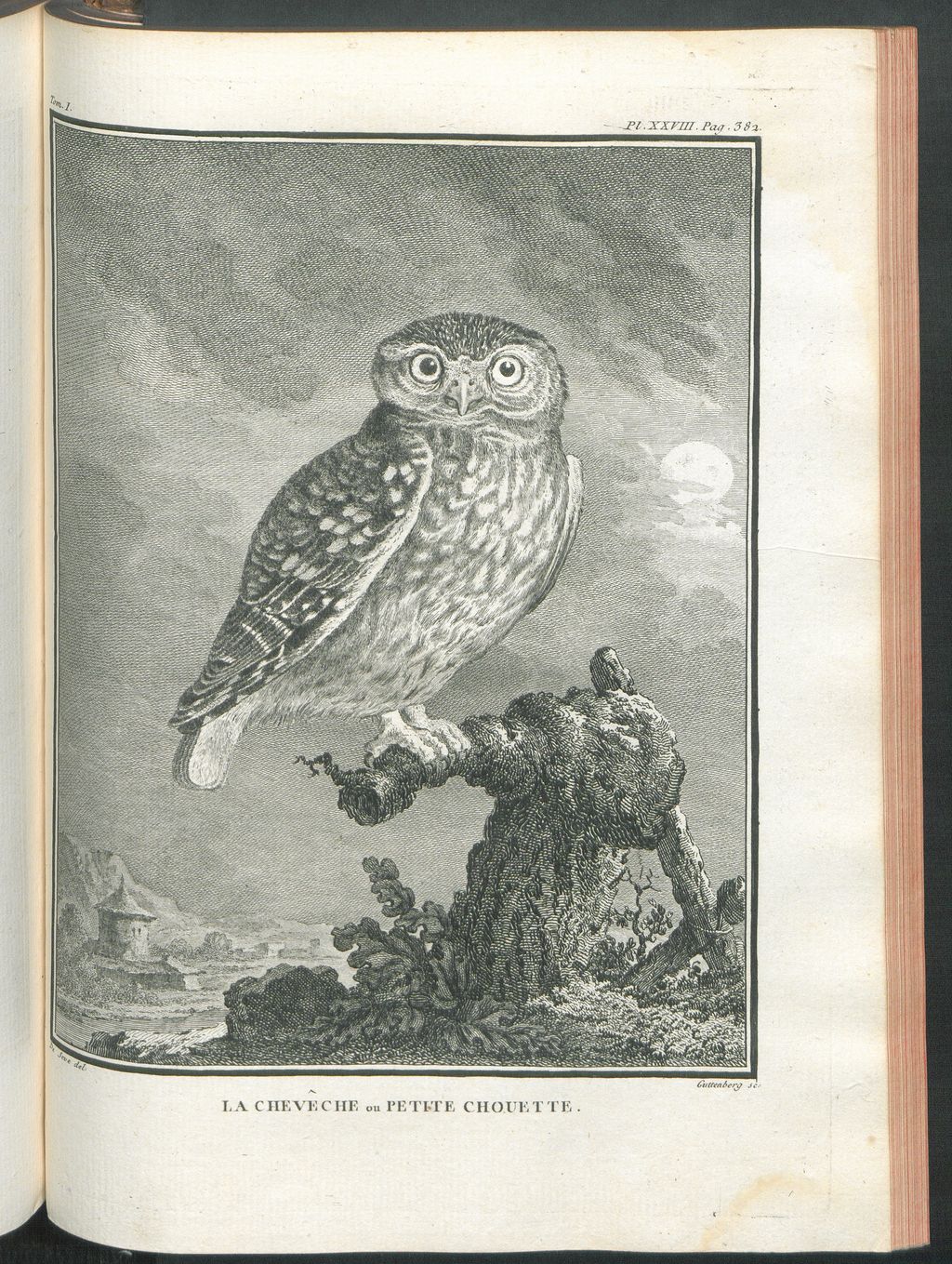
Picasso used print processes including sugar-lift aquatint, which can preserve the freedom of a brush-like mark while producing an inked image from a prepared plate. The British Museum connects his learning of the process with Roger Lacourière. The National Museum of Western Art in Tokyo distinguishes the techniques in its Japanese and English catalogue record. These institutional accounts are more secure guides to medium than the look of a small digital image: dark marks on white paper may be a drawing, an impression of a print, or a reproduction of either. [4]
The ostrich in the Buffon prints
The ostrich is a particularly good example of how a precise object record changes an account. MoMA identifies The Ostrich (L’Autruche) as plate XVI of the illustrated book, an aquatint and drypoint made in 1936 and published in 1942. Its impression, number 976.1964.16, was printed by Atelier Roger Lacourière in Paris. The bird’s body is made of looping, dense marks; an improbably straight neck rises to a small head, while long, angled legs make it seem to hurry across the page. Grass, other small marks and the plate’s boundary surround it in the full print. A familiar isolated ostrich image is a crop of this same composition. Cropping preserves the central bird but removes some of the context of the printed sheet. It cannot tell us which physical impression was photographed, or confer permission to republish the reproduction. [4]
The cat illustrates the opposite identification result. Buffalo AKG Art Museum owns an impression of the 1936 Le Chat from the Buffon portfolio, printed and published with the book in 1942. It describes that object as etching and aquatint; the image is a densely worked, frontal cat. A separate, spare drawing of a cat’s angular profile is not that Buffon plate simply because both are called “Picasso’s Cat.” The distinctive visual structure matters more than the shared animal name. The grasshopper is similar: Buffalo AKG’s La Sauterelle belongs to the elaborated Buffon set, while a tiny framed one-line grasshopper reproduction belongs to a different visual family. Until its source drawing is identified, the later object should not inherit the Buffon print’s date or medium. [4]
The dated pig drawing circulating in reproduction raises a further problem. Its sparse outline and visible 1952-looking notation do not fit an entirely different drawing, Pigs, held by the Courtauld Gallery. The Kunstmuseum Pablo Picasso Münster shop sells a modern screenprint of the same outline as Le petit cochon; this establishes a reproduced design, not the original sheet's medium, date or holder. Its general product description connects one-line animal drawings to a 1907 sketchbook, while the notation visible in this particular image appears to include “52”. That tension cannot be settled by a merchandise description. The Courtauld dates its Pigs broadly to 1904–08 and identifies its medium as oiled charcoal on wove paper. It associates the drawing with Picasso’s 1906 stay in Gósol, correspondence with Gertrude Stein and a preparatory relationship to The Swineherd. Those are details of the Courtauld sheet and its documented history, not facts about every pig image bearing Picasso’s name. A page that uses the reproduced outline and the earlier work’s biographical account would create a nonexistent hybrid. The original holder of the outline design has not been established. It is more informative to explain the mismatch than to assert a medium, exact date or provenance the image cannot support. [4] [3] [5]
Picasso returned to Buffon in another form that is easy to mistake for the earlier portfolio. 40 dessins de Picasso en marge du Buffon appeared in 1957. MoMA dates its drawings to 1954–57 and describes the published book as collotype reproductions of drawings plus a supplementary linocut; the Musée national Picasso-Paris also holds a copy. Collotype is a reproductive printing process, so a page bearing one of those drawings is not automatically an original ink drawing or a 1936 aquatint. Nor is a cat from the later book necessarily the same cat as the 1942 Le Chat. The two publications are best approached as separate chapters in Picasso’s long engagement with animal images and printed books: the earlier project consists of original plates made for a natural-history edition, while the later one publishes drawings reproduced by another process. [4]
For a reader, the important shift from the 1907 studies is not simply that more years had passed. In a bestiary sketch, a creature can emerge from a line made almost in passing. In an aquatint, Picasso works through a reproducible matrix, testing how mark, tone and printed surface describe an animal. The resulting book joins image to a naturalist’s text even though Picasso’s beasts may not behave like scientific specimens. The publication context should be part of the interpretation rather than a footnote to a decorative motif. [4]
Cat and Bird (1939): Cat Seizing a Bird
Some of Picasso’s animal pictures resist the cheerful associations later attached to the dove. Cat Seizing a Bird is an oil painting dated 22 April 1939. The Musée national Picasso-Paris holds it as MP178 and records the canvas at 81 by 100 centimetres, with the date inscribed on it. Its cat is not a neat profile or household companion. The animal grips a bird, making the contact between predator and prey the centre of the painting’s drama. [5]
That precise date matters. The painting followed the Spanish Civil War and preceded the outbreak of the Second World War. The Paris museum reads the image in relation to the political violence of the period. That interpretation deserves attention, but it is not a licence to claim that Picasso assigned a fixed nation or political leader to each animal. The painting can embody violence without becoming a coded diagram. It also differs from another 1939 cat-and-bird version and related drawings in the museum’s account. A date, medium and accession number are safeguards against mixing those works together. [5]
The inscription “22.4.39” on the painting is unusually helpful because another cat-and-bird version and related drawings belong to the same year. It lets the viewer connect the violent scene to a particular canvas rather than to an interchangeable image of a cat. The museum's accession number, MP178, confirms which work its account interprets. Those identifiers do not settle the work's every possible meaning, but they prevent an interpretation made for one composition from being carried over to another merely because the titles are similar. [5]
This 1939 picture also shows why an animal guide needs more than an all-purpose symbolism paragraph. A cat in a 1907 notebook study, a Le Chat Buffon print and this biting cat are not three instances of a stable “cat means aggression” sign. They are separate objects, with separate techniques and situations. The bird in the cat’s jaws is not interchangeable with a later bird of peace. [5]
The bull, the horse and the problem of reducing a shape
Picasso’s Bull lithographs, developed from late 1945 into January 1946, are famous partly because they show an image changing across eleven states. In the National Gallery of Art’s fifth-state impression, recognizable anatomy has begun to yield to a more geometric arrangement. MoMA holds a seventh-state impression. Looking across the sequence shows not a single stroke of instant inspiration but a series of decisions made through lithography. The familiar story that Picasso “reduced a bull to one line” needs the evidence of the sequence, its states and its medium to be more than a slogan. [7]
The bull lithographs and the 18 January studies
The National Gallery of Art catalogues the sequence's detailed first state as a 1945 lithograph on Arches paper, accession 1982.12.1. Its bull stands in profile facing right, its heavy body worked in dense black strokes, with an alert eye and two horns; later states alter those marks rather than merely tracing the same silhouette. A cropped image of this first-state composition has circulated under the broad title Bull, but a crop does not identify which physical impression was photographed. A separate sheet of several small bulls inscribed “18 janvier 46” is not one of the eleven lithographic states; it belongs to a different bull-study problem and needs its own object record. Recognising the first state should sharpen, not flatten, the distinction between a print sequence and Picasso's other bull drawings. [7]
The date on the many-bull sheet matters. Irving Lavin's scholarly table of the bull sequence places its final lithographic state on 17 January 1946, then lists two drawing entries dated the following day. The little figures in such studies differ from the single large animal printed state by state: horns, backs, legs and dark areas are tried in several combinations on one surface. A cluster of small experiments does not itself constitute twelve or eighteen sequential print states. Without a secure match to an original object, the sheet's medium, dimensions and present location cannot be borrowed from one of Lavin's catalogue cross-references. What can be said is more useful than a forced identification: Picasso's reduction of a bull was not confined to the famous stone, and drawing continued alongside and after the printed sequence. [7]
The first state is therefore more than a “before” picture on the way to a celebrated sparse finale. Its dark patches and irregular contours give the animal weight and uneven surface; the later geometric states ask the viewer to hold that animal together through a changing set of signs. The NGA's first- and fifth-state records make this a comparison between identifiable impressions in one sequence, not a claim that every bull Picasso drew was a preparatory stage of it. Lithography is central to the comparison: the changing printed image can be examined state by state, whereas a free-standing drawing of several bulls may record a different kind of trial altogether. [7]
Bull and horse subjects also connect to Picasso’s interest in the bullring, the Minotaur and eventually Guernica. The horse in the 1937 painting is not a specimen of equine drawing, nor is the bull merely a shorthand for the lithographs eight years later. The bullfighting guide follows those changing narrative roles; the Guernica page addresses the 1937 painting in its historical setting. This animal guide is concerned with the larger question of how a familiar body could be observed, distorted, printed and reinterpreted. [7]
One influential biographical reading illustrates both the attraction and the limits of symbolism. In the opening chapter of A Life of Picasso: The Minotaur Years, 1933–1943, John Richardson connects some 1930s corrida images to Picasso's conflict with Olga, reading the horse and charging bull or Minotaur in relation to their marriage. That is Richardson's interpretation of a particular period, not a key Picasso supplied for every horse or bull. It cannot explain the later lithographic bull sequence merely by transferring the same identities across different works and years. [7]
The 1946 Antibes Goat
The old pablopicasso.net Goat page displays a reclining animal whose long neck, folded forelegs, rounded body, angular flank and curling tail match the image in the French Ministry of Culture's catalogue for La Chèvre at the Musée Picasso, Antibes. The catalogue records a large work, 119.6 by 149.5 centimetres, made at the Château Grimaldi in 1946 and donated to the town that year. This is an identification of the pictured composition, not of the old site's small JPEG as an original object or a cleared reproduction. The Antibes inventory number is MPA 1946.1.5.[9]
The old article calls the image a charcoal-and-graphite drawing. The Antibes record instead classifies the work as a painting and describes resin-based paint and charcoal on plywood. Its surface can look spare and drawn because the goat is built from visible contours, but the support and painted material matter. The line of the back barely closes the animal's shape; several strokes cross the torso; and an angular plane interrupts the haunch. The image invites comparison with Picasso's animal drawings without making this wood panel a sheet of paper.[9]
Nothing in the Antibes object record says this 1946 panel depicts the later household goat sometimes called Esmeralda, or that a lottery led directly to its making. Those are claims of the old page, not established facts about this accession. A reader coming from /goat/ should first learn which work the familiar picture represents, then follow the separate story of Picasso's 1950 goat assemblage. The two works share an animal subject, but they differ in date, material, place and collection; neither is a substitute image for the other.[9][5]
A goat made of things
In Vallauris in 1950, Picasso made La Chèvre from plaster and found materials. The Musée national Picasso-Paris lists a wicker basket, ceramic pots, palm leaf, metal, wood and cardboard in its description of the assemblage, MP339. The ordinary things are not merely hidden supports. They help a viewer recognize the animal: a basket becomes torso, pots contribute form, and the whole arrangement turns the workshop’s available objects into a goat with an assertive presence. [5]
This is a different operation from sketching a goat’s contour. Picasso did not imitate its hair or anatomy in conventional sculpture. He used objects whose shapes could be recruited to suggest the body. Paris also catalogues a distinct bronze state, MP340. A cast changes the materials and therefore the experience of the piece, even when the form derives from the assemblage. The distinction matters whenever a photograph or caption simply says “Picasso’s goat.” [5]
The goat also offers a useful test of what a title can and cannot tell us. A drawn goat's silhouette and a three-dimensional goat assembled from basket and pots may share a subject, yet their making asks different questions. A drawn outline selects visible edges; the assemblage makes already-shaped things do the work of anatomy. When the plaster form is later translated into bronze, the object's surface and material history change again. Paris's distinct MP339 and MP340 records keep those stages legible without treating “Picasso's Goat” as one undifferentiated picture. [5]
Owls, ceramics and living companions
Owls provided Picasso with opportunities to turn an animal’s broad eyes, beak and rounded form into a ceramic object. The Museu Picasso in Barcelona holds a 1947 Vallauris earthenware Owl, MPB 112.443, as well as a distinct 1961 owl, MPB 112.430, discussed in its collection material. Paris records yet another object, the found-object La Petite chouette of 1951–53, MP347. The recurring name does not make these the same work or even the same process. [1] [5] [6]
The owl also belonged to Picasso’s lived surroundings. A French educational account from the Paris museum discusses an owl called Ubu and a goat called Esmeralda. Such biographical context can explain why living creatures remained present to him, but it should not turn every owl image into a portrait of Ubu. The one-line Le Hibou design sold as a modern screenprint is likewise distinct from Barcelona’s ceramic and Paris’s small assemblage. A reader seeking “Picasso’s owl” may mean a pet, a drawing or a ceramic, and a useful guide should help separate them. [1] [5] [6]
The shape of a ceramic owl shows why medium matters. A drawing represents a body on flat paper. A ceramic owl is itself a shaped body that can be held or walked around; painted details and the clay’s contour work together. Picasso’s post-war ceramic practice was not a side activity of putting familiar pictures on pots. It altered the relationship between image, surface and object. The ceramics guide considers that work in its wider context. [1] [5] [6]
David Douglas Duncan, who knew and photographed Picasso, contributed the foreword to Friedewald's animal book. In it he recalls a studio owl responding to Picasso and a house goat seeking his attention; he also remembers the dachshund Lump as a companion. These are valuable eyewitness recollections of animals in Picasso's daily environment, but they do not identify the owl in a particular ceramic or the goat in a particular sculpture. Duncan's affectionate judgment about Picasso's relationship with living creatures should likewise be read as one witness's view, not as a complete account of the artist's relationships. [1] [5] [6]
Pigeons, doves and the danger of one easy meaning
Birds in Picasso’s work are no more uniform than his cats or bulls. The Museu Picasso in Barcelona documents a group of nine pigeon paintings made in 1957, when he interrupted work connected with Las Meninas. He watched the birds from La Californie and repeatedly painted their relationship to a window and the surrounding view. These are observed creatures in a setting, not simply the graphic peace dove repeated in colour. [1] [6] [8]
Les Pigeons (The Pigeons) painted at Cannes
One canvas in the Barcelona sequence can be identified precisely. The Pigeons, MPB 70.457, is an oil on canvas measuring 100 by 81.5 centimetres, made at Cannes in 1957. At the left, two darker birds occupy small compartments of the dovecote. Two pale birds meet on the railing before the open window; the sea forms a deep-blue horizontal band behind them, and a palm fills the right side. The painting lets the viewer look at birds both enclosed and free to move, while the window makes an ordinary scene in the loft into a view across the Bay of Cannes. Barcelona describes this interplay of interior and exterior as central to the series. It also notes that Picasso’s father had painted pigeons, although the 1957 canvas need not be treated as a literal homage to any one paternal work. [1] [6] [8]
This particular loft-and-bay composition is often reproduced in a crop, but the photograph's colours and boundaries are not a basis for dating the canvas more exactly than Barcelona’s 1957 catalogue entry. Other canvases in the nine-work group arrange the loft and landscape differently; Paris archival photography records more than one dated version. In 1960 Picasso also made Three Pigeons, an oil now catalogued by Museo Picasso Málaga. It belongs to a different date, composition and object history. Neither work should inherit the metadata of the other. [1] [6] [8]
Picasso’s Dove of Peace has a different public and political history, and Child with a Dove is an early painting with its own pictorial setting. “Bird” is a useful link among them, not an instruction to interpret them all as peace symbols. The 1939 Cat Seizing a Bird makes the limits of that shortcut impossible to miss. [1] [6] [8]
Roosters and the limits of a title
Roosters show how a familiar subject can generate quite different works under similar titles. MoMA catalogues a 1938 charcoal The Cock; Museum Berggruen holds a different 1938 rooster made with charcoal and pastel. Their media overlap, but their images do not become the same object because the English titles are close. The Berggruen sheet's added colour changes the possibilities for marking comb, plumage and movement, while the MoMA record anchors a separate graphic treatment. A catalogue title and medium are a starting point for comparison, not a shortcut around looking at the work. [8]
The Cock (Le Coq), 29 March 1938
A third 1938 rooster can be identified at the design level. Christie's catalogues Le coq as a pastel on paper, 77.5 by 55 centimetres, signed and dated at lower right “Picasso 29.3.38.” The old site's brightly coloured The Cock reproduction matches its red comb, paired eyes, banded neck, curved bands across the body and blue-green fan of tail feathers, as well as the placement of the dated signature. The catalogue gives a provenance and lists the work as Zervos IX, no. 113. It does not turn the small old-site JPEG into an original pastel or clear that reproduction for reuse. [8]
This bird is neither MoMA's charcoal The Cock (80.1991) nor Museum Berggruen's charcoal-and-pastel Der Hahn (NG MB 58/2000), despite their shared year and translated titles. Christie's essay reads the vivid bird as a guardian of the French Republic; that is a catalogue interpretation, not a documented statement of Picasso's intention. The old site's description instead called the pastel a painting and connected it to an American entry into the Second World War that had not occurred in March 1938. A later Cock of the Liberation is another distinct work. Date, material and visible design are better anchors here than a generic story about what every rooster symbolized. [8]
The rooster's comb, beak, raised body and tail can remain recognizable even as Picasso exaggerates or rearranges them. That visual flexibility makes the subject useful for comparing a spare drawing with a more colourful one, but it also makes identification by a generic name unreliable. If a reproduction is captioned only “Picasso Rooster,” the reader should look for a date, medium, collection or catalogue number before attaching a museum account to it. The difference matters artistically as well as bibliographically: charcoal and pastel can organize the same bird through markedly different balances of line, tone and colour. [8]
What the animals let Picasso change
Picasso did not build a tidy zoological catalogue. He returned to animals because their forms and associations could be tested in different circumstances. The early line drawings make recognition depend on very few strokes. The Buffon aquatints make animal images through a print process and a book. The 1939 cat and bird turn their encounter into an unsettling painted event. The lithographed bull sequence makes change across states visible. The Antibes goat joins drawn contour to a painted panel, while the Vallauris goat transforms discarded objects into a body; ceramic owls make an image into a three-dimensional thing. The pigeon paintings move a familiar bird into a particular window and light. [4] [5] [6] [7] [8]
Looking closely therefore means asking more than “Which animal is it?” What is the actual object — a sheet, an impression, a canvas, a sculpture or a later reproduction? When was the image conceived, when was it printed or cast, and where is it held? Those questions keep the pleasure of recognition without letting an appealing motif erase its history. They also keep open the central imaginative point: Picasso could make the same creature feel playful, vulnerable, threatening or ordinary, depending on what he did with line, material and setting. [4] [5] [6] [7] [8]
Discussion
Use the evidence and your own close looking to explain your view. These are editorial prompts, not reader comments.
Reader Insights
How does the same animal change across drawing, print and sculpture?
Which dog, dove or pigeon has an object record rather than just a familiar online label?
When does an animal act as a symbol, and when is that reading too easy?
Join the Conversation
Which reading best fits the evidence?
References
- Boris Friedewald, Picasso's Animals, publisher's preview (David Douglas Duncan's foreword and opening pigeon/dove chapter); John Richardson, A Life of Picasso, volume I, 1992 Pimlico printing, pp. 295–296 and 405 (early dogs); Richardson, A Life of Picasso: The Minotaur Years, 1933–1943, authorised publisher preview (volume IV, opening chapter). These are attributed contexts, not image-rights clearances.
- Musée national Picasso-Paris, 1907 Apollinaire bestiary studies, MP1989-1; 1907 notebook MP1860; 1907 Eagle woodcut, MP3160 and Chick woodcut, MP3161; Met, Dufy’s illustrations for the 1911 published Bestiary.
- Kunstmuseum Pablo Picasso Münster shop, modern screenprint collection, including camel, penguin, owl, butterfly, flamingo, sparrow, horse, mouse and Le petit cochon. Consulted only for reproduction history, not as an original-object catalogue.
- British Museum, Picasso printmaker guide; MoMA, Buffon illustrated-book record, The Ostrich, plate XVI and 1957 40 dessins de Picasso en marge du Buffon; Paris museum's 1957 book copy; National Museum of Western Art, Tokyo, Buffon record; Buffalo AKG, Le Chat and La Sauterelle.
- Musée national Picasso-Paris, Chat saisissant un oiseau, MP178; La Chèvre, MP339; bronze MP340; La Petite chouette, MP347; Courtauld Gallery, distinct early Pigs drawing D.1978.PG.264.
- Museu Picasso Barcelona, Picasso’s Bestiary; Cliper, the Artist’s Dog, MPB 110.083; 1947 Owl; The Pigeons, MPB 70.457 and 1957 series account; Legs of a Horse, MPB 111.072; early drawings.
- National Gallery of Art, first state of The Bull, fifth state; MoMA, seventh state; Irving Lavin, Institute for Advanced Study, Picasso's Lithograph(s) “The Bull(s)” and the History of Art in Reverse, synoptic table.
- Museo Picasso Málaga, Three Pigeons and Picasso. Horses exhibition account; Museu Picasso Barcelona, Bullfight and Six Studies of Pigeons, MPB 110.869; MoMA, 1938 charcoal The Cock, 80.1991; Museum Berggruen, different 1938 Der Hahn, NG MB 58/2000; Christie's, 29 March 1938 pastel Le coq, Zervos IX 113.
- French Ministry of Culture, POP/Joconde object record for La Chèvre, Musée Picasso Antibes, MPA 1946.1.5, including the photographed composition, 1946 date, support and explicit copyright restriction.
Image Credits
- kmoney56, 4 February 2007. CC BY-SA 2.0. Source: Wikimedia Commons / Flickr. Proportionally resized to 1024px; no crop. Derivative under CC BY-SA 2.0. Source record. Licence.
- Histoire naturelle des oiseaux, volume 1, Paris, Imprimerie royale, 1770. Buffon; illustration credited in the source volume to Jacques de Sève. Polona / Biblioteka Narodowa, via Wikimedia Commons. Public domain. Proportional resize only. Source record. Licence.
- Misaochan. CC BY-SA 3.0. Source: Wikimedia Commons. Resized to 1024px; no crop. Source record. Licence.

.jpg)
