


 by Tom Gurney
Tom Gurney BSc (Hons) is an art history expert with over 20 years experience
Email: tomgurney1@gmail.com / Phone: +44 7429 011000
Introduction
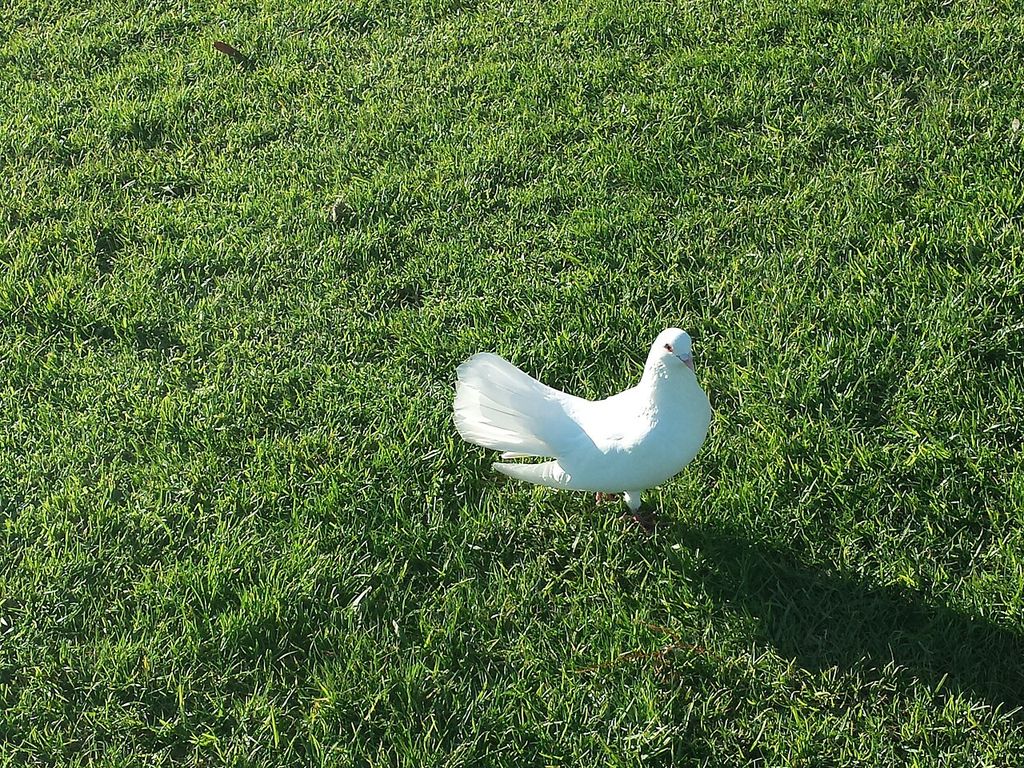
Picasso's “Dove of Peace” is not the title of just one image. A white bird, rendered with the weight and softness of a living pigeon, became the emblem of a peace congress in Paris in 1949. In later drawings and prints the bird takes flight, sometimes reduced to a few sweeping lines. A particularly colourful dove from 1957 carries flowers across its body and a sprig in its beak. These related images share an artist and a powerful public association, but they do not share a date, medium or original purpose.[1][2][3][4]
The distinction matters because a caption reading “Dove of Peace” can accompany the blue-outlined bird with flowers while a description under it discusses the very different 1949 lithograph. The flower-bearing dove belongs to the later part of the story. A small reproduction alone cannot establish whether it photographs an original drawing, a printed textile or another reproduction. The dove is both an artwork and a changing symbol, but a generic title cannot assign an edition or provenance to any one image.[1][2][4][5]
At a Glance
- 1949 print: La Colombe, dated 9 January 1949; Paris museum proof MP3414
- Poster use: Selected for the Paris peace congress of 20–23 April 1949
- 1957 flower dove: A later design documented as a coloured-pencil drawing and on a printed scarf
Dove of Peace in Picasso's career
First Communion
1896Three Musicians
1921Guernica
1937Dove of Peace
selected designs, 1949–57Las Meninas series
1957The highlighted group of related designs is dated with the qualifications explained in the sources on this page. The other works are selective points of comparison, not the start or end of a style.
Contents
- The white dove of 1949
- How a pigeon entered the peace movement
- Before and after the famous poster
- The flower-bearing dove of 1957
- Reading the dove as art and as a sign
- How to identify the image in front of you
The white dove of 1949
The early image is unexpectedly naturalistic. In an impression held by the National Gallery of Art in Washington, a white pigeon rests against a dense black ground. Its head turns, its body is rounded, and its wings are folded rather than spread across the sky. The bird occupies a largely dark field that makes its pale feathers luminous. It is recognisable as an individual creature before it is read as a sign for peace.[2]
The Musée national Picasso-Paris records the work as La Colombe, dated 9 January 1949. Its object is an artist's proof, made by washing the image on a zinc plate and pulled by the printer Fernand Mourlot. The Paris museum gives that proof dimensions of 56.7 by 76.2 centimetres. The National Gallery's Dove (La colombe) is a separate lithographic impression on wove paper. The two records relate to the same image, but the Paris proof's physical details must not be transferred automatically to every surviving impression.[1][2]
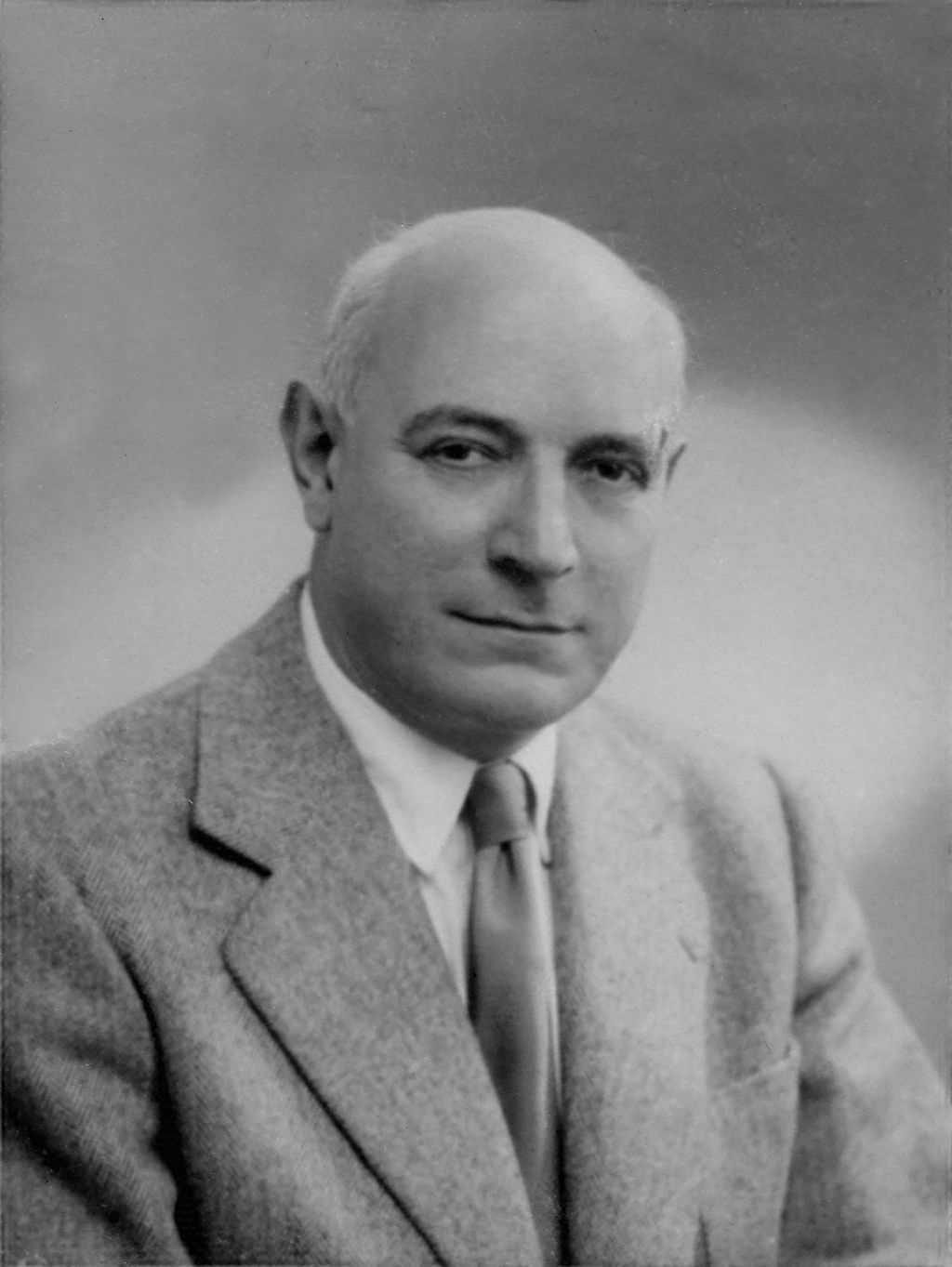
This is a useful reminder that a lithograph is not simply a drawing photographed and multiplied. The artist works with an image on a printing surface, and impressions are pulled from it. A proof may have a different collection history from a later impression, even when both show the same bird. A poster using that image is another object again: it places the bird in a design, adds an event and reaches a public far beyond the print room. Knowing which of these objects one is looking at changes the questions one can ask about material, size and purpose.[1][2]
The dark ground also helps distinguish the 1949 image from a familiar modern shorthand for Picasso's dove. It is not a continuous blue outline against blank paper, nor does it carry flowers. Its quiet, resting posture may surprise someone expecting a bird in mid-flight. The image's later fame has encouraged viewers to see it first as an emblem, but its close attention to a living pigeon is part of what made it available for such an emblematic life.[1][2]
How a pigeon entered the peace movement
The 1949 image was not conceived, so far as the Musée national Picasso-Paris's account states, as a commission to create a peace logo. Louis Aragon selected an existing image by Picasso for the poster of the World Congress of Partisans of Peace, held at the Salle Pleyel in Paris from 20 to 23 April 1949. The selection turned a bird on a print into a public face for a political event. It is therefore more accurate to say that the dove became a peace emblem through its use than that Picasso drew this particular pigeon from the outset as a universal peace symbol.[1][3]
That use was historically specific. Picasso had joined the French Communist Party in 1944 and was involved in postwar peace activity. The Paris museum's chronology places him at an international peace congress in Wrocław in 1948, before Aragon's 1949 poster choice. Tate's account of Picasso and the Peace Movement situates this activity within the politics of the Cold War. To call the congress poster “peaceful” without mentioning its organised political setting would remove part of its history. To say, conversely, that every dove Picasso later made served exactly the same organisation would flatten a long, varied body of work.[3][6][7]
The poster gave the image a reach unlike that of a single print. A reproducible black-and-white bird could move among notices, publications and other objects; it could be recognised without a museum label. The Paris museum records subsequent political uses and commercial adaptations. Reproduction made the dove more familiar, but also less tied in public memory to the January 1949 plate from which this particular image began. “Picasso's peace dove” became a phrase broad enough to cover several visually distinct designs.[1][3]
There is a difference between the symbolism attached to an image and a claim about an event's effect. A white dove can express hope, ceasefire or a desire for reconciliation. Its presence on a congress poster does not by itself tell us who attended, what they agreed or whether a political movement achieved its aims. Picasso's position as a celebrated artist made the image conspicuous; the meanings viewers gave it could still differ. A museum object record establishes the poster use, not a single interpretation shared by everyone who saw it.[1][3][7]
Watch: Pablo Picasso
Explore Picasso through five videos from museums, broadcasters and art educators.
Picasso’s Guernica: Great Art Explained
Explore the composition and historical setting of Picasso’s best-known response to war.
Watch on YouTubeBefore and after the famous poster
The 1949 bird was not Picasso's first encounter with pigeons. The Museu Picasso Málaga traces the motif back to his family and childhood: his father kept pigeons, and the birds recurred across Picasso's work. The living animal and the public emblem are connected, but they should not be made identical. Looking at birds could supply forms and behaviour for art without dictating the political meaning a later poster would acquire; the broader theme is explored in Picasso and Animals.[6]
The motif did not stop in 1949, either. The Museu Picasso Barcelona catalogues a distinct Flying Dove made in Vallauris in 1950, a lithograph known through a proof associated with Jaume Sabartés. Its title alone might invite confusion with the 1949 La Colombe, yet it has its own date, composition and collection record. “Flying dove” is a description, not a guarantee that two reproductions are impressions of the same plate.[8]
Other birds entered paintings that were not congress posters. The much earlier Child with a Dove is a separate work, not a version of the 1949 print. In 1957 Picasso painted nine pigeon canvases within his variations on Velázquez's Las Meninas, according to the Museu Picasso Málaga. A later painting, Three Doves of 1960, belongs to that museum's collection. The bird could be observed, repeated and rearranged as a painterly subject while its public association with peace remained available in the background. The persistence of pigeons in his art makes the famous emblem part of a longer visual history rather than an isolated invention.[6]
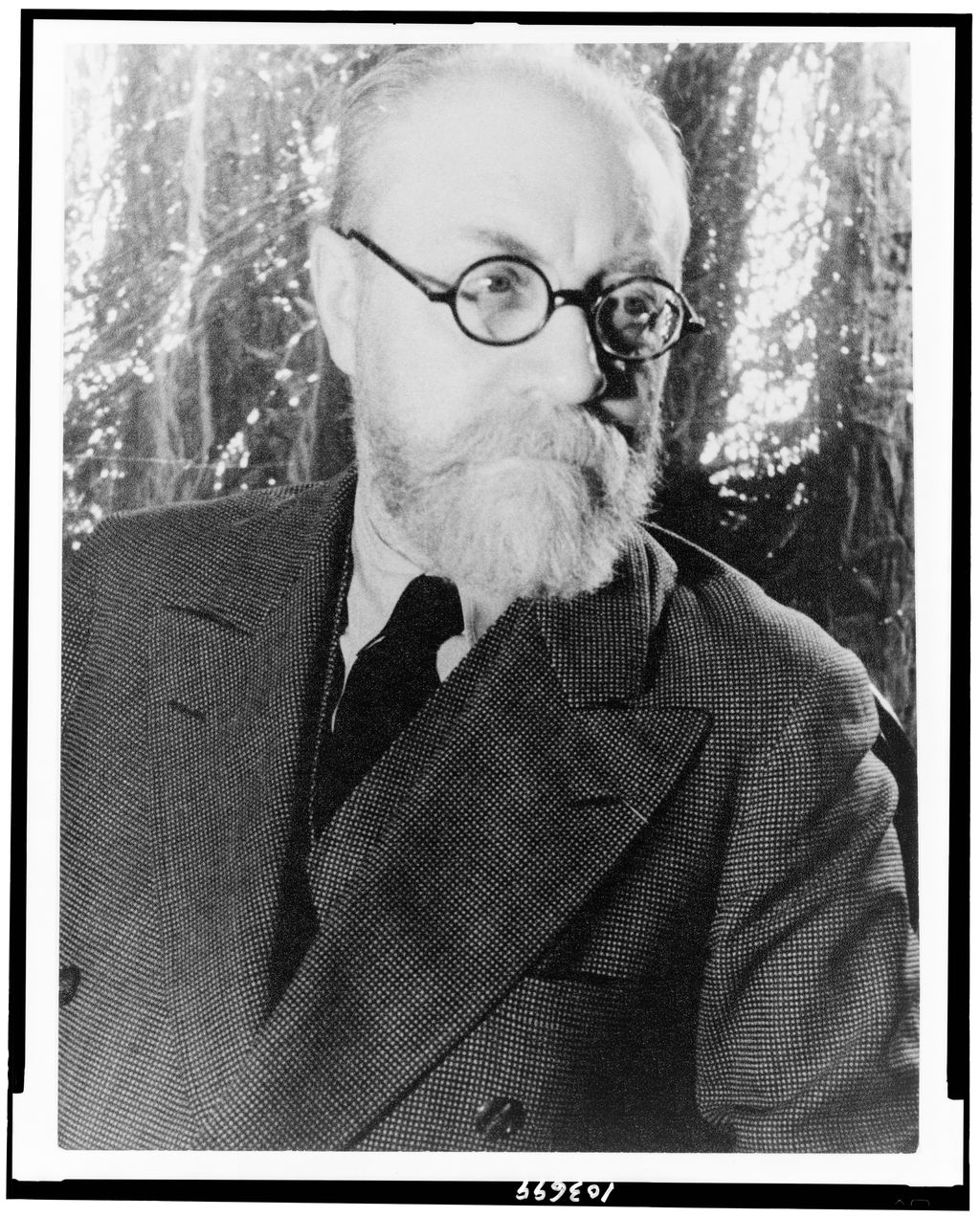
This longer history also helps explain why confident origin stories deserve caution. An older account attached to the legacy site linked the first peace dove to a bird given by Henri Matisse. The museum records used for this page establish the 1949 object, its poster selection and Picasso's sustained interest in pigeons; they do not establish that gift as the source of this particular plate. It would be misleading to turn an appealing anecdote into the key to the image without firmer evidence.[1][3][6]
The flower-bearing dove of 1957
The later floral image is almost the opposite of the resting white pigeon. Its bird is defined by a blue outline, opening its wings in flight. Flowers of several colours sit across its wings and body, and a small floral sprig projects from the beak. The line gives the bird a lightness and immediacy; colour makes the peace motif feel festive rather than solemn. It is easy to recognise why this version has circulated on prints and textiles, but its visual appeal should not cause it to be dated to the Paris congress of 1949.[4][5]
An estate-credit image catalogue identifies a 1957 coloured-pencil work on paper as Colombe avec Fleurs, in a private collection, and associates it with a youth festival. The Musée national Picasso-Paris also catalogues a 1957 cotton scarf screenprinted after a flower-dove design, titled Colombe aux fleurs. Other surviving scarves have been described with different textile supports and production details. These records establish a related 1957 motif across drawing and reproductive formats; they do not prove that every online JPEG depicts the original sheet or that all scarves form one identical, numbered edition.[4][5]
One handled silk scarf, catalogued with a printed Picasso signature and date, carries the flower dove in a larger textile composition. “Printed signature” is an important phrase. It means the signature is part of the printed design, not proof that Picasso signed that particular scarf by hand. A crop showing just the bird and signature could remove the border, inscriptions or material clues that would help identify the actual object. Because the old site's illustration is small and lacks a documented chain of custody, it can be placed within the motif's history but not authenticated as a specific original or authorised impression.[5]
The floral dove is associated in catalogues with the 1957 World Festival of Youth and Students in Moscow. That is a different setting from the April 1949 Paris congress. The available Paris archive links the design to 1957 material, while descriptions of individual scarves do not always agree about fabric or print status. It is safest to describe the historical association and then identify a particular surviving object from its own catalogue entry. A date in an image or a dealer's description is not a substitute for object-level evidence.[4][5]
Why give the bird flowers? On the page, they create a shift from the stark tonal contrast of the 1949 pigeon to a lighter, decorative vocabulary. A sprig in the beak makes the action of carrying something visible. Flowers dotted over the wings make the body itself a field of colour. These are observations about the design, not a claim that Picasso issued a written explanation of every flower. The effect suits a festival setting, but the exact meaning of a particular red or yellow mark should not be invented.[4][5]
The interval between 1949 and 1957 is substantial. The flower-bearing dove did not immediately replace the first image, and there were other bird designs between them. A Paris museum educational account, for example, discusses a different scarf made for a 1951 festival; its flying dove and surrounding profiles are not the same composition as the 1957 flower bird. Keeping these designs separate gives Picasso room to revise a motif instead of making all his doves into a single picture that inexplicably changes medium and shape.[3][4][5][8]
Reading the dove as art and as a sign
The simplest way to compare the two best-known images is to begin with posture. The 1949 bird is settled, its wings folded and its white volume held against a dark background. The floral bird is airborne, traced largely by contour and animated by colour. One gains force from the particularity of an animal; the other from the economy of a recognisable silhouette. Both can stand for peace, yet they ask the viewer to look in different ways.[1][2][4]
Their reproductive lives differ too. The 1949 image is documented through a printing plate, impressions and a congress poster. The 1957 floral design is documented as a coloured-pencil drawing and through textiles made after the design. Those media bring different kinds of handling and audience. A lithograph may be examined as a print with an impression history; a scarf can be worn, folded and circulated in public space. Neither should be described as “the original painting” simply because an online reproduction presents a flat image on a screen.[1][2][4][5]
Picasso's line can seem effortless in the airborne bird, but simplicity is not the absence of decisions. A continuous curve defines head, chest and wing; a change of direction makes flight legible; small colour marks transform the outline into a celebratory object. In the resting pigeon, tonal contrasts and the rounded body do more of that work. The two approaches show an artist able to change visual language while keeping a subject recognisable. They also show how an image designed or adopted for wide circulation must survive at sizes far smaller than an original sheet.[1][2][4]
The word colombe itself belongs to the works' French titles and is conventionally translated as “dove.” In English, “pigeon” may sound more everyday and “dove” more symbolic, although both names refer to related birds. It is useful to keep both registers in view. Picasso could pay attention to an ordinary bird and, through the circumstances of reproduction, see it become a sign recognised by people who had never seen the bird or the plate in person.[1][2][6]
How to identify the image in front of you
Begin with the composition, not the name on a sales listing. A white, closely observed bird with folded wings against black points toward the 1949 La Colombe image; the actual object might be a lithographic impression, proof, poster or reproduction. A bird drawn in blue line with multicoloured flowers points toward the later 1957 flower-dove motif. A different flying bird may belong to another Picasso work, including the Barcelona museum's 1950 Flying Dove. Matching the motif is a first step, not final authentication.[1][2][4][8]
Next ask what the thing is made of. Paper, ink, zinc plate, coloured-pencil sheet and printed textile are not interchangeable descriptions. Record dimensions, any inscriptions, the edge of a sheet or scarf, and whether a signature is printed as part of the image or separately applied. Consult a collection's inventory number or a documented catalogue reference where one exists. A generic caption such as “Picasso Dove of Peace, 1949” cannot identify a flower-covered 1957 scarf, no matter how often that caption has been repeated online.[1][2][4][5]
Finally, distinguish copyright from authenticity. A museum photograph or a high-resolution catalogue image may make a work easy to study, but availability on the web is not permission to reuse it. Picasso's artworks remain subject to rights restrictions; an image supplier's credit or a museum copyright notice should be treated as a rights signal, not an invitation to copy. An apparently authentic impression still needs its own permission assessment before its image is republished.[1][4]
Picasso's dove began as a bird before it became a famous sign. The 1949 La Colombe became the image of a particular Paris peace congress through Aragon's selection; later doves carried the motif into new media and settings, including the flower-bearing design associated with 1957. Seeing the differences restores both the artwork and the history. For the original 1949 image, the Musée national Picasso-Paris object record[1] and the National Gallery of Art impression[2] are firmer starting points than an undated cropped reproduction.[1][2]
Discussion
Use the evidence and your own close looking to explain your view. These are editorial prompts, not reader comments.
Reader Insights
Which dove is a soft, living-looking bird and which is reduced to a sign?
How did the 1949 congress change one image’s public life?
Why must the 1957 flower-bearing dove have its own object identity?
Join the Conversation
Which reading best fits the evidence?
References
- Musée national Picasso-Paris, La Colombe, MP3414.
- National Gallery of Art, Dove (La colombe), 1950.17.236.
- Musée national Picasso-Paris, Picasso ! educational dossier, p. 36.
- Bridgeman Images, Colombe avec Fleurs, 1957, BAL54009.
- Musée national Picasso-Paris, scarf after Colombe aux fleurs; Dellasposa, catalogued 1957 scarf.
- Museu Picasso Málaga, Three Doves.
- Musée national Picasso-Paris, chronology; Tate Publishing, Picasso: Peace and Freedom.
- Museu Picasso Barcelona, Flying Dove, MPB 70.211.
Image Credits
- Misaochan. CC BY-SA 3.0. Source: Wikimedia Commons. Resized to 1024px; no crop. Source record. Licence.
- Mourlot family archive; scan and rights-holder release credited to Eric Mourlot on Wikimedia Commons. Record date: 16 July 1953, despite the filename’s ‘1950’. Worldwide public-domain dedication, with fallback permission for any purpose. Proportional resize only. Source record. Licence.
- Carl Van Vechten, 20 May 1933. Library of Congress, Prints & Photographs Division, Carl Van Vechten Collection, LC-USZ62-103699. The Library considers this collection public domain; donor restrictions expired in 1986. Privacy and publicity rights may apply. Uncropped and uncolourised; proportional resize only. Source record. Licence.


