


 by Tom Gurney
Tom Gurney BSc (Hons) is an art history expert with over 20 years experience
Email: tomgurney1@gmail.com / Phone: +44 7429 011000
Introduction
Picasso's Guernica began with a real event, but it is not a painted aerial view of it. On 26 April 1937, German and Italian aircraft supporting the forces of General Francisco Franco bombed the Basque town of Gernika[8] during the Spanish Civil War. Picasso, living in Paris, encountered the news in the press. He transformed it into a monumental scene of people and animals caught in terror: a mother cries over her child, a horse twists in pain, a fallen figure lies below, and a woman appears trapped beside a burning building. No aeroplane is visible. The work asks viewers to confront the human consequences of an attack rather than inspect a map of the town. [8]
The Museo Reina Sofía's collection record[1] dates the oil-on-canvas painting to 1 May–4 June 1937, in Paris, and gives its dimensions as 349.3 × 776.6 centimetres. Nearly eight metres across, it was made for the Spanish Republic's pavilion at the Paris International Exposition. Today it is held by the Reina Sofía in Madrid. These simple facts conceal a more complicated story: a government commission that preceded the bombing, a composition revised as it grew, a photographic record made by Dora Maar, and decades in which the painting's location carried political meaning. [1]
At a Glance
- Made: Paris, 1 May–4 June 1937
- Medium and size: Oil on canvas, 349.3 × 776.6 centimetres
- Historical event: Bombing of Gernika on 26 April 1937
- Original purpose: The Spanish Republic’s Pavilion at the 1937 Paris exposition
- Collection: Museo Reina Sofía, Madrid (DE00050)
Guernica in Picasso's career
First Communion
1896Three Musicians
1921Guernica
1937Las Meninas series
1957The highlighted work is dated with the qualifications explained in the sources on this page. The other works are selective points of comparison, not the start or end of a style.
Contents
- Why did Picasso paint Guernica ?
- What is happening in the painting?
- Do the bull and horse have fixed meanings?
- How did Picasso make the enormous canvas?
- Guernica at the Spanish Pavilion
- Why was it in New York, and when did it return to Spain?
- Why does Guernica still matter?
Why did Picasso paint Guernica?
The Republic commissioned a large painting from Picasso before the bombing of Gernika. Its government wanted to present its case at the 1937 Paris exposition while the civil war was being fought at home. The Reina Sofía's Rethinking Guernica research project[2] places the commission at the beginning of that year. Picasso had not yet settled on a subject for the vast canvas when reports of the 26 April attack reached Paris. The news gave his commission a focus; it did not cause the commission to be issued. [2]
Gernika was attacked in the context of the northern campaign. The Gernika Peace Museum's chronology[3] describes people seeking shelter as bombs struck the urban centre and fires spread. The town's suffering quickly became an international story. Responsibility was also contested in wartime propaganda: the Francoist side denied its forces' role and tried to blame the destruction on its opponents, as the Reina Sofía's historical account[8] explains. The number of people killed remains a matter of historical debate; a contemporary official estimate should not be mistaken for a universally agreed final count. [3] [8]
Picasso was not there to see the attack. The museum's collection account[1] connects his response to photographs and reports in French newspapers. That distinction matters. The painting is a response to knowledge of an atrocity, made at a distance, not eyewitness reportage. Its title names a place and an event, while its imagery avoids a literal view of the streets, aircraft or specific victims. The distance did not make the work apolitical. It gave Picasso room to make an image that the Spanish Pavilion could use in its argument against the violence of the war. [1]
What is happening in the painting?
The eye meets a compressed field of bodies, sharp angles and abrupt contrasts of light and dark. At the left, a bull stands above a woman who holds a dead child and throws back her head. Near the centre, a horse strains across the canvas, its mouth open. Beneath it is a fallen human figure. A woman extends a lamp into the scene from an upper opening; another approaches from the right; at the far end, a figure raises both arms beside flames. The Reina Sofía's description[1] also notes a bird that is easy to miss in the densely worked left-hand area. [1]
This is not a procession of separate, neatly framed episodes. The figures overlap, and the room or street around them seems to break apart. A light bulb hangs above the horse, while the handheld lamp enters from the side. The two lights do not resolve the chaos. They make the scene more exposed. Open mouths repeat across human and animal forms, yet the painting is silent. The contrast between visible cries and the absence of sound is one source of its force.
The canvas is often described as black and white, though its surface moves among blacks, greys, whites and shifts in tone. The Reina Sofía collection record[1] relates this restrained palette partly to press photography and film. It also places the broad, pyramidal organisation of the figures within the long tradition of history painting. Both points are useful, but neither is a complete explanation. Newspaper imagery could carry urgent reports of the bombing; the scale and organisation of a history painting could ask the spectator to treat that news as a public event of enduring importance. The result does not resemble an illustrated newspaper article. It transforms a reported event into a scene built from Picasso's own visual language. [1]
The title can tempt us to search for exact historical equivalents for each figure. Yet the painting does not label the woman, horse or bull as particular citizens or soldiers. Nor does it show the bombers. Its grief is attached to Gernika without pretending that the viewer can identify an individual person from the canvas. The mother and dead child are especially direct. They anchor the suffering in a relationship that can be understood without a symbolic dictionary, while the whole composition resists being reduced to one anecdote.
The composition also refuses a comfortable viewing position. The horse's body cuts across a central space that might otherwise let the eye rest. The head of the fallen figure interrupts the lower edge; the entering women push from the right towards the centre. There is no clear horizon beyond which the disaster could be safely placed. This is a formal observation, not a claim that Picasso intended each diagonal to stand for a particular bomb or building. The viewer experiences pressure through the organisation of the figures before any iconographic explanation begins.
Watch: Pablo Picasso
Explore Picasso through five videos from museums, broadcasters and art educators.
Picasso’s Guernica: Great Art Explained
Explore the composition and historical setting of Picasso’s best-known response to war.
Watch on YouTubeDo the bull and horse have fixed meanings?
Many explanations offer a simple key: one animal stands for Spain, the other for fascism, or one lamp for hope and the other for destruction. Those claims are easier to remember than to establish. The Reina Sofía's account of the painting's interpretations[6] describes decades of disagreement over the figures. In 1947, the Museum of Modern Art in New York even held a symposium concerned with their meaning. The discussion did not settle a single reading. [6]
The bull and horse were already part of Picasso's wider artistic vocabulary. The Reina Sofía points to his 1935 print Minotauromachy as an important precursor to the later painting. Their appearance in Guernica can therefore connect with earlier images as well as with the events of 1937. A viewer can also reasonably see fear, force, endurance or vulnerability in them. What cannot safely be done is to convert one interpretation into a documented statement of Picasso's exact intention for every form. The museum's study of what Picasso said about the work[9] notes how rarely he supplied a formal symbolic explanation. [9]
This does not mean that all readings are equally persuasive. An interpretation should account for what can actually be seen, for the work's title and date, and for its place in the Republican Pavilion. The mother with the dead child, for example, makes civilian suffering inescapable. But the image also has older artistic echoes, and its figures are arranged for expressive power rather than documentary accuracy. Good viewing leaves those facts in tension. A fixed code can make the painting feel solved just when it should prompt harder attention.
How did Picasso make the enormous canvas?
Picasso began making sketches on 1 May 1937. The Reina Sofía research portal[2] describes about fifty drawings and sketches during the following weeks, together with substantial changes to the canvas. That evidence contradicts the familiar impression that the image arrived fully formed, just as it gives no reason to invent a precise story about every day's progress. The scale alone required planning: the final work is taller than most viewers and much wider than a conventional easel painting. [2]
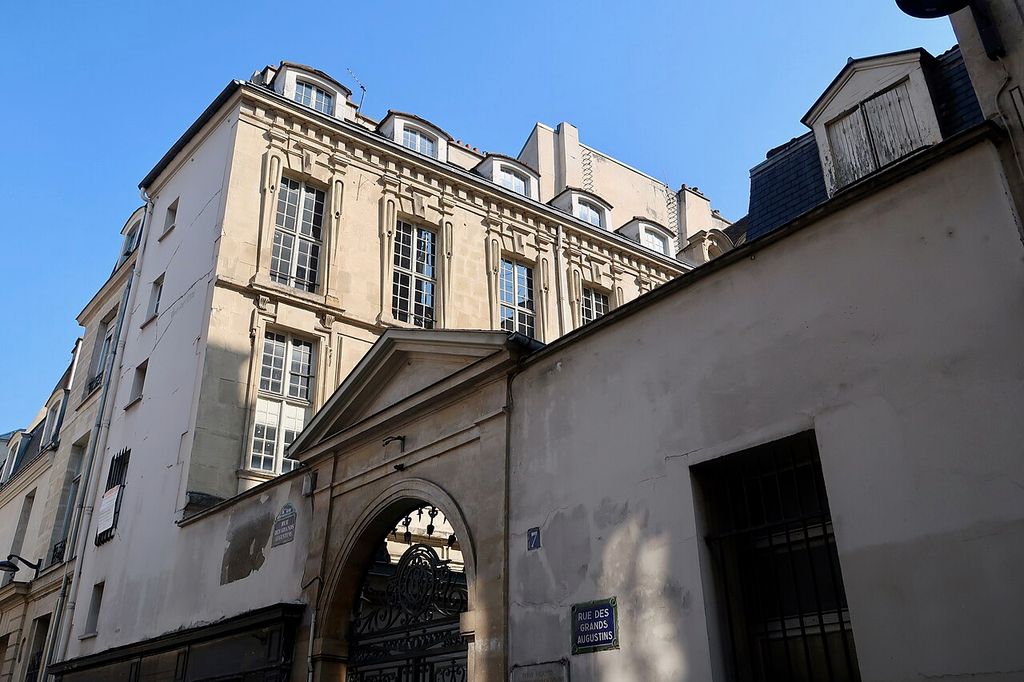
The most remarkable record of its making was created by another artist. From 11 May to 4 June, the photographer Dora Maar visited Picasso's studio on the rue des Grands-Augustins and photographed stages of the painting at the request of the art publisher Christian Zervos. The Reina Sofía holds 28 photographs[4] that reveal changes in the positions and definition of the principal figures. Their value is not merely that they show Picasso at work. They allow the viewer to compare one state of the image with another, and to see the painting as a sequence of decisions rather than a single flash of inspiration. [4]
Maar had to work with a large canvas in difficult studio light. The museum describes her use of retouching, internegatives and prints to make a usable photographic series. Those are photographic choices, not invisible clerical labour. Its account of Maar's career[10] presents her as an established photographer with Surrealist, commercial, portrait and street practices. Calling her only Picasso's “muse” would obscure the independent expertise that produced the record on which later histories of Guernica rely. [10]
The photographic sequence[4] shows that some core figures were present early: mother and child, bull, horse, fallen figure, lamp bearer and raised-armed figure. It also shows corrections, eliminations and shifts of emphasis. A photograph can establish the appearance of a given stage, but it cannot tell us every reason Picasso revised it or all that happened between exposures. The finished work's apparently urgent force was made through reconsideration. Its dramatic compression is a result, not evidence that it was painted without thought. [4]
The distinction between a preparatory study and the finished work matters here. A drawing can investigate a head or a body without already fixing its role in the mural. A photograph can show a passage of canvas later painted over. An early form is not a hidden final message simply because it survives in documentation. Instead, the drawings and Maar's sequence let us see that the familiar final arrangement was one possibility among several Picasso tested. They also limit what the historian can claim: there is abundant evidence of alteration, but no complete diary of each decision.
Guernica at the Spanish Pavilion
At the Paris exposition, the painting occupied a ground-floor end wall of the Spanish Pavilion. That building was designed by Luis Lacasa and Josep Lluís Sert, while Josep Renau helped shape the exhibition's political and photographic programme. The Reina Sofía's Pavilion study[5] places Guernica among other works made or displayed in support of the Republic, including art by Joan Miró and Alexander Calder. Visitors were encountering a political exhibition, not an isolated painting in a neutral white room. [5]
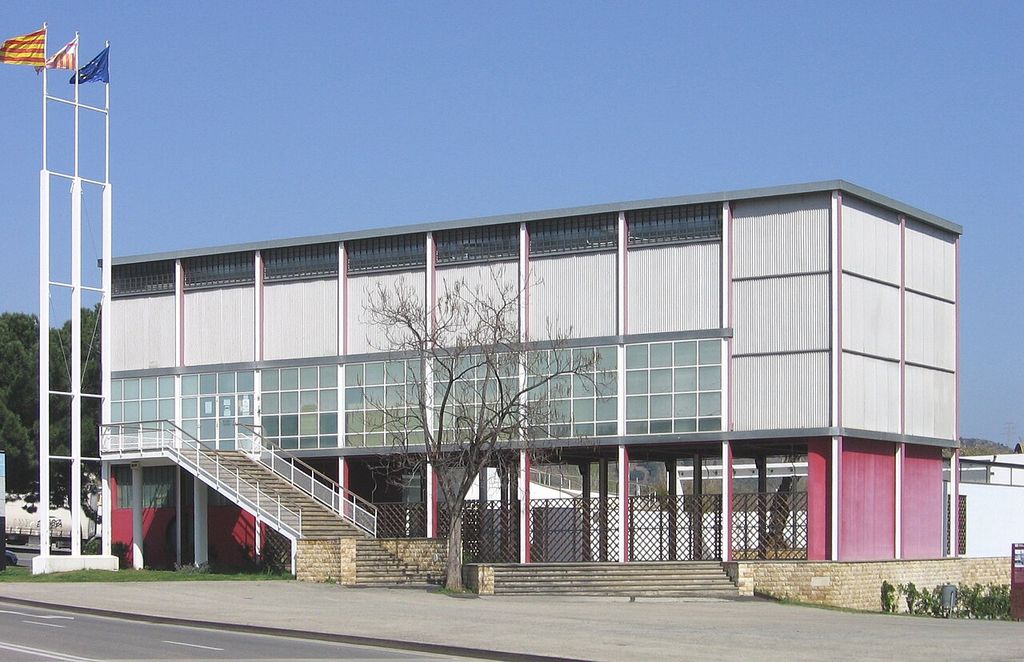
That setting helps explain the mural's unusual combination of particulars and generality. Its title tied it directly to a bombing that the Pavilion's audience could read about. Its lack of literal aircraft or identifiable streets enabled the attack to be represented through bodies, fear and rupture. The work could serve an immediate public argument and still remain open to later viewers who did not know the day's news. It was monumental, but not triumphal. Where some public murals glorify victory, this one makes anguish its central event.
The painting was discussed and reproduced soon after its creation. The Reina Sofía's record of a 1937 Cahiers d'art issue[11] shows that Zervos published commentary and Maar's process photographs. Reproduction helped the work circulate beyond the Pavilion, although seeing it in a magazine is different from standing before the full-sized canvas. Later reproductions would make Guernica familiar around the world; the physical work continued to have a separate, much more constrained life. [11]
That physical history began moving almost immediately. The Reina Sofía records Guernica in a touring exhibition of Matisse, Picasso, Braque and Laurens in Scandinavia in 1938[12]. There, outside its original Republican Pavilion, it appeared among modern paintings assembled around the careers of artists working in France. The change of setting affected how viewers might encounter it: a political mural could also be presented within a story of modern art. Neither setting exhausted the work. The Pavilion explains its immediate purpose; later exhibitions reveal how quickly it began to acquire another kind of public life. [12]
Why was it in New York, and when did it return to Spain?
The Spanish Republic acquired Guernica in 1937, according to the Reina Sofía's collection record[1]. Its subsequent location cannot be explained simply by saying that a New York museum owned it. As the political situation in Spain worsened and war spread across Europe, Picasso arranged for the painting to remain in the custody of the Museum of Modern Art (MoMA). Its New York period began in 1939. Loans and exhibitions took it elsewhere at times; MoMA was its long-term base, not a place it never left. [1]
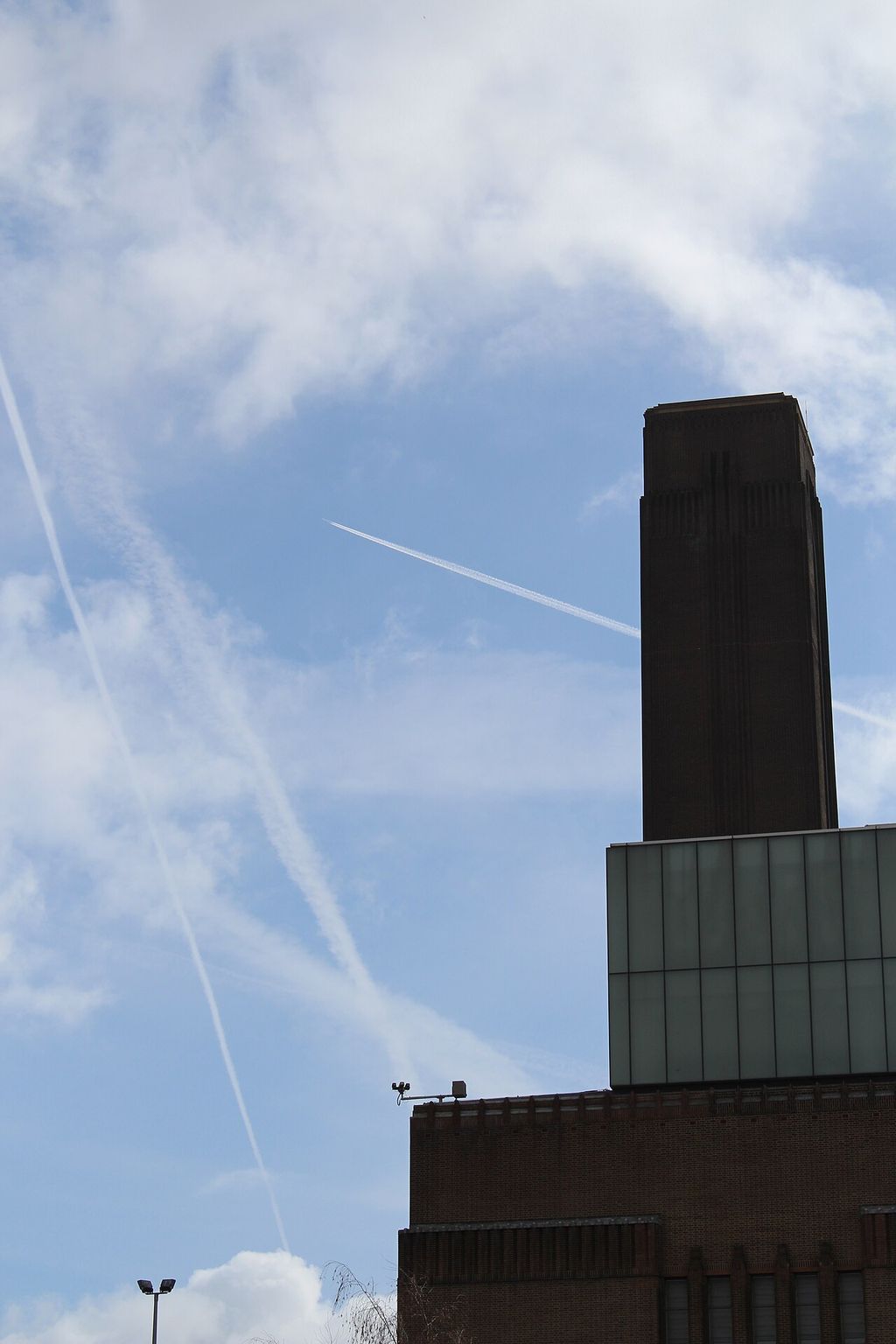
In 1958, Picasso extended MoMA's custodial loan for an indefinite period, with return linked to the restoration of democracy in Spain. The Reina Sofía's museum history[13] follows the painting's presence there until September 1981. The distinction between ownership, custody and Picasso's authority over loans is important. Flattening them into a tale of a picture “given to MoMA” loses the political and legal difficulty of its eventual return. [13]
After Franco's dictatorship and during Spain's transition to democracy, the work came to Madrid. It arrived on 10 September 1981 and was shown to the public in the Casón del Buen Retiro, then associated with the Prado, from 24 October. The Reina Sofía's Casón history[7] recounts its protective installation and the symbolism of presenting it in Spain for the first time. It remained there until 1992. The painting entered the Reina Sofía on 26 July 1992, as the museum's location history[14] records. Thus “returned to Spain in 1981” and “entered the Reina Sofía in 1992” describe two different moves, not competing dates. [7] [14]
The painting's physical travels helped produce its reputation, but they also underline that it is a vulnerable object. Its fame has sometimes encouraged an assumption that it can be sent anywhere its message is wanted. Museum stewardship has to consider the actual large canvas, not only the endlessly repeatable image. The history of its installations and loans is part of the history of how a work made for a temporary Pavilion became a permanent focus of national and international attention.
Why does Guernica still matter?
Its meaning begins with an attack on Gernika and the Spanish Republic's wartime attempt to make that violence visible abroad. It would be a mistake to erase the Basque town, the political sides or the date in favour of an abstract message that could apply to any war. The Gernika Peace Museum[3] preserves the local history that the famous painting can sometimes overshadow. The town is not merely a metaphor or a title. [3]
It would also be too narrow to say the painting matters only as a record of 26 April 1937. It does not provide an operational account of the air attack. Its forms ask what terror does to bodies and families, and how an event reported in words and photographs can be answered through painting. That is why the work has been carried into later debates about attacks on civilians and the public responsibilities of art. The Reina Sofía's interpretation history[6] traces those changing readings rather than insisting that the canvas has one final translation. [6]
For a first encounter, start with what is visible: the opposing lights, the broken space, the repeated open mouths, the mother's grief and the horse at the centre. Then return to the specific history that brought the work into being, and to Maar's photographs of its making. None of these approaches cancels the others. Guernica endures because it holds a named historical catastrophe, a carefully constructed painting and a continuing argument about how to see suffering in public. For connected works and context, continue with Picasso's Dream and Lie of Franco, Weeping Woman and work on war and peace.
Discussion
Use the evidence and your own close looking to explain your view. These are editorial prompts, not reader comments.
Reader Insights
Which figure or object anchors your first route through the enormous canvas?
How did the 1937 Pavilion setting change what an early viewer could understand?
What is lost if Gernika’s bombing is replaced by a purely universal war symbol?
Join the Conversation
Which reading best fits the evidence?
References
- Museo Reina Sofía, Guernica collection record — object data, interpretation and collection history.
- Museo Reina Sofía, Rethinking Guernica — archival research and creation chronology.
- Gernika Peace Museum, history of the bombing — local chronology and documentation.
- Museo Reina Sofía, Dora Maar's photographic sequence — the stages of the painting.
- Museo Reina Sofía, Spanish Pavilion — original display and political programme.
- Museo Reina Sofía, interpretation history — debates over symbolism.
- Museo Reina Sofía, Casón del Buen Retiro — 1981 return and Spanish display.
- German and Italian aircraft supporting the forces of General Francisco Franco bombed the Basque town of Gernika. View source
- museum's study of what Picasso said about the work. View source
- Its account of Maar's career. View source
- Reina Sofía's record of a 1937 Cahiers d'art issue. View source
- touring exhibition of Matisse, Picasso, Braque and Laurens in Scandinavia in 1938. View source
- Reina Sofía's museum history. View source
- museum's location history. View source
Image Credits
- Celette. CC BY-SA 4.0. Source: Wikimedia Commons. Resized proportionally to 1024px wide; no crop. Source record. Licence.
- Canaan. CC BY-SA 3.0. Source: Wikimedia Commons (File:Pabellón República.jpg). 1024px proportional sRGB JPG derivative; no crop. Source record. Licence.
- Deror_avi. CC BY-SA 3.0. Source: Wikimedia Commons. Resized to 1024px; no crop. Source record. Licence.


