


 by Tom Gurney
Tom Gurney BSc (Hons) is an art history expert with over 20 years experience
Email: tomgurney1@gmail.com / Phone: +44 7429 011000
Introduction
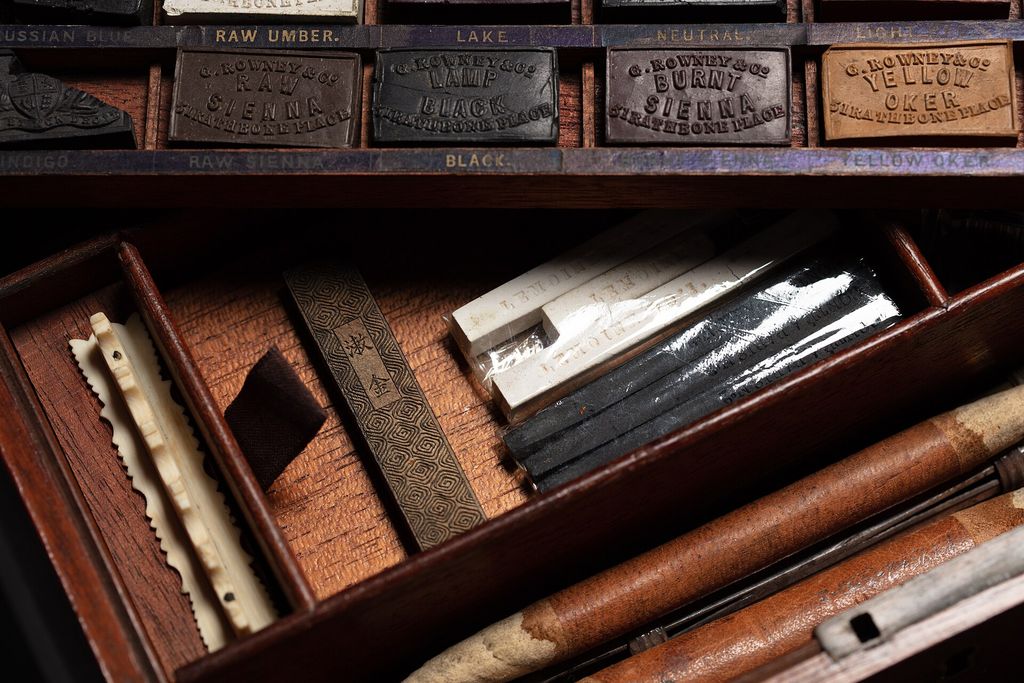
There is no single Picasso style that will identify everything he made. A spare blue figure, a densely faceted Cubist portrait, a guitar built from cardboard and a painted ceramic vessel can all be his work. Their differences are not evidence that he repeatedly forgot how to paint. They show an artist changing the questions he asked of an image and the materials available to answer them.
Style is what we notice in a work's handling of line, colour, form and space. Technique is how the work was made: drawing, layering oil paint, pasting paper, casting or joining parts, cutting a printing block, working clay. The two affect one another, but they are not synonyms. A painted imitation of wood and a piece of actual wood-grain paper may look related; only one brings an existing manufactured surface into the picture. Picasso's technical choices often made his visual choices possible. This guide follows that relationship through selected works, not a checklist of isolated “periods.”[1][2]
At a Glance
- Style: The handling of line, colour, form and space
- Technique: How a work was made and what materials it uses
- Scope: Drawing, painting, collage, sculpture, prints and ceramics
Contents
- Academic drawing was a starting point, not an abandoned skill
- Blue and Rose as changing visual languages
- Cubism changed how a picture builds space
- Cubism and classicism could coexist
- Pasted paper made representation a material question
- Construction, sculpture and the role of other hands
- Prints and ceramics extend the experiment
- Variation could itself be the method
- How to look at a Picasso work
Academic drawing was a starting point, not an abandoned skill
Picasso learned to draw and paint in an academic setting before the works most visitors now associate with his name. At Barcelona's La Lonja he studied conventional exercises and techniques; Science and Charity of 1897 belongs to the large-scale narrative painting taught and admired in that world. The Musée national Picasso-Paris account of his training[1] makes it difficult to sustain the popular story that his later distorted figures arose from an inability to represent a body. They were choices made by someone who knew the rules he was challenging.[1]
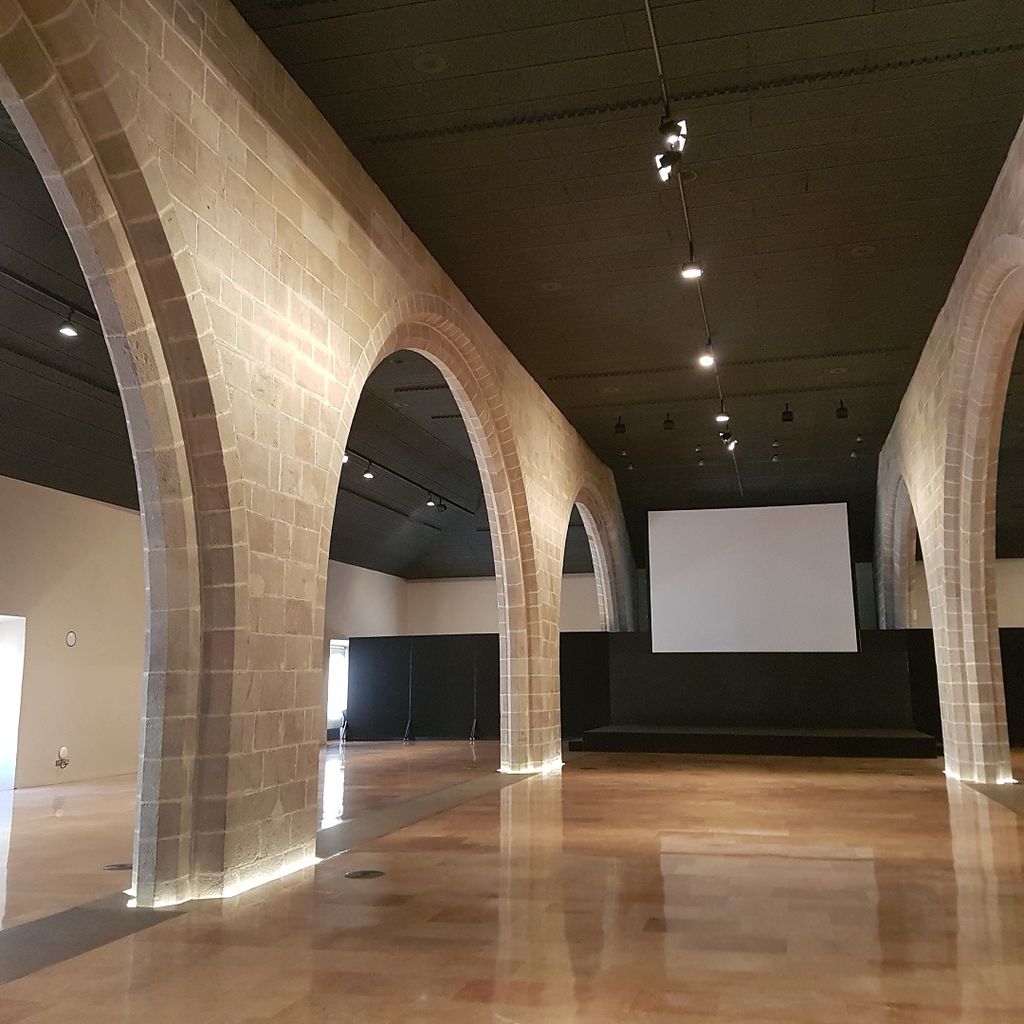
Academic skill did not give him one permanent visual language. Early studies, portraits and figure paintings sit beside experiments with colour, caricature and graphic shorthand. Drawing remained useful throughout his life, whether as a preparation for painting, an independent work or a way of trying a form quickly. A viewer can see a confident contour in one work and a broken, searching line in another. Neither should be taken as a universal signature. The more productive question is what a line does in this particular work: describe an edge, divide a plane, suggest motion or turn a flat sheet into a space.[1][3]
The idea of a single trajectory from realistic youth to abstract maturity also misses later returns. Picasso continued to use recognisable figures, classically proportioned bodies and direct observation after Cubism. “He could paint realistically but chose not to” is better than calling every modernist work a technical failure, yet it remains too simple if it implies realism and experiment were always opposite options. At times they coexisted in the same year, or in the same composition.[4][16]
Blue and Rose as changing visual languages
The terms Blue Period and Rose Period are useful, but they are retrospective labels for evolving bodies of work rather than switches Picasso flipped on fixed dates. In works usually grouped as Blue Period, a restricted blue or blue-green palette, elongated or isolated figures and spare settings can concentrate attention on vulnerability and distance. The effect depends on form and subject as well as colour. A blue pigment by itself cannot tell us that an entire work expresses one emotion, still less diagnose the painter's state of mind.[2]
Conservation research supplies a more physical account of how a blue painting came into being. The Museu Picasso Barcelona has examined works in which Picasso used an existing canvas again. In La copa azul, technical imaging revealed earlier figures below the visible still life. In Azoteas de Barcelona, x-radiography, infrared examination and tiny paint samples found colourful inner layers below the blue surface. The earlier composition had dried before the visible one was painted. What looks like a unified, immediate mood can therefore be the endpoint of a longer sequence of decisions and material changes.[2]
The point is not to turn every blue painting into a hidden-picture puzzle. The Barcelona evidence is object-specific. It shows that reuse, alteration and paint layering are part of the story of those works; it does not prove why Picasso covered each earlier image. It also shows the limits of a period label. One canvas can literally carry a different palette and a different composition beneath its later surface. The finished blue layer is what viewers see, but the technical record complicates any claim that style changed in a clean, single moment.[2]
In works grouped as the Rose Period, warmer pinks, ochres and earth colours become more prominent, with performers and families among the recurring subjects. The palette is not continuously rosy, and the people are not automatically happy because the colour is warmer. Picasso could simplify bodies and leave a scene emotionally ambiguous. The transition is better understood as a changing set of visual and thematic possibilities than as a sudden recovery from an imagined personal diagnosis.[3][17]
Watch: Pablo Picasso
Explore Picasso through five videos from museums, broadcasters and art educators.
Picasso’s Guernica: Great Art Explained
Explore the composition and historical setting of Picasso’s best-known response to war.
Watch on YouTubeCubism changed how a picture builds space
Cubism was developed with Georges Braque, not invented by Picasso alone in one painting. Around 1908–11, the two artists pushed against the expectation that a picture should show a single coherent view of an object from a stable position. Planes can shift, overlap and break a figure or tabletop into partial signs. Colour often narrows while edges and tonal relations become more active. Picasso's 1910 Girl with a Mandolin is a useful named example: MoMA identifies its restricted colours and simplified, fragmented forms. The sitter has not vanished into an abstract pattern; the portrait asks viewers to reconstruct her from parts.[4][5]
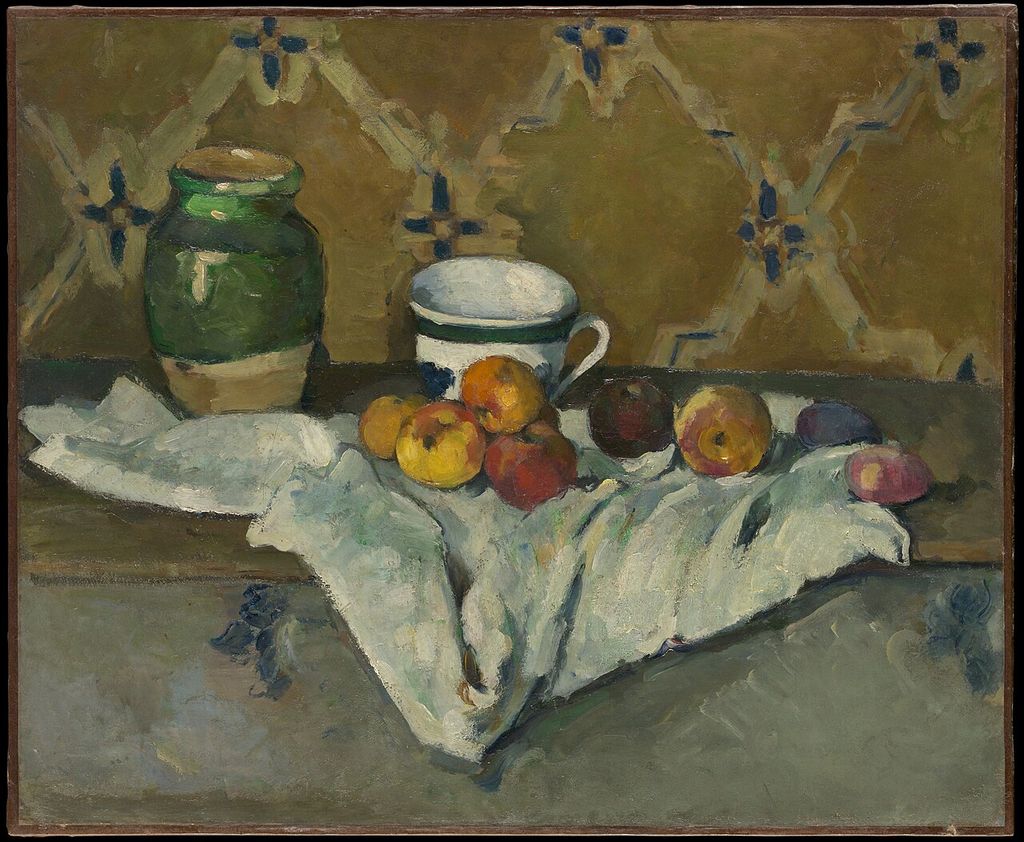
“Multiple viewpoints” is a useful beginner's description, but it can become a formula that flattens the work. Not every facet is a photographic angle, and the painted surface is not a diagram of how an eye physically sees. A curve might suggest a shoulder or instrument; a shaded plane might imply volume in one passage and become a flat patch in the next. The uncertainty is deliberate. It forces a viewer to move between seeing a person or object and noticing the arrangement of marks on a canvas.[5]
The making of Les Demoiselles d'Avignon shows that Picasso's change of pictorial language was neither fully mapped in advance nor merely accidental. MoMA's conservation history describes work on the large canvas in at least two stages between winter 1906–07 and summer 1907. In the later campaign Picasso painted over parts of figures, strengthened outlines and left some blue marks only partly covered. Differences among the figures have sometimes been used to call the painting unfinished. MoMA instead treats those differences as part of the work's difficult, changing construction. The physical painting carries evidence of its development.[6]
Technical examination of the Met's Gertrude Stein portrait, begun in 1905, offers another kind of evidence. X-radiography, autoradiography and pigment mapping reveal repeated adjustments to her face and other passages. The painting's final head is not simply an unmediated record of one sitting, nor can a later anecdote settle every step of its making. The Met's conservators distinguish what the material layers demonstrate from what recollections suggest. That distinction matters for Picasso generally: an account of his personality cannot replace close evidence from a particular object.[7]
Cubism and classicism could coexist
One summer makes the non-linear history unusually clear. In a Fontainebleau studio in 1921 Picasso painted two large versions of Three Musicians and two of Three Women at the Spring. The first pair develops bright, interlocking Cubist shapes. The second pair turns toward monumental bodies and classical references. MoMA's study of the paintings and their studio setting shows that these were near-concurrent projects, not a neat before-and-after change of allegiance. The works differ in how they assemble a figure and distribute weight across the canvas, yet each relies on careful choices about line, surface and scale.[16]
The contrast should not be translated into “modern versus old-fashioned.” A classicising body can be newly made and a Cubist surface can refer to inherited subjects, such as music or the three-figure composition. Nor should the 1921 works be used to say Picasso had no commitments and merely tried on styles. Their proximity gives us a more concrete proposition: he could test distinct solutions to related pictorial problems at the same time. Period names remain useful for orientation, but they must not conceal that simultaneity.[16]
Pasted paper made representation a material question
In spring 1912 Picasso made Still Life with Chair Caning, attaching printed oilcloth that imitates woven cane to a painted canvas and enclosing the oval with rope. This is not a piece of real chair seat inserted into a picture. It is a manufactured illusion of chair caning that remains physically present as oilcloth. The picture asks the viewer to separate material from depicted material, then makes the separation unstable. Later that year Braque developed papier collé, or pasted-paper construction, and Picasso expanded the method. The distinction credits both artists: Picasso's oilcloth-and-rope experiment and Braque's role in the specific pasted-paper procedure are related but not identical events. Our collage and assemblage guide follows those material experiments further.[8]
Picasso's Bottle of Vieux Marc of spring 1913 shows why this mattered. Centre Pompidou catalogues charcoal, gouache and papers pasted or pinned to paper. A newspaper fragment remains a real newspaper fragment. Wallpaper can stand for a cloth-covered table; a bottle is reduced to drawn signs and a written name. A viewer does not simply choose between “real” and “represented” objects. The work moves among levels of physical presence, printed imitation and mental completion. That movement is part of its style, but it depends on the technique of bringing existing surfaces into the artwork.[8][9]
The German catalogue for Museum Berggruen's 1914 Glas und Kreuz-Ass makes the materials even more specific. Faux-wood cardboard helps form a tabletop; a playing card operates between planes; pencil joins other cut and pasted elements. What appears as a bold, flat design is also a constructed relation among manufactured paper, drawn marks and altered surfaces. Calling it “a Cubist painting” without checking its medium would miss the work's central operation.[10]
Construction, sculpture and the role of other hands
Picasso also made figures and objects that occupy space, but his sculptural practice did not follow a simple progression from carving to assembly. MoMA describes it as episodic and materially varied. The cardboard Guitar of 1912 and a later sheet-metal version of 1914 make an instrument from planes, openings and edges rather than carving one from a solid block. They translate problems of Cubist representation into an object that can cast shadows and be seen from changing positions.[11]
Other works begin with already recognisable objects. In Bull's Head of 1942, a bicycle saddle and handlebar become an animal's head without ceasing to be bicycle parts. Its economy is not the same as the faceted procedure of an early Cubist painting, yet both ask viewers to hold two readings at once. The work's material identity, date and museum inventory matter: another Picasso sculpture can carry a similar translated title but be a different object.[11]
Technical collaboration also belongs in this history. The iron work associated with Woman in the Garden involved Julio González, whose workshop experience and metalworking contribution should not disappear behind Picasso's name. A sculpture's style may be credited to Picasso's design, but its making can involve tools, welding expertise, fabrication and later casting decisions. A bronze in a museum may also be a later cast of an earlier model. “Technique” therefore includes the history of the particular object we stand before, not just a list of things an artist could do.[11][12]
Prints and ceramics extend the experiment
Original printmaking offered Picasso another way to change an image through a process. In lithography he could draw on a prepared surface and work with printers to produce impressions. Museu Picasso Barcelona traces a shift from more linear lithographic marks toward brush, wash and gesture. The 1945–46 series The Bull makes variation visible across states: the animal is successively reconsidered rather than copied from a single final drawing. Each state has its own printing history. A poster reproducing one of Picasso's paintings is a different kind of object from a lithograph created through this process.[13]
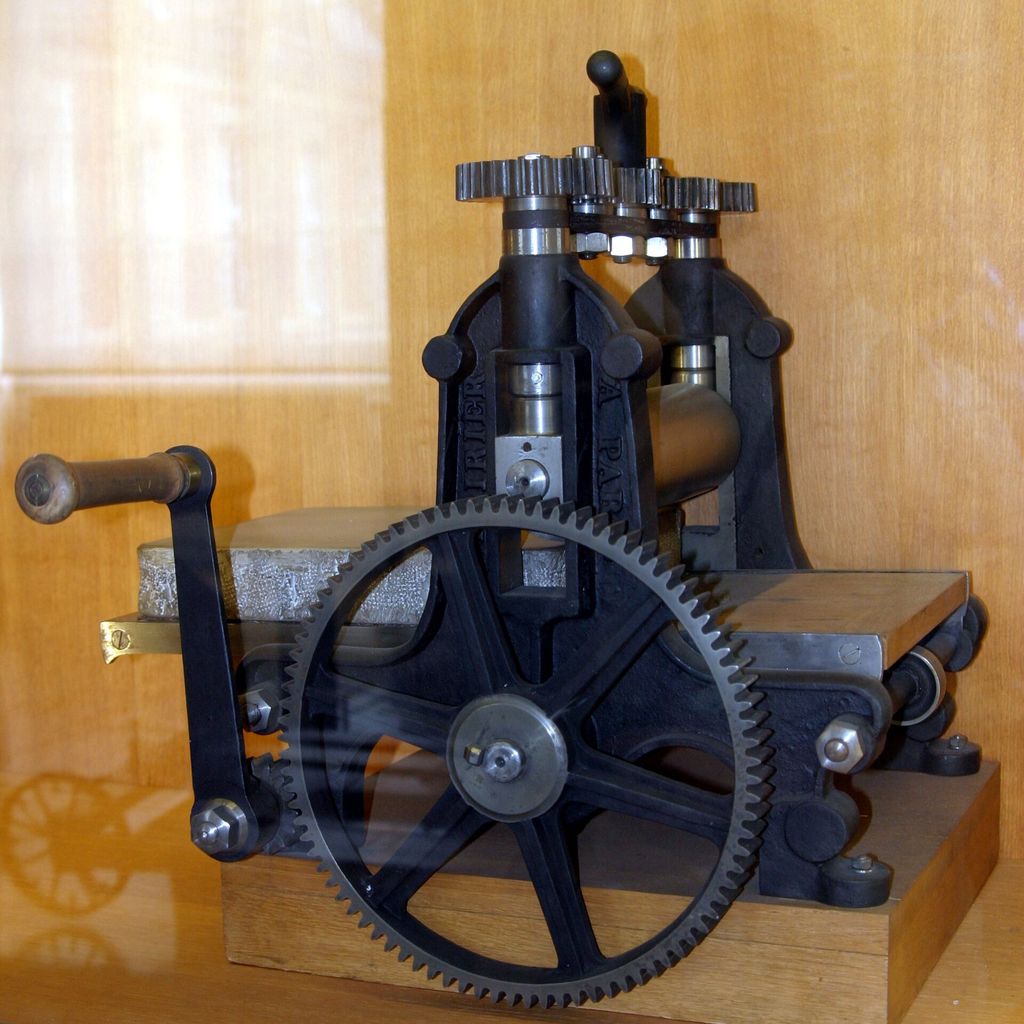
Etching, aquatint and linocut offered different resistances. In sugar-lift aquatint, the drawn mark and chemical action on a metal plate help produce broad tones that can look painterly in an impression. Barcelona's technical account names Roger Lacourière as a printer who introduced Picasso to this method. Such work was neither a mechanical afterthought to painting nor a solitary act. The printer, press, paper and successive states are part of how the image exists. A museum label that names a printer or a specific state is telling us something about the work's making, not adding peripheral trivia.[13]
Ceramics made the relation between a drawn sign and a shaped thing newly tangible. After encountering the Madoura workshop in Vallauris, Picasso worked with forms, slips, oxides and glazes as well as the heat of firing. A jug handle can become an ear or leg; a plate can become a shallow pictorial field. The Museo Picasso Málaga's Insect gives a concrete case: a traditional thrown vessel was altered with attached elements and decorated so that its shape contributes to the creature. The transformation depends on both the vessel already made and Picasso's treatment of it.[14]
The people and production categories matter here as much as they do in printmaking. Suzanne Ramié designed forms; workshop potters and other artisans participated; unique decorated pieces differ from authorised editions made by defined workshop processes. A general statement that “Picasso made a ceramic” may be convenient, but a good object account asks who formed, decorated and produced the particular piece. It also distinguishes the date of an idea or model from the date of an individual impression or editioned object. Those questions sharpen, rather than diminish, our view of Picasso's inventiveness.[14]
Variation could itself be the method
In later work Picasso often returned to a motif rather than fixing a single final answer. His 1957 Las Meninas series at the Museu Picasso Barcelona takes Velázquez's earlier painting as a point of confrontation. The museum identifies changes in format, scale, character placement, line and colour among Picasso's versions. It holds 45 interpretations and a preliminary drawing. These are not 45 identical copies; their sequence lets a viewer follow sustained decisions about how a known image might be restructured.[15]
This kind of variation reaches beyond one series. It connects the altered canvas, the changing print state and the recurring motif without pretending that their processes are technically the same. A covered Blue Period composition is a physical revision of a support. A print state is a stage in a matrix's development. A new Meninas painting is a separate work in dialogue with earlier works. What joins them is Picasso's willingness to treat an image as something that can be remade, not a form to be settled once and forever.[2][13][15]
How to look at a Picasso work
Start with the museum's medium line before assigning a period or a mood. Is the object oil on canvas, charcoal and pasted paper, a bronze cast from an earlier model, a lithographic impression, or a glazed ceramic made at Madoura? Look for what the material permits and what it resists. In a Cubist still life, ask which parts are drawn and which are actual paper. In a print, ask whether the label gives a state, printer and impression date. In a sculpture or ceramic, ask how components were shaped, joined or reproduced.[8][10][11][13][14]
Then ask how line, colour and space work in that object, without assuming the answer from “Blue Period,” “Cubism” or “late Picasso” alone. A scientific image can expose a change underneath the surface; it cannot read Picasso's mind. A memoir may provide a valuable account of a sitting; it is not identical to the physical record in the paint. These distinctions do not make the art less immediate. They give us better questions to bring to it, and they allow Picasso's many styles and techniques to remain specific rather than becoming one story of constant change for its own sake.[2][6][7]
Discussion
Use the evidence and your own close looking to explain your view. These are editorial prompts, not reader comments.
Reader Insights
What can material evidence tell you that a style label cannot?
Where does an apparently painted surface turn out to be a pasted or assembled material?
Which skill or question persists across two very different techniques?
Join the Conversation
Which reading best fits the evidence?
References
- Musée national Picasso-Paris, Picasso's artistic training.
- Museu Picasso Barcelona, Picasso. Proyecto Azul; Viaje a través del azul.
- Museu Picasso Barcelona, Blue Period technical seminar.
- Musée national Picasso-Paris, collection overview.
- MoMA, Girl with a Mandolin.
- MoMA, Les Demoiselles d'Avignon conservation study; large canvas process.
- The Met, technical study of Gertrude Stein.
- Centre Pompidou, Feuille de musique et guitare and the Braque/Picasso sequence.
- Centre Pompidou, La Bouteille de vieux marc.
- Museum Berggruen, Glas und Kreuz-Ass.
- MoMA, Picasso Sculpture; Picasso: Guitars 1912–1914; Musée national Picasso-Paris, Bull's Head.
- Museo Reina Sofía, Woman in the Garden and González.
- Museu Picasso Barcelona, lithography; sugar-lift aquatint; MoMA, The Bull state XI.
- Museu Picasso Barcelona, ceramics and workshop research; Museo Picasso Málaga, Insect.
- Museu Picasso Barcelona, Las Meninas; series presentation.
- MoMA, Picasso in Fontainebleau; MoMA research introduction.
- Musée national Picasso-Paris, Blue and Rose periods; National Gallery of Art, The Saltimbanques.
Image Credits
- Auckland Museum Collections from Auckland, Aotearoa New Zealand. CC BY 2.0. Source: Wikimedia Commons. Source record. Licence.
- Pilardenou999. CC BY-SA 4.0. Source: Wikimedia Commons (File:Llotja de Mar de Barcelona, Segon pis, Escoles i Tallers.jpg). 1024px proportional sRGB JPG derivative; no crop. Source record. Licence.
- Paul Cézanne. CC0. Source: Wikimedia Commons. Resized to 1024px; no crop. Source record. Licence.
- Rama. CC BY-SA 2.0 fr. Source: Wikimedia Commons. Source record. Licence.



