


 by Tom Gurney
Tom Gurney BSc (Hons) is an art history expert with over 20 years experience
Email: tomgurney1@gmail.com / Phone: +44 7429 011000
Introduction
Picasso left many words behind, but not every sentence printed above his name is equally well documented. A remark written in his own notebook is different from a conversation remembered years later; an artist-approved English translation is different again from a Spanish sentence retroactively made to look original. The quotations below are a small, source-led selection. Each comes with enough context to show what Picasso was discussing, not just a line suitable for a poster.
Finding, rather than “researching”: the 1923 statement
In 1923 Picasso spoke in Spanish to the artist and writer Marius de Zayas. According to the Museum of Modern Art's later catalogue[1], Picasso approved de Zayas's manuscript before an English translation appeared as “Picasso Speaks” in The Arts that May. That history makes the published statement unusually valuable, while also giving readers a reason not to treat its English wording as a verbatim record of Picasso's Spanish speech. [1]
At a Glance
- Purpose: Trace a small selection of Picasso’s words to their sources
- Evidence: A 1963 notebook, published statements and recorded conversations
- Read carefully: Check the original context and whether English wording is a translation
Contents
- Finding, rather than “researching”: the 1923 statement
- What happens while a painting is made: the 1935 conversation
- Painting and politics: a 1945 statement
- “Painting is stronger than I am”: Picasso's 1963 notebook
- Famous Picasso sayings that need more work
- How to cite Picasso's words
“To find, is the thing.” [1]
The line follows Picasso's complaint about the importance then given to the word research in modern painting. He was resisting a story in which a painting mattered because of the painter's declared intentions or search for novelty. In the same statement, he said that what an artist actually does counts more than what the artist planned to do. The brief sentence is often reduced to “I do not seek, I find,” but the wording above is the one printed in the contemporary English statement reproduced by MoMA. The distinction is small in length and large in evidential terms: the familiar aphorism is a paraphrase unless its separate textual history is established. [1]
The same 1923 statement contains one of Picasso's best-known remarks: [1]
“Art is a lie that makes us realize truth” [1]
He was not dismissing art as fraud. In the surrounding passage he argued that a work of art is not the same thing as nature, even when it persuades us of something true. The phrase belongs to an argument about representation: artists construct images, and viewers should not mistake that construction for a failure to see the world. MoMA's 1939 exhibition announcement[2] repeated the passage, giving it a documented life beyond later quotation books. When citing either 1923 line, identify de Zayas and the translated publication rather than attributing an English sentence to an unspecified conversation. [1] [2]
What happens while a painting is made: the 1935 conversation
Christian Zervos published a “Conversation avec Picasso” in Cahiers d'art in 1935. The Centre Pompidou's account[3] places the informal discussion at Boisgeloup. In the MoMA catalogue's English rendering[1], Picasso says: [1] [3]
“A picture is not thought out and settled beforehand.” [1] [3]
He goes on to describe a picture changing as his thoughts change: forms are added, altered and taken away. This is a useful corrective to the idea that a Cubist painting was fully calculated before the brush touched the surface. [1] [3]
The conversation is strong evidence for how Picasso described his working process in 1935. It is not, however, an autograph manifesto. Zervos selected and recorded the remarks, and later English versions add translation. That chain matters when a compressed slogan such as “Every act of creation is first an act of destruction” is presented as an exact, freestanding sentence. The securely useful point is more specific: Picasso described making a painting through successive changes, including removal. His many drawings and revisions for particular works allow that claim to be tested against objects, not merely repeated as a maxim. [1] [3]
Watch: Pablo Picasso
Explore Picasso through five videos from museums, broadcasters and art educators.
Picasso’s Guernica: Great Art Explained
Explore the composition and historical setting of Picasso’s best-known response to war.
Watch on YouTubePainting and politics: a 1945 statement
Picasso's words about Guernica cannot be separated from the Spanish Civil War or from the later political life of the painting. The Museo Reina Sofía's research project[4] traces an English-language interview by Jerome Seckler, published in New Masses on 13 March 1945, and its treatment in MoMA's 1946 Picasso catalogue. In that record, Picasso rejects the idea that a painting is made simply to decorate a home: [4]
“It is an instrument of war for attack and defense against the enemy” [4]
That statement is often quoted as a universal definition of painting. Its immediate setting is narrower and sharper: the politics of Picasso's work during and after the war, particularly Guernica. The Reina Sofía also points out that later accounts could diminish this political force. A responsible citation should name the interview and date, and should not merge the 1945 remark with Picasso's separate 1937 declaration against the military rebellion in Spain. Both illuminate the painting; they are not one interchangeable sentence. [4]
“Painting is stronger than I am”: Picasso's 1963 notebook
Here the source is not an interview at all. The Musée national Picasso-Paris[5] catalogues a crayon inscription on the third cover of a notebook, inventory number MP1886. Picasso dated it 27 March 1963. The original French reads: [5]
“La peinture est plus forte que moi” [5]
Our translation is “Painting is stronger than I am.” The rest of the inscription says that painting makes him do what it wants. This is a deliberately paradoxical description from an artist who had spent decades changing media, styles and methods. It does not prove that he worked without decisions or discipline; it tells us how he chose to describe the pressure of making a picture at that moment. Unlike a recollection of speech, the words and date are recorded on an object catalogued by the museum. Its manuscript form also reminds us that the mark-making itself is part of the historical evidence, although reproducing the page would require a separate rights decision. [5]
Famous Picasso sayings that need more work
The former pablopicasso.net quotes page gathered many familiar sentences without identifying a dated book, interview, letter or manuscript for each. It even printed two variants of the “every child is an artist” line. We have not carried those variants, “good artists copy, great artists steal,” or the line about computers into this verified selection. That does not establish that Picasso never said them. It means that a confident quotation page needs more than the repeated appearance of a sentence on other quotation pages.
An extended saying about Dora Maar on the former page also needs exceptional care. Removing its setting would turn a charged account of a real person and her portrayal into a casual punchline. The relationship between Picasso, Maar and the Weeping Woman works deserves source-based treatment of its own, with Maar's artistic career visible rather than reduced to one reported remark.
How to cite Picasso's words
For the 1923 remarks, cite Picasso's statement to Marius de Zayas, “Picasso Speaks,” The Arts, May 1923, and note that the published English was translated from Spanish. For the 1935 working-process discussion, cite Zervos's “Conversation avec Picasso,” Cahiers d'art, 1935, nos. 7–10, and specify the edition or translation actually used. For the 1945 political statement, cite Jerome Seckler's interview in New Masses, 13 March 1945. For the 1963 sentence, cite the Musée national Picasso-Paris notebook record, MP1886 (3c), dated 27 March 1963. A line without that kind of trail may still be memorable, but it is not yet a verified Picasso quotation. [1] [3] [4] [5]
Discussion
Use the evidence and your own close looking to explain your view. These are editorial prompts, not reader comments.
Reader Insights
How does the 1963 notebook differ from the published conversations?
What changes when the wording passed through translation?
Can the original setting of a remark support the broad claim often made from it?
Join the Conversation
Which reading best fits the evidence?
References
- MoMA, Picasso: Forty Years of His Art, including the 1923 and 1935 statements
- MoMA, 1939 exhibition announcement citing the 1923 statement
- Centre Pompidou on Christian Zervos and the 1935 conversation
- Museo Reina Sofía on Picasso's 1945 interview and Guernica
- Musée national Picasso-Paris, notebook MP1886
Image Credits
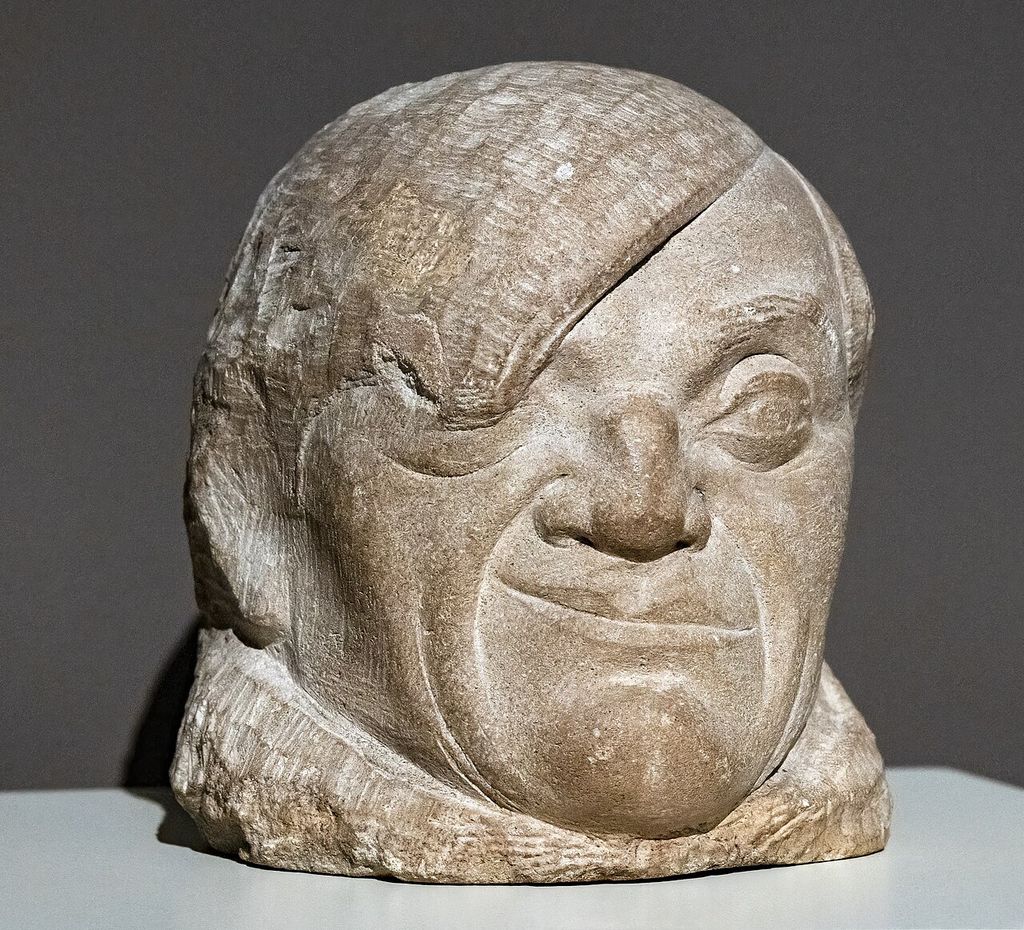
- Didier Descouens. CC BY-SA 4.0. Source: Wikimedia Commons. Resized to 1024px; no crop. Source record. Licence.
