


 by Tom Gurney
Tom Gurney BSc (Hons) is an art history expert with over 20 years experience
Email: tomgurney1@gmail.com / Phone: +44 7429 011000
Introduction
A woman sleeps in a red armchair. Her head slips sideways, her eyes close, and her hands gather in her lap. Yet nothing in Picasso's The Dream settles into the stillness one might expect from that description. Yellow hair sweeps around the head; the face seems to turn in two directions at once; a red-and-black pattern crowds the space behind the chair. The sitter appears at rest, but the painting keeps changing as the eye moves across it.
Picasso painted Le Rêve on 24 January 1932. It is an oil on canvas measuring 130 × 97 centimetres, according to the Musée national Picasso-Paris[1], which identifies the subject as Marie-Thérèse Walter and records the work in a private collection. “The Dream” translates the French title, but the image does not disclose what Walter dreamed—or even establish that she was asleep before the artist as he worked. It shows a particular way Picasso made a known person visible: through curves, colour, compression and double meanings. [1]
At a Glance
- French title: Le Rêve
- Date: 24 January 1932
- Sitter: Marie-Thérèse Walter
- Medium: Oil on canvas
The Dream (Le Rêve) in Picasso's career
First Communion
1896Three Musicians
1921Guernica
1937Las Meninas series
1957The highlighted work is dated with the qualifications explained in the sources on this page. The other works are selective points of comparison, not the start or end of a style.
Contents
- A figure assembled from colour and curves
- What does the double image mean?
- One day in a crowded year
- Dream, Surrealism and a painting that resists a label
- The painting after 1932
A figure assembled from colour and curves
The armchair is an unusually forceful shape. Its red back rises on either side of Walter, while yellow appears below the arms and near the lower edge of the picture. The red makes her pale body prominent, but it also presses around it, giving the sitter little unoccupied space. The chair does not function merely as furniture. Its rounded sides repeat the arcs of her shoulder, head and bent arms until person and setting begin to form one continuous arrangement.
Walter's head tips sharply towards her shoulder. A broad crescent of yellow hair occupies one side; dark, nearly closed lines indicate her eyes. Her nose, mouth and cheek can be read as a face tilted towards us. Then the pale upper shape seems to become another profile. The outline does not remain faithful to a single viewpoint. Picasso uses the instability to give the head a presence that a conventional front-facing likeness could not produce. It can seem sleepy and animated at the same time.
Look down from the head and the transitions become equally elusive. A string of red and yellow beads crosses the upper body. Areas of cream, pink and green describe the exposed shoulders, chest and dress without keeping every boundary fixed. Her forearms turn inward; long fingers overlap over a dark shape in her lap. Some fingers are defined by black edges, while others appear to share a contour. The body is legible, but not assembled from separate, anatomically measured parts. Picasso makes the viewer trace the links between one curve and another.
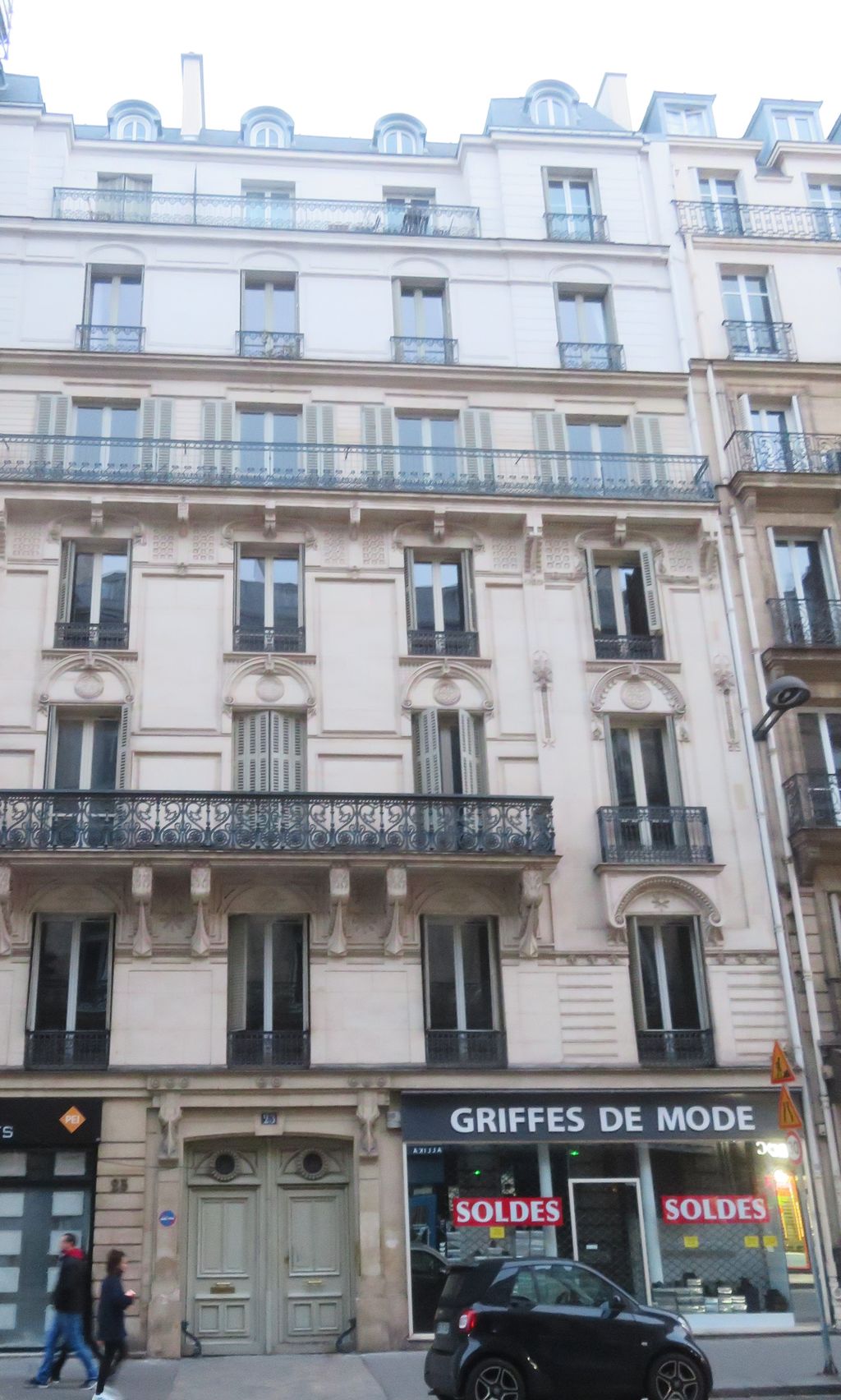
The upper background is divided too. Dark green panels or moulding occupy one side, and a red patterned wall the other. The Paris museum's account of the painting[1] connects these motifs to the interior of Picasso's rue La Boétie apartment. Their different textures matter visually even to someone who does not recognise the room. The green side is comparatively spare and vertical. The red side is tight with diagonals and repeated decorative shapes. Between them, Walter's head and the chair are neither isolated against a neutral backdrop nor fully enclosed within an orderly domestic space. [1]
Colour crosses these divisions. Green from the interior reappears on the figure; red belongs to chair, background and necklace. A bright yellow accent can be read in the hair, the chair and the lower part of the canvas. Repetition makes the picture cohere, but it also prevents a simple division between woman and room. Walter is identifiable as the sitter, while the canvas refuses to treat the body as an object set apart from its surroundings.
These effects are easy to flatten in a small reproduction. At 130 centimetres high, the original is close to the scale of a seated human figure. The composition fills the upright canvas. Its colour fields and changes of contour have room to confront a standing viewer, rather than serving as small decorative details. Conversely, scale does not turn it into a documentary portrait. The large surface makes Picasso's decisions about how to represent Walter more, not less, apparent.
What does the double image mean?
The painting's most contested feature is also one of its most visible. The upper part of Walter's divided face may be read as a phallic shape. The Musée national Picasso-Paris's French 1932 catalogue material[1] makes that reading explicitly, placing Le Rêve among a group of twenty-five paintings made between early January and mid-March in which erotic forms can double as other things. It describes the face as seen both frontally and in profile. The interpretation is grounded in the contours of the picture and in the museum's study of the series; it is not a fact about the contents of Walter's own dream. [1]
That distinction matters. A closed eye in a painting may invite a viewer to imagine the sitter's inward life. This painting gives no access to it. Its title can refer to sleep or dreaming as an artistic subject without naming a particular dream. The erotic image, similarly, is a choice made within Picasso's representation. It tells us about what the painter put on the canvas, not what Walter felt, wanted or understood on 24 January.
The double profile is more than a concealed detail to be spotted once. It changes how the whole painting works. After noticing it, a viewer may return to the meeting of green and pink, to the curve of the neck, and to the ambiguous boundaries of the arms. Forms that initially seemed simple develop alternative readings. Picasso's pleasure in metamorphosis is inseparable from the experience of looking. One contour can perform several jobs without the painting resolving them into a single stable anatomy.
It is therefore possible to acknowledge the work's erotic charge without reducing Walter to a symbol. She was a real person whose features recur throughout Picasso's work. Here she is also the subject of a constructed image made by an older man with whom she was in a private relationship while he was married to Olga Khokhlova. The Paris museum's chronology of the Picasso–Walter relationship[2] records that Picasso met Walter in 1927, when she was 17 and he was 45. That asymmetry belongs to the history of the work, but it does not license an invented account of a conversation or sitting for this particular picture. [2]
Watch: Pablo Picasso
Explore Picasso through five videos from museums, broadcasters and art educators.
Picasso’s Guernica: Great Art Explained
Explore the composition and historical setting of Picasso’s best-known response to war.
Watch on YouTubeOne day in a crowded year
The exact date places The Dream in a remarkably concentrated series. The Paris museum's day-by-day 1932 chronology[1] lists La Lecture on 2 January, La Dormeuse au miroir on 14 January, a large Le repos on 22 January, and Le Sommeil on 23 January. Le Rêve followed on the 24th. A painting of a woman in a red armchair came on 27 January. These are different works, not alternate English names for the same one. [1]
The sequence shows a motif being repeatedly tested. Reading, sleep, a turning head and the red chair offered Picasso related problems of shape and viewing angle. In The Dream, the tilt of the head and the framing chair are especially emphatic. The Paris museum compares those choices with the red-armchair painting of 27 January, but notes that the later canvas dismantles the body more freely. Rather than treating Le Rêve as a timeless emblem of romance, it is more revealing to see it as one answer within an evolving series.
Walter's recognisable hair and profile are central to that series, yet their appearance is not proof that she sat in person for every canvas. A French Paris-museum teaching dossier[1] says that Walter was not at Picasso's side while he made some of the January–March works inspired by her. This is an important limit on a familiar story about The Dream: the image cannot be described as a literal record of her falling asleep in the chair before him. Picasso could draw on observation, memory and invention. The surviving public sources used here do not establish the precise working circumstances of 24 January. [1]
Nor does the apartment interior automatically settle the location in which the canvas was painted. A picture can represent a room even if the artist works elsewhere. The Paris museum identifies the wallpaper and moulding as those of rue La Boétie; that is a claim about the depicted setting. Without an object record explicitly documenting the place of execution, it would be unsafe to turn that visual identification into “painted at rue La Boétie” or “painted at Boisgeloup.”
Picasso was also preparing a large retrospective at the Galerie Georges Petit in Paris. As the Paris museum's 1932 exhibition research[2] explains, recent paintings were set against earlier work, while sculpture, still life, bathers and darker themes also occupied him. The year was not devoted exclusively to Walter portraits. Yet those portraits became unusually visible within Picasso's public presentation of himself. [2]
The Museo Picasso Málaga[3] describes the Paris retrospective as bringing roughly thirty recent works into conversation with older ones, about twenty of the recent pictures depicting Walter sleeping, reading or in bust form. It is a useful measure of how persistent the motif had become. It should not be mistaken for a claim that every individual 1932 painting was shown or that each offers the same view of her. The Museum's August Siesta, for example, moves the sleeping figure outdoors; it is months later than the January chair portrait. [3]
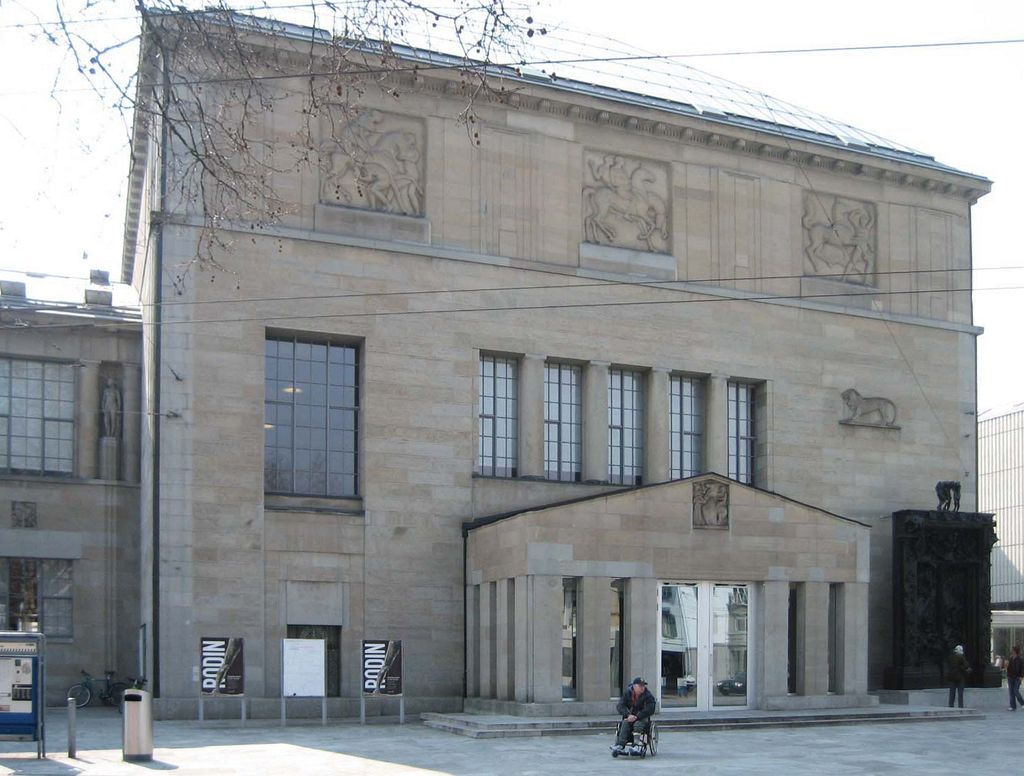
The Paris show was followed by a Picasso exhibition at the Kunsthaus Zürich that autumn. Kunsthaus Zürich's exhibition history[3] records a sizeable public response. The Paris museum's portrait dossier[1] specifically notes that psychoanalyst Carl Gustav Jung saw Le Rêve there and wrote a critical response. That is evidence of the work's early public and intellectual reception, not confirmation that Jung's interpretation was Picasso's own intention. [3] [1]
Dream, Surrealism and a painting that resists a label
Dream imagery was prominent in the art and writing around Picasso in the early 1930s. The Surrealists were interested in desire, unconscious association and transformations of the body. The Dream can be discussed in that climate: a sleeping subject, an unstable face, and imagery whose sexual reading lies beneath a seemingly ordinary portrait all make the connection understandable.
But attaching a single movement label to the painting is less useful than describing what it does. The Paris museum's teaching material[1] points to affinities with Surrealist concerns while noting that Picasso did not join the movement. His painted figure also draws on an older seated-portrait tradition, as Tate's account[3] observes. The familiar chair and the unfamiliar body operate together. Calling the work simply “a Surrealist painting,” or “Fauvist” because its colours are bright, misses the precision of that combination. [1] [3]
The idea of a dream should likewise remain open. The picture does not depict a landscape or sequence of events taking place inside Walter's mind. We see a sitter represented with closed eyes, not a visual report from a sleeping person's perspective. The visual transformations seem to occur on the painted surface and in the viewer's act of reading it. The dream is an invitation to look beyond a single, rationally fixed identity for each shape—not a psychological document that can be decoded once and for all.
The treatment of the body may be beautiful, unsettling or both. The rounded chair and yellow hair can encourage a tender reading; the crowded red wall and sexualised double image can complicate it. Neither response needs to cancel the other. Picasso's image gains much of its force from holding a recognisable person and an aggressively invented arrangement in the same frame. What looks like ease in Walter's posture is achieved through an active rearrangement of her features.
The painting after 1932
The Dream remained in private ownership while becoming one of the most reproduced images of Picasso's 1932 work. Contemporary Spanish reporting on the Ganz collection[4] says that Victor Ganz acquired it in 1941 for US$7,000, before building a major collection with Sally Ganz. On 10 November 1997, it was sold at Christie's New York as part of their collection for US$48,402,500, a figure confirmed by Christie's own later account of the sale[4]. Those numbers describe two historical transactions, not the painting's value today. [4]
The museum's 2017–18 Picasso 1932 exhibition placed the privately held canvas in a chronological account of the year. Its collaboration with Tate Modern also brought public attention to the series beyond Paris. Museum display and authorised reproduction have made the work widely known, but neither makes its image free to reuse. Its copyright and reproduction permissions are separate from the possibility of writing and researching its history.
The familiar sale story can overwhelm the painting if it becomes the reason to look. A more durable reason lies in the work itself. Follow the red chair upward, then the yellow hair, the divided face, and the curved arms back to the hands. At each stage, colour and contour change their roles. Walter remains the named subject, but the canvas refuses to behave like a simple likeness or a literal transcript of sleep. Painted on a documented January day in 1932, Le Rêve holds a moment of apparent repose inside an image that never quite comes to rest.
Discussion
Use the evidence and your own close looking to explain your view. These are editorial prompts, not reader comments.
Reader Insights
Where do Walter’s face and the chair seem to change as you look?
How does the documented January 1932 date limit a broad dream interpretation?
What remains uncertain about the private experience implied by the title?
Join the Conversation
Which reading best fits the evidence?
References
- Musée national Picasso-Paris, French Picasso 1932 press dossier: dated sequence, setting, visual and erotic interpretation; portrait teaching dossier: medium, dimensions, private ownership and Zürich reception; additional teaching dossier: limits on literal sittings.
- Musée national Picasso-Paris, Picasso–Walter chronology; Picasso 1932 exhibition overview.
- Museo Picasso Málaga, The Siesta; Kunsthaus Zürich, Picasso exhibition history; Tate, The Dream description.
- Christie's, the Ganz collection and Le Rêve sale; El País, contemporary Spanish report on the collection.
Image Credits
- VVVCFFrance, 14 January 2024. Wikimedia Commons, CC0 1.0. Historic building exterior; modern photograph. Proportional resize only. Source record. Licence.
- Adrian Michael, Kunsthaus Zürich, 28 March 2007. Wikimedia Commons, CC BY 2.5. Proportional resize only; original framing retained. Source record. Licence.


