


 by Tom Gurney
Tom Gurney BSc (Hons) is an art history expert with over 20 years experience
Email: tomgurney1@gmail.com / Phone: +44 7429 011000
Introduction
Pablo Picasso's La Celestina is a portrait of a hooded woman against a field of blue. One eye meets the viewer; the other is covered by a pale, clouded surface. The sitter has a name, Carlotta Valdivia, recorded in an inscription associated with the painting. Yet the title identifies her with a different woman: Celestina, the formidable matchmaker in a Spanish work by Fernando de Rojas. Painted in Barcelona in March 1904, the canvas brings an individual face into contact with a literary character without turning into a simple illustration of the story.[1][2]
This is the oil painting held by the Musée national Picasso-Paris, inventory MP1989-5. Its collection record gives a size of 74.5 by 58.5 centimetres and the fuller French title La Célestine (La femme à la taie), referring to the film over one eye. It belongs to the final part of Picasso's Blue Period. The work matters not only because of its striking gaze, but because it asks how a portrait can carry a sitter's identity, a social setting and an older fictional role at once.[1][2]
At a Glance
- Made: Barcelona, March 1904
- Sitter: Carlotta Valdivia
- Medium: Oil on canvas, 74.5 × 58.5 centimetres
- Literary reference: Celestina in Fernando de Rojas's play
- Collection: Musée national Picasso-Paris, MP1989-5
La Celestina in Picasso's career
First Communion
1896La Celestina
1904Three Musicians
1921Las Meninas series
1957The highlighted work is dated with the qualifications explained in the sources on this page. The other works are selective points of comparison, not the start or end of a style.
Contents
- The woman and the name
- Looking at the portrait
- From Rojas's Celestina to Picasso's sitter
- The drawings and the finished canvas
- At the end of the Blue Period
- The Celestina motif beyond 1904
- What the painting leaves open
The woman and the name
The name Carlotta Valdivia appears in an inscription on the painting's stretcher, along with an address on Calle Conde Asalto in Barcelona and “marzo 1904.” This unusually specific record helps establish whom Picasso painted, where the portrait belongs in his chronology and why the modern museum dates it to March of that year. The inscription does not tell us what Valdivia thought of being painted or how she understood the fictional name placed over her image.[1]
The Paris museum describes Valdivia as the keeper of a Barcelona brothel. That is an important part of its interpretation of the painting, but her exact occupation has been debated. Art historian Carol Salus recorded Pierre Daix's contrary view that she was not a procuress, alongside Josep Palau i Fabre's argument that the address linked her to a place of sexual encounters. The proximity of an address to a venue is a clue about the world in which Picasso met her, not documentary proof of a particular job. It is therefore safer to say that Picasso represented a named Barcelona woman as a Celestina than to make the painted role her unquestioned biography.[2][3]
The literary name comes from Fernando de Rojas's Comedia de Calisto y Melibea, later known widely as La Celestina or the Tragicomedia de Calisto y Melibea. In the story, Celestina acts as a paid intermediary in Calisto's pursuit of Melibea. She is resourceful, manipulative and central to a plot in which desire and money lead toward tragedy. Picasso's painting contains neither Calisto nor Melibea. It does not depict a particular encounter from the text. The connection lies in the transformation of one sitter into the image of a character whose name was already powerful in Spanish culture.[2][4]
That distinction corrects a persistent source of confusion. The character is not from Pío Baroja's Aurora Roja, a much later novel. Baroja can matter to discussions of the cultural atmosphere around Picasso, but he did not create Celestina. The precise literary reference changes how we look: the canvas is not a documentary scene from a modern book, nor a generic portrait simply given a romantic title. It is a modern likeness made to resonate with a late-medieval Spanish figure.[2][3][4]
Looking at the portrait
Valdivia faces forward, with her head framed by a dark hood and cloak. The blue ground offers almost no depth, furniture or room. There is no other figure to establish a conversation, and no object to show what she is doing. These omissions concentrate attention on the face. Picasso's sitter occupies the canvas with a steadiness that is different from the lowered heads and turned-away bodies often associated with the Blue Period. She is isolated, but not absent or merely passive.[2][3]
Her skin is cooler and lighter than the surrounding clothing. The pale face carries subdued pink and grey as well as blue, so that it seems to emerge from a darker field. Blue has become a way of organising the whole picture, not just a report of the colour of an actual wall or garment. The Paris museum emphasises the economy of this construction: near-monochrome colour, a frontal face and little anecdotal detail. The result can feel austere while remaining sharply individual.[2][3]
The two eyes do not behave alike. One appears directed outward; a light opacity interrupts the other. The contrast makes us conscious of the act of looking at her. We can observe the visible difference without claiming to diagnose its medical cause from paint. Nor should we treat it as proof that Valdivia possessed supernatural insight. The museum offers an interpretive reading of the clouded eye as an inward gaze. It is a compelling way to think about the picture, not a fact the sitter's body or Picasso's surviving words compel us to accept.[2][3]
Small details complicate the severity. Salus's close study identifies an earring and the delicate edge of lace near the hood, details that sit against the otherwise restrained colour and broad dark form. A faint warmth in the cheeks resists the idea that the canvas is literally made in one colour. These touches allow the viewer to notice the woman as a person with dress and presence, even as the title draws her toward the symbolic role of Celestina.[3]
Nothing in the composition tells a complete life story. The direct gaze may seem commanding; the stillness may seem guarded. Both are responses to what the painting makes visible, not access to Valdivia's thoughts. To read the covered eye as a moral defect or the hood as a costume that proves an occupation would mistake pictorial choices for documentary testimony. Picasso has made a portrait that presses toward character, but he has withheld the ordinary setting that would explain its subject for us.[1][2][3]
Watch: Pablo Picasso
Explore Picasso through five videos from museums, broadcasters and art educators.
Picasso’s Guernica: Great Art Explained
Explore the composition and historical setting of Picasso’s best-known response to war.
Watch on YouTubeFrom Rojas's Celestina to Picasso's sitter
Rojas's Celestina is not simply an old woman in dark clothes. Her speech, bargaining and dealings with other characters make her a force in the drama. In the literary work she has a history, motives and possessions that connect her to others. A painting of a single head cannot translate that network directly. Picasso instead makes a face stand for the name. The difference is worth keeping in view whenever the picture is described as though it were a literal scene from the text.[2][3][4]
Salus compared the novel's character with Picasso's image. She pointed out that the painting omits objects closely associated with the literary Celestina, including her rosary and thread. The woman is not shown conducting a transaction or speaking to a young couple. Even the conspicuous eye is not a specified feature of Rojas's character. These changes matter because the painting's power does not depend on faithfully enumerating the book's details. Picasso selects a look, a colour and an encounter with the viewer, then leaves the narrative offstage.[3][4]
There is room for more than one interpretation of that selection. The museum reads the painting through the tragic vision of the Blue Period and finds significance in the unequal eyes. Salus explores possible literary, Symbolist and social associations of blindness. Such arguments illuminate the range of meanings available in Picasso's Barcelona environment, but an analogy is not evidence that a particular text, stage performance or belief supplied the definitive cause of the picture. We can acknowledge a rich visual tradition while being honest about where the record ends.[2][3]
The social setting is equally important and equally easy to overstate. Barcelona's taverns, café-concerts and sex-work districts were present in Picasso's early drawings. The Museu Picasso Barcelona's account of his 1899 El diván identifies a matchmaker overseeing an encounter and relates that figure to Celestina, to a copy after Goya and to other drawings from the late 1890s. This shows that the motif was already part of Picasso's pictorial world before he painted Valdivia. It does not prove that the woman in El diván was Valdivia, or that the 1904 portrait documents a particular brothel interior.[5]
The painting also resists a tidy opposition between “real woman” and “fictional monster.” If we import every negative trait of Rojas's character into the historical sitter, we turn a literary label into a judgement about someone whose life is thinly documented. If we erase the literary title, we lose a deliberate part of Picasso's work. The more revealing question is how a recognisable, named woman comes to carry an inherited image. That double identity explains why the portrait remains unsettling even without a dramatic action on the canvas.[1][2][3]
The drawings and the finished canvas
Picasso did not arrive at the final frontal portrait in one recorded step. Salus identifies three blue-toned preparatory drawings connected with La Celestina. In one, a hooded matchmaker appears with younger figures; in another, she is part of a tavern setting; in a third, Picasso depicts himself painting the woman. Their exact order is uncertain. Together they show him testing relationships and settings that the oil painting would largely remove.[3]
The comparison makes the final canvas more intelligible. A social scene can tell a viewer who is a client, who is an intermediary and what kind of place they occupy. The oil gives none of those answers explicitly. By bringing the sitter forward and suppressing companions, Picasso makes her face carry the dramatic weight. The blue background is not an empty space left because the artist lacked a setting; it is part of a decision to make the viewer's encounter with the woman immediate.[2][3]
It would be too neat to say that each sketch was a failed attempt or that the final oil gives Picasso's last word on the character. We know the sketches bear a relationship to the portrait and that their narrative settings differ from it. The sequence of individual decisions is harder to reconstruct. The painting's frontal form nonetheless shows a clear visual result: descriptive context recedes, while one face and its two unlike eyes become the subject's principal means of expression.[3]
At the end of the Blue Period
The museum dates the painting to Barcelona in March 1904, before Picasso's move to Paris that year. It identifies La Célestine as a work near the close of the Blue Period. That period was never just a rule requiring every picture to be blue. Its portraits and multi-figure scenes explored isolation, poverty, blindness, grief and relationships using restricted colour and simplified settings. Valdivia's portrait shares the cool palette and concentrated figure, but her frontal presence prevents us from reducing it to one more image of anonymous misery.[1][2][6]
The Paris museum's period essay places La Celestina and Le Couple among works signalling change in 1904. That is better understood as a transition than as a switch suddenly thrown when Picasso crossed a border. The woman's cheeks contain a measure of warmth, and the image's literary role gives it a different kind of theatrical charge from some earlier Blue Period subjects. Neither detail means the canvas has ceased to belong to the blue years; rather, the portrait shows how varied their final months could be.[2][6]
Comparing La Celestina with Picasso's 1901 self-portrait can sharpen this point. The Paris museum observes that both use a cool blue background and a pale face to intensify a gaze. Yet the later canvas addresses a woman whom Picasso names and recasts as a literary figure. The formal resemblance is useful, but it does not make the pictures psychologically identical. A shared colour cannot tell us that two sitters experienced the same feeling or that Picasso meant a single symbol to cover both.[7]
The painting's date was once less settled. Salus notes older references that assigned it to 1903 and explains why the inscription and comparative evidence support March 1904. The holding museum's present collection record adopts that date and place. For a reader, this is not an antiquarian quibble: locating the picture in the months just before the Paris move clarifies its relationship to the late Blue Period and avoids turning the title into an episode from Picasso's later French life.[1][3]
The Celestina motif beyond 1904
Picasso's attention to the character extended beyond this painting. Barcelona's El diván provides an earlier matchmaker image; a group of etchings made in 1968 returns to La Celestina and Rojas's text near the end of Picasso's career. A museum exhibition dossier draws that long arc between Spanish literature and his late printmaking. It is tempting to treat all these images as variations of one fixed obsession, but their media, dates and dramatic structures differ. The 1904 oil is a sitter's portrait; the 1968 prints are a later, expansive dialogue with the story.[5][8]
Nor is the canvas at the Paris museum the same thing as a later print titled La Célestine. The museum catalogues a 1968 print object separately from MP1989-5. This is a practical distinction as well as an art-historical one: a title can follow a character across decades, while each object has its own date, material and ownership history. Someone looking for the hooded woman with the clouded eye should begin with the March 1904 oil record, not a generic search for anything called Celestina.[1][8]
The painting itself entered the Musée national Picasso-Paris through a gift from Fredrik Roos in 1989, according to the collection record, which also names Max Pellequer among its former owners. Such entries trace documented stages rather than a complete account of every transfer since Picasso painted it. The museum lists a gallery location in its current catalogue, but installations can change. Anyone hoping to see the original should check the museum's current listing before visiting.[1]
What the painting leaves open
La Celestina gives us a precise sitter's name and month, a strong literary title and a remarkably spare visual encounter. It does not give us a reliable transcript of Valdivia's life, a medical diagnosis of her eye or a single proven explanation for what the portrait means. The most useful way to see it is to hold both sides of its identity together: a Barcelona woman whose face Picasso studied and an image shaped by the long cultural life of Rojas's Celestina.[1][2][3]
The picture's blue stillness can initially make her seem remote. Looking longer reveals decisions that resist a generic label: the forward gaze, the opaque eye, the warmth caught in the face, the hood's delicate edge and the absence of the story's other players. Picasso did not merely copy a literary character or record a woman as though a photograph could exhaust her. He made a portrait in which the gap between a person and the name assigned to her remains visible. The Musée national Picasso-Paris collection record[1] identifies the original and is the appropriate place to check its current status.[1][2][3]
Discussion
Use the evidence and your own close looking to explain your view. These are editorial prompts, not reader comments.
Reader Insights
How does the sitter’s recorded name coexist with a literary title?
Which visual detail most strongly holds your attention in the blue portrait?
What would be unsupported if Carlotta Valdivia were treated only as a fictional character?
Join the Conversation
Which reading best fits the evidence?
References
- Musée national Picasso-Paris, collection record for La Célestine (La femme à la taie), MP1989-5, French.
- Musée national Picasso-Paris, account of La Célestine, French.
- Carol Salus, “Picasso's Vision of 'Celestina' and Related Issues,” Celestinesca 15.2 (1991).
- Biblioteca Virtual Miguel de Cervantes, Fernando de Rojas, Comedia de Calisto y Melibea, Spanish.
- Museu Picasso Barcelona, El diván, Spanish.
- Musée national Picasso-Paris, Blue and Pink Periods, French.
- Musée national Picasso-Paris, 1901 self-portrait comparison, French.
- Musée national Picasso-Paris, 2023 Picasso and La Celestina exhibition dossier, English; Paris museum's separate 1968 print record.
Image Credits
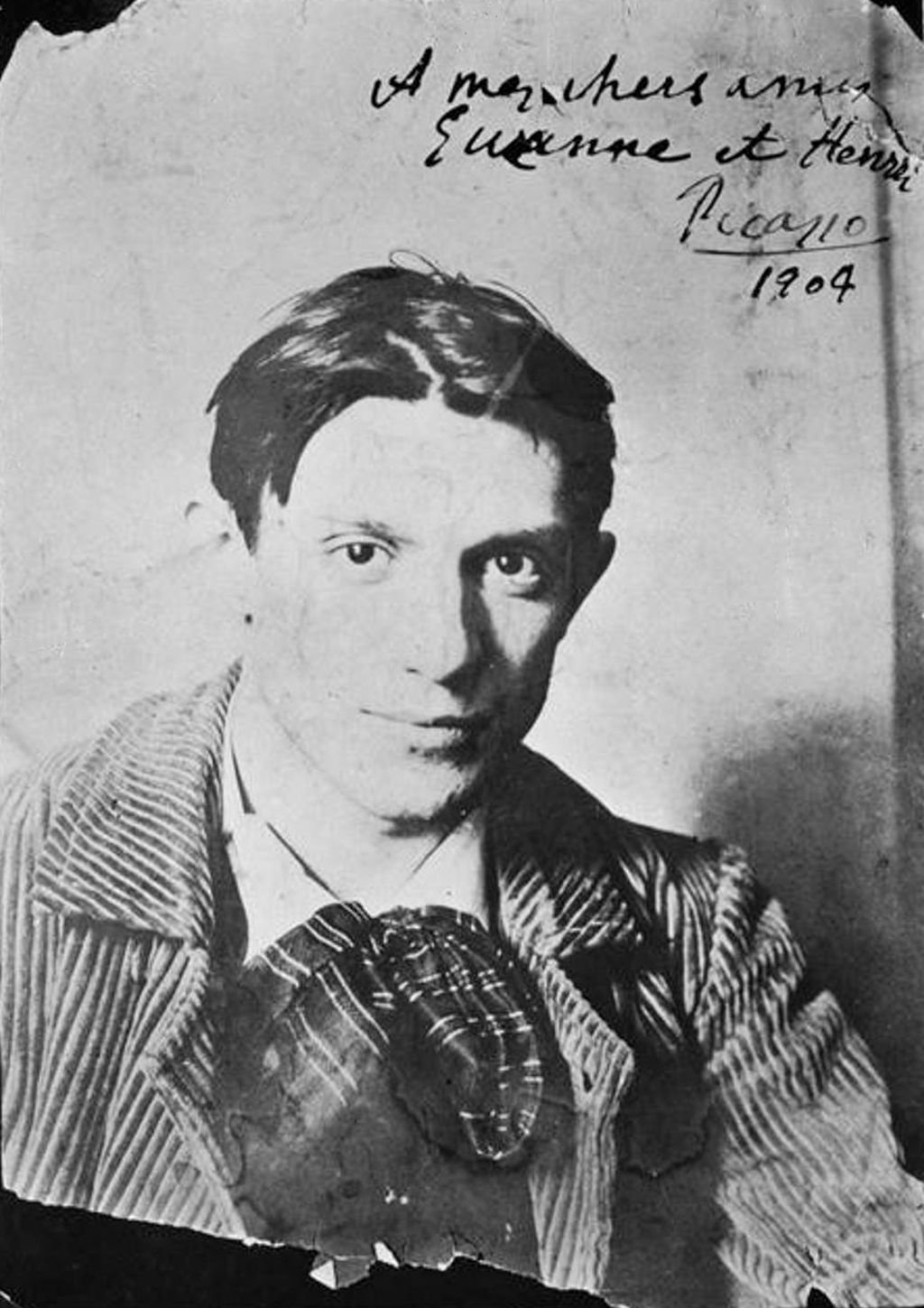
- Ricard Canals i Llambí, 1904. Wikimedia Commons labels the photograph public domain; its source credits RMN-Grand Palais. Resized to 1024px; no crop. Source record. Licence.
