


 by Tom Gurney
Tom Gurney BSc (Hons) is an art history expert with over 20 years experience
Email: tomgurney1@gmail.com / Phone: +44 7429 011000
Introduction
Pablo Picasso's Weeping Woman shows a woman in a broad-brimmed hat pressing a white handkerchief to her face. Her eyes, cheeks and hands are pulled into sharp-edged shapes; tears seem to cut through the colour. Picasso painted the canvas in Paris on 26 October 1937, months after completing Guernica during the Spanish Civil War. The model was Dora Maar, a photographer and artist who documented the making of that mural. This particular Weeping Woman is the oil painting now in Tate's collection, not every crying-woman image Picasso made that year. Distinguishing the works is essential to understanding what the painting can—and cannot—tell us about war, portraiture and Maar herself.[1][2][3]
Tate's canvas, accession T05010, measures about 60.8 by 50 centimetres. Its modest physical size differs greatly from Guernica, but the face takes up much of its surface. The painting is often approached as an emblem of grief. It is also a highly specific construction: colour flares across a dark-outlined head, a hat and flower sit above it, and the handkerchief breaks into jagged pieces between fingers and mouth. To call it simply a portrait of a woman crying leaves out the ways Picasso made the cry visible.[1][2]
At a Glance
- Date: Paris, 26 October 1937
- Model: Dora Maar, a photographer and artist
- Object: Oil on canvas, 60.8 × 50 cm
- Collection: Tate T05010; distinct from other weeping-woman works
Weeping Woman in Picasso's career
First Communion
1896Three Musicians
1921Weeping Woman
1937Guernica
1937Las Meninas series
1957The highlighted work is dated with the qualifications explained in the sources on this page. The other works are selective points of comparison, not the start or end of a style.
Contents
- Which Weeping Woman?
- Hat, face and handkerchief
- From Guernica to the October paintings
- Dora Maar beyond the role of model
- The painting's journey to Tate
- Seeing grief without inventing a story
Which Weeping Woman?
Picasso returned to the crying woman in drawings, prints and paintings through 1937. The Tate work is identifiable by its large hat, flower, striped dark hair and dense interplay of blue, red and yellow around a white handkerchief. A 1957 Museum of Modern Art catalogue illustrated the canvas when it belonged to the collector Roland Penrose and dated it 26 October 1937. Tate's archive records the same painting under T05010, while Art Fund gives its medium and current dimensions. Those records, together with the image, anchor the page to an object rather than to a vague theme.[1][2]
Other works have the same or a similar name. The National Gallery of Victoria in Melbourne owns an oil dated 18 October 1937, with a smaller head set against a narrow interior. The Museo Reina Sofía in Madrid has a Weeping Woman's Head with Handkerchief dated 17 October, larger than either Melbourne's or Tate's canvas. The Metropolitan Museum of Art owns a Weeping Woman in Front of a Wall print conceived in 1937 and printed later. These works belong to a related artistic enquiry, but their dates, sizes, colours and media are not interchangeable. A caption or reproduction that supplies only the title “Weeping Woman” is not enough to identify the Tate painting.[3][4][5]
The distinction matters especially for interpretations of the series. The Melbourne picture does not have the Tate canvas's elaborate hat and flower. Reina Sofía's 17 October work is a separate, much larger oil. A print may reverse or transform the orientation of a painted head. When several images are quietly merged into one account, claims about the Tate painting's exact appearance or sequence become unreliable. We can compare the works to see Picasso testing a motif; we should not pretend that one generic picture contains every variation.[3][4][5]
The Paris Picasso museum holds another La Femme qui pleure, accession MP165, dated 18 October 1937. It is an oil made in Paris, about 55.3 by 46.3 centimetres. Melbourne's work is dated the same day and is close in scale, yet the museum records identify two separate holdings. The matching date is therefore not an error to resolve by choosing one institution. It shows how intensely Picasso returned to the subject at that moment. The Paris work stayed in the artist's studio collection and entered the French national collection through the Picasso estate arrangement in 1979; Tate's painting followed the Penrose route instead.[3][10]
Hat, face and handkerchief
Look first at the hat. Its broad red and blue planes span the top of the head, and the flower or bow-like ornament interrupts the brim. Below it, dark hair falls in long striped curves along one side of the face. These recognisable elements hold the image together before the eyes and mouth become clear. The National Gallery of Victoria's comparative study notes that the Tate version's hat, flower and hair give it a stronger portrait-like dimension than the other October oils. They also move the picture away from Guernica's black, white and grey scheme.[3]
The face is neither calm nor easily mapped onto a single viewpoint. Eyes sit high above a nose and mouth whose forms are broken into angles. The hands crowd toward the lower centre. Fingers extend and curl around the white handkerchief, which can look at once like cloth, shards and teeth. The image does not need to show a realistic tear rolling down a normally modelled cheek to convey crying. Picasso makes the features resist their usual positions, and the effort of pressing cloth against the mouth becomes part of the visible distress.[1][3]
The handkerchief is the central white form. It gathers the eyes, nose, mouth and hands around one point of contact. Its sharp edges contrast with what viewers know of soft fabric. That contradiction is productive: a tool for wiping tears seems unable to soothe the face it covers. The Spanish Museo Reina Sofía describes the handkerchief and conspicuous tears as additions that distinguish the post-Guernica crying-woman images from the earlier mother in the mural. The same museum notes the new paintings' vivid colour as a further difference from Guernica's restricted palette.[4]
An earlier stage of the motif makes this change clearer. The Los Angeles County Museum of Art holds a separate Weeping Woman with Handkerchief made on 26 June 1937. Its white crumpled cloth and one hand silhouetted near the chest are organised very differently from the Tate canvas's crowded face. Comparing the two works lets us see that the handkerchief was not an accidental prop added at the end of October. Picasso could retain a motif while altering its scale, position and relation to the mouth and eyes. The June painting is not a preparatory sketch that can simply be read as an unfinished Tate image; it is an oil in its own right.[8]
Colour does not simply illustrate an emotion here. The hat uses red and blue; the hair and outlines are dark; yellow and green carry parts of the face. The mouth is held amid white, grey and black angular forms. Those combinations can feel jarring because bright colour, often associated with celebration, is put to work in an image of pain. Roland Penrose, who owned the painting, observed this disconcerting mismatch between colour and grief in his writing, as Art Fund records. His response is one historically important reading, not proof that Picasso intended every red, green or blue patch to have a fixed symbolic meaning.[1]
The tight space heightens the effect. The head, shoulders, hands and hat fill the small vertical canvas; there is little narrative setting to tell us where the woman sits or what she has just seen. The apparent interior around her can give the figure an enclosed feeling, but it does not identify a real room. In the Tate version, the human face and the handkerchief carry the encounter. The viewer has to confront the facial construction before any story can explain it.[1][3]
Watch: Pablo Picasso
Explore Picasso through five videos from museums, broadcasters and art educators.
Picasso’s Guernica: Great Art Explained
Explore the composition and historical setting of Picasso’s best-known response to war.
Watch on YouTubeFrom Guernica to the October paintings
The political context is specific. On 26 April 1937, the Basque town of Gernika was bombed by German and Italian forces supporting the Nationalist side in Spain's civil war. Picasso had already received a commission for the Spanish Republic's pavilion at the Paris International Exposition. He began studies for the monumental Guernica in early May and developed the canvas over the following weeks. It includes, at the left, a mother crying out while holding her dead child. The later weeping-woman works grow out of this imagery and its historical crisis.[3][6]
The link is not an identity card for Dora Maar. In Guernica, the mother belongs to a collective scene of violence and terror. In the October Tate canvas, one woman's head is separated from that mural and transformed by colour, tears and handkerchief. The mother with the dead child is a thematic and formal predecessor. It does not establish that the Tate figure is literally a mother whose own child has died, still less that Maar experienced such an event. The distinction keeps political allegory from turning into an invented personal tragedy.[3][4]
There is a longer pictorial history of grieving women, too. A Guggenheim Museum teaching resource places Spanish images of the Mater Dolorosa, the sorrowing Virgin, in the background of Picasso's antiwar imagery. This is a comparison of visual traditions, not evidence that he copied one named statue or that Tate's portrait is a religious painting. It can help explain why a mother grieving a child carried such emotional and cultural force in Guernica. The October painting then puts a modern, recognisable model inside an image whose ancestry and political meaning extend beyond her personal life.[9]
Picasso did not move from the mural to a single finished answer. The Reina Sofía archive records crying heads and handkerchief studies in June and July, then further paintings and drawings in October. Its 17 October oil is one nearby point in that sequence; Melbourne's is dated 18 October and Tate's 26 October. A comparative study by the National Gallery of Victoria calls the October group “postscripts” to Guernica. That term is useful if it means continuing work on a charged image after the mural was completed, not an afterthought lacking its own pictorial decisions.[3][4]
The Tate canvas is frequently called the last or most elaborate version. Its date and richly worked hat, hair and handkerchief support its position late in the October group; the NGV comparison describes it as particularly elaborate. But “best” is a judgement, not an object fact, and “last” can imply a definitive end to a motif Picasso revisited later. The Spanish Reina Sofía notes that the crying woman recurred in his work into the 1940s. It is safer to identify the Tate painting as the late, highly developed 26 October oil than to declare that Picasso had forever concluded the subject.[3][4]
The face's fragmentation may recall the experiments of Cubism, a movement Picasso helped develop decades earlier. In 1937, however, this painting was not an exercise in repeating a 1910 formula. Colour, handkerchief, emblematic grief and the pressure of wartime news make its purposes different. The image joins dislocated viewpoints to intense facial expression. Describing how these devices work is more illuminating than applying a single style label and assuming it explains the painting.[3][4]
Dora Maar beyond the role of model
Maar's presence is visible in the painting's relation to Picasso's portraits of her, but she did not enter art history only when he painted her. Centre Pompidou documents her commercial photography, street photographs in Barcelona, Paris and London, and participation in Surrealist exhibitions. Her photographic experiments and political interests preceded the 1937 mural. She later developed painting and returned to experimental photographic work. To identify her only as Picasso's lover or muse erases an artistic career with its own objects, choices and audiences.[7]
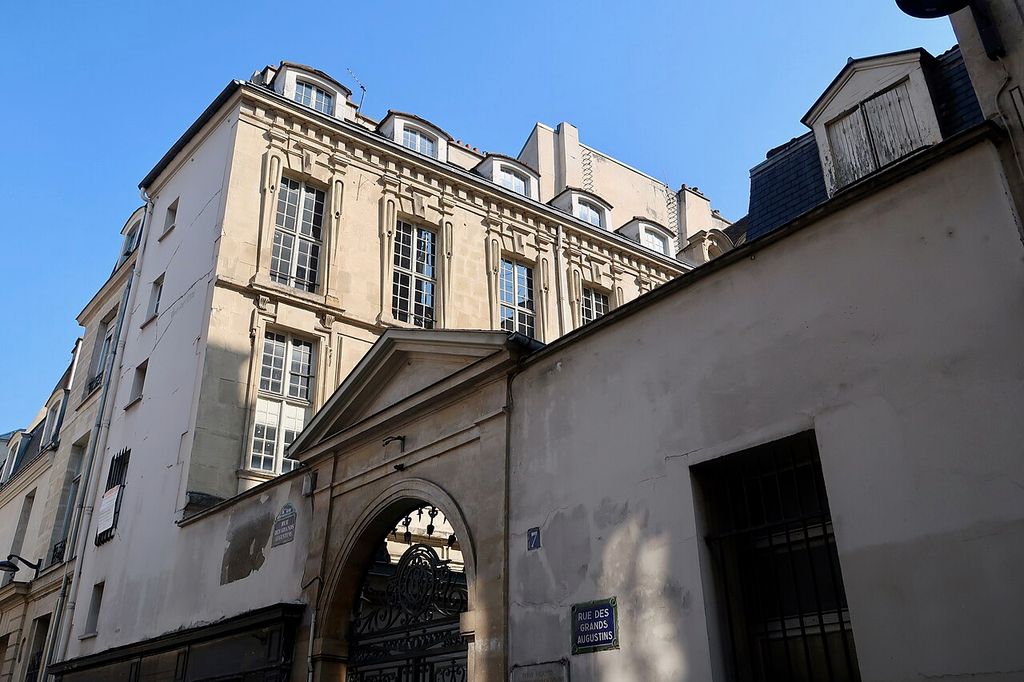
Her contribution to the story of Guernica was also practical and creative. At the rue des Grands-Augustins studio in Paris, she photographed stages of the mural's making from 11 May to 4 June 1937. The Reina Sofía describes Christian Zervos's request that she document its progress and explains the difficulties of photographing a large canvas in a poorly lit studio. Her photographs preserve visual evidence of Picasso's revisions; they are works of photographic judgement and technique, not automatic copies made by an invisible assistant.[6][7]
The photographic record matters because it shows the difference between a surviving object and a remembered process. A finished painting does not reveal every intermediate arrangement Picasso tried. Maar's sequence allowed later viewers to follow changes in the mural's figures and space; Reina Sofía's later technical study has added evidence from infrared and X-ray examination. The photographs and the technical images answer partly different questions. Neither gives us a recording of every conversation in the studio. Her work as a witness was substantial, but claims that she dictated the Tate canvas's specific colours or facial design go beyond the available record.[6]
The Musée national Picasso-Paris describes Maar as an antifascist Surrealist photographer whose relationship with Picasso developed alongside this collaborative moment. It also connects the crying-woman motif with the atmosphere of the Spanish war. These sources help us understand why a face associated with Maar could become part of an image of wider suffering. They do not document a precise occasion on which she wept for Picasso's model, or give Picasso a right to define her inner life for all viewers. A portrait can combine the features of a real person with an allegorical purpose.[4][7]
This tension is part of the painting rather than a problem to hide. Maar was both a maker of images and a person Picasso repeatedly transformed into images. The Tate canvas can be admired for formal invention while asking what happens when a woman's face becomes a vessel for collective pain. It is possible to acknowledge Picasso's antiwar context without treating Maar's emotional suffering as a resource he was entitled to use. The historical record supports her independent activity even when the canvas leaves her own response to this portrait unknown.[6][7]
The painting's journey to Tate
Roland Penrose acquired the 26 October canvas from Picasso soon after it was made, according to Art Fund's account. A 1957 MoMA catalogue captions it as Penrose's work, providing independent evidence of that ownership by mid-century. The painting was later lent to Tate. Tate's acquisition file and the National Heritage Memorial Fund record place its acquisition in 1987; Art Fund lists 1988 as its support year. Those dates refer to different institutional records and should not be compressed into an invented day-by-day transaction. The secure outline is Picasso to Penrose to the Tate collection.[1][2][11]
It is therefore misleading to say the painting has simply been “on display at Tate Modern since 1987.” Tate Modern opened later than the acquisition, and display can change with loans and installations. Tate's object page is the sensible place to check its current location before travelling.[1][2]
Seeing grief without inventing a story
The Tate Weeping Woman can be approached from several directions. The mother and dead child in Guernica explain why a crying figure mattered to Picasso in 1937; the October series shows him developing that figure beyond the mural. The hat, hair, hands, handkerchief and violent colour make the Tate painting a specific canvas within the series. Maar's own photography places her in the making of this history as an artist, not simply its subject.[3][4][6][7]
The painting does not tell us that Maar lost a child, cried in a particular room or embodied only one feeling. Such stories make the image easier to narrate but less accurate. It is more productive to let the portrait and the political image remain in tension: a recognisable person rendered through a visual language of public grief. Neither a documentary likeness nor a universal symbol alone exhausts what the canvas does with her face. To see the identified original and check its current status, use Tate's object record for T05010[1].[1][2]
Discussion
Use the evidence and your own close looking to explain your view. These are editorial prompts, not reader comments.
Reader Insights
How do the handkerchief and hands organise the face’s distress?
What does Dora Maar’s own artistic career add to this portrait’s history?
How is this Tate canvas distinct from other weeping-woman images?
Join the Conversation
Which reading best fits the evidence?
References
- Tate, Weeping Woman, T05010; Tate acquisition archive record; Art Fund's support record.
- MoMA, 1957 Picasso anniversary catalogue; Tate exhibition label reproduced in a large-print guide.
- National Gallery of Victoria, Patrick McCaughey, A witness to Guernica; NGV's current educational object entry.
- Museo Reina Sofía, Cabeza de mujer llorando con pañuelo (III), Spanish.
- The Metropolitan Museum of Art, Weeping Woman in Front of a Wall.
- Museo Reina Sofía, Dora Maar's photographic report on Guernica, Spanish; Guernica conservation account.
- Centre Pompidou, Dora Maar biography, French; Musée national Picasso-Paris, Spanish War and Occupation, French.
- Los Angeles County Museum of Art, Weeping Woman with Handkerchief, 26 June 1937.
- Solomon R. Guggenheim Museum, teaching materials on Spanish painting and the Mater Dolorosa.
- Musée national Picasso-Paris, La Femme qui pleure, MP165, French.
- National Heritage Memorial Fund, Weeping Woman by Picasso.
Image Credits
- Celette. CC BY-SA 4.0. Source: Wikimedia Commons. Resized proportionally to 1024px wide; no crop. Source record. Licence.
- Bonachera jf, 18 May 2016. Wikimedia Commons, CC BY-SA 4.0. Proportional resize only; derivative retains CC BY-SA 4.0. Source record. Licence.

