


 by Tom Gurney
Tom Gurney BSc (Hons) is an art history expert with over 20 years experience
Email: tomgurney1@gmail.com / Phone: +44 7429 011000
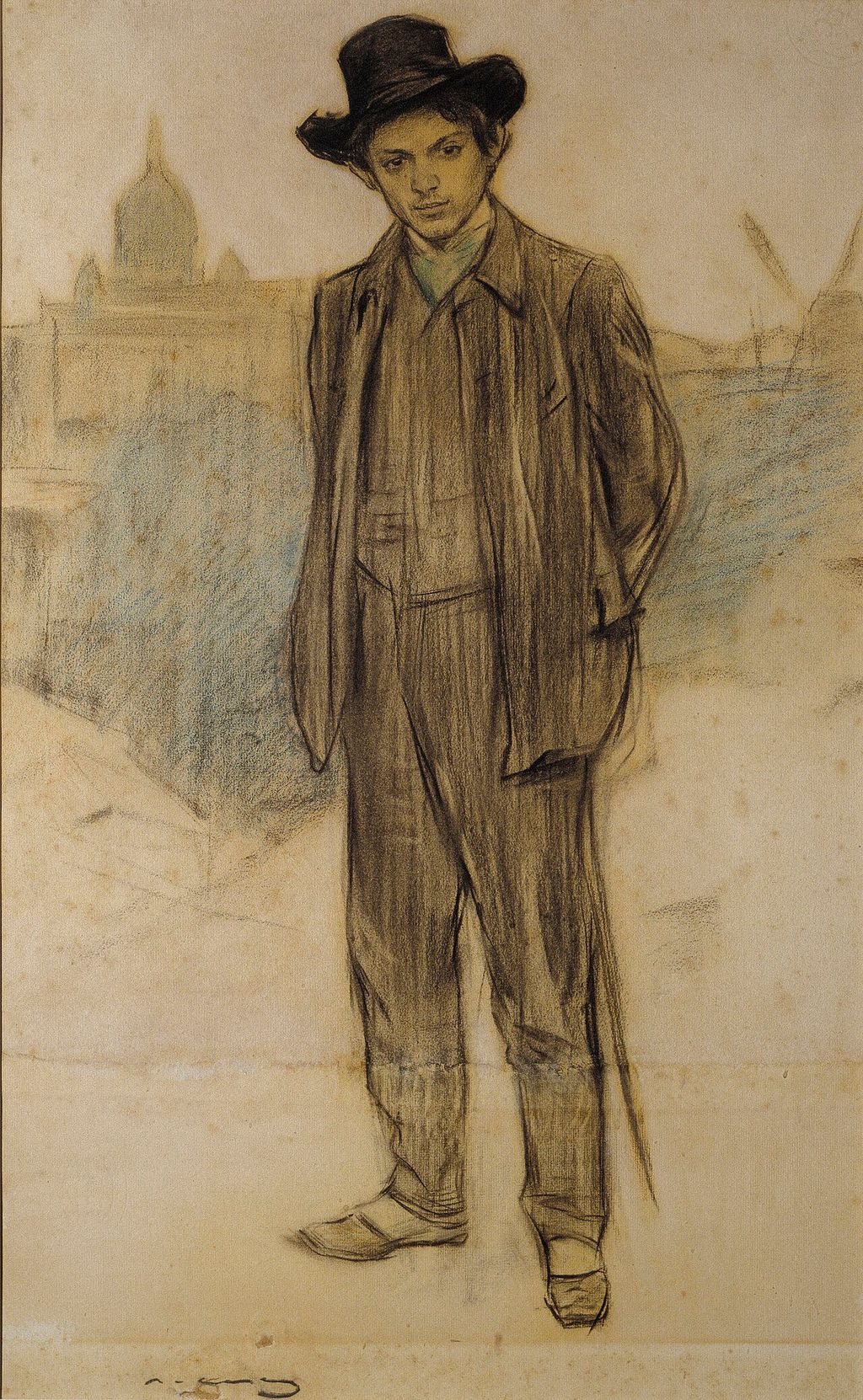
Introduction
Pablo Picasso (1881–1973) was a Spanish artist who lived for most of his adult life in France. He made paintings, drawings, prints, sculptures, ceramics and designs for the stage. He helped develop Cubism with Georges Braque, yet many of his most compelling works do not look Cubist. A blue painting of people on a shore, a guitar built from cardboard, an immense response to the Spanish Civil War and a clay jug turned into a figure belong to the same career. They do not belong to one visual formula.[1][2][3]
Picasso matters because he repeatedly changed the terms of an artistic problem. How can a flat surface show an object from more than one angle? What happens when a real piece of patterned material enters a painting? How can an image of violence speak to people who did not witness the event? What can a pot become when its existing shape suggests a body? His answers were made in conversation with other artists, craftspeople, writers and earlier art, and they were sometimes contradictory. Understanding him begins with those questions, not with the idea that every work is a step toward one final style.[3][4][5]
Watch: Pablo Picasso - the genres and disciplines in which he was involved, with famous Picasso paintings.
At a Glance
- Born: 25 October 1881 in Málaga, Spain
- Died: 8 April 1973 in Mougins, France
- Worked chiefly in: Barcelona and Paris early on; Paris and southern France later
- Media: Painting, drawing, printmaking, collage, sculpture, ceramics and stage design
- Period labels: Blue, Rose and Cubist phases overlap with work that does not fit a single style.[1][2][6]
Picasso's artistic connections
Picasso drew on Cézanne's treatment of form and revisited Velázquez's Las Meninas; Juan Gris and Fernand Léger extended the Cubist language pioneered by Picasso and Braque. These are different kinds of relationship, not a teacher–pupil chain. [10][15]
Picasso in context
Blue/Rose
c. 1901–06; overlapping phasesFauvism
c. 1905–07; neighbouring Paris movementCubism
c. 1907–14; Picasso–Braque partnershipSurrealist reception of Picasso
1925–30; not formal membershipPablo Picasso
1907–14; early Cubist experimentsGeorges Braque
1907–14; close collaborationJuan Gris
1912–14; selected Cubist worksFernand Léger
1911–14; public Cubist contextFirst Communion
1896The Tragedy
1903Three Musicians
1921Guernica
1937Las Meninas series
1957This is a selective comparison, not a set of exclusive career phases. Dates and relationships draw on the Musée d’Orsay[32], Musée national Picasso-Paris[33], MoMA[34], and the Met[35]. The bars mark the dated evidence shown here, not every year an artist worked in a style.
Contents
- The artist before the famous styles
- Blue and rose were changes in emphasis
- A picture that challenged the painted body
- What Cubism changed
- Painting was one part of the practice
- Art about war and public life
- Returning to earlier art and working late
- Subjects that return in different forms
- What the evidence can and cannot reveal
- How to begin looking at Picasso
The artist before the famous styles
Picasso's early ability did not appear without training. His father, José Ruiz Blasco, was a painter and teacher. The family moved from Málaga to A Coruña and then, in 1895, to Barcelona. At La Llotja art school, Picasso studied drawing and painting through academic exercises. The Museu Picasso Barcelona's notebooks show practice rather than a myth of instant genius: figures copied, poses tested and compositions revised. Large student pictures such as First Communion (1896) and Science and Charity (1897) demonstrate that he could make a carefully organised, publicly legible scene before he chose to challenge such conventions.[1][7]
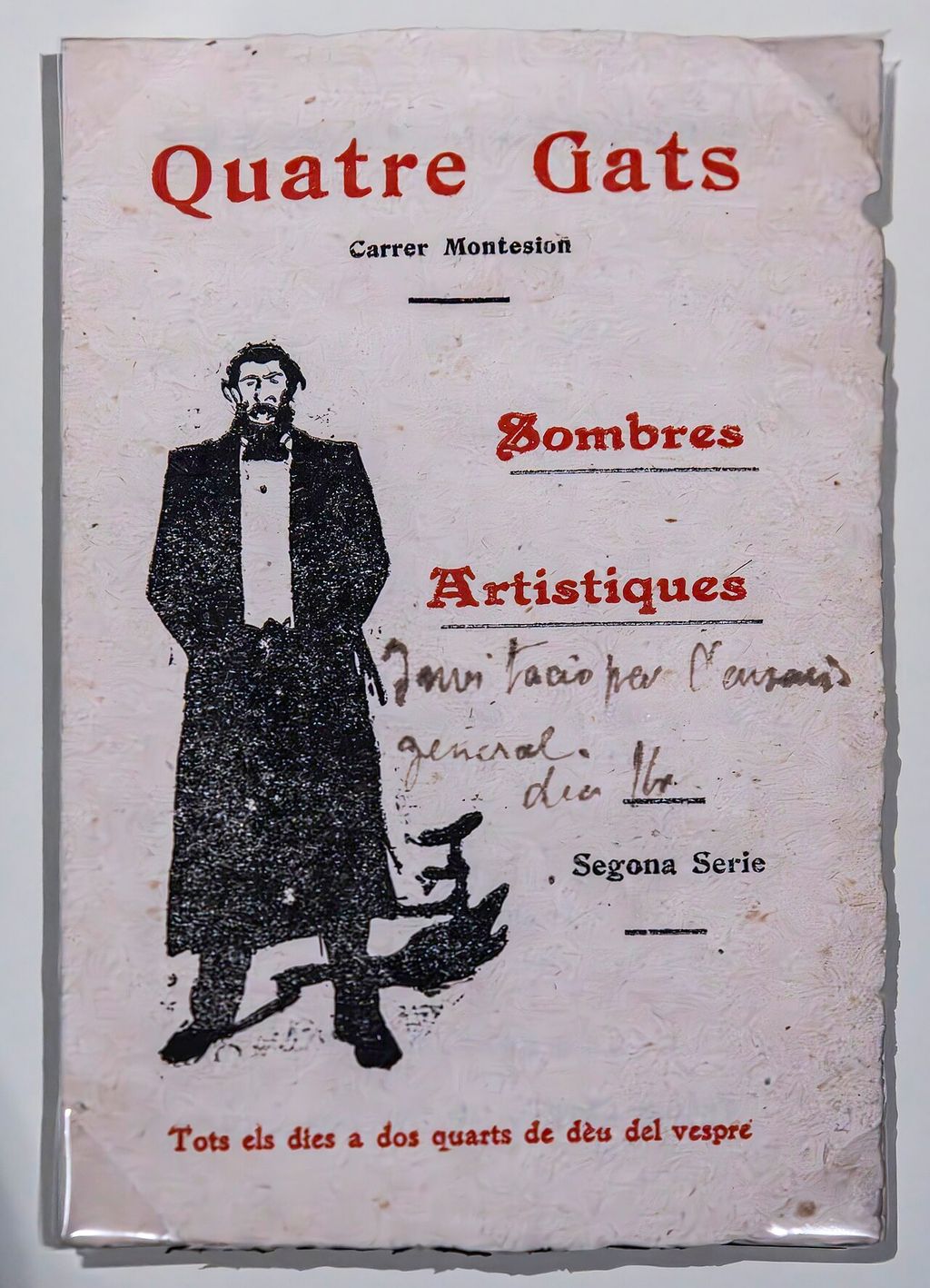
Barcelona was the city in which that student became part of an artistic community. Around Els Quatre Gats he encountered artists, writers and friends who would matter long after he left. He travelled to Paris in 1900 with Carles Casagemas and then moved back and forth between the two cities. Only in 1904 did he settle in Paris more permanently. That geography changes how the early work should be read. Blue Period paintings were made in both Paris and Barcelona, and the French capital was not the sole source of every new idea.[1][7][8]
Many later accounts divide Picasso's life into a tidy sequence: student, Blue Period, Rose Period, Cubist, classicist, Surrealist, late artist. It is a helpful first map, but the map must not replace looking. The 1921 Three Musicians belongs to a Cubist visual language even as Picasso made large classicising figures nearby. His 1957 Las Meninas series looks backward to Velázquez while conducting a contemporary experiment in repetition. A visitor can recognise both continuity and change without forcing each work into a sealed chapter.[2][9][10]
Blue and rose were changes in emphasis
From late 1901, blue and blue-grey became prominent in Picasso's pictures of people who are alone, together yet distant, working, sheltering a child or living with little security. His friend Casagemas had died by suicide earlier that year, and Picasso painted images related to him. The loss mattered. It does not explain every blue picture, every person represented or the choices of line, posture and material through which those people became visible. The Musée d'Orsay places the changing palette alongside Parisian encounters, Barcelona work, social observation and an expanding artistic language.[6]
The National Gallery of Art's The Tragedy of 1903 offers a useful test of that difference. Three barefoot figures stand on a shoreline, close enough to form a group but unable, it seems, to close the emotional space between them. The museum gives no single event that the scene illustrates. Infrared imaging has identified changes and underdrawings, reminding us that the painting was worked through rather than simply poured out as a record of grief. A blue palette can intensify a scene without serving as a diagnosis of its maker.[11][31]
The Blue Period was not confined to painting. Drawings, pastels, prints and sculpture helped Picasso try similar questions about the human figure at different scales. Nor did it end precisely when he moved to Paris in 1904. The warmer colours and circus performers later grouped under the Rose Period emerged gradually. Harlequins and acrobats offered new subjects, but a performer in pink is not automatically cheerful. Many seem suspended between public display and private isolation. Colour names describe an artistic tendency; they should not be turned into a simple story in which poverty and sorrow end because a new relationship begins.[6][8]
To begin with these years is to see that Picasso's art was already changing in several directions at once. He could make a severe image of a worker or mother, study an older painter, carve or model a figure and experiment with how much colour a composition needed. The later Cubist break did not erase this attention to bodies and human proximity. It changed the structures through which they could be shown.[6][12]
A picture that challenged the painted body
Picasso's portrait of the writer and collector Gertrude Stein, made in 1905–06, helps bridge the better-known periods. The Metropolitan Museum of Art describes a painting begun in Paris and completed after a summer in Gósol in the Catalan Pyrenees. Stein's body is solidly seated, while her face is remade in a masklike, highly simplified manner. The two parts do not fit a neat stylistic label. The portrait also has a history beyond Picasso's studio: Stein's own writing and collecting helped shape its reception, and she left the painting to the Met.[13]
In 1907 Picasso completed Les Demoiselles d'Avignon, a large painting of five sex workers in a shallow, fractured space. He prepared it through many drawings and revisions. Its present title came into use around its first public exhibition in 1916, nine years after it was painted. The work was therefore not instantly unveiled to a welcoming or scandalised “art world” in 1907. Its first audience was smaller, and its later reputation was built through exhibitions, criticism and museum history.[14]
The painting's forms draw on several sources, including older European painting, Iberian sculpture and African and Oceanic works Picasso encountered in Paris. The Museum of Modern Art notes that many non-European objects reached French collections through colonial channels. A serious account cannot treat their makers as anonymous suppliers of shapes for a European breakthrough. Nor should Les Demoiselles be reduced to a formal exercise: its figures' confronting gaze, its sexual setting and its treatment of bodies remain part of what makes the canvas unsettling. Historians differ on whether to call it the beginning of Cubism or a decisive work that preceded the fuller development of that movement.[14]
This distinction is useful for understanding Picasso more widely. Some of his works became famous because they challenged a convention; their histories also reveal what earlier museums, dealers and viewers chose to notice or ignore. Looking today can involve both appreciating an artistic invention and asking how cultural objects, people and power were represented within it.[14]
What Cubism changed
Cubism developed through Picasso's close exchange with Georges Braque, especially from about 1908 to the outbreak of the First World War. It did not mean that artists merely drew cubes. In many paintings, a guitar, bottle, tabletop or human face is broken into facets whose relations must be assembled by a viewer. Muted colour can make shape, edge and interval do more work. The resulting image may be difficult at first because it does not provide a single stable viewpoint from which every part fits together.[3][15]
Compare a conventional still life with a Cubist one. In a conventional painting, a bottle might stand in front of a table and cast a shadow; the artist builds an illusion of objects occupying a room. In an Analytic Cubist work, the neck, label, curve or glint of a bottle might be distributed through intersecting planes. Some clues remain recognisable; others merge with the surrounding space. The picture makes the act of recognition part of the experience. Picasso and Braque explored this together, while other artists, writers and exhibitors contributed to the broader movement.[3][15]
Around 1912 the question shifted again. In Still Life with Chair Caning, Picasso included a piece of oilcloth printed to resemble woven chair cane and edged the oval picture with rope. The manufactured material is real, but what it depicts is an imitation. Newspaper, patterned paper and other fragments entered related works. Such collages ask whether an object must be painted to belong to a painting. They also pull signs from everyday life into the space formerly reserved for art materials.[15]
Picasso's cardboard Guitar of late 1912 challenged sculpture in a different way. Cut and assembled cardboard, string and other ordinary components made a form whose open spaces were as significant as its surfaces. He revisited the idea in sheet metal in 1914. A guitar can therefore appear as a painted set of clues, a pasted fragment or a construction whose shape depends on the space around it. This movement between media is one reason Picasso's contribution cannot be measured by painting alone.[16]
War broke the circumstances of the Picasso–Braque partnership. Braque served in the French army and was wounded; Picasso, a Spanish citizen living in France, was not mobilised into that army. The later appearance of more recognisable and classical figures in Picasso's art is not proof that Cubism had failed. Three Musicians, painted in 1921, revisits the flat, interlocking logic of Synthetic Cubism while he was also making monumental figure paintings. Different solutions could coexist within one summer of work.[9][15]
Painting was one part of the practice
Picasso drew throughout his life. Drawings could be exercises, studies for larger works or finished works that needed no painted conclusion. The Musée national Picasso-Paris holds notebooks, individual sheets and studies that reveal several stages of an idea. A drawing for a figure in Les Demoiselles is not interchangeable with a later ink sketch simply because both are on paper. One might test a pose; another might make a single line carry a complete gesture. Looking at the medium and purpose of a sheet is more informative than calling every sketch effortless.[2][17]
Printmaking offered another range of possibilities. Picasso made The Frugal Repast in 1904 and returned to etching, aquatint, lithography and linocut over later decades. A plate can be revised; a design can exist in several states; impressions made and distributed later may bear a different date from the original act of drawing. The British Museum's printmaking research follows this work from early Paris to the south of France and brings printers and publishers into the story. A print is not automatically a cheap copy of a painting. It may be the form in which Picasso first posed a problem, tried a variation or reached a different public.[18]
Sculpture was equally varied. A clay figure of 1902, the open Guitar constructions, the welded-metal work made with Julio González, large plaster forms at Boisgeloup and postwar assemblages cannot be described as one sustained style. The Musée Picasso Paris collection shows how objects could be modelled, cut, bent, cast or assembled from things with earlier uses. In La Chèvre of 1950, recognisable found components helped make an animal whose body is both creature and construction. Such works ask a viewer to move around them and notice how parts meet, not merely recognise the subject from a single front view.[2][19]
Theatre took these questions to another scale. For the 1917 ballet Parade, Picasso designed a curtain, sets and costumes. The production also depended on Jean Cocteau's scenario, Erik Satie's music, Léonide Massine's choreography and Serge de Diaghilev's company. The curtain's size and its relation to moving performers made it unlike a canvas addressed to a still viewer in a gallery. It is a good example of how artistic forms can change when an audience, setting and collaborators change.[20]
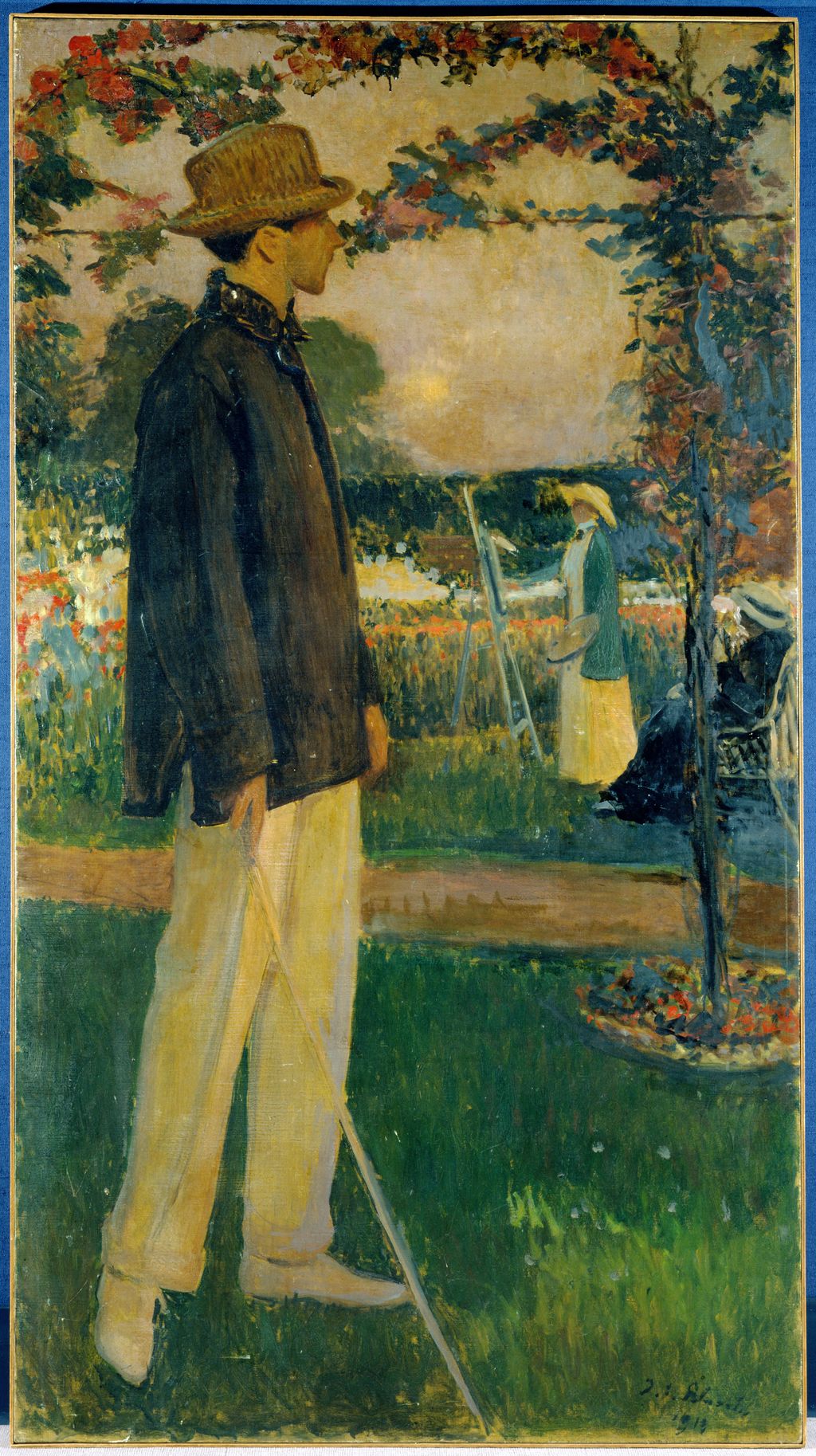
After the Second World War, ceramics became a major part of Picasso's work in Vallauris. Suzanne and Georges Ramié ran the Madoura workshop where he began sustained experiments with clay. A vessel's body might suggest an owl or a face; decoration could amplify or contradict its shape. Firing, glazing, workshop practice and editions all matter to the result. These works should not be dismissed as decorative diversions from painting, nor treated as if Picasso made them without the craft knowledge of the people around him.[21]
Art about war and public life
Picasso's most widely known political work is Guernica. The Spanish Republic commissioned a large canvas for its pavilion at the 1937 Paris International Exposition. After the bombing of Gernika on 26 April, Picasso worked on studies and then the painting in his Paris studio. The picture does not document aircraft, a map or an ordered sequence of events. Its broken human and animal bodies make the vulnerability of civilians and the violence of war urgently visible without supplying a simple caption for each figure.[22]
Dora Maar, herself an artist and photographer, photographed stages of the work. Her images are evidence of revisions: Guernica did not arrive in its final form in one burst. The Museo Reina Sofía's archive preserves the painting's commission, making and later journeys. It also cautions against treating one reading of the bull, horse or lamp as the artist's authorised key. The painting's political force lies partly in the tension between a specific war and a visual language that viewers have carried into other conflicts.[22][23]
Picasso supported the Spanish Republic, was appointed director of the Prado in 1936 and joined the French Communist Party in 1944. Later images, including the dove associated with the peace movement and Massacre in Korea of 1951, show continuing political engagement. But “political Picasso” is not a separate person who replaced “experimental Picasso.” Form, public commission, exhibition and ideology meet differently in different works. The cartoon-like simplicity of one emblem and the difficult composition of Guernica can both serve political ends without using the same visual method.[1][22][24]
The history of Guernica also continued after Picasso's death. It was kept for many years at MoMA, returned to Spain in 1981 and entered the Museo Reina Sofía in 1992. Its physical movement followed political change and museum decisions. This does not mean the painting's meaning is exhausted by its later status as an icon; it means that art can acquire new public responsibilities beyond the conditions of its making.[22]
Returning to earlier art and working late
Picasso's later work often engaged with art made centuries before him. In 1957 he produced fifty-eight paintings in response to Velázquez's Las Meninas. Some examine individual people from the older work; others change the scale, viewpoint or grouping; still others are pigeons, landscapes or a portrait of Jacqueline Roque. The series shows the difference between copying a painting and using it as a field of questions. Which parts make it recognisable? What happens if a figure is isolated or a dark area becomes a shape in its own right? The Museu Picasso Barcelona holds the series, which Picasso donated in 1968.[10]
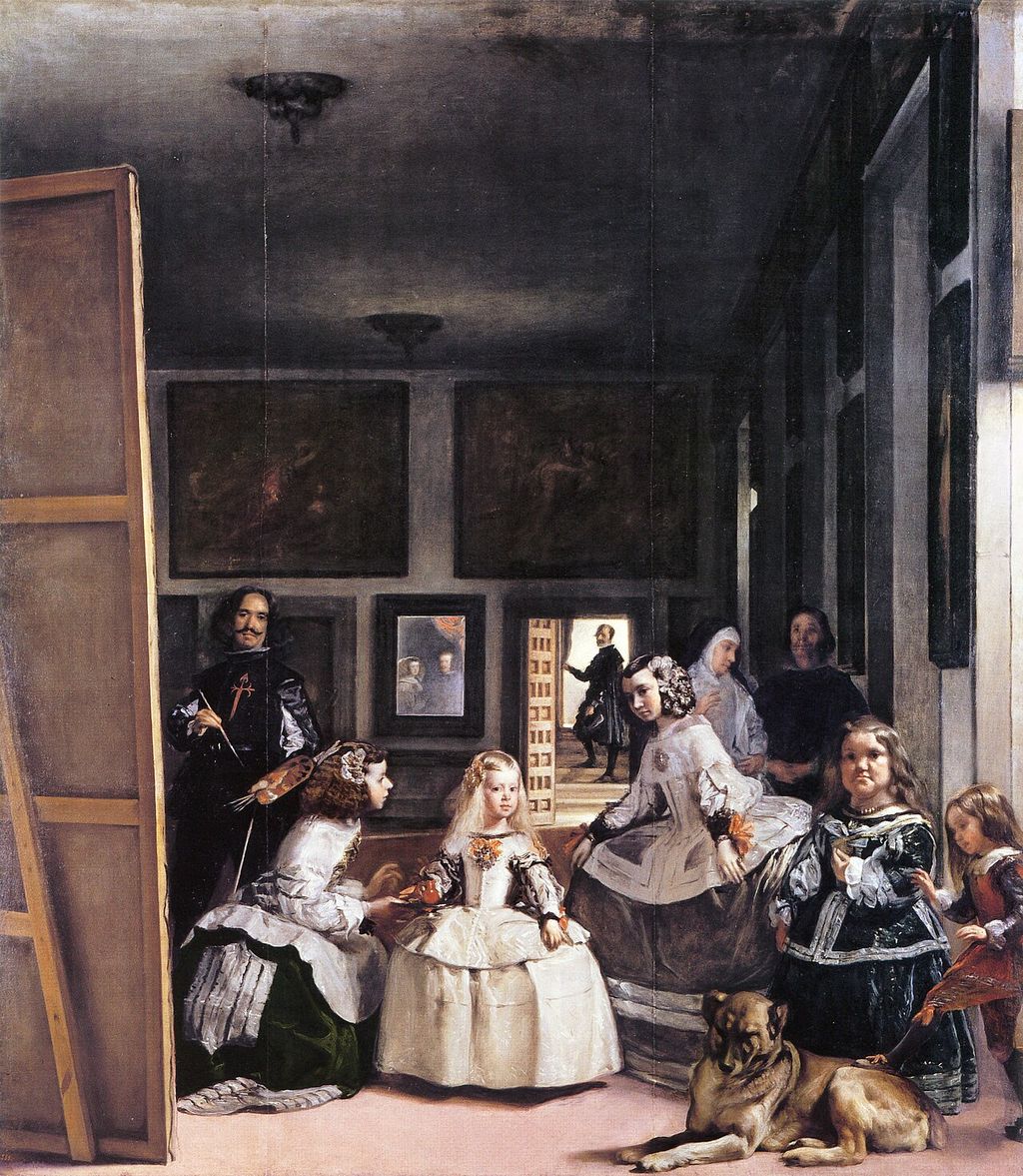
This kind of serial work resists the idea that one image ends an investigation. Picasso made many versions after earlier artists and repeated motifs within his own practice. Variation could be rapid, but speed does not mean an absence of thought. Changes of scale, medium and emphasis let him discover different possibilities in the same subject. A reader who has seen only one reproduction may miss the argument that develops across a sequence.[10][25]
Picasso continued making paintings, drawings and prints during his final years in Mougins. Musketeers, painters and models, embraces and other figures appear in work whose handling can be deliberately blunt. The Musée Picasso Paris notes a substantial late production and the mixed reception it received. It is tempting to call these images the work of an artist beyond his best years, or to praise every mark as timeless genius. Neither response is much use. Each work still asks what its scale, line, colour, subject and relation to other works accomplish.[26]
The Museu Picasso opened in Barcelona in 1963, with Jaume Sabartés and the city central to its formation. Picasso's later gifts, especially the Las Meninas series and the large body of early work retained by his family, changed what could be studied there. The Musée Picasso Paris, built substantially from works and archives preserved after his death, offers another kind of view across his media and working process. Different collections show different Picassos. Reading an object record and its provenance is often the best next step after encountering a famous title.[1][2][27]
Subjects that return in different forms
Picasso returned to certain subjects for decades, but recurrence does not guarantee a fixed meaning. A mother and child can appear as a particular pair of people, a study of bodies in contact or part of a picture about loss and protection. The child in The Tragedy stands between adults on a shore; the gesture does not tell us whether the scene has a single narrative. Elsewhere, an artist may draw a family member or imagine a more general figure. A useful question is not simply “what does motherhood symbolise for Picasso?” but “what do these people do in this work, and what evidence lets us name them?”[11][12]
Musicians and instruments offer another route. A guitar's curved body and neck remain recognisable even as Picasso breaks them into planes or builds them from scraps. In Three Musicians, masks and costume make identity part of a performance; the instruments occupy a scene with human figures rather than a tabletop. A cardboard Guitar has no player, yet its open form asks a viewer to supply volume that is barely there. The repeated subject makes changes of medium especially clear: a sound-producing object becomes a set of visual signs, a social performance or a physical construction.[9][16]
Animals also travel between observation, myth and politics. A goat assembled from found components is a material problem and an animal figure at once. The Minotaur, a creature with a human body and bull's head from Greek myth, enters Picasso's work around 1928 and becomes prominent in the 1930s. The Musée Picasso Paris describes different roles across drawings and prints, from pleasure to vulnerability or violence. No single label—“Picasso himself,” “Spain,” “brutality”—should be fastened to every instance. Context matters: a figure in a print from the Vollard Suite does not automatically mean the same thing as an animal in Guernica.[19][22][28]
The artist and model is another recurring relationship, and perhaps the most difficult to describe responsibly. Picasso portrayed people close to him, but he also used conventional figures inherited from older art. A face can be linked to a named person by an object record, archive or strong visual and documentary evidence; many cannot. The presence of a woman in a picture is not permission to label her a “muse,” infer the artist's feelings or erase her own work. Gertrude Stein wrote and collected, Dora Maar made photographs, and Françoise Gilot painted and wrote. Their roles in the history of Picasso's art are different, and none can be reduced to a visual motif.[13][23][29]
Finally, Picasso repeatedly pictured people making or viewing art, and he returned to older paintings as sources of new work. The Las Meninas series is an unusually sustained example, but the larger question runs across his career: how does one maker respond to another without simply copying? Sometimes he kept a recognisable composition and changed its figures; sometimes an earlier work offered only a starting point for a new material or scale. The repeated subject is therefore not a sign of running out of ideas. It can show a problem being asked again under different conditions.[10][25]
What the evidence can and cannot reveal
Picasso's works often look spontaneous, and photographs of him at work have strengthened that impression. Surviving studies tell a more exact story. Drawings for Les Demoiselles d'Avignon record changes in the number, arrangement and posture of figures before the final canvas. MoMA's technical study found further evidence of reworked heads beneath the visible paint. It also found limits: an overall X-ray did not reveal additional major changes such as adding or removing figures during the final painting campaign. The studies and imaging establish specific revisions; they do not prove a complete sequence of Picasso's thoughts or the meaning of every borrowed form.[14][30]
The same distinction matters for Blue Period paintings. The National Gallery of Art has reported infrared evidence of changes and underdrawings beneath The Tragedy. That finding is valuable because it shows the picture was worked through, not made as a single transparent expression of emotion. It cannot identify the three figures as named people or settle the painting's narrative. Scientific tools reveal earlier marks; interpretation still depends on looking, context and the modesty to leave some questions open.[11][31]
Maar's photographs of Guernica provide another kind of sequence. Unlike an X-ray, they record visible states of the mural while Picasso was still painting it. The photographs make alterations in the composition traceable and give Maar a distinctive role as an author of the work's historical record. Yet even a series of dated photographs cannot tell us exactly what Picasso intended by the horse, bull or lamp, or how every 1937 viewer understood them. Documentary evidence is powerful precisely when its limits are respected.[22][23]
Prints make revision visible in a different way. A plate or block can have several states, each reflecting a material decision before an edition is printed. A later impression may be dated by its plate, printing or publication, depending on the catalogue. Drawings and ceramics pose their own questions of material, edition and collaboration. This is why a title and a small picture on a website are rarely enough to establish an artwork's identity. A holding institution's record can supply date, medium, dimensions and provenance; when those details are absent or contradictory, confident naming should wait.[2][18][21]
Museums have also changed what viewers can see. Barcelona's collection brings the student years and the Las Meninas series together. Paris preserves paintings, sculptures, paper works and archives across a much longer span. MoMA's conservation record adds evidence about one especially influential canvas, while Reina Sofía's archive follows Guernica through making, travel and reception. These are complementary forms of knowledge, not competing claims to the one definitive Picasso. They show why the artist's reputation is still studied and revised.[2][14][22][27][30]
How to begin looking at Picasso
For a first encounter, six works give a route through different questions rather than a ranking of his “best” art:
- The Tragedy (1903): Look at the space between three people who stand very close. How do colour, posture and the empty shore shape a feeling without specifying an event?[11]
- Les Demoiselles d'Avignon (1907): Compare the faces and bodies, then ask why the figures confront the viewer. The sources of its forms and the later history of its title are part of the encounter.[14]
- The cardboard Guitar (1912): Notice how little solid material is needed for an instrument to become recognisable. Its gaps and shadows belong to the work.[16]
- Three Musicians (1921): Find the performers, instruments and masked identities among painted shapes that recall cut paper. It shows Cubist invention continuing alongside other styles.[9]
- Guernica (1937): Begin with the documented commission and Maar's photographs, then examine how the final arrangement directs attention to suffering rather than supplying a literal report.[22][23]
- The Las Meninas series (1957): Look across several canvases, not only the largest. Variation itself is the work's subject as Picasso reopens Velázquez's composition.[10]
The route deliberately crosses painting, construction and serial work. It also keeps the difference between what a museum can document and what a viewer may infer. No one object can stand for all of Picasso, but these six make visible why his practice cannot be contained by a single period name.[2][10][14]
One path is to follow a question rather than a decade. To understand his treatment of people, compare The Tragedy with the confronting figures of Les Demoiselles d'Avignon and the masked performers of Three Musicians. The people in these works inhabit very different spaces. What does posture tell us? How does a face become legible—or deliberately difficult? How close does a viewer feel to a figure, and what in the composition creates that distance? These questions make period labels more useful because they show what changed inside them.[11][14][9]
A second path is to follow an object. The guitar appears in paintings, collages and constructions. In each form, some features are needed for recognition and others can be omitted, displaced or replaced by actual materials. Looking at the 1912 cardboard Guitar after a Cubist still life makes it easier to see why Picasso was not merely changing the appearance of familiar things. He was testing the conditions under which we identify them at all.[15][16]
A third path is to follow a medium. A painting holds colour and revision on a fixed support; a print can be made in states and editions; a ceramic vessel has an inside, an outside and a firing history; a stage curtain works in relation to performance. None is a lesser version of another. Together they reveal an artist who made choices according to what each material could do—and whose work depended on printers, potters, stage collaborators, sitters and the people who preserved or exhibited it.[17][18][20][21]
Finally, follow the public life of an artwork. Guernica began as a commission for a particular pavilion, became a touring anti-war image, was held in New York and later returned to Spain. Les Demoiselles spent years in a studio before its public exhibition and still prompts debate about cultural sources and representation. The Las Meninas series became a gift to Barcelona. These histories are not footnotes to a finished image. They affect what viewers can see, where they can see it and what questions they bring.[10][14][22]
Picasso's art is easier to approach when fame is set aside long enough to observe the work in front of us. Name the date and material. Ask what changed during its making, who else contributed, and what the holding institution actually knows. A powerful interpretation can remain open to correction. That combination of close looking and historical care is a better way into Picasso than a list of masterpieces or a legend of solitary genius.[2][14][17][22]
Picasso artworks directory
A selected guide to the works researched for this launch, from early paintings to drawings, prints and postwar art. Each title opens an individual study; this is a curated selection, not a catalogue raisonné.
Explore Picasso
Start here
- Pablo Picasso Biography
- Pablo Picasso Paintings
- Pablo Picasso Drawings
- Pablo Picasso Prints and Printmaking
- Pablo Picasso Sculptures
- Pablo Picasso Ceramics
- Pablo Picasso Collage and Assemblage
- Pablo Picasso Quotes
- Pablo Picasso Timeline
- Pablo Picasso: Style and Technique
- Pablo Picasso Museums and Places
Periods and themes
- Picasso's Blue Period
- Pablo Picasso's Rose Period
- Pablo Picasso's African Period
- Pablo Picasso and Cubism
- Pablo Picasso and Neoclassicism
- Pablo Picasso and Surrealism
- Pablo Picasso's Late Work
- Pablo Picasso Portraits
- Pablo Picasso Self-Portraits
- Animals in Pablo Picasso's Art
- Flowers and Still Life in Pablo Picasso's Art
- Bulls, Minotaurs and Bullfighting in Picasso's Art
- Pablo Picasso: Peace, War and Politics
- Mother, Child and Family in Picasso's Art
- Picasso, Theatre, Ballet and the Circus
- Picasso's Studios and Places
- Pablo Picasso and Jacqueline Roque
Artworks and people
- Bouquet of Flowers
- Picasso and Lump the Dog
- The Tragedy
- War and Peace
- The Mackerel
- Girl with a Mandolin
- The Dream (Le Rêve)
- Weeping Woman
- Girl Before a Mirror
- The Old Guitarist
- Self-Portrait (1901)
- Science and Charity
- Guernica
- Mother and Child Study (1904)
- La Celestina
- Ma Jolie
- La Vie
- The Dream and Lie of Franco
- Mediterranean Landscape
- Dora Maar au Chat
- The Blue Room
- The Reservoir, Horta de Ebro by Pablo Picasso
- Dove of Peace
- Women Running on the Beach
- Don Quixote
- Blue Nude
- Woman Ironing
- The Three Dancers
- Child with a Dove
- Les Demoiselles d'Avignon
- Massacre in Korea
- Boy Leading a Horse
- First Communion
- Family of Saltimbanques
- Three Musicians
- Portrait of Daniel-Henry Kahnweiler
- The Charnel House
- Night Fishing at Antibes
- Maya with Doll
- Portrait of Olga in the Armchair
- Portrait of Gertrude Stein
- Garçon à la Pipe
- Picasso and Sylvette David
- Rest
- Les Noces de Pierrette
- Pipes of Pan
- Joie de Vivre
Discussion
Use the evidence and your own close looking to explain your view. These are editorial prompts, not reader comments.
Reader Insights
Which two works show Picasso changing a problem rather than moving neatly to a new style?
How did Braque, craftspeople or another collaborator shape the work discussed?
What does an object record tell you that a famous period label cannot?
Join the Conversation
Which reading best fits the evidence?
References
- Museu Picasso Barcelona, “Cronología,” Spanish institutional chronology and Catalan version. View Spanish source; View Catalan source.
- Musée national Picasso-Paris, “La collection,” French account of the collection, media and archives. View source.
- The Metropolitan Museum of Art, James Voorhies, “Pablo Picasso (1881–1973),” art-historical overview. View source.
- Bayerische Staatsgemäldesammlungen, “Pablo Picasso,” German artist account. View source.
- Deutsches Historisches Museum, “Pablo Picasso,” German historical biography. View source.
- Musée d'Orsay, “Picasso. Bleu et rose,” French exhibition account. View source.
- Museu Picasso Barcelona, “Picasso. Los Cuadernos,” Spanish exhibition research on early notebooks. View source.
- Museu Picasso Barcelona, “El vínculo de Picasso con Barcelona,” Spanish institutional account. View source.
- The Museum of Modern Art, “Three Musicians,” 1921 object record. View source.
- Museu Picasso Barcelona, “The chronology of Las Meninas of Picasso,” the museum's account of the 1957 series and 1968 gift. View source.
- National Gallery of Art, “The Tragedy,” 1903 object record with technical and collection information. View source.
- Musée national Picasso-Paris, “Frise chronologique,” French institutional chronology. View source.
- The Metropolitan Museum of Art, “Gertrude Stein,” 1905–06 object record. View source.
- The Museum of Modern Art, “Les Demoiselles d'Avignon,” object record, making, first exhibition and cultural-source discussion. View source.
- Musée national Picasso-Paris, “Picasso et le cubisme,” French study. View source.
- The Museum of Modern Art, “Picasso: Guitars 1912–1914,” exhibition research. View source.
- Musée national Picasso-Paris, Picasso–Giacometti educational dossier, French discussion of drawing as observation, study and preparation. View source.
- British Museum, “Picasso: Printmaker,” exhibition research. View source.
- Musée national Picasso-Paris, “La Chèvre,” object account; and “La collection,” sculpture section. View object; View collection.
- Centre Pompidou, “Rideau de scène du ballet Parade,” collection record. View source.
- Musée national Picasso-Paris, “Les années méditerranéennes,” French account of Vallauris and Madoura. View source.
- Museo Nacional Centro de Arte Reina Sofía, “Guernica,” object record and Repensar Guernica archive. View object; View archive.
- Museo Nacional Centro de Arte Reina Sofía, “Dora Maar's report on Guernica's progression,” archive record. View source.
- Museo Nacional Centro de Arte Reina Sofía, “Pablo Picasso,” Spanish dossier within Repensar Guernica. View source.
- Musée national Picasso-Paris, “Les influences de Picasso,” French thematic collection account. View source.
- Musée national Picasso-Paris, “Les dernières années de Picasso,” French account of late work. View source.
- Museu Picasso Barcelona, “Historical and museographic tour of the collection,” institutional history. View source.
- Musée national Picasso-Paris, “Picasso et la mythologie,” French account of the Minotaur's changing place in his work. View source.
- Musée national Picasso-Paris, collection dossier on Françoise Gilot; Museu Picasso Barcelona, exhibition account of Fernande Olivier. View Gilot source; View Olivier source.
- The Museum of Modern Art, conservation study of Les Demoiselles d'Avignon, technical analysis. View source.
- National Gallery of Art, 2008 Annual Report, p. 38, reporting infrared-identified changes and underdrawings in The Tragedy. View source.
- Musée d’Orsay, Picasso: Blue and Rose exhibition overview. View source.
- Musée national Picasso-Paris, Picasso and Cubism biographical essay. View source.
- The Museum of Modern Art, What Is Cubism? collection essay. View source.
- The Metropolitan Museum of Art, Surrealism art-historical essay. View source.
Image Credits
- Ramon Casas. Public domain. Source: Wikimedia Commons. Resized to 1024px; no crop. Source record. Licence.
- Didier Descouens. Public domain. Source: Wikimedia Commons. Resized proportionally to 1024px wide; no crop. Source record. Licence.
- Jacques-Émile Blanche, 1913, P1881. CC0 Paris Musées / Musée Carnavalet – Histoire de Paris. Painting public domain (Blanche died in 1942); reproduction released CC0. Proportional resize only. Source record. Licence.
- Diego Velázquez. Public domain. Source: Wikimedia Commons. Resized to 1024px; no crop. Source record. Licence.

_Quatres_Gats._Carrer_Montesion._Sombres_Artistiques,_segona_serie._Tots_els_dies_a_dos_quarts_de_d%C3%A8u_del_vespre,_Ed_Pere_Romeu_(l%27aven%C3%A7)_1898_-_MNAC.jpg)
