


 by Tom Gurney
Tom Gurney BSc (Hons) is an art history expert with over 20 years experience
Email: tomgurney1@gmail.com / Phone: +44 7429 011000
Introduction
Jacqueline Roque was Picasso's companion from the mid-1950s and his wife from 1961 until his death in 1973. Her face appears across drawings, paintings and prints made during those years, but the familiar phrase “Picasso's muse” describes only one part of her life. She worked at the Madoura pottery in Vallauris when they met, had a daughter from an earlier marriage, shared the successive homes and studios in which Picasso made his late work, and later donated important objects to the Museu Picasso in Barcelona. To understand her place in the art, it helps to look at both the portraits and the person beyond their frames.
Picasso did not create a single, definitive “Jacqueline portrait.” In 1954 he drew her rapidly in ink; in 1956 she sat within the architecture of a Cannes studio; in 1957 he placed her portrait beside his vast engagement with Velázquez's Las Meninas; and in 1960 another canvas returned to an earlier way of arranging a woman's head. The works share a sitter, but their forms and purposes differ. Jacqueline was not merely a sign that Picasso had entered a new domestic phase. She was a continuous presence across a period of sustained artistic experiment.
At a Glance
- Relationship: Picasso’s companion from the mid-1950s and wife from 1961
- Years of marriage: 1961–73
- Beyond portraiture: Madoura pottery work, shared homes and later museum donations
Contents
- Who was Jacqueline Roque before she met Picasso?
- Jacqueline in the drawings of 1954
- La Californie, Vauvenargues and Mougins
- A portrait within the Las Meninas years
- Why the portraits look so different
- Jacqueline's role after Picasso's death
Who was Jacqueline Roque before she met Picasso?
Jacqueline was born in Paris and lived a substantial part of her life before meeting Picasso. The Museu Picasso Barcelona's biographical account[2] records an early marriage to André Hutin, a period living in Africa, and a daughter, Catherine Hutin. After that marriage ended, she returned to France with Catherine. These facts matter because accounts that begin and end with her as an elderly painter's young model erase her own family and history. [2]
She found work at Madoura in Vallauris, the pottery associated with Suzanne and Georges Ramié. Picasso had been working with the workshop since the late 1940s. The Musée national Picasso-Paris[1] dates their meeting to the summer of 1952, while Barcelona's ceramic-exhibition account also places it at Madoura. The site is more than a romantic backdrop. Ceramics were part of Picasso's working day there, and Jacqueline's job put her in the same environment before she became a frequent subject of his art. [1]
The museums distinguish meeting from living together. Barcelona's account says the couple began sharing a life in October 1954. Paris dates Jacqueline's appearance in Picasso's work to the summer of that year. These dates fit a gradual development better than a single anecdote about courtship. We do not need a story about her private reasons for accepting him to establish when the relationship entered his art.
Their marriage took place at Vallauris on 2 March 1961, according to the Museu Picasso Barcelona chronology[5]. Jacqueline remained with Picasso through the final twelve years of his life. He was already one of the world's best-known artists when they met. The unequal public fame and their difference in age shaped later writing about the relationship, but neither is a licence to replace documentary history with confident claims about what either person “really” wanted. [5]
Jacqueline in the drawings of 1954
One way to avoid treating all her portraits as interchangeable is to start with a document rather than a famous reproduction. The Centre d'Études Picasso in Paris[1] catalogues a notebook of November–December 1954 drawings, including several ink Portraits de Jacqueline and profiles. Each is a sheet within a larger working book. Nearby pages include studies connected to Picasso's reinterpretation of Delacroix's Women of Algiers. The notebook shows different kinds of line and subject being worked through in close succession. [1]
This sequence matters for the person page. A portrait title does not guarantee a single pose or mood. One head may be almost calligraphic; another builds a profile through repetition or scraping. The pages belong to a studio process, not to an illustrated diary whose every change can be decoded as a change in the couple's feelings. The museum's object descriptions establish the materials and sequence. They do not report Jacqueline's response to each drawing.
Paris also identifies the 3 June 1954 Jacqueline aux mains croisées (“Jacqueline with Crossed Hands”), a work whose monumental neck and flattened geometry are discussed in the museum's French educational dossier[6]. Even early in their relationship, Picasso was not simply recording a likeness. He was reorganising a head and body to test how drawing, sculpture and painting could intersect. Jacqueline's recognisable features could remain while the form changed drastically. [6]
The separate Jacqueline aux fleurs places her profile beside pale blossoms. Paris museum archive photographs[7] identify the oil, while the flowers and still-life discussion examines how its botanical setting shapes the portrait. It is not another title for Jacqueline with Crossed Hands. [7]
Watch: Pablo Picasso
Explore Picasso through five videos from museums, broadcasters and art educators.
Picasso’s Guernica: Great Art Explained
Explore the composition and historical setting of Picasso’s best-known response to war.
Watch on YouTubeLa Californie, Vauvenargues and Mougins
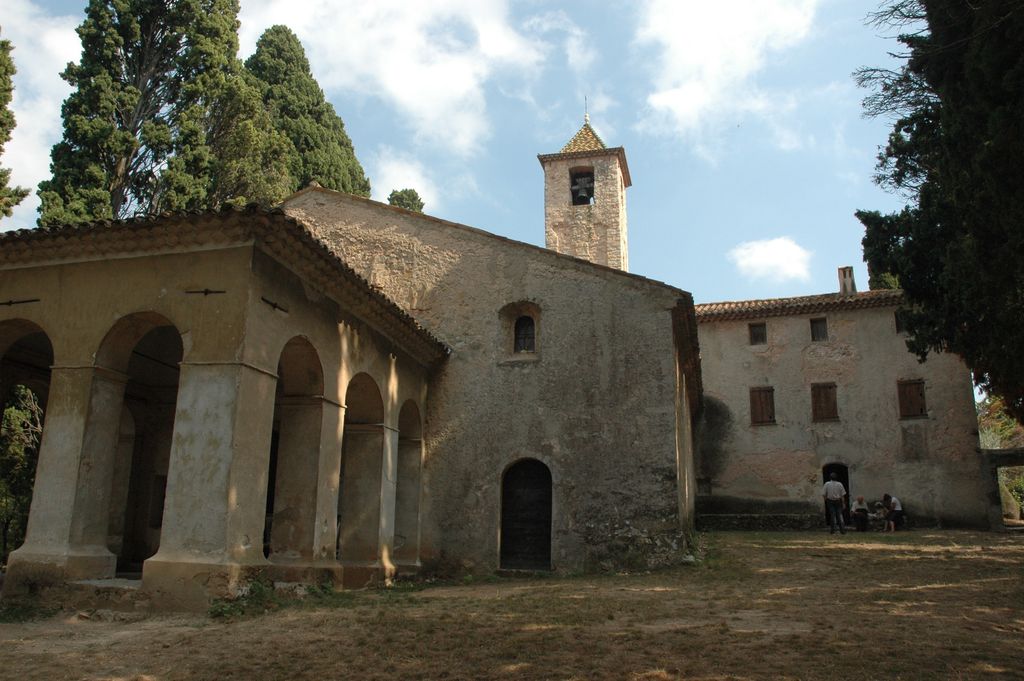
The studios and places provide a second way to follow the relationship without making every portrait into biography. In 1955 the couple moved to La Californie, Picasso's large house above Cannes. The Paris Picasso museum's account of the studio[8] describes bright rooms and large windows opening towards a garden. Its archival photographs show the workspaces and the accumulation of objects around him. Jacqueline appears in and around these rooms in paintings and photographs, but the rooms themselves also became subjects. [8]
MoMA's Woman by a Window[3], painted at Cannes in June 1956, is a useful example. Jacqueline sits in a rocking chair by the studio window. The picture includes the window's light, the surrounding architecture and a fragment connected to painting within the room. MoMA records it as an oil on canvas, 162 × 130 centimetres: it is a distinct work, not the later yellow-hat portrait. Its setting makes a person and a workplace visible together. It can suggest contemplation, but the painted figure's apparent mood cannot be treated as a transcript of Jacqueline's inner life. [3]
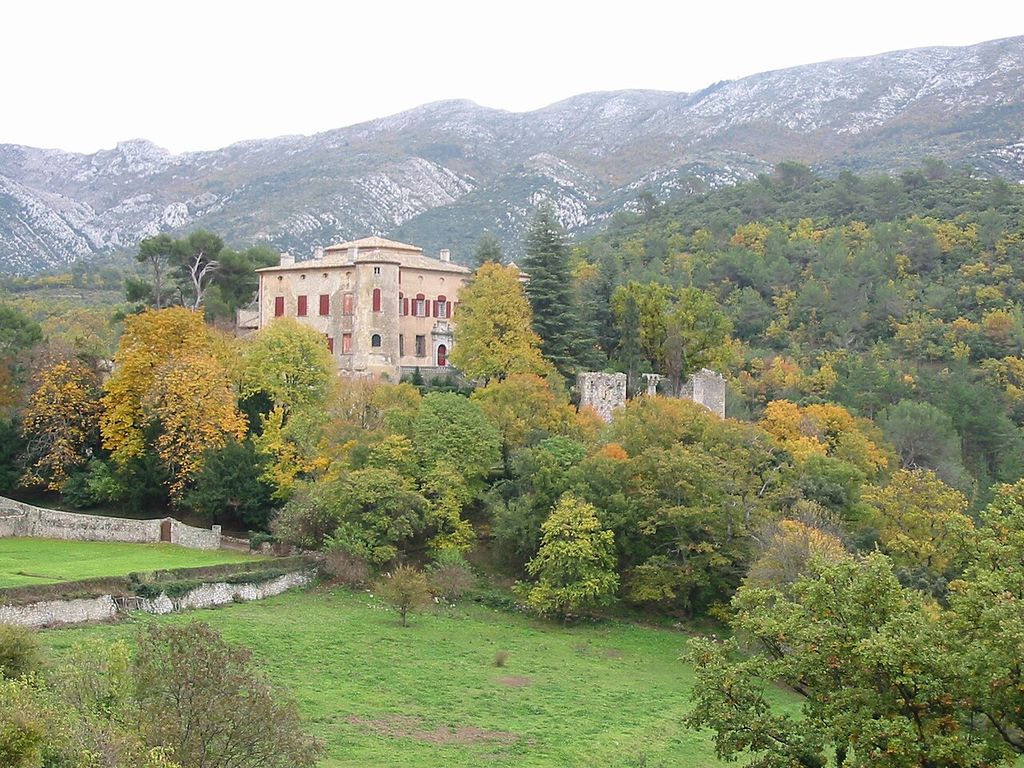
Picasso bought the Château de Vauvenargues near Aix-en-Provence late in the decade, and Barcelona's chronology places the couple there from about 1959 to 1961. After their marriage they moved to Notre-Dame-de-Vie, near Mougins, which became their last shared home and studio. The Paris museum's Mediterranean Years account[1] traces Jacqueline's figure through these settings. The portraits change alongside rooms, light, working rhythms and Picasso's broader experiments. None of that proves she caused a particular formal invention; it does show why a page about her needs more than one artwork and one location. [1]
Jacqueline's presence was not limited to a private interior. The couple's circle included artists, writers, dealers and photographers. Roberto Otero's photographs, shown by the Museo Picasso Málaga[9], record Picasso at work and in Jacqueline's company among other situations. Such photographs are evidence of shared spaces and appearances, not transparent access to a relationship's emotional truth. They, too, are separate copyrighted works rather than freely available portraits for reuse. [9]
A portrait within the Las Meninas years
The Museu Picasso Barcelona[2] owns a securely identified Portrait of Jacqueline, painted at Cannes on 3 December 1957. It is an oil on canvas measuring 116 × 89 centimetres, inventory MPB 70.489. Picasso gave it to Barcelona in 1968 alongside the group associated with his Las Meninas work, in homage to his friend and secretary Jaume Sabartés. The museum's series chronology[2] places the portrait among 58 works made that year: interpretations of Velázquez's picture, images of pigeons, landscapes and this portrait. [2]
It would be misleading either to call the Jacqueline painting merely one of Velázquez's maids of honour or to detach it entirely from the series. The museum points to its painted frame, which makes the portrait look as though it were set in a mirror. Its curators compare Jacqueline visiting Picasso's upstairs studio with the royal visit implied in Velázquez's original composition. That is a museum reading of the painting's position in the suite; it does not establish that Jacqueline was literally cast as Queen Mariana in every part of Las Meninas or that Picasso left a single definitive allegorical key.
This is not the widely reproduced image of a woman in a yellow hat and blue-striped blouse. It has its own date, medium, museum inventory and place in the 1957 sequence. A person page can discuss several portraits, but the catalogue details of one cannot be transferred to another simply because the sitter's name is shared.
Why the portraits look so different
Jacqueline's face was a recurring subject, not a fixed template. The Metropolitan Museum of Art[3] identifies the sitter in its 1960 Head of a Woman, a comparatively modest oil canvas. The museum connects that painting to a sequence of ten wash drawings dated 12 November 1960. It also notices that Picasso reworked arrangements from earlier paintings of Françoise Gilot. That last point is revealing: the formal life of a Picasso portrait does not start from zero whenever his relationships change. Earlier visual ideas can be recast around a new sitter. [3]
The Barcelona Picasso museum's 2017 portrait project[10] gathers Jacqueline images ranging from a 1954 pencil drawing to later oils and related works. Its selection makes the extent of the series visible, though counts vary depending on whether drawings, prints and sculptures are included. Barcelona speaks of roughly 200 portraits while the Met says hundreds of works; neither phrase defines the same fixed inventory. It is more honest to say that Picasso represented her repeatedly across media than to pretend a single number has a settled definition. [10]
The variety extends to Picasso's dialogues with older art. Barcelona's portrait research connects Jacqueline's features with his 1954–55 variations on Delacroix's Women of Algiers. A viewer may recognise her eyes or profile in a figure drawn from a nineteenth-century painting. That is different from saying Delacroix's entire scene is a literal portrait of Jacqueline. The work brings a living model into a composition with its own history, while the model's features are transformed by that composition. Looking for her face can be productive if it does not erase the older picture, or turn every female figure into a named sitter.
The repeated almond-shaped eyes, strong profile, dark hair and carefully held posture in some works helped curators recognise her, as the Paris Picasso museum[1] explains. Recognition still has limits. A painting titled only Woman cannot always be reassigned to Jacqueline because it resembles another portrait, and an odalisque in the Women of Algiers variations is not a documentary likeness of her. Sometimes she is a named sitter; sometimes her features inform a broader type or a historical quotation. The page should preserve that difference. [1]
A widely circulated image called Woman with Yellow Hat (Jacqueline) shows a divided blue-and-white face, bright yellow hat and striped clothing. Its visual impact is easy to describe, but a direct holding-institution record for this precise image has not been established here. Its date, support, dimensions and present owner should therefore not be inferred from the neighbouring Barcelona, MoMA or Met portraits. Its catalogue identity needs an independent object-level check before it could anchor a separate artwork account.
Picasso also made late sculptures from cut, folded and painted sheet metal, a process described by the Fondation Beyeler's German collection guide[11]. Some female heads and hats from this period invite comparison with the painted Jacqueline images. That does not justify relabelling every late Woman with a Hat sculpture as a portrait of her. The medium changes the encounter: a sheet-metal head has edges, folds and shadows that alter as one walks around it, while a canvas presents its transformations on one surface. Jacqueline's recurring image made room for both kinds of experiment. [11]
Jacqueline's role after Picasso's death
Jacqueline lived until 1986, thirteen years after Picasso. Barcelona's museum documents her as a donor and supporter, not only a widow. In 1982 she lent 41 unique ceramic works from her collection for an exhibition in the city. The museum says she announced at its opening that she would give them to Barcelona; they entered its collection as a donation. Picasso had given the pieces to her over the years they lived together. Her decision changed what the public museum could study and display.
These were not simply portrait souvenirs. The museum's ceramic exhibition[4] describes dishes, jars and bowls whose shapes Picasso used as starting points for faces, animals and mythological figures. Some ceramic objects in her gift were made before the couple met, which is another reason not to confuse the collection with a pictorial record of their relationship. Jacqueline chose to move a group of works she owned from private possession into a public institution. That act had an art-historical consequence: later visitors and researchers could encounter the range of Picasso's experiments with clay, glaze, incision and vessel form together. [4]
The museum's object record[4] lists her 1985 gift of the 1901 painting Woman with a Bonnet (MPB 112.750). It is a different artwork from the Jacqueline portraits: the date alone places it more than half a century before they met. The gift shows how she could shape the preservation of Picasso's work beyond images of herself. It also corrects an occasional museum-website error that attaches 1961 to the donated bonnet painting. [4]
To acknowledge this agency is not to settle every argument about Picasso's later family relationships or access to him. Those questions involve other people's accounts, legal and personal histories, and more evidence than a portrait can supply. It would be equally reductive to make Jacqueline the source of a serene late style or the sole cause of every conflict around a famous artist's household. A serious account can say that she shared and helped manage his last decades without inventing her motives or making her solely responsible for decisions involving many people.
Jacqueline's importance, then, lies in several connected histories. Her likeness runs through a substantial part of Picasso's late art. Her presence can be traced in the working places of Vallauris, Cannes, Vauvenargues and Mougins. Her own acts of lending and donation helped determine what survives in a public collection. The portraits are worth studying one by one, but the person represented in them should not disappear behind a myth about Picasso's inspiration.
Discussion
Use the evidence and your own close looking to explain your view. These are editorial prompts, not reader comments.
Reader Insights
Which portrait detail varies across Picasso’s many depictions of Jacqueline?
How does the Madoura setting expand her story beyond the word muse?
What can a notebook establish that a later recollection cannot?
Join the Conversation
Which reading best fits the evidence?
References
- Musée national Picasso-Paris, Mediterranean Years and 1954 drawing notebook.
- Museu Picasso Barcelona, Jacqueline biography, 1957 portrait and Las Meninas chronology.
- MoMA, Woman by a Window and Metropolitan Museum of Art, Head of a Woman.
- Museu Picasso Barcelona, Jacqueline's ceramic gift, collection history and Woman with a Bonnet object record.
- Museu Picasso Barcelona chronology. View source
- museum's French educational dossier. View source
- Paris museum archive photographs. View source
- Paris Picasso museum's account of the studio. View source
- Roberto Otero's photographs, shown by the Museo Picasso Málaga. View source
- Barcelona Picasso museum's 2017 portrait project. View source
- Fondation Beyeler's German collection guide. View source
Image Credits
- Malost. CC BY-SA 3.0. Source: Wikimedia Commons. Resized to 1024px; no crop. Source record. Licence.
- Berdea, 17 September 2011. Wikimedia Commons, CC BY-SA 3.0. Proportional resize only; derivative retains CC BY-SA 3.0. Source record. Licence.

