


 by Tom Gurney
Tom Gurney BSc (Hons) is an art history expert with over 20 years experience
Email: tomgurney1@gmail.com / Phone: +44 7429 011000
Introduction
A woman's face fills the upper part of a small, wide canvas. Her closed eyes are reduced to dark marks; her pale hands meet beneath her cheek. Below them runs a red surface edged by a loop of yellow, while a heavy dark contour gathers the head and arms into one sweeping shape. There is almost no room to look around. In Le repos (Marie-Thérèse Walter), usually translated as Rest, Picasso brings the viewer close to a sleeping figure while leaving the setting unusually spare.
This is a specific oil on canvas, 27.3 × 46.3 centimetres, signed at the lower left and inscribed “Boisgeloup 17 mai XXXII” on its stretcher. The date is 17 May 1932. These details come from Christie's catalogue of the painting[1], which also identifies the woman as Marie-Thérèse Walter. Several other Picasso paintings are called Le repos. Their dates, sizes and histories should not be attached to this one simply because the titles match. [1]
At a Glance
- French title: Le repos (Marie-Thérèse Walter)
- Date: 17 May 1932
- Object: Oil on canvas, 27.3 × 46.3 centimetres
Rest in Picasso's career
First Communion
1896Three Musicians
1921Rest
1932Guernica
1937Las Meninas series
1957The highlighted work is dated with the qualifications explained in the sources on this page. The other works are selective points of comparison, not the start or end of a style.
Contents
- Looking at the sleeping figure
- Why the date and title matter
- Marie-Thérèse Walter and Boisgeloup in 1932
- Other images of sleep and rest
- The painting's recorded history
Looking at the sleeping figure
The canvas is wider than it is high, closer in proportion to a view across a bed than to a conventional upright portrait. Picasso uses that shape to crop the figure. We do not see Walter standing, seated in a complete chair, or placed in a fully described room. A face, shoulder, forearm and hands take up almost everything. Their broad pale areas touch or overlap, making it necessary to follow the dark line slowly to work out which curve belongs to which part of the body.
Her head tilts down towards her arm. The nose projects in profile, while the eyes are closed and the mouth is a small cluster of dark-red marks near the centre. Those few features are enough to make the face readable. Picasso does not build it through a succession of delicate shadows. He lets a blue-black outline carry much of its shape. The result can seem at once immediate and constructed: a recognisable head made from abbreviated, sometimes startlingly large forms.
The hands deserve equal attention. Fingers overlap in a compressed group beneath the head. Some edges are dark and firm; elsewhere pale brushwork merges one finger with the next. They appear to support the cheek, but they also provide a second set of curves that echo the larger line of the face. The eye can move from the nose to the fingers and back without leaving the centre of the painting. A small action—resting the head—becomes a formal structure for the entire canvas.
Colour sharpens that structure. The red lower field is broad, emphatic and mostly uninterrupted. It can be read as a bed or other support, but the painting offers few details with which to identify the furniture. A narrow yellow curve separates it from part of the pale body. At the top, white, cream, muted blue and dark green-black areas meet without settling into a conventional wall or pillow. This is not a room described for its own sake. Picasso gives just enough surroundings to register the body's weight, then concentrates on the relationship between face, arm, line and colour.
The horizontal composition makes the image feel close, but “close” is a visual effect rather than proof of exactly where Picasso stood or whether Walter was physically asleep before him. A painter can observe, remember and invent within the same work. The closed eyes do not document the sitter's dream, mood or consent to a particular representation. They do create a picture in which a face usually available for social exchange—the gaze meeting another person's—is temporarily withdrawn. What remains is a set of visible forms and the viewer's awareness of looking at someone who does not look back.
The scale reinforces this encounter. At only 27.3 centimetres high, the original painting asks for a near view; it does not have the commanding size of Picasso's large 1932 oils. That physical fact can be lost when reproductions appear at the same screen width as much larger canvases. Up close, the dark outline is not a perfectly even graphic border. It thickens, breaks and changes colour as it turns around the cheek, forearm and hand. The red area likewise carries visible variations rather than reading as a flat block. These qualities keep the picture suspended between the swift clarity of a drawing and the worked surface of a painting. They help explain why the body feels both simplified and present.
Why the date and title matter
The 17 May painting is easy to confuse with other works titled Le repos. A different oil of 22 January 1932[3] measures 162 × 130 centimetres, stands vertically and was made in Paris, not at Boisgeloup. The Musée national Picasso-Paris's 1932 calendar[4] places that January Le repos among a tight sequence of paintings of women reading, sleeping or sitting in a chair. It is not a large version of this little May canvas. It appeared in Picasso's 1932 Paris and Zürich retrospectives, according to its own exhibition record. Christie's catalogue for the May painting does not list those 1932 shows among its exhibitions. [3] [4]
Another later market entry compounds the confusion. A Le Repos offered by Sotheby's in 2018[3] presents Walter's sleeping head amid yellow, violet, red and green. It is a different composition and carried its own auction result. Neither that result nor the January painting's size or 1932 exhibition history belongs to the May work. The safest identifying details here are the small landscape format, the red lower field, the intertwined pale head and hands, and the stretcher inscription naming Boisgeloup, 17 May 1932. [3]
There is a reason this matters beyond cataloguing neatness. Picasso returned to related motifs throughout the year, changing their scale, medium, position and colour. The same title could label several solutions to the problem of a body at rest. If every Rest becomes interchangeable, one loses precisely what the close-looking shows: this painting's tight crop, sparse setting and almost continuous route through head and fingers. Comparison is useful only once the compared works remain distinct.
Watch: Pablo Picasso
Explore Picasso through five videos from museums, broadcasters and art educators.
Picasso’s Guernica: Great Art Explained
Explore the composition and historical setting of Picasso’s best-known response to war.
Watch on YouTubeMarie-Thérèse Walter and Boisgeloup in 1932
Walter was not an anonymous model. Picasso met her in Paris in 1927, when she was 17 and he was 45, according to the Musée national Picasso-Paris's detailed chronology[4]. He was married to Olga Khokhlova. Their relationship with Walter remained private for years; in autumn 1930, Picasso arranged for her to live at 44 rue La Boétie, near the marital home at number 23. Those facts supply important context without turning Walter into nothing more than a cause of Picasso's stylistic changes. [4]
Picasso bought the Château de Boisgeloup in Normandy in 1930 and set up a sculpture workshop there the following year. His work around Walter moved between painting, drawing, printmaking and large sculpted heads. A dated inscription places this particular canvas at the estate in May 1932. It does not prove that the painting was made as a literal record of one afternoon's nap, or tell us who else was there when it was painted. The château was also part of Picasso's family life: the Paris museum's research on Olga[6] describes films from spring 1931 in its grounds in which Olga, Picasso and others appear. A story of Boisgeloup as a secluded space shared only by Picasso and Walter is too simple. [6]
By 1932, Walter's profile and rounded forms were prominent in Picasso's work. The Paris museum's 1932 exhibition research[4] places images associated with her beside bathers, still lifes, sculpture and darker subjects such as the Crucifixion. The year was unusually visible to the public as well: Picasso had a major retrospective at Galerie Georges Petit in Paris in June and July, followed by a Kunsthaus Zürich exhibition in the autumn. The Kunsthaus's own exhibition history[5] records the Zürich show's scale and success. The May Rest belongs to the same year and setting, but its catalogue does not establish that it hung in either 1932 retrospective. [4] [5]
That distinction also changes how the private and public sides of 1932 are described. Picasso selected recent work for major displays, and the first volume of Christian Zervos's catalogue of his paintings appeared that year. The Paris museum treats these developments as part of the growing public organisation of his career, not simply the background to one relationship. Walter's face entered this increasingly visible body of work while the relationship itself remained complicated by Picasso's marriage. What a painting discloses visually and what the public knew about the people in it were not necessarily the same. Rest can be read within that changing public moment without pretending that it was one of the pictures visitors saw in June.
The story is more complicated than an instant move from “harsh” Surrealism to a soft style dictated by a new lover. Picasso had long combined sharp distortions, classical-looking profiles, flattened forms and fluid curves, often within the same period. In Rest, the expansive line around the head and arm makes the figure supple, while the heavy black contour, abrupt crop and broad red field keep the painting forceful. It is possible to discuss Surrealism's interest in sleep and the body as context; it would be too much to claim a precise dream or psychoanalytic message that Picasso supplied for this canvas.
Walter's role should not be idealised in the opposite direction either. Portraits of sleeping women can make a sitter appear passive, especially when later writers present the artist's looking as a complete account of her life. The date, location and her identification as the subject are documented. Her thoughts at the time of this painting are not. The image shows how Picasso represented Walter; it does not give a direct statement from her. Respecting that limit makes the painting's visual choices clearer rather than less compelling.
Other images of sleep and rest
Picasso made a number of images of Walter sleeping, reading or reclining in 1932. The French museum's daily chronology places La Lecture on 2 January, the large January Le repos on 22 January, Le Sommeil on 23 January, and Le Rêve on 24 January, all before this 17 May picture. Their sequence suggests an artist revisiting a theme, not a single canvas that suddenly discovered it. The titles alone do not show which work was painted from life, which from memory, or how long any one painting took.
Indeed, the Paris museum's research on the early-1932 portraits[7] cautions that Walter was not physically present for some of the January–March canvases inspired by her. That finding applies to those earlier works; it does not settle whether she was at Boisgeloup on 17 May. It does show why the sleeping pose cannot be treated as photographic evidence of a sitting. Picasso's repeated theme is an artistic construction as well as an image of a known person. The May painting's title invites the language of rest, but the actual conditions of making it remain undocumented in the public object record. [7]
A separate 4 April 1932 Nu couché[8] at the Musée national Picasso-Paris offers a useful contrast. Its reclining nude is more expansive, with the body and surrounding forms making a different kind of space. It is not a study for Rest. Likewise, the Museo Picasso Málaga's The Siesta[5], painted 18 August 1932, places a sleeping figure outdoors in full daylight. These comparisons show that sleep could support many different spatial and bodily arrangements that year. The May canvas is distinctive because so little lies between the viewer and the compressed face and hands. [8] [5]
The Málaga museum's account of the 1932 Galerie Georges Petit retrospective notes that recent paintings of women sleeping, reading or shown in bust form were displayed beside earlier works. That helps explain why 1932 became a highly visible year for Picasso's representations of Walter. It does not place this particular May canvas on the wall there; the Christie's exhibition list for it[1] begins later. A broader artistic context is not a substitute for an object's own record. [1]
One can also compare how Picasso treats a sleeping person with how viewers usually approach portraiture. A conventional portrait often offers a face that returns the viewer's gaze and a setting that tells us about the sitter's status. Here neither occurs. Walter's face is seen sideways, eyes closed, and much of the body has been cropped away. Yet the features are not generic: the long profile, pale colour and rhythmic curves remain individual enough for the catalogue to name her. Picasso's formal simplification does not eliminate likeness. It changes the terms under which a likeness is encountered.
The painting's recorded history
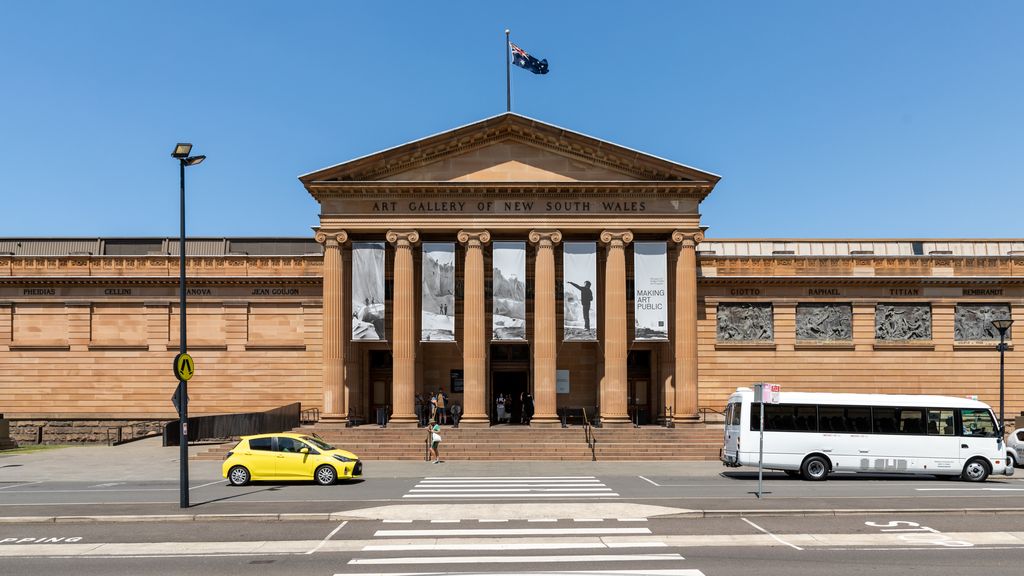
The Christie's provenance[1] places the painting with Jane MacGowan in Sydney by 1938. It was included that year in a contemporary British and Continental art exhibition at what is now the Art Gallery of New South Wales. The painting appeared at Christie's New York on 17 May 1983, where Richard M. Cohen of Los Angeles acquired it. It descended in the Cohen family and was offered from that collection in November 2002. These are the published steps of an ownership chain, not proof that every earlier transfer or the current whereabouts is known. [1]
The painting was also lent to Picasso and the Weeping Women: Marie-Thérèse Walter and Dora Maar, an exhibition travelling through Los Angeles, New York and Chicago in 1994–95. Those museum appearances were loans; they do not make the painting part of those museums' permanent collections. Christie’s 6 November 2002 sale-results release[2] records US$3,089,500 for lot 31. That is a historical sale result, not a present-day value. The published lot record does not identify a current owner or public display location after the sale. [2]
The later reception of Rest has often emphasised romance and serenity. Those readings may respond to real features of the image: a closed eye, a cheek against a forearm, gentle pale shapes. Yet the broad red ground and forceful black line complicate any account of pure softness. The painting tells us with certainty that Picasso made a small, horizontal image of Walter at Boisgeloup on 17 May 1932. It invites us to follow a few curves until face, hand and support become an unusually close composition. What she dreamed, how she felt and what the image meant to Picasso beyond its making remain less certain—and need not be invented for the painting to hold our attention.
Discussion
Use the evidence and your own close looking to explain your view. These are editorial prompts, not reader comments.
Reader Insights
How do Walter’s hands and face fill the unusually wide canvas?
Which inscription identifies this Rest among several similarly titled works?
What does the spare setting invite us to infer but not prove?
Join the Conversation
Which reading best fits the evidence?
References
- Christie's, Le repos (Marie-Thérèse Walter), 17 May 1932: object, provenance, exhibitions and 2002 auction record.
- Christie's, 6 November 2002 Impressionist and Modern Art evening-sale results: lot 31's recorded sale price.
- Christie's, the different Le repos of 22 January 1932, and Sotheby's, another Le Repos offered in 2018.
- Musée national Picasso-Paris, 1932 exhibition research, French daily chronology, and Picasso–Walter family chronology.
- Museo Picasso Málaga, The Siesta; Kunsthaus Zürich, 1932 Picasso exhibition history.
- Paris museum's research on Olga. View source
- Paris museum's research on the early-1932 portraits. View source
- separate 4 April 1932 Nu couché. View source
Image Credits
- Dietmar Rabich, 25 October 2019, Wikimedia Commons / ‘Sydney (AU), Art Gallery of New South Wales — 2019 — 3103’, CC BY-SA 4.0. Proportional resize only; derivative retains CC BY-SA 4.0. Source record. Licence.

,_Art_Gallery_of_New_South_Wales_--_2019_--_3103.jpg)