


 by Tom Gurney
Tom Gurney BSc (Hons) is an art history expert with over 20 years experience
Email: tomgurney1@gmail.com / Phone: +44 7429 011000
Introduction
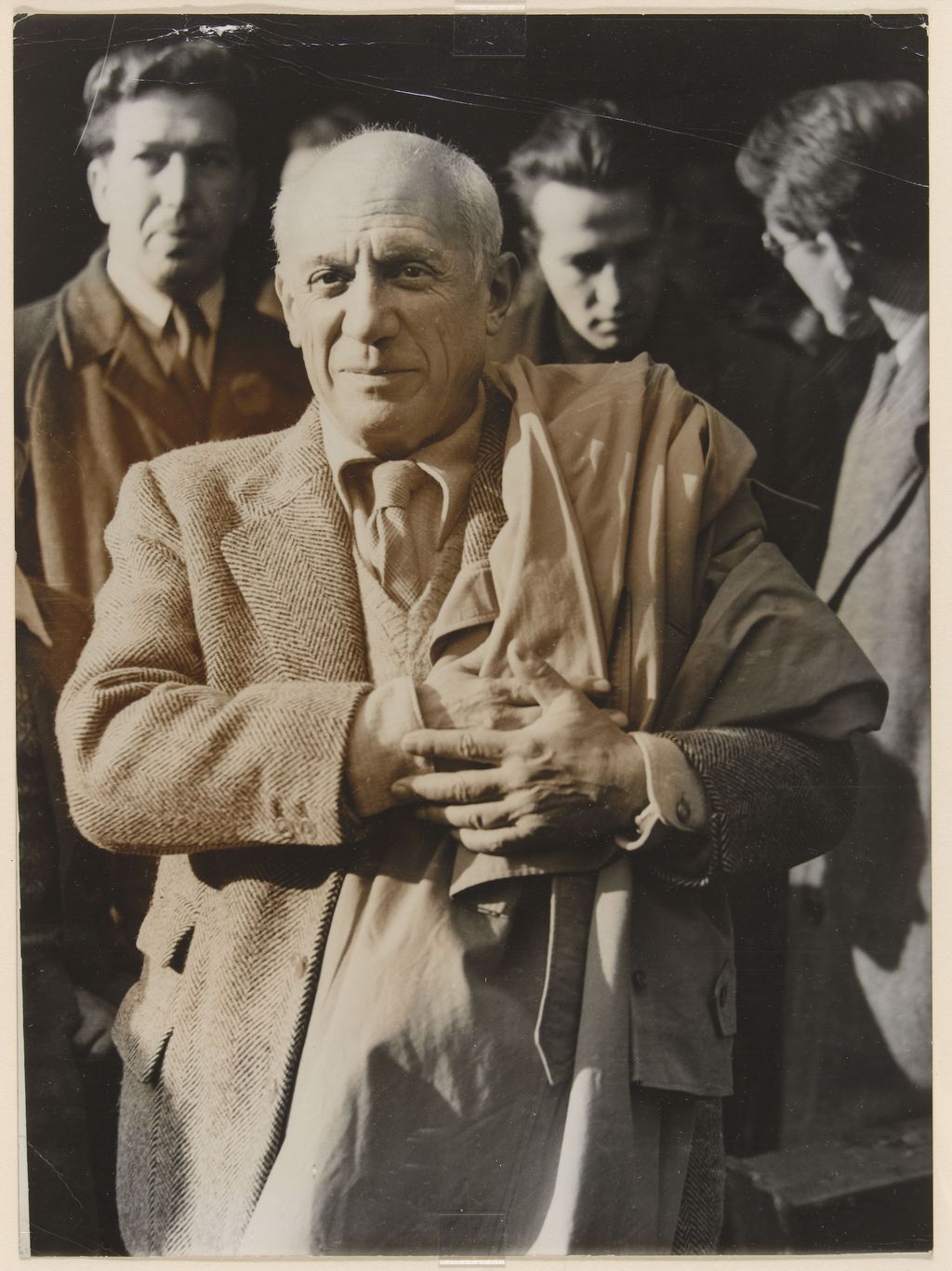
Pablo Picasso (1881–1973) was a Spanish artist who spent most of his adult life in France. He made paintings, drawings, prints, sculptures, ceramics and designs for the stage. He helped develop Cubism with Georges Braque, but no one style adequately describes his long career. His pictures of impoverished people in the early 1900s, his fractured still lifes before the First World War, the anti-fascist Guernica of 1937 and the serial variations of his later years all ask different things of the viewer. What connects them is a persistent willingness to remake a form rather than settle on one successful way of seeing.[1][2][3]
The life is also more complicated than a procession of periods named after colours or relationships. Barcelona remained important after Picasso moved to Paris. Artists, writers, dealers, dancers and craftspeople shaped the circumstances in which he worked. The women close to him were not interchangeable “muses”: some were artists and writers whose own work helps us understand the record. Politics, especially the Spanish Civil War and the Second World War, entered his art and public position. A biography should connect these strands without treating a personal event as the single key to a painting.[1][2][4]
At a Glance
- Born: 25 October 1881, Málaga, Spain
- Died: 8 April 1973, Mougins, France
- Career centres: Málaga, A Coruña, Barcelona, Paris and southern France
- Media: Painting, drawing, printmaking, sculpture, ceramics and stage design
Picasso in context
Blue/Rose
c. 1901–06; overlapping phasesFauvism
c. 1905–07; neighbouring Paris movementCubism
c. 1907–14; Picasso–Braque partnershipSurrealist reception of Picasso
1925–30; not formal membershipPablo Picasso
1907–14; early Cubist experimentsGeorges Braque
1907–14; close collaborationJuan Gris
1912–14; selected Cubist worksFernand Léger
1911–14; public Cubist contextFirst Communion
1896The Tragedy
1903Three Musicians
1921Guernica
1937Las Meninas series
1957This is a selective comparison, not a set of exclusive career phases. Dates and relationships draw on the Musée d’Orsay[31], Musée national Picasso-Paris[32], MoMA[33], and the Met[34]. The bars mark the dated evidence shown here, not every year an artist worked in a style.
Contents
- Childhood and artistic education in Spain
- Blue pictures, new audiences and the Bateau-Lavoir
- A radical painting and the making of Cubism
- Ballet, marriage and the coexistence of styles
- Sculpture, relationships and the 1930s
- Spain at war and occupied France
- Ceramics, politics and the Mediterranean years
- Barcelona, Mougins and the last decade
- What Picasso's biography can and cannot explain
Childhood and artistic education in Spain
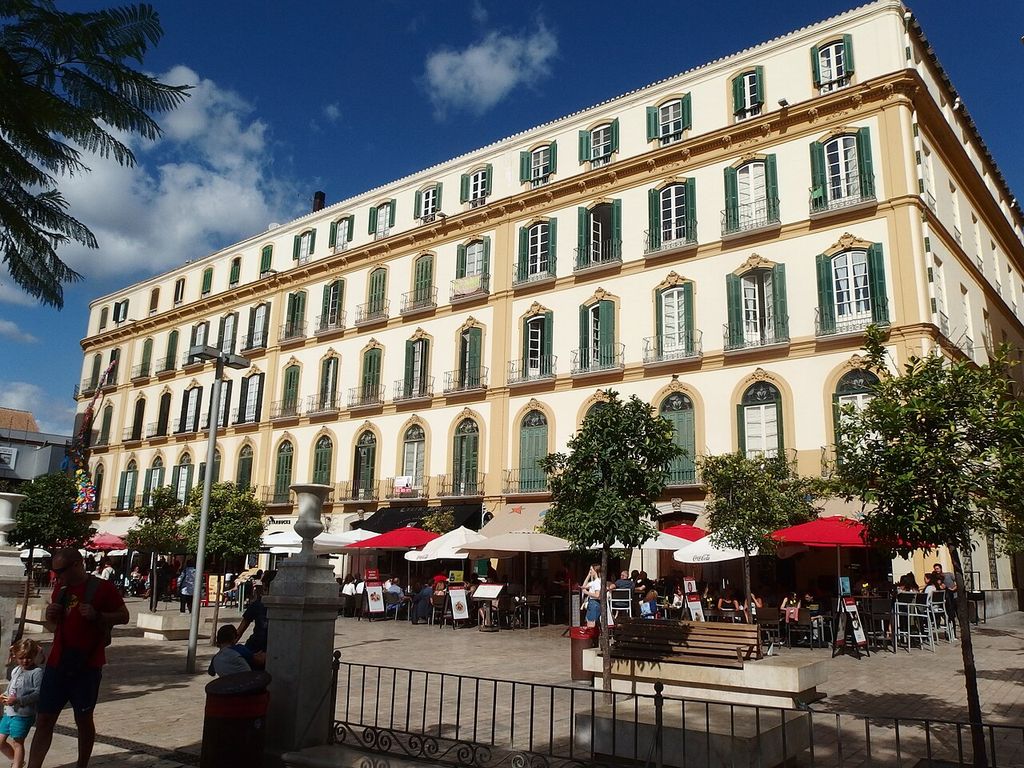
Picasso was born Pablo Ruiz Picasso in Málaga on 25 October 1881. His father, José Ruiz Blasco, was a painter and teacher; his mother was María Picasso López. The family moved to A Coruña in 1891, where Picasso studied at the fine arts school connected to his father's teaching. His younger sister Concepción, known as Conchita, died in 1895. Later that year the family moved to Barcelona, and Picasso entered La Llotja, the city's art school.[1][2][5]
The surviving student works are important because they challenge a familiar story about a child who simply outgrew conventional drawing. His notebooks show repeated exercises in observation, figure drawing and composition. First Communion (1896) and Science and Charity (1897) are ambitious paintings made within academic expectations. In the latter, the artist arranged a scene around a sick woman, a doctor and a religious attendant. His father posed for the doctor. The paintings show discipline and an understanding of how a work could address a public audience; Picasso's later departures from academic representation were made by someone who had learned its rules closely.[5][6]
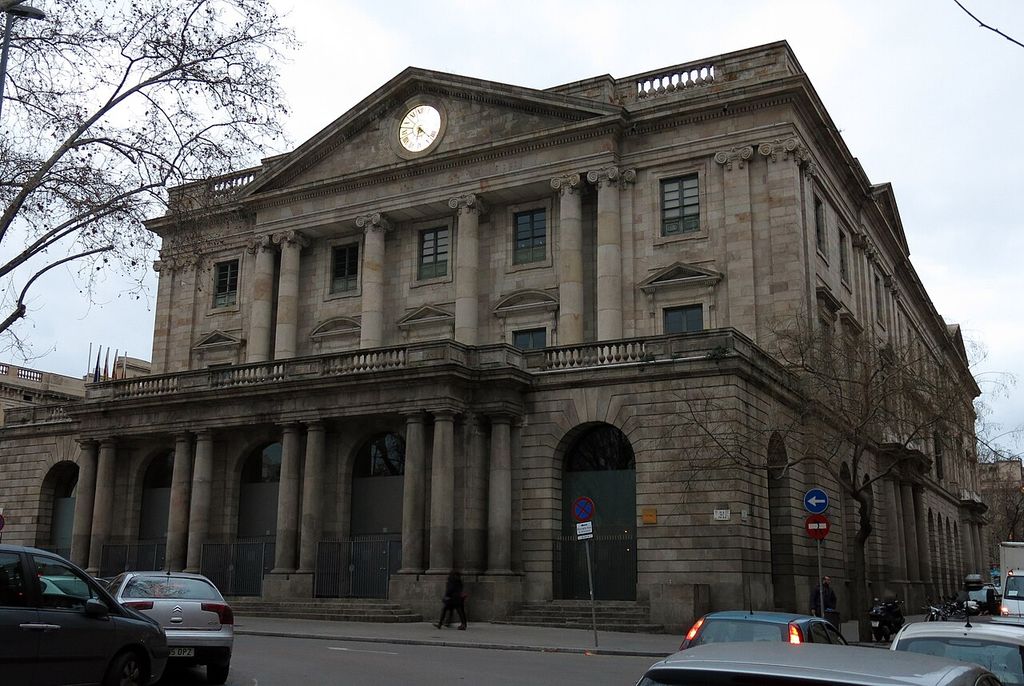
He went to Madrid in 1897 to study at the Real Academia de Bellas Artes de San Fernando and saw paintings at the Prado. The following year he stayed in Horta de Sant Joan with his friend Manuel Pallarès. The landscape and relative freedom of Horta mattered to an artist still deciding how to work outside formal education. Back in Barcelona he moved among the writers and artists associated with Els Quatre Gats. The café was more than a romantic backdrop: it was a place to show drawings, encounter new art and form the friendships that would sustain travel and experimentation. Among the people in this circle were Carles Casagemas and Jaume Sabartés.[1][2][5]
Picasso held a solo exhibition at Els Quatre Gats in 1900 and travelled to Paris with Casagemas later that year. Paris offered museums, dealers, exhibitions and modern art on a different scale. Yet the route was not a one-way journey from provincial Spain to cultural France. He moved repeatedly between Paris and Barcelona over the next few years, carrying works and ideas across the border. Barcelona would remain a site of family, friendship and artistic identity long after he lived mainly in France.[1][7]
Blue pictures, new audiences and the Bateau-Lavoir
Casagemas died by suicide in Paris in February 1901. Picasso was in Spain at the time. He later made paintings about his friend, and the death forms part of the history of what is called the Blue Period. But it cannot by itself explain every picture Picasso made from late 1901 to about 1904. During those years he studied modern French painting, exhibited, drew, made prints and developed images of workers, prisoners, mothers, children and solitary figures. Some of these subjects had particular social settings, including the women's prison and hospital of Saint-Lazare in Paris. To call them all embodiments of the artist's sadness would erase both their differences and the choices involved in making them.[2][3][8]
In June 1901 Picasso exhibited at Ambroise Vollard's gallery in Paris with Francisco Iturrino. The display preceded the mature blue-dominated works and showed his rapid engagement with the art around him. Later that year blue and blue-grey became increasingly important in portraits and figure paintings. Picasso returned to Barcelona in 1902 and painted major works there, including La Vie in 1903. Its arrangement of a couple, a woman with a child and pictures within the picture has prompted many interpretations. No one biographical explanation has settled them. The so-called Blue Period developed across cities and across media; it was not a single mood frozen in paint.[1][3][8]
Picasso moved to Paris more permanently in April 1904 and settled at the Bateau-Lavoir in Montmartre. He etched The Frugal Repast and continued to work with thin, inward-looking figures. During this Paris period Fernande Olivier became his partner. Her later writing is a source for the artistic and social world of the Bateau-Lavoir, not simply a record of how Picasso looked at her. Friends, poets and patrons formed an active network, and the experience of shared studios and limited means was as real as the later legend of bohemian Montmartre.[1][2][9]
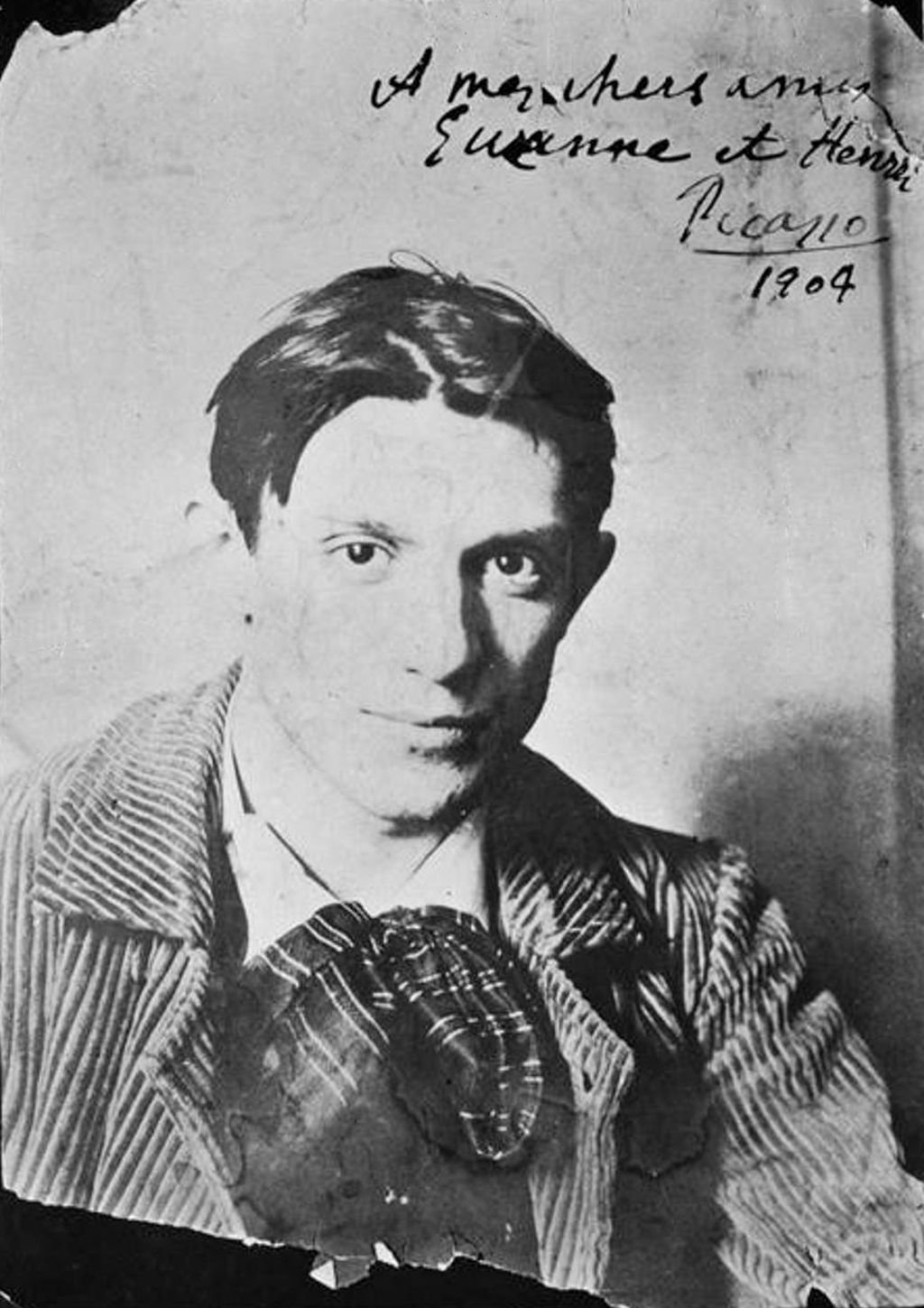
Warmer colours and circus subjects appeared more often in 1905 and 1906, a tendency later called the Rose Period. Acrobats and harlequins gave Picasso a way to think about work, performance and social identity. They were not necessarily carefree counterparts to the Blue Period's people. A figure can wear pink and still appear isolated. These labels are useful maps of change, but they are not exact boundaries.[3][8]
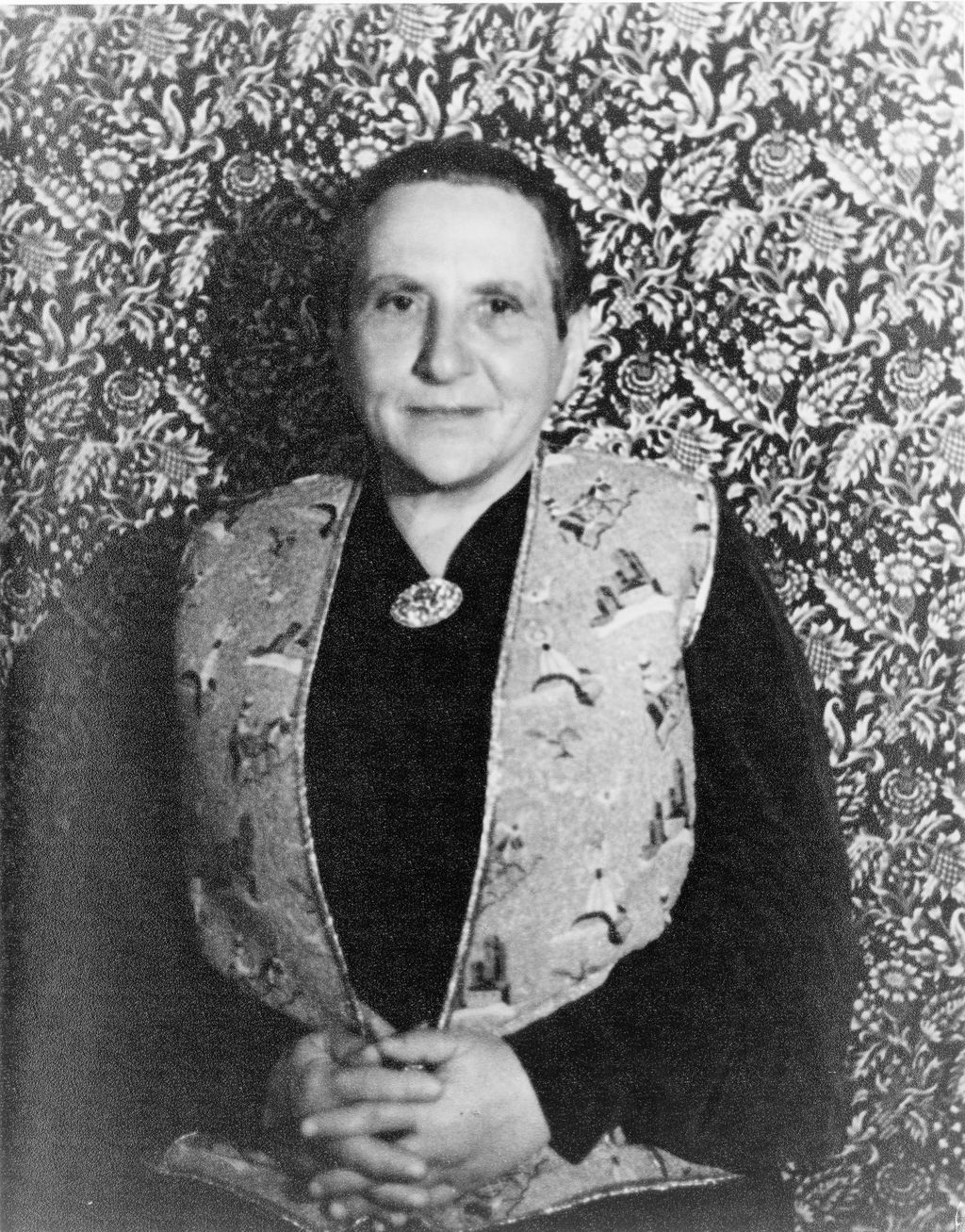
The American writer and collector Gertrude Stein entered Picasso's Paris circle. His portrait of her, made across 1905–06, shows how his handling of the human face was changing. According to the Metropolitan Museum of Art, he began sittings in Paris, reworked the face and completed it after a summer in Gósol, in the Catalan Pyrenees. The body and the masklike head do not belong comfortably to one established style. Stein was not a passive subject: she helped make the painting's public life through her writing, collecting and decision to leave the portrait to the Met.[10]
Watch: Pablo Picasso
Explore Picasso through five videos from museums, broadcasters and art educators.
Picasso’s Guernica: Great Art Explained
Explore the composition and historical setting of Picasso’s best-known response to war.
Watch on YouTubeA radical painting and the making of Cubism
In 1906 and 1907 Picasso pressed harder against the conventions of the European painted figure. He looked at Iberian sculpture and at African and Oceanic works accessible in Paris. The latter had often entered French collections through colonial routes. A responsible account of this history cannot speak vaguely of a single “primitive” style offered up for modernist use. The objects had makers, meanings and histories beyond the formal possibilities Picasso and his peers drew from them; those histories were altered by collection and display in Europe.[11]
Les Demoiselles d'Avignon, completed in Paris in June–July 1907, made the break visible on an unprecedented scale for Picasso. Five figures confront the viewer within a shallow, broken space. Preparatory studies show that their arrangement changed substantially over months. The painting's references include older European painting and sculpture as well as non-European forms; it is not the product of one mysterious moment of inspiration. It was first exhibited publicly in 1916, when its now-familiar title came into use, referring to a Barcelona street associated with sex work. The painting's bodies and gaze still raise difficult questions about how women and cultural difference are represented. Calling it simply “the first Cubist painting” settles a debate that historians and museums continue to examine.[11][12]
The ensuing collaboration with Georges Braque developed Cubism as a practice rather than an isolated masterpiece. The two artists exchanged ideas closely from about 1908. They tested how a still life, portrait or landscape might show more than one aspect of an object without pretending to offer a single stable view. In the dense works later called Analytic Cubism, fragments of a bottle, instrument or face can be dispersed through muted planes. The viewer recognises through clues and relations rather than through an unbroken outline.[2][3][13]
Picasso's return to Horta de Sant Joan in 1909 produced landscapes whose buildings and terrain helped this formal exploration. Around 1910 his portrait of the dealer Daniel-Henry Kahnweiler demanded patient looking to discover a sitter in apparently shifting facets. Dealers, collectors, writers and other painters made these experiments visible and arguable. To speak of Picasso alone inventing modern art would hide both Braque's role and the broader Cubist field.[1][2][13]
The work changed again around 1912. In Still Life with Chair Caning, Picasso put a piece of manufactured oilcloth into a picture and used a rope as its border. A material that only looked like chair cane sat beside painted signs; the picture asked what was real, represented or merely indicated. He and Braque also explored pasted paper. Picasso's cardboard Guitar of late 1912 and a related metal construction of 1914 treated sculpture less as a solid mass than as planes and intervals. MoMA's accounts emphasise the ordinary materials and the unfamiliar openness of these objects. The importance of Cubism therefore lies not only in distorted faces but in new questions about surfaces, materials and space.[13][14]
These experiments did not eliminate recognisable subjects. Guitars, bottles, newspapers, tables and human faces recur because they offered familiar structures to disturb and rebuild. Letters and printed fragments can be read as signs on a surface while also hinting at a café, a conversation or a news item. A piece of patterned paper can refer to wood without being wood. This is why a Cubist still life can be intellectually demanding without being a private code. It makes ordinary acts of recognition newly visible: the eye collects partial evidence, the mind tests it, and the picture refuses to settle into the single view that an illusionistic painting might promise.[3][13][14]
The First World War disrupted Picasso and Braque's close working circumstances. Braque served in the French army and was wounded; Picasso, a Spanish national in France, was not called up. He continued working, but the social world around him changed sharply. His subsequent interest in recognisable figures should not be read as a simple repudiation of Cubism. Different visual languages could remain available at once.[2][13]
Ballet, marriage and the coexistence of styles
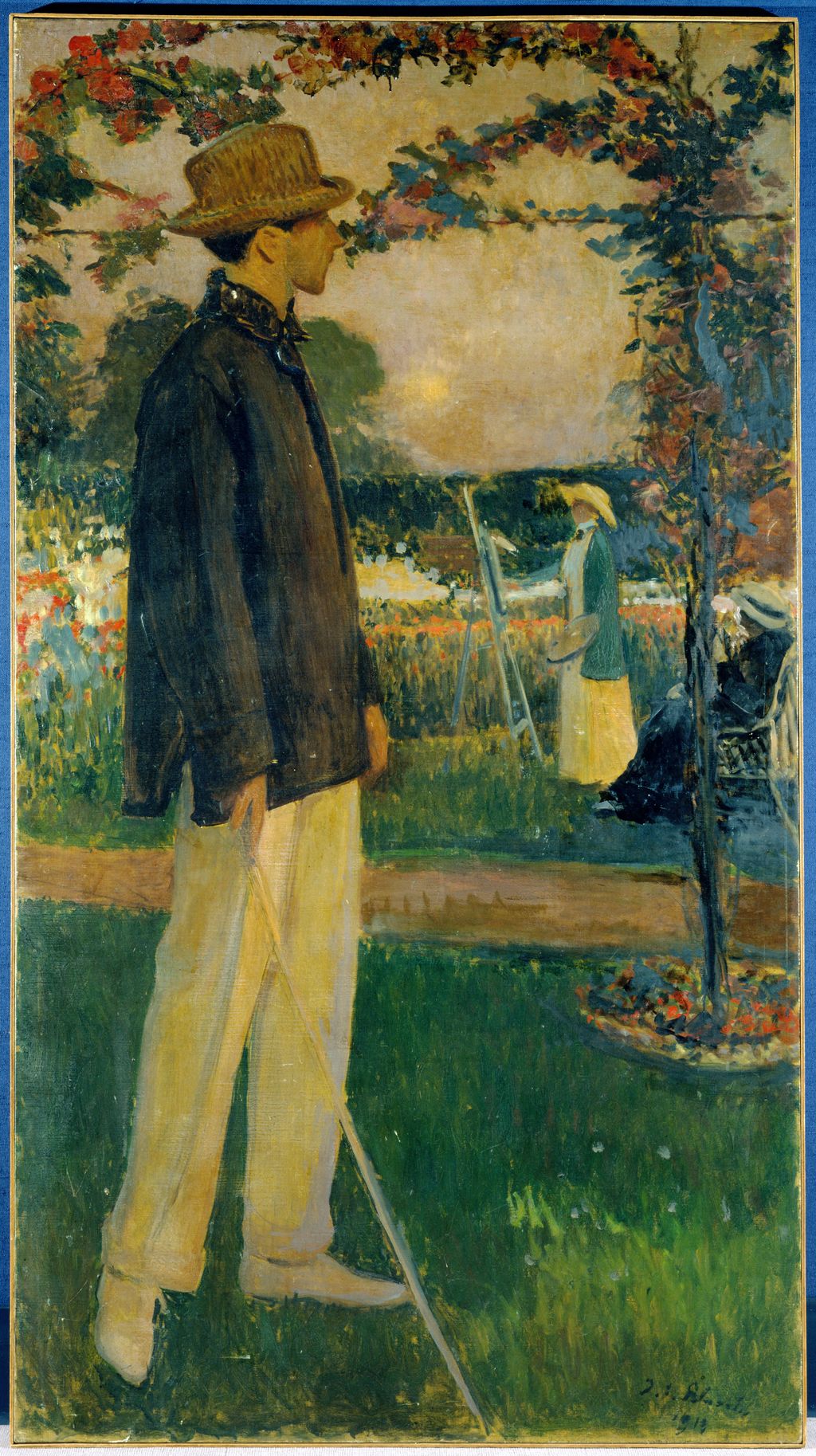
Eva Gouel, Picasso's partner after Fernande Olivier, died in 1915. In 1917 Picasso travelled to Italy to work on Parade for Serge de Diaghilev's Ballets Russes. The production was a collaboration: Jean Cocteau developed the scenario, Erik Satie composed the music, Léonide Massine made the choreography, and Picasso designed the curtain, sets and costumes. His stage work asked how images could act with music and moving bodies before an audience. It also brought him into the company of Olga Khokhlova, a Ballets Russes dancer. They married in 1918 and had a son, Paulo, in 1921.[1][2][15]
Picasso made strikingly classicising pictures in the years after the war, including portraits of Olga and monumental women. In the same summer of 1921 at Fontainebleau, however, he worked on Three Musicians, a large painting that returned to the flat, interlocking shapes of Synthetic Cubism. The MoMA version places masked performers in a space that seems assembled from colour and cut paper, although it is painted. Nearby in his practice were heavy, sculptural figures. These parallel lines of work make a chronological label such as “neoclassical period” useful only with qualifications.[2][16]
He continued designing for the stage and made works that interested Surrealist artists during the 1920s. The Dance of 1925, with its strained bodies and energy, does not fit comfortably into a story of serene classical recovery. Picasso did not simply join one movement after another; he could enter a movement's conversation while keeping his own uneven, sometimes contradictory path. The significance of his work in these years lies partly in that refusal of consistency.[2][3]
Sculpture, relationships and the 1930s
Picasso met Marie-Thérèse Walter in 1927. She was seventeen, and he was married and in his mid-forties. That disparity is part of the biography; a euphemistic story of a “new muse” conceals it. Her presence became visible in many paintings, drawings and sculptures of the following years, but individual works still require examination of their form, date and evidence rather than a one-to-one key based on his private life. Picasso also worked with the Catalan sculptor Julio González on welded-metal experiments. At Boisgeloup, a château he acquired in 1930, he had more room to make large sculptural forms. These were years of changing materials as well as changing relationships.[1][2][17][29]
In 1932 a large retrospective at the Galerie Georges Petit in Paris surveyed Picasso's career. Christian Zervos began issuing his catalogue raisonné. Such projects helped turn a living artist's changes into a public history, even as he continued to work against easy summaries. The monumental and sensuous images of the early 1930s coexist with prints, sculptures, harsher figures and the recurring Minotaur. The forms cannot all be explained as the direct effect of one relationship.[2][17]
The retrospective also creates a useful question for any biography: who shapes the account of an artist while that artist is alive? Dealers decide what to show; critics choose period names and turning points; catalogues gather works that had been dispersed among studios and owners. A visitor in 1932 could see a long development that an early Paris viewer could not. Picasso was both the maker of the works and a participant in their public presentation. The result was already a history, not a transparent window on everything he had made. That distinction matters when later books describe his life as though one authorised sequence of masterpieces had always existed.[2][17]
Picasso made his last visit to Spain in 1934. He and Olga separated in 1935 but did not divorce; Marie-Thérèse gave birth to their daughter Maya that year. The photographer and artist Dora Maar entered his life during the mid-1930s. These overlapping relationships were not merely a source of new portrait subjects. They affected households and children, and the people involved had their own work and perspectives. Maar's photography would become indispensable to the record of his most famous political painting.[1][2][18]
Printmaking is especially valuable for understanding these years because it preserves changes of line, plate and technique that a list of famous paintings cannot show. Picasso had made The Frugal Repast in 1904, but print was not merely an early sideline. Between 1930 and 1937 he produced the one hundred etchings and aquatints later known as the Vollard Suite. The British Museum describes recurring images of the sculptor's studio and the Minotaur without treating the series as a continuous story. The prints were made over years, printed as a group later and distributed later still. This separation of making, printing and publication is a reminder that a work's date and its public appearance may differ considerably.[27][30]
The workshop mattered here too. Picasso began working with the printer Roger Lacourière in 1934 and learned techniques including sugar aquatint, which allowed tonal passages unlike a simple etched line. Printmaking was neither a reproduction service for his paintings nor a less important category of art. A plate could be reworked; the pressure and ink of a print could make an image take on another character; repeated impressions brought a design into new circulation. The Vollard Suite connects the intimate space of making, Picasso's renewed interest in classical stories and the modern dealer-publisher's role in putting art before an audience.[27]
Spain at war and occupied France
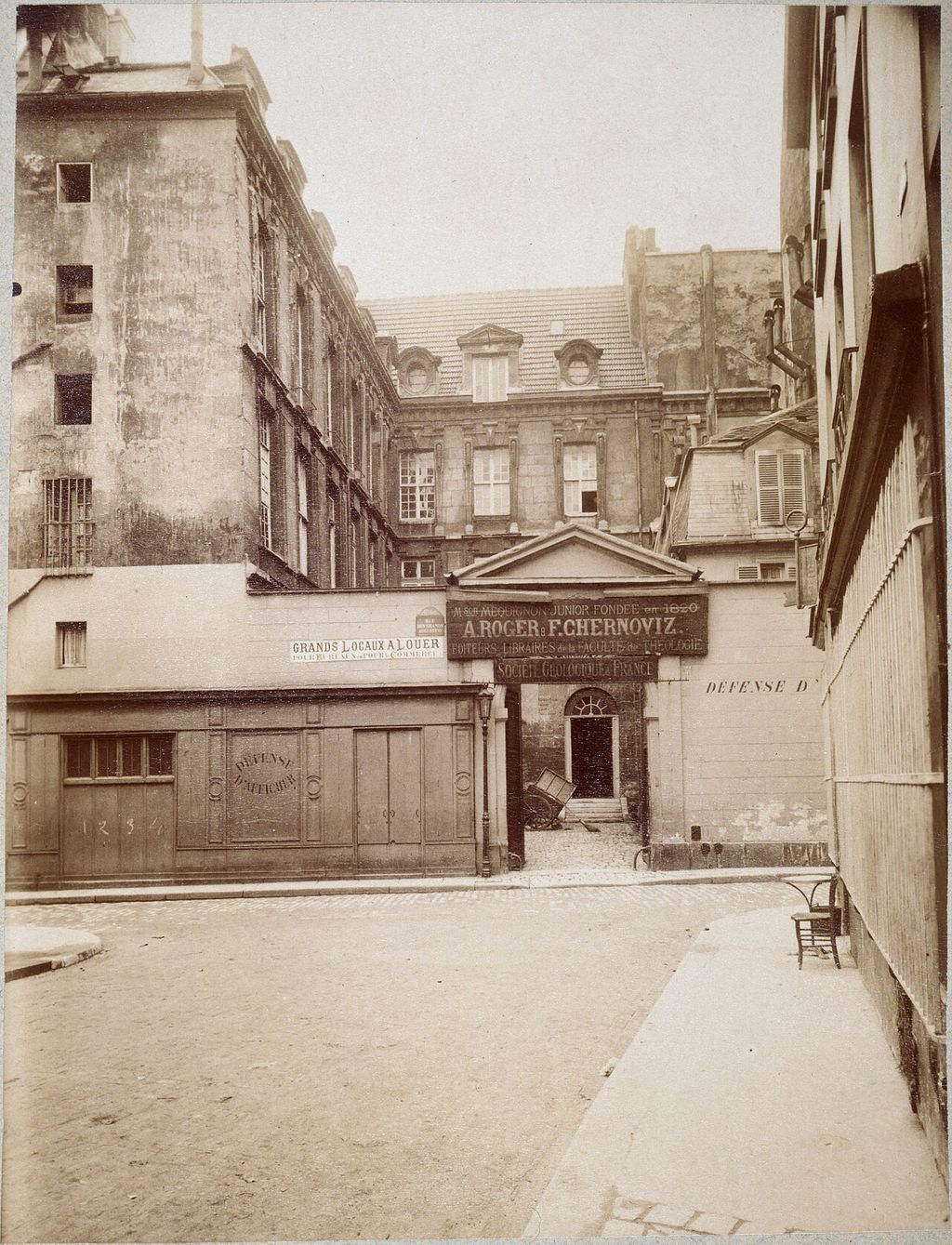
The Spanish Civil War began in July 1936. Picasso supported the Republic and was appointed director of the Prado in September. He remained in France; the appointment should not be confused with a daily administrative career in Madrid. In 1937 the Republican government commissioned him to make a large work for the Spanish Pavilion at the Paris International Exposition. After the bombing of Gernika on 26 April, Picasso began studies on 1 May and painted Guernica in his Paris studio on rue des Grands-Augustins. The work does not render an aerial view or documentary account of the attack. Instead, fractured human and animal bodies press into a black, white and grey space that turns suffering into an urgent public image.[1][19]
Maar photographed successive stages of Guernica. Her sequence shows decisions and revisions that a viewer of the final canvas alone cannot see. She was an established photographer associated with the Paris avant-garde, not simply the woman who happened to witness the painting's creation. The painting's commission, its wartime setting and the later travels that made it a symbol all matter; so does the difference between political force and a fixed translation of every figure. Picasso seldom offered a conclusive symbolic key.[18][19]
The painting soon acquired a life beyond the one exhibition for which it was made. It travelled through Europe and the Americas and was placed in MoMA's care during the Second World War. Picasso later extended that arrangement, making a democratic future in Spain a condition for its return. It reached Spain in 1981, after his death, and moved to the Museo Reina Sofía in 1992. These dates are more than a shipping history. They show how an artwork made for the Spanish Republic became entangled with exile, dictatorship, museum custody and the political meaning of its eventual arrival in Madrid. That later history belongs to Guernica's biography, but it should not be projected backward as though Picasso knew every use the painting would acquire.[28]
In 1939 Picasso's mother died and the Spanish Republic was defeated. Guernica was shown in the United States, including MoMA's exhibition Picasso: Forty Years of His Art, which opened in November 1939. Its title and date are important because later summaries sometimes misstate them. With the Second World War and the occupation of France, Picasso continued to live and work largely in Paris. His position as a famous Spanish artist did not remove the constraints and tensions of the time. In 1944 he joined the French Communist Party. The Spanish war and the occupation had made his public political commitments more explicit, though it would be false to reduce all his art after 1937 to a party message.[2][19][20]
During the occupation Picasso met Françoise Gilot, a young painter whose career and later writing cannot be subsumed into his biography. Institutional chronologies differ over whether their first meeting was in 1942 or 1943, so an exact year should not be asserted without further documentary work. They lived together after the war and had two children, Claude and Paloma. Gilot's eventual departure in 1953 was a major personal change, but her own art and account of those years stand apart from Picasso's sequence of portraits.[1][2][21]
Ceramics, politics and the Mediterranean years
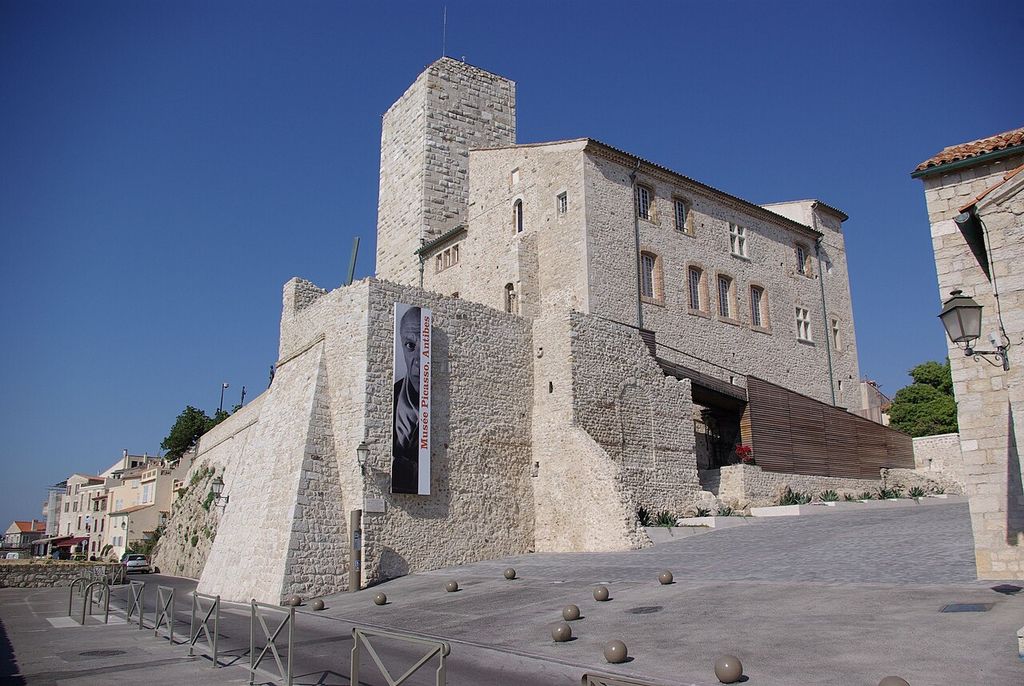
After the war Picasso worked increasingly in the south of France. At Antibes he made pictures in a setting later associated with a renewed Mediterranean vocabulary. In 1946 he encountered Suzanne and Georges Ramié at the Madoura pottery workshop in Vallauris, returning in 1947 to work with clay more extensively. The partnership depended on ceramic knowledge, firing facilities and the workshop's production. Picasso could turn a plate into a face or an animal, but these transformations were not made by an isolated painter casually decorating pots. Craft processes were central to their physical form. Our ceramics guide follows that practice across objects and techniques.[2][22]
Picasso and Gilot's son Claude was born in 1947 and their daughter Paloma in 1949. Their family life unfolded alongside sustained work in print, sculpture and ceramics. The public use of Picasso's dove image by the peace movement in 1949 made his political identification newly visible. He made Massacre in Korea in 1951 and large works for the Chapel of Peace in Vallauris. These works belong to a period of Cold War argument, not merely to an idyll of sun and pottery. His art could move between private play, historical reference and collective protest.[1][2][23]
After the separation from Gilot, Jacqueline Roque became Picasso's companion and, in 1961, his second wife. The postwar decades also saw repeated engagement with earlier European paintings. Picasso made a series after Delacroix's Women of Algiers in the mid-1950s and, in 1957, fifty-eight canvases in conversation with Velázquez's Las Meninas. These did not copy their models as exercises in homage. He varied figures, viewpoints, scale and setting, making the older painting a field of possibilities. The Las Meninas series included pigeons, landscapes and a portrait of Jacqueline as well as interpretations of Velázquez's court scene.[1][24]
Serial work is a clue to Picasso's later method. One image was often not a final answer. A repeated subject could change in successive works until its familiar parts ceased to behave as expected. That method connects late painting to much earlier Cubist and print experiments without making them identical. It also cautions against a biography that picks one “masterpiece” for each decade and leaves the studio's process invisible.[3][14][24]
The same urge to vary an image can be followed through later prints. Lithography let Picasso draw and revise on a surface from which impressions could be made. In Vallauris he worked with the printer Hidalgo Arnéra on colour linocuts. For Still Life under the Lamp of 1962, he used a reduction method: one block was cut and printed in stages for successive colours, so each stage altered the block irreversibly. The British Museum preserves states showing the development of the print. Such a sequence reveals decisions that a finished image hides. It also demonstrates why printing partners belong in the account of Picasso's late work, just as the Ramiés belong in the account of his ceramics.[27]
This breadth can make the word “prolific” sound like a substitute for looking. Thousands of works survive across media, but precise lifetime totals vary with what is counted as an individual drawing, state, edition, ceramic or printed impression. A number alone cannot convey the difference between a quick study, a reworked plate, a unique sculpture and an editioned print. The better question is how Picasso used each medium's possibilities: clay could be shaped and fired, a plate could be revised, a canvas could hold earlier images beneath a new one, and a stage curtain could change the scale of a figure in relation to an audience.[14][15][22][27]
Barcelona, Mougins and the last decade
The Museu Picasso opened in Barcelona in 1963, initially as the Colección Sabartés. Jaume Sabartés, a friend from Picasso's youth who later served as his secretary, was central to the project through his collection and advocacy. The museum's early emphasis on Picasso's apprenticeship restored visibility to the Barcelona years that a Paris-centred history could minimise. In 1968, after Sabartés died, Picasso donated his Las Meninas series and a 1901 portrait of Sabartés. A much larger 1970 gift included works his family had kept in Barcelona, among them paintings, drawings and notebooks. These were material acts of preservation, not merely signs of nostalgia.[1][25]
Picasso and Jacqueline lived at Notre-Dame-de-Vie in Mougins. After surgery in 1965, he continued to produce paintings, drawings and prints on a substantial scale. His late work often returned to painters and models, musketeers, erotic encounters and figures made with conspicuous speed. Some viewers found these works rough or repetitive beside the celebrated Blue Period and Cubist canvases. Their freedom of handling has also interested later artists. Neither judgement should turn the last years into a decline narrative; the works deserve attention as choices made in a particular studio and time.[2][26]
Picasso died at Mougins on 8 April 1973. He was buried at Vauvenargues. By then his art had already been the subject of major exhibitions, collecting campaigns, political uses and fierce disputes over modern representation. The life ended, but the history of the works did not. Conservation continues to reveal earlier compositions beneath paintings; archives clarify exhibitions and collaborators; museums reassess the movement of objects and the contexts in which he encountered them.[1][2][11]
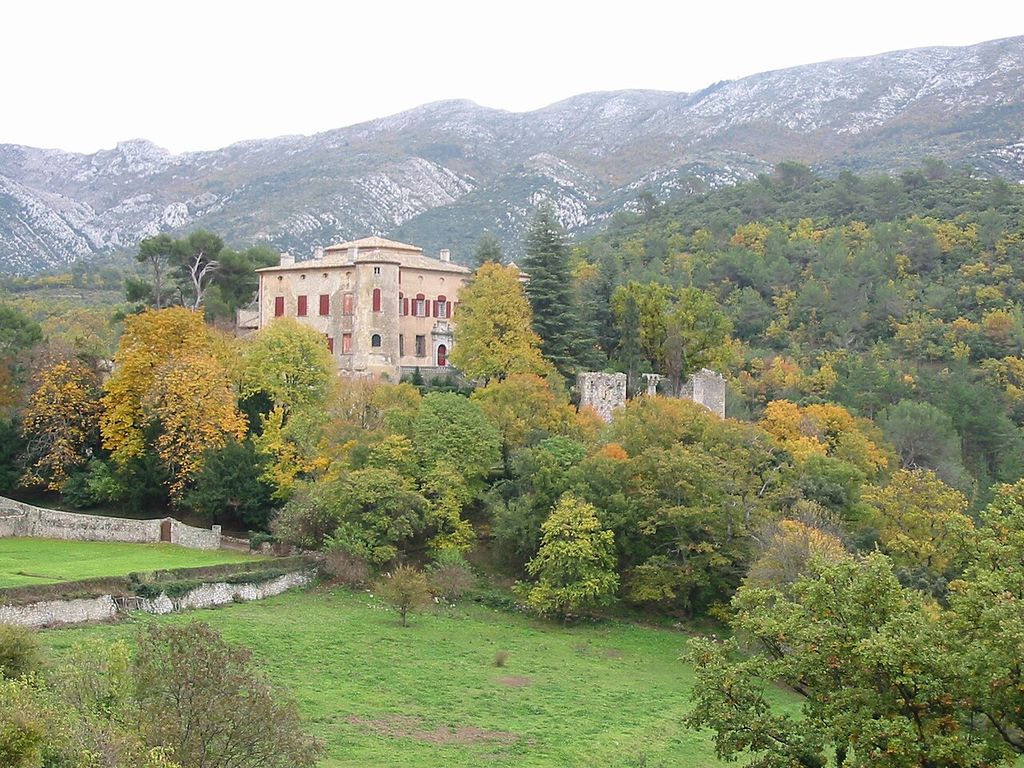
The evidence available to readers has also changed. Picasso's early notebooks in Barcelona let us compare finished student paintings with drawings made as he learned. MoMA's records distinguish a 1907 canvas from its first exhibition nine years later. Maar's photographs of Guernica preserve a sequence of alterations to a work that became an icon. The British Museum's print states show an image transforming through a technical process. Each kind of record offers a different kind of knowledge. None makes the artist's motives fully transparent, but together they replace the neat myth of effortless invention with a more interesting history of work, revision and public interpretation.[6][11][18][27]
There is also a difference between Picasso's fame and the story of modern art. His name is often used as shorthand for twentieth-century invention, which can make collaborative work look like solitary genius. The 1907 painting depended on encounters with works whose makers were obscured by colonial collecting; Cubism grew through dialogue with Braque and a wider circle; Parade was a theatre production with several authors; ceramics relied on the Ramiés' workshop. Giving those circumstances their due does not diminish what Picasso did. It makes the nature of his achievement more exact, and it permits readers to ask harder questions about what museums once called influence or originality.[11][13][15][22]
What Picasso's biography can and cannot explain
Picasso's long career changed painting and sculpture in ways that are difficult to compress into a single achievement. Cubism with Braque altered how objects could be shown on a flat surface. Collage and construction unsettled the divide between depiction and material. Guernica gave a modern political catastrophe a form that travelled well beyond its original pavilion. Ceramics and serial variations show a later artist still testing materials and inherited images.[11][13][14][19][22]
Scale is one thread through these otherwise different works. An intimate etched plate can ask a viewer to come close enough to follow a line; a cardboard Guitar makes the space around it part of the object; the curtain for Parade addressed a theatre audience; Guernica was conceived for a public pavilion. Picasso did not simply repeat one invention at larger or smaller size. Each medium and setting changed what an image could do and whom it could reach. This helps explain why paintings alone cannot carry the whole biography. Drawings and prints may show a thought developing; sculpture and ceramics insist on material and touch; theatrical work brings collaborators and performance into view. Looking across them is more revealing than ranking them beneath a handful of famous canvases.[14][15][19][22][27]
Biography helps place those works. Casagemas's death, the two cities of the Blue Period, the First World War, the Spanish Civil War and relationships with people who worked around Picasso are not incidental. But a life event is not a code that unlocks a picture. Nor can every achievement be assigned to Picasso alone while Braque, the Ramiés, Maar, Gilot, Olivier, Stein, González, Cocteau and others vanish into the margins. The strongest account of Picasso joins life to close looking, keeps other makers visible and leaves room for evidence that complicates the legend.[7][9][10][11][15][18][21][22]
Discussion
Use the evidence and your own close looking to explain your view. These are editorial prompts, not reader comments.
Reader Insights
Which place or collaborator most changes a simple period-by-period account of Picasso’s life?
Where does a personal event illuminate a work, and where would it become an unsupported explanation?
Which later work shows an earlier artistic question returning in a new form?
Join the Conversation
Which reading best fits the evidence?
References
- Museu Picasso Barcelona, “Cronología” and “El vínculo de Picasso con Barcelona,” Spanish institutional accounts; Catalan chronology also consulted. View chronology; View Barcelona account.
- Musée national Picasso-Paris, “Frise chronologique,” French institutional chronology. View source.
- The Metropolitan Museum of Art, James Voorhies, “Pablo Picasso (1881–1973),” Heilbrunn Timeline of Art History. View source.
- Deutsches Historisches Museum, “Pablo Picasso,” German historical biography. View source.
- Musée national Picasso-Paris, “La formation de Picasso,” French account of academic study. View source.
- Museu Picasso Barcelona, “Picasso. Los Cuadernos,” Spanish exhibition research on early notebooks. View source.
- Museu Picasso Barcelona, “El vincle de Picasso amb Barcelona,” Catalan account of the artist's continuing relationship with the city. View source.
- Musée d'Orsay, “Picasso. Bleu et rose,” French exhibition account. View source.
- Museu Picasso Barcelona, “Fernande Olivier, Pablo Picasso and their friends,” exhibition account. View source.
- The Metropolitan Museum of Art, “Gertrude Stein,” 1905–06 object record and Spanish interpretive account describing the Paris sittings, reworked face and completion after Gósol; English object record.
- The Museum of Modern Art, “Les Demoiselles d'Avignon,” object record and contextual essay on sources and colonial channels. View source.
- The Museum of Modern Art, “502: Picasso's Les Demoiselles d'Avignon,” collection gallery account. View source.
- Musée national Picasso-Paris, “Picasso et le cubisme,” French account of the partnership with Braque and collage. View source.
- The Museum of Modern Art, “Picasso: Guitars 1912–1914,” exhibition research. View source.
- Centre Pompidou, “Rideau de scène du ballet Parade,” collection record naming the collaborators and Picasso's contribution. View source.
- The Museum of Modern Art, “Three Musicians,” 1921 object record. View source.
- Bayerische Staatsgemäldesammlungen, “Pablo Picasso,” German collection biography. View source.
- Museo Nacional Centro de Arte Reina Sofía, “Dora Maar's report on Guernica's progression,” archival account. View source.
- Museo Nacional Centro de Arte Reina Sofía, “Pablo Picasso,” Spanish archival dossier within Repensar Guernica. View source.
- The Museum of Modern Art, “Picasso: Forty Years of His Art,” exhibition record, 1939–40. View source.
- Musée national Picasso-Paris, collection dossier on Françoise Gilot, French, 2024. View source.
- Musée national Picasso-Paris, “Les années méditerranéennes,” French account of Vallauris and the Madoura workshop. View source.
- Museo Nacional Centro de Arte Reina Sofía, “Picasso, Palazzo Reale, Milan, October–December 1953,” Spanish archival account of the postwar peace movement. View source.
- Museu Picasso Barcelona, “Forgetting Velázquez. Las Meninas,” research on the 1957 series. View source.
- Museu Picasso Barcelona, “Historical and museographic tour of the collection,” museum and donation history. View source.
- Musée national Picasso-Paris, “Les dernières années de Picasso,” French account of late production. View source.
- British Museum, Picasso Printmaker, exhibition large-print guide, with technical and chronological research on the Vollard Suite. View source.
- Museo Nacional Centro de Arte Reina Sofía, “Guernica” object record and Rethinking Guernica archival project. View object; View archive.
- Musée national Picasso-Paris, “Sa vie pour Picasso, Marie-Thérèse Walter,” collection record identifying her age at their first meeting. View source.
- The Metropolitan Museum of Art, “Heads and Entangled Figures, from the Vollard Suite,” object record distinguishing 1934 creation from 1939 printing. View source.
- Musée d’Orsay, Picasso: Blue and Rose exhibition overview. View source.
- Musée national Picasso-Paris, Picasso and Cubism biographical essay. View source.
- The Museum of Modern Art, What Is Cubism? collection essay. View source.
- The Metropolitan Museum of Art, Surrealism art-historical essay. View source.
Image Credits
- Keystone Press Agency, 11 November 1950. Rijksmuseum, RP-F-F01599. The museum labels the object public domain; the Commons digital file is marked CC0. Proportional resize to 1024px wide; no crop, restoration or colourisation. Source record. Licence.
- Palickap. CC BY-SA 4.0. Source: Wikimedia Commons. Resized to 1024px; no crop. Source record. Licence.
- Enfo. CC BY-SA 4.0. Source: Wikimedia Commons (File:367 La Llotja, façana del Pla de Palau.JPG). 1024px proportional sRGB JPG derivative; no crop. Source record. Licence.
- Ricard Canals i Llambí, 1904. Wikimedia Commons labels the photograph public domain; its source credits RMN-Grand Palais. Resized to 1024px; no crop. Source record. Licence.
- Carl Van Vechten, 4 November 1934. Library of Congress, Prints & Photographs Division, Carl Van Vechten Collection, LC-USZ62-103678. The Library considers this collection public domain; donor restrictions expired in 1986. Privacy and publicity rights may apply. Uncropped and uncolourised; proportional resize only. Source record. Licence.
- Jacques-Émile Blanche, 1913, P1881. CC0 Paris Musées / Musée Carnavalet – Histoire de Paris. Painting public domain (Blanche died in 1942); reproduction released CC0. Proportional resize only. Source record. Licence.
- Atget, Eugène (Jean Eugène Auguste Atget, dit) (Libourne, 12–02–1857 - Paris, 04–08–1927), photographe. CC0. Source: Wikimedia Commons. Resized proportionally to 1024px wide; no crop. Source record. Licence.
- Clemensfranz. CC BY-SA 3.0. Source: Wikimedia Commons. Resized proportionally to 1024px wide; no crop. Source record. Licence.
- Malost. CC BY-SA 3.0. Source: Wikimedia Commons. Resized to 1024px; no crop. Source record. Licence.



