


 by Tom Gurney
Tom Gurney BSc (Hons) is an art history expert with over 20 years experience
Email: tomgurney1@gmail.com / Phone: +44 7429 011000
Introduction
Picasso worked in rooms, houses and workshops that differed greatly in size, purpose and company. A Paris apartment could contain paintings by artists he admired beside his own unfinished work. A garage at Boisgeloup gave him space to model large sculptures. At Royan, a temporary studio looked over a seaside town during the first year of war. In Cannes, the studio itself became the subject of a painting. These places matter, but they do not explain a work merely by appearing in its address line.
There are three questions to keep apart. Where was an artwork made? What kind of activity could happen there? And how did Picasso choose to picture that place, if he pictured it at all? A drawing of a studio is not a photograph of everything it held on a given day; a painting of a town is not the same thing as the town. Following a few documented workplaces, and two works that make place unusually visible, offers a more useful geography than a list of homes. For where Picasso's works are held now, see our separate guide to Picasso museums and places.
At a Glance
- Places: Horta, Paris, Boisgeloup, Royan, Vallauris and Cannes
- Core distinction: A work’s place of making is not necessarily its depicted place
- Read the studio: Space, tools, collaborators and historical circumstances all matter
Contents
- Horta and Gósol: working away from a permanent studio
- Paris: the Bateau-Lavoir and experimental rooms
- Picasso's rue La Boétie studio and the 1920 drawing
- Boisgeloup: room for sculpture and movement between media
- Grands-Augustins: making and storing work through war
- Café à Royan and its studies
- Antibes and Vallauris: temporary room, shared workshop
- La Californie and later southern studios
- Place is evidence, not a complete explanation
Horta and Gósol: working away from a permanent studio
Before Paris became his long-term base, Picasso spent extended periods away from the city. The Museu Picasso Barcelona's study of his notebooks[2] places a first stay at Horta de Sant Joan from June 1898 to January 1899. The young artist drew rural work, people and landscapes there. A return in 1909 belongs to a very different phase, when he was developing Cubism. “Horta” is therefore not the name of one style or one studio; it is a place to which he returned with changed artistic questions. [2]
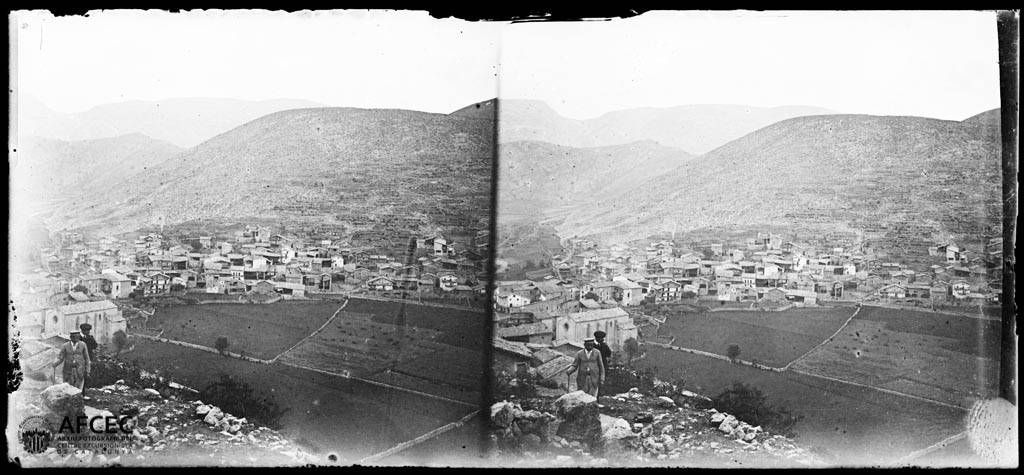
The same Barcelona research dates his stay in Gósol, with Fernande Olivier, from May to August 1906. He stayed at Cal Tampanada and used a notebook for portraits, the village and studies for larger compositions. The notebook is particularly revealing because the landscape and everyday people appear beside experiments that could later become something else. Work made away from a fixed Paris studio was not automatically landscape painting, and a study made in a village did not have to remain an image of that village.
These journeys connect place with observation and portable practice. The evidence is in dated drawings and notebooks rather than a preserved room that can be entered today. Barcelona's collection and research help reconstruct those periods, but the museum is not itself Picasso's Horta or Gósol workplace. That distinction becomes increasingly important as his art later moves between domestic interiors, workshops and places known chiefly through photographs.
Paris: the Bateau-Lavoir and experimental rooms
Picasso occupied a studio at the Bateau-Lavoir in Montmartre from 1904. The Musée national Picasso-Paris's account of Cubism[6] places Les Demoiselles d'Avignon in a corner of that working space. The room was an address within a wider artistic network, not a solitary laboratory from which modern art emerged without other people. Georges Braque and other artists, dealers and writers formed part of the exchanges through which Cubism developed. [6]
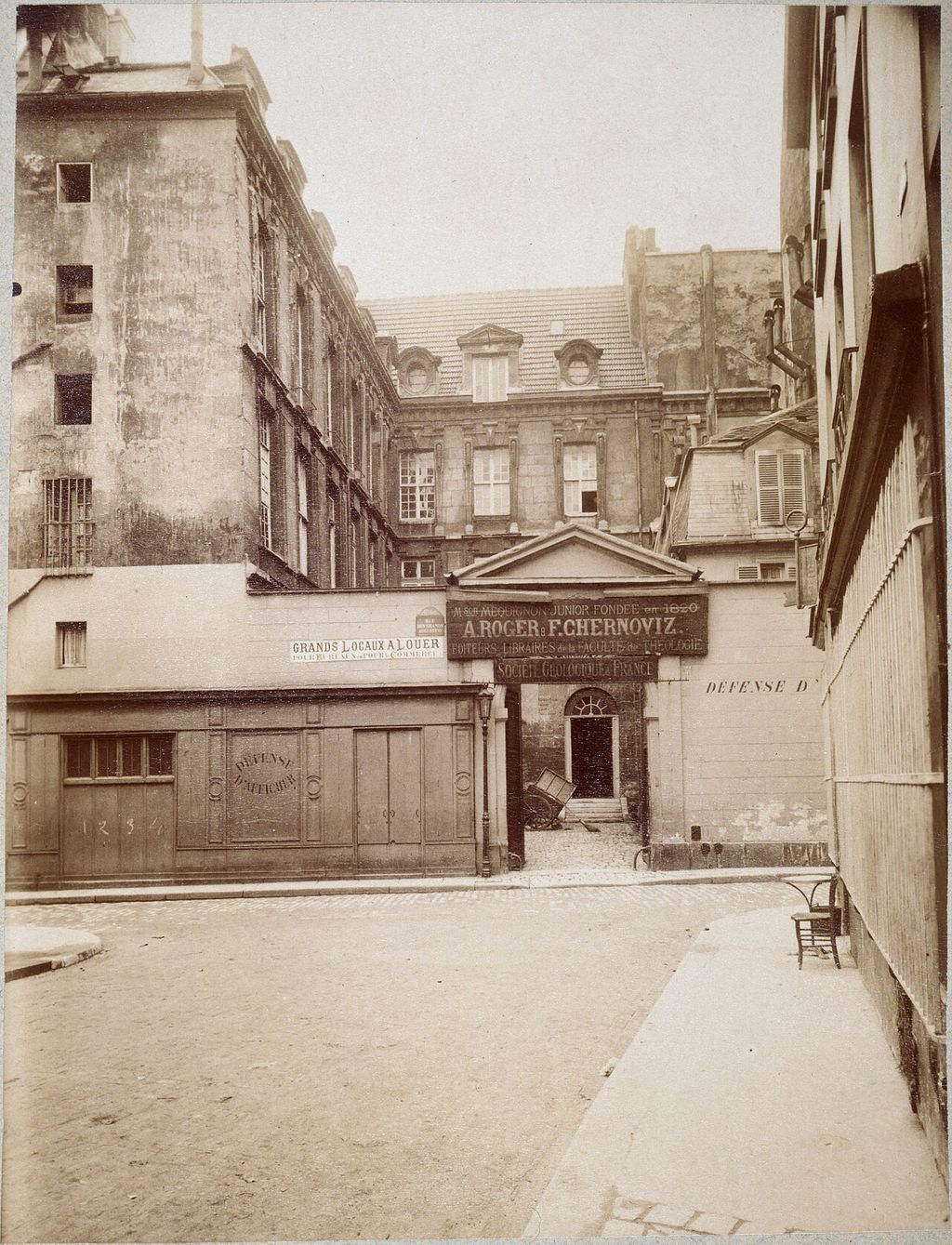
Photographs of studios add evidence, though not unfiltered evidence. The Paris museum's research on Picasso's studios[1] discusses a photograph showing him at the Bateau-Lavoir with instruments and works from outside Europe. It also identifies later photographs of the studio at 11 boulevard de Clichy, where friends appear amid studies, collected objects and reproductions. At boulevard Raspail, Picasso arranged works and materials for the camera in temporary combinations. Such images tell us what could be present and how Picasso wished those things to be seen; they should not be treated as neutral inventories of every work made in each room. [1]
For collage and assemblage, the studio could be more than a place to put a canvas on an easel. It held paper fragments, cardboard, objects, tools and works in different states of completion. Photographs could preserve configurations that were otherwise temporary. This is a connection between place and method, but not a claim that an address by itself invented Cubism. The work depended on looking, making, conversations and repeated experiments across several rooms.
Watch: Pablo Picasso
Explore Picasso through five videos from museums, broadcasters and art educators.
Picasso’s Guernica: Great Art Explained
Explore the composition and historical setting of Picasso’s best-known response to war.
Watch on YouTubePicasso's rue La Boétie studio and the 1920 drawing
In November 1918, Picasso established a studio in his apartment at 23 rue La Boétie. A Philadelphia Museum of Art record for Man Ray's 1922 photograph[2] identifies the address and shows how a public image of the artist could use his working room as its setting. The Musée national Picasso-Paris's studio research[1] describes paintings by Renoir and Henri Rousseau hanging near Picasso's own works in rooms of the apartment. This was a place of collection, display and reception as well as making. [2] [1]
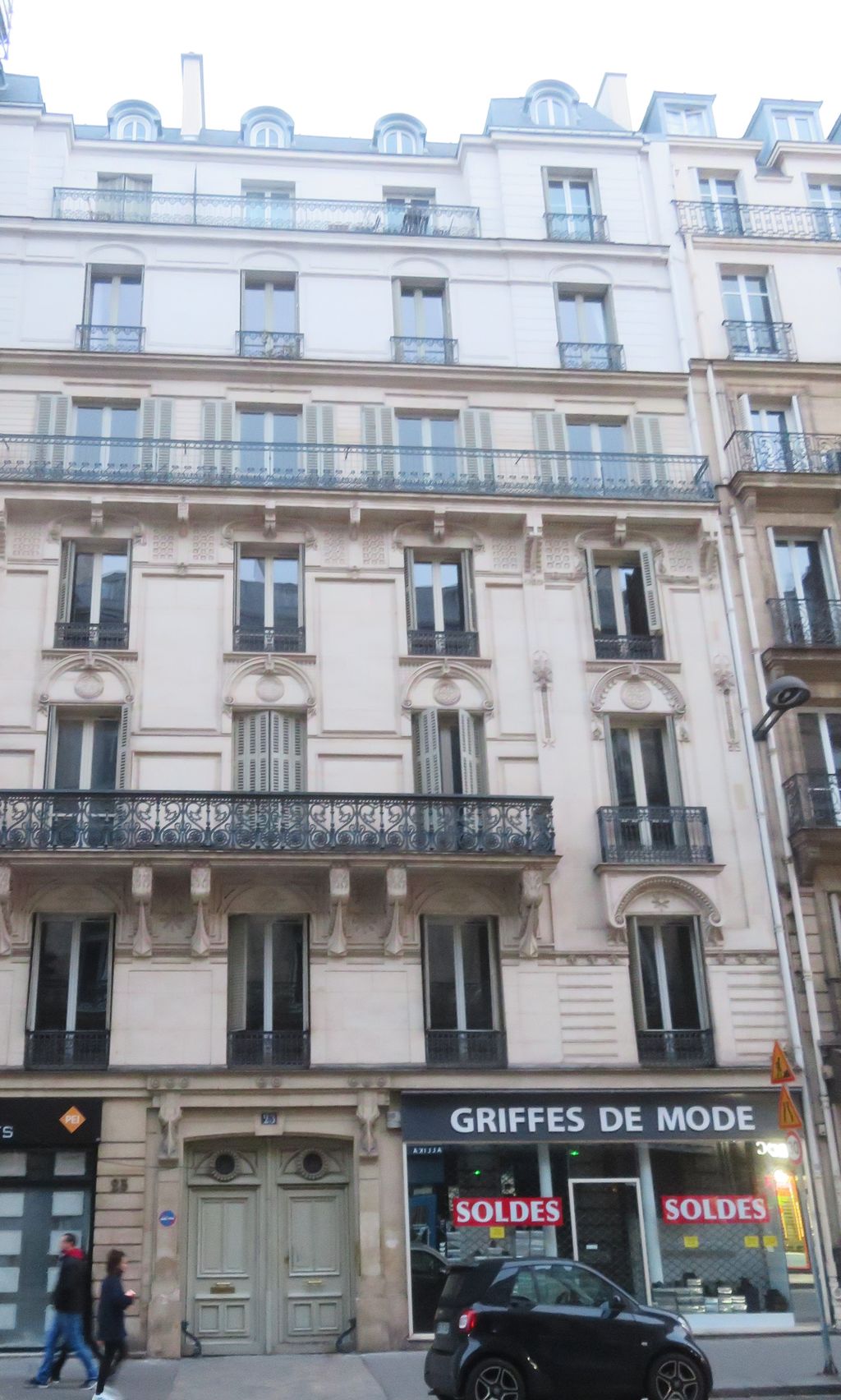
Picasso's Artist's Studio on Street La Boétie is a drawing of that world, not a photograph of it. The Paris museum catalogues the work as L'Atelier de l'artiste rue La Boétie, MP918[3], dated 12 June 1920, made in graphite and charcoal on paper. Its recorded place of execution is cautiously given as Paris–Saint-Raphaël. The title identifies the room represented; it does not prove Picasso sat in that room while drawing it. [3]
The sheet gathers easels, framed pictures, furnishings and a stringed instrument into a busy interior. Portraits and objects interrupt one another, and the eye moves from one picture-within-the-picture to the next. It is tempting to call this a faithful floor plan of the studio, but drawing lets Picasso compress, choose and emphasise. The room is a subject whose contents display the activity of making and looking at art. That is why its date, medium and collection record matter more than a generic claim that it shows “creative clutter.”
The museum owns another work with virtually the same title: MP895[3], a smaller, landscape-format graphite drawing dated 15 March 1920. Its measurements and day must not be assigned to MP918. Repeated titles make an exact object record essential. They also tell us that Picasso revisited the studio as an image: he did not draw it once and leave it behind. [3]
Boisgeloup: room for sculpture and movement between media
Picasso acquired Boisgeloup, near Gisors in Normandy, in June 1930. The Paris museum's sculpture research[3] identifies a workshop set up in an outbuilding garage, where he modelled figures and heads in plaster. Scale and material made a difference. A large plaster form required a different kind of space and handling from a drawing on a small sheet. Boisgeloup was not simply a country retreat that appeared in art as scenery; it made particular working processes possible. [3]
Nor did it replace Paris. A Paris museum dossier on 1932[7] describes movement between the La Boétie studio and Boisgeloup and follows sculptural forms into paintings. In that account, a bust can reappear as a motif within a still life. The exchange is not “sculpture happened in Normandy, painting happened in Paris.” It is a circulation of bodies, objects and ideas across media and addresses. [7]
The photographs of Boisgeloup's sculpture workshop are valuable for reconstructing that activity, but they, too, have dates and makers of their own. A photograph taken in 1932 of plasters in a room does not prove that every plaster visible was conceived on the day the shutter clicked. The evidence is strongest when an object record, a dated work and a documented working place are read together.
Grands-Augustins: making and storing work through war
In 1937, Picasso took a new studio at 7 rue des Grands-Augustins in Paris. The Musée national Picasso-Paris timeline[1] places the making of Guernica there and records Dora Maar's photographic documentation of its rapid development for the Spanish Pavilion at the Paris International Exposition. The painting's title names a Basque town bombed during the Spanish Civil War; Paris was the place of its making, not the scene it depicts or its current museum location. [1]
The studio continued to matter after the work left it. During the German Occupation, Picasso worked in the Grands-Augustins space. The Paris museum's studio essay[1] uses later photographs, including Brassaï's 1943 image of an assemblage of sculptures and objects, to explore the accumulation there. Works made at different times occupied the same physical room. A studio could hold an artist's past alongside the piece under way; it was not a blank stage reset for each new picture. [1]
Wartime context should not be used to flatten every work into a direct illustration of the war. The Kunstsammlung Nordrhein-Westfalen's account of Picasso's war years[8] follows him between Royan and Paris and includes the ordinary genres of painting as well as subjects that respond more openly to violence. The place and political conditions are indispensable evidence. They do not supply an automatic symbolic key for every jug, window or figure. [8]
Café à Royan and its studies
Picasso spent much of September 1939 to August 1940 in Royan, on France's Atlantic coast, while the Second World War transformed the conditions in which he worked. The Museo Picasso Málaga's Royan-sketchbook research[4] documents eight notebooks and trips back to Paris. In early 1940 he used an upper-floor studio at the seafront Villa Les Voiliers, as the Museu Picasso Barcelona[9] records. This was a temporary workplace within a wider pattern of lodgings and movements, not a carefree holiday house. [4] [9]
From that elevated viewpoint he made Café à Royan. The Musée national Picasso-Paris's record[4] identifies the finished work, MP187, as an oil on canvas, 97 × 130 cm, dated and inscribed 15 August 1940. It shows the café and its waterfront surroundings through sharply simplified shapes. The town's own exhibition account[10] identifies the Café des Bains and notes that seven preparatory studies were shown alongside the painting. Royan's buildings would later be devastated by bombing in 1945, so the image is also a record—though a deliberately transformed one—of a place that no longer has the same appearance. [4] [10]
There is a real study-to-painting relationship here, but it must be described precisely. The Paris museum's Royan notebook register[4] includes a graphite Study for Café à Royan, MP1877 (41r), distinct from the oil. The record gives the notebook a date range, not a secure individual date for that page. Other studies of the cafe also survive. Their relationship to the completed painting is worth tracing, but a study, the oil and a later reproduction are different objects even when they show the same waterfront view. [4]
A small monochrome reproduction often labelled Café in Royan shows a café front and awning among angular roofs, dark foliage and a broad curving line in the foreground. Its visible inscription includes “Royan 15.8.40” and the numeral “II”. The date connects it plausibly to the same day's preparatory work, but not to a single identified sheet: Royan's exhibition account[10] says five of seven studies shown with the painting bore that date. The reproduction does not establish the original drawing's medium or owner. In particular, it should not be called the finished oil MP187 or assigned to the Paris notebook leaf MP1877 (41r) on the strength of its subject and date alone. [10]
The painting was made under occupation, after German troops had entered Royan. That context prevents an easy reading of its bright colours as proof that Picasso was retreating into happiness. Neither the painted cafe nor an empty waterfront can tell us his private state of mind by itself. What the records do show is sustained work across sketches, notebooks and a large canvas in a temporary studio, followed by his return to Paris in late August 1940. Royan is thus a case in which place, view and historical moment meet without becoming the same thing.
Antibes and Vallauris: temporary room, shared workshop
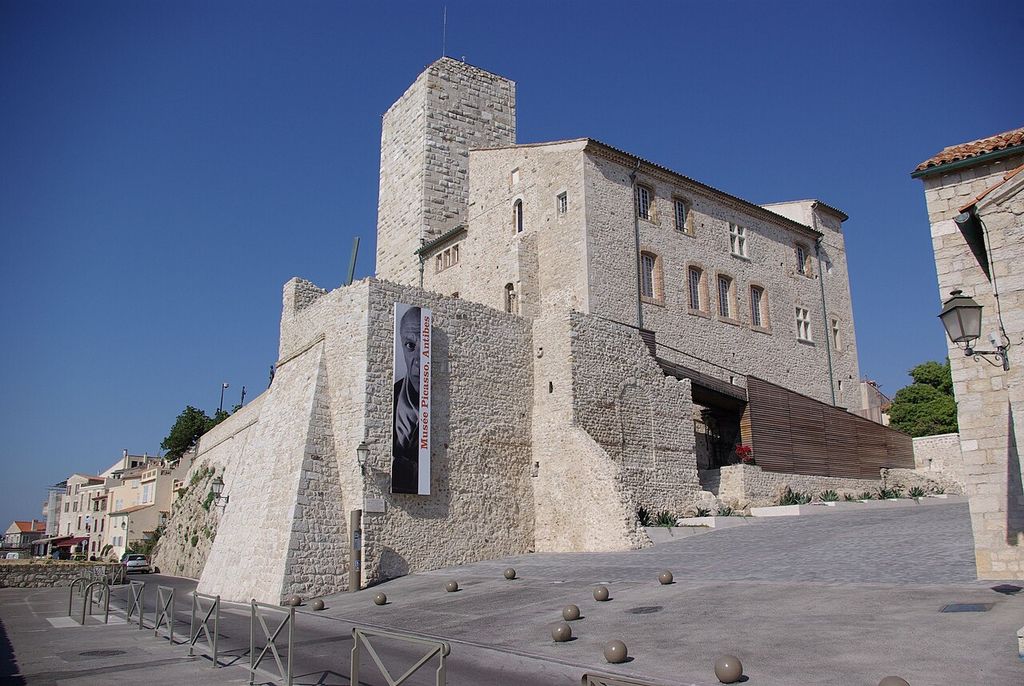
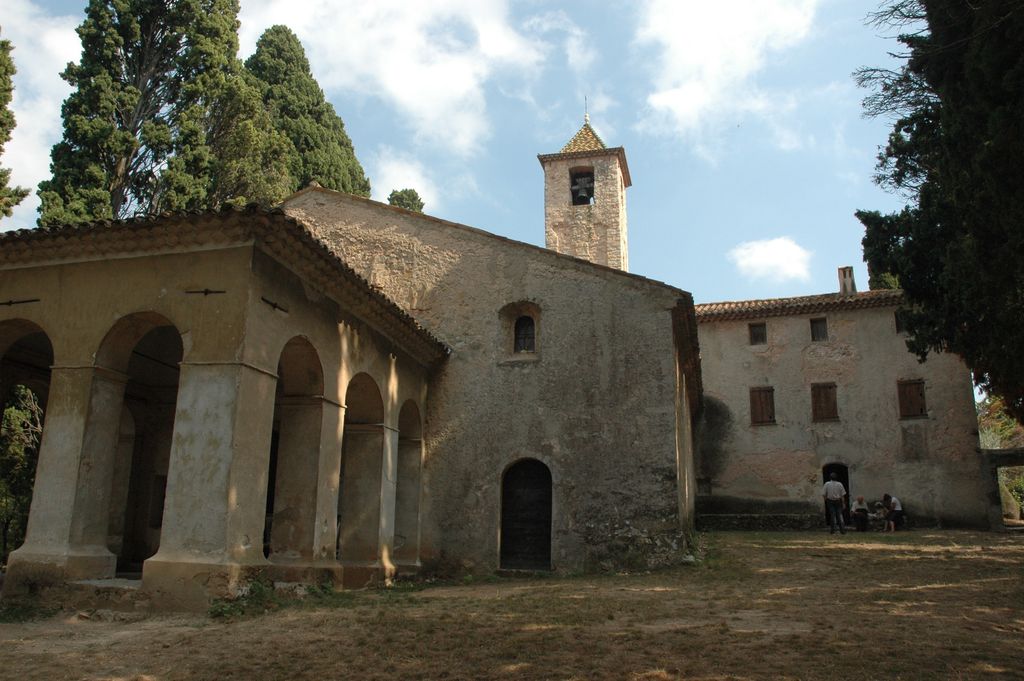
In 1946, the curator of the Château Grimaldi at Antibes invited Picasso to use part of the building as a studio. The city of Antibes's museum history[5] records the short stay and the works he left with the city afterward. The château now houses a Picasso museum, but it was already a historic building and museum when he worked there. It is an unusually clear case of a temporary workshop later becoming part of the public story of a collection. [5]
Vallauris offered another working arrangement. The Musée national Picasso-Paris's Mediterranean account[5] distinguishes Picasso's domestic life at La Galloise, the Madoura pottery of Suzanne and Georges Ramié, and the Fournas workshop. These were related places, not one room. Ceramics depended on materials, firing and skilled collaboration; assemblage sculpture drew on other objects and workshop space. Calling all this “his studio in Vallauris” hides the different processes that made the period fertile. The linked ceramics and sculpture pages follow those media more closely. [5]
La Californie and later southern studios
Picasso moved to the villa La Californie above Cannes in 1955. The Paris museum[11] describes a house in which living rooms, studio and collected objects flowed together. Photographs document crowded working spaces; paintings could make something different of them. In The Studio at La Californie of 1956, the museum's object essay[5] sees a deliberately simplified interior with windows and a canvas within the canvas. The subject is a studio, but the picture is an arranged composition, not a furniture survey. [11] [5]
The same Paris account connects the painted interior with Picasso's dialogue with Henri Matisse. That is the curator's reading, supported by particular formal comparisons, not a licence to call every work made in Cannes “Matisse-like.” The villa supplied a view, architectural forms and space for accumulated works; Picasso selected from these for different ends. The studio could become an active subject rather than just the background to a model.
Later periods at Vauvenargues and Mougins complicate a neat sequence of moves. The Paris museum's Mediterranean biography[5] notes overlapping use of residences and working places. These names locate parts of Picasso's later production, but they are not interchangeable labels for all of it. A date and a place in an artwork record remain more dependable than an assumption that everything after 1955 was made in one southern room. [5]
Place is evidence, not a complete explanation
Picasso's workplaces changed what he could store, model, photograph, fire or paint. Their difference is visible in the portable notebooks of Horta and Gósol, the collected things of La Boétie, the sculptural space of Boisgeloup, the wartime rooms of Royan and Paris, the shared ceramic practice of Vallauris, and the staged interior of La Californie. Yet each example also shows the limits of geography. A drawing can depict a studio while possibly being made elsewhere; a painting of a town can transform its visible streets; a photograph can arrange the contents of a workshop for a viewer.
The most useful question to ask of a Picasso work is therefore specific: which object is this, what is its dated medium, what place does its record give for making it, and is that place also what the work represents? Those checks keep a studio from becoming a mythic explanation of style and allow the real, varied conditions of Picasso's work to be seen.
Discussion
Use the evidence and your own close looking to explain your view. These are editorial prompts, not reader comments.
Reader Insights
Which studio feature made a particular kind of work possible?
Where was a work made, and is that also the place it depicts?
How do photographs of a studio both document and stage what we see?
Join the Conversation
Which reading best fits the evidence?
References
- Musée national Picasso-Paris, The Studios of Picasso and chronology.
- Museu Picasso Barcelona, Horta and Gósol notebooks; Philadelphia Museum of Art, Man Ray at La Boétie.
- Musée Picasso-Paris, La Boétie MP918 and distinct MP895; Boisgeloup sculpture dossier.
- Musée Picasso-Paris, Café à Royan MP187 and Royan notebook; Museo Picasso Málaga, Royan sketchbooks.
- City of Antibes, château studio; Musée Picasso-Paris, Mediterranean workshops and The Studio at La Californie.
- Musée national Picasso-Paris's account of Cubism. View source
- Paris museum dossier on 1932. View source
- Kunstsammlung Nordrhein-Westfalen's account of Picasso's war years. View source
- Museu Picasso Barcelona. View source
- exhibition account. View source
- Paris museum. View source
Image Credits
- Atget, Eugène (Jean Eugène Auguste Atget, dit) (Libourne, 12–02–1857 - Paris, 04–08–1927), photographe. CC0. Source: Wikimedia Commons. Resized proportionally to 1024px wide; no crop. Source record. Licence.
- Cèsar August Torras i Ferreri. Public domain. Source: Wikimedia Commons (File:Dos homes en primer terme i al fons el poble de Gósol des del castell.jpeg). 1024px proportional sRGB JPG derivative; no crop. Source record. Licence.
- VVVCFFrance, 14 January 2024. Wikimedia Commons, CC0 1.0. Historic building exterior; modern photograph. Proportional resize only. Source record. Licence.
- Clemensfranz. CC BY-SA 3.0. Source: Wikimedia Commons. Resized proportionally to 1024px wide; no crop. Source record. Licence.
- Berdea, 17 September 2011. Wikimedia Commons, CC BY-SA 3.0. Proportional resize only; derivative retains CC BY-SA 3.0. Source record. Licence.



