


 by Tom Gurney
Tom Gurney BSc (Hons) is an art history expert with over 20 years experience
Email: tomgurney1@gmail.com / Phone: +44 7429 011000
Introduction
Pablo Picasso's La Vie presents a meeting that we cannot quite explain. A young couple stands at the left; across from them, a fully clothed woman holds an infant. Two other pictures appear behind the figures. Their pale blue world seems hushed, but the standing man's gesture and the woman's direct gaze make the encounter feel active. Are we seeing a family, a separation, an argument, or a passage through stages of life? The painting offers enough detail to invite each question and too little to settle any of them.[1]
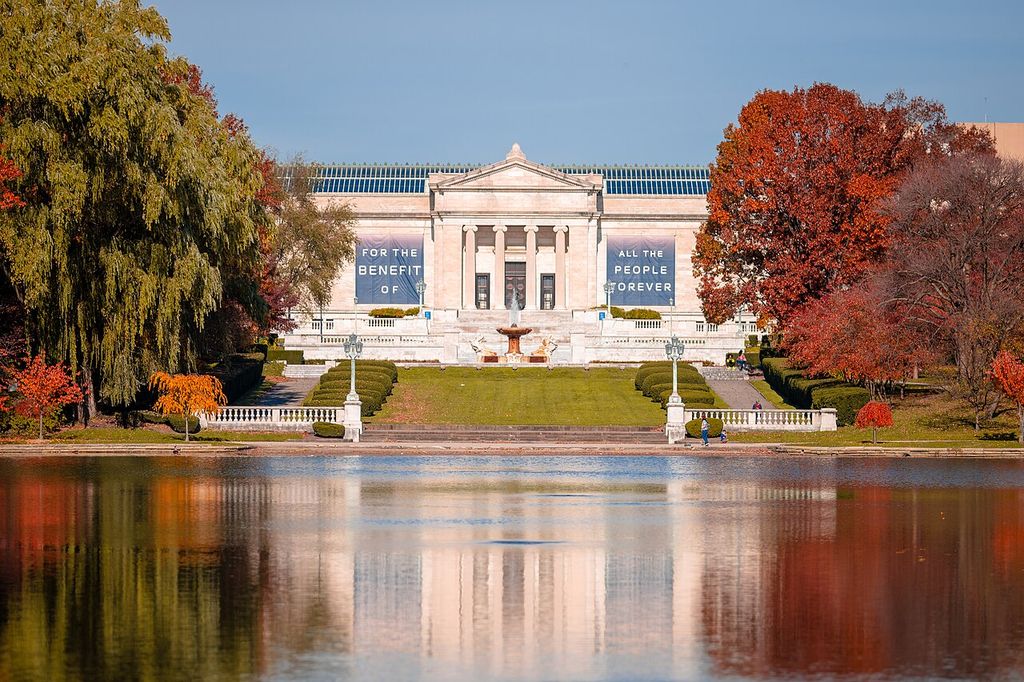
Painted in Barcelona in 1903, La Vie is an oil on canvas in the Cleveland Museum of Art, accession 1945.24. It measures 196.5 by 129.2 centimetres without its frame. The museum places it near the culmination of Picasso's Blue Period, when he repeatedly explored hardship, vulnerability and human isolation. Its title means “Life” in French, but it is not a caption that explains precisely what happens in the room. The work's unusual force lies in the gap between the simple title and the relationships that remain unresolved.[1][2]
At a Glance
- Made: Barcelona, 1903
- Medium: Oil on canvas, 196.5 × 129.2 cm unframed
- Visible scene: A young couple faces a draped woman holding an infant
- Beneath the painting: An earlier composition identified as Last Moments
- Collection: Cleveland Museum of Art, 1945.24
La Vie in Picasso's career
First Communion
1896La Vie
1903Three Musicians
1921Las Meninas series
1957The highlighted work is dated with the qualifications explained in the sources on this page. The other works are selective points of comparison, not the start or end of a style.
Contents
- What is happening in the painting?
- Can La Vie's meaning be fixed?
- Barcelona, Casagemas and the Blue Period
- The painting beneath La Vie
- Revisions within the visible work
- How La Vie left Barcelona
- Looking again
What is happening in the painting?
The foremost group can be described without deciding what it means. A young woman leans into the man at left. He wears only a brief cloth, while she is nude. He turns toward the woman with the baby and raises an arm in a gesture that appears to point toward her. The woman at right is wrapped in blue fabric and holds the infant close. The figures occupy the same shallow space, yet their bodies do not come together as one continuous family portrait. There is a visible distance between the couple and the mother-and-child figure.[1]
Behind them are two pictures within the painted scene. In the upper one, two people appear close together; in the lower one, a solitary figure folds inward, head lowered toward the knees. The upper embrace echoes the standing couple, while the lower figure introduces a posture of withdrawal. These are not extra people standing in the main room. They are depicted images that complicate our view of the encounter, as if another account of intimacy and solitude were being shown alongside it.[1]
The background is sparse. Picasso does not provide a street, a bed or a table that would place the scene in an ordinary domestic episode. The figures and pictures carry almost all the narrative weight. This absence matters because it leaves the raised hand difficult to read. A gesture can be an introduction, a question, a warning or an appeal. Nothing in the setting tells us definitively which it is. The painting is less an illustration of a known story than a carefully staged situation whose relationships we must test.[1]
Colour makes the figures belong to the same emotional space. Blue ranges from the dark drapery and outlines to paler skin and wall. The effect is not simply that Picasso painted everything one identical shade. Variations in blue and grey separate cloth from flesh and bring faces and hands forward. The narrow range also reduces the easy distinction between a foreground person and a painted person in the background. There is room to see echoes across the whole canvas rather than only a sequence from left to right.[1][5]
The young couple's bodies are exposed, while the adult at right is almost concealed by her garment. That contrast is plainly visible. It can support readings about desire and care, youth and age, or vulnerability and protection; none follows automatically from the clothing. In particular, the small cloth worn by the man cannot by itself prove an elaborate psychological theory about him. It is more useful to notice how differently the two sides present the body, and how the infant adds another kind of dependence to the scene.[1]
Can La Vie's meaning be fixed?
The Cleveland Museum of Art introduces at least two broad traditions of interpretation. One treats the people as a couple confronted by material hardship, perhaps in a working-class setting. Another treats the infant, young pair and draped adult as a symbolic movement through stages of life. The museum does not choose one as an established decoding of every figure. The painting's title and arranged age differences invite an allegorical reading, while the physical closeness and confrontation invite a more immediate human one. Both are ways of looking, not documentary reports of an event Picasso witnessed.[1]
The Musée national Picasso-Paris goes further, describing the work in its French account of the Blue Period as an allegory extending from pregnancy to death. That is a serious curatorial interpretation, informed by Picasso's early career and the composition's transformation. It still should not be presented as an explanation dictated by Picasso in a surviving statement. Neither the French account nor the Cleveland object record supplies a written key assigning a fixed identity to the woman, infant and background figures. The painting can sustain reflection on life's beginning and end without turning each passage into a symbol with only one definition.[1][4]
This distinction matters especially because the standing man's face has a documented connection to Picasso's life. Conservation work shows that Picasso first gave the figure his own features and later changed it to resemble his friend Carles Casagemas. That alteration is a powerful clue about the painting's emotional and autobiographical territory. It does not establish that the encounter on the canvas literally occurred, or that every other figure has a corresponding named person. A known likeness is not a license to turn the entire picture into a disguised biography.[3][6]
The nude woman's identity is a good example of that limit. Casagemas had a troubled relationship with a woman known as Germaine in Paris. Accounts of his life document that relationship, but the museum evidence used here does not identify her as the sitter or represented person in La Vie. Calling the woman “Germaine” without qualification would move from historical context to unsupported certainty. The visible image makes her relation to the man important; it does not reveal her name.[6]
The title also encourages a temptation to read the painting as Picasso's definitive philosophy of existence. Yet La Vie is not a treatise. Its people remain particular bodies in a particular painted room, even when the grouping suggests an allegory. The lowered figure in the bottom picture can evoke grief or fatigue; the upper embrace can suggest shelter or dependency. A viewer may see a movement between those conditions. The responsible formulation is “the painting can be read as,” not “Picasso intended this precise sequence.”[1][4]
Watch: Pablo Picasso
Explore Picasso through five videos from museums, broadcasters and art educators.
Picasso’s Guernica: Great Art Explained
Explore the composition and historical setting of Picasso’s best-known response to war.
Watch on YouTubeBarcelona, Casagemas and the Blue Period
The picture was made in Barcelona, not Paris. The Museu Picasso Barcelona places its creation in the studio at number 17, Riera de Sant Joan, a space Picasso had shared with Casagemas in 1900. He returned there in 1903 after his friend's death and worked alongside Àngel Fernández de Soto. The museum holds several preparatory drawings associated with La Vie, making Barcelona essential not just as a location but as a source of evidence for the work's development.[5][6]
Casagemas was a young Catalan artist and writer, not merely a character in Picasso's story. The two friends shared an artistic circle and a studio before travelling to Paris in 1900. Casagemas died by suicide there in February 1901. Picasso made images connected with his death, and museums identify it as an important part of the context for his Blue Period. The later substitution of Casagemas's face in La Vie makes that connection visible in this particular painting. It is still too simple to say that a single tragedy mechanically created every blue work Picasso made over the next several years.[4][6]
Picasso's work of the period moved between cities and visual approaches. The Paris Picasso museum discusses poverty as well as bereavement in its account of the Blue Period. Barcelona's later technical study shows that a more colourful palette could coexist with the famous blue one. In La Vie, blue is emphatic, but the painting is the result of choices about composition, earlier work and revision—not a direct measurement of the artist's private mood. The colour helps make a shared world for the figures and deepens the sense of stillness; it need not be translated into a single emotion.[4][7]
The studio history adds another resonance without proving an allegory. In 1903 Picasso painted this large canvas where he and Casagemas had once worked together. The male figure came to bear the dead friend's features. Those facts make memory an unavoidable context for viewing the painting. They do not tell us that the woman at right is Casagemas's mother, that the nude pair represents a specific failed relationship, or that the painter meant to depict an afterlife. The power of the biographical evidence is strongest when it is not made to carry claims it cannot support.[3][5][6]
The painting beneath La Vie
La Vie has another history physically underneath it. Cleveland conservators studied the canvas with X-radiography in 1978. When the image of the earlier painting is turned 90 degrees counterclockwise, it reveals a composition identified as Last Moments—a woman on a deathbed with another figure, probably a priest, nearby. A lamp and bedside table help locate the scene. This is an earlier painting on the same canvas, not one of the two pictures represented on the wall inside the finished La Vie.[3]
The Musée national Picasso-Paris records that Picasso presented Derniers moments—the French title of Last Moments—at the Paris Exposition universelle in 1900. It says he painted La Vie over it in May 1903. Reuse of the support therefore transformed an earlier deathbed subject into a new, more ambiguous composition bearing a title about life. It is tempting to announce that Picasso deliberately paired the two titles as an exact conceptual statement. The surviving physical and chronological evidence confirms the sequence and its striking contrast, not his full reason for choosing this particular canvas.[3][4]
Further conservation work sharpened the picture beneath. A 2013 transmitted-infrared image helped Cleveland's senior conservator Marcia Steele identify more of the lying woman's arm and head, the sheets and wall forms. A faint trace possibly corresponding to a figure of death appears above her. Because that last form is difficult to discern, it should remain a qualified possibility. Scientific images are not transparent photographs of a lost masterpiece; specialists interpret differences in how materials absorb or transmit radiation, in conversation with preparatory drawings.[3]
The earlier painting is important for another reason. It shows that Picasso's seemingly unified blue canvas was made through reuse and transformation. Many viewers cannot see Last Moments directly in the surface. Its existence changes our understanding of the artist's working process, but it should not force every visible figure in La Vie to become a character from the hidden deathbed scene. One painting was covered by another. The new one has its own composition and uncertainties.[3][4]
Revisions within the visible work
The painting over Last Moments was itself revised. Cleveland's radiographs and infrared reflectography reveal that the standing male figure began with a face resembling Picasso's own. He then changed it to Casagemas. The conservator also notes alterations to the heads of the other standing figures and to the top of an easel that once helped define the scene between them. These changes are different from the earlier canvas beneath the whole composition: they belong to Picasso's process of arriving at La Vie.[3]
Under the crouching person pictured low in the background, technical imaging has found traces of a flying birdman and a reclining woman. The final solitary figure partly covers those earlier forms. This evidence warns against treating today's arrangement as the effortless execution of a complete story Picasso had fixed in advance. He tried alternatives and made consequential substitutions. A figure who now reads as inward and still occupies a position that once contained quite different imagery.[3]
The Museu Picasso Barcelona's 2013 exhibition placed La Vie beside preparatory drawings and another Barcelona painting, Rooftops of Barcelona. Technical study of Rooftops revealed an image beneath it related to the development of La Vie. The discovery enriches the network of experiments around the Cleveland canvas. It does not mean Rooftops hides Last Moments: these are two different supports with different hidden pictures. That distinction allows the drawings, altered canvases and finished work to illuminate a working process without collapsing them into a single object.[7]
Preparatory evidence also offers a check on tidy tales of Picasso's intentions. The change from self-image to Casagemas matters precisely because the artist did not simply draw one stable meaning and enlarge it. He reconsidered who would occupy the man's place. Likewise, the alterations in background figures suggest decisions made during painting. We can follow some of those decisions through material evidence; we cannot reconstruct every thought behind them. The painting's ambiguity is not a failure of research but part of what the surviving research actually shows.[3][5][7]
How La Vie left Barcelona
The Cleveland Museum of Art's provenance record names the Barcelona artist and collector Sebastià Junyent as an early owner. It says Junyent acquired La Vie from Picasso in 1904 together with The Old Jews for 500 pesetas. The record then lists several dealers and owners, including Ambroise Vollard and Justin K. Thannhauser; by 1937 the painting was at the Rhode Island School of Design. Jacques Seligmann & Co. sold it to Cleveland in 1945, where it entered through the Hanna Fund. The dated entries establish important waypoints, not a seamless account of every transfer.[2]
That chain helps correct a common simplification. Picasso did not paint La Vie for the Cleveland museum, nor did the museum's “Gift of the Hanna Fund” credit mean he gave it directly to Cleveland. The painting moved from the Barcelona world in which it was made through private collecting and the art trade before becoming a public collection object in the United States. When a study of the painting cites a later museum, that institutional history should not be mistaken for its place of creation.[2][5]
An exhibition listing in Cleveland's record gives its German title as Das Leben in Zurich in 1932. That is the same work named in another language, not a second painting. Today the stable reference is Cleveland's accession 1945.24, paired with its 1903 date, medium and dimensions. Those details also separate the painting from later works that may discuss “life” in a broad sense but do not share its object history.[1][2]
Looking again
The most revealing way to return to La Vie is to hold together what can be established and what remains open. We know where the canvas was made, what lies underneath it, which face Picasso revised, and where the finished painting is kept. We can see a couple, a draped adult with a child, and two internal pictures. We do not have to decide that every person is a disguised acquaintance or that every gesture has one hidden translation.[1][3][5]
The painting's successive states make its title richer, not easier. An earlier image of dying lies beneath a finished scene containing an infant, young adults and a figure curled into herself. The final arrangement can be read as a meditation on life stages, but it also permits a more immediate reading of people facing one another in need or uncertainty. Picasso left a work whose physical history can be investigated in remarkable detail while its human encounter remains unresolved. The Cleveland Museum of Art's object record[1] is the authoritative place to identify the original painting and check its current collection information.[1][3]
Discussion
Use the evidence and your own close looking to explain your view. These are editorial prompts, not reader comments.
Reader Insights
How do the standing figures and the mother with a child relate spatially?
Which earlier image is visible in the work’s technical history?
Why can no single narrative settle the encounter depicted?
Join the Conversation
Which reading best fits the evidence?
References
- Cleveland Museum of Art, La Vie, 1945.24.
- Cleveland Museum of Art, printable object record and provenance.
- Marcia Steele, “A Life Before La Vie,” Cleveland Museum of Art (2014).
- Musée national Picasso-Paris, “Les périodes bleue et rose,” French.
- Museu Picasso Barcelona, virtual itinerary, Catalan.
- Museu Picasso Barcelona, Carles Casagemas biography, Catalan.
- Museu Picasso Barcelona, Journey Through the Blue: La Vie exhibition research, Spanish.
Image Credits
- Erik Drost. CC BY 2.0. Source: Wikimedia Commons. Resized to 1024px; no crop. Source record. Licence.
