


 by Tom Gurney
Tom Gurney BSc (Hons) is an art history expert with over 20 years experience
Email: tomgurney1@gmail.com / Phone: +44 7429 011000
Introduction
Picasso's ceramics turn a plate, jug or storage vessel into something that must be read twice. A dish may hold a painted still life while also being one of its objects. Handles can become parts of an animal; the inside of a bowl can deepen a face. These works are not simply paintings transferred to pottery. Clay shape, surface decoration and firing affect what a line or colour can do.[1][2]
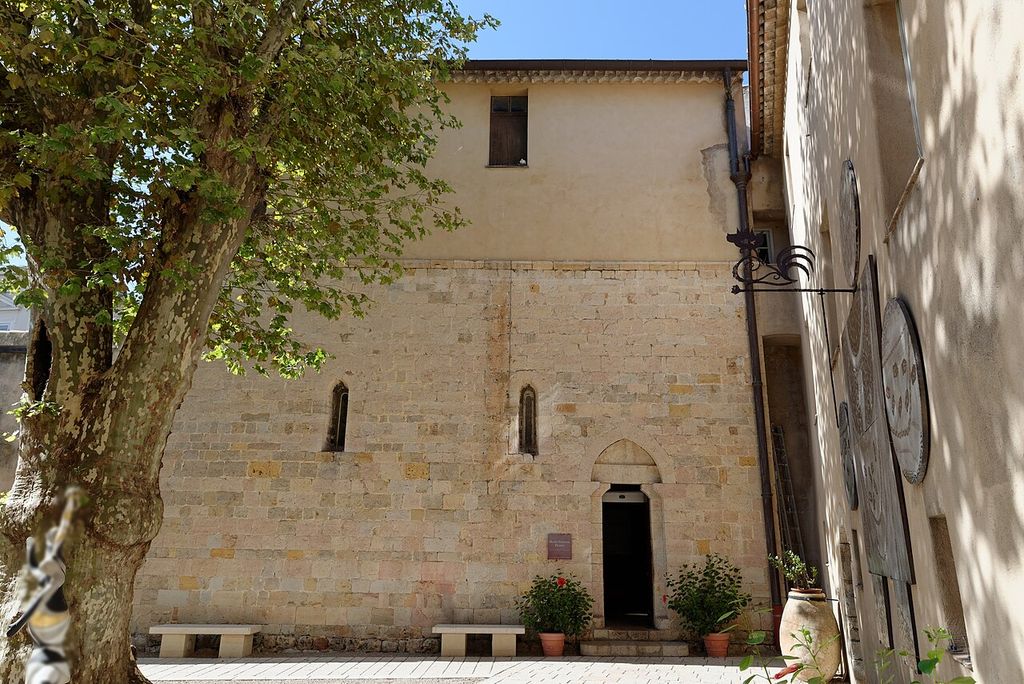
Picasso began sustained work in ceramics after visiting the Madoura pottery in Vallauris, southern France, in 1946. The work depended on the knowledge and labour of Suzanne and Georges Ramié and other potters. It produced both unique pieces and designs made in authorised workshop editions. Understanding that distinction—and the difference between a design date and the making of a particular ceramic—is essential to reading the objects and their labels. It is also more useful than the idea that pottery was only a pleasant break from his other art.[1][3][4]
At a Glance
- Main setting: Vallauris, southern France
- Sustained work began: After Picasso’s 1946 visit to the Madoura pottery
- Collaborators: Suzanne and Georges Ramié and other potters
- Object types: Plates, jugs, bowls and sculptural vessels
Contents
- Madoura and the beginning of sustained work
- Clay, slips, oxides and the kiln
- When a plate becomes a picture and an object
- Jugs, faces and animals
- Unique works, Madoura editions and dates
- Later work and where to see it
- A way to look at a Picasso ceramic
Madoura and the beginning of sustained work
The Musée national Picasso-Paris records Picasso's meeting with Suzanne and Georges Ramié, owners of Madoura, during a 1946 visit to Vallauris. The Museu Picasso Barcelona dates a brief visit to July and describes three pieces he left at the workshop. He returned in 1947, when work with clay became sustained rather than occasional. Museo Picasso Málaga dates its Still Life with Glass and Knife to 28 October of that year, giving a firm object-level anchor for the early phase.[1][3][5]
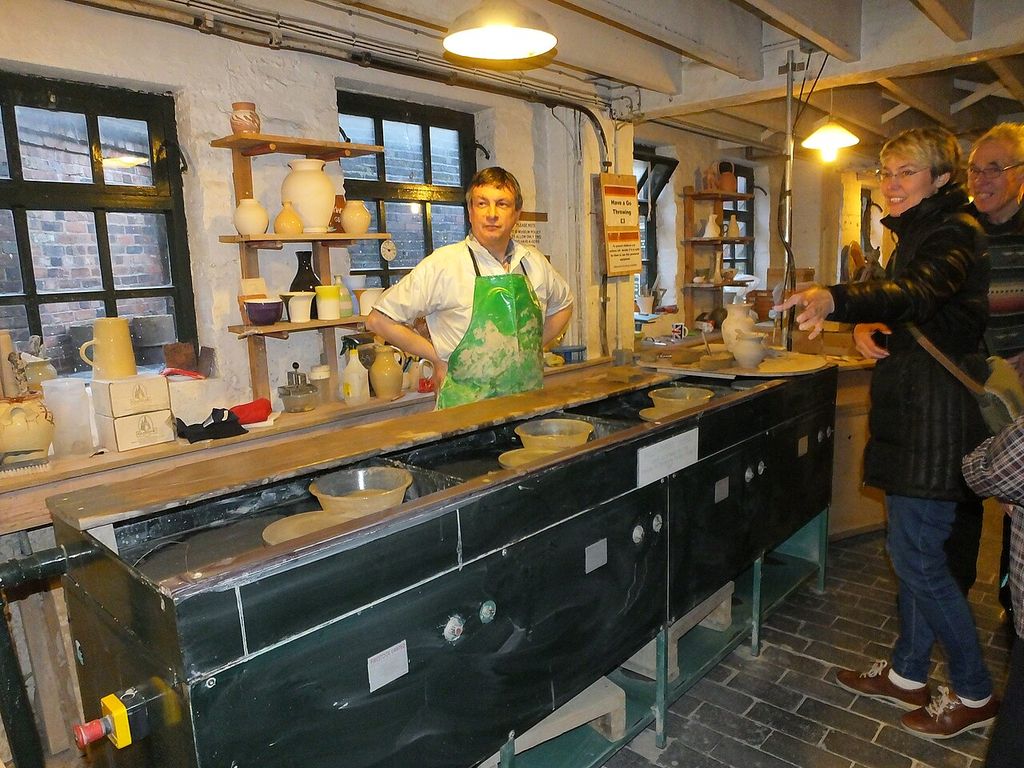
Vallauris already had a pottery culture, workshops, clay, kilns and established vessel forms. Picasso entered a working environment rather than inventing ceramics alone. Madoura gave him materials and facilities, but the exchange was not merely a rental arrangement. Suzanne Ramié studied and adapted traditional forms; experienced potters threw, moulded and fired pieces; Picasso decorated, incised and sometimes altered them. Málaga's account of the 1951 Insect names the master thrower Jules Agard and explains Picasso's close work with Suzanne on shapes she designed. Their contributions should be visible in the story.[1][6]
The pace could be intense. The Málaga museum says he made nearly two thousand pieces at the Ramiés' workshop in 1947–48. That estimate refers to those two years and that workshop, not to a tidy lifetime total of “Picasso ceramics” of every kind. Some works were unique; other designs later existed in editions. Counting models, individual handmade objects and workshop-produced examples as though they were the same thing would give a misleading impression of both output and authorship.[5][7]
The move south did not end work in other media. Picasso continued to paint, draw, print and make sculpture. His activity in ceramics could borrow questions from them—how to outline a face, show several things on one surface or transform an everyday object—without being subordinate to any one of them. A pot cannot be treated like a sheet of paper: it curves away, has an inside and an outside, and changes in the kiln. That material difference is the point of looking at ceramics as ceramics.[1][2]
Clay, slips, oxides and the kiln
A ceramic object begins with a body of clay that is shaped and then fired. At Madoura, Picasso could work on forms already made in the workshop as well as on pieces conceived in collaboration. A slip, or engobe, is a liquid-clay coating that can carry colour; oxides and glaze can also affect the fired surface. Incising draws into the material rather than laying a line only on top. Sgraffito reveals a lower layer by scratching through the upper one. These choices determine whether a contour remains flat, cuts into the skin of the object or stands in relief.[2][6][8]
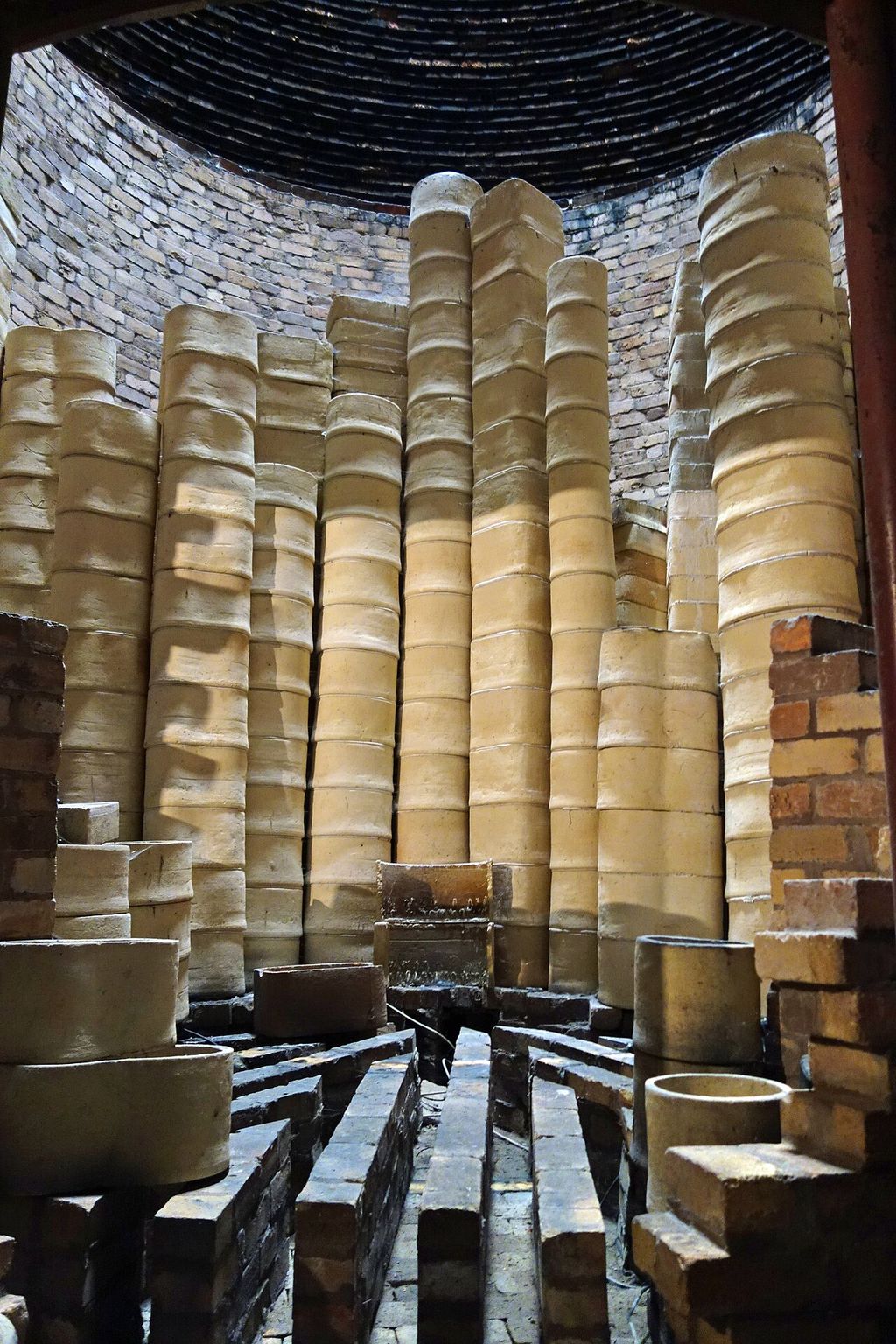
Firing introduces another stage between action and result. The Barcelona museum calls pre-firing colour an “invisible palette”: the appearance anticipated while a piece is being worked on may differ from the one disclosed by heat. This does not make the finished colour an accident, but it explains why control is unlike painting in oil on a canvas. A glaze can gather at an edge; an oxide may produce a colour only when fired; a scratched mark cannot simply be wiped away and repainted as though it were pencil.[7]
The 1947 Owl in Barcelona is catalogued as thrown white earthenware decorated with slips and oxides, gouged and partly glazed. The medium description is a small technical history. It tells us that an owl was achieved through more than a drawn outline: the vessel was turned, its surface altered and several treatments left visible after firing. The bird's identity grows from the ceramic form as well as its decoration.[9]
No single method describes all Picasso ceramics. A shallow plate, an upright jar, a plaque and a tile offer different surfaces and different relations to the viewer's hand and eye. Some pieces were modelled; others were workshop forms painted or incised by Picasso; editioned works might be produced later from a matrix or model. A label that states earthenware, slip, oxide, glaze, mould or edition is therefore not specialist clutter. It tells you what kind of encounter with the material the work records.[2][4][7]
Watch: Pablo Picasso
Explore Picasso through five videos from museums, broadcasters and art educators.
Picasso’s Guernica: Great Art Explained
Explore the composition and historical setting of Picasso’s best-known response to war.
Watch on YouTubeWhen a plate becomes a picture and an object
Still Life with Glass and Knife uses a rectangular plate rather than a canvas. Málaga identifies the 1947 piece as fired red earthenware painted with slips. Its white and dark areas suggest a glass, cutlery and other elements of a meal while the actual serving dish remains present. The museum compares this play between real support and represented tableware with Spanish platos de engaño—“deception plates”—and the ceramics of Bernard Palissy. Those are curatorial comparisons, not proof that Picasso copied a single historical model.[5]
If the plate were reproduced as a flat photograph, it would be easy to miss the double role of its rim and surface. The image lies on a dish that could belong to the same table it depicts. Colour and uncoated clay help differentiate and connect the represented things. In a museum, looking at the object's thickness, curve and edge can reveal choices hidden by a front-facing image. This is one reason a ceramic still life has a different effect from one painted on canvas, even when the subject is similar.[5]
Barcelona's collection research shows Picasso repeatedly using the plat long, a large oval or elongated workshop dish. Its outline could become the boundary of a head; its concave interior could give a face or animal apparent depth. A circular plate, too, could be read as a face without losing its identity as tableware. Such transformations need not be described as casual jokes. The vessel's established shape gives the image a constraint, and Picasso's marks make us alternate between the familiar object and the figure it has become.[7]
This relationship also resists a hierarchy in which functional pottery sits beneath “fine art.” A dish can be designed for an everyday form and still be approached as a distinct artwork. At the same time, one should not assume that every decorated Picasso plate was used at his dinner table. Collection records document many as art objects, gifts or exhibition pieces; claims about daily household use require separate evidence.[7][10]
Jugs, faces and animals
The shape of a jug offers a different challenge. Suzanne Ramié adapted a one-spouted traditional type that the Barcelona museum calls a “Gothic jug.” Workshop potters produced examples, and Picasso used the vessel's swelling body and neck as a support for figures. A painted woman can wrap around the circumference, so no single viewpoint contains the whole image. The viewer has to turn the object or move around it. The figure depends on another maker's researched and prepared form, not just Picasso's later decoration.[7]
The Málaga museum's Insect of 1951 makes collaboration and transformation particularly clear. The starting vessel was a Provençal gus, used to store vinegar or water, with a lid and multiple handles. Picasso painted the lid as a head and turned the handles and sides into parts of a creature. He used blue slip on white earthenware and incised through blue areas to reveal the lighter body beneath. The piece remains visibly a vessel while also becoming an invented animal; that tension is its visual energy.[6]
Owls, fish, goats, fauns, doves, bulls and human faces recur across the ceramics; our guide to animals in Picasso's art follows those motifs across other media. But a motif alone does not explain a work. An owl on a flat plate functions differently from a jug whose body becomes an owl. A faun can be scratched into a surface, modelled in relief or implied by a shape. The Barcelona collection's 41 ceramics given by Jacqueline Picasso include unique plates, jugs and bowls; their varied formats make it possible to compare what each object asks of a familiar subject.[7][9][10]
These motifs also have histories beyond Picasso. Málaga's exhibition research relates some ceramic colours and methods to Mediterranean and Islamic pottery traditions, while Barcelona documents his response to an exhibition of historical Spanish ceramics in 1957. A large Spanish-style plate made after that visit should be read in relation to a particular form and exhibition, not explained by a vague idea that “Mediterranean art” was timeless and interchangeable. The potters' inherited skill and the older objects Picasso studied deserve to remain visible.[7][11]
Unique works, Madoura editions and dates
“A Picasso ceramic” is not one production category. Barcelona describes the 41 works Jacqueline donated to the city as unique ceramics. At Madoura, Picasso also authorised limited editions of designs made through workshop processes. The British Museum catalogues a goat-head plate as an empreinte originale from an edition of 60, listing both Picasso's design and the Madoura factory. The editioned object is not a modern poster printed with a ceramic image; it is itself a fired ceramic made within an authorised production arrangement. But neither is it the same object as a unique plate decorated by Picasso's hand.[4][10][12]
The British Museum explains one empreinte originale route: Picasso worked on a plaster mould, from which clay impressions could be taken; workshop craftspeople then painted the ceramic under his supervision. It distinguishes those from éditions Picasso in which the workshop reproduced more of the relief and painted work from the original. Barcelona's research names Jean Ramié, Georges's son, in work on plaster moulds with Picasso. These processes make authorship layered: design, matrix, shaping, painting and firing may be distributed across several people and dates.[7][12]
One should not reverse that nuance into a simple test of authenticity. The British Museum notes that its editioned plate lacks an individual edition number, perhaps because it was experimental before the final version was chosen. A stamp or number can be important evidence, but a missing or present mark alone cannot settle what a particular object is. The Musée national Picasso-Paris catalogues Alain Ramié's specialist reference work on editioned ceramics from 1947 to 1971; such catalogues and institutional object records are starting points for careful identification. A significant purchase calls for qualified independent assessment and documented provenance, not a quick decision from a photograph of the underside.[12][13]
Dates require similar care. A catalogue may give the year Picasso conceived a design, the date of a mould, the period during which Madoura made the edition, or the date of the individual object being described. Those may not coincide. “Designed in 1956” does not automatically mean every example was fired in 1956. Ask which event a date names, and keep a unique ceramic distinct from a later authorised edition of a design.[7][12]
Later work and where to see it
Picasso continued to make ceramics after the first Vallauris phase. Barcelona's exhibition research describes work at La Californie near Cannes after 1955, including pieces arriving from Madoura and other ordinary tiles or vessels that he decorated. In the 1960s he again worked at the Madoura studio and made new empreintes originales as well as unique decorated pieces. Some of the late faces are uneasy rather than uniformly cheerful; the works cannot all be explained as the expression of a relaxed private life.[7]
Public collections make this history accessible; the broader museums and places guide helps readers choose where to investigate Picasso's work. Barcelona holds the 41 unique works donated by Jacqueline Picasso and publishes object-level records for pieces such as the 1947 Owl. Málaga displays and studies works including the 1947 still life and the 1951 Insect. Museum Ludwig in Cologne explicitly identifies numerous Picasso ceramics in its collection. It is therefore wrong to suppose that the field survives only in scattered private ownership. Each institution's catalogue may use different levels of detail, so a precise title, date, medium and inventory number remain valuable when comparing examples.[5][6][9][10][14]
Online catalogue pages let readers compare precise objects and their techniques, rather than relying on a general idea of “Picasso pottery.” A collection record does not, however, guarantee that the object is currently on display. For a real visit, check the museum's current display information and use its object record to identify the particular plate, jug or vessel you want to see.[5][6][9]
A way to look at a Picasso ceramic
Start by naming the object before naming the image: plate, jug, bowl, storage vessel, tile or plaque. Ask whether the shape was a familiar workshop form, a form designed by Suzanne Ramié or another potter, or a piece modelled especially for the work. Then follow the marks. Does a line lie in slip, cut through it, rise as relief or emerge only after glazing and firing? Turn the vessel in your mind—or in person, where a museum permits it—to see whether a figure continues around the back.[6][7][9]
Finally, read the production record. Is this a unique piece, an empreinte originale or another authorised Madoura edition? Who made the form, mould, decoration and firing? Does the date belong to the design or to the specific ceramic? These questions give the plates and jugs more life than a list of motifs or auction prices. They reveal a practice in which Picasso's inventiveness met a centuries-old craft, other makers' expertise and the unpredictable material action of fire.[1][7][12]
Discussion
Use the evidence and your own close looking to explain your view. These are editorial prompts, not reader comments.
Reader Insights
Where does a vessel’s shape become part of its depicted subject?
What does the Madoura workshop contribute to the history of the object?
How can a museum label distinguish a unique ceramic from an authorised edition?
Join the Conversation
Which reading best fits the evidence?
References
- Musée national Picasso-Paris, “Les années Méditerranéennes,” French account of Vallauris and Madoura. View source.
- Museo Picasso Málaga, “Made of earth,” account of ceramic process and transformed forms. View source.
- Museu Picasso Barcelona, “Tierra, agua y fuego,” Spanish account of the 1946 Madoura visit. View source.
- British Museum, Madoura goat-head plate, collection record and edition account. View source.
- Museo Picasso Málaga, “Still Life with Glass and Knife,” 1947 object record. View source.
- Museo Picasso Málaga, “Insect,” 1951 object record and Marilyn McCully's essay. View source.
- Museu Picasso Barcelona, “Ceràmiques de Picasso. Un regal de Jacqueline a Barcelona,” Catalan exhibition research. View source.
- Museo Picasso Málaga, “Picasso, cerámica y tradición,” Spanish exhibition account of ceramic materials and colour. View source.
- Museu Picasso Barcelona, “Owl,” 1947 object record. View source.
- Museu Picasso Barcelona, “Picasso Ceramics. Jacqueline's Gift to Barcelona,” collection exhibition. View source.
- Museo Picasso Málaga, “Obra gráfica y cerámicas de Picasso,” Spanish exhibition research. View source.
- British Museum, Madoura edition process in the goat-head plate record. View source.
- Musée national Picasso-Paris, library record for Alain Ramié's Picasso, catalogue de l'œuvre céramique édité, 1947–1971. View source.
- Museum Ludwig, “Die Sammlung des Museum Ludwig,” German account of its Picasso holdings. View source.
Image Credits
- François de Dijon. CC BY-SA 4.0. Source: Wikimedia Commons. Resized proportionally to 1024px wide; no crop. Source record. Licence.
- Photograph by Clem Rutter, Rochester, Kent. ( www.clemrutter.net ).. CC BY-SA 3.0. Source: Wikimedia Commons. Resized proportionally to 1024px wide; no crop. Source record. Licence.
- Des Blenkinsopp. CC BY-SA 2.0. Source: Wikimedia Commons. Resized proportionally to 1024px wide; no crop. Source record. Licence.


